Mill-Direct ERW Steel Pipe · Synbase Steel

ERW Steel Pipe — Electric Resistance Welded Carbon Pipe to A53, API 5L & A500

Insist on electric resistance welded pipe with weld-seam confidence normally saved for seamless. We’re using inline HFW seam normalizing, full-body ultrasonic testing, and heat-number-traceable EN 10204 3.1 certification on every length shipped direct from a Synbase production line.

Request an ERW Quote
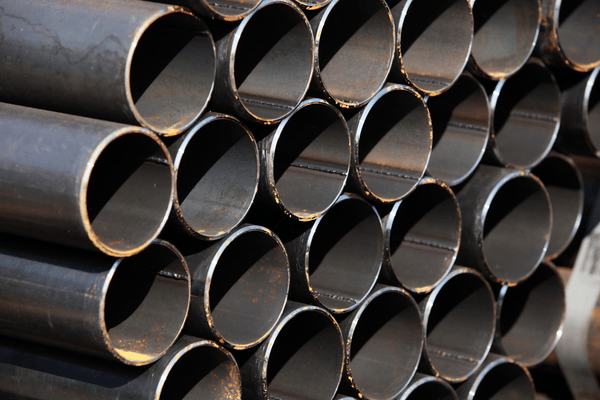
Electric Resistance Welded Carbon Pipe
  • NPS ½–24 OD range (HFW/ERW)
  • A53 · API 5L · A500 · A252 Standards covered
  • Gr B–X70 API 5L grades
  • 3.1 MTC EN 10204 traceable
  • 100% UT Full-body weld NDT
  • 100+ Export countries
TECHNICAL INSIGHT

Where ERW Pipe Wins, and What the Weld Seam Really Costs You

ERW pipe (electric resistance welded pipe) isn’t a budget, lower-grade alternative to seamless. It’s a distinct, engineered solution optimized for a specific range of operating conditions. For the majority of water, structural, and standard oil-and-gas services, it’s precisely the right material choice-not a concession.

The real cost drivers for pipe projects are typically not the welds themselves but rather how those welds are managed. The subtle, important trade-off lies in how the seam has been finished-not that ERW is simply less than seamless pipe.

The real failure point isn’t the weld, it’s the missing heat treatment

Pipes without proper normalization can pass a visual inspection but fail after repeated pressure cycles, simply because the grain structure in the weld and heat-affected zone was never restored. Unlike a low-cost producer that discharges pipe straight from the weld box, Synbase normalizes the seam of every pressure-grade pipe at line speed.

It’s useful to address two major risks tied directly to the seam up front, as the rest of this content is engineered to mitigate them.
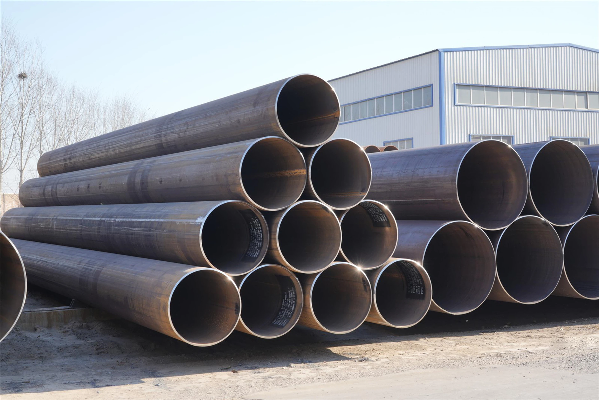
  • Seam corrosion grooving: Because the weld seam has a different grain structure than the surrounding material, it can serve as a path for corrosion that forms a groove along its length while the rest of the pipe surface remains intact.
  • At the heat-affected zone, HAZ sensitization fosters intergranular attack at the grain boundary-an issue that’s prevented by seam normalization.
  • A 0.85 design de-rate applies: ASME code de-rates an ERW seam at a weld joint quality factor of 0.85, meaning that 18% thicker pipe wall thickness is needed for a given pressure level compared to seamless pipe-a design consideration we embrace openly, not an oversight.
ERW Pipe Seam Treatment and Normalization
SYSTEM SELECTION

ERW vs Seamless: The Decision Threshold

The pertinent question is never, “Is ERW pipe as good as seamless pipe?” Instead, the real question is at what point in your operating parameters does the security of seamless pipe justify its increased cost. That point is dictated by the interplay of pressure, the fluid being conveyed, diameter, and the consequences of failure.

Mismatched criteria can lead to double costs. Using seamless pipe on a handrail will overspend the budget; using ERW pipe in sour service carries a risk of failure. We offer an honest framework below to help you analyze when to use “ERW pipe vs. seamless pipe” for your specific application.
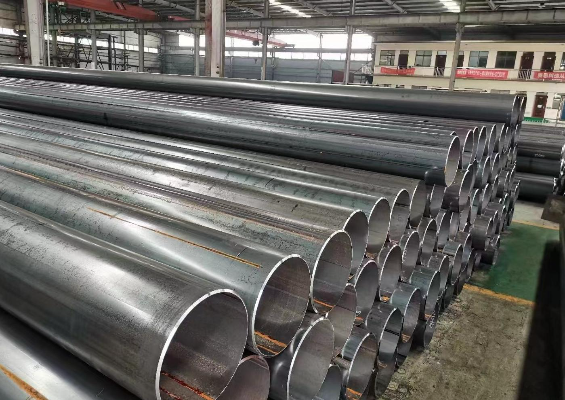
ERW vs Seamless Pipe Operating Parameters

The ERW-vs-Seamless Decision Threshold

Service factor
ERW (HFW) is the right spec
Move to seamless
Design pressure
Low–medium; seam de-rated at E = 0.85 and still ample
High-pressure where E = 1.00 is mandated
Medium / service
Water, air, steam, structural, gathering & distribution lines
Sour (HIC), lethal, cyclic high-pressure service
Outside diameter
NPS ½–24 (HFW practical ceiling ~610 mm)
Small-bore thick-wall, or above the ERW range
Temperature
Ambient to moderate
High-temp creep service (A106/A335 seamless)
Governing code
B31.1 / B31.4 / B31.8 standard service
B31.3 lethal / fitness-for-service critical
Relative acquisition cost
Typically 20–30% lower than seamless
Premium justified by failure consequence

Engineering note, the 0.85 factor, used honestly

ASME B31.3 designates a longitudinal weld joint quality factor of 1.00 for seamless, 0.85 for ERW, and 0.85-1.00 for SAW, based on the degree of radiographic inspection performed. This translates to roughly 18% more wall thickness for ERW pipe compared to seamless for the same design pressure. Synbase bases our wall thickness on this factor, openly acknowledging it rather than downplaying it, since B31.3 doesn’t permit increasing the 0.85 quality factor through additional inspections.

The wide range of applications left of this divide are well-covered by modern HFI-ERW, which is safe by design, UT, and heat treatment. We’ll alert you if your application falls on the right side of this line, directing you to our carbon steel seamless pipe division – proper spec beat cheaper price.

PROCESS OVERVIEW

The Welded Pipe Process Spectrum, ERW · HFW · EFW · LSAW · SSAW

There’s no single product when we say “welded steel pipe,” and a common, costly error is mismatching the weld method to your pipe size. ERW handles medium volume, small to medium pipe sizes and the big stuff is produced with submerged arc.

A misstep here means you either pay LSAW line pipe prices for 6″ water pipe or stretch ERW beyond its maximum – typically 610mm for water and 24″ for gas – size. Synbase is the in-house producer of the smaller ERW/HFW range, so the recommendations reflect actual line production reality.

The Welded Pipe Process Spectrum

Process
Weld method
OD range
Typical standards
Best for
ERW / HFW
High-frequency resistance, longitudinal, no filler
½–24″
A53 Type E, API 5L, A500, A252
Volume fluid, structural & line pipe
EFW
Electric fusion, with filler metal
Larger / stainless
A671/A672, A312 welded
Thicker wall, stainless welded pipe
LSAW
Longitudinal submerged arc
16–60″
API 5L, A672
Large-OD high-pressure line pipe
SSAW
Spiral submerged arc (spiral welded pipe)
20–120″
API 5L, AWWA C200, A139
Large-OD water & low-pressure

HFW is modern ERW, not a separate product

Welding methods: The High Frequency (HF) process and ERW are used interchangeably in the tube & pipe industry; an HFW pipe refers simply to current ERW technology. When you see “HFW Pipe” on a drawing, interpret this as cleaner, more consistent seams than you get from low-frequency welding common decades ago.

Three controlled procedures determine a good ERW seam – all of which Synbase controls on the same production line prior to shipping:
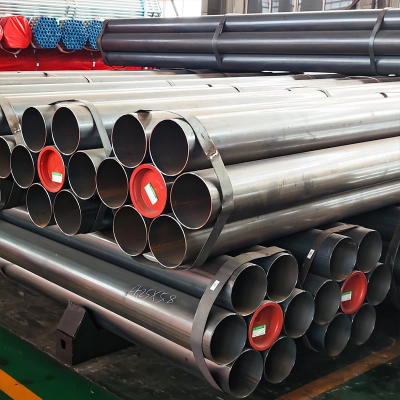
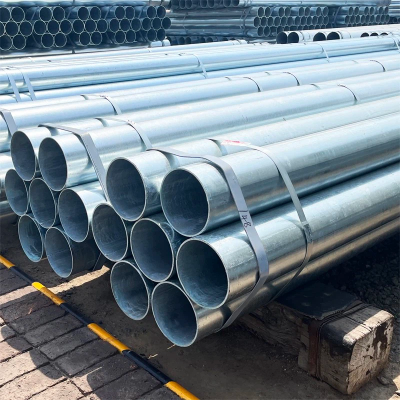
  • Skelp edge prep – The rotary shear cut edges that are squared, clean, and cut to precise tolerances required for a strong bond.
  • Skelp formation – Roller forming reduces the metal to perfectly round prior to the Weldbox.
  • Welding process – The edges are heated with HF current and forge pressure joins the surfaces, forming one wall without filler metal.
HFW ERW Welding Process
Need a process recommendation for your diameter?
Request a custom ERW vs SAW estimate →
Synbase ERW Pipe Production and Specifications
SPECIFICATIONS

Synbase ERW Pipe, Sizes, Grades & Standards

Data competitors skip – we deliver not just a size range, but by-grade yield strengths and tensile strength. Engineers can now properly design specs, and buyers can effectively source and price against single specification table. An incomplete spec sheet invites costly delays after the pipe arrives.

All material below has been produced on Synbase ISO9001 welded pipe production line and tested to EN10204 3.1 MTC including ASTM A53 ERW and API 5L ERW line pipe.

Dimensions & finishes

  • OD: NPS ½–24 (21.3–610 mm); larger diameters move to LSAW/SSAW.
  • Schedules: Schedule 10 through Schedule 160 — including STD, Schedule 40, XS and Schedule 80, plus custom walls; ASTM A53 covers NPS ⅛–26.
  • Ends: plain end, beveled, threaded & coupled, grooved.
  • Finish: black (bare/varnish), hot-dip galvanized, 3LPE/FBE coated; ERW round tube to A500/A513 on request.

Synbase ERW grade & standard matrix (mill-certified minimums)

// SYSTEM.DATA.04
Standard / grade
Type
Min yield
Min tensile
Typical service
ASTM A53 Gr B
Type E (ERW)
241 MPa (35 ksi)
414 MPa (60 ksi)
Steam, water, air, gas, mechanical
API 5L Gr B
PSL1 / PSL2
245 MPa (35.5 ksi)
415 MPa (60 ksi)
General line pipe
API 5L X42
PSL1 / PSL2
290 MPa (42 ksi)
415 MPa (60 ksi)
Gathering & distribution lines
API 5L X52
PSL2
360 MPa (52 ksi)
460 MPa (66 ksi)
Transmission line pipe
API 5L X60 / X65
PSL2
415–450 MPa
520–535 MPa
Higher-grade transmission
API 5L X70
PSL2
485 MPa (70 ksi)
570 MPa (82 ksi)
High-strength transmission
ASTM A500 Gr B/C
HSS (welded)
290–317 MPa
400 MPa (58 ksi)
Structural hollow sections
ASTM A252 Gr 2/3
Pile (welded)
241–310 MPa
414–455 MPa
Driven steel pipe piles

For values as per ASTM A53, A500, A252 and API 5L (46th ed.) min. A heat “as-rolled” test report included with the full heat MTC.

[APPLICATION]

ERW Pipe by Application, Fluid, Line Pipe, Structural & Piling

As ERW is governed by four distinct standards, an order with a Synbase mill is able to accommodate highly diverse projects. A client running standard industrial piping could pay needlessly high premiums for the costly and time-consuming line pipe testing or improperly specifying an inexpensive structural steel line pipe as critical transmission-unless their chosen partner makes it clear what the application merits. Synbase ensures your pipes fit the specific job.
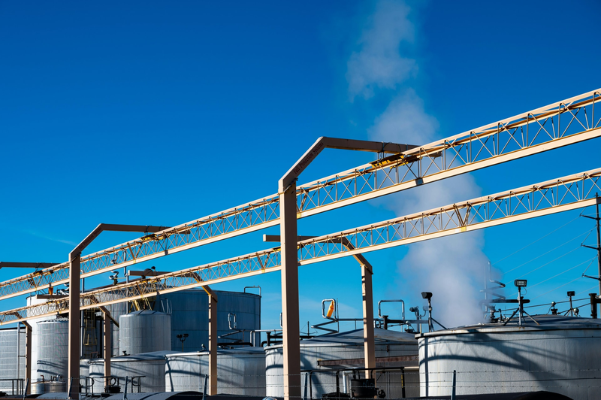
Fluid and mechanical service ERW pipe

Fluid & mechanical service, ASTM A53 Type E

General black or galvanized carbon pipe, for steam, water, air and gas uses from NPS – 26, and light-duty mechanical use. Our workhorse spec for industrial plants, building services, and water production.
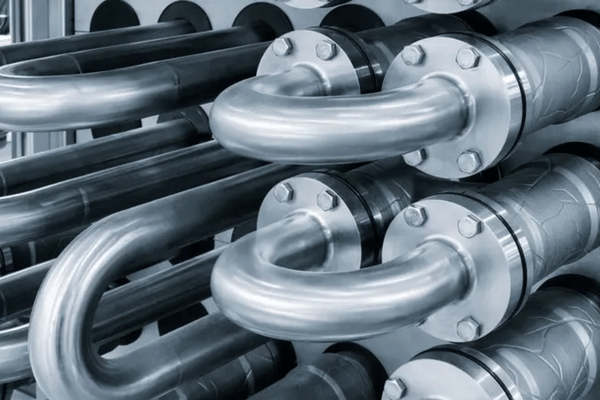
API 5L Line Pipe for O&G gathering

Line pipe, API 5L (B / X42–X70)

ERW line pipe (Type E) for O&G gathering, distribution and medium-pressure transmission service. For high-pressure lines where the most demanding chemical composition, NDT testing and impact toughness matter, demand PSL2: Synbase verifies its conformance for each heat against the required standard.

Structural and piling ERW steel pipe

Structural & piling, ASTM A500 & A252

  • A500 HSS — cold-formed welded hollow sections for columns, bracing, scaffolding and bridges, certified to 290–317 MPa yield.
  • A252 pile — driven steel pipe piles, Grade 2/3, for foundations and marine works.
  • ERW carbon steel pipe and tube — round mechanical and general-purpose stock for fabrication and OEM assembly.

Engineering note, why ERW dominates these jobs

For the rigors of water transmission, for structural steel applications, or simply standard distribution line pipe – the weld bead is often not located in the critical failure path and the economic and logistical advantages of welded construction are simply overwhelming. The select few cases requiring the “gold standard” of seamless (such as in sour conditions, high temperature, or extreme pressure applications) remain-fortunately for many consumers-the exception rather than the rule and have been an integral part of the reason why Synbase houses both processes in-house.

Matching ERW to a specific application? Get an application-specific quote & spec sheet →
PROCESS / INTEGRITY STACK

The ERW Weld-Seam Integrity Stack, How We De-Risk the Seam

Competitors bypass this step; what the world needs is to rejoin this fractured chain to restore and prove the weld-it’s at this disconnect thatpressure-cycle failures originate.

A weakened seam simply fails over time: the competitors hide this from you by claiming that a seam is fine if it’s not treated. We mend this fractured chain, step-by-step, in an eight-step process within Synbase because service life depends on the strength of the seam not on the fact that a weld exists.
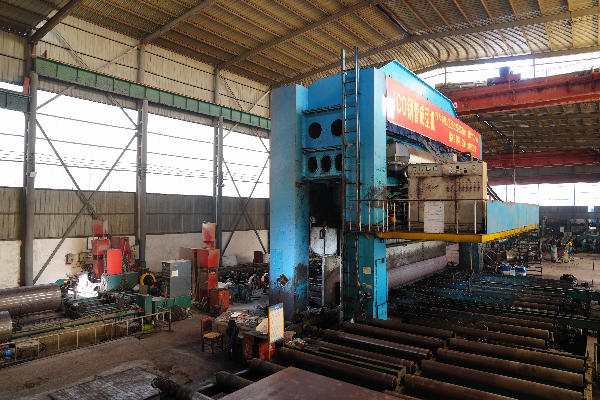
Heavy Engineering Press and ERW Process

“We normalize the weld seam inline on every pressure-grade run. A seam that has been re-grained behaves like the parent body in a corrosion cell, that single step is the difference between pipe that survives a decade of pressure cycling and pipe that grooves out along the seam in service.”

// Synbase Pipe Mill Engineering Team
01

Skelp edge prep

Rotary-shear cleans and deburrs the edges ensuring a tight, weld-ready bond with minimal risk of inclusions.

02

HF welding + forge pressure

Electric current high frequency that fuses the edges, being extrusion of material on external (no filler).

03

ID/OD bead scarfing

The bead is leveled both internally and externally by welding upset removal.

04

Online seam normalizing

After welding, a heat treatment in coil in the weld +HAZ that recreates the grain structure. That’s the process that defeats seam grooving and HAZ sensitization, ignored by cheapest mills.

05

Full body & weld-line NDT

100% by UT plus testing by Eddy currents on the entire weld bead.

06

Hydrostatic test

Every length must comply with hydrostatic tests specified by standards A53/API 5L.

07

Mechanical proof

Flattening tests, elongation of weld toe and CVN impact (PSL 2), where provided for by standard API5L.

08

EN 10204 3.1 MTC

Chem/mech properties and heats number-verified by independent plant inspection Synbase.

In fact, it’s not merely our practice, it’s what years of metallurgists’ efforts have shown us. With USPTO patents for work in ERW seam toughness and sour service (such as U.S. Pat. No. 4,804,021 and U.S. Pat. No. 11,045,896 on identifiable seam manufacturing), our efforts prove that it’s the treatment of the weld, not its welding method, which determine performance in the most demanding oil, gas, water, and mechanical applications.

Want to see what verification ships with your order?

Request a sample EN 10204 3.1 MTC & NDT test report →
PROCUREMENT STRATEGY

Mill-Direct vs Distributor, Total Landed Cost & Procurement

It all begins with the pipe you’re buying, not the list price alone. Sourcing ERW pipe direct from the mill re-casts the value equation-and perhaps more importantly-changes the nature of the documents that will arrive with your steel.

[ DATA_SET // YIELD_DELTA ]
20–30%
typical acquisition saving of ERW vs seamless, same spec — before landed cost

Industry-average band; driven by coil-vs-billet feedstock, >95% coil-to-pipe yield, and 30–40% lower forming labor. Exact delta varies by OD, wall, grade, quantity and market.
ERW vs Seamless Pipe Cost and Yield comparison structure
EVALUATION METRICS

The cost structure behind the number

  • Feedstock: ERW begins as steel coil, while seamless requires piercing a solid billet, so coil is generally a more affordable, higher yield method.
  • Yield: An modern ERW facility generates more than 95% yield on thecoilto pipelinetransformation; this produces much less energy and far fewer waste products than themulti-stages of seamless production.

In plain terms thetrade-offsare: seamless has about 20% higher potential for use under pressure, precisely the threshold defined in the table above.

What separates a safe ERW buy from a costly one

A low-pricedtonne of steelpipewill seldom result in thelowestproject cost; instead confirm appropriate weld-cleaning treatments and require anMTC-certificate with full traceability of temperature in the material. Any vendor who suggests you can forgo an MTC is to be avoided; Synbase, the factory producer, supplies the certificate itself (an EN 10204 type 3.1 or 3.2 with third party inspection), so you always have proof of the process your pipeline steel underwent, supported by anISO9001certified quality management system.

Landed-cost factors we make transparent

Instead of an ambiguoussingle quote price Synbase outlines the factors that will impact the shippedcost of yourorder, so you can properlybudget against them:

  • Grade and PSL level (PSL2 testing adds cost); wall and OD; coating (galvanized / 3LPE / FBE).
  • quantityordertomcontainer load efficienciesea freight andterms of incotermsdestination countryduties
  • Documentation scope (3.1 vs 3.2, additional NDT, third-party inspection).
SYSTEM & COMPLIANCE

Certifications & Compliance

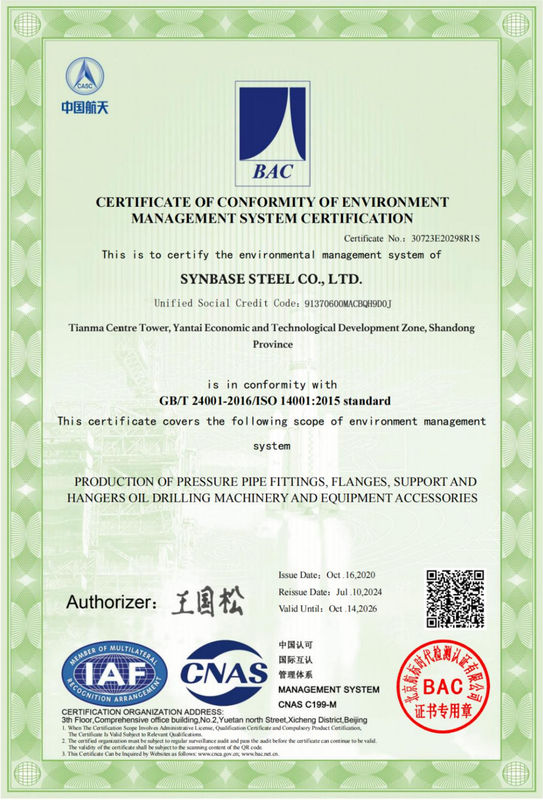
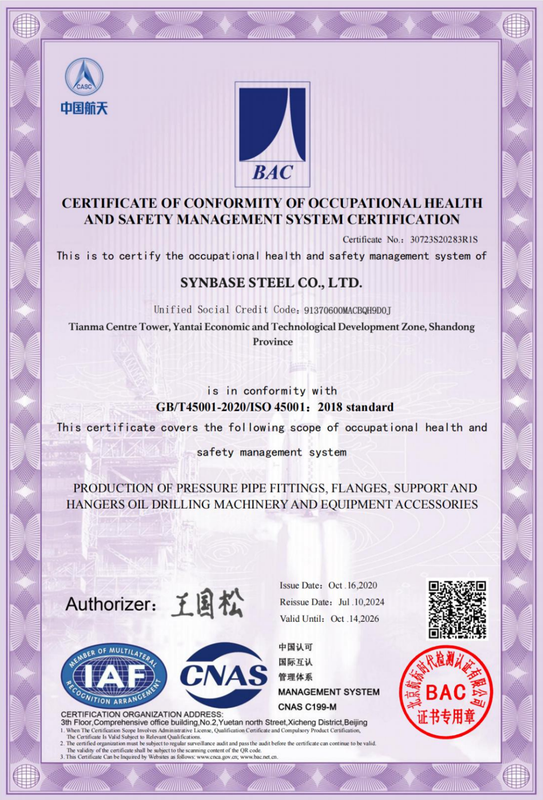
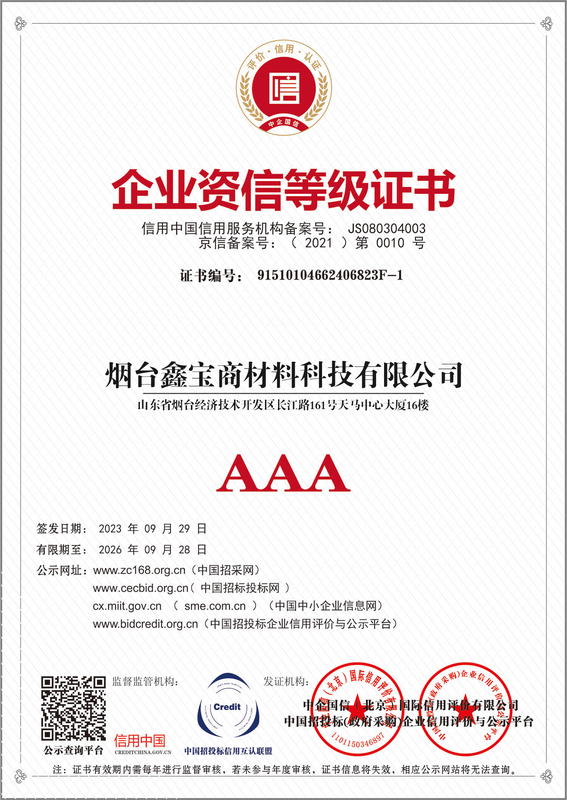
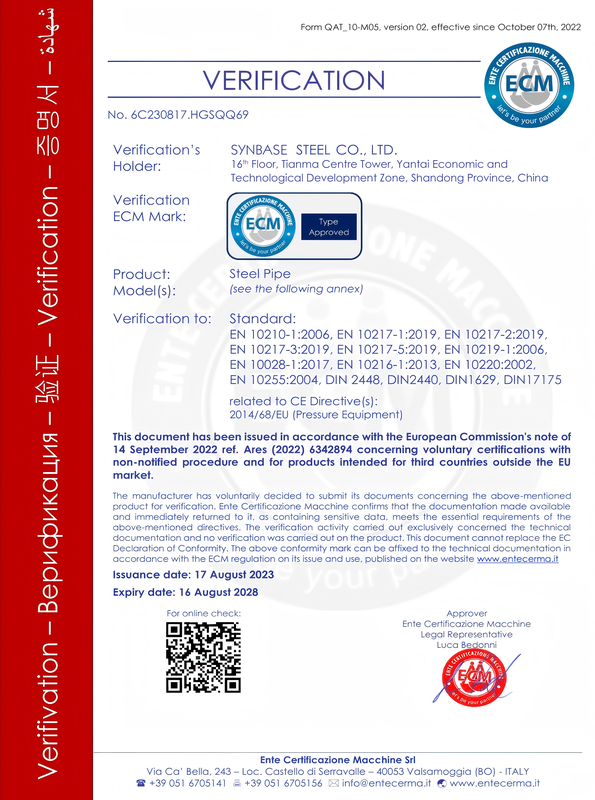
Documentation is integral to the pipe product, not an add-on service – a missed certificate could result in failed vendor audits or rejected shipments. Synbase Steel is the pipeline systems central enterprise operation of E-CHENG STEEL GROUP. Its environmental, quality, and safety systems comply with internationally recognised specifications.
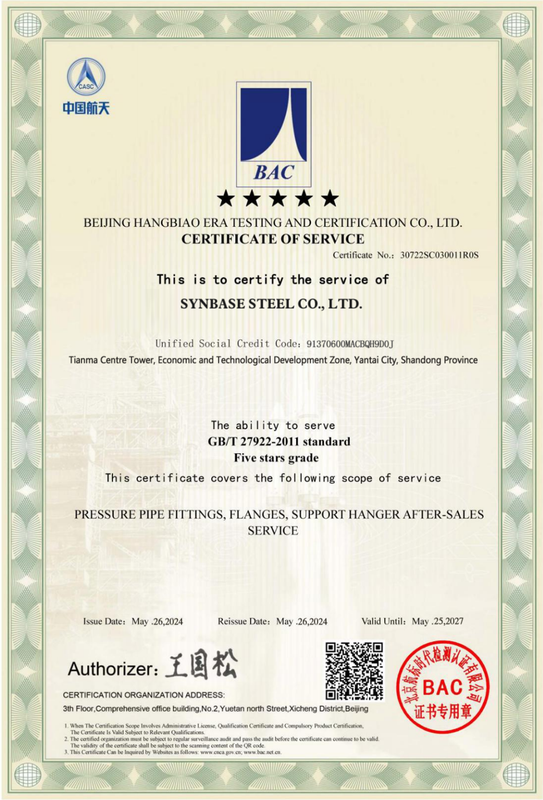
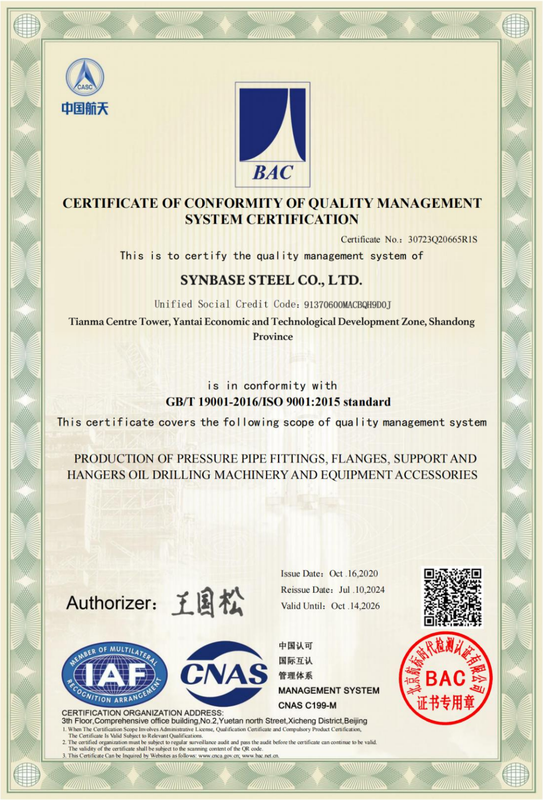
ISO 9001
Quality management
ISO 14001
Environmental management
ISO 45001
Occupational H&S
CE
EU conformity
EN 10204 3.1
Heat-traceable MTC
Enlarged Certificate
Mill-Direct / EN 10204 3.1 / 100+ Countries

Specify ERW with seamless-grade confidence

Send Synbase your standard, grade, OD wall and quantity. You’ll get a mill-direct quotation, a sample EN 10204 3.1 MTC, and an honest answer on whether ERW or seamless fits your service.
SYSTEM / RESOURCES

ERW Pipe FAQ

Electric Resistance Welded (ERW) pipe is formed by shaping a stainless steel sheet into regular pipe and welding it longitudinally with electric current. No filler metal is introduced in the weld seams, which thus consist of an integrated form of the steel itself. These Pipes are engineered for their intended ranges and can’t be thought of as a bargain supply of the seamless product, provided that they’re constructed on properly managed production lines; indeed, the welding seam is normalized and checked by an ultrasonic scan as well as having its specification detailed on the MTC as if it were a component of the entire body.

Seamless pipe is capable to withstand nearly 20% higher pressures and is recommended for applications involving Sour services, Lethal materials, or extreme pressures. If your water, structural or conventional oil and gas supply require piping, then properly normalized ERW can cost 20-30% less and remain reliable. Use the tool referenced above to ascertain the ideal pipe choice for your specific project.

The actual deficiencies in ERW steel pipes are the 0.85 rating for welded seams (the pipe wall thickness will need to increase by about 18% for any equivalent pressure rating) and the possibility of corrosion along the welds and HAZ with improper treatment. Full on-line seam normalizing and 100% UT Inspection address these potential weaknesses. Appropriate wall thickness calculations cover the former issues.

Yes – A53 Type E is the ERW designation (Type S is seamless, Type F is furnace-butt-welded). Synbase supplies A53 ERW pipe in Grade B, black and hot-dip galvanized.

HFW/ERW is practical up to about NPS 24 (610 mm). Larger diameters move to LSAW or SSAW.

Yes, as API 5L Type E line pipe in Grade B and X42-X70. Specify PSL2 for the tighter chemistry, mandatory NDT and CVN impact testing that transmission and higher-risk service require.

None in practice – HFW (high-frequency welding) is the high-frequency current that modern ERW lines use, so the terms are used interchangeably. “HFW pipe” simply signals current-generation ERW seam quality.

Common schedules from Schedule 10 through XS/80, plus custom walls, across NPS -24. Wall is also where the 0.85 design factor is accounted for, so share your design pressure and Synbase will confirm the schedule.