Send Your RFQ to Synbase Steel
Prefer to send drawings, BOMs or attachment lists by email? sales@synbasesteel.com

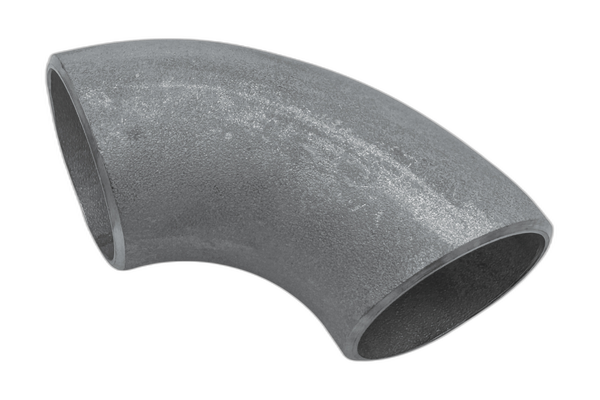
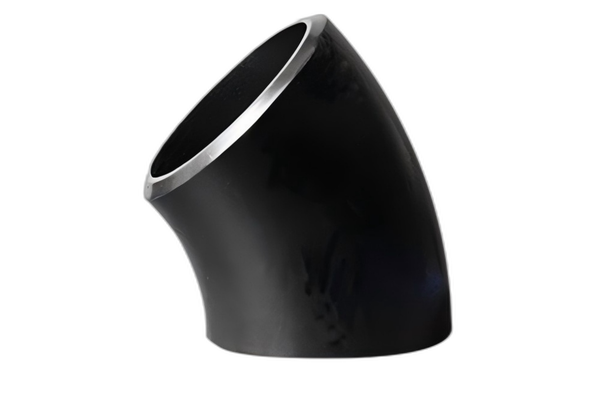
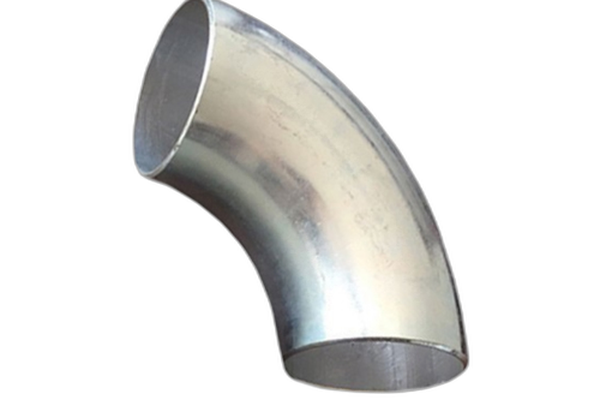
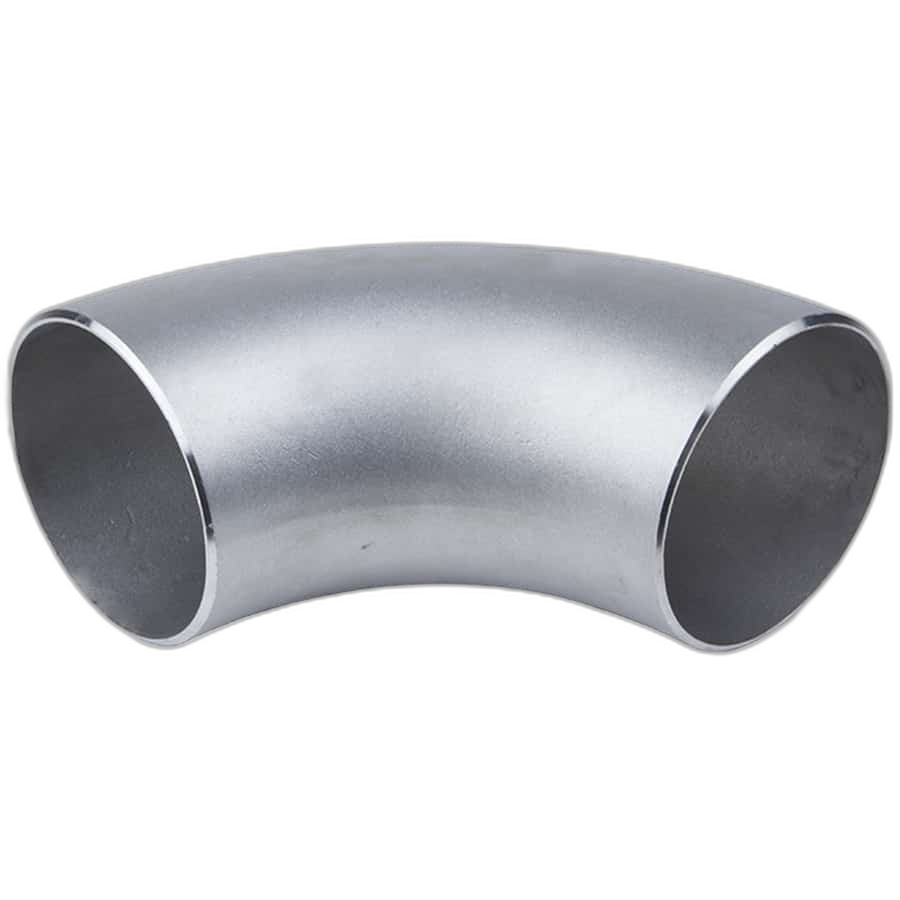
Butt weld elbow fittings route flow through a full-penetration welded joint that carries the same pressure as the run pipe, no thread, no leak path, no diameter restriction. Synbase supplies mill-direct ASME B16.9 elbows in 90° and 45°, long radius and short radius, across carbon (A234 WPB/WPC), low-alloy Cr-Mo (A234 WP11/WP22) and stainless (A403 304/316L), each shipped with an EN 10204 3.1 mill test certificate you can trace to the heat. For compatible parent material, source carbon steel seamless pipe.
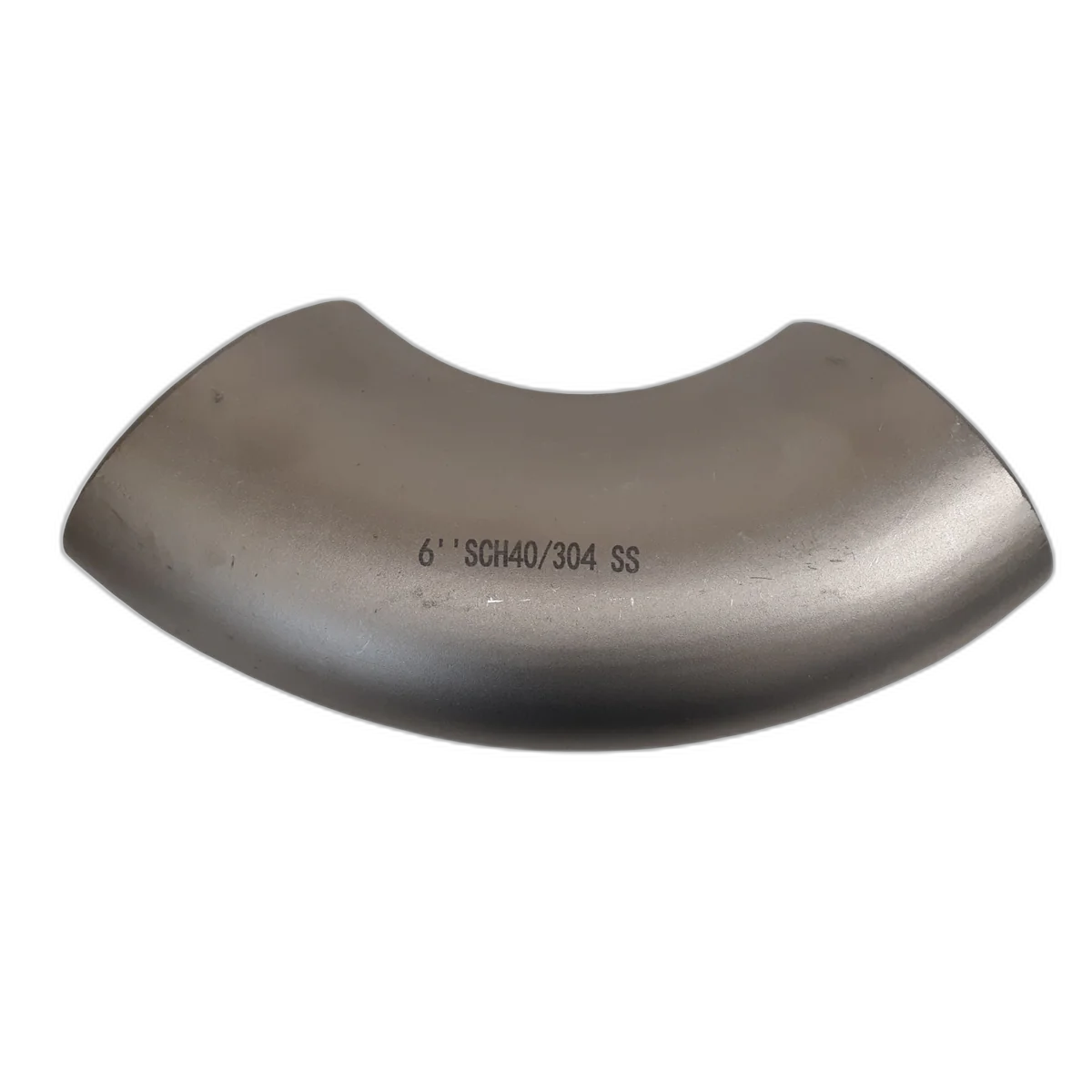
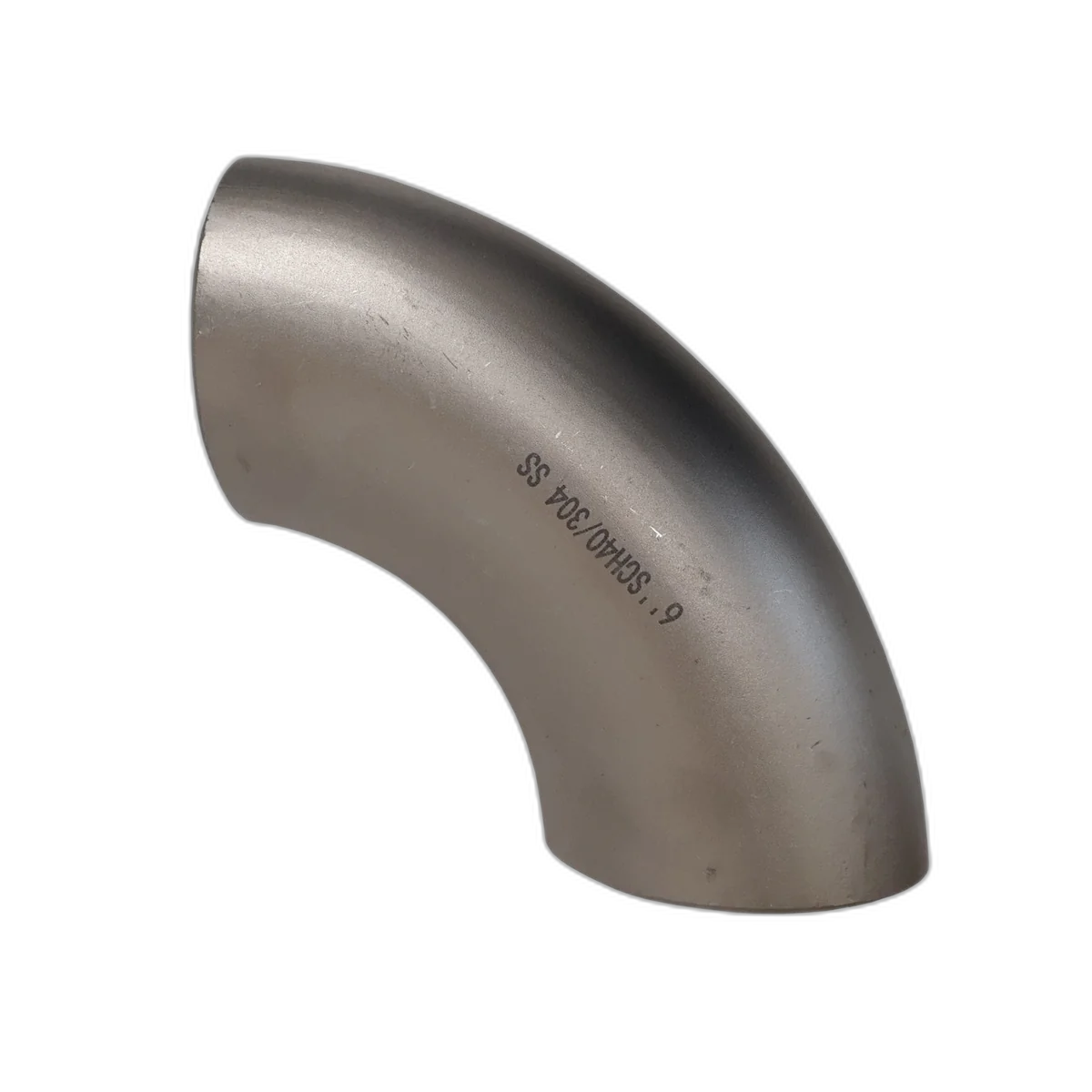
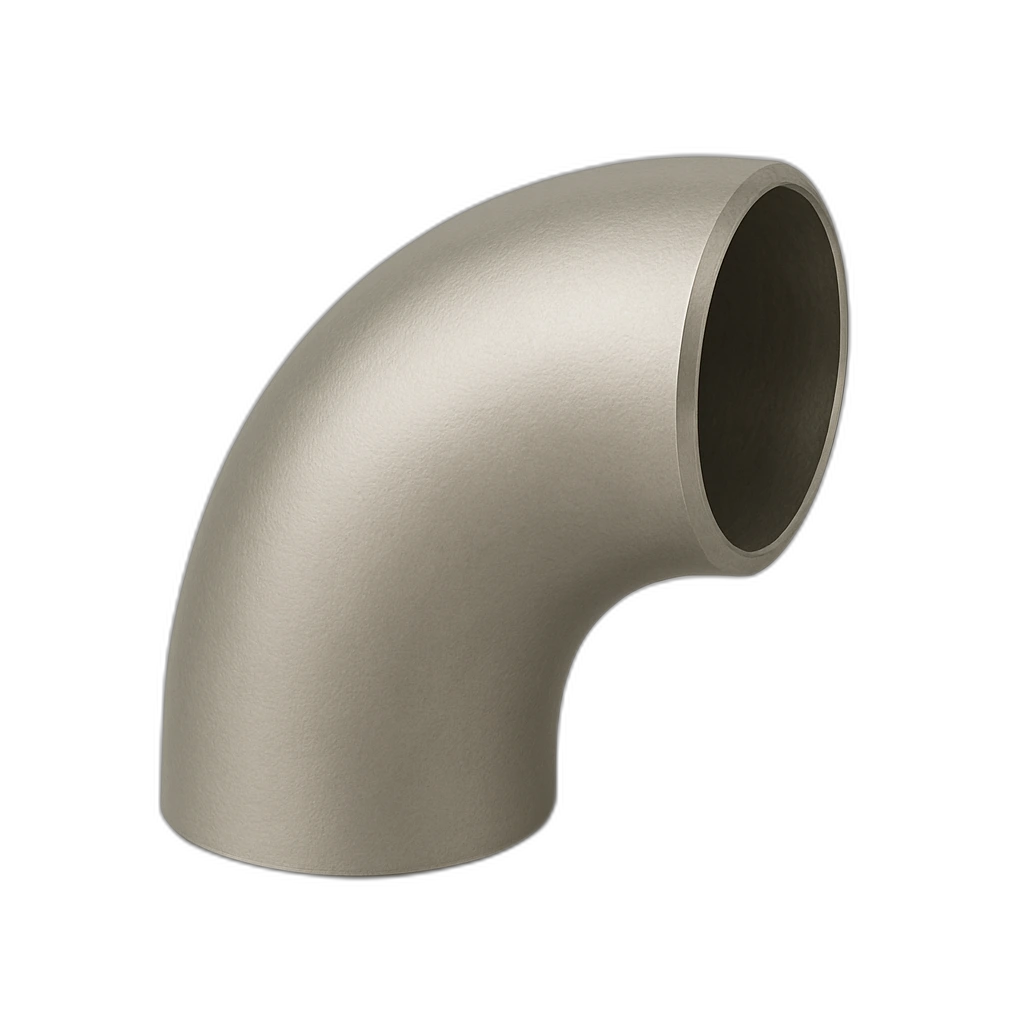
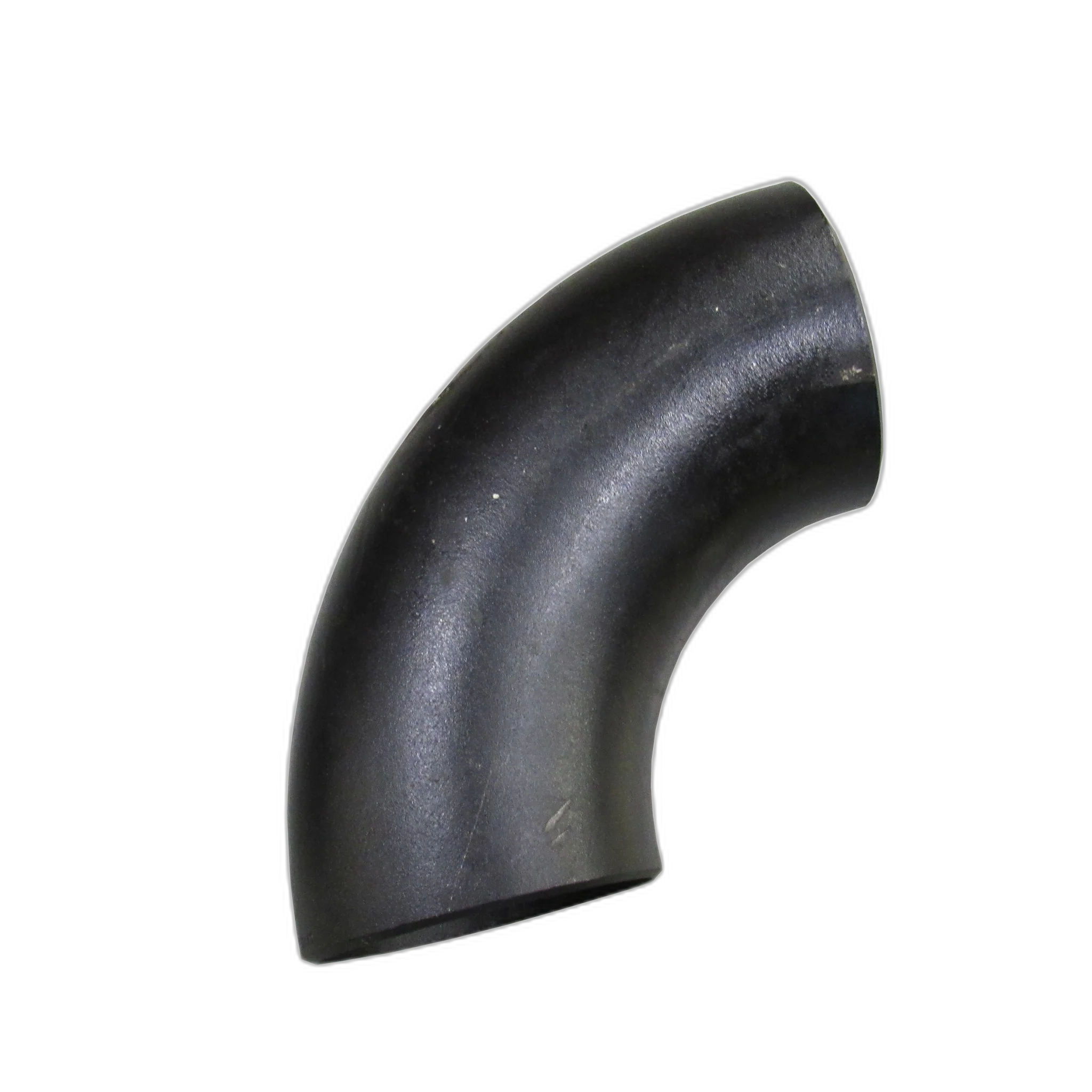
A butt weld elbow is welded end-to-bevel directly into the line, so the fitting become a continuous, full-bore section of the pipe rather than a mechanical joint bolted or threaded onto it. That single design choice removes the two failure modes that thread and socket connections introduce: a stress-raising thread root and an annular crevice where corrosion and pressure cycling concentrate. The trade-off engineers actually wrestle with isn’t whether to weld, it’s selecting the radius, grade and wall thickness so the elbow survives the service it see.
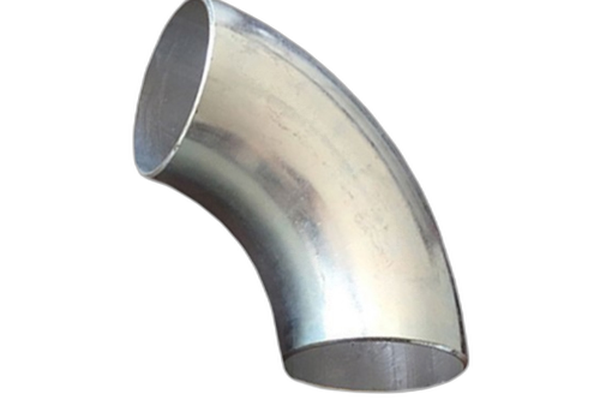
“SMLS” (seam-free) describes how the parent material is made — extruded with no longitudinal weld seam; “butt weld” describes how the fitting is joined to the pipe (a circumferential weld at a beveled end). An SMLS butt weld elbow is both: an elbow formed from seam-free pipe and then installed by butt welding. ASME B16.9 governs the fitting’s dimensions and pressure-temperature behaviour either way.
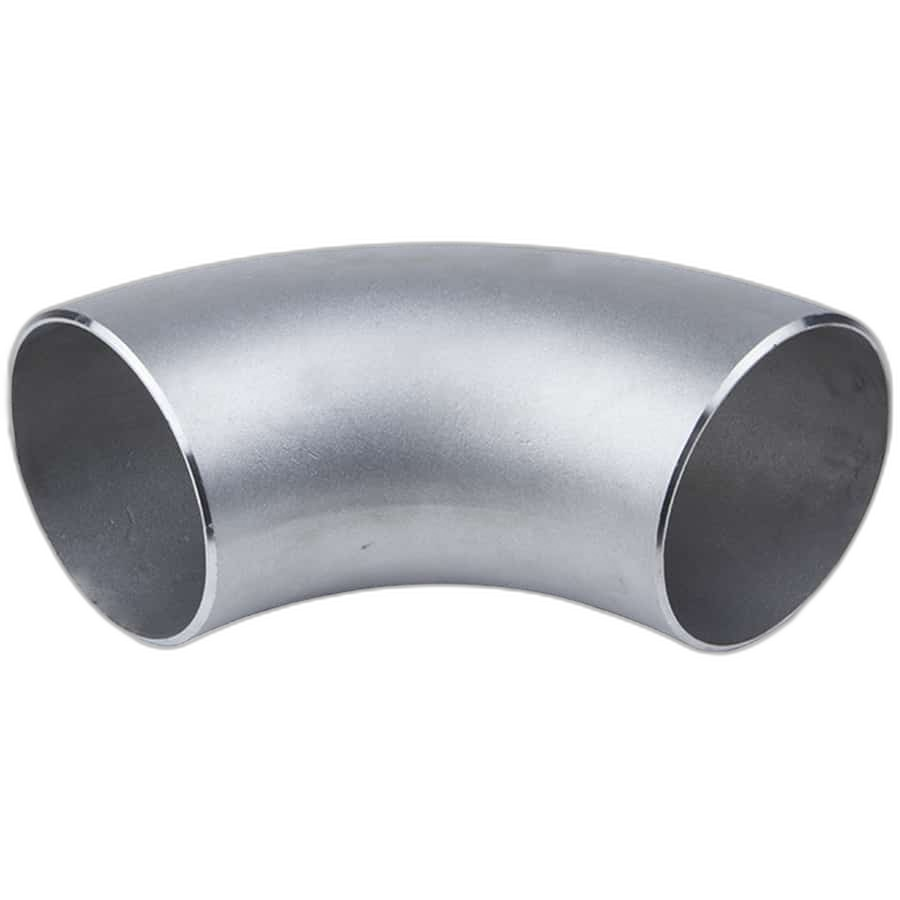
For a direction change on a pressure line, the connection method is a real engineering choice, and the numbers favour the welded joint as bore and pressure rise. The comparison below uses connection capability, not marketing language. Unlike socket weld or threaded options, a butt weld offers superior strength and eliminates crevice corrosion risks, making it ideal for high-pressure systems. For compact branches, compare forged socket weld fittings.
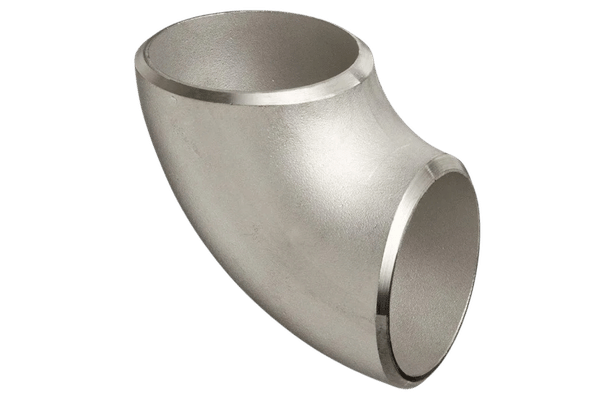
The full-penetration weld is the reason a butt weld elbow keeps the full design pressure and the full inside diameter of the run pipe, while socket-weld and threaded fittings carry a crevice and a bore step that cap their pressure and invite crevice corrosion. Above NPS 2″ and on any line that will be radiographed, butt welding is effectively the only connection that qualifies, which is why elbows are the highest-volume buttweld fitting in process piping.
In oil & gas, refinery and production piping, a butt weld elbow that holds 100% of the run-pipe pressure at NPS 24 (610 mm) is the difference between a sound spool and a leak path at the next valve. That is why Synbase normalizes or heat-treats every carbon and low-alloy elbow to ISO 9001 procedures and certifies the result, the honest version of “industrial quality” is a traceable test report, not a slogan.
| Connection | Pressure capacity | Leak path | Size range | Weld inspection |
|---|---|---|---|---|
| Butt weld elbow | 100% matching pipe | none — full bore | NPS ½″–48″+ | RT / UT full weld |
| Socket weld (B16.11) | Class 3000 / 6000 / 9000 | annular crevice gap | ≤ NPS 2″–4″ | MT / PT (fillet only) |
| Threaded (B16.11) | reduced by thread cut | thread-root crevice | ≤ NPS 4″ | visual only |
| Flanged | gasket / class-rated | gasket seal face | all sizes | visual + bolt torque |
Get one of those three variables wrong and the symptoms are predictable: a short-radius elbow chosen for an abrasive slurry thins on its outer wall and perforates; an A234 WPB carbon elbow specified for a −30 °C line fails the impact requirement that only A420 WPL6 meets; a Schedule 10S stainless elbow ordered for a Schedule 40 system leaves a wall-thickness mismatch at the weld. A B16.9 elbow is designed to carry the same allowable internal pressure as the matching pipe of equal grade and schedule, there’s no separate “fitting rating” to look up, with bend-specific minimum wall verified per ASME B31.3 para. 304.2.1 where the code applies.
A long radius (LR) elbow has a center-to-end radius of 1.5 × the nominal pipe size — an NPS 4 LR 90° measures 6 in (152 mm) center-to-end. A short radius (SR) elbow is 1.0 × NPS, so an NPS 4 SR 90° is 4 in. The radius is measured to the pipe centerline, not the outside or inside diameter.
The radius is a flow-versus-space decision, and it has a measurable crossover. Pressure loss through a fitting is expressed as a resistance coefficient (K) in the Crane TP-410 method. A 90° long radius elbow runs about K ≈ 0.75; a 90° short-radius/standard elbow about K ≈ 0.9. At 45° the gap widens proportionally, roughly K 0.20 (LR) against K 0.40 (SR). The long radius therefore turns the flow with 15–50% less local resistance, less turbulence at the extrados, and a gentler erosion profile.
That advantage isn’t universal, which is where the crossover sit. At high velocity, in abrasive or two-phase service, and on long straight runs feeding a pump suction, the LR’s lower turbulence is worth the extra envelope, choose LR. In a congested skid, a compact manifold, or a structural support where the 50% shorter face dimension is what makes the routing fit, the SR’s pressure-drop penalty is small enough to accept, choose SR. At low Reynolds number the LR/SR pressure-drop difference narrows, so on a slow, viscous line the decision collapses back to pure geometry.
LR (1.5D) and the general 90°/45° range → ASME B16.9. SR (1.0D) and returns → ASME B16.28. Tighter and longer radii, 3D, 5D and 6D bends, fall outside B16.9/B16.28 and are supplied as induction or pipe bends to ASME B16.49 or MSS-SP-75, not as wrought elbows. Synbase produces all four classes; only the radius class change which document governs the dimension.
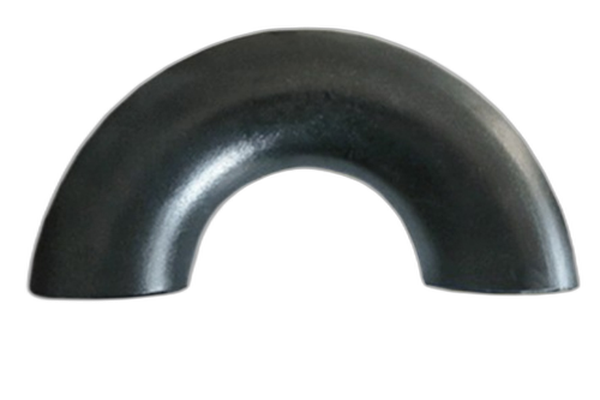
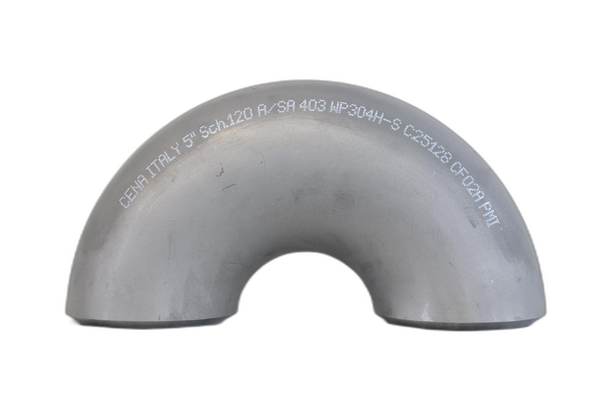
The Synbase butt weld fittings line covers the four angles a piping system actually calls for, 90° and 45° elbows in both radii, plus 180° returns, in carbon, low-alloy and stainless steel, and matches each grade to the application it serves, not to the catalogue.
The selection logic below is the part that fragmented supplier pages leave out: which alloy belongs in which line, and why. A 316L stainless steel elbow and an A234 WPB carbon elbow share the same B16.9 dimensions but answer completely different service applications.
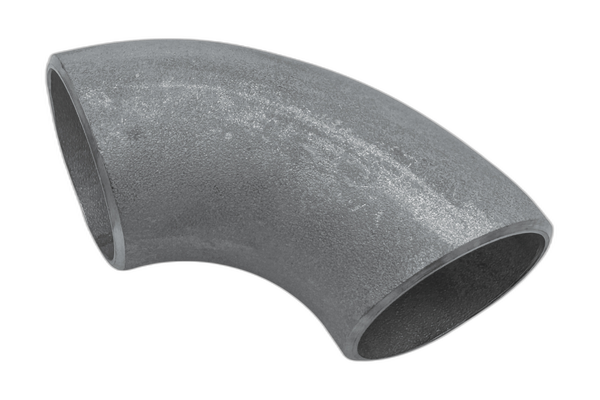
Read the Atlas by service, not by price. A234 WPB carries most moderate-temperature carbon-steel piping; the moment the line runs cold, WPB is the wrong answer and A420 WPL6, impact-tested at −46 °C, is the only carbon grade that qualifies. Where temperature and creep climb, the low-alloy WP11/WP22 Cr-Mo grades take over; where the threat is corrosion, A403 304/316L answers it. For 3A sanitary and food-grade tube-OD weld elbows, polished or unpolished, with tangents, see our sanitary fittings line, which is dimensioned to tube OD rather than NPS.
Wall thickness is set by schedule, and the two material families use different schedule systems. Specify them separately so the elbow wall matches the pipe at the weld:
Every dimension below is reconciled against the ASME B16.9-2018 copy in our standards library and cross-checked against the published reference tables; cells we can’t confirm to the standard are left blank rather than guessed. This is the spec sheet most import suppliers either omit or publish with copy errors, here it’s, correct, in one place.
| NPS | O.D. (mm) |
Center-to-End 90° LR — A (mm) |
Center-to-End 45° — B (mm) |
90° SR — A (mm) |
|---|---|---|---|---|
| 2 | 60.3 | 76 | 35 | 51 |
| 3 | 88.9 | 114 | 51 | 76 |
| 4 | 114.3 | 152 | 64 | 102 |
| 6 | 168.3 | 229 | 95 | 152 |
| 8 | 219.1 | 305 | 127 | 203 |
| 10 | 273.0 | 381 | 159 | 254 |
| 12 | 323.8 | 457 | 190 | 305 |
| 16 | 406.4 | 610 | 254 | 406 |
| 24 | 610.0 | 914 | 381 | 610 |
Welding ends are beveled to B16.9 as standard; ASME B16.25 bevels apply only to transition, heavy-wall or bore-matching welds.
Import suppliers either omit or publish broken dimension tables, the 3-inch and 4-inch rows are a common place to find a transposed wall or center-to-end value. A single wrong cell becomes the buyer’s problem at fit-up, because a 152 mm take-off cut to 102 mm leaves a gap no welder can close. Synbase reconciles every value to the ASME B16.9-2018 copy in its library before it ships, so the table you plan a refinery or production spool from is the table the elbow was actually made to.
Any formed elbow has an uneven wall, and that’s by design, not defect. When the bend is formed, the outer radius, the extrados, stretches and thins, while the inner radius, the intrados, compresses and thickens; the wall sit near nominal at the centerline.
where WT is the starting wall, OSR the outside radius and CLR the centerline radius.
Where elbows actually lose wall in service is at the extrados, and the dominant mechanism is flow-accelerated corrosion (FAC), not simple abrasion, carbon-steel bends develop locally thinned areas at the outer radius where turbulence strips the protective oxide layer. That’s why a long radius is specified for aggressive flow, why heavier schedules buy service life on slurry returns, and why erosion-critical bends are sometimes built with a weld-overlaid inner wall.
For a wrought B16.9 elbow, this is a forming-tolerance fact rather than a buyer risk: the standard require that the finished wall, after forming, including the extrados, still meets the specified minimum, so the elbow you receive carries its rated schedule. The in-service question is separate. ASME B31.3 para. 304.2.1 sets the governing rule: a bend must retain, after forming, a wall thickness at least equal to the minimum required for the straight pipe under the same conditions.
Unlike most suppliers, who treat an elbow as a commodity with a single wall number, Synbase specs the extrados as the design-limiting wall, because that’s where flow-accelerated corrosion removes roughly 0.1–0.5 mm per year on an aggressive line. The trade-off isn’t always obvious: a heavier schedule or a longer radius buy service life, while over-constraining the wall adds cost a clean-service line may not need. We confirm the choice against the B31.3 minimum, then quote it.
Elbows are hot-formed by mandrel push or hydraulic press from SMLS or welded mother pipe, then sized, beveled and heat-treated to the grade requirement. The forming route matters to the buyer:
A mandrel-pushed elbow holds tighter wall control around the extrados.
A hot-pressed elbow suits heavy wall and large diameter.
The part of the process that decides whether an EPC buyer trusts an unknown mill is the testing and the paperwork behind it, so that’s where Synbase puts its evidence.
Every heat is verified by chemistry, tensile and, for low-temperature grades, Charpy impact, with NDT by ultrasonic, magnetic-particle or dye-penetrant per the order, plus positive material identification (PMI) and hardness on alloy grades.
Each shipment carries an EN 10204 3.1 mill test certificate, and the heat number on that certificate matches the number stamped on the fitting.
| Tensile | 415–585 MPa |
| Yield | ≥240 MPa |
| Elongation | ≥22% (longitudinal) |
| Hardness | ≤197 HB |
For pressure piping most specifications require 3.1 as the minimum. Forged mill certificates are a documented problem in the steel supply chain, which is exactly why the heat-number-to-stamp match and third-party inspection matter.
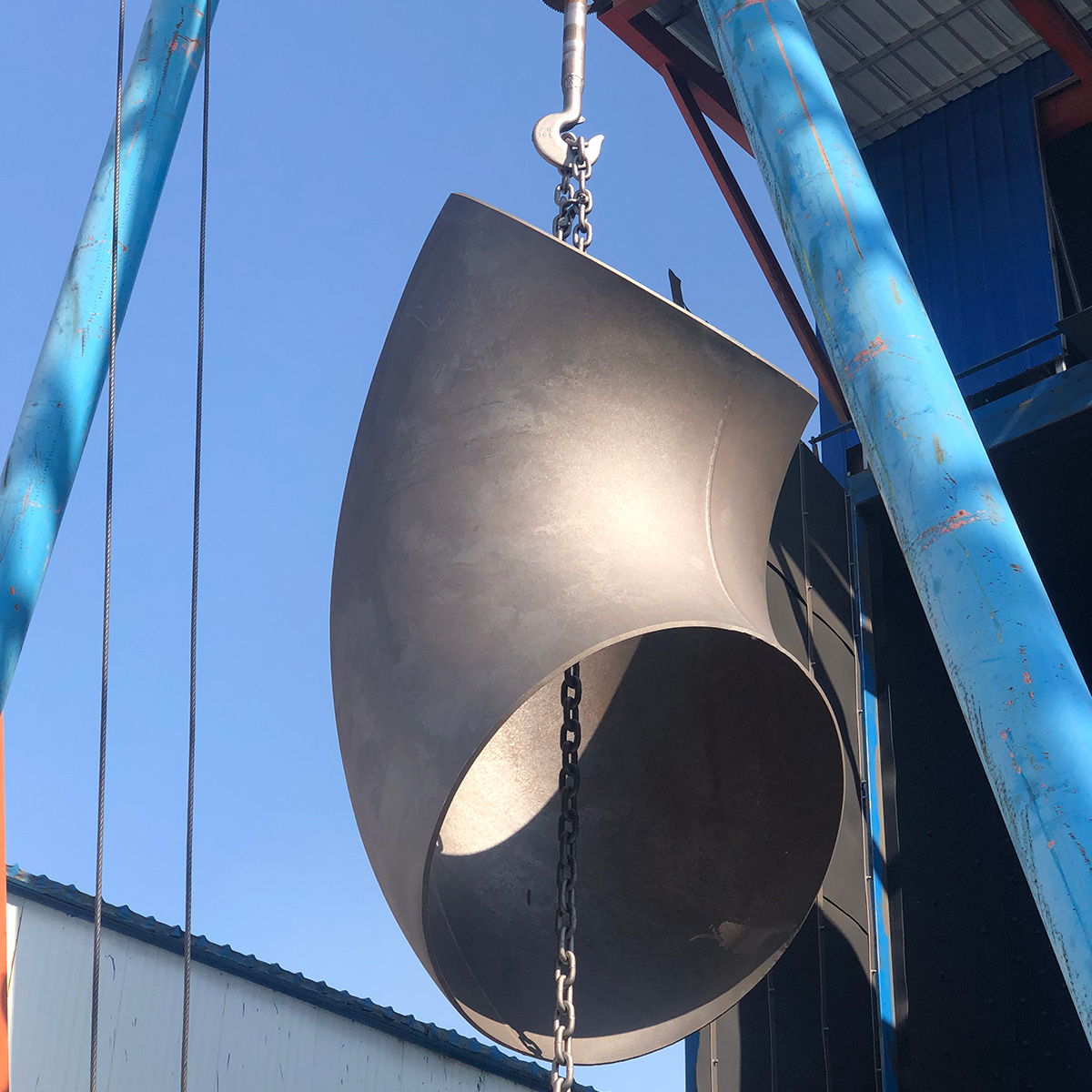 FIG.01 / Butt Weld Elbow
Synbase is the pipeline-fittings enterprise of the ISO 9001-certified E-CHENG STEEL GROUP, with supply-chain integration through partners including Baosteel and Tianjin Pipe (TPCO) — entities a buyer can verify independently rather than a logo wall. The same mill that makes these elbows also supplies the matching API 5L line pipe and OCTG they weld into, so a project can source pipe and fittings to one set of mill test certificates.
Line-pipe spools.
Exchanger and boiler circuits.
Lines in A420 WPL6.
Slurry returns where extrados life is the design driver.
The honest procurement question isn’t “import or domestic” — even US distributors stock approved-import A234 WPB, so imported fittings are already the market norm. The real question is total landed cost against verified quality, and it has a clear breakeven.
Landed cost is a stack, not a sticker price. Mill-direct unit price, minus the distributor margin layer, plus ocean freight, plus import duty — including any antidumping/countervailing duty — plus customs and last-mile. Mill-direct wins as order volume rises toward container and project quantities; a domestic distributor wins for a small, urgent, break-bulk pull. We tell buyers which side of that line they are on.
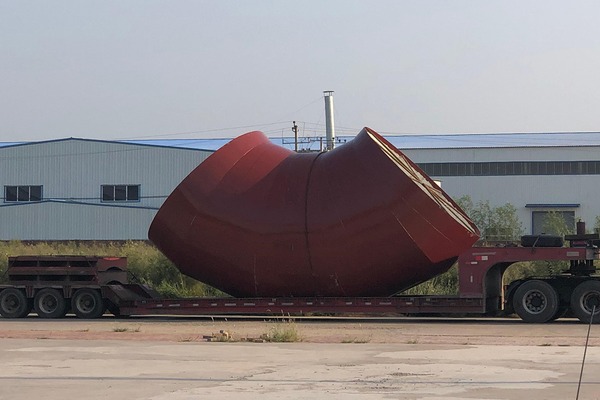
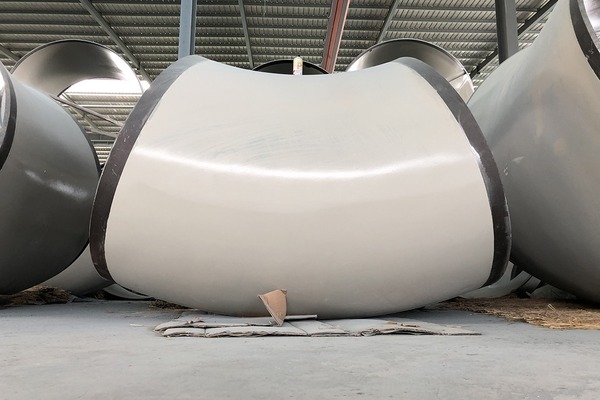
A long radius (LR) elbow has a center-to-end radius of 1.5 × NPS; a short radius (SR) elbow is 1.0 × NPS. LR gives lower pressure drop and gentler flow (K ≈ 0.75 vs ~0.9 for a 90°); SR saves a third of the face dimension for tight routing. Use LR for flow and erosion, SR for space.
1.5 × the nominal pipe size, measured to the centerline. An NPS 4 LR 90° is 6 in; an NPS 6 is 9 in; an NPS 8 is 12 in.
For a 90° elbow the take-off equals the center-to-end dimension, which equals the radius, so a 4 in LR 90° take-off is 6 in. (A 45° take-off isn’t the published center-to-end figure; derive it from the offset geometry.)
Both are wrought carbon-steel grades under ASTM A234 for moderate-to-high temperature service; WPC has a slightly higher tensile range than WPB. WPB is the common default; WPC is specified where the matching pipe grade calls for it.
Either. Synbase supplies both SMLS (seam-free) and welded butt weld elbows; both conform to ASME B16.9 dimensions and carry the same EN 10204 3.1 traceability. The SMLS construction is typically specified for higher-pressure, sour, or cyclic service, where engineers don’t want a longitudinal weld seam running through the body of the fitting in addition to the circumferential weld at each end.
No. Nominal pipe size is a designation, not the measured OD, for example NPS 4 has an OD of 114.3 mm (4.5 in). Match the elbow OD and schedule to the pipe, not the NPS number alone.