Send Your RFQ to Synbase Steel
Prefer to send drawings, BOMs or attachment lists by email? sales@synbasesteel.com

Manufacturer-direct weld neck flanges in carbon steel, stainless and alloy – forged, dimensionally certified, and shipped with third-party-verifiable material certificates.
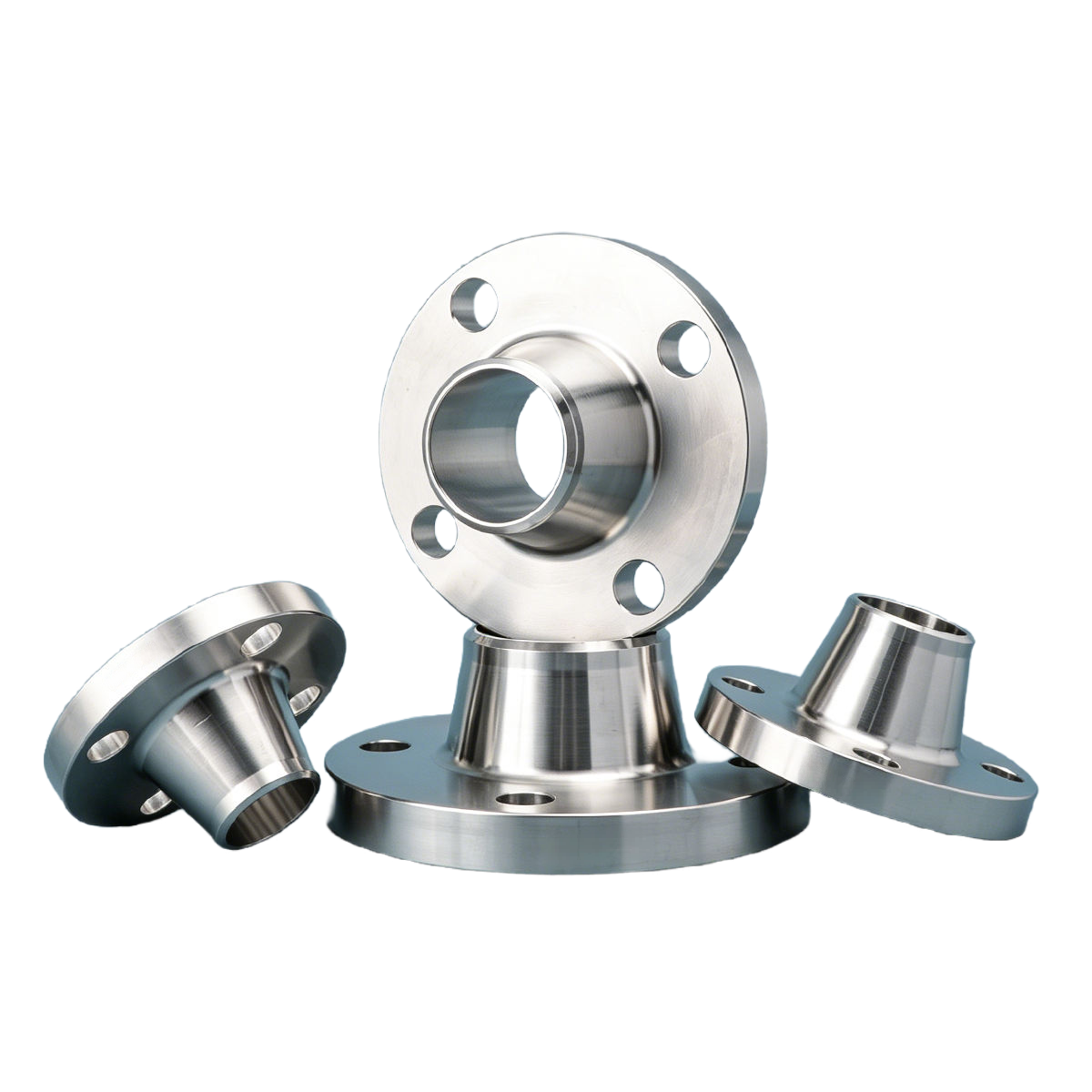
A weld neck flange is the pipe flange engineers reach for when a joint has to survive pressure, temperature, and cyclic load without leaking. Its long tapered hub is butt-welded to the pipe, moving the weld away from the flange face and spreading stress gradually into the pipe wall. Synbase Steel forges these flanges to ASME B16.5 and EN 1092-1 – and backs every shipment with the material traceability that high-stakes projects demand.
Request a Quote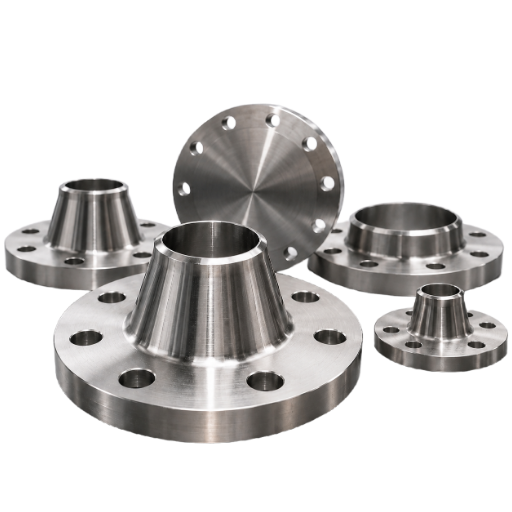
On a normal 150# water line, an installing contractor will usually argue for a cheaper slip-on flange – and on eng-tips, that is exactly the debate that plays out thread after thread. A slip-on is cheaper to buy and more forgiving to align. The problem appears later: in high-pressure, high-temperature, or vibrating service, the slip-on’s two fillet welds become a fatigue and leak path.
The root cause is that a flange is rarely specified against its full service envelope. A pressure class alone is not a rating: ASME B16.5 pressure-temperature ratings fall sharply as temperature rises and vary by material group. The weld neck flange answers this with geometry – the tapered hub provides a smooth transition that reduces stress concentration.
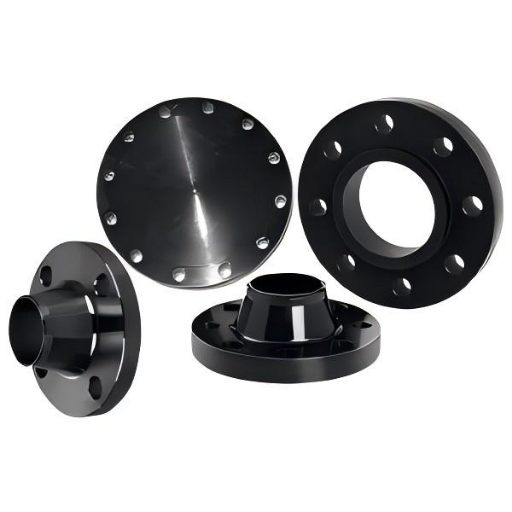
Synbase forges weld neck pipe flanges across the full ASME B16.5 and EN 1092-1 range so the connection is matched to the service, not to whatever was cheapest on the shelf. Below, you get the data to specify correctly the first time – dimensions, materials, face types, and the certification that proves what you received is what you ordered.
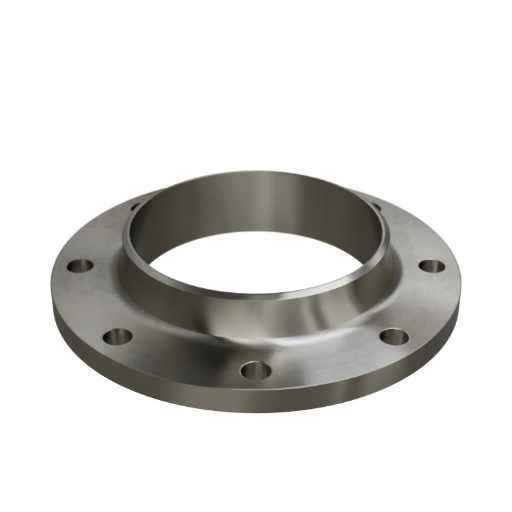
Engineers selecting a weld neck flange need three decisions to line up: pressure class, material grade, and face type. 304 stainless steel that is perfect for a corrosive chemical line is the wrong call for a 540°C steam header, where a chromium-molybdenum alloy belongs. Our range below maps the common configurations; every item is forged, not cast, and machined to ASME B16.5 dimensional tolerances. Match the steam-line material with Cr-Mo alloy seamless pipe.
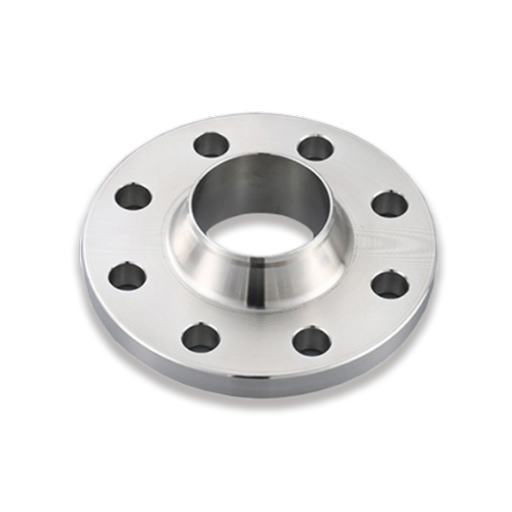
The standard process-piping flange. Its raised face concentrates gasket seating stress for a reliable seal.
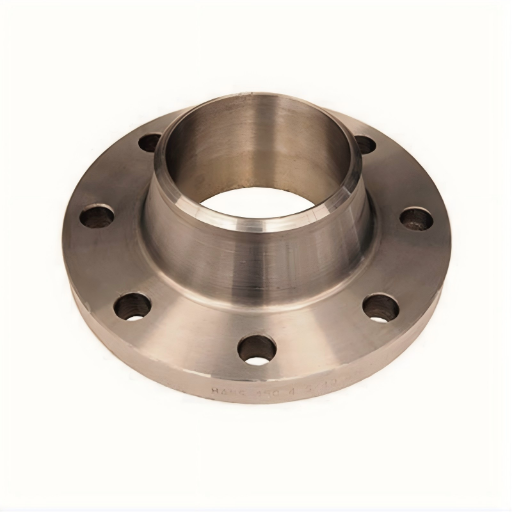
Metal ring gasket crushed into a machined groove — the choice for high-pressure, high-temperature oil & gas service.
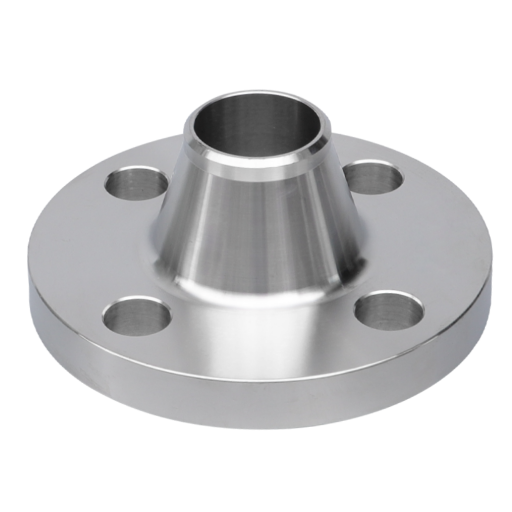
Also called nozzle flanges — a one-piece construction for pressure-vessel and tank nozzles that replaces a flange-plus-pipe weld.
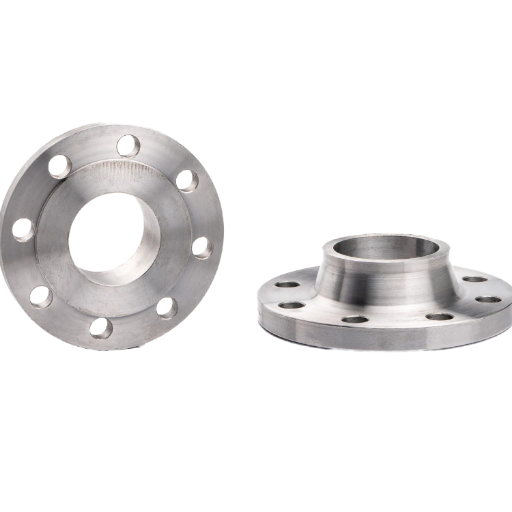
Reducing weld neck flanges connect two pipe sizes; orifice weld neck flanges carry pressure-tap holes for flow metering.
Too often this decision defaults to whatever the last job used. Match the grade to media, temperature, and corrosion instead — the highlighted row is the most common fit for general process service.
| Material (ASTM) | Type | Best-fit service | Temp guide | Corrosion |
|---|---|---|---|---|
| A105 | Forged carbon steel | General process, water, oil, non-corrosive gas | ≤ 425°C | Low (coat/paint) |
| A182 F304 / F304L | Austenitic stainless | Mild corrosive, food, water treatment | cryogenic–550°C | Good |
| A182 F316 / F316L | Austenitic stainless (Mo) | Chlorides, marine, aggressive chemical | cryogenic–550°C | Superior (pitting/crevice) |
| A182 F11 / F22 | Cr-Mo alloy steel | High-temp steam, refinery, power | up to ~600°C | Moderate (high-temp strength) |
On a typical process application, what’s the difference between A182 F304 and A182 F316? It comes down to molybdenum. A182 F316 has about 2 to 3 percent Mo to make it resistant to chloride pitting and crevice corrosion that A182 F304 does not; if you’re dealing with coastal piping, or even chloride-carrying lines in a plant, that element makes A182 F316 the only acceptable choice, even with the price increase.
Use this as a quick reference for maximum non-shock working pressure by class. Values shown are for material Group 1.2 (common forged grades, including A105) in bar; ratings for other material groups differ, and ASME B16.5-2020 governs. The pattern to internalize: a flange’s class is a rating at a temperature, and that rating falls as the line gets hotter.
| Temperature | Class 150 | Class 300 | Class 600 | Class 900 | Class 1500 | Class 2500 |
|---|---|---|---|---|---|---|
| -29 to 38°C | 19.8 bar | 51.7 bar | 103.4 bar | 155 bar | 259 bar | 431 bar |
| 200°C | 13.8 bar | 48.6 bar | 97.2 bar | 146 bar | 243 bar | 405 bar |
| 400°C | 6.5 bar | 34.7 bar | 69.4 bar | 104 bar | 174 bar | 290 bar |
| 538°C | 1.4 bar | 5.9 bar | 11.8 bar | 17.7 bar | 29.5 bar | 49.2 bar |
Source: ASME B16.5-2020, Group 1.2 ratings (values via Engineering ToolBox).
A weld neck flange’s bore must match the connecting pipe’s inside diameter, which is set by the pipe schedule — not just the nominal size. A 6″ Schedule 40 flange and a 6″ Schedule 80 flange have different bores. So specify NPS and schedule (or wall thickness) when you request a quote; on a long weld neck the neck ID equals the nominal pipe size unless you state otherwise. Sending us the line spec avoids the most common re-order on flange purchases.
This is the honest question every buyer asks when comparing weld neck versus slip-on flanges. Simply declaring that the weld neck “wins every time” does little to build trust. Use this chart to compare these choices in pressure capability, weld types, and relative installation costs — for easy comparison by service and system requirements. Review slip-on flanges when pressure and fatigue duty allow. For small-bore high-pressure service, compare socket weld flanges.
| Criterion | Weld Neck | Slip-On | Socket Weld | Lap Joint |
|---|---|---|---|---|
| Weld type | 1 full-penetration butt weld | 2 fillet welds | 1 fillet weld | Stub-end butt + loose flange |
| Pressure suitability | Class 150–2500 (all) | ≤ Class 300 typical | ≤ Class 1500, small bore | Low–moderate |
| Fatigue / cyclic | Highest resistance | Low | Moderate | Low–moderate |
| Radiography possible | Yes (full butt weld) | No | No | Yes (stub weld) |
| Relative cost | Higher | Lowest | Low | Higher (two parts) |
| Best fit | High P/T, cyclic, critical | Low-P utility lines | Small-bore high-P | Frequent dismantling, costly alloy pipe |
Take it this way: below approximately Class 300 on mild or non-critical fluids, the slip-on option will likely prove cost-effective. For any line with high cyclic thermal ranges, vibration, process corrosion, or a fluid with health implications, the weld neck provides a single, inspectable weld at an additional cost. This is the same concept applied directly in the pressure table above. Lifecycle perspective; exact savings depend on service, inspection regime, and downtime cost.
A weld neck flange replaces the two fillet welds of a slip-on with a single full-penetration butt weld that can be radiographed — the cost saving shows up over the line’s life, not on the purchase order.
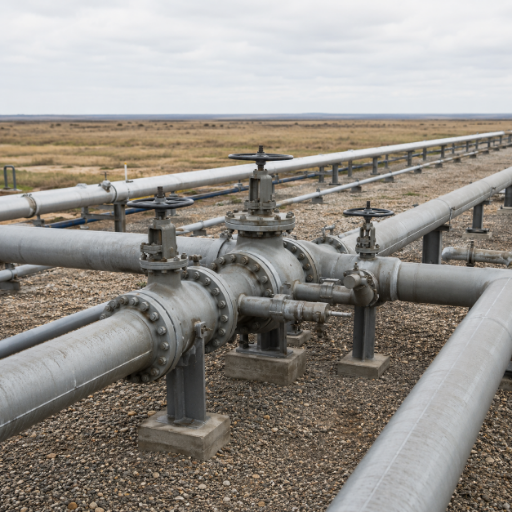
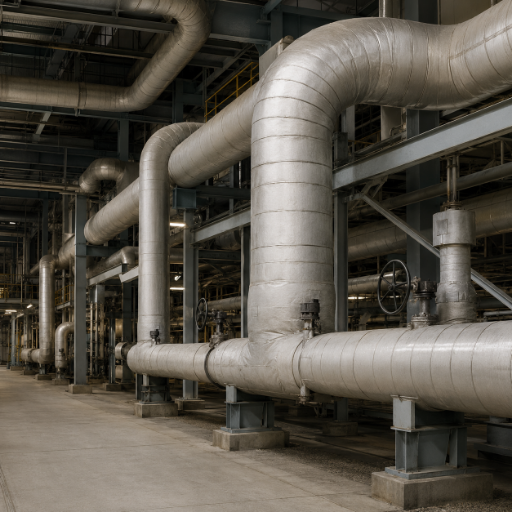
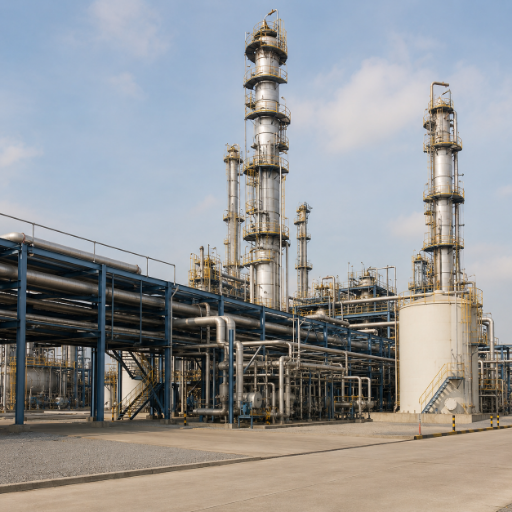
It takes context to make flange specification choices effective. An A105 weld neck,RTJ, flange might be perfect on a gas transmission line but would be overkill for an open loop cooling tower or service water supply- and an A182 F304 could be a fine choice in a clear water or chemical feed system, and would readily pit out in a coastal environment. These four applications showcase where each is justified.
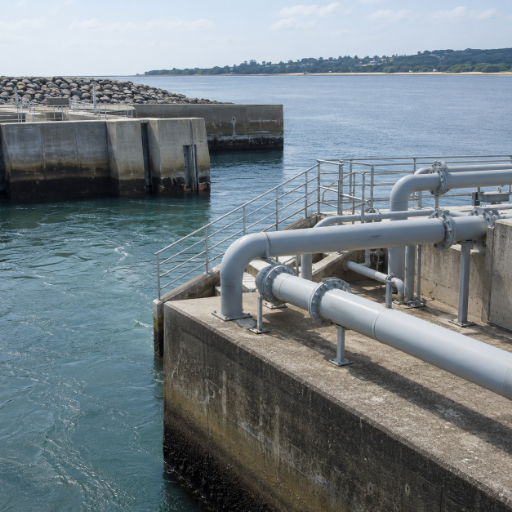
Here is the objection no flange supplier likes to name: on engineering forums, buyers warn each other that imported material can arrive with mill certificates that do not match the metal in the box — “blatantly fraudulent mill certs,” as one documented eng-tips thread puts it. If you have ever audited a supplier and found the certificate could not be reproduced, you know why this is the first question, not the last.
We address that concern with unmatched product traceability, not just with a lot of fancy lettering on the wall. Every weld neck flange we deliver comes with an EN 10204 3.1 material certification proving the relationship between the physical item and the original steel heat number, and that MTC details the chemistry and mechanical results, as well as any subsequent heat treatment. This is not a random selection, it follows a careful trace all the way from material melting to the finished product, and upon your request, we will coordinate the process so that a third party inspection service – SGS, BV, Lloyd’s, which ever agency you may specify – will verify the contents.
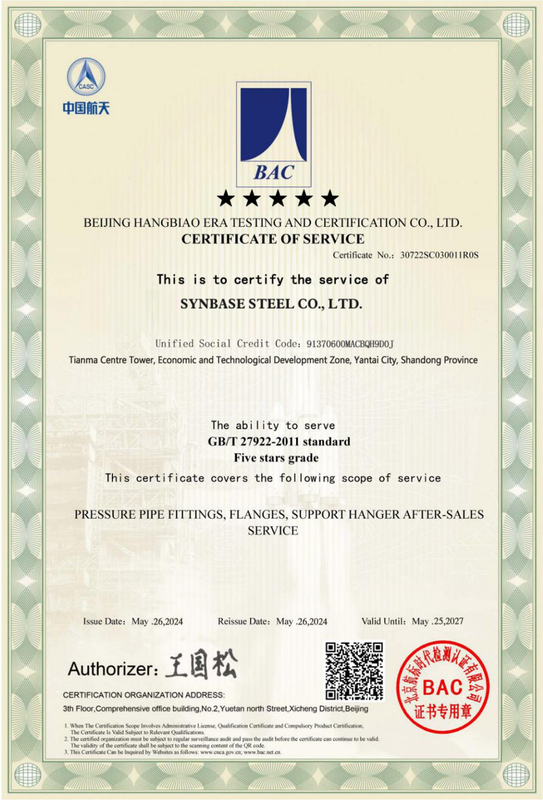
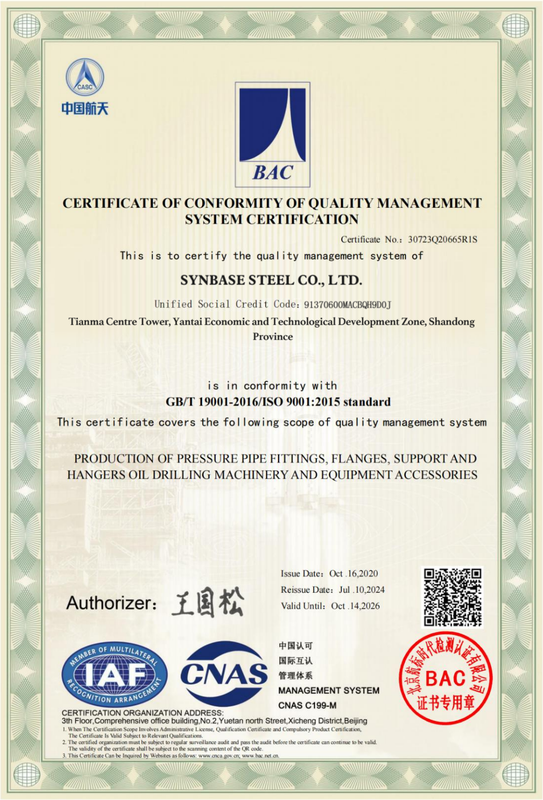
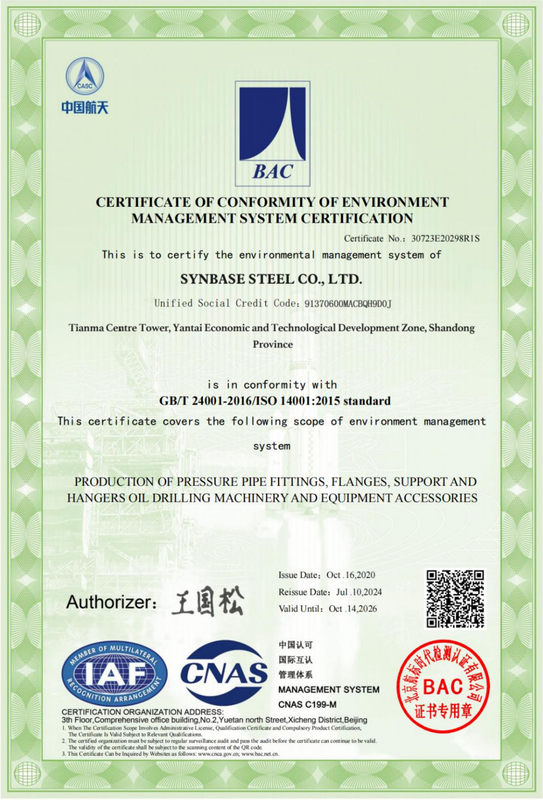
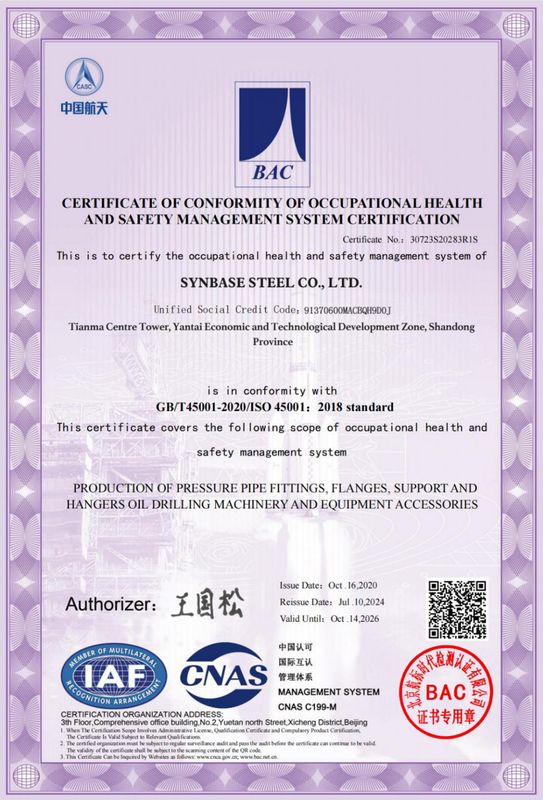
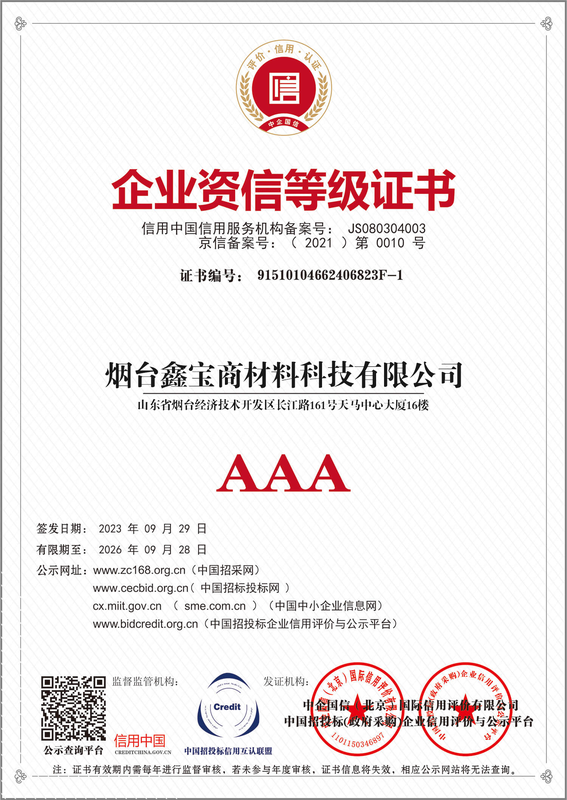
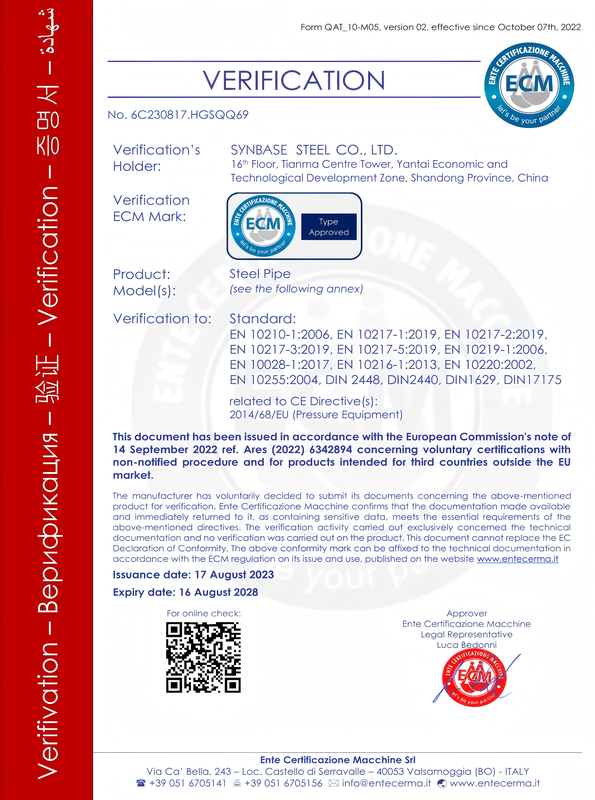
“We treat the heat number as the product’s fingerprint. Before a weld neck flange leaves the plant, its 3.1 certificate is matched against the forging’s heat and the dimensional inspection record — and if a customer wants a third party to witness that, we’d rather they did. A certificate you can’t verify isn’t worth printing.”
That detailed traceability is built upon our substantial and integrated manufacturing capabilities. Synbase Steel operates as the core flange and fittings enterprise of E-CHENG STEEL GROUP, a member of the China Iron and Steel Association, with production backed by long-standing supply relationships with mills including Baosteel, Tianjin Pipe (TPCO), Ansteel and TISCO for specialty alloy material. For a busy project manager assessing a new supplier, that is a potent combination – group-scale forging capacity complemented by the demonstrable proof of product compliance that can stand up to scrutiny.
A weld neck flange is a pipe flange with a long tapered hub that is butt-welded directly to the pipe. The taper distributes stress from the flange into the pipe wall, and the single full-penetration weld can be radiographed - which is why weld neck flanges suit high-pressure, high-temperature, and cyclic service rather than simpler slip-on or socket weld flanges.
Employ a weld neck on high pressure (generally above Class 300) systems, on high temperature services (steam, etc.), and on services where vibration, thermal cycling or the media is potentially harmful. A slip-on is a valid cost saving on a non-critical low pressure utility line, so service conditions matter more than line size.
Standard grades include ASTM A105 Forged Carbon Steel for general purpose applications; A182 F304/F316 for service where corrosion is an issue, particularly to chlorides with the F316; and A182 F11/F22 Chrome Molybdenum Alloy for service at higher temperature on steam lines or refinery applications. Synbase stocks all three grades, certified to EN 10204 3.1.
Dimensions per ASME B16.5 (NPS 1/2"-24", Class 150-2500) and EN 1092-1 for European PN rating; forging material is according to ASTM/ASME A182 and A105. The earlier designation for B16.5 is ANSI B16.5. Mill documents to be supplied against EN 10204 3.1.
Read the certificate in order: confirm the heat number on the flange matches the certificate, then check that chemistry, mechanical properties, and heat treatment meet the ordered grade. Synbase ties each 3.1 certificate to a traceable heat number and can arrange third-party witness inspection (SGS, BV, Lloyd's) so an independent party verifies the document before shipment.
NPS, pipe schedule (for bore dimension), pressure class, material grade, face type (RTJ, FF or RF), standard/National standards, number of pieces and any additional inspections, documentation etc. In the full line spec, we are able to give a firm price and lead time in a single quote.