Send Your RFQ to Synbase Steel
Prefer to send drawings, BOMs or attachment lists by email? sales@synbasesteel.com

Mill-direct forged slip-on flanges in carbon steel, stainless steel and alloy — sized from 1/2 in instrument lines to 144 in waterworks headers, with the material certification and heat-number traceability that project specifications demand.
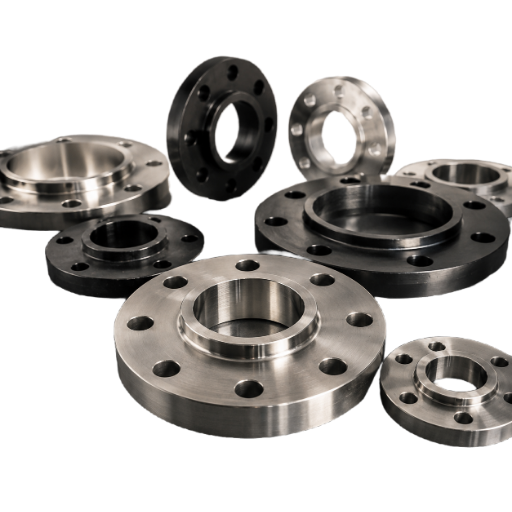
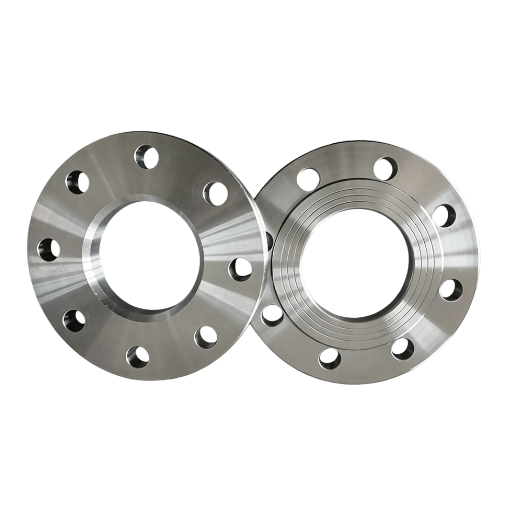
A slip-on flange slides over the pipe end and is fixed with two fillet welds — one around the outer diameter and one inside the bore — which is exactly why fabricators reach for it: the pipe length stays adjustable until the final weld, and no bevel preparation is needed. That same simplicity is why the slip-on flange remains the default for low- and medium-pressure process lines. Sourcing is where it stalls.
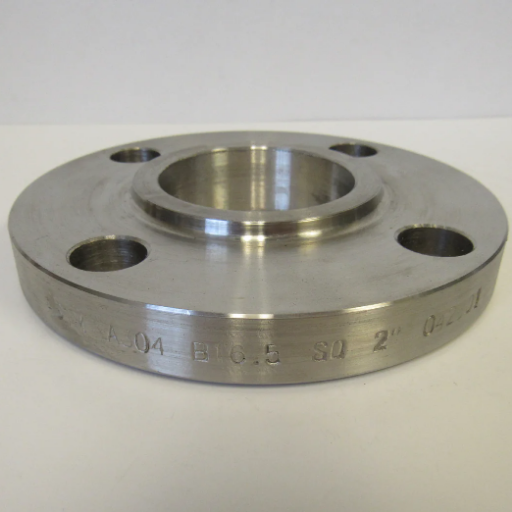
Synbase builds these flanges at the forging source rather than pulling them from a shelf. That means the size you specify, the grade you specify, and the certificate your inspector expects all come from one place — including the large-diameter and alloy work that distributors quietly subcontract. What follows gives you the dimensions, the comparison logic, and the AWWA classes to specify correctly.
That stall usually starts the same way. A distributor stocks standard ANSI sizes in carbon steel, but the line calls for a 36 in AWWA ring flange, an A350 LF2 low-temperature grade, or a stainless F316 face, and the lead time triples while the quote routes back to a mill. Then quality control asks for an EN 10204 3.1 certificate tied to the actual heat, and the catalog supplier cannot produce one.
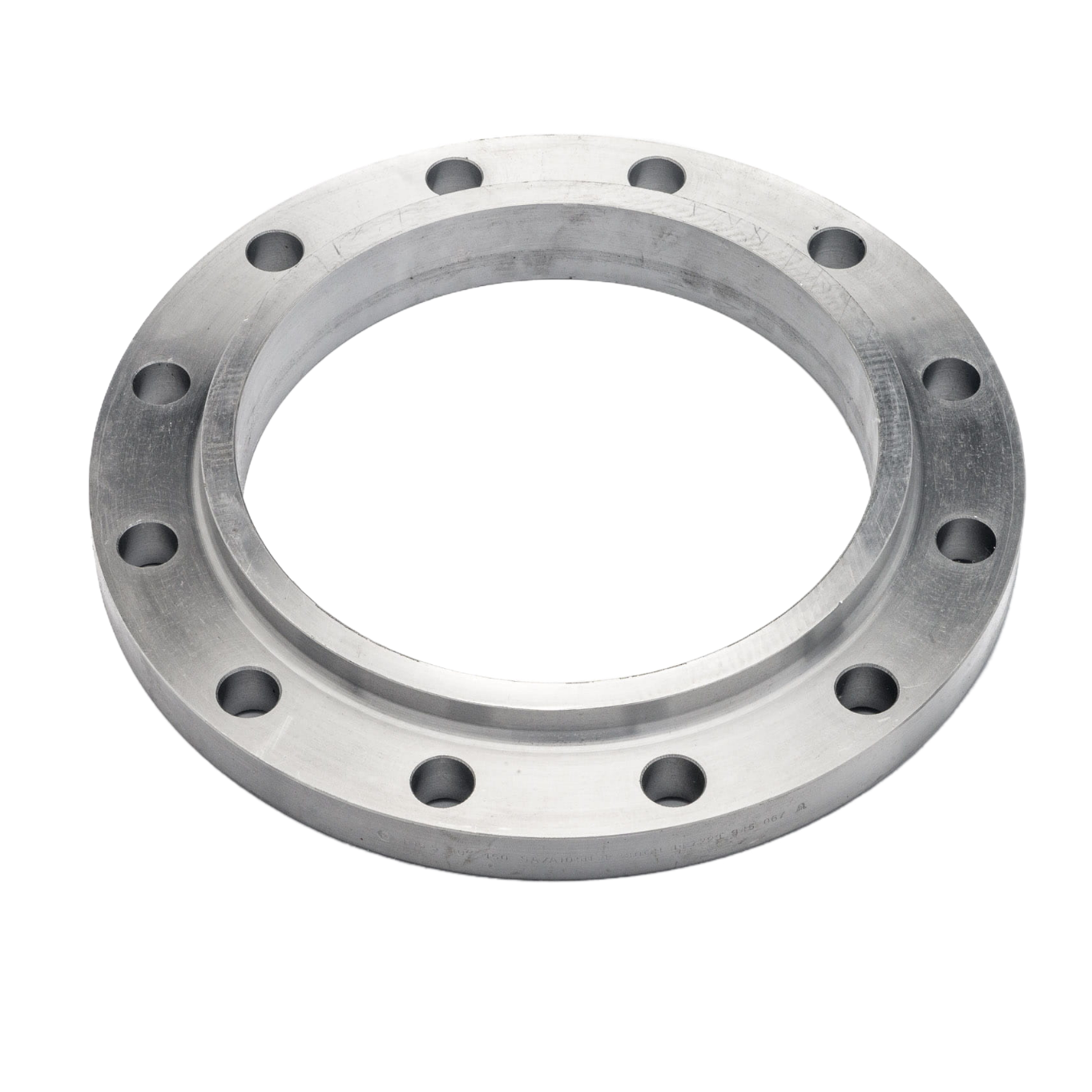
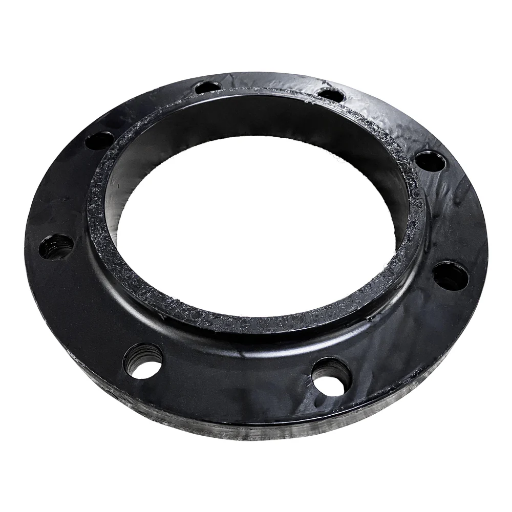
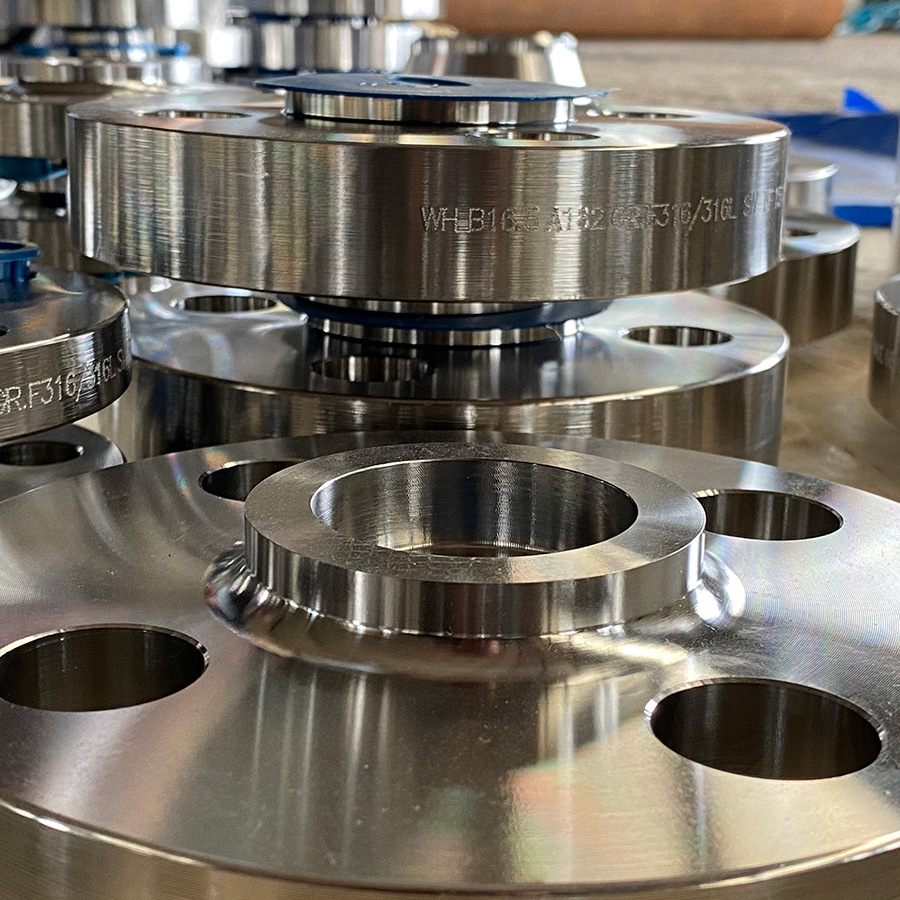
Every slip-on flange we forge shares the same hubbed body — a low-profile hub that reinforces the connection without the tapered neck of a weld-neck flange — but the sealing face, material grade, and pressure rating change with the service. We carry four face configurations and three material families, drilled to ASME B16.5 templates so the flange mates with standard bolting and gaskets on site.
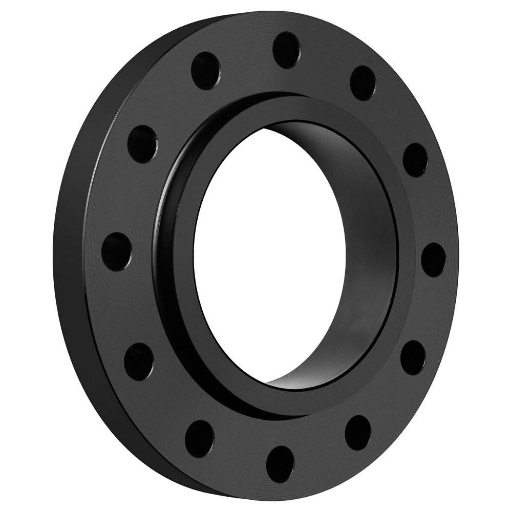
The most common configuration: a small raised face concentrates gasket load for a tighter seal in oil, gas, and process lines.
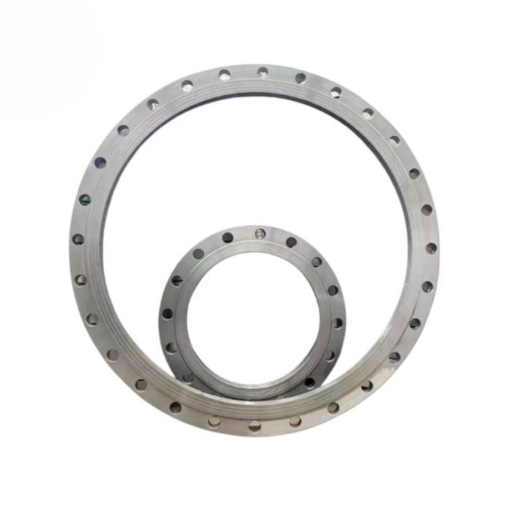
Full-face gasket contact for mating with cast-iron equipment, pumps, and valves that cannot tolerate raised-face point loading.
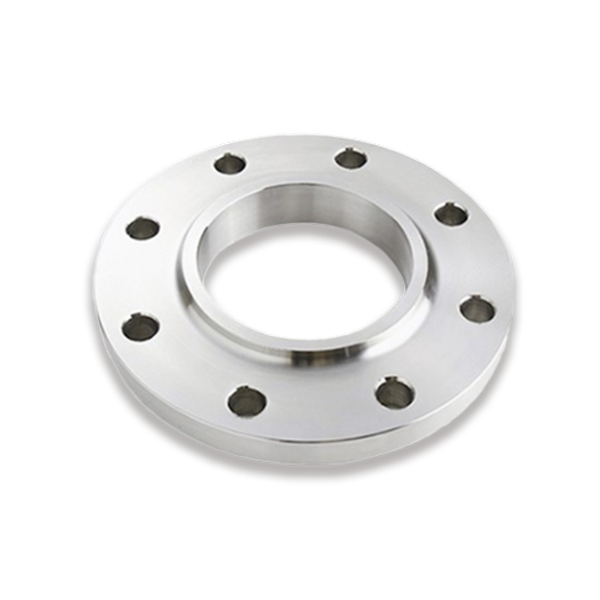
A precision ring-joint groove machined into the face for high-pressure and high-temperature seals where a metal ring gasket is required.
Flat-faced ring flange for waterworks service, 4 in to 144 in, drilled to AWWA C207 Class B/D/E/F patterns.
Material selection follows the medium and temperature rather than habit. Carbon steel ASTM A105 covers most ambient process and water service. For sub-freezing lines where impact testing matters, ASTM A350 LF2 is the grade to specify. Corrosive media and potable-water hygiene call for ASTM A182 F304 or F316 stainless, with F316 adding molybdenum for chloride-bearing fluids. Because the slip-on is forged rather than cast, grain flow follows the contour of the part — which is why a Class 600 RTJ slip-on holds its rating under cyclic load.
Below, the ASME B16.5 Class 150 figures give the reference dimensions for common pipe sizes — outside diameter, bolt count, bolt diameter, and bolt-circle diameter. Your gasket and bolting schedule depend on these numbers, and they stay identical across slip-on, weld-neck, and blind flanges of the same class and size.
| NPS | Flange OD (in) | No. of Bolts | Bolt Dia. (in) | Bolt Circle (in) |
|---|---|---|---|---|
| 2″ | 6 | 4 | 5/8 | 4-3/4 |
| 4″ | 9 | 8 | 5/8 | 7-1/2 |
| 6″ | 11 | 8 | 3/4 | 9-1/2 |
| 8″ | 13-1/2 | 8 | 3/4 | 11-3/4 |
| 10″ | 16 | 12 | 7/8 | 14-1/4 |
| 12″ | 19 | 12 | 7/8 | 17 |
| 16″ | 23-1/2 | 16 | 1 | 21-1/4 |
| 24″ | 32 | 20 | 1-1/4 | 29-1/2 |
ASME B16.5 covers 1/2 in to 24 in; sizes above 24 in follow ASME B16.47 Series A/B. Full Class 150–2500 charts ship with the dimensional datasheet.
| If your service is… | Face | Suggested material | Typical class |
|---|---|---|---|
| Ambient water / utility | FF or RF | A105 / A516 Gr.60 | 150 |
| Oil & gas process line | RF | A105 | 150–600 |
| Sub-zero / cryogenic | RF | A350 LF2 | 150–300 |
| Corrosive / potable | RF | F304 / F316 | 150–300 |
| High-pressure metal seal | RTJ | A105 / alloy | 600–2500 |
| Large-diameter waterworks | FF ring | A516 Gr.60 | AWWA B/D/E/F |
Those material and class choices carry a direct cost consequence — which is the next thing most engineers and project managers weigh against the alternative flange types.
On the bench, engagement depth is what separates a sound slip-on joint from a leak. Standard practice inserts the pipe so its end sits about one pipe-wall thickness plus 1/8 in back from the flange face, leaving room for the internal fillet weld without choking the bore. Both welds carry the load. Skipping the inside weld to save time is the single most common field failure we see on returned joints — the external fillet eventually cracks under service load, especially on cyclic lines.
An honest answer to "which flange?" is that a slip-on is the right call more often than spec sheets suggest — but not always. A weld-neck flange transfers stress into the pipe through its tapered hub and butt weld, so it belongs on high-pressure, high-cycle, and high-temperature lines. A lap-joint flange rotates freely over a stub end, which earns its place where frequent disassembly or dissimilar-metal isolation matters.
Its main advantage as a type of flange is the fit for low- and medium-pressure applications: the slip-on wins on installation speed and cost wherever the service stays low to medium pressure — the welding and material saved per joint is significant, and on a non-critical line that is usually the only factor that matters. Forcing a costlier weld-neck or blind flange onto a low-pressure, non-stress-critical line is wasteful; forcing a slip-on onto a critical high-stress line is the specification mistake fabricators warn about on engineering forums.
Read across one row at a time against your line's pressure and duty cycle, and the choice resolves itself. A slip-on flange wins when pressure and cycle counts stay moderate, saving considerable welding labor and pipe material per joint versus heavier weld-neck or lap-joint connections that the service does not warrant — and that describes most piping in the field. Where impact toughness at temperature, higher pressure, or high cycle counts come into play, the slip-on cannot safely serve. Our dimension table above lists common slip-on sizes; we match custom sizes on request.
| Factor | Slip-On | Weld Neck | Lap Joint |
|---|---|---|---|
| Welds required | 2 fillet welds | 1 butt weld + bevel | 1 fillet (to stub end) |
| Pressure suitability | Low–medium | Low–very high | Low–medium |
| Fatigue / cyclic load | Moderate | High | Moderate |
| Install time | Fast (no bevel) | Slower (fit + bevel) | Fast |
| Relative material cost | Lower | Higher | Higher (2 parts) |
| Disassembly | Cut to remove | Cut to remove | Bolt off, rotate |
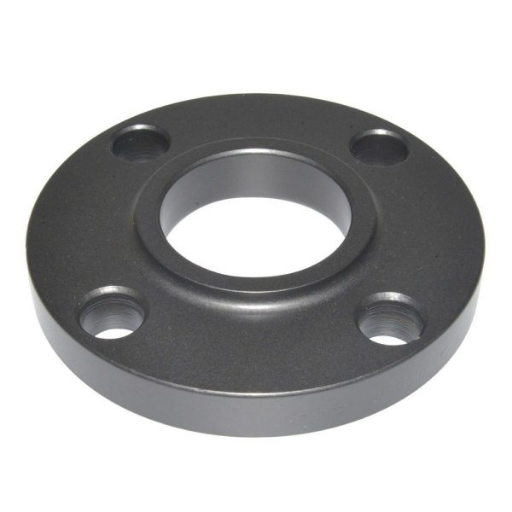
Waterworks pipe rarely fits the ASME B16.5 size range — municipal headers, intakes, and treatment-plant piping run far past 24 in, which is why the American Water Works Association maintains AWWA C207 for steel pipe flanges in waterworks service from 4 in through 144 in (100 mm through 3,600 mm). Within that standard sit flat-faced ring-type slip-on flanges and blind flanges, sorted into four pressure classes. This is the work distributors typically cannot hold in stock — and where mill capacity decides the project.
| AWWA C207 Class | Working pressure | Bolt pattern | Typical use |
|---|---|---|---|
| Class B | 86 psi | Own pattern | Low-pressure water rings |
| Class D | 175 psi (4–12 in); 150 psi larger | Matches 150# ASME B16.5 | General waterworks |
| Class E | 275 psi | Heavier ring | Higher-pressure mains |
| Class F | 300 psi | Heaviest ring | Pump & surge service |
Because Class B and Class D share the bolt pattern of the 150# ASME B16.5 flange, a C207 Class D ring drops straight onto standard 150-pound bolting — a practical detail that keeps mixed waterworks-and-process systems buildable. Every AWWA C207 flange is flat-faced by design, made from steel with a minimum 50,000 psi tensile strength and 0.35% maximum carbon, commonly ASTM A516 Gr.60 plate or A105 forgings.
Manufacturing method becomes significant at large sizes. For anything over approximately 78 in inside diameter and beyond available plate width, AWWA C207 allows construction to be accomplished using up to four segments with every welded interface passing through 100 percent radiographic testing. That capacity to forge or weld large rings rather than pull them from inventory is at the heart of how Synbase competes on a waterworks bid.
If a buyer is weighing C207 against C228, the split is material, not geometry. C207 covers carbon-steel ring and blind flanges for standard municipal water service, balancing strength against cost. C228 sets minimum thickness and corrosion-allowance rules for stainless-steel flanges, for service where rust resistance outweighs cost. For most municipal water distribution, C207 Class D carbon steel is the workhorse; reach for C228 stainless only when the chemistry demands it.
Specifying a large-diameter waterworks line? Get the AWWA C207 Class D spec sheet →Synbase slip-on flanges move through four service environments, and the value in each is the same: one supplier covering the standard sizes, the large-diameter rings, and the certification in a single shipment. Municipal water distribution takes AWWA C207 ring flanges for transmission mains and treatment plants. Oil and gas gathering and low-pressure process lines take RF carbon-steel slip-ons to ASME B16.5. Power generation takes cooling-water and auxiliary piping. And across EPC contracts, it is the flange package that ships complete rather than in back-ordered pieces.
As a member company of the E-CHENG STEEL GROUP pipeline-equipment cluster, Synbase draws on production bases for steel pipe, fittings, flanges, and valves, plus the group's warehousing and logistics network. That integration is why the company supplies national oil companies, large energy projects, and EPC contractors across more than 100 countries — and why a single RFQ can cover an entire flanged-system scope instead of one size at a time.
Building a multi-size flange package? Request a project quote →On large-diameter waterworks rings we forge or cut the body, fit and weld the segments, then put every weld through full radiography before the flange ever sees a coating line. That inspection record is what a water authority's engineer signs off on — so we treat it as part of the product, not an extra.
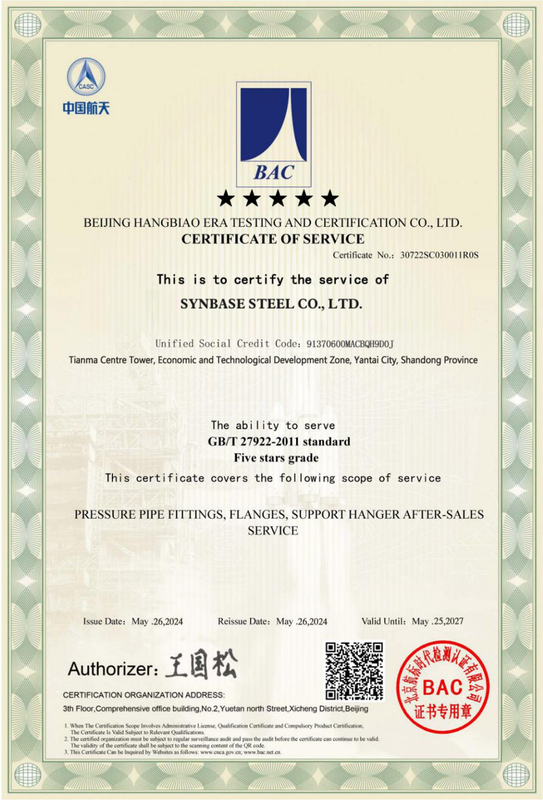
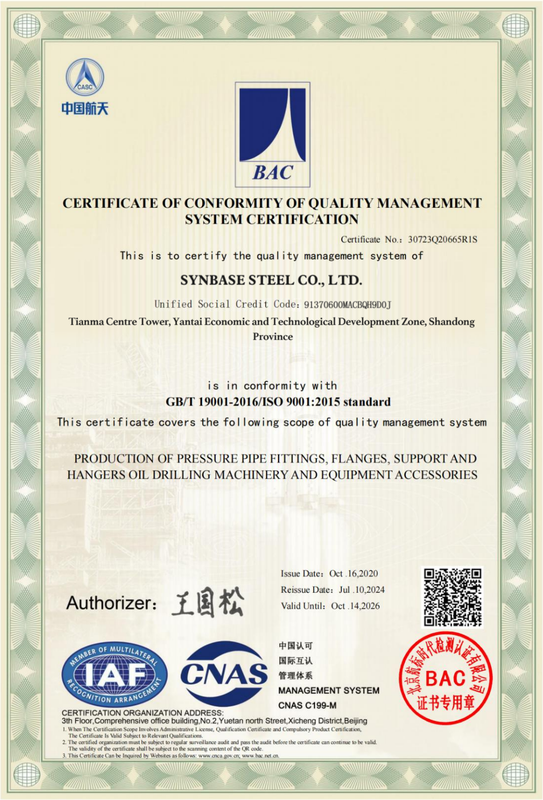
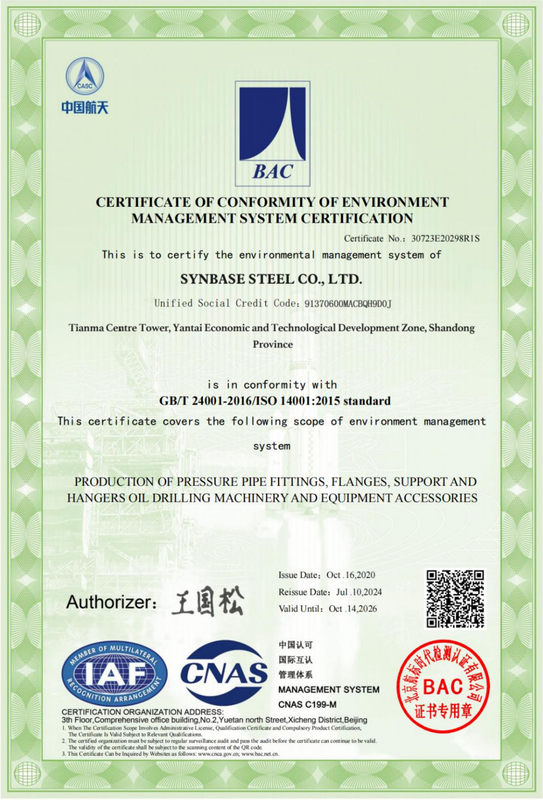
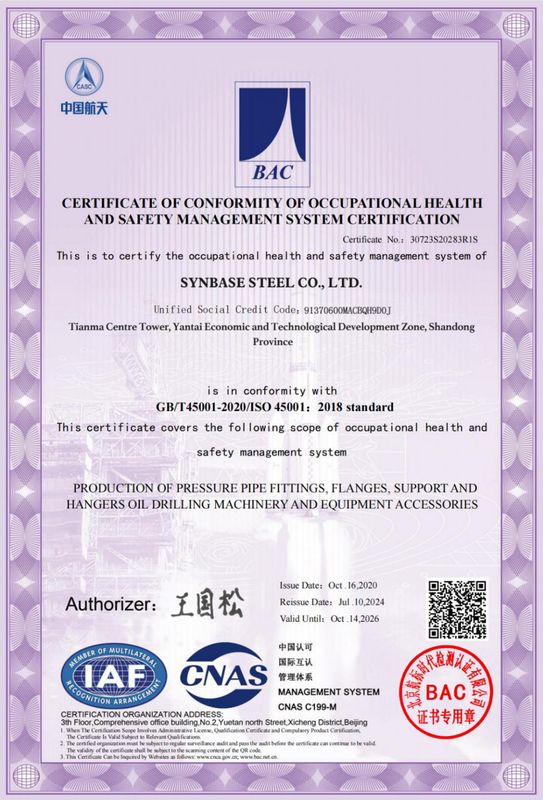
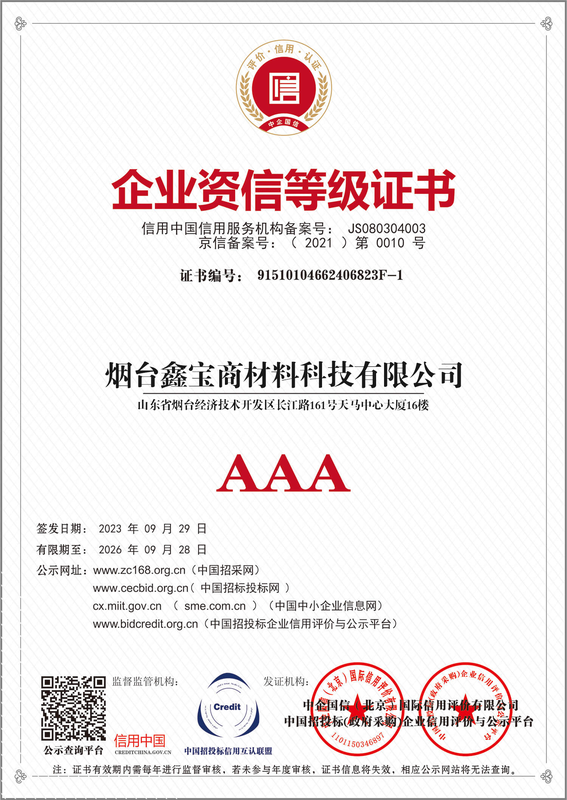
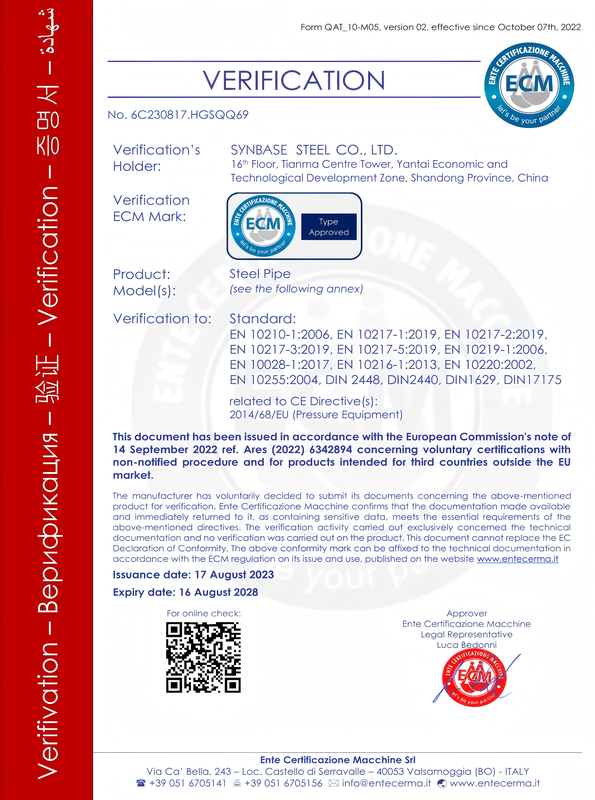
As far as our project-grade flange buyers are concerned, the certificate bears weight like the steel itself. Petrochemical, power, offshore, and water-authority specifications routinely require an EN 10204 3.1 Material Test Certificate from the producing mill. It records the actual chemistry and mechanical properties measured on the supplied heat. What worries international buyers, though, is a counterfeit or edited MTC carrying a false heat number. Synbase answers that two ways: the 3.1 certificate is issued against the real heat, and — as AWWA C207 itself mandates — every flange is stenciled with its size, material, class, and heat number, so the part on site traces back to the paperwork on file.
Choose a slip-on flange for low- and medium-pressure water, utility, and process lines where speed and cost matter and the joint sees no high cyclic or thermal stress. Specify a weld-neck flange instead for high-pressure, high-temperature, or fatigue-loaded lines.
An AWWA C207 Class D ring flange is flat-faced carbon steel rated 175 psi in sizes 4 to 12 inches and 150 psi in larger sizes. It is commonly forged from ASTM A105 or cut from ASTM A516 Gr.60 plate. Because its bolt pattern matches the 150-pound ASME B16.5 flange, a Class D ring bolts straight onto standard 150# components, which keeps mixed waterworks and process systems buildable.
C207 covers carbon-steel ring and blind flanges for standard waterworks; C228 covers stainless-steel flanges where corrosion resistance is the priority.
Yes. A slip-on flange takes two fillet welds, one outside and one inside the bore. Both share the load, so the internal weld must not be skipped.
Synbase forges slip-on flanges from 1/2 inch to 24 inches to ASME B16.5 in Class 150 through 2500, with larger industrial sizes to ASME B16.47 and waterworks ring flanges from 4 inches through 144 inches to AWWA C207 Class B, D, E, and F. Material options span carbon steel such as A105 and A516 Gr.60, low-temperature A350 LF2, and stainless A182 F304 and F316, and large-diameter rings are supplied as welded segments with full radiographic inspection before coating.
Minimums and lead times depend on size, grade, and certification scope. Standard carbon-steel sizes carry a lower minimum and ship faster than custom large-diameter AWWA rings that need segment welding and radiography. Send size, class, material, and quantity for a firm quote and date.