Send Your RFQ to Synbase Steel
Prefer to send drawings, BOMs or attachment lists by email? sales@synbasesteel.com

Specify the production string that fails first when it’s wrong: tubing matched to your H&sub2;S partial pressure, well depth and connection load – not a spec-dump. Every length ships from a Synbase seamless line with NACE-aware grade control and a heat-traceable EN 10204 3.1 mill test certificate.
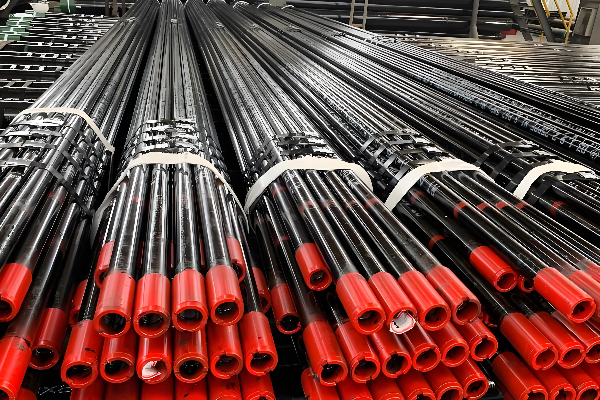
API 5CT tubing is the production string that carries oil and gas from the reservoir up to surface – the conduit that runs inside the casing, not the casing itself. API 5CT (ISO 11960) sets the chemistry, mechanical properties, heat treatment and threaded connections for both casing and tubing. What it does not do is pick the grade for you. Confirm the surrounding API 5CT casing pipe specification.
That gap is where money gets lost. The same yield strength can hide a grade that cracks in sour, high-H₂S service, and a “compliant” certificate can still be the wrong document for the well.
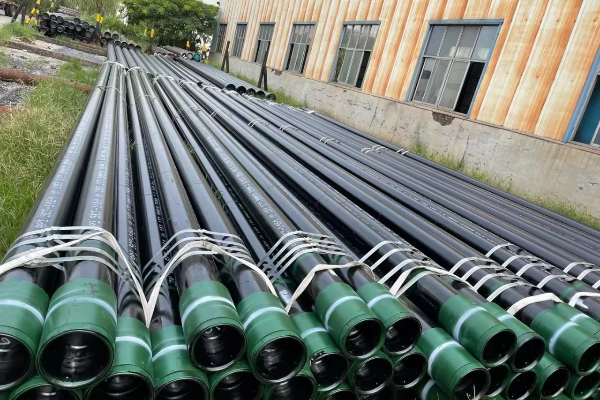
When production tubing corrodes or cracks to the point that well integrity is threatened, the fix is a workover – and a single workover commonly adds on the order of US$2 million in operating expenditure before lost production is even counted. A tubing string specified on price alone is the most expensive line item a well can carry.
Production tubing selection turns on three questions. You’ll find our explanation answers for your choices here below and every other line in this page we built around them:
Want the grade logic for your specific well?
Request a free tubing spec review(with a sample 3.1 MTC) →We include this useful reference not usually seen elsewhere online; a size-range breakdown, with each grade detailed for its yield, tensile, and hardness values – essential for your engineering calculations and RFQ responses. The honest truth is: just getting a grade with higher minimum yield doesn’t mean more production; premium P110 adds unnecessary costs unless the depth and pressure absolutely requires it.
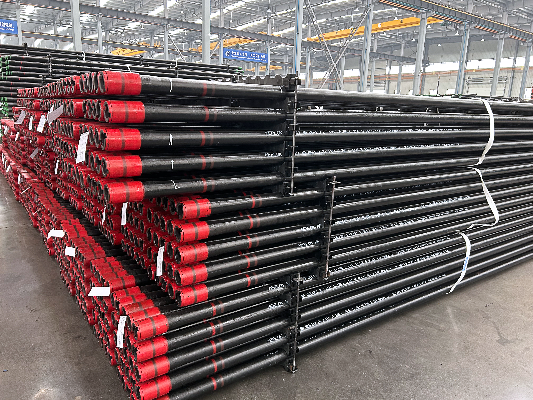
API 5CT uses seamless pipes. Our high-strength seamless steel pipe is sorted into four different groups as required by API in accordance with strengths and how the heat treatment has been applied. The groups – not the sheer minimum strength – will tell you the right use case for any steel.
| Group | Grades | Yield (ksi, min–max) | Max hardness | Where this tubing belongs |
|---|---|---|---|---|
| Group 1 | H40, J55, K55, N80-1, N80Q | 40–110 | No SSC cap (exc. N80Q) | Shallow–intermediate, sweet wells; water injection |
| Group 2 | L80-1, L80-9Cr, L80-13Cr, R95, C90, T95 | 80–110 | L80 ≤23 HRC · C90/T95 ≤25.4 HRC | Sour service (H₂S), CO₂, mild–deep wells |
| Group 3 | P110 | 110–140 | No standard SSC cap | Deep, high-pressure sweet wells |
| Group 4 | Q125 | 125–150 | Controlled (per SR) | Ultra-deep / HPHT production |
These are different products: N80 and L80 tubing both have an 80,000 psi minimum yield, but that’s where the similarity ends. Group 2 L80 is produced with a mandatory quench-and-temper and a 23 HRC hardness cap and is qualified for sour (H₂S) service; standard N80-1 has no hardness limit and isn’t. Selecting on yield alone is how sweet-service steel ends up cracking in an H₂S string.
The connection, not the pipe body, is actually where most tubing strings leak. The valid question isn’t “which is best?” but “how much strength and sealing pressure does your well need” – because a premium connection can add 30-100% to the cost of the coupling.
Over-specification wastes your budget on a shallow producer; under-specification risks a parted string or a gas leak in a sour, high-pressure well. The balancing act is real – joint strength and sealability vs. cost – and the table below shows how Synbase engineers place the three API 5CT connection types honestly.
| Connection | Joint strength | Seal / clearance | Relative cost | Specify when |
|---|---|---|---|---|
| NUE (non-upset) | Substantially below pipe body | Smaller coupling OD — clearance advantage | Lowest | Tight annular clearance, low load, shallow wells |
| EUE (external upset) | 100% joint efficient (≥ pipe body) | API thread, reliable in most wells | Moderate | The default serviceable string for most producers |
| Premium | ≥ pipe body, metal-to-metal seal | Gas-tight under bending & thermal cycling | +30–100% on coupling | HPHT, gas, sour, deviated / long-horizontal wells |
For most conventional producers, external-upset (EUE) connection is the answer: because the joint is designed stronger than the pipe, it’s 100% joint-efficiency. Upsetting thickens the pipe end before threading, which is why EUE has higher tensile capacity than a non-upset (NUE).
Unsure which connection your completion needs?
Get a free connection & makeup-torque recommendation →EUE tubing is upset (thickened) before threading over the last 127mm or so, improving its tensile and pressure capacity at the connection. NUE is priced slightly lower; but has fewer strengths than the EUE version, so the value of its annular clearance should be compared with its cheaper price. Choose make-up torque to API 5C1/5C5 and verify connection sealability to ISO 13679; add pup joints to space-out the string – Synbase provides couplings and pup joints with the same heat traceability as the tubing.
Here’s the trap that rejects more OCTG deliveries than any other: a tubing string that meets API 5CT isn’t automatically qualified for sour service. The two standards set different hardness limits, and that gap is exactly where sulfide stress cracking starts.
Once the H&sub2;S partial pressure crosses roughly 0.05 psi, grades without a hardness cap – J55, standard N80, P110 – become candidates for sulfide stress cracking. The internal pressure rating no longer tells the whole story; the metallurgy does.
API 5CT permits L80 up to 23 HRC, while NACE MR0175 / ISO 15156 cap carbon and low-alloy steel at 22 HRC (237 HBW) for sour service. That single point of hardness is why an “API-compliant” L80 can still be rejected on a sour well – Synbase controls the heat treatment to the NACE limit, not just the API ceiling, and certifies it on the MTC.
| Grade | Sour (H&sub2;S) qualified? | Hardness control | Best-fit service |
|---|---|---|---|
| J55 / K55 / N80-1 | No | None | Sweet, shallow–intermediate only |
| L80-1 | Yes | ≤23 HRC, Q&T | Workhorse sour-service tubing |
| L80-13Cr | Yes (+ CO&sub2;) | ≤23 HRC, 13% Cr | Sour + CO&sub2; / chloride corrosion |
| C90 / T95 | Yes | ≤25.4 HRC, controlled | Deeper, higher-pressure sour wells |
| C110 | Yes (SR) | ≤30 HRC, tightly controlled | High-strength sour, HPHT |
| P110 | No (standard) | None | Deep, high-pressure sweet wells |
The selection ladder is straightforward once the trap is named: sweet wells run Group 1 grades, sour wells step to L80, and rising H&sub2;S, CO&sub2; or chloride moves the string to L80-13Cr, C90, T95 or C110. The honest version of the trade-off: higher isn’t safer – it’s a matched choice against partial pressure and temperature.
“We heat-treat L80 to the NACE 22 HRC limit, not the API 23 HRC ceiling, and we verify every heat with hardness and impact testing before it ships. On a sour well, that one point of hardness is the difference between a tubing string that lasts the life of the well and one that cracks at the first H&sub2;S exposure.”
This is what the metallurgy research points to as well: USPTO-granted work on completing wells in deep, hot and corrosive reservoirs (e.g. US 4,057,108) confirms that controlled tubing metallurgy, not strength alone, governs whether a tubing string survives sour, high-temperature service.
Many misunderstand three tubular products used in our industry and often buy the wrong ones, squandering the procurement process. API 5CT covers the jointed downhole production tubing. API 5L applies to line pipe used on the surface for the transmission of fluid, and Coiled Tubing is continuous string supplied on a reel and used for well intervention applications.
As a general rule-of-thumb: tubing which is run into the well to produce is API 5CT tubing; tubular products which are run along the surface terrain are API 5L, and when tubing is supplied on a reel to run downhole for intervention operations it’s coiled tubing.
Synbase offers API 5CT tubing and API 5L (ISO 3183) line pipe on the same Group seamless lines that produce our carbon steel seamless pipe and welded lines, ensuring a single point of purchase and delivery even for mixed project requirements.
| Attribute | API 5CT tubing | API 5L line pipe | Coiled tubing |
|---|---|---|---|
| Standard | API 5CT / ISO 11960 | API 5L (46th ed.) | API 5ST |
| Function | In-well production string | Surface gathering / transmission | Well intervention / workover |
| Form | Jointed, threaded & coupled | Jointed, welded in field | Continuous reel, 3,000–25,000 ft |
| Grades | J55–Q125 (incl. sour) | Gr B–X70 | Low-alloy HSLA |
| Connection | NUE / EUE / premium | Bevel for welding | None (continuous) |
Documentation accompanies product-it’s not an upsell; incomplete or generic documents result in failed audits and rejected deliveries. The risk of procurement non-compliance becomes a critical concern when an apparent quality system can’t substantiate a heat-specific mill certificate when called upon during an audit.
An EN 10204 3.1 certification provides the actual chemical and mechanical properties resulting from the tested heat, signed off by the mill’s independently authorized inspection representative, and is clearly traceable to the heat number stenciled on the pipe. A 2.2 document, in contrast, offers typical material properties with no traceability back to a particular heat-for oil-and-gas applications, 3.1 is essential; and at Synbase, we supply this certification in house (including third-party-witnessed 3.2 where required).
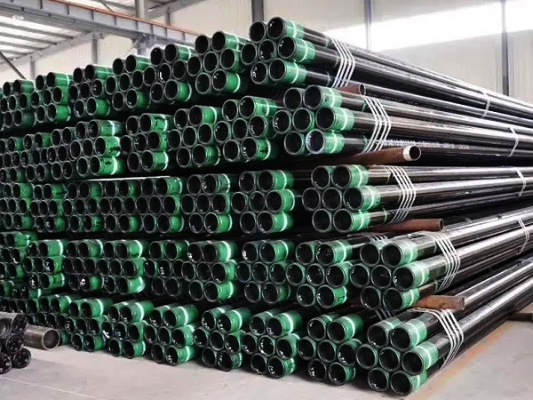
Beyond certifications, our products are supported by real manufacturing capabilities. As the pipeline-equipment core enterprise of E-CHENG STEEL GROUP, Synbase Steel operates its own seamless tube production facility-not a steel trader-to manufacture all lines of OCTG casing, tubing, pipe fittings, flanges, and valves.
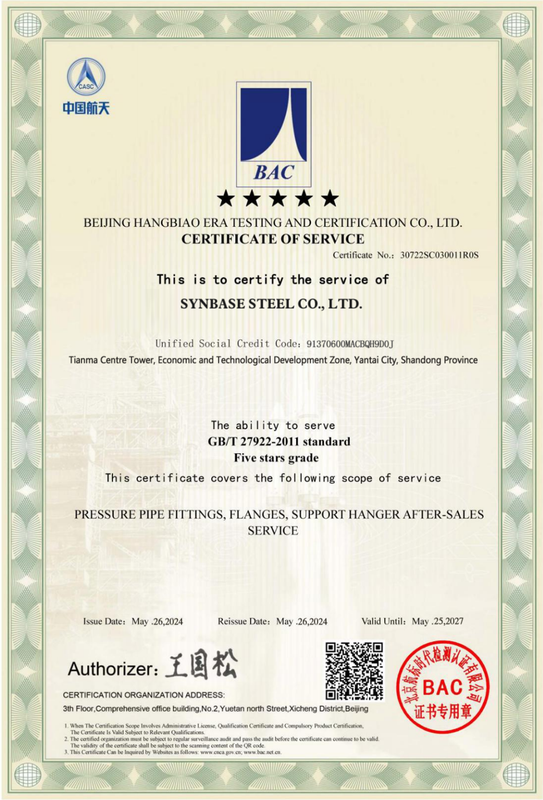
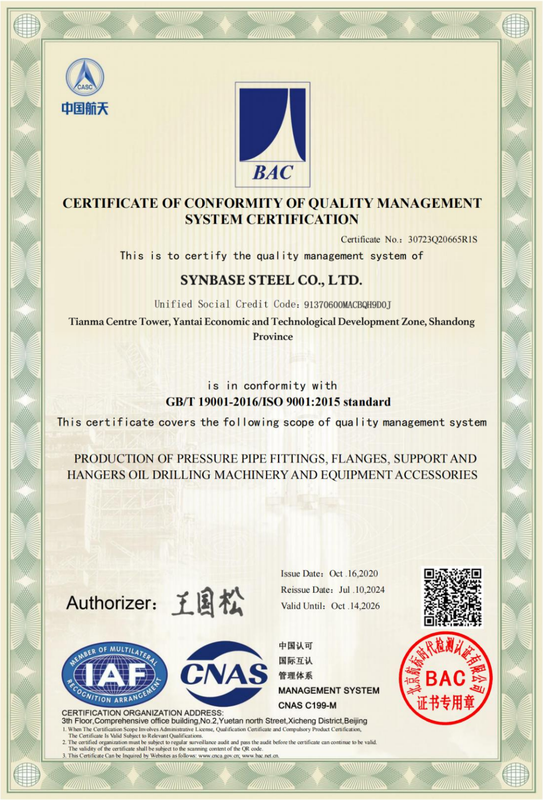
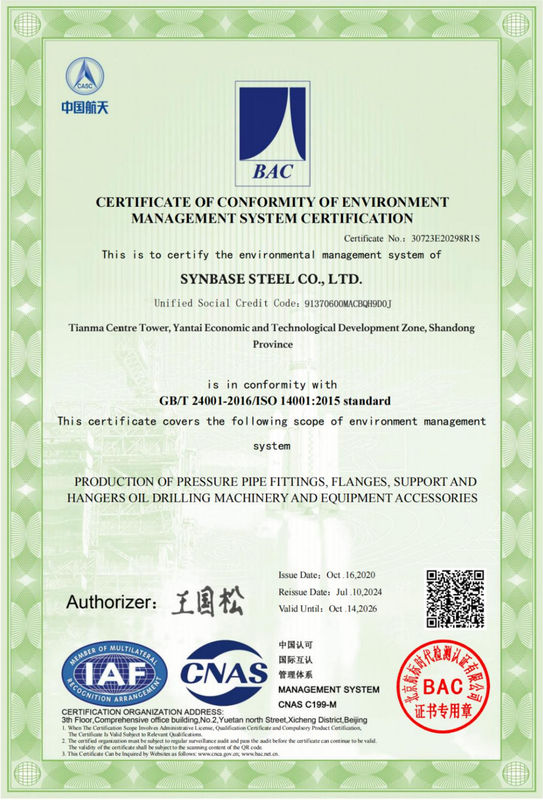
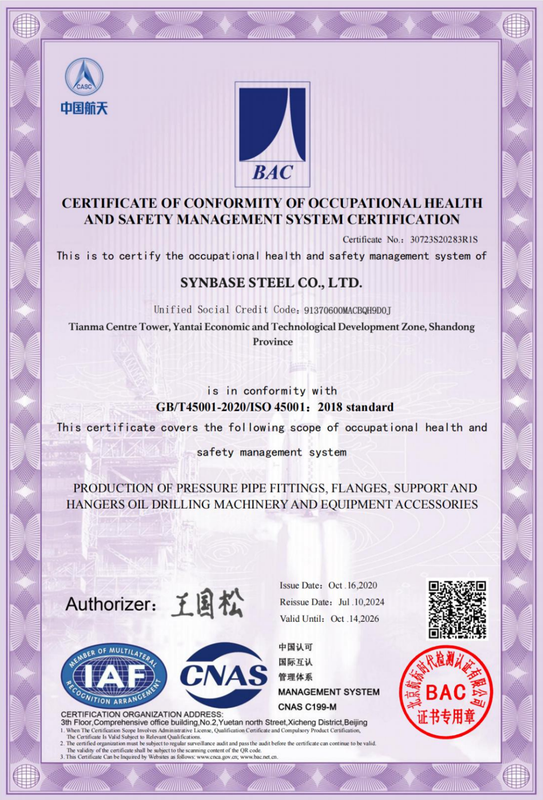
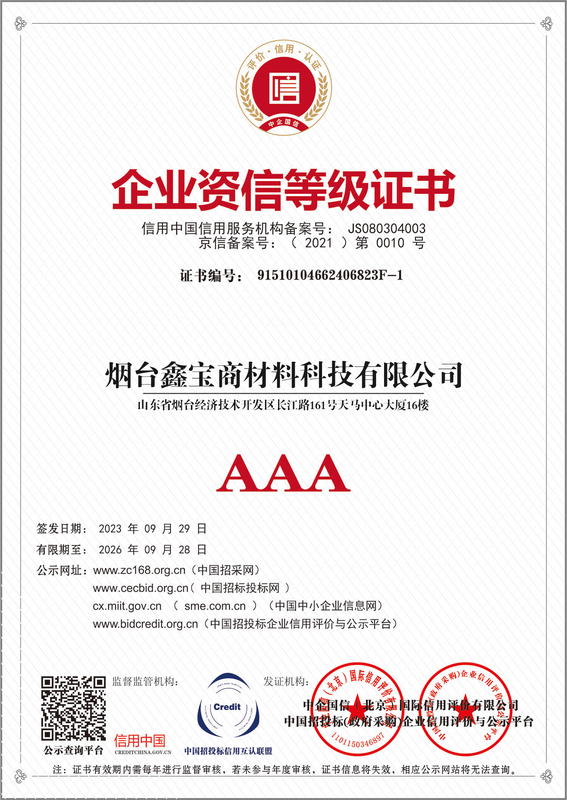
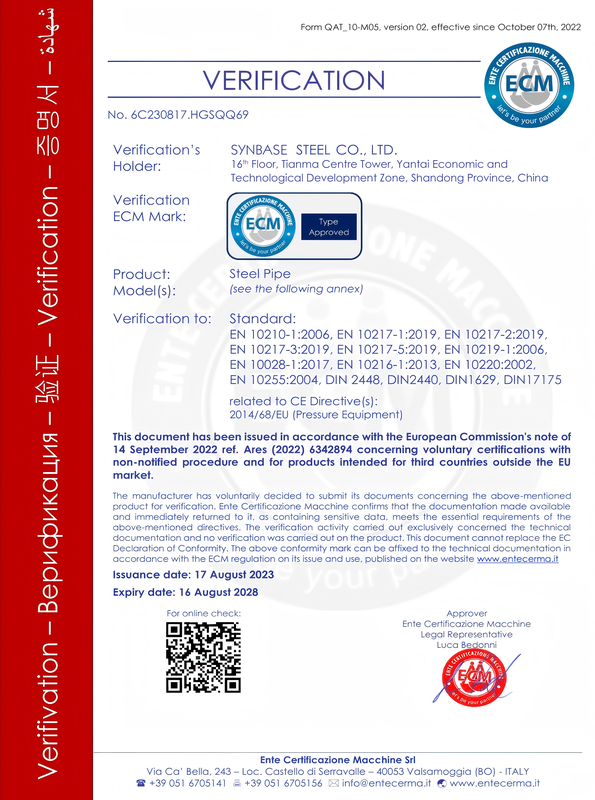
List price is the first line of the real number, not the whole number. When you buy API 5CT tubing from the mill, you get more than just a real number, but also a real document.
Industry field figure (well-workover operating-cost study); the cost of getting grade selection wrong dwarfs any per-tonne saving. Exact figures vary by well, depth and intervention scope.
Instead of giving you one, misleading number, Synbase walks through the cost-influencing decisions you’ve control over so you can plan around them:
The cheapest tonne is almost never the cheapest well. Insist that the grade matches your service requirements, the heat is covered by a 3.1 MTC, and disqualify any supplier that allows the certificate to be an option. Synbase is an end-mill; for us, every heat of tubing corresponds to its certificate.
Evaluate and match API 5CT steel grades against well depth, pressure, and sour service (H₂S) parameters.
Compute nominal mass, weight per foot, and dimensional tolerances for standard API tubing sizes and wall thicknesses.
Compare joint strength, seal clearance, and thread profiles to specify the correct tubular connection for your string.
Send Synbase your depth, pressure, H&sub2;S/CO&sub2; partial pressure, OD × wall and quantity. You’ll get a mill-direct quotation, a sample EN 10204 3.1 MTC, and an honest NACE MR0175 grade recommendation for your service.
Casing is the larger-diameter tubular cemented into a wellbore to protect and seal the formation; it’s then lined with a production string called tubing to bring oil and gas to surface. Both are addressed under API 5CT, sharing grade terminology (J55-Q125), but the production string is more commonly in the 2-3/8″ to 4-1/2″ OD with either NUE, EUE or proprietary connections.
Available within API 5CT are the following grades, ranked in descending order by minimum yield strength: H40, J55, K55, N80 (both types 1 and N80Q), L80 (including 1, 9Cr and 13Cr), R95, C90, T95, P110 and Q125. These grades are segregated into four performance groups. The members of Group 1 (H40 – N80 Type 1 and N80Q) are all suitable for sweet wells, and can be used at shallow depths in most wells. Sour service requires Group 2 (L80 all types), Group 3 (C90, T95 and C110) or Group 4 (P110, Q125), each offering greater performance in deeper, more corrosive environments.
L80-type is the most common sour service grade; it undergoes a rigorous quench and tempering treatment, which yields it to 23 HRC and provides excellent resistance to sulphide stress corrosion cracking (SSCC). The L80-13Cr subtype provides enhanced chloride and carbon dioxide resistance. C90 and T95 are available for greater depth, with C110 offering maximum strength in these critical applications. (While N80 and P110 are strength-wise adequate, they aren’t certified to be compatible withsour service; when purchasing steel for sour conditions, specify NACE MR0175 or similar, in addition to strength specifications).
External upset end (EUE) tubing is thickened prior to machining the pipe ends. EUE provides a 100% joint efficient connection that exceeds the strength of the parent pipe body. None upset end (NUE) doesn’t have upset ends, therefore it can have a substantially weaker connection; conversely, it also has the benefit of a smaller O.D. coupling, useful in tight clearances, and for a much smaller increase in price over API connections.
API 5CT describes steel tubulars intended for inside a wellbore ( OCTG ), as casing and tubing. API 5L , on the other hand, defines steels for pipe lines on the surface of the ground . They use different series of grade designations (J55 to Q125 vs. Grades A/B to X80 respectively) and are produced according to fundamentally different requirements for applications and conditions. Don’t use L80 in sour wells unless specified NACE compliant.
No – this is one of the most costly but common misconceptions regarding steel purchasing. L80 is permissible under API 5CT at levels up to 23 HRC, however, NACE MR0175 has an allowable hardness maximum of 22 HRC for sour service use. This means that while the steel will meet API requirements, it could also fail the NACE MR0175 sour service test! We require all mills to make this explicit in the MTC.
Common tubing ODs are 2-3/8”, 2-7/8”, 3-1/2” and 4-1/2” (60.3-114.3 mm), in range lengths R1 (20-24 ft) and R2 (28-32 ft). Wall thickness is confirmed against your design pressure, with pup joints available to space-out the string.
Synbase issues an EN 10204 3.1 certificate with actual heat-specific chemistry and mechanical results, traceable to the heat number on the pipe and signed by an independent mill inspector. Third-party-witnessed 3.2 certification is available where your project or class society requires it.