Send Your RFQ to Synbase Steel
Prefer to send drawings, BOMs or attachment lists by email? sales@synbasesteel.com

On a large-diameter project, the risk is rarely the pipe itself. It’s a supplier who ship against a summary sheet instead of a traceable mill test certificate, or a quoted lead time that quietly slips once the order is live.
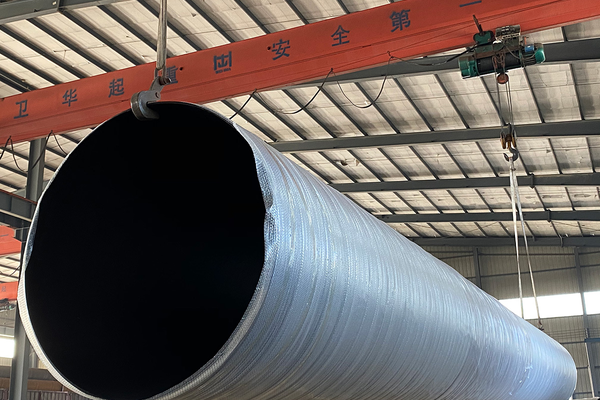
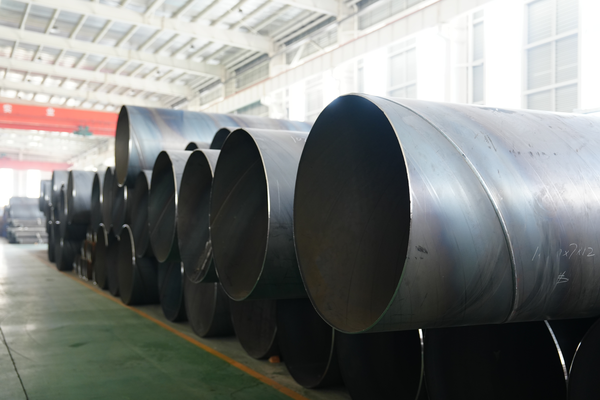
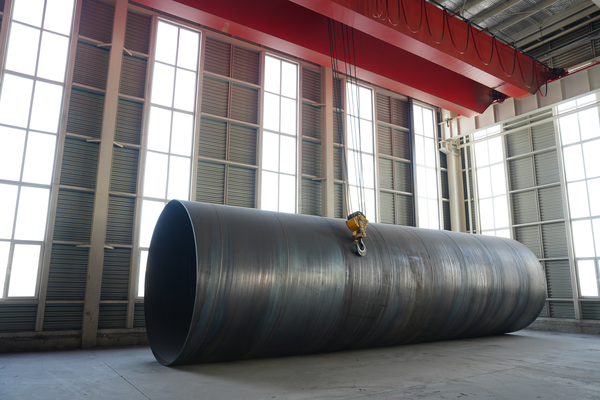
A spiral welded pipe, the SSAW (spiral submerged-arc welded) product, also written spiralweld pipe or HSAW, is formed by feeding hot-rolled steel coil in at an angle, then joining the helical seam with double-sided submerged arc welding. That one design choice is the reason a single mill can roll diameters from a few hundred millimetres up to several metres off the same strip width.
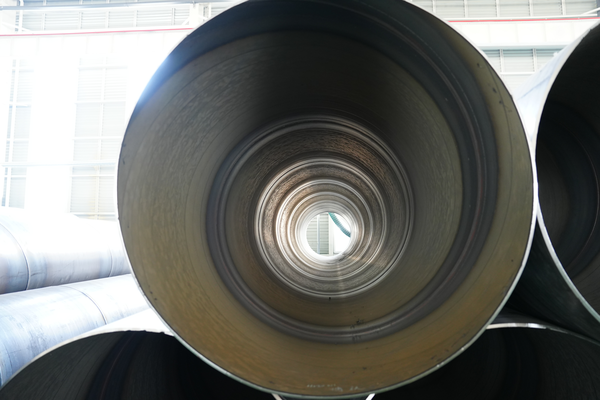
Synbase routes the whole decision: which weld process fits your pressure and wall, which grade and standard your spec calls for, which coating matches the service, and how the order get inspected and documented before it leaves the mill. Every claim below carries a standard number or a sourced data point.
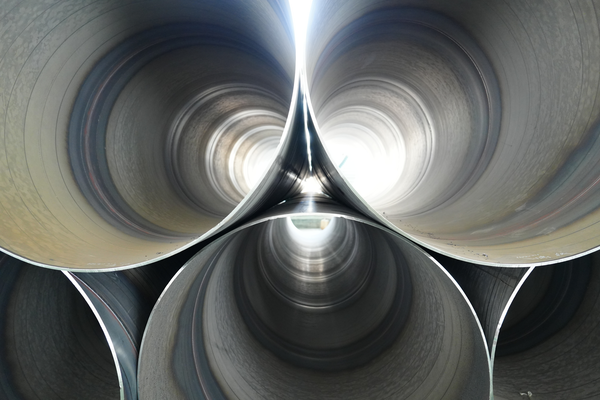
On a water transmission or marine piling project, the wrong call surfaces late, a 1420 mm line that fails ultrasonic acceptance, or a delivery that slips past the concrete pour.
Synbase takes that risk off the table because every spiral welded pipe is matched to your pressure, grade and standard before the coil is cut, then certified to ISO 9001 on the way out.
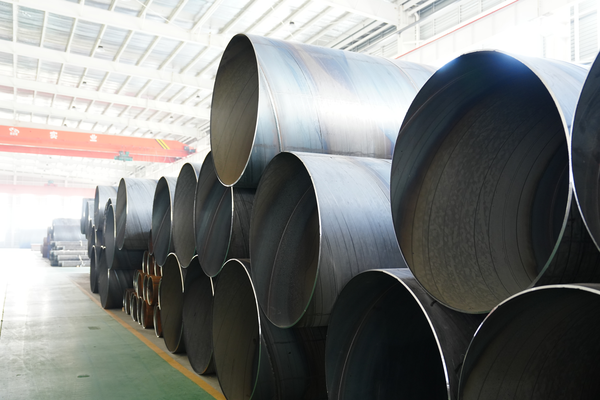
Our spiral line runs OD 219–4500 mm against wall thickness 5–25 mm, in single lengths up to 12 m and longer by agreement. Our availability grid below maps the diameter, wall combinations a spiral submerged arc welded pipe can actually be produced in. A mismatched wall or an unavailable diameter is where a build stalls, re-sourcing a 2540 mm pile in practice costs weeks, so this grid is the real trade-off Synbase rolls against, not a catalogue.
| Outside Ø (mm) | Wall thickness band (mm) | Typical grade window | Common use |
|---|---|---|---|
| 219 – 426 | 6 – 12 | Q235B / Gr.B | Feeder / structural |
| 457 – 720 | 7 – 16 | Gr.B / X42 / X52 | Line pipe / piling |
| 820 – 1020 | 8 – 18 | X52 / X60 | Water / gas transmission |
| 1220 – 1420 | 9 – 20 | X60 / X65 | Trunk transmission |
| 1620 – 1820 | 10 – 22 | X65 / X70 | Large water mains |
| 2020 – 2220 | 12 – 22 | Q345 / X70 | Penstock / outfall |
| 2540 – 3000 | 14 – 25 | Q345 / S355J2 | Marine piling / casing |
| 3200 – 3500 | 16 – 25 | Q345B / S355J2 | Combi-wall / monopile |
| 3600 – 4500 | 18 – 25 | Q345B / custom | Heavy foundation / intake |
| Standard / Grade | Min. yield (MPa) | Min. tensile (MPa) | Service fit |
|---|---|---|---|
| API 5L Gr.B | 245 | 415 | Low-pressure line / water |
| API 5L X42 | 290 | 415 | Gas / oil feeder |
| API 5L X52 | 360 | 460 | Transmission |
| API 5L X60 | 415 | 520 | Higher-pressure trunk |
| API 5L X65 | 450 | 535 | Trunk / sour-screened |
| API 5L X70 | 485 | 570 | High-strength transmission |
| ASTM A252 Gr.2 | 241 | 414 | Driven pipe pile |
| ASTM A252 Gr.3 | 310 | 455 | Heavy structural pile |
One reference that maps standard → grade → application → coating → test, so a specifier read a single row instead of cross-checking four documents.
| If you specify… | Grade window | Application | Default coating | Test set |
|---|---|---|---|---|
| API 5L PSL2 | X52 – X80 | Oil & gas line pipe | 3PE / 3LPE | Hydro + 100% UT + Charpy |
| AWWA C200 | Gr.B – X52 | Water transmission | FBE + cement-mortar lining | Hydro + UT seam |
| ASTM A252 Gr.2/3 | Gr.2 / Gr.3 | Pipe pile / casing | Bare or 2FBE | Dimensional + weld UT |
| EN 10219 S355J2H | S355J2 | Structural hollow section | Hot-dip galvanizing | Impact at −20 °C |
The assumption that “a spiral seam means a weaker pipe” costs buyers money on the wrong projects. Inside its design envelope, large diameter, low-to-medium pressure, water, piling and structural service, SSAW is the cost-optimal, standards-compliant choice, and it clears the same API 5L hydrostatic and ultrasonic acceptance as a straight-seam pipe. For longitudinal-seam requirements, review LSAW pipe.
The honest line is about weld geometry, not quality. An LSAW weld develops roughly 98–100% of the base-metal strength; a spiral weld runs about 90–95% and carries higher residual stress from continuous forming. Framed as spiral welded pipe vs longitudinal, or straight weld vs spiral weld, the honest answer is the same, match the process to pressure and wall, because the trade-off is geometry and cost, not pass-or-fail.
| Process | OD range | Max wall | Weld vs base | Relative cost | Best for |
|---|---|---|---|---|---|
| ERW | ½” – 24″ | ~16 mm | HF seam | Lowest | Medium-bore distribution |
| SSAW (us) | 8″ – 177″ (4500 mm) | ~25 mm | 90–95% | Mid-range | Large dia, low–med pressure, water, piling |
| LSAW | 16″ – 60″ | ~60 mm | 98–100% | Highest | High-pressure, thick-wall, sour service |
| SMLS | ≤ 24″ | thick | No seam | High | Critical small-bore, extreme pressure |
Read the Weld-Process Selection Matrix top-down. Once your wall and design pressure land in the SSAW band, paying the LSAW premium just buys back margin you already specified away, and forcing a large diameter onto an LSAW line drives up both cost and weld count.
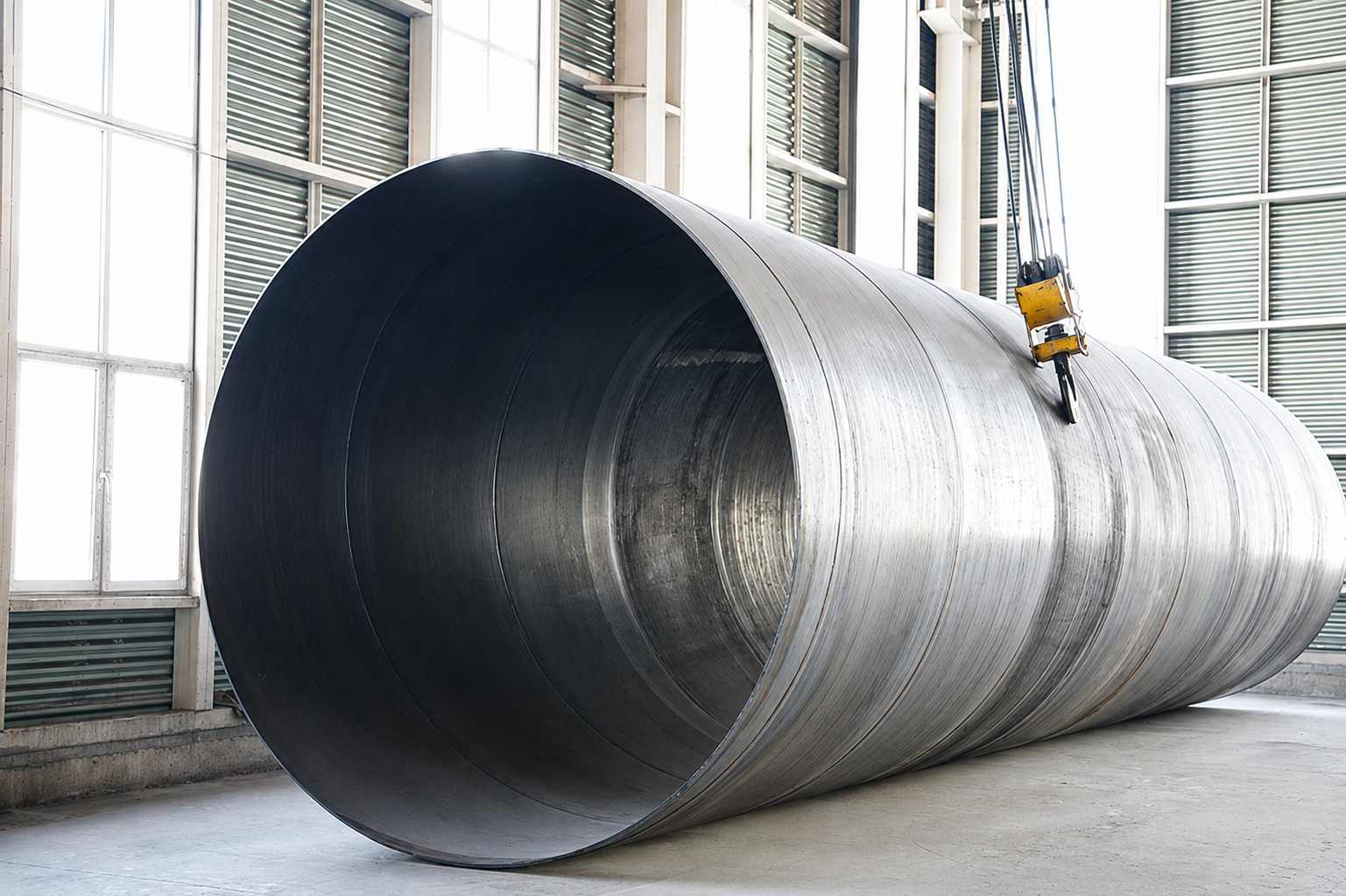
The spiral welded pipe manufacturing process starts from steel coil, not steel plate. The strip is uncoiled, edge-milled and formed to a helix, then the weld seam is laid by double-sided submerged arc welding on the inside and outside diameter.
An LSAW pipe instead forms a flat plate and runs a longitudinal weld seam, while an ERW pipe uses electric resistance welding with no filler. That continuous fabrication is the welding process that lets one spiral mill manufacture the full diameter range from a single coil width, a flexibility no straight-seam line shares.
That same product also trades as a helical seam pipe, HSAW or spiral seam welded pipe; an LSAW run with two passes is a straight seam welded pipe, also called DSAW (double submerged arc welded).
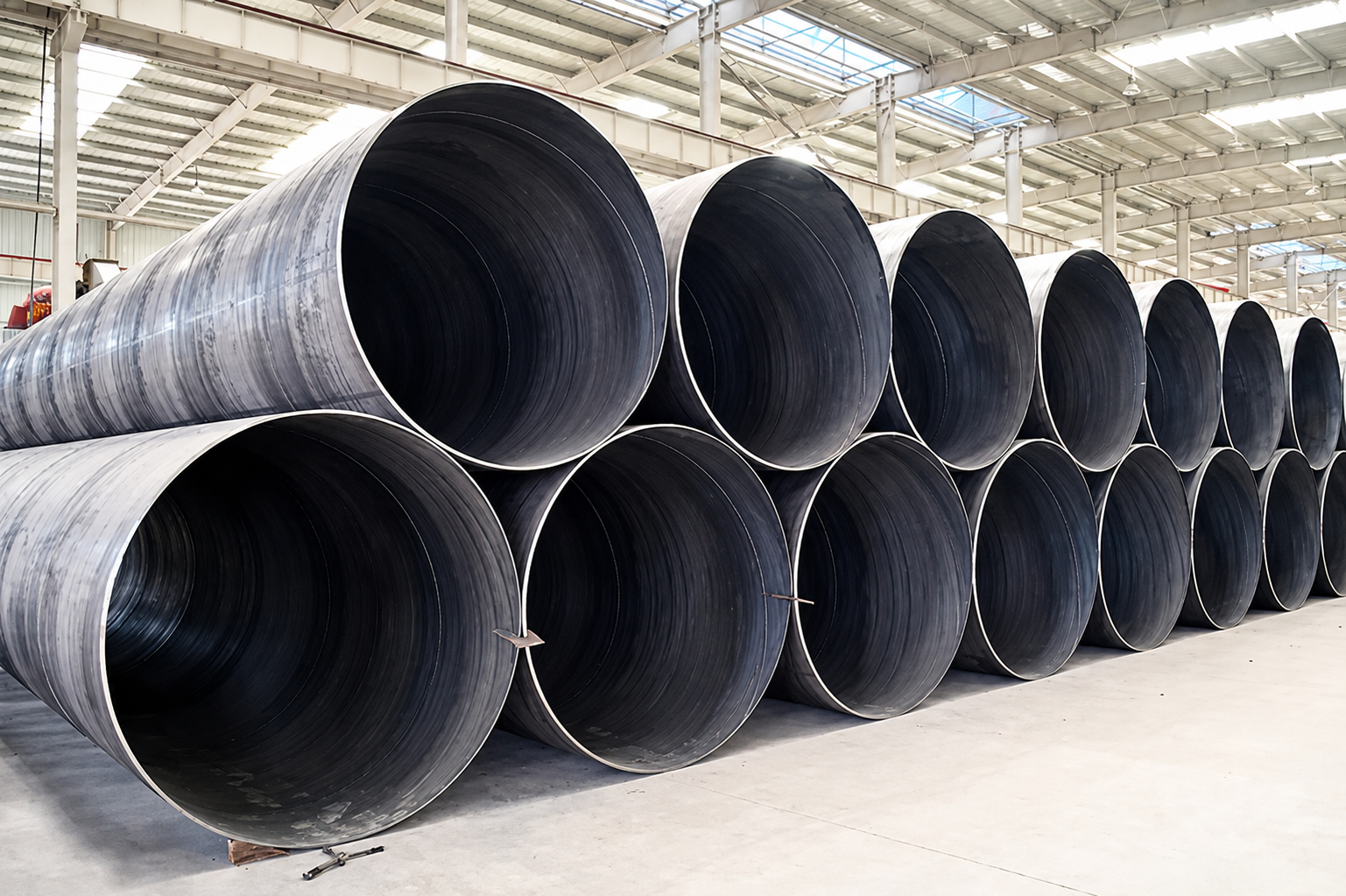
For high-pressure thick-wall transmission, deep sour-service lines, or any wall past about 25 mm, longitudinal weld is the right answer, and we’ll quote it off our JCOE line rather than push spiral. Matching the process to the duty is the whole point.
The risk in application is specifying one pipe for every duty. A water main, a sour-screened gas line and a marine pile pull in different directions, and forcing a single grade onto all three either over-builds cost or under-builds capacity, the trade-off is real in practice, not cosmetic. Synbase resolves this because grade and coating are matched to each service, not averaged across them.
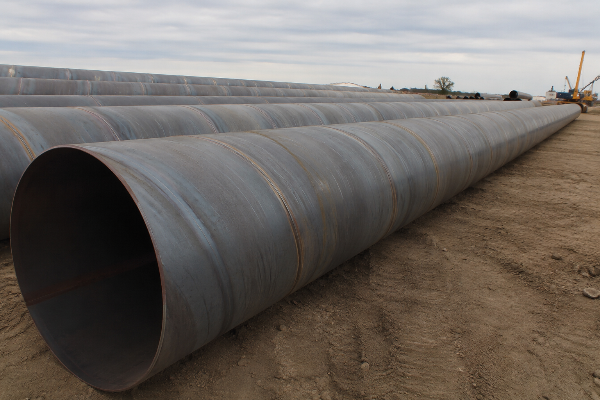
For gathering, feeder and trunk lines at low-to-medium pressure, SSAW in X52–X70 carries oil and gas and natural gas service against API 5L PSL1/PSL2. Continuous spiral forming holds longer single lengths, which cuts the number of field girth welds along a pipeline run.
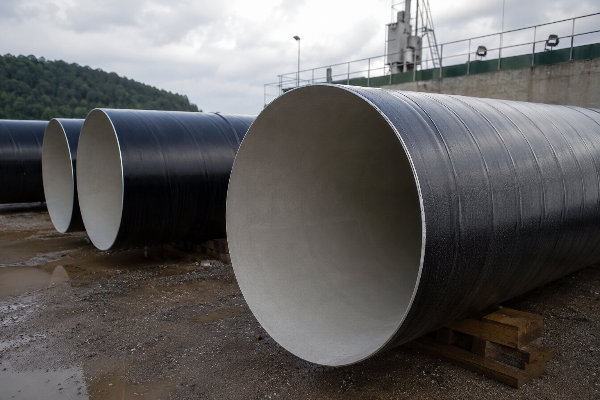
Large water mains, intakes, outfalls and penstocks are the natural home of spiral welded pipe. AWWA C200 steel water pipe pairs an exterior coating with a cement-mortar or epoxy internal lining, and Synbase applies both in-house on the same order.
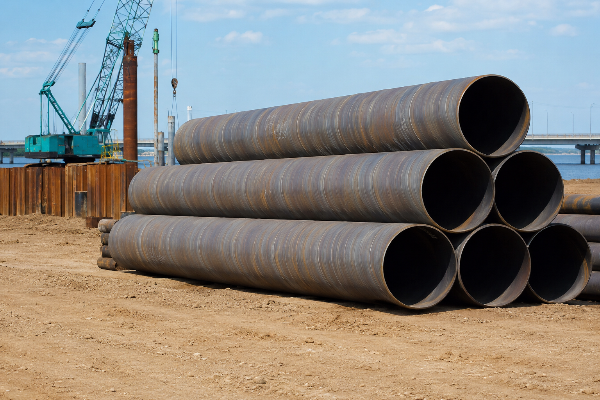
As a steel pipe pile, the spiral product drive into deep foundations and carries load through end-bearing and skin friction, used in bridges, ports, marine works and soft-soil sites where it stays stable. The same pipe serves as drilled-shaft casing and as the king pile in combi-walls.
An open-ended pipe pile can plug or stay coring depending on soil and drivability; a closed-end pile with a plate can be filled with concrete for higher capacity. ASTM A252 Gr.2 (241 MPa) and Gr.3 (310 MPa) cover most driven-pile duties, with the deep foundation and casing geometry confirmed against your geotechnical report.
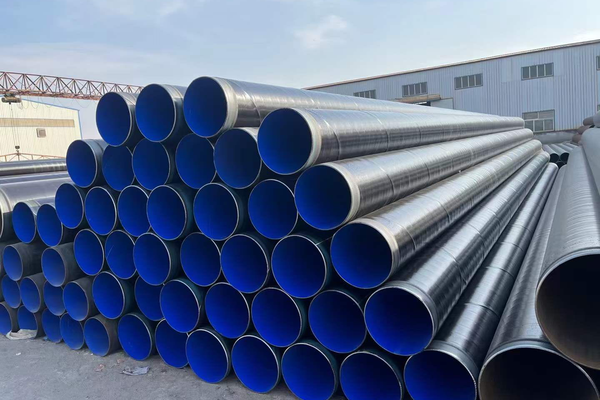
Coating is where most suppliers point you to a third party, and where Synbase keeps the work in-house. Our welded-pipe base runs three international anti-corrosion lines, single-layer FBE, double-layer 2FBE, 2PE and 3PE, processing more than 6 million m² per year.
Read the table by service environment and you’ve got the Coating-by-Environment Selector: buried gas defaults to 3PE, potable water to FBE plus a cement-mortar lining, and exposed structural to galvanizing. On a buried 1020 mm gas line in the field, 3PE is the default film; a potable water main of the same size runs FBE plus a cement-mortar lining to AWWA C205 instead. Keeping coating on the same order means one inspection trail, not split accountability between mill and coater.
Get Instant QuoteThe risk on an unfamiliar supplier is a track record you can’t verify, a first-time exporter can quote anything. Synbase answers that because the group has delivered pipeline products into national-oil-company and EPC programmes for years, backed by audited ISO 9001 systems and 800,000 t of annual production.
Synbase Steel is the pipeline-equipment core of E-CHENG STEEL GROUP, a group carrying over 14 billion RMB in assets, more than 2,000 staff and 800-plus national patents. Our welded-pipe base alone runs 800,000 t per year across JCOE longitudinal and spiral lines.
Pipeline products from the group have shipped into major energy and water programmes for national oil companies and EPC contractors across the Middle East, Europe, Southeast Asia and the Americas, serving operators including CNPC, Sinopec, Shell and Total. That record across 100-plus countries is what separates a qualified supply partner from a first-time exporter.
SSAW rolls from steel coil rather than the steel plate and UOE/JCOE forming an LSAW line needs — which is why it lands between ERW and LSAW on price while reaching diameters neither can. Evaluate it on lifecycle total cost of ownership, not price per ton.
Source: industry cost analyses (union-steels.com; ctweldedpipe.com), 2024–2025The trust gap on an unfamiliar mill closes with documents, not adjectives. Every Synbase order is API-monogrammed where applicable and backed by ISO 9001, ISO 14001, ISO 45001 and CE, with marine work covered by ABS, DNV, BV, LR and CSS class approvals.
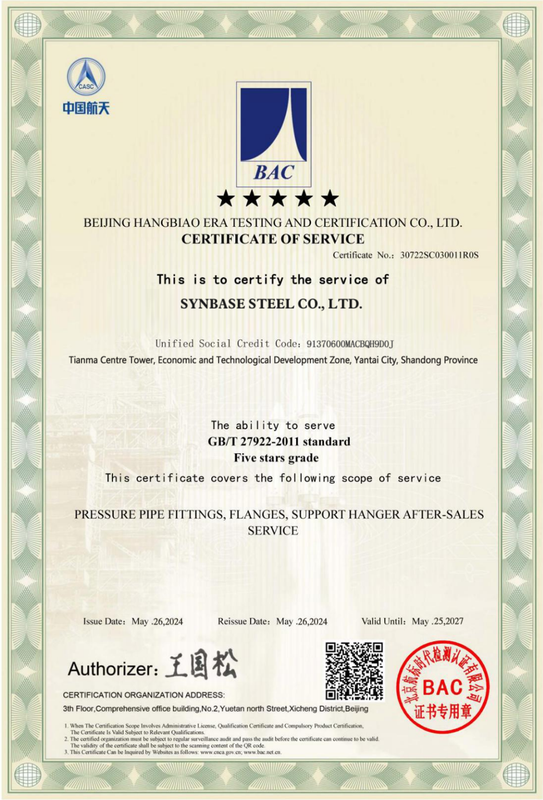
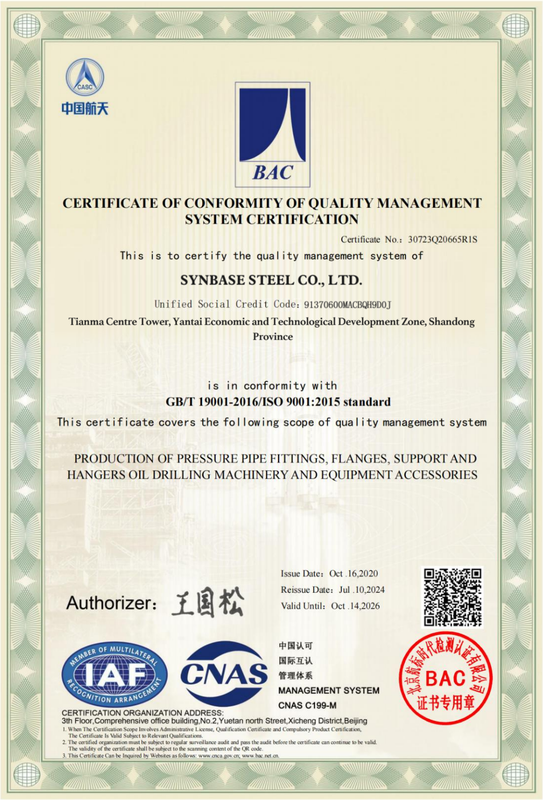
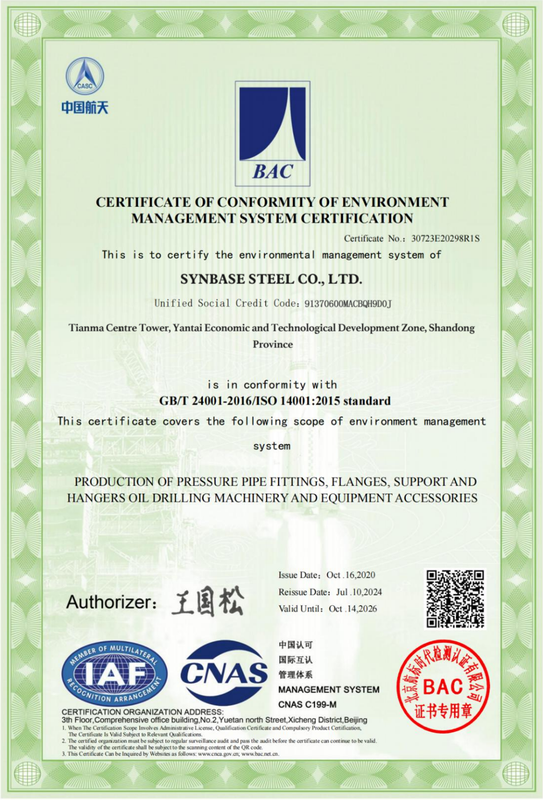
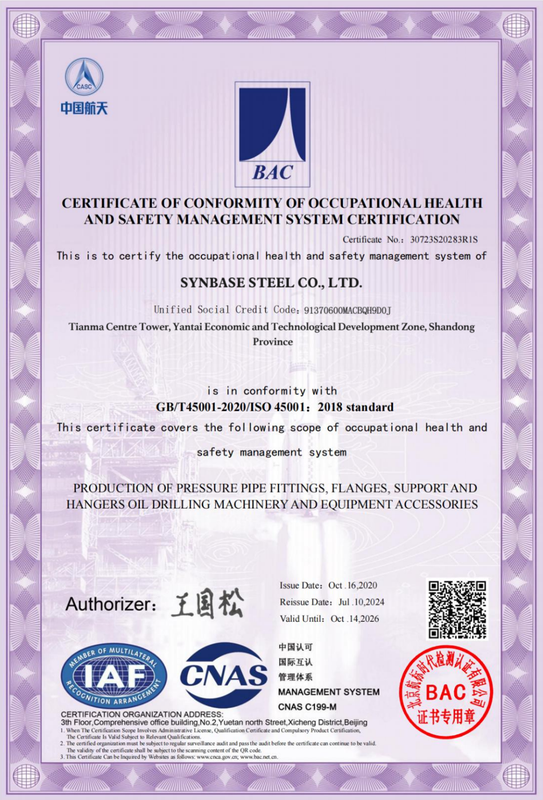
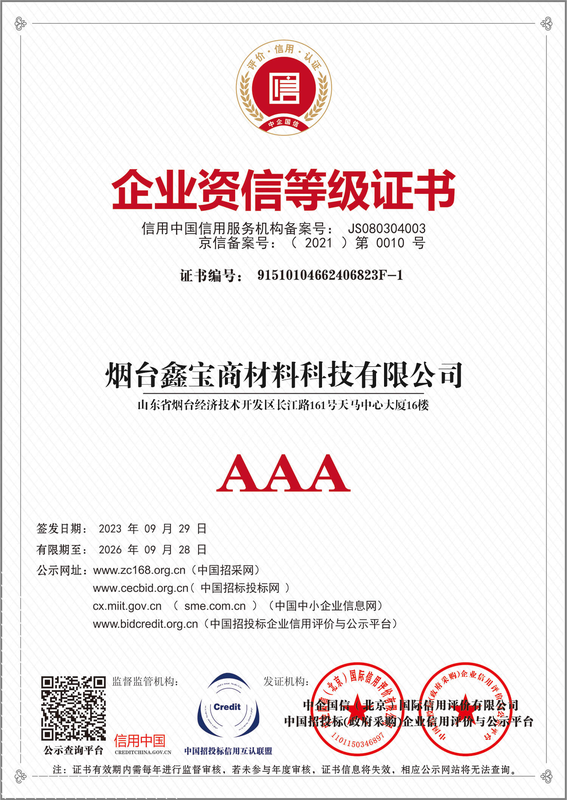
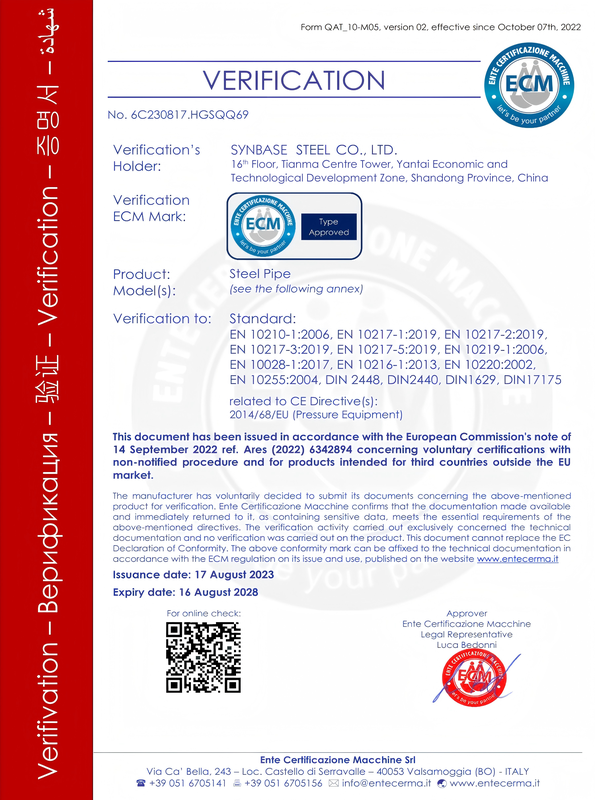
On the line, each spiral weld is inspected and ultrasonically tested inside and out, the pipe is hydrostatically tested, and pipe-end MPI and dimensional checks close out the heat. A mill test certificate carries the heat number, chemistry, mechanical results and test record, not a summary sheet.
In practice, a marine order is released only after ABS or DNV witnesses the hydrostatic and UT records on each 2540 mm pile. Unlike a trading house reselling another mill’s paperwork, every document traces back to our own heat, which is exactly what an audit check.
“We treat the mill test certificate as the contract, not paperwork, every heat number on the MTC traces back to its chemistry and its hydrostatic and UT records, and we welcome SGS, BV or TÜV witnessing the test before the pipe leaves the line.”
Price per ton is the wrong anchor on a pipe order. Total cost of ownership folds in coating, inspection, freight, field welds and the risk of a non-conforming shipment, and that’s where a factory-direct supplier with in-house coating, unlike a trading house reselling another mill’s pipe, changes the lifecycle math.
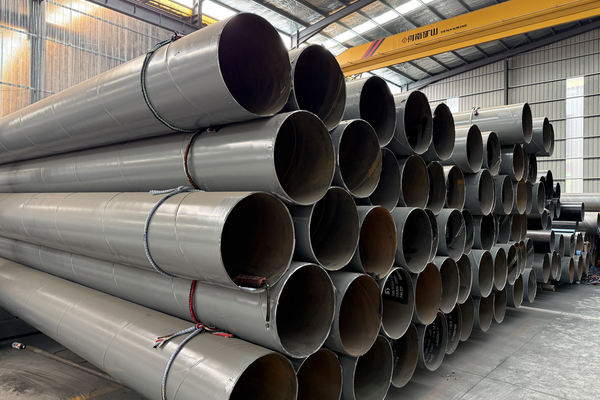
Diameter and wall set coil consumption and welding time, SAW on a spiral mill run near 3 m/min, a real throughput factor.
Grade and standard scope, PSL2, Charpy and sour screening add test scope versus PSL1.
Coating scope, 3PE, FBE or internal lining each add a line pass.
Inspection level, third-party (SGS / BV / TÜV) witnessing and EN 10204 3.1 certification.
Length, packing and Incoterms, container vs break-bulk, FOB vs CIF to your port.
Because the group is integrated across SMLS and welded pipe, pipe fittings, flanges and valves, a single order can carry the pipe and its matching components on one inspection trail. For exact pricing and a lead-time estimate, send the five drivers above and request a quotation.
Get Instant QuoteQuickly compute the theoretical weight and required tonnage for SSAW pipes based on your specific dimensions.
Determine the optimal welding technology and parameters based on specific steel grades and wall thickness.
Identify the most robust anti-corrosion layer solutions engineered for your project’s environmental conditions.
SSAW is spiral submerged-arc welded pipe, also called spiralweld or HSAW. Steel coil gets uncoiled, formed to a helix at a set angle, and the spiral seam is joined by double-sided submerged arc welding inside and out.
Choose SSAW for large diameter at low-to-medium pressure: water transmission, piling and structural work, and feeder lines. Move to LSAW for high-pressure thick-wall and sour service, and to ERW for medium-bore distribution.
API 5L governs pressure line pipe for oil, gas and water with X-grade strength and PSL1/PSL2 test levels. ASTM A252 governs structural pipe piles by Grade 1/2/3 yield, where drivability and load capacity, not internal pressure, set the spec.
ASTM A53 is general-purpose pipe for low-pressure mechanical and ordinary fluid service. API 5L is the pipeline-transmission standard, with higher strength grades, tighter testing and traceability for energy service.
Our spiral line reaches OD 4500 mm, past the typical 3000–3658 mm ceiling of most spiral mills. That range cover large intake, outfall, monopile and combi-wall work from a single seam.
FBE, 2FBE, 2PE and 3PE on dedicated in-house lines, plus 3LPE/3LPP, internal cement-mortar or epoxy lining, and hot-dip galvanizing, picked by service environment and applied on the same order.
The spiral seam runs longer than a straight seam and carries higher residual stress, so the weld develops about 90–95% of base-metal strength. We mitigate with full inside-and-outside UT, hydrostatic testing and grade matching, and we steer high-pressure thick-wall duties to LSAW.
Pricing, MOQ and lead time depend on diameter, wall, grade, coating and inspection level. Send those five drivers with your port and Incoterm and we’ll return a quotation and lead-time estimate.