Send Your RFQ to Synbase Steel
Prefer to send drawings, BOMs or attachment lists by email? sales@synbasesteel.com

A concentric reducer joins two pipe runs of different diameters on one shared centerline, and on the wrong line, in the wrong orientation, or from an untraceable mill, that simple steel cone becomes a trapped air pocket, a cavitating pump, or a fitting whose heat number matches nothing. Synbase Steel manufactures butt-weld concentric reducers mill-direct, to ASME B16.9 and EN 10253-2, in carbon, stainless and alloy grades, with an EN 10204 3.1 material test certificate on every shipment.
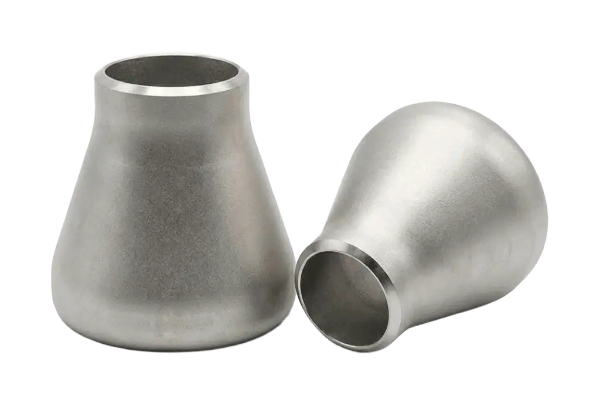
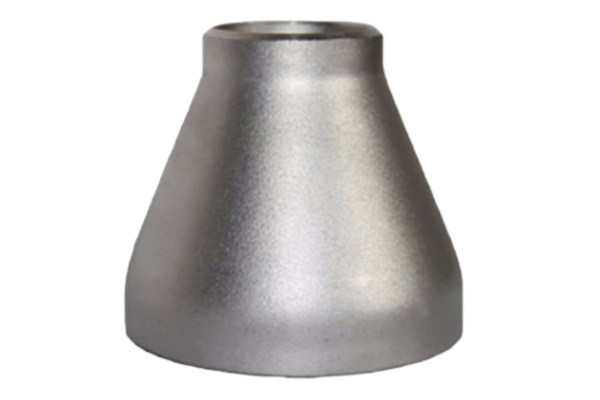
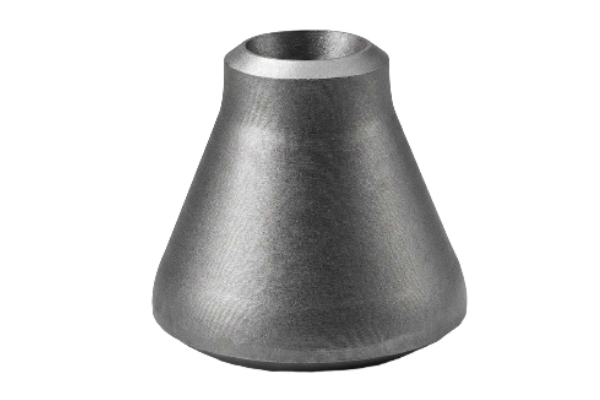
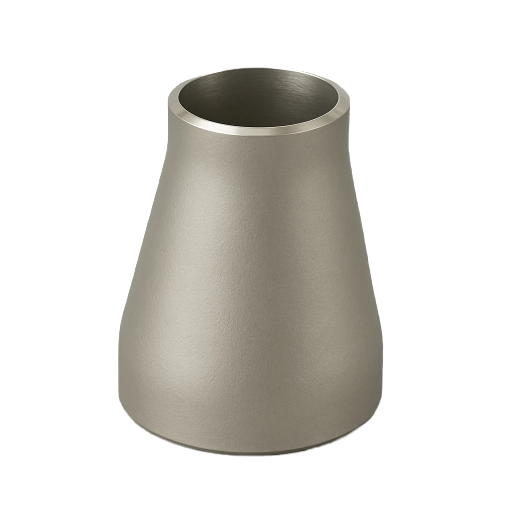
A concentric reducer is a cone-shaped butt-weld pipe fitting that connects two pipes on a common centerline and steps the bore to reduce one nominal pipe size to the next. It exists for a blunt reason:
The part is a commodity governed by ASME B16.9, but the decisions around it aren’t. Three failures put concentric reducers on rejection reports and into failed pump audits, and each is preventable at the spec stage:
A concentric reducer where an eccentric belongs traps air at the top of the cone, starves the impeller, and can cavitate or lose prime within minutes.
Wall thickness is set by the customer, not by the fitting standard, so an order that leaves it out arrives with a wall that doesn’t match the line and forces weld-prep counterbore rework.
A fitting with no heat number, a forged brand stamp, or a Schedule-40 outside hiding a Schedule-10 bore can’t be matched to a genuine material certificate, and fails later under pressure, not at install.
Synbase answers all three at source: a quantified selection method (below), customer-specified schedules held to ASME B16.9 tolerance, and a single mill with full heat-number traceability. We make the fitting and we certify it — the rest of this page is the engineering behind that.
Request a concentric reducer quoteFluid Service & Orientation
The most expensive misconception in reducer selection is the common assumption that an eccentric reducer, flat side up, is always the right answer at a pump suction. It is not always, and the counterintuitive part is what the research below shows. Peer-reviewed CFD work published by the South African Institution of Civil Engineering modelled 12 reducer geometries and found that a correctly designed concentric reducer both transports air through the fitting and delivers a more uniform inlet velocity than an eccentric one, challenging the default-to-eccentric habit that ANSI/HI itself states without a published reason.
The reducer is never the cavitation fix; it only changes line size. Orientation and net positive suction head do the protecting, on piping designed to ASME B31.3, and the trade-off between the two geometries is settled by service, not by habit. The decision below is what separates a fitting that last from one that destroys a pump.
This is the point at which fluid service and pipe geometry tip you from one reducer to the other. Every row is a real installation case from ANSI/HI 9.6.6, the Karassik Pump Handbook, and practising piping engineers, not a rule of thumb.
| Service & geometry | Orientation | Reducer type | Flat side | Failure avoided |
|---|---|---|---|---|
| Pump suction, clean liquid, air possible | Horizontal, feed from below/level | Eccentric | UP | Top air pocket → cavitation / lost prime |
| Pump suction, feed from above | Horizontal, source higher than pump | Eccentric | DOWN | High-point vapor trap (line slopes down) |
| Suction with solids >10% in suspension | Horizontal | Eccentric | DOWN | Solids settling in the suction |
| Pump suction, clean liquid, no gas, no solids | Horizontal, flooded | Concentric | — | Asymmetric flow / radial impeller thrust |
| Top-suction pump nozzle | Any | Concentric | — | Eccentric would skew flow off the eye |
| Large step >4″ where eccentric skews flow | Horizontal | Vented concentric + straight run | — | One-sided impeller loading |
| Pump discharge / vertical riser | Vertical or any | Concentric | — | None — no high-point air concern |
| General vertical line size change | Vertical | Concentric | — | No high point forms regardless |
| Aqueous <10% solids, horizontal suction | Horizontal | Eccentric | UP | Air pocket at the reduction |
A single reduction is bounded by hydraulics, not just by what two pipe sizes you want to join. Stay inside this window and the fitting earns its place; leave it and you add pump head, footprint, and wear.
Flow speed scales with (D₁/D₂)² across the cone, so an 8×6 step lifts velocity by roughly 1.8× — which is why suction velocity is capped near 2.4 m/s and kept in a 0.75–2.5 m/s working band.
Eccentric reducers at or above 15°, and concentric reducers at or above 20°, fail inlet-velocity acceptance criteria; even an AWWA C208 standard 14° eccentric can fall outside them, forcing a downstream straight run that consumes NPSH-available.
The suction pipe should be at least one size larger than the pump nozzle, the reason the reducer is there at all. A reducer that make the discharge smaller than the nozzle is a red flag for a wrongly selected pump running far from its best-efficiency point.
Match a reducer to your fluid service
Request reducer selection supportReducer Materials
Most pages in this category cover one grade. A distributor catalog will list 304 sanitary tube; a stock house will list A234 WPB carbon. Synbase runs the full material span from a single group supply chain. Whether you need a stainless steel concentric reducer for a 316L process line, a carbon steel concentric reducer for a pipeline, or a concentric pipe reducer in chrome-moly alloy for a steam header, one reducer family answers all three without three vendors and three certificate formats.
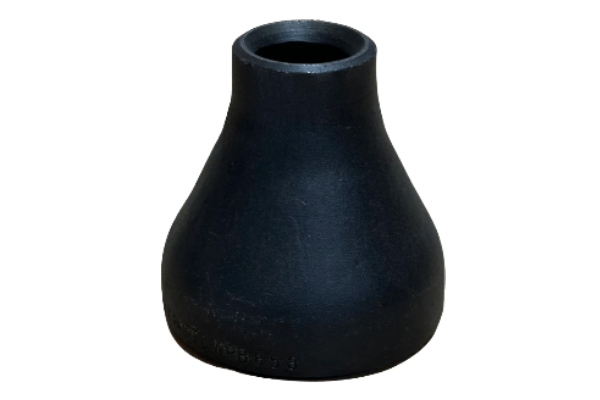
Match the grade to the service, then to the governing standard. Every grade below is held to ASME B16.9 dimensions and supplied with the matching material certificate.
| Grade | Standard | Key property | Best-fit service |
|---|---|---|---|
| A234 WPB | ASTM A234 / ASME B16.9 | 415 MPa tensile, 240 MPa yield, C 0.30% max | General carbon pipelines, water, oil & gas |
| A234 WPC | ASTM A234 | 485 MPa tensile, 275 MPa yield | Higher-strength carbon service |
| A234 WP11 / WP22 | ASTM A234 (Cr-Mo) | Chrome-moly creep strength | Elevated-temperature steam / power headers |
| A403 WP304 | ASTM A403 / B16.9 | 515 MPa tensile, 205 MPa yield min | Standard corrosion service |
| A403 WP304L | ASTM A403 | 304 with C 0.030% max | Welded lines avoiding sensitization |
| A403 WP316 | ASTM A403 | Mo-bearing, C 0.07% max | Chloride / marine corrosion |
| A403 WP316L (S31603) | ASTM A403 | 316 with C 0.030% max | Welded chemical / pharma process |
| EN P235GH / P265GH | EN 10253-2 (PED) | European pressure grades | EU pressure-equipment projects |
| A815 S31803 / S32205 | ASTM A815 (duplex) | Duplex strength + pitting resistance | Sour / high-chloride / offshore |
| A420 WPL6 | ASTM A420 (low-temp) | Impact-tested to −46 °C | Cryogenic / cold-climate lines |
Synbase presses one-piece concentric reducers from solid through the smaller and mid sizes and rolls and welds large-bore reducers up to 60″, because the one-piece forming ceiling around 24″ is where forming economics and wall integrity cross over.
Grade equivalence is built in for international buyers:
The L grades are separated only by carbon ceiling.
Most competitor pages hide the dimensional table in an off-page PDF and publish no weights at all, leaving you to guess at freight and structural load. Synbase puts the numbers inline. There’s one rule that catches detailers more than any other, and it’s worth stating before the table.
End-to-end length H is keyed to the large-end NPS only, not the reduction ratio. A 24×20 and a 24×16 are both H = 508 mm; every 6″ reducer is 140 mm long; every 8″ is 152 mm. The large-end OD equals the large pipe OD, the small-end OD equals the small pipe OD. Detail your spool length to the large end and field re-cutting disappears.
| NPS (large×small) | Large OD D (mm) | Small OD D1 (mm) | Length H (mm) | STD weight (kg, nominal) |
|---|---|---|---|---|
| 3/4 × 1/2 | 26.7 | 21.3 | 38 | on request |
| 2 × 1 | 60.3 | 33.4 | 76 | on request |
| 3 × 2 | 88.9 | 60.3 | 89 | ~0.9 |
| 4 × 3 | 114.3 | 88.9 | 102 | ~1.6 |
| 6 × 4 | 168.3 | 114.3 | 140 | ~3.8 |
| 8 × 6 | 219.1 | 168.3 | 152 | ~6.3 |
| 12 × 10 | 323.9 | 273 | 203 | ~15.2 |
| 16 × 10 | 406.4 | 273 | 356 | ~32 |
| 24 × 20 | 610 | 508 | 508 | by schedule |
Dimensions per ASME B16.9; weights are nominal STD/Sch 40 reference figures cross-checked across two published charts, which themselves diverge 3–7% because wall thickness varies with schedule. The exact weight by heat and schedule is stated on your Material Test Certificate, not estimated.
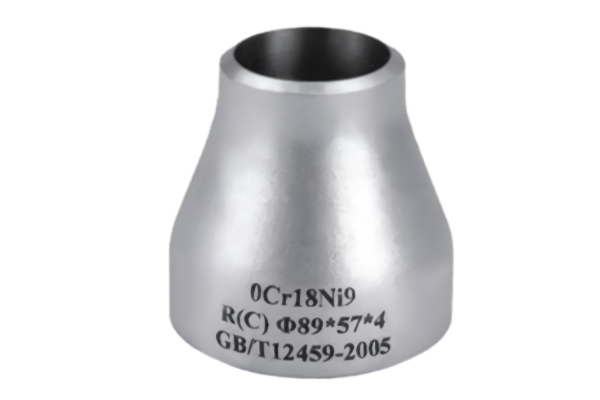
We publish the carbon ceiling as 0.30% because that is the actual ASTM A234 WPB limit, not the 0.25% that floats around supplier sheets. If a fitting’s certificate gets a basic number like that wrong, you can’t trust the heat data either, so we hold the certificate to the same tolerance as the steel.
Material Traceability & Certification
Traceability is where imported fittings earn their bad reputation, and where Synbase separates from the trade. The single strongest authenticity check a site engineer run is to match the heat number stamped on the fitting against the number on the supplied material test certificate; a mismatch is grounds for rejection on the spot.
That check fail on the goods that flood the low end of this market. The risk is documented, not hypothetical: the US authorities have found Chinese-origin butt-weld fittings finished in a third country to evade duties, so the country a shipment arrives from isn’t the country the steel was made in.
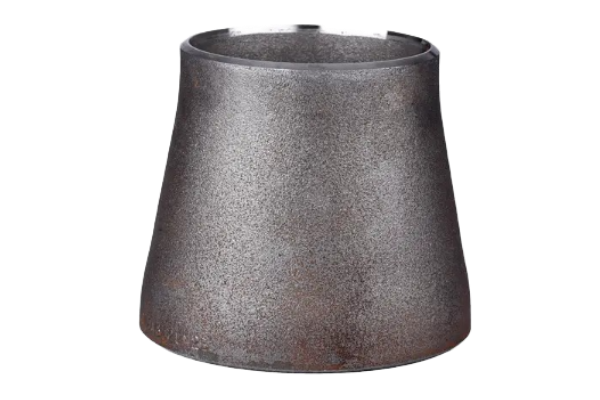 Concentric reducer
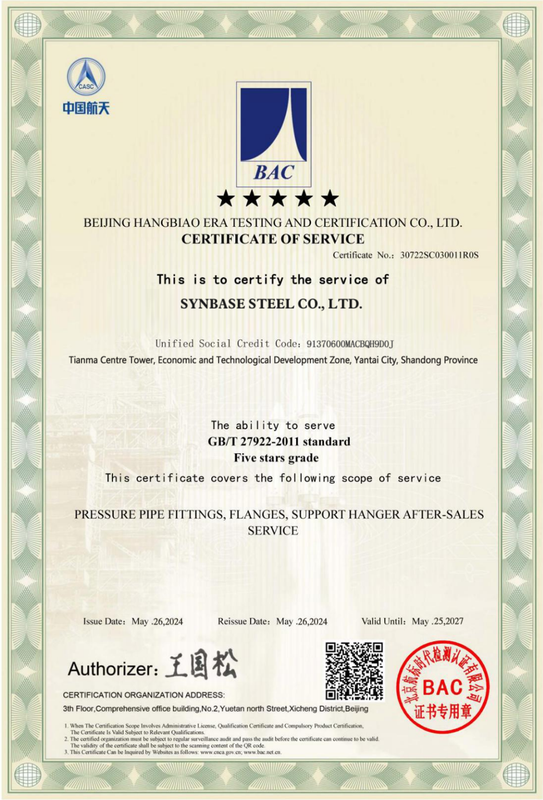
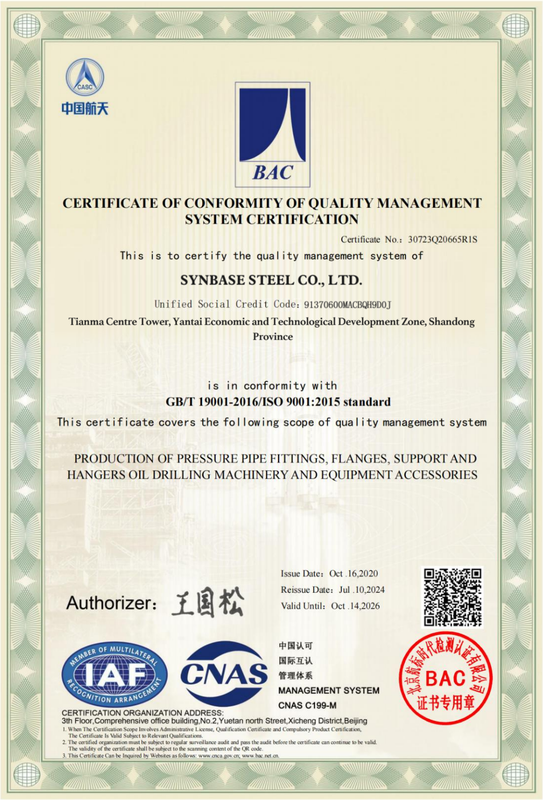
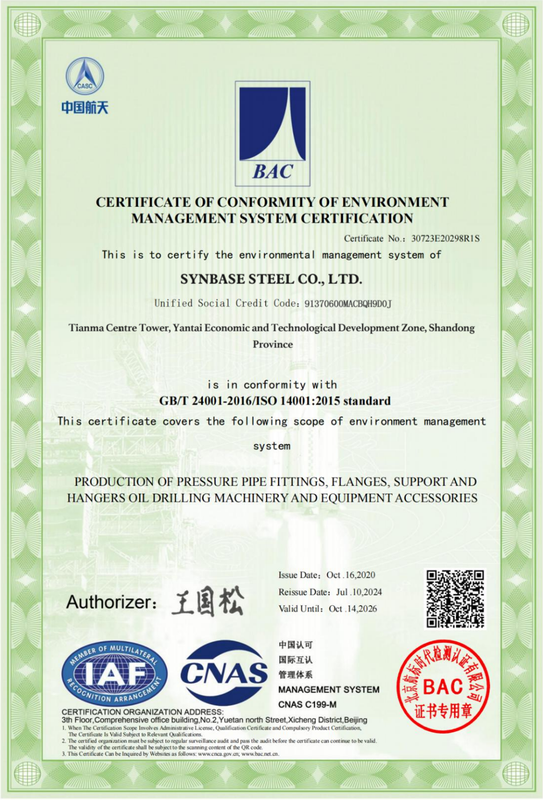
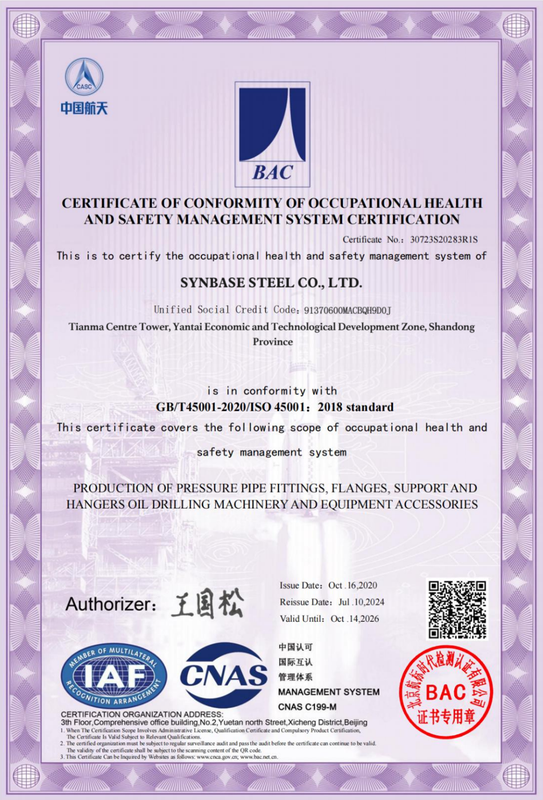
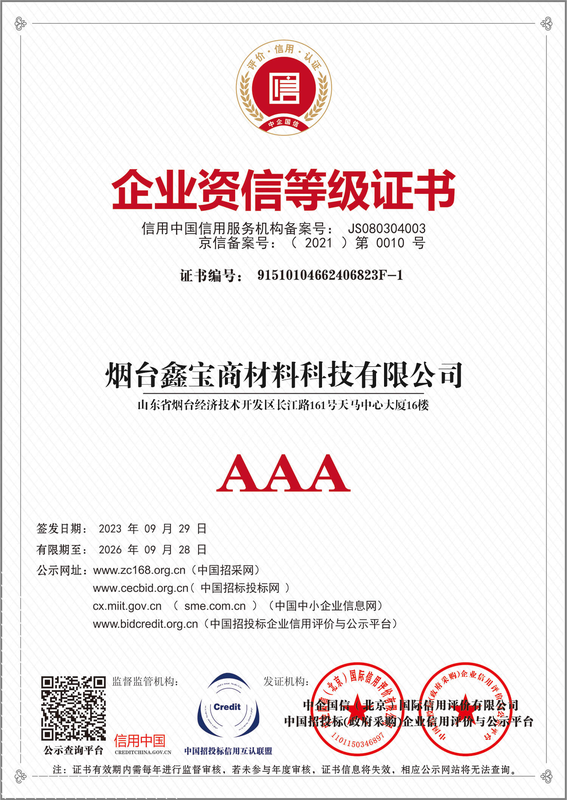
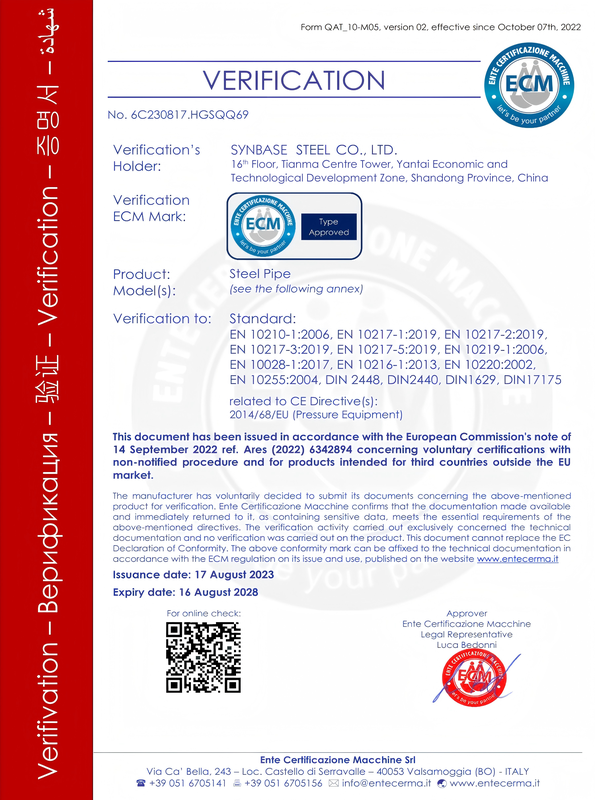
Synbase ships current certificate editions, not the superseded 2008 and OHSAS revisions still listed on aging supplier pages, and a single, named mill of origin.
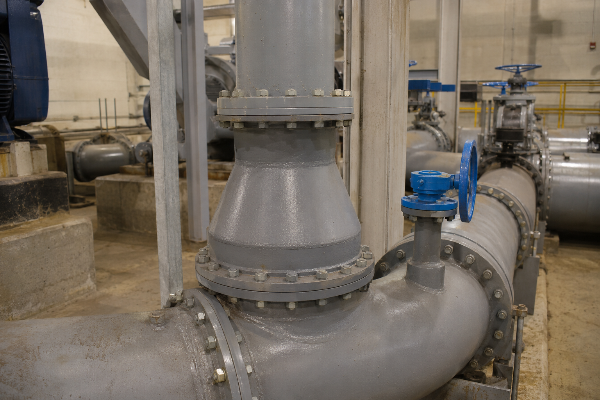
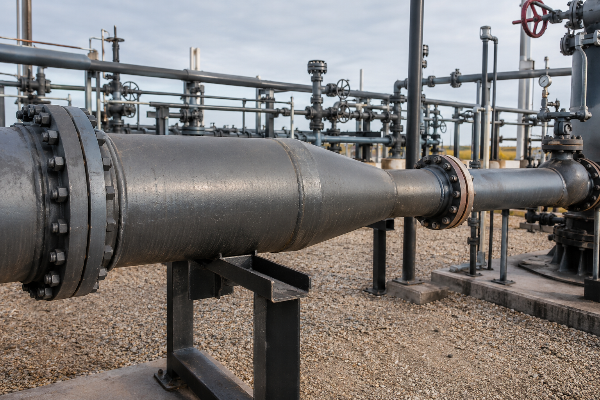
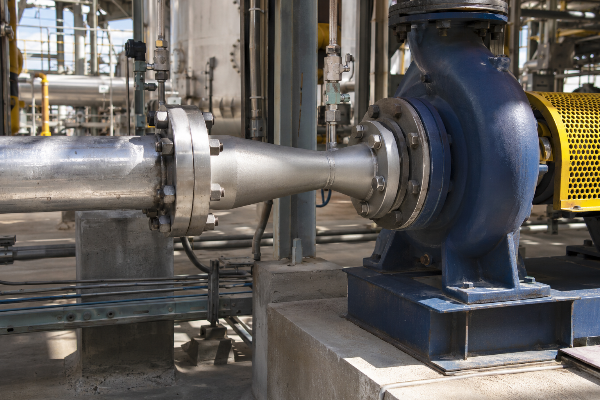
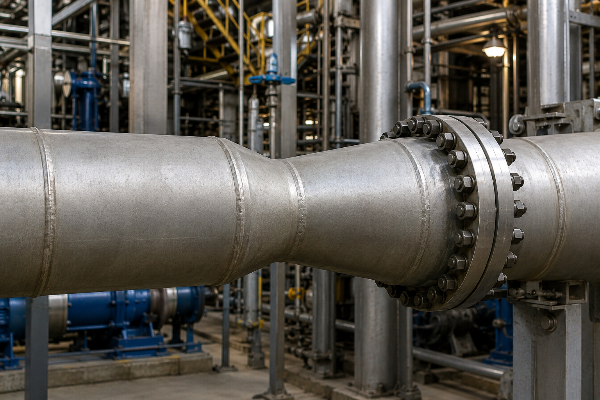
Concentric reducers step pipe size at pump discharges, vertical risers, and clean-liquid runs throughout heavy fluid-handling plant. Where the line carries air or solids, the eccentric sibling take over, but most size transitions here are concentric, on the discharge and the vertical:
Mill-direct pricing removes a layer, not a mystery. In B2B distribution a manufacturer typically adds 15–20% selling into the channel, and the distributor adds another 20–40% on top, margin the end buyer absorbs on a commodity fitting that competes on volume, not service. Buying from the mill collapses that stack into one transaction.
A concentric reducer is a low-ticket part; the cost when it's wrong isn't. A wrong-length spool get field re-cut and re-welded. An omitted schedule arrives as a wall mismatch and gets counterbored. A wrong reducer at a pump suction can take out bearings, seals and wear rings in days. Getting the spec and the certificate right the first time is where the saving sit, far more than the unit price. The honest trade-off is plain: a correct fitting with a verifiable certificate cost a little more than the cheapest line, and far less than a re-cut spool or a wrecked pump.
Framed from documented failure modes (ASME B16.9 dimensional, ANSI/HI 9.6.6, SAICE 2014). Synbase does not publish a fixed ROI percentage — request a quotation against your line list for an applied cost view.
Send your line list, grades, NPS pairs, schedules and quantities, and Synbase returns an itemised quotation, lead time and MOQ matched to your scope.
Request a quote against your line list →Compare concentric and eccentric reducer geometries and pick the correct type for your line orientation and flow requirements.
Open tool →Look up reducer dimensions and weights by nominal size based on B16.9 reference data.
Open tool →Calculate the change in flow velocity across the reducer for a given line size and flow rate.
Open tool →A concentric reducer is a cone-shaped butt-weld pipe fitting that connects two pipes of different diameters on the same centerline. The symmetric cone keep flow centered, which is why it's the standard choice on vertical lines and pump discharges where no air can pocket at the top.
Use a concentric reducer on vertical lines, pump discharges, top-suction nozzles, and clean liquids with no gas or solids. Use an eccentric reducer on horizontal pump-suction lines where air can collect, with the flat side up when feed comes from below and flat side down when feed comes from above or the line carries more than about 10% solids.
The reducer doesn't cause cavitation; orientation and NPSH do. A concentric reducer on a horizontal pump-suction line can trap an air pocket at the top, which reaches the impeller and cavitates. On vertical lines, discharges, and clean flooded suctions, a concentric reducer actually gives a more uniform inlet velocity than an eccentric one.
Concentric reducers to ASME B16.9 and EN 10253-2 dimensional standards, in carbon steel (ASTM A234 WPB/WPC), stainless (ASTM A403 WP304/304L/316/316L), chrome-moly alloy (A234 WP11/WP22), duplex (A815) and low-temperature (A420 WPL6) grades, with MSS SP-43 cross-reference for thin-wall stainless.
NPS 3/4 to 60, one-piece construction through the smaller and mid sizes and welded construction for large-bore reducers, in schedules from 5S/10S through STD/XS to XXS. Large-diameter and custom reductions that distributor stock ranges don't carry are made to order.
Yes, every shipment carries an EN 10204 3.1 MTC with heat number, chemical analysis, mechanical results and PMI, traceable to a single mill and lot. A 3.2 third-party witnessed certificate is available on request.
The price difference between the two geometries is minor when grade, schedule and size match; both are governed by one standard and the same forming routes. The cost that matter is selecting the right one, a wrong reducer at a pump suction is far more expensive than the fitting itself.
Butt-weld concentric reducers are welded directly into the line at both ends, so the order must state the schedule to match the line wall and avoid counterbore rework. Detail the spool length to the large-end NPS, since end-to-end length is fixed by the large end, not the reduction ratio.
Both are matched to your scope and quoted against your line list rather than fixed, because grade, schedule, size and certification level all move the schedule. Send the line list and Synbase returns an itemised quotation, MOQ and lead time within 24 hours.