Send Your RFQ to Synbase Steel
Prefer to send drawings, BOMs or attachment lists by email? sales@synbasesteel.com

ASTM A182 stainless steel flanges are subject to the perennial problem of suppliers whose product data sheets may list every possible grade from F304L all the way to Super Duplex F53 but cannot deliver the heat specific mill test reports that would allow you to believe the product statement. Synbase Steel is a manufacturer of forged ASTM A182 flanges made from mill materials of proven origin — traceable, tested in house for PMI to spectro xrf technology, and certified with EN 10204 3.1 or 3.2 MTRs. We can supply A182 stainless steel in grades F304L thru Super Duplex F53 per ASME B16.5/EN 1092-1 Dual standard, class 150 thru 2500 directly from our plant with a guaranteed 24 hour RFQ.
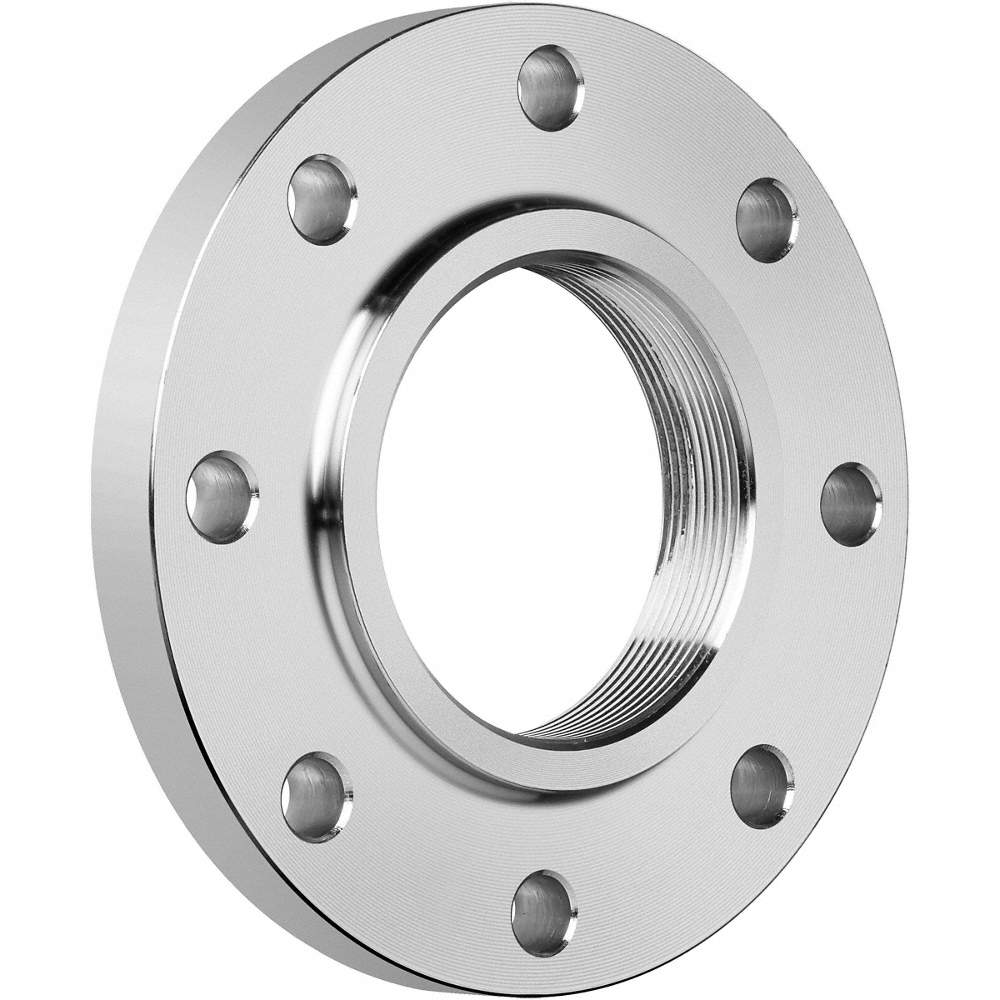
Unlike its cousin, ASTM A276 “Standard Specification for Stainless Steel Bars and Shapes”, A182 includes specifications for the manufacturing processes (including forging) of the items themselves and for heat treatment requirements and the necessary mechanical and metallurgical testing that confirms the integrity and quality of the forging as a final pressure containing part, as opposed to being a component simply machined from bar after the forging step.
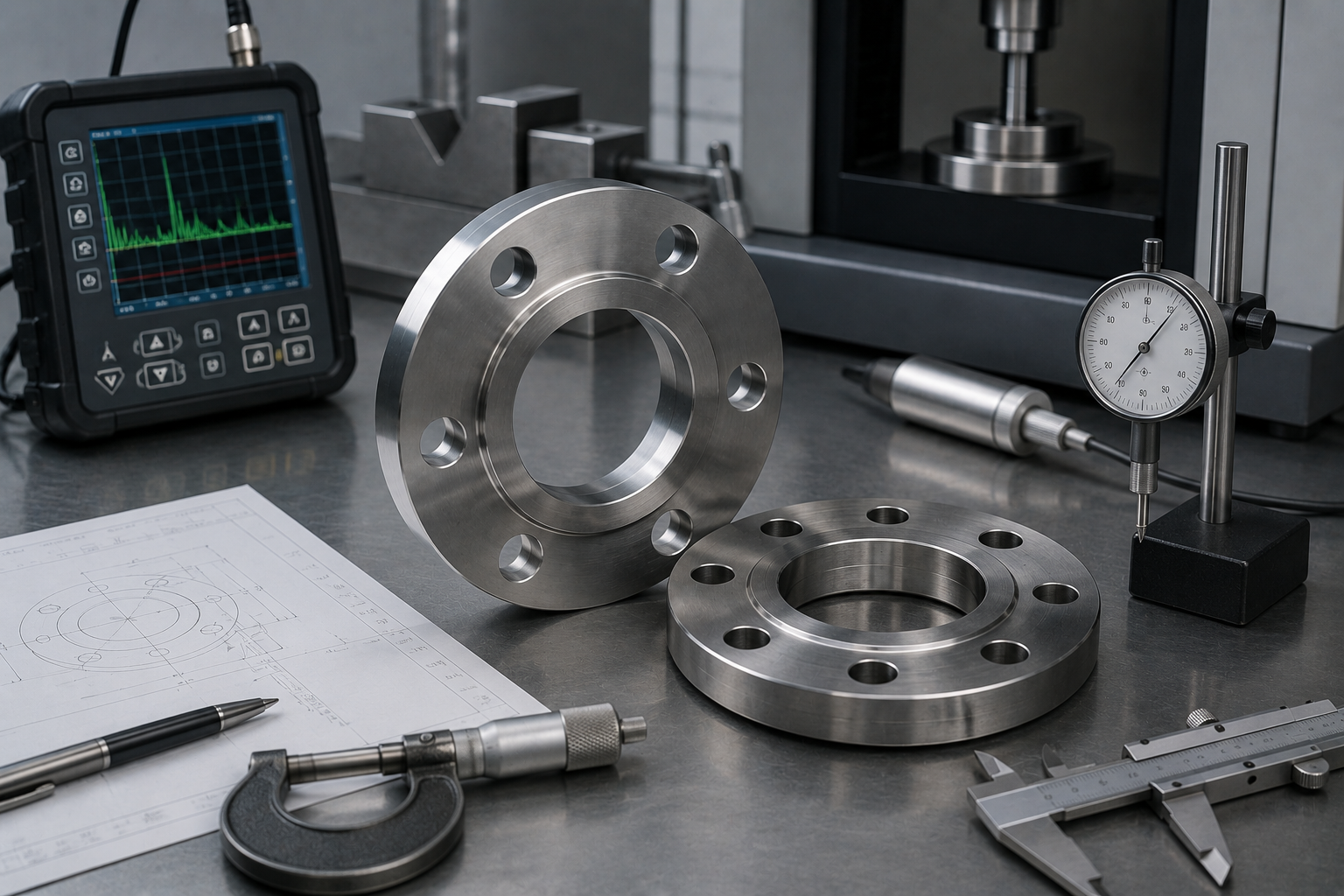
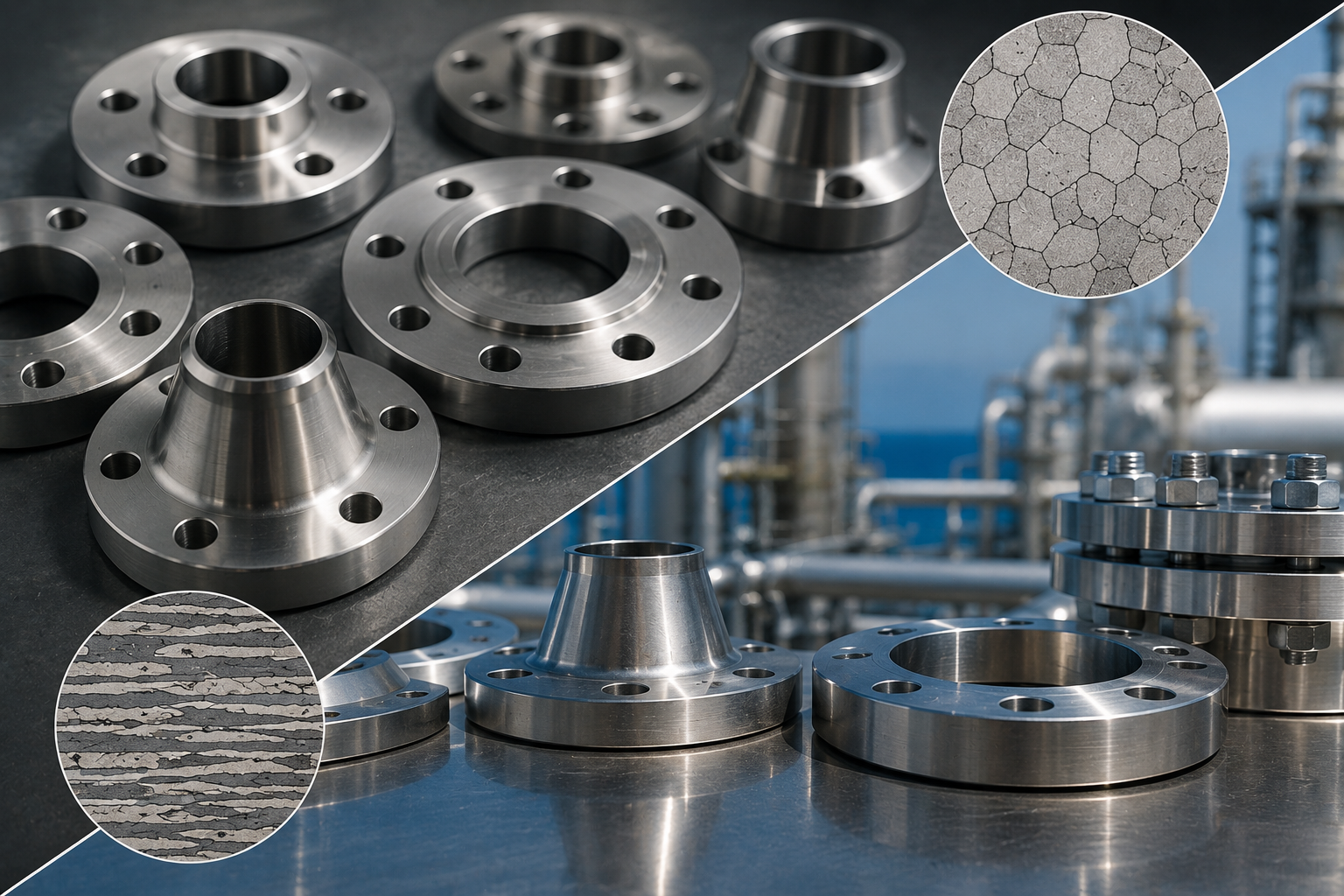
The Austenitic family includes grades F304, F304L, F316, F316L, F317, F317L, F321, and F347. These are in the typical face-centered-cubic (FCC) Austenite phase, offer good overall corrosion resistance and weldability over a wide temperature range and were the traditional work-horse stainless steels for much of the process industry.
The Duplex family of stainless grades in the specification are F51 (also known as 2205 duplex stainless steel), and F53 (also known as super duplex stainless steel or 2507). As the names suggest these steels combine significant amounts of both Ferrite and Austenite within the microstructure (~50%/~50%) offering markedly higher yield strength compared to Austenitic stainless grades and much improved resistance to chloride ion corrosion across multiple service conditions, particularly chloride ion induced stress corrosion cracking, or chloride SCC. Chloride SCC is a potential failure mode that can be particularly relevant in piping systems in contact with marine waters, chemicals or within acidic chloride contained processes.
Standard A182 material grades (e.g. F304, F316) have a maximum allowable carbon content of .080%. The “L” Grades however have a maximum of .030%. This low carbon content serves to minimize carbide precipitation at the grain boundaries during welding. The “carbide precipitation” or more familiarly known as sensitization depletes chromium from the edges of the grains in the Heat Affected Zone (HAZ) of the weld, thereby reducing corrosion resistance in that critical area. For this reason, low carbon L Grade A182 stainless steel is most frequently specified for welded piping systems unless the system is guaranteed to undergo post-weld heat treatment.
The F321 and F347 grades achieve an enhanced resistance to sensitization through the addition of elements which tie up the free carbon and prevent it from bonding with the chromium at the grain boundaries: F321 contains .60% to 1.00% titanium, whereas F347 contains .60% to 1.00% columbium and nitrogen, also referred to as columbium and Niobium.
Overall, with just the seven Stainless Grades of A182 – F304L, F316L, F317L, F321, F347, F51 and F53, industrial process applications from municipal water plants to offshore oil and gas are covered across a tremendous range of chemical environments. Flanges produced to this standard are dimensionally governed by ASME B16.5 (NPS ½” to 24″) and ASME B16.47 for large-diameter applications.
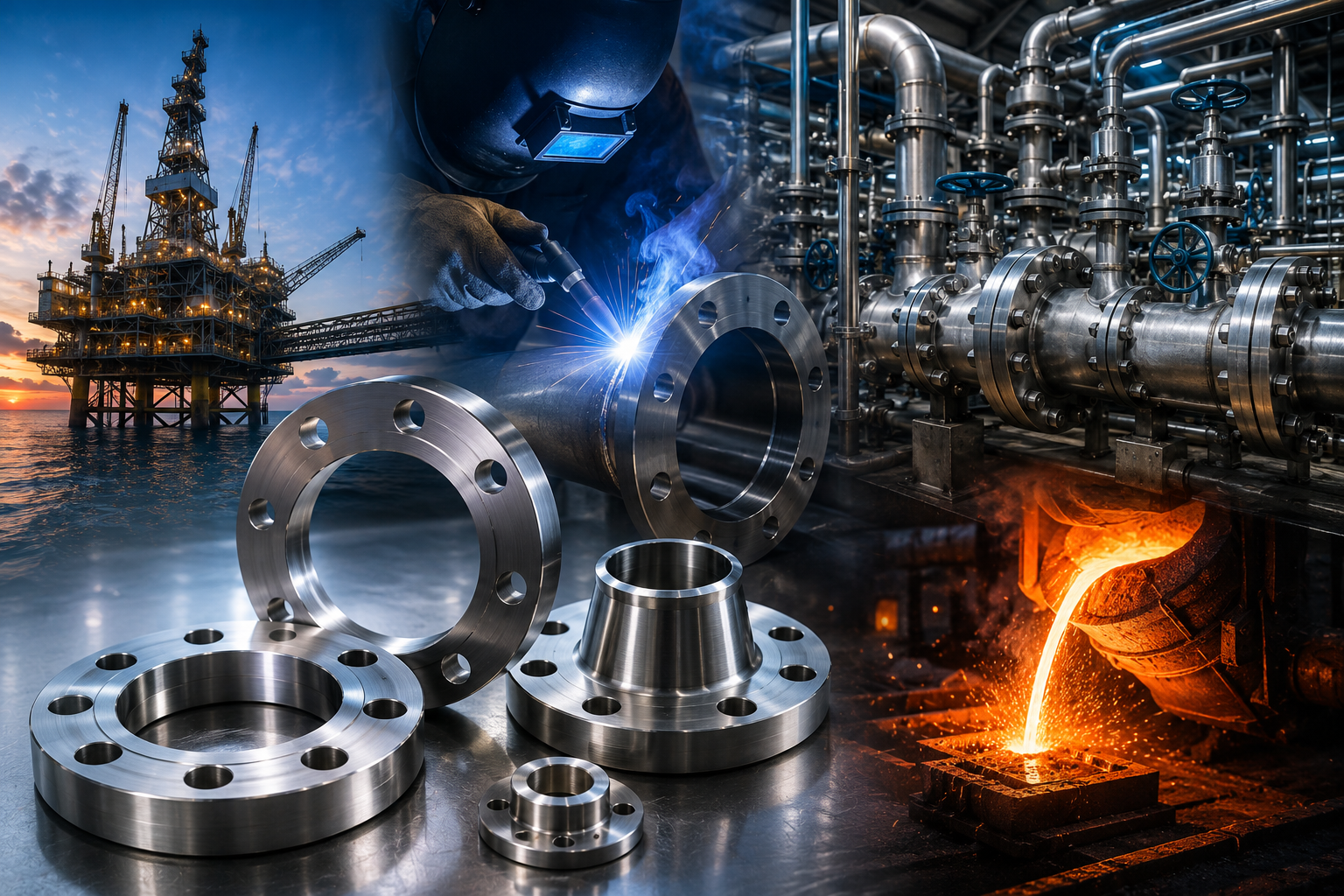
Selecting the correct grade start by correlating the corrosive drivers in the service environment to the chemistry of the alloy you’re considering. Those key factors typically include: Cl concentration, temperature, pH and H2S presence. Among the standard austenitics (300 series), molybdenum is the biggest differentiator; it’s absent in F304L, and in F316L and F317L, it constitutes 2-3% and 3-4% of composition, respectively. That molybdenum addition has a direct and significant impact on the pitting resistance equivalent number (PREN), which the equation Cr + 3.3Mo + 16N uses. The PREN climbs from about 19 for F304L to 25 for F316L – providing fivefold protection against initial pitting attack in chlorides.
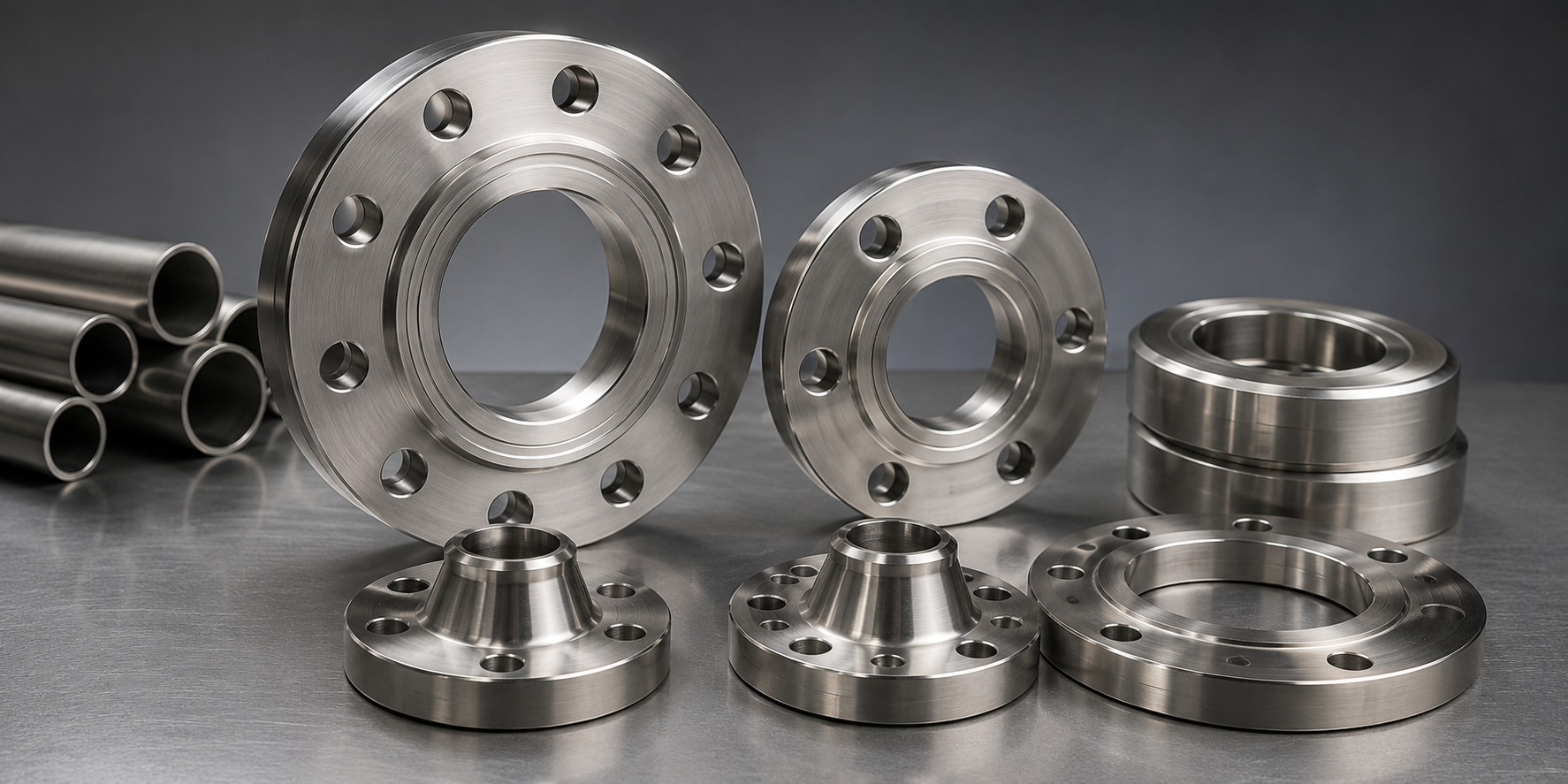
Match your service environment to the correct A182 grade. For final specification, verify against a documented corrosion study for your specific medium, temperature and Cl concentration.
| Service Environment | Recommended Grade | PREN (approx.) | Max Cl⁻ Guidance | Key Characteristic |
|---|---|---|---|---|
| General freshwater / mild atmospheric | F304 / F304L | ~19 | <200 ppm | Cost-effective entry-level austenitic; L-grade for welded joints |
| Seawater / moderate chloride environments | F316L | ~25 | ~1,000 ppm | Mo addition improves pitting resistance; default for chemical process |
| High-chloride / acidic media / phosphoric acid | F317L | ~28 | ~2,000 ppm | Higher Mo than F316L; used in acidic/chloride chemical service |
| High-temperature service >400°C, no PWHT | F321 / F347 | ~19 | <200 ppm | Ti / Nb stabilization prevents sensitization at high temperature |
| High chloride + high pressure; offshore H₂S | F51 (2205 Duplex) | ~35 | Seawater range | NACE MR0175; 2× yield strength of F304L |
| Severe offshore / concentrated acid + chloride | F53 (2507 Super Duplex) | ~43 | Marine / concentrated | Highest corrosion resistance in A182 stainless family |
Here are the typical chemical ranges of the major ASTM A182 grades. (Si/Mnmaxs for austenitic are all the same:1.00/2.00, and aren’t listed for clarity.)
| Grade | UNS No. | C max (%) | Cr (%) | Ni (%) | Mo (%) | Special Elements |
|---|---|---|---|---|---|---|
| F304L | S30403 | 0.030 | 18.0–20.0 | 8.0–13.0 | — | N ≤ 0.10% |
| F316L | S31603 | 0.030 | 16.0–18.0 | 10.0–15.0 | 2.00–3.00 | N ≤ 0.10% |
| F317L | S31703 | 0.030 | 18.0–20.0 | 11.0–15.0 | 3.00–4.00 | — |
| F321 | S32100 | 0.080 | 17.0–19.0 | 9.0–12.0 | — | Ti ≥ 5×C (max 0.70%) |
| F347 | S34700 | 0.080 | 17.0–20.0 | 9.0–13.0 | — | Cb ≥ 10×C (max 1.10%) |
| F51 (2205) | S31803 | 0.030 | 21.0–23.0 | 4.5–6.5 | 2.50–3.50 | N: 0.08–0.20% |
| F53 (2507) | S32750 | 0.030 | 24.0–26.0 | 6.0–8.0 | 3.00–5.00 | N: 0.24–0.32% |
| Grade | Min Tensile Strength | Min Yield Strength | Min Elongation | Hardness max |
|---|---|---|---|---|
| F304L | 485 MPa (70 ksi) | 170 MPa (25 ksi) | 40% | 88 HRB |
| F316L | 485 MPa (70 ksi) | 170 MPa (25 ksi) | 40% | 88 HRB |
| F317L | 485 MPa (70 ksi) | 170 MPa (25 ksi) | 40% | 88 HRB |
| F321 | 515 MPa (75 ksi) | 205 MPa (30 ksi) | 30% | 88 HRB |
| F347 | 515 MPa (75 ksi) | 205 MPa (30 ksi) | 30% | 88 HRB |
| F51 (2205 Duplex) | 620 MPa (90 ksi) | 450 MPa (65 ksi) | 25% | 31 HRC |
| F53 (2507 Super Duplex) | 800 MPa (116 ksi) | 550 MPa (80 ksi) | 15% | 35 HRC |
One figure that jumps out is the duplex F51 yield strength minimum of 450 MPa, compared to 170 MPa for the F304L/F316L austenitics. That 2.6× difference translates to a significant system design benefit: if you have multiple pipe sizes to consider at equivalent pressure ratings, using a duplex flange can mean a smaller wall schedule, saving weight in offshore projects and modular process plant installations.
The honest tradeoff between F304L and F316L comes down to one variable: what is the operating Cl⁻ concentration in your system, typically expressed as ppm, at the maximum operating temperature? If it’s below about 200 ppm, the corrosion resistance of F304L is probably all that’s needed. For F316L, the added 25-40% price premium doesn’t bring any corrosion resistance benefits beyond that point. Common specification mistakes in this area often include using F316L blindly every where on a project or assuming it’s inherently better, simply because of a slight difference in a PREN chart. The choice really should be driven by comparing the PREN of the material to the chlorides present in your actual service, and the corrosion rate based on that level and temperature; not just an assumed superiority based on grade number. Both grades are similar strength-wise too: ASTM A182 Table 2 gives an equal 170 MPa minimum yield strength for all grades except duplex — pressure class designations and allowable working pressures are governed by ASME B16.5.
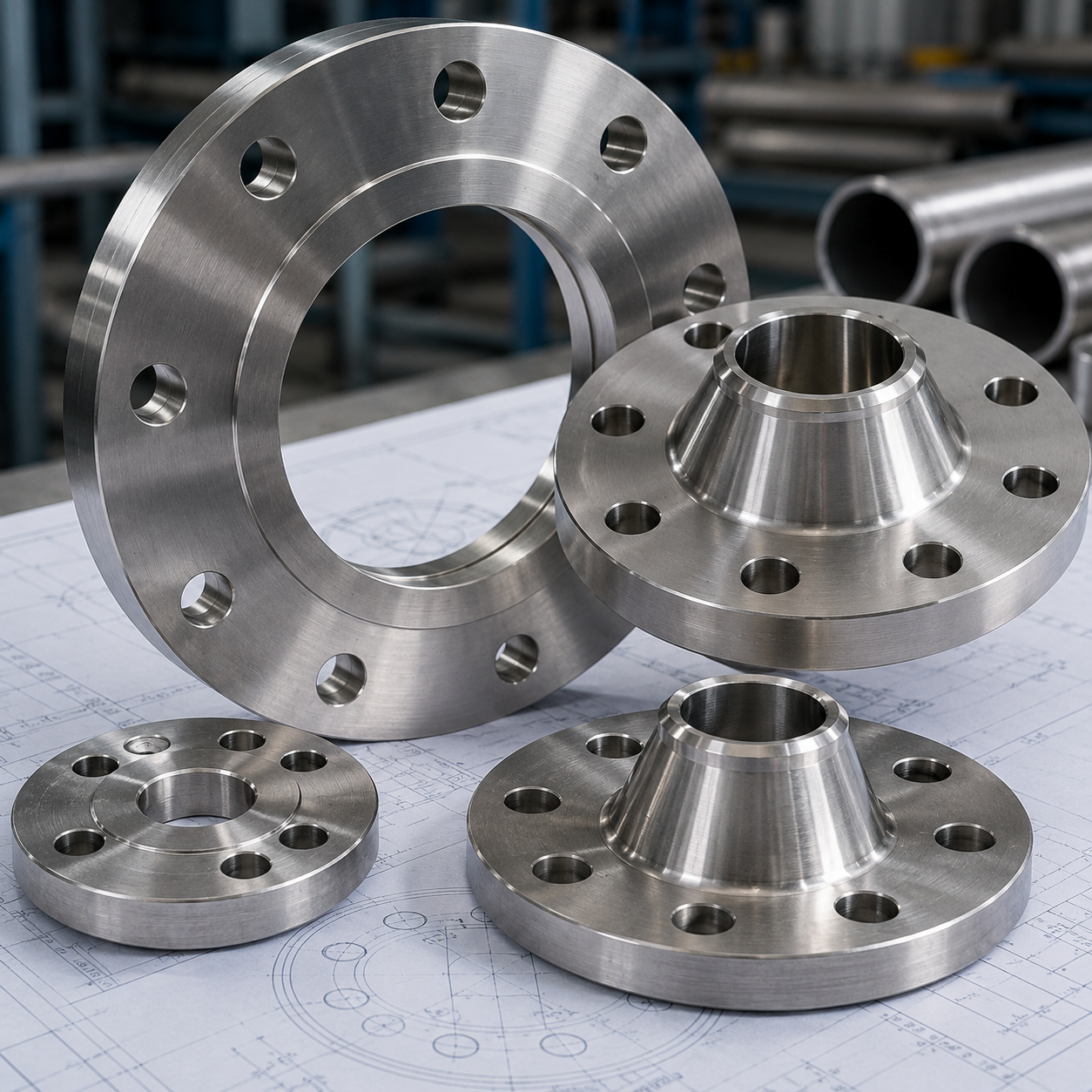
We’ve a spectro XRF analyzer at our facility, so every heat we ship is checked against this table – it’s not a spot check of one batch or heat on our side, it’s 100% of units shipped. Many suppliers skip this, simply relying on the mill’s 3.1 MTR (which is generally reliable, but isn’t independent validation by downstream processor like Synbase). Where this difference really shows up is on narrow composition range grades such as F51 and F53, where an incorrect element in either direction could take a perfectly acceptable material out of spec; nitrogen content for these is so tight it needs spectrometer confirmation and can’t simply be hardness-tested.
These tables are rendered in crawlable html, not buried in a static JPG image file as they’re on the vast majority of supplier sites. Engineers seeking specification data should query this information directly with dedicated tools, making this clear publishing format a specific trust signal in the world of procured component data.
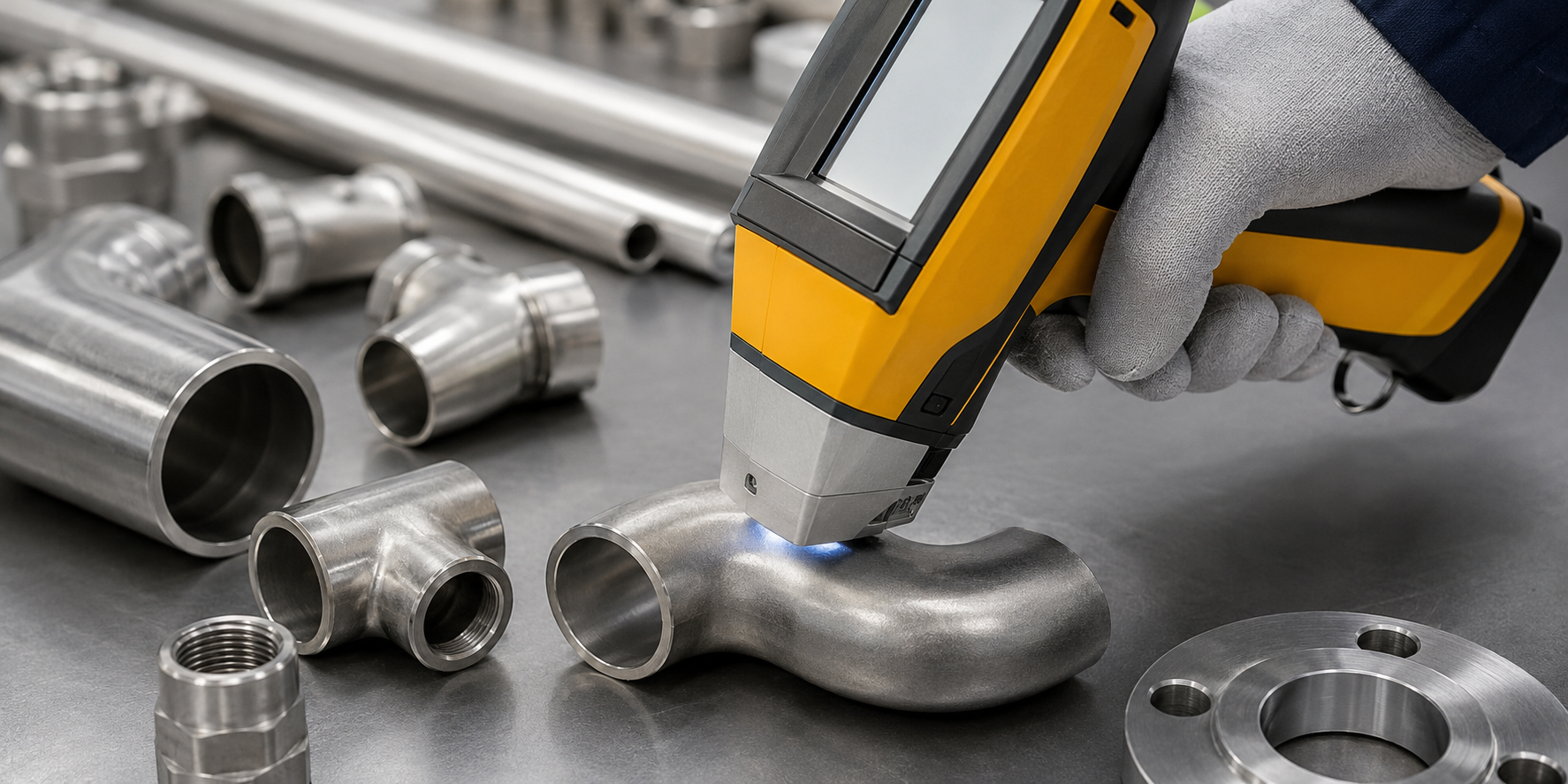
Pressure-temperature (P-T) ratings for stainless steel flanges are defined in ASME B16.5 by material group. The standard austenitic grades – F304L, F316L, and F317L – fall into Group 2.2. Duplex F51 falls into a separate group with distinctly different ratings. The six pressure classes in B16.5 – 150, 300, 600, 900, 1500, and 2500 – designate the maximum allowable working pressure at a baseline temperature, with ratings that decrease as temperature rises due to reduced material yield strength.
An important difference between carbon steel (A105, Group 1.1) and stainless steel (Group 2.2) flanges is that the stainless Group 2.2 ratings at Class 150 and Class 300 are lower than comparable carbon steel flanges in equivalent class designations. This is counterintuitive at first glance – stainless is often perceived as the higher-performance material – but the lower ambient-temperature yield strength of the austenitic grades (170 MPa minimum versus ~250 MPa for A105) is responsible. The crossover come at elevated temperature, where austenitic stainless retains strength better than carbon steel.
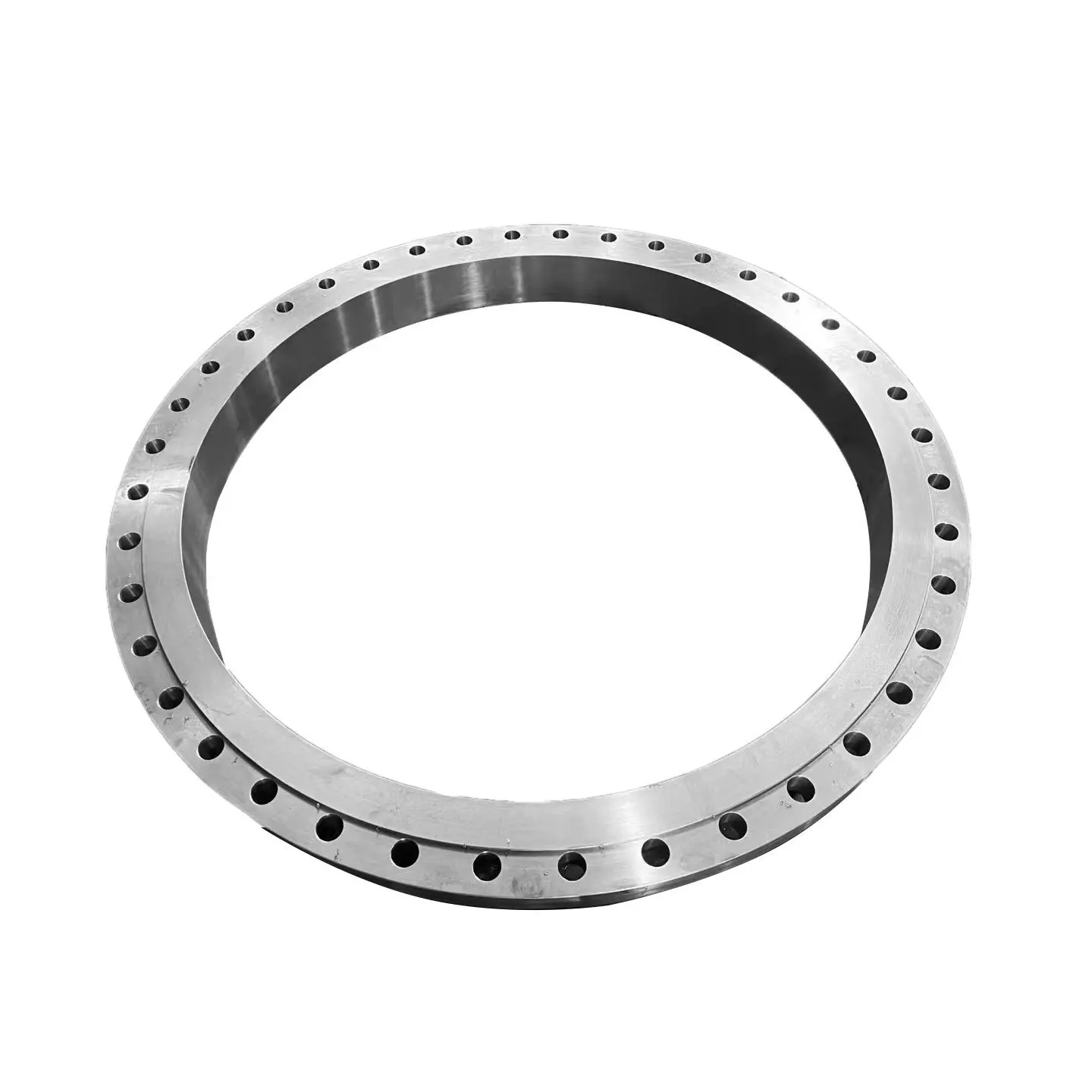
Maximum allowable working pressure at 100F (38C) baseline by pressure class. Values shown are approximate reference figures for ASME B16.5 Group 2.2. Always consult ASME B16.5 Table 2-2.2 for exact project application values across the full temperature range.
| Pressure Class | Max WP at 100°F (approx.) | Equivalent (bar) | Typical Application |
|---|---|---|---|
| Class 150 | ~275 psi | ~19 bar | Low-pressure utility, water, general process |
| Class 300 | ~720 psi | ~50 bar | General oil & gas process, standard chemical plant |
| Class 600 | ~1,440 psi | ~99 bar | High-pressure process, steam, compressor lines |
| Class 900 | ~2,160 psi | ~149 bar | High-pressure, high-temperature refinery service |
| Class 1500 | ~3,600 psi | ~248 bar | Very high pressure, wellhead, subsea lines |
| Class 2500 | ~6,000 psi | ~414 bar | Ultra-high pressure, specialty service |
“The most common cause of premature flange failure we see in returned components is not the base metal, it is gasket incompatibility. An F316L flange paired with a gasket material unsuited to the service medium can fail within 12 months despite the flange itself being entirely correct for the environment. Our procurement process specifically captures gasket specification at the time of order, not as an afterthought.”Synbase Steel, Engineering Review Team
ASTM A182 defines material requirements. Dimensional requirements come from ASME B16.5 and ASME B16.47 series. All three dimensional standards are available from Synbase Steel in A182 stainless grades.
By far the most commonly specified is ASME B16.5 Raised Face (RF). A Flat Face (FF) is used for equipment like cast iron pumps, while Ring Type Joint (RTJ) is for high-integrity sealing at Class 900+.
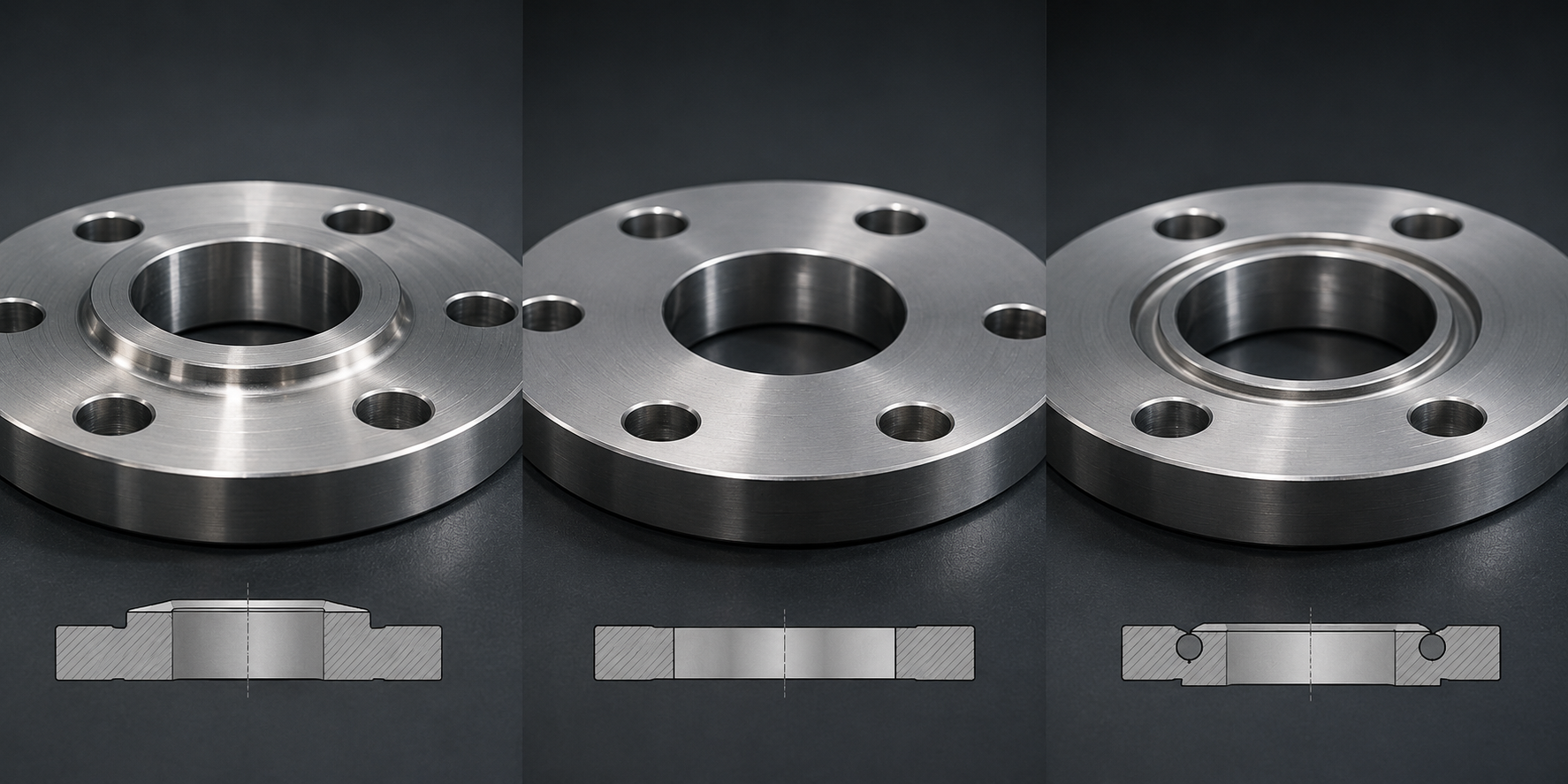
Synbase Steel offers unified MTR documentation across all flange types, simplifying your quality assurance process.
Request a Combined RFQ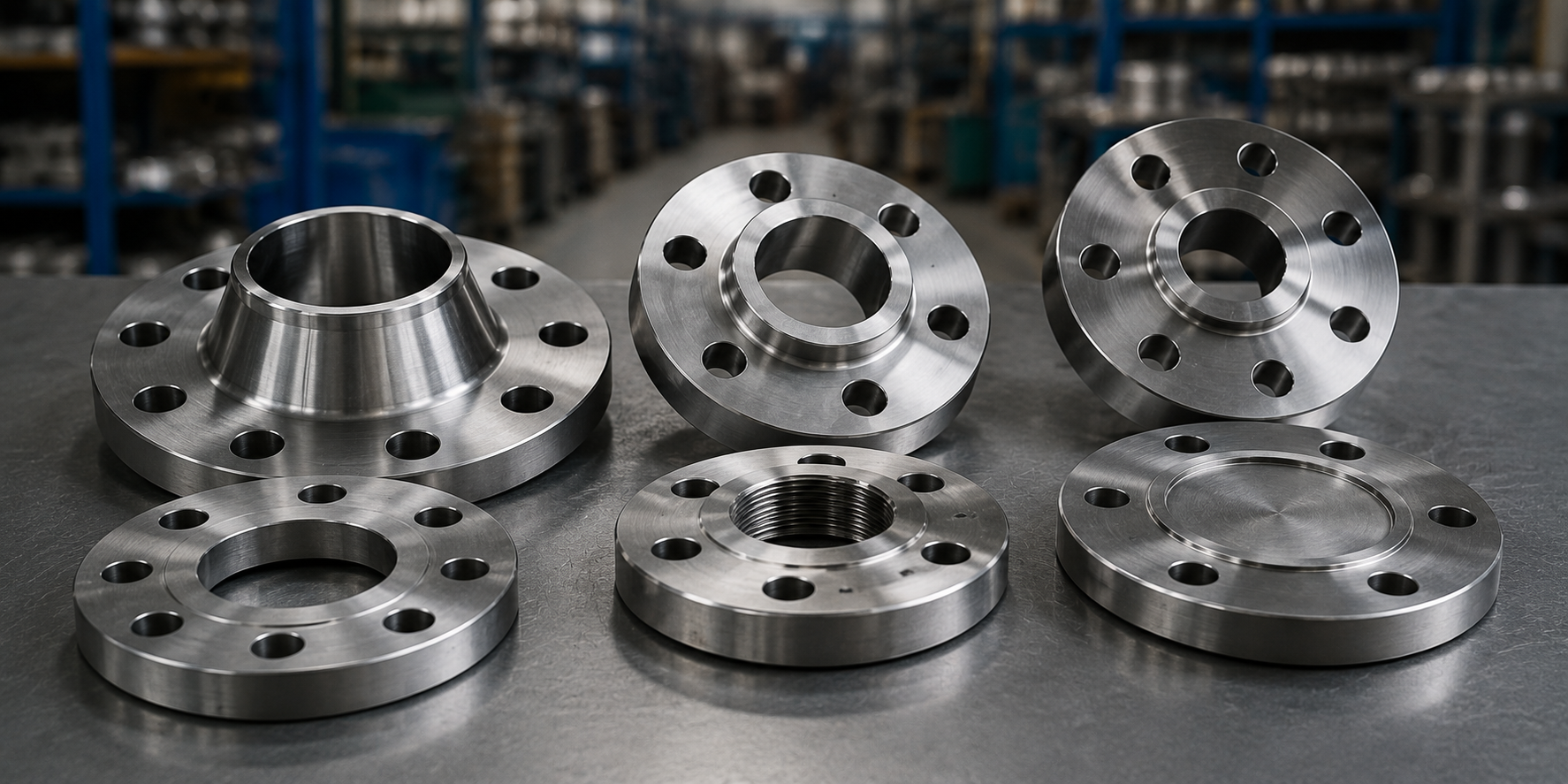
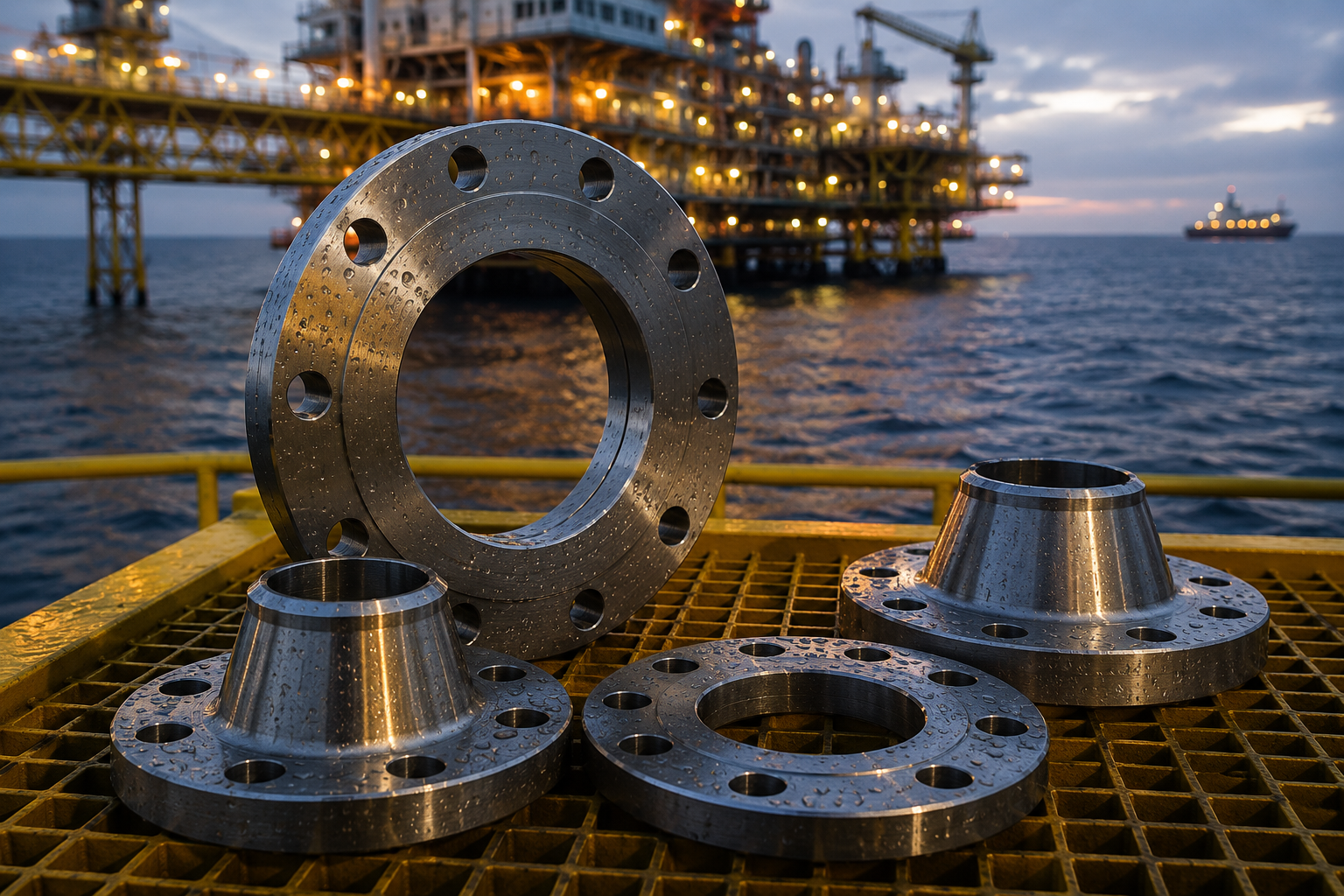
OurA182 stainless flanges are manufactured using the close die hot forging method. This method provide uniform fine grain structure through the total section of flange body. Forgings are hot worked from mill certificated stainless steel billets which are qualified for composition in accordance with A182 from an incoming raw material. Billets are put into forge lines, heated to the correct forging temperature, and pushed/hammered to be pre-shaped to the close net configuration within dimensions to fit to B16.5 or EN 1092-1 tool designs.
All of our 316L stainless and all A182 flanges are “solution annealed” post-forge which are the one and only heat treatment cycle that effectively re-dissolves carbides and puts back in the corrosion resistant matrix that make stainless so stainless. ASTM A182 says it is absolutely mandatory and we mean it: A non-annealed A182 will fly our PMI machine on the surface yet it has a sensitized matrix within and that will fail us on time by the way, by intergranular corrosion. Postanneal, the flanges will then be CNC machined to our stringent final dimensions. We will then perform the remainder of our detailed inspection sequence on both flanges.
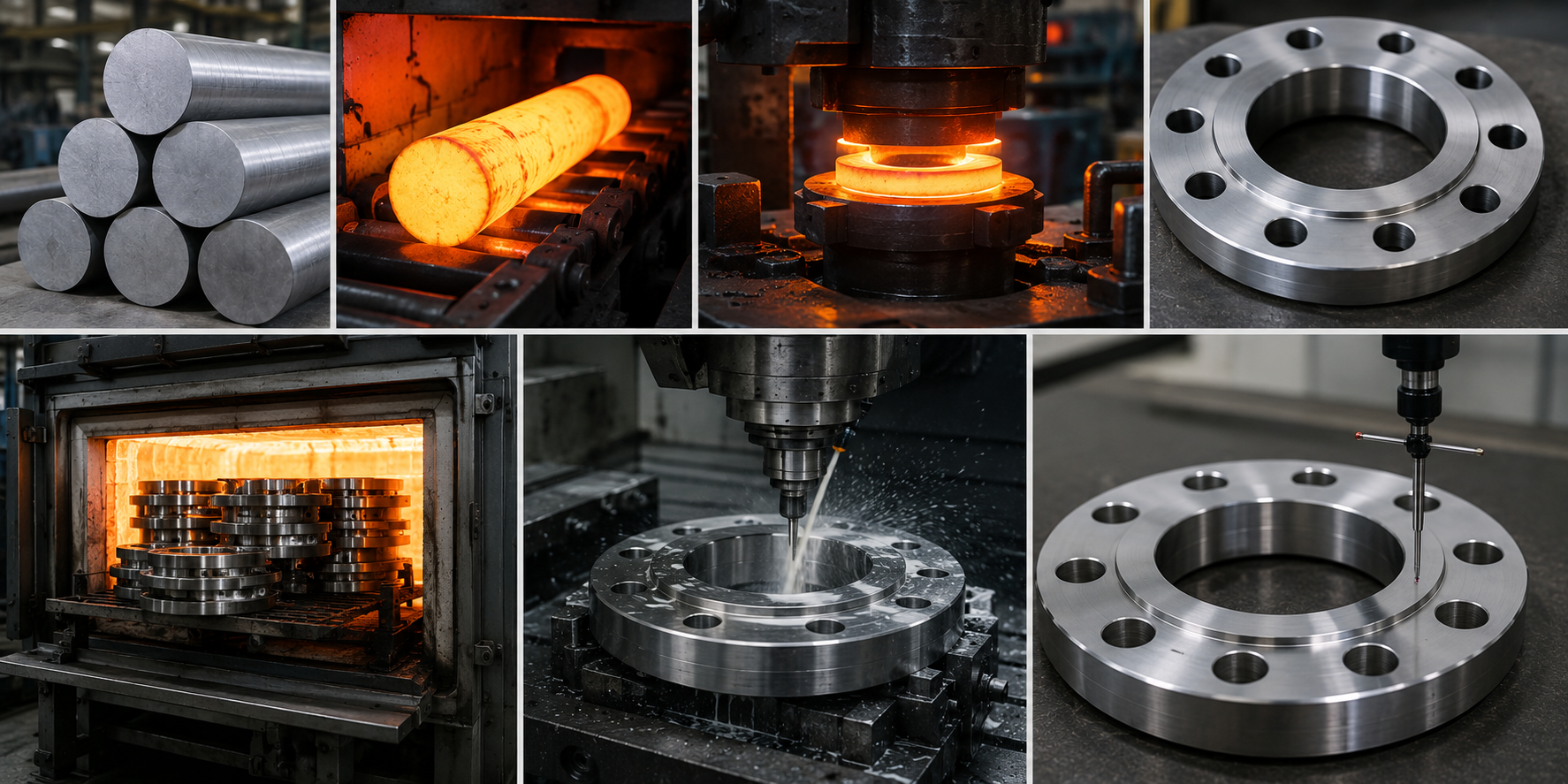
Our rigorous quality protocol involves the following steps for every production run:
Our complete certification package includes:
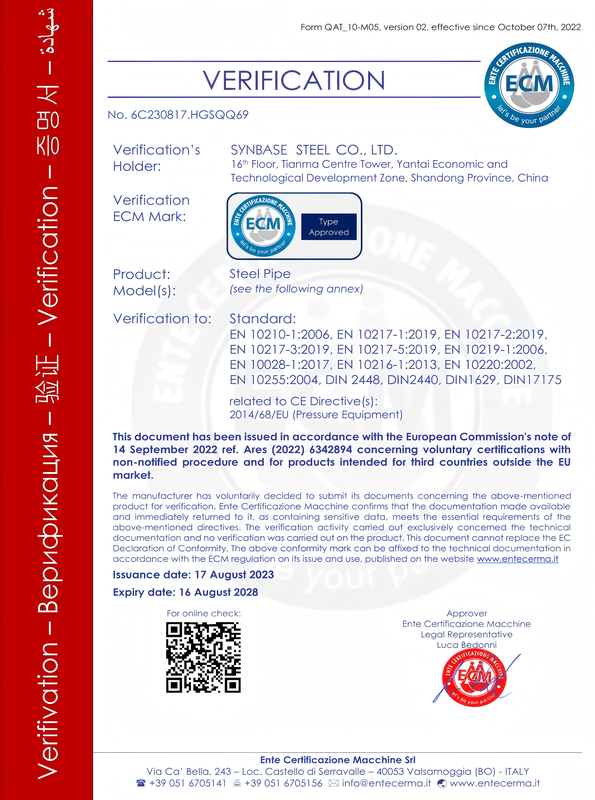
Synbase Steel holds ISO 9001:2015 certification covering manufacturing and quality management, and we are qualified for PED 2014/68/EU supply, allowing us to issue CE marking to European projects. NACE MR0175 / ISO 15156 suitability for duplex F51 grades in HS sour service is verified through confirmed composition and heat treatment compliance.
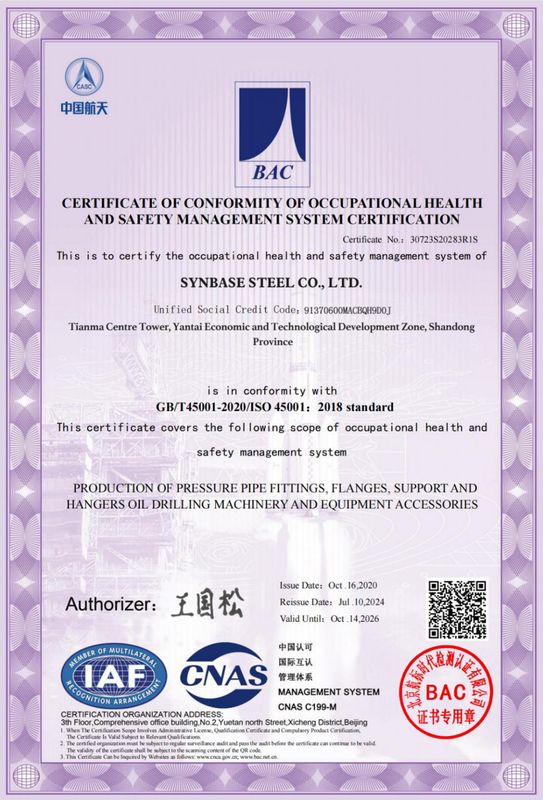
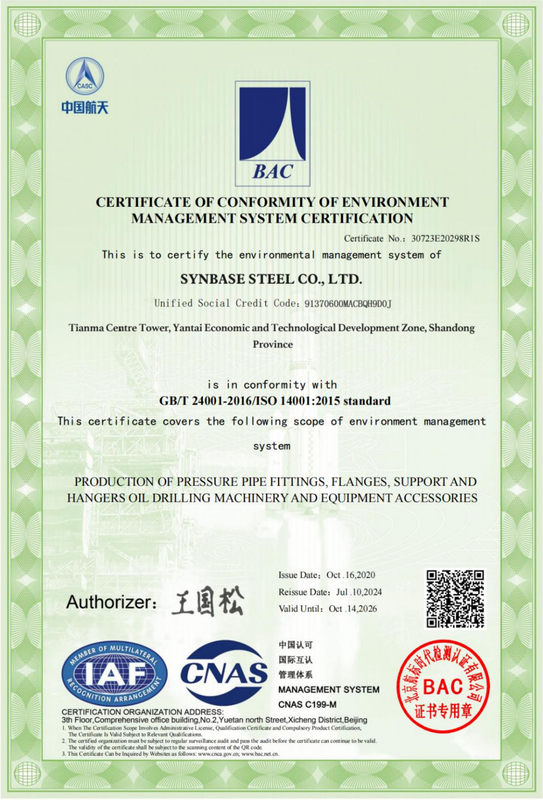
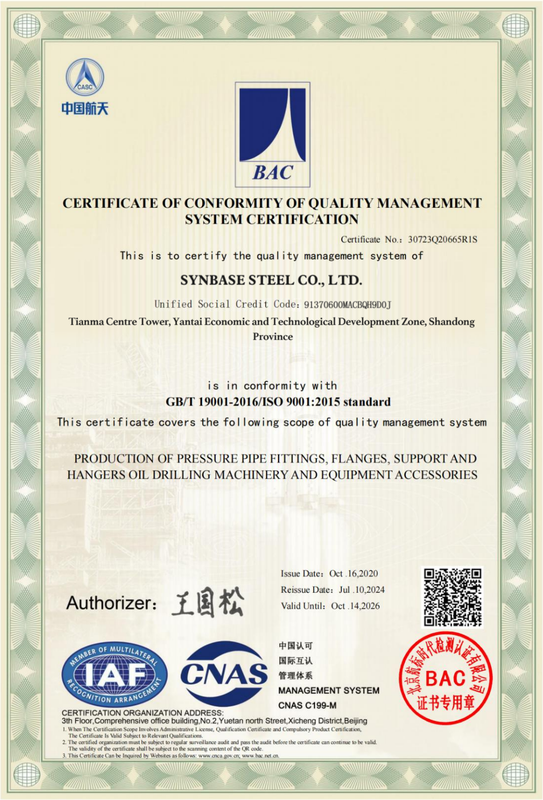
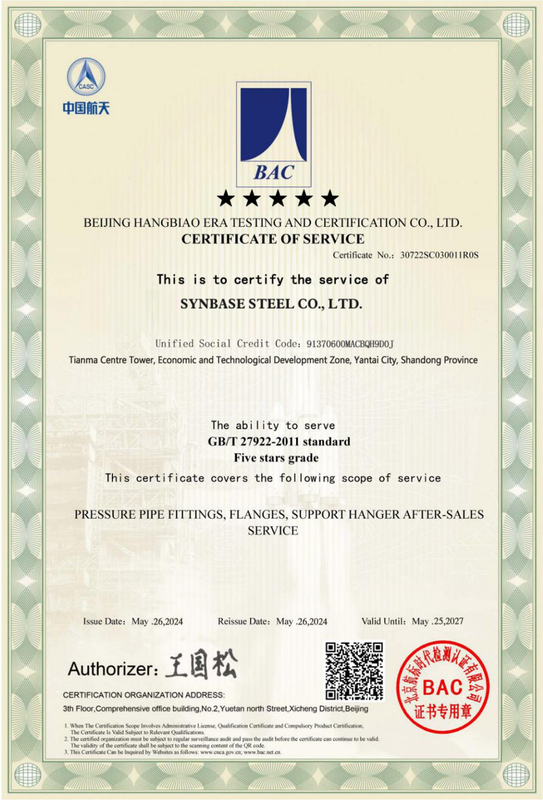
The mandatory 100% PMI test is an exceptional practice; most manufacturers run batch-only testing. What risks does this conventional sampling approach pose? Simply put, it becomes insufficient in the face of material substitution or heat segregation-critical concerns for any supply chain. Unquestioningly, the material documented in the MTR would be different from the uninspected 90% of the batch if such substitutions were made. Given the prevalent issue of country-of-origin material substitution within any commodity supply chain, 100% unit-level PMI inspection offers objective validation beyond just MTR review. Accordingly, we automatically include this required PMI check on all quotation line items-it’s not an optional feature.
Should your QAP necessitate a dual-party EN 10204 3.2 certification, we’ll work directly with certified third-party laboratories to manage your inspection and reporting needs. This won’t introduce additional lead times for standard grades. Kindly notify your technical sales representative of your requirements before order placement.
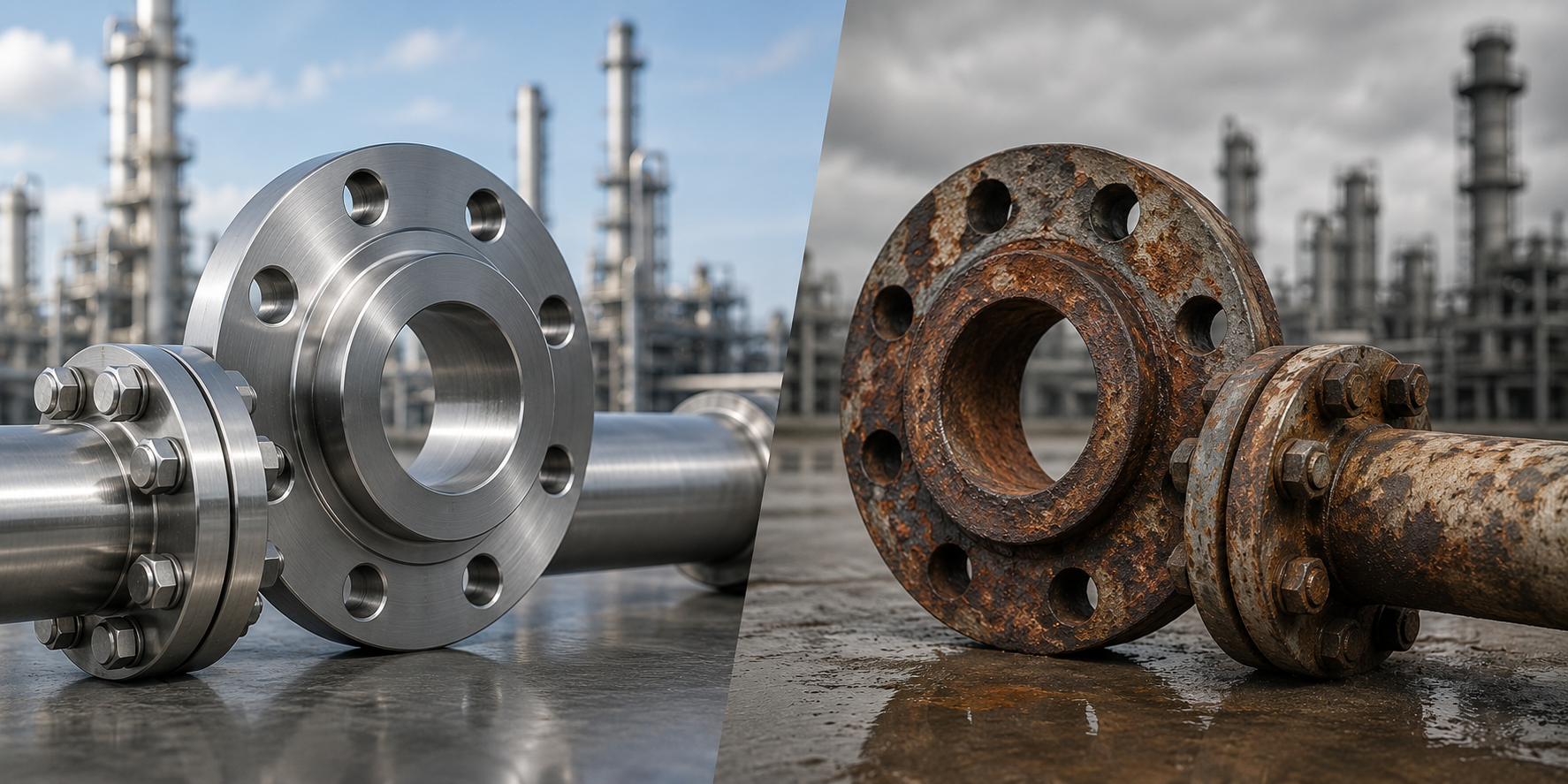
Stainless A182 flanges carry a proven service life in corrosive environments well over three decades, while carbon steel flanges used in the same environments will generally require replacement every 5-15 years. An A182 stainless flange will cost about three to five times more upfront than a comparable carbon steel option, but its total cost of ownership, considering replacement interval savings, is less than one-third of the carbon steel alternative over its lifecycle.
More compelling isshutdown cost . One unforced shutdown to replace corroded flanges in the process stream can more than dwarf the incremental initial equipment premium for an allstainlessprocess. In an offshore installation, where day rates for shutdowns often run in the six-figure range, the mathematics becomes skewed decidedly in favor of specified A182 stainless grade to suit requirements up front.ROIanalysis for specified-grade accuracy-selecting F316L over F304L for sufficient chloride services – follows the exact same math, but on a smaller scale.
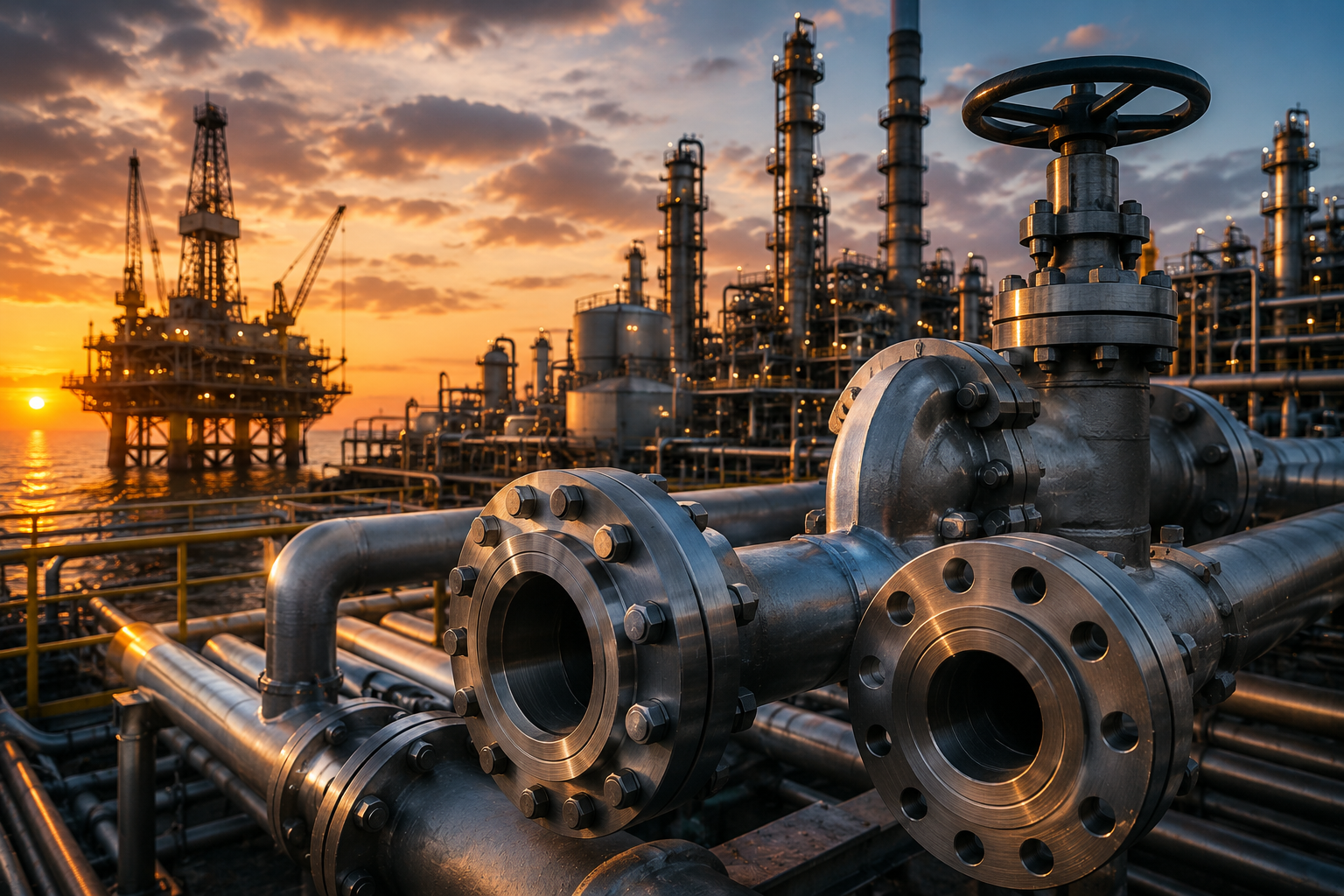
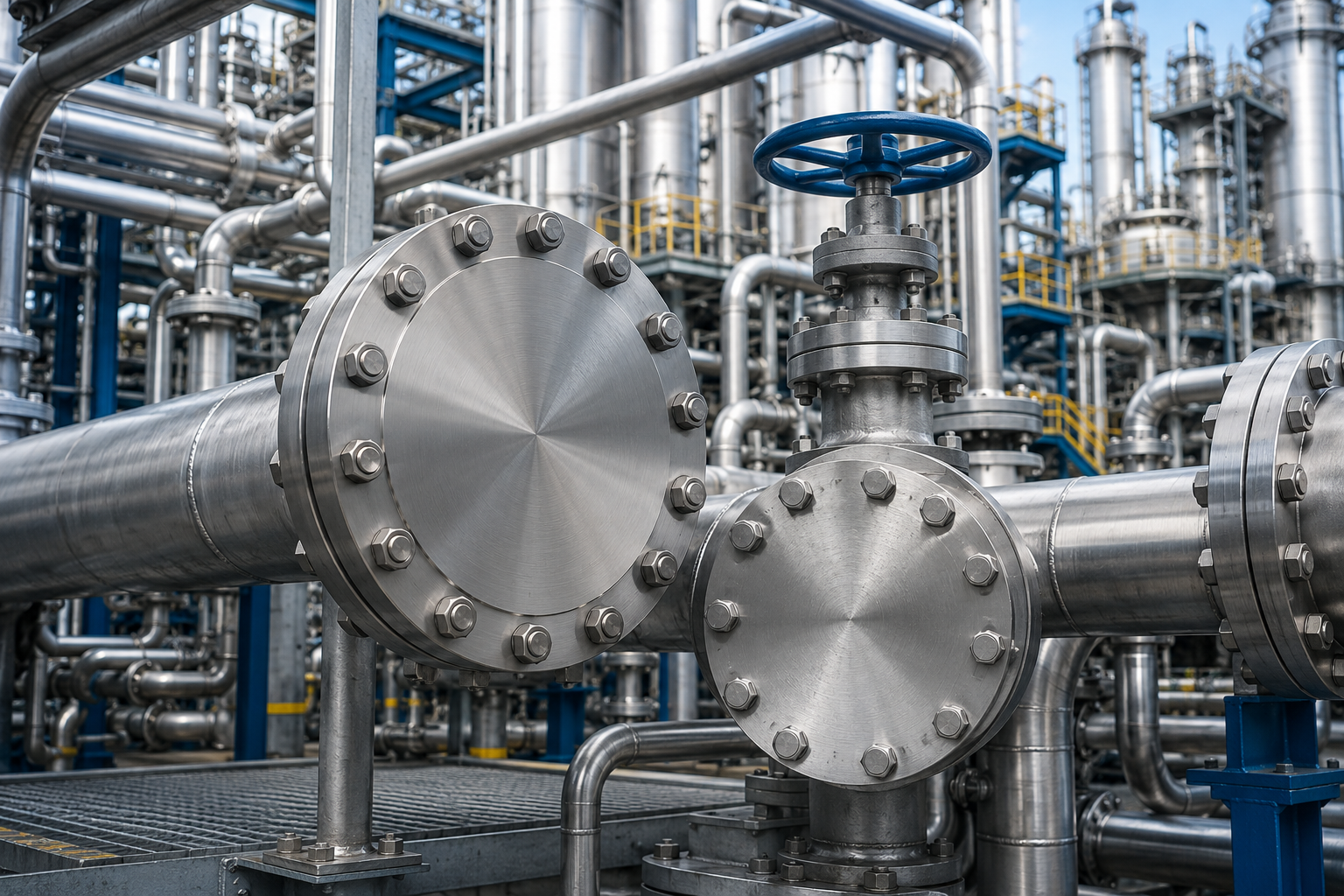
The A182 stainless flange range finds a large range of industrial applications. Grade and Class specification varies enormously by industry and selecting incorrectly can build in exactly the kind of maintenance and compliance exposures identified in the lifecycle argument above.
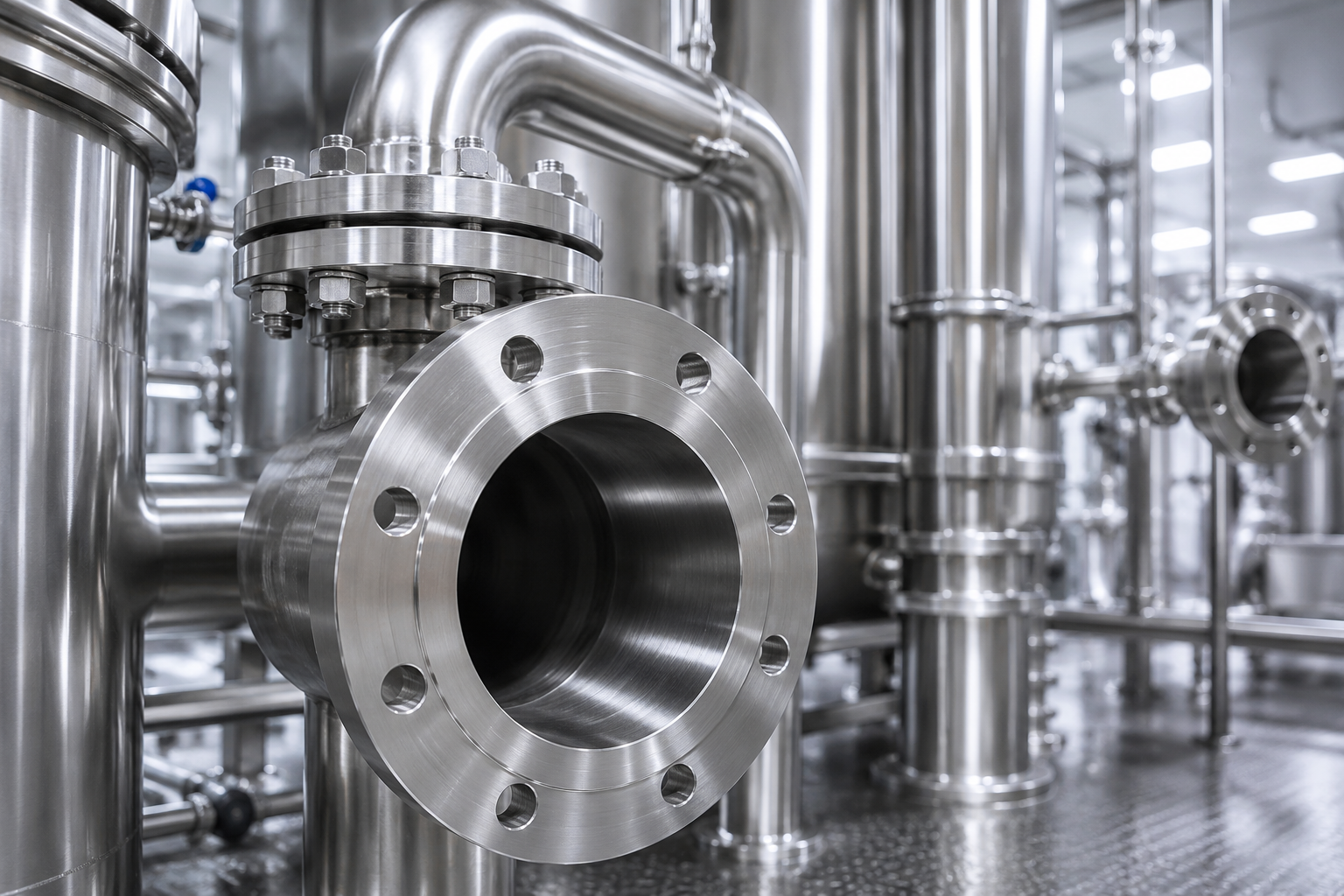
A stainless flange order shipped from a manufacturer missing one of these specification criteria creates either a plant delay (waiting for the plant to query for needed information) or (even more problematically) it forces the plant to guess at the material spec with likely non compliance to actual service needed. the checklist below captures every available specification input to uniquely define one A182 flange product. Filling out will take 5 mins and it stops 90% of the RFQ process.
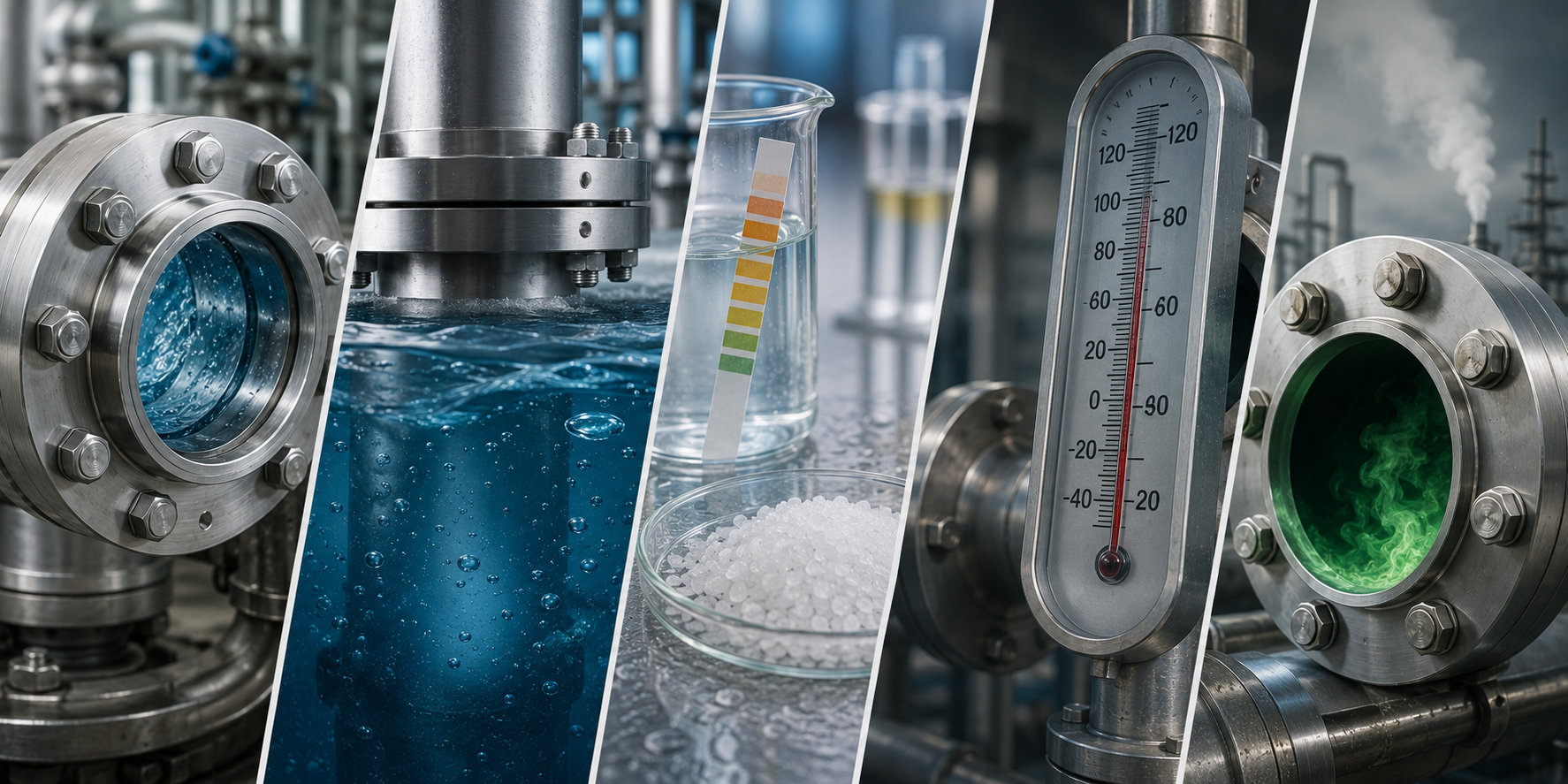
Provide medium contact with bore, chloride ppm, pH range, temperature, HS presence. Four factors drive flange grade selection (F304L / F316L / F317L / F321 / F347 / F51 / F53).
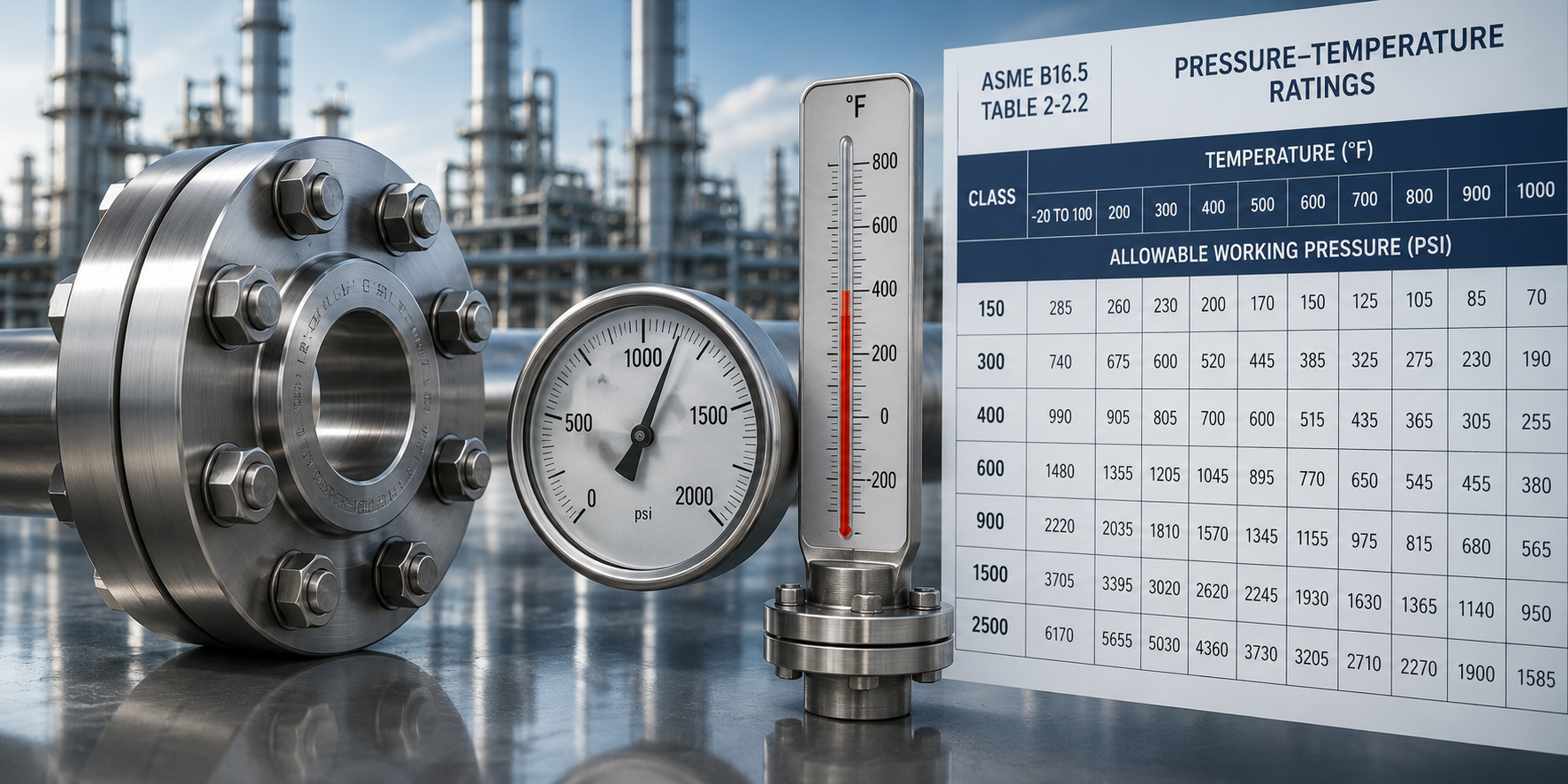
Identify operating pressure/temperature, verify A182 grade provides ASME B16.5 Table 2-2.2 P-T rating for class. Ratings drop sharply above 200°F – verify the ASME B16.5 table directly at your service temperature.
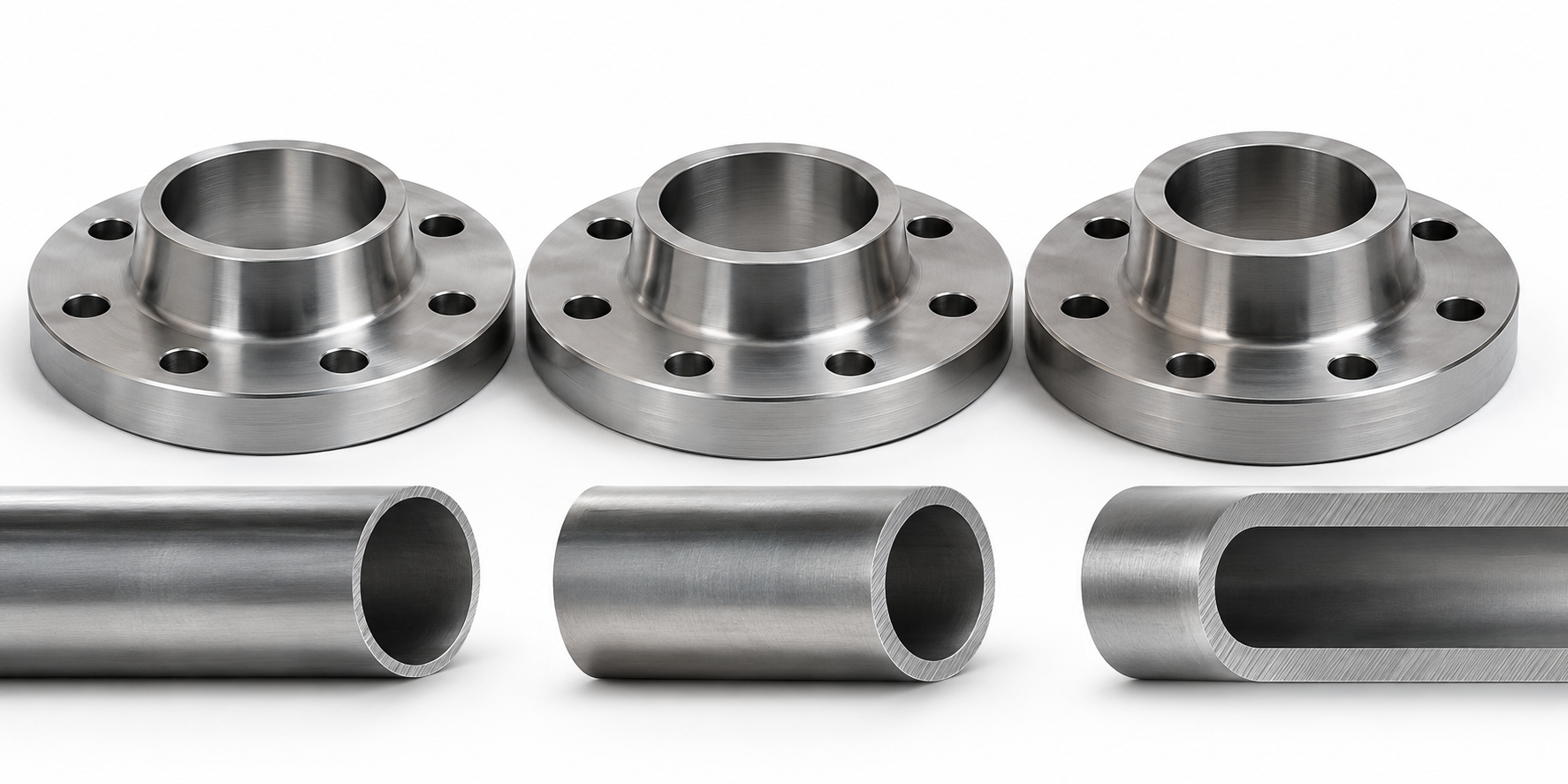
Indicate ASME B16.5, ASME B16.47 (Series A or B) or EN 1092-1. For face type, specify raised face (RF), flat face (FF), or ring type joint (RTJ). RF for class 150-600 is standard, RTJ is standard for class 900 and above.
Specify flange NPS (“ – 60”) and the bore ID aligned with your pipe wall schedule (SCH 10S / SCH 40S / SCH 80S). The bore ID is critical as it directly impacts the hub bore measurement on weld neck and socket weld flanges.
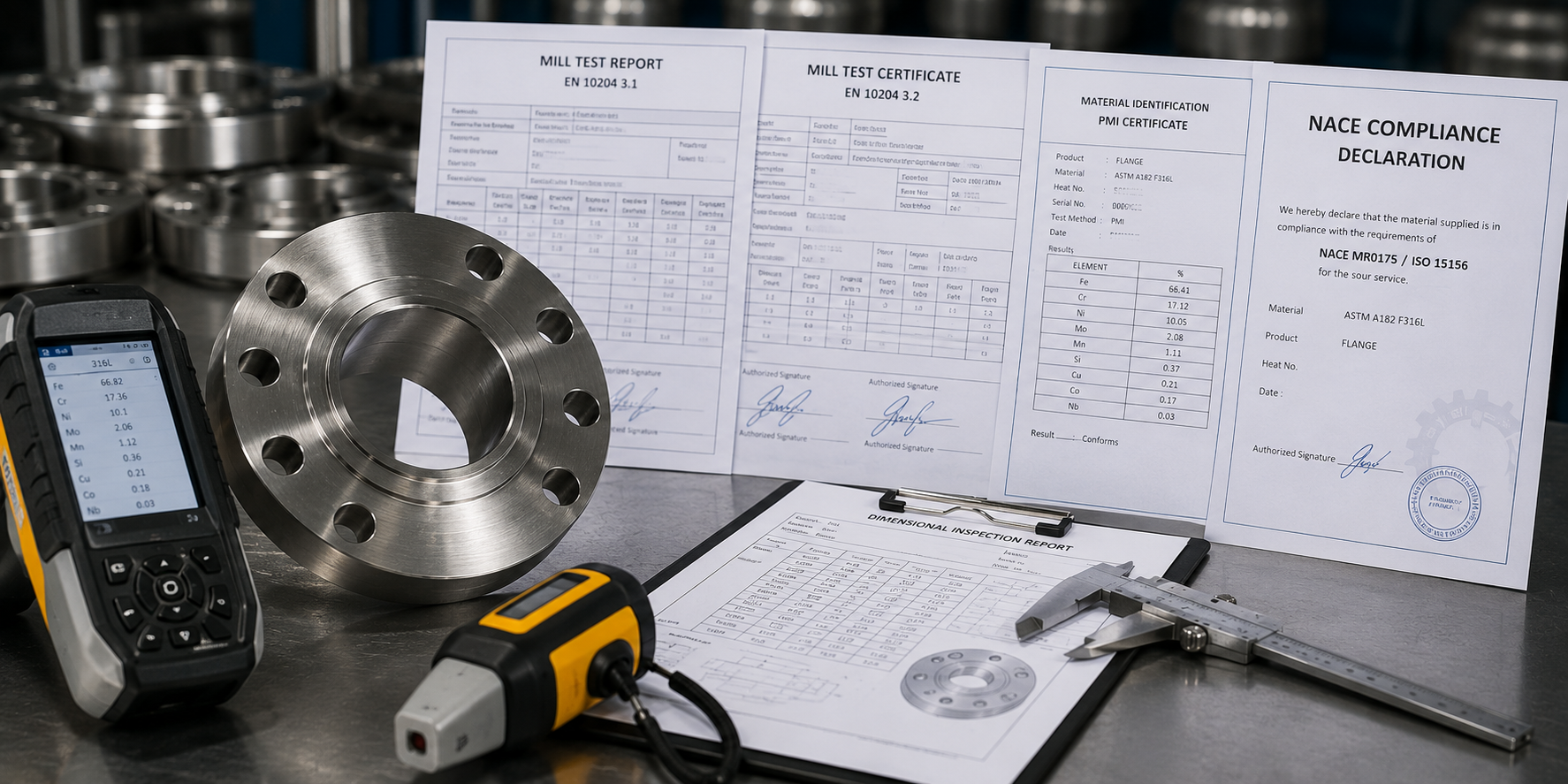
Provide EN 10204 3.1 MTR (standard), EN 10204 3.2 MTR (additional dual signature required by owner), PMI certificate, or separate CoC. NACE compliance declaration if required.
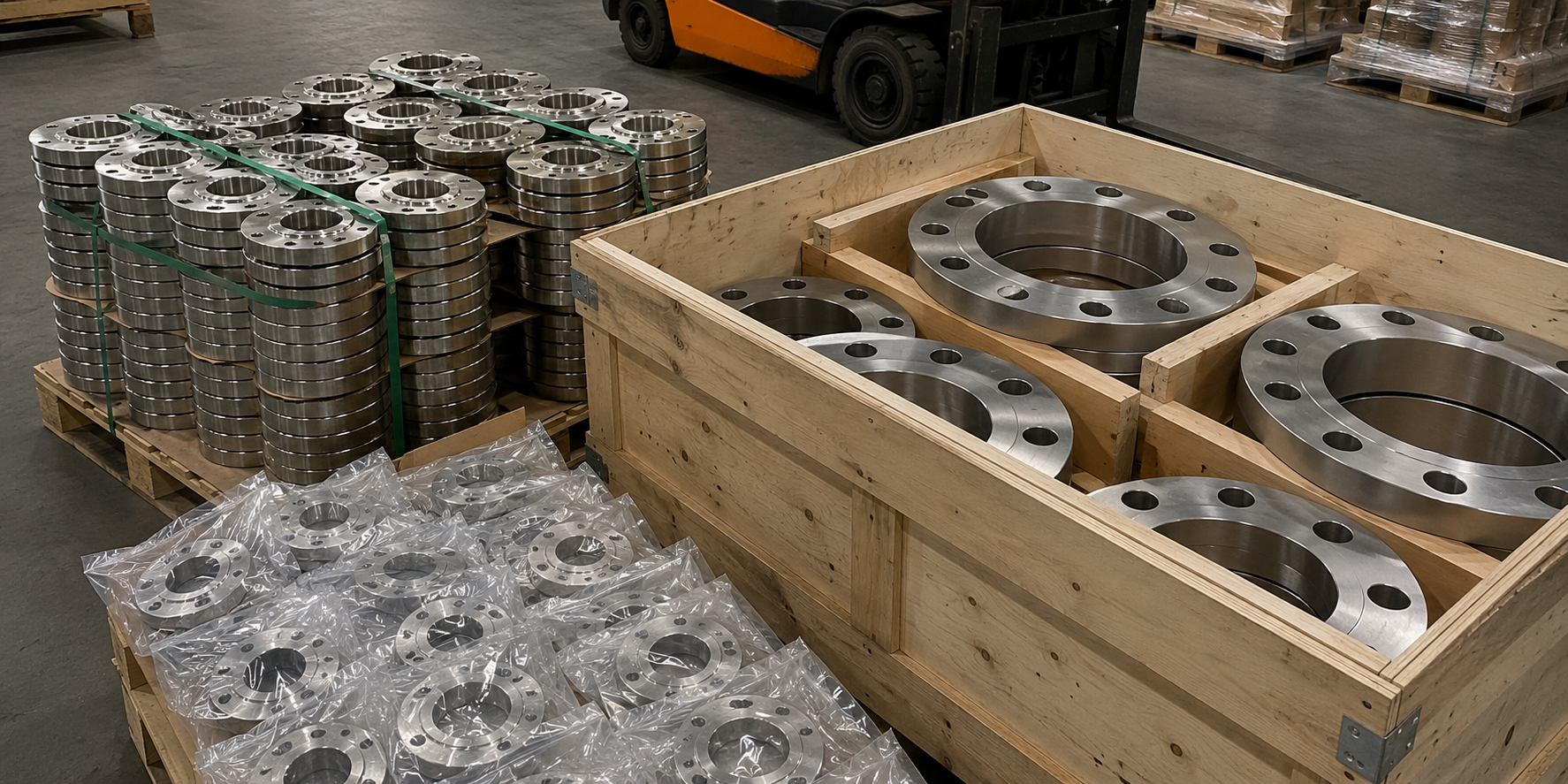
Provide count of flanges per size and grade. Specify packaging type: bulk shipment, polybag individual or wood crate for export shipment. For NPS 16” and higher sizes or heavy flanges, a wood crate is required for sea freight.
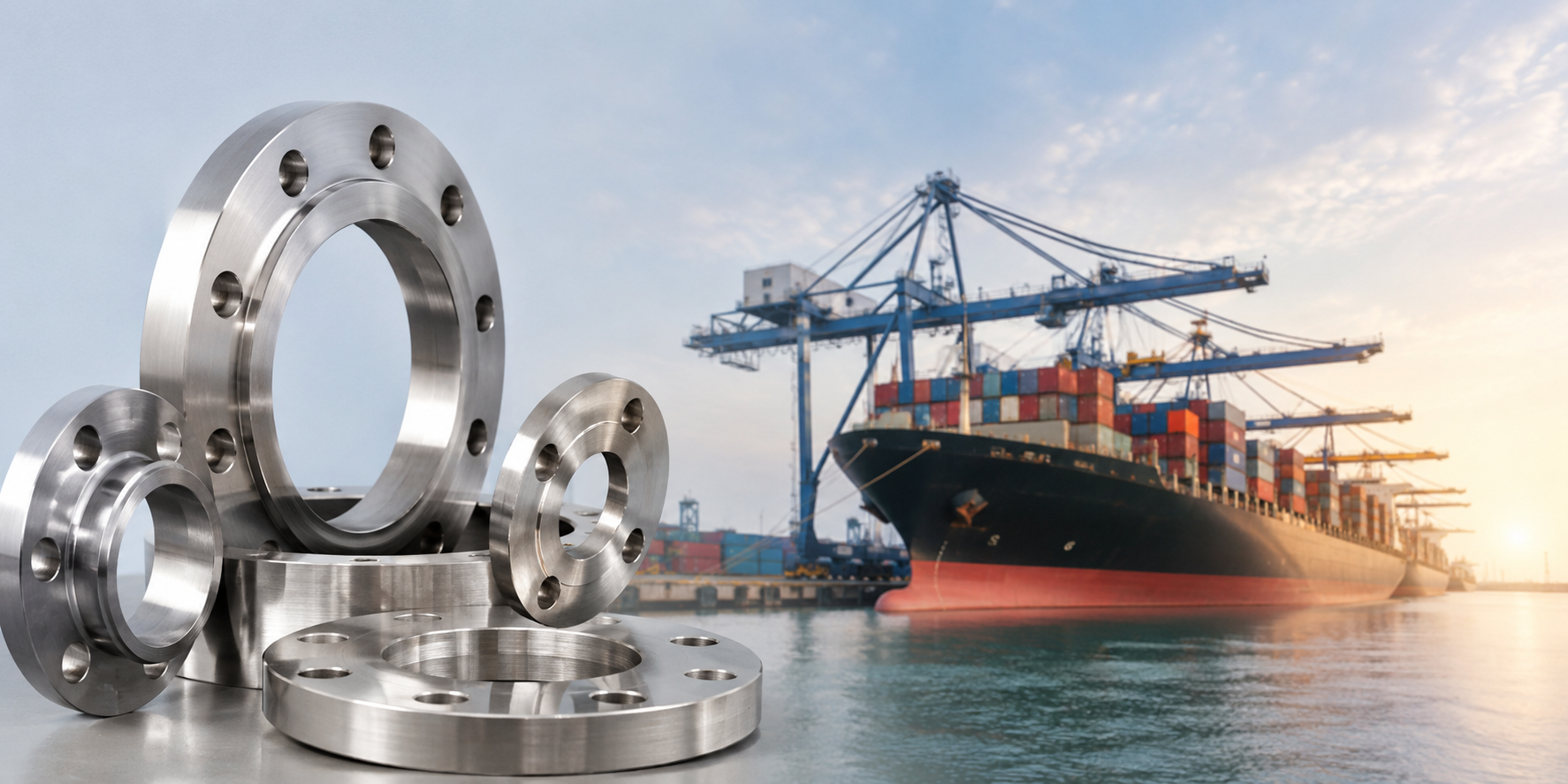
Specify Incoterms: FOB (Shanghai or Tianjin port), CIP to your site, or DAP. Standard stock flanges (F304L / F316L) ship FOB in 3-7 business days. For custom sizes, non-standard pressures or grades outside of standard stock range F317L, F321, F347, F51, F53 we usually have lead times of 20-30 days from order placement.
MOQ for F304L and F316L standard stock items (NPS ½”-12”, ASME B16.5, Class 150 / 300): 25 each size/grade. For custom sizes, pressures and other grades, we often support single piece orders with 20-30 day delivery and full certification package.
Synbase can offer a single point of contact, integrated RFQ, and unified MTR record support for active stainless steel pipe fitting projects where both flanges and fittings are supplied from a single source.
Want physical verification and full material traceability of your flange grade before you confirm your first production order? You may request a single piece complimentary sample flange today.
Request Free Sample FlangeStreamline your specification process and ensure full technical compliance with our dedicated digital resources for ASTM A182 stainless steel flanges.
Input your specific process variables—including chloride concentration, operating temperature, and H2S presence—to automatically identify the optimal austenitic, duplex, or super duplex flange grade for your environment.
Access SelectorAccess comprehensive Pressure-Temperature (P-T) rating charts and dimensional guidance perfectly aligned with ASME B16.5 and ASME B16.47 standards for all A182 stainless steel material groups.
View Class GuideA standardized, downloadable RFQ template designed to ensure all critical engineering parameters—from face finish to MTR certifications and NDE requirements—are captured accurately for fast quoting.
Download Form