Send Your RFQ to Synbase Steel
Prefer to send drawings, BOMs or attachment lists by email? sales@synbasesteel.com

CARBON STEEL, STAINLESS STEEL & ALLOY GRADES.
Pressure Class: 150 – 2500. Size: NPS: 1/2” – 24”.
ISO 9001:2015 Approved. Exported to over 100 countries from E-CHENG STEEL GROUP.
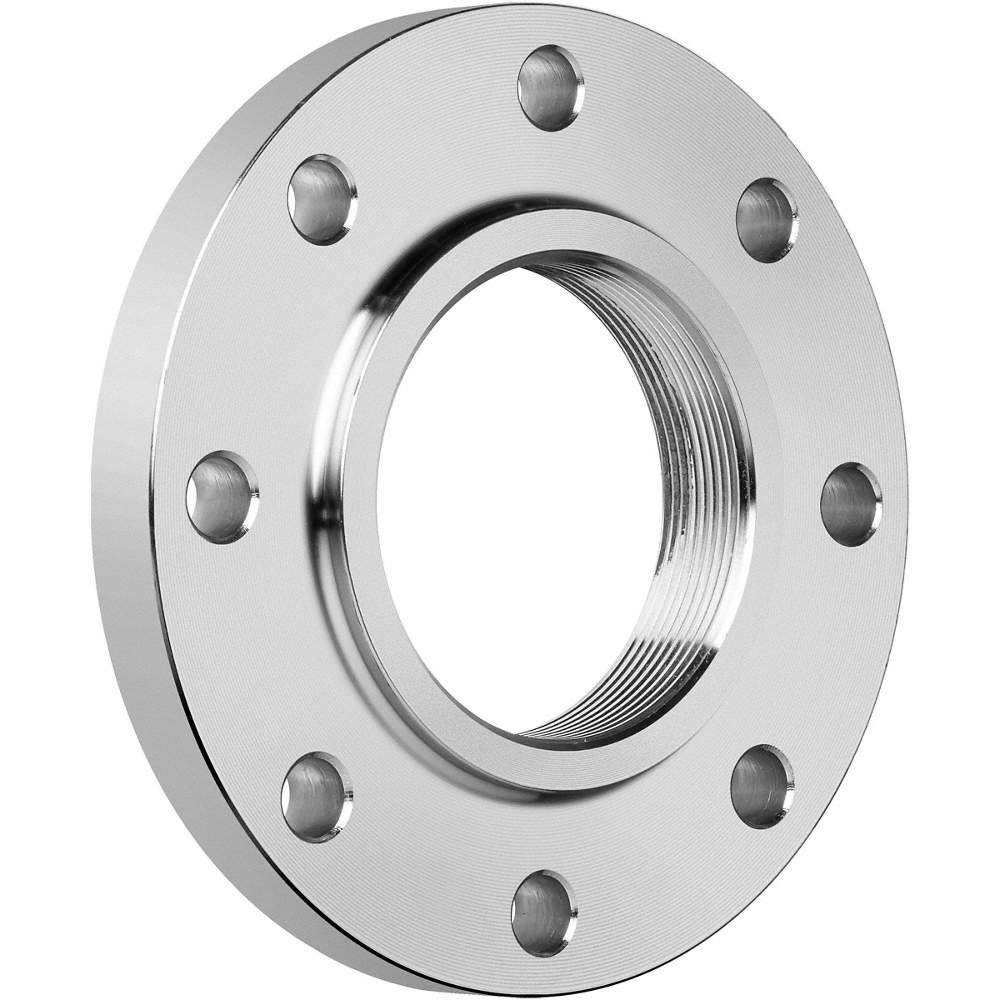
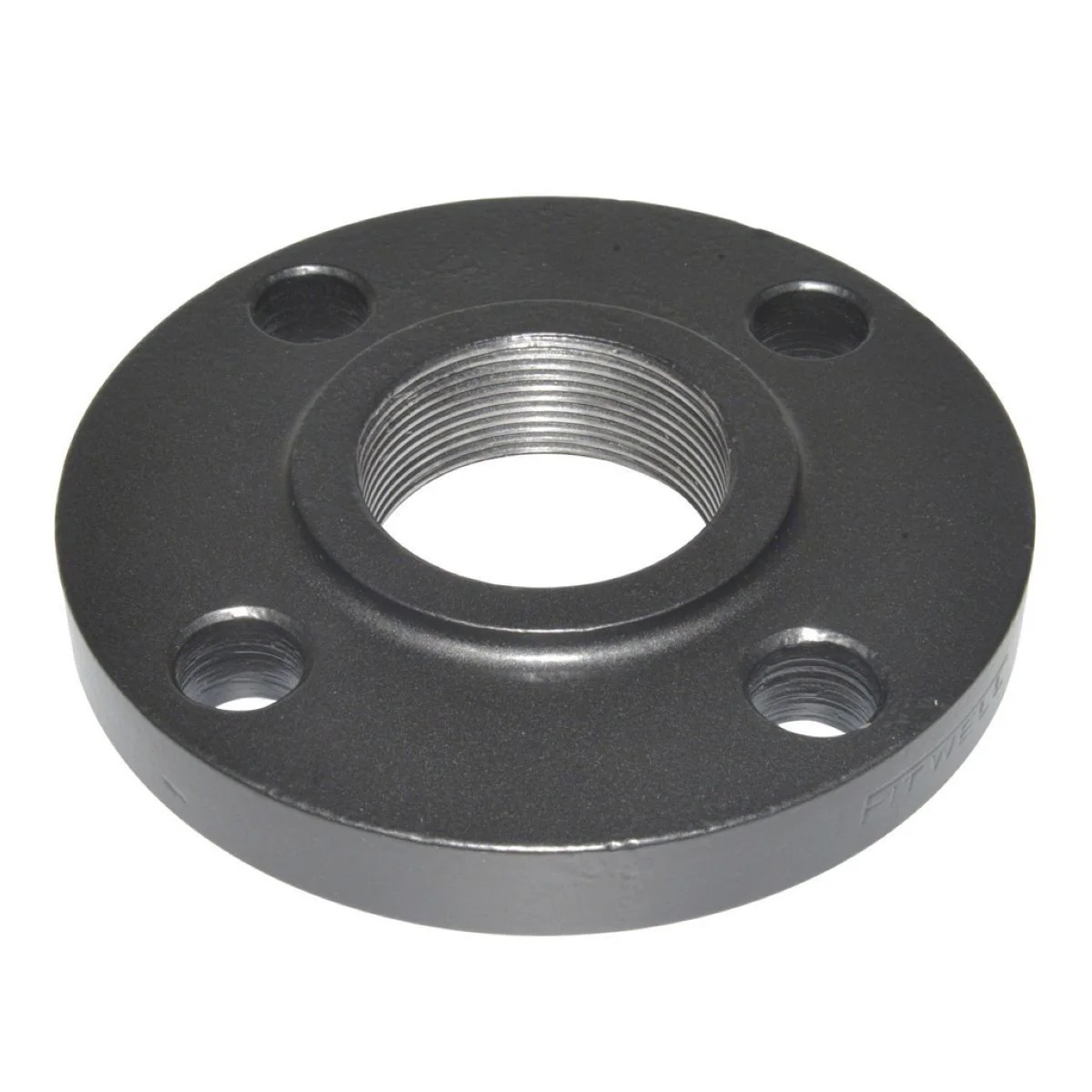
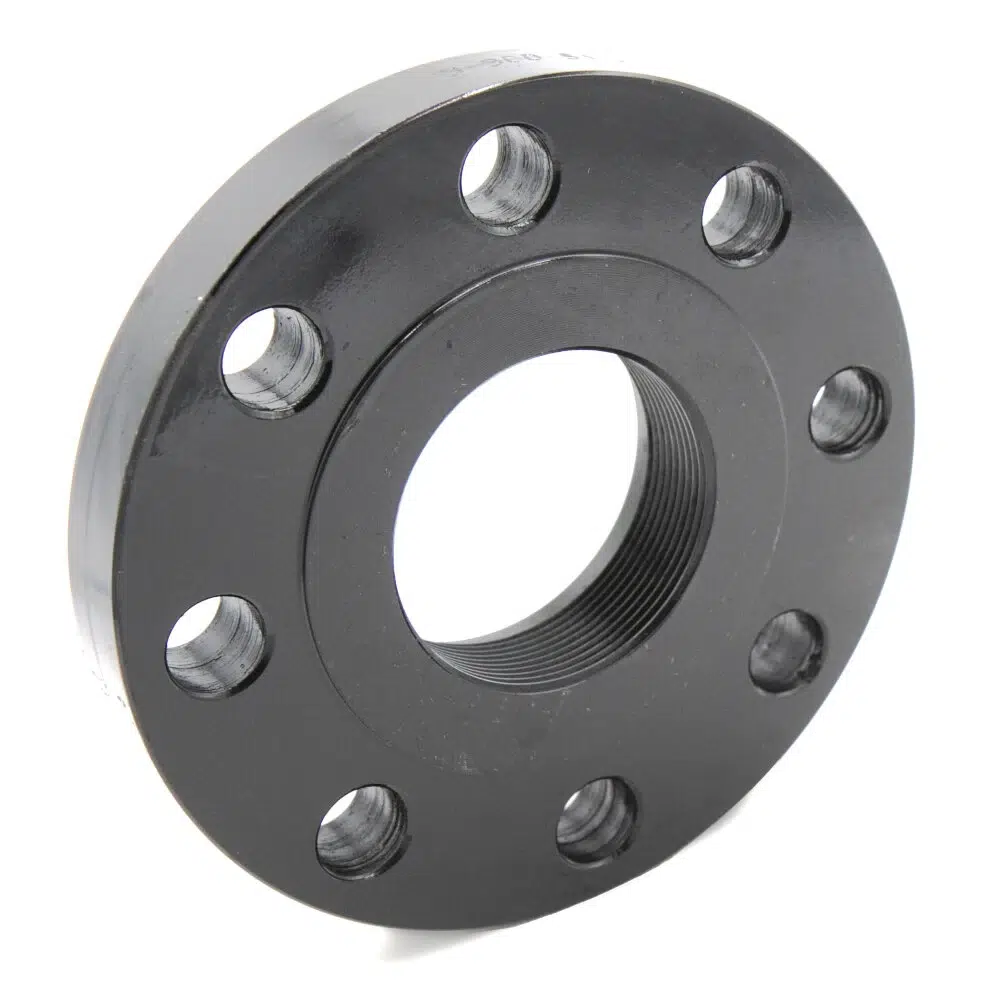
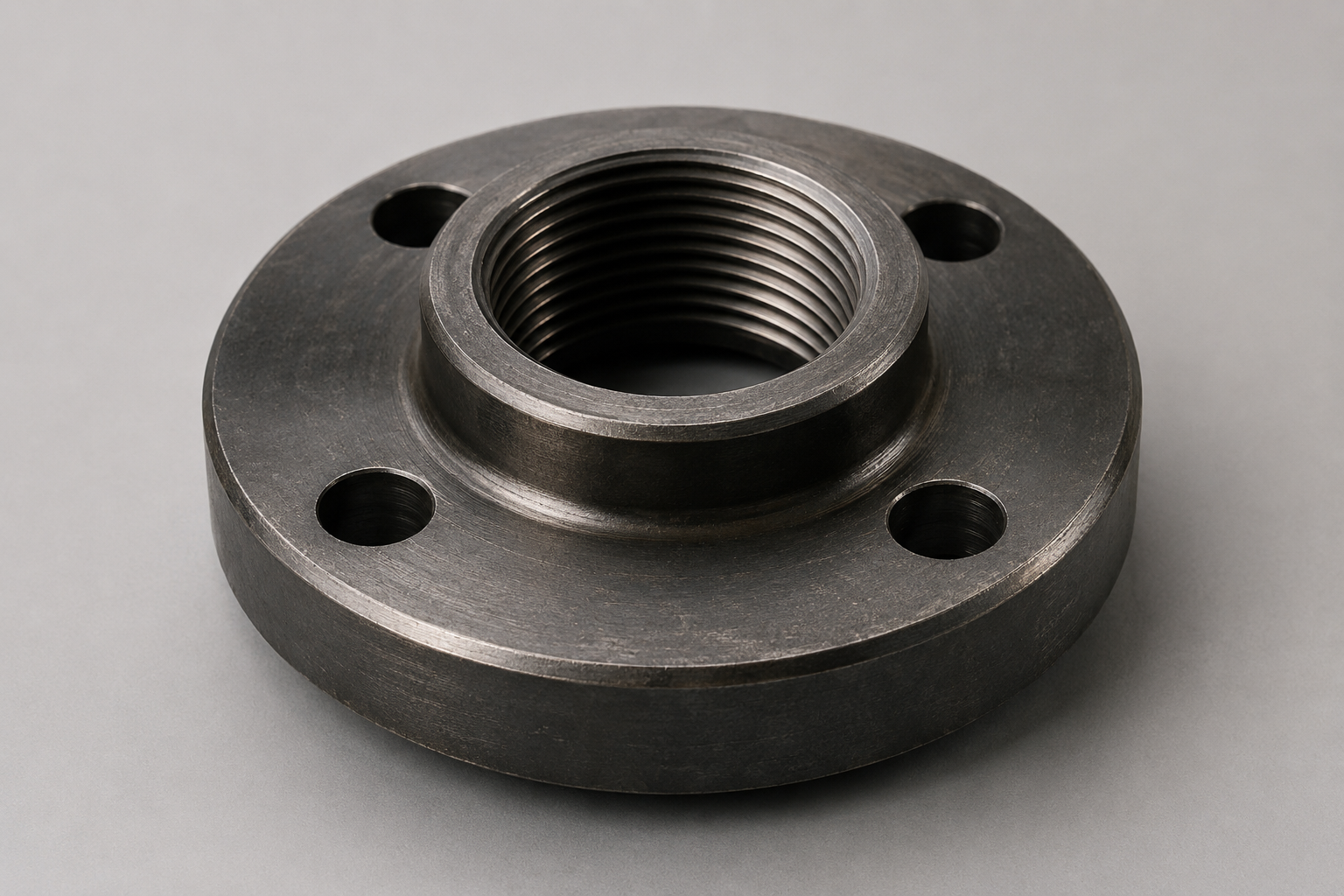
What Is a Threaded Flange? A threaded flange is simply a pipe flange which has an internal, tapered threaded hole (bore) which is then screwed directly on top of the end of a pipe having a male pipe thread to create a flanged connection that can be removed without welding. They adhere to the ASME B16.5 standard, and can be obtained in six pressure ratings:150 to 2500, in nominal pipe sizes from NPS ½ to NPS 24. This is also known as a screwed flangeor a companion flange, and is one of the most commonly used types when welding (hot work)isn’t an option,when future dismantle is anticipated,or for conditions in which conditions is mild or moderate pressure range.
Its bore is machined to ASME B1.20.1 NPT (National Pipe Taper) thread form as standard; this is 1in-16 tapered, giving a positive metal-to-metal seal once assembling the joint and assembling torque applied. A second sealing area is the flange face, or as is commonly the case with higher pressure, with a raised face, on the ring (or ring-joint). Gasket Seal, which forms as a barrier between the faces when the flange is assembled to the other flange. Both these areas are important for an effective sealing arrangement.
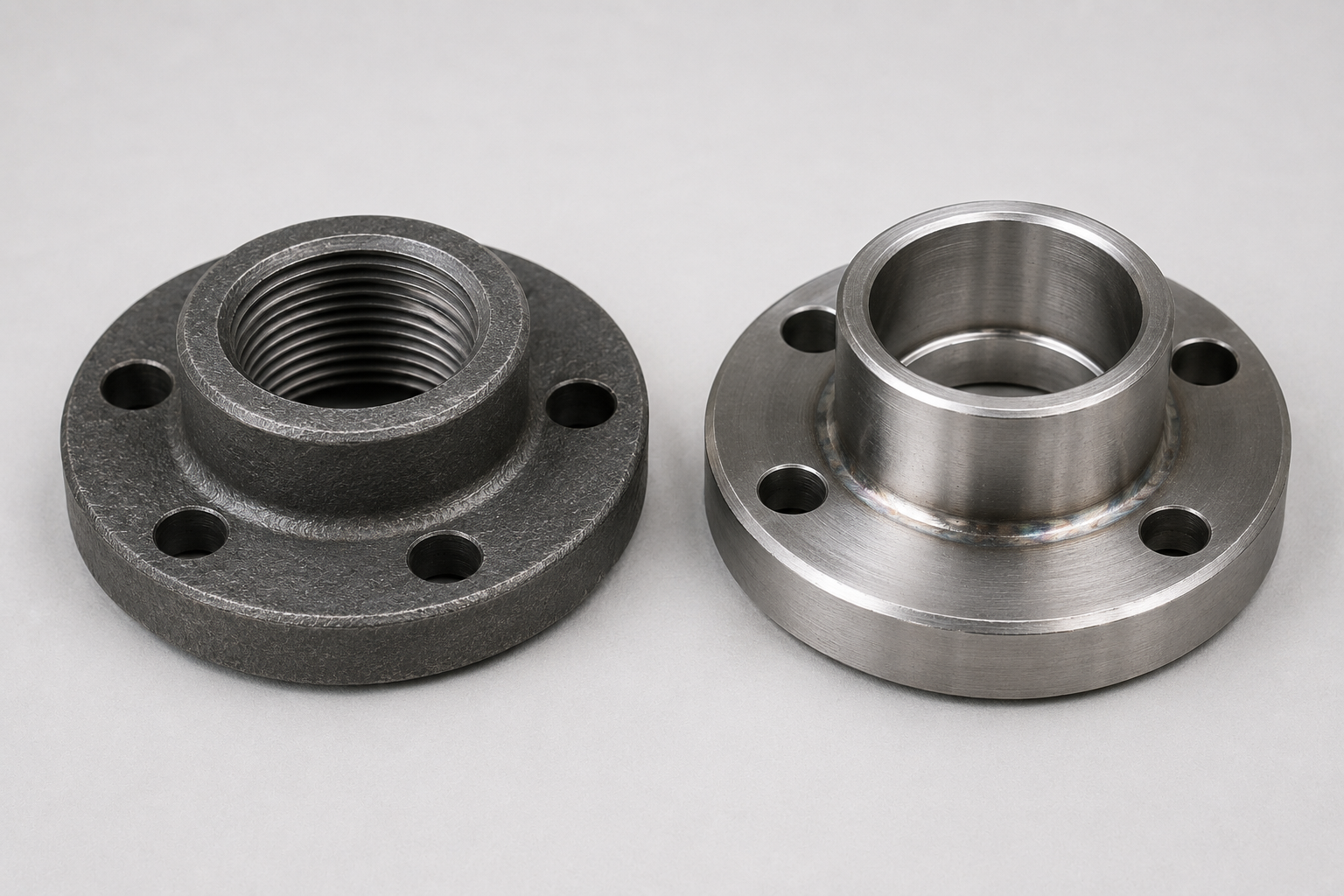
So…should you specify threaded or socket weld? That isn’t just an issue of pressure rating. It’s an issue of service, access, and project code. Frankly, as industrial engineers, there’s a framework we use – and we call it the No-Weld Zone Protocol- to guide this choice on industrial projects.
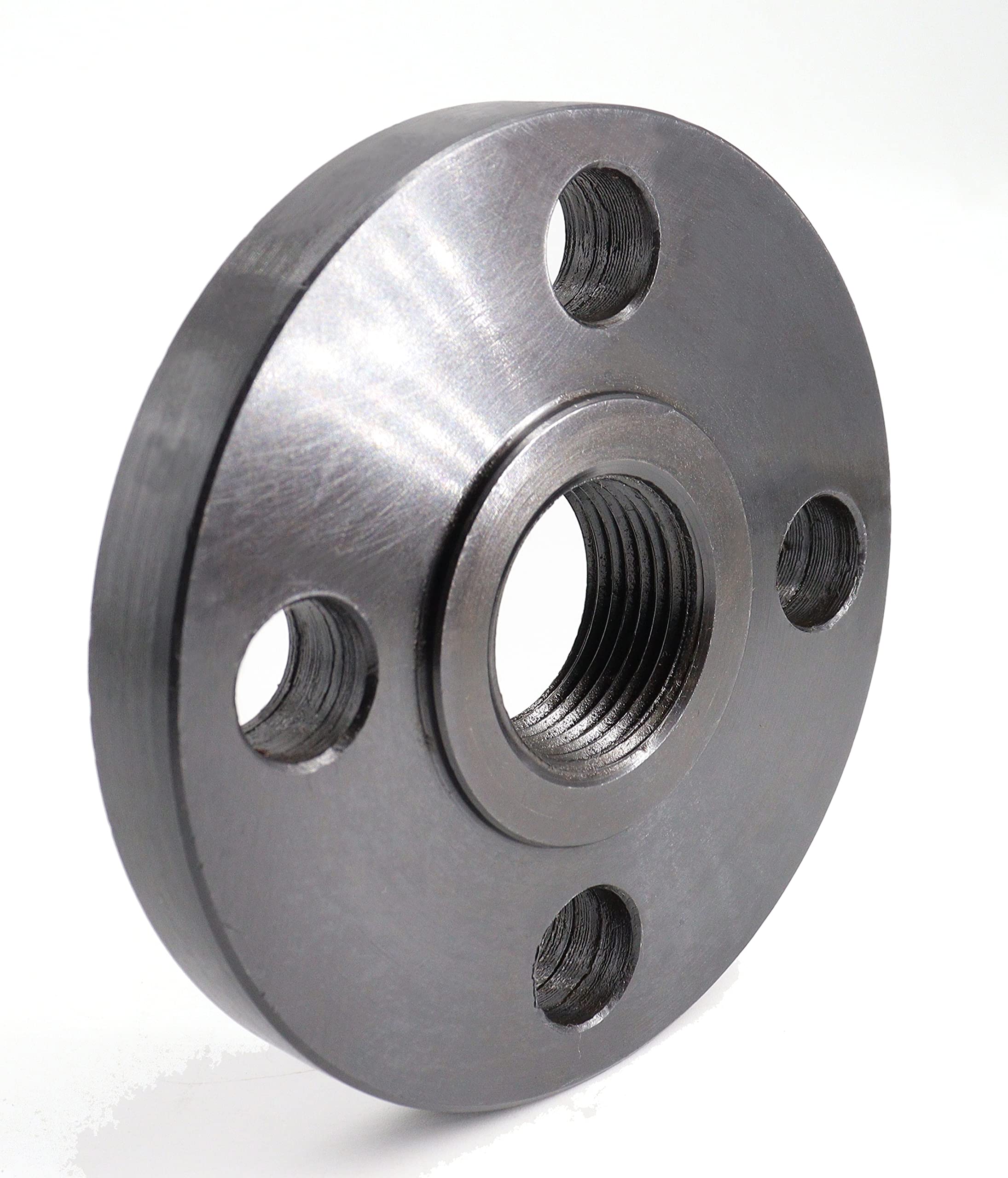
Use threaded flanges when all five conditions have been fulfilled. Should one or more of these conditions fail, you’ll instead have to select socket weld or weld neck.
| Condition | Threaded (Safe) | Socket Weld Preferred |
|---|---|---|
| 1. Hot work authorization | Restricted / Ex-rated zone / no hot work permit | Welding available and permitted |
| 2. Operating temperature | ≤ 400°F (204°C) at service conditions | > 400°F; severe thermal cycling |
| 3. Nominal pipe size | NPS ≤ 2″ (most economical range) | Above NPS 4″ (machining cost rises) |
| 4. Pressure class | Class 150 or 300; Class 600 with engineering review | Class 900 or higher (reduced P-T rating for threaded per ASME B16.5) |
| 5. Service dynamics | Low vibration, non-cyclic loading, or adequate pipe support provided | High vibration (pump skids, compressors), severe cyclic loading |
The standard industry accepted process piping practice for process lines with vents & drains is: Sock-weld the 1st connection to the primary pipe from the vessel (the root valve) to get rid of the non-isolatable leak at the beginning point, and then thread the rest of the process connections in series downstream from the root valve, and make them all easily removable for service. You’ve got the integrity of a welded root-connection along with the maintenance of a threaded connection; it’s the approach process piping designers under the ASME B31.3 Code employ when providing Utility Class service to a plant.
“Threading to 2″ is significantly cheaper in total labour and materials installation cost than socket weld. And if you need periodic alterations to the piping, threaded wins by a country mile.”
Senior Chemical Engineer, Eng-Tips Engineering Forums
A pump-skid instrument line experienced intermittent weeping after several months operation. Cause root cause: vibration with inadequate line support. Solution: Add adequate pipe support near the connection, change to new gasket. Preventive: Don’t use threaded joints in highly vibratory service with no dedicated support brackets, or specify socket weld joints in those locations.
The second-most frequent cause of early flange failure (after mismatched threads) is specifying the wrong grade of flange material. Material compatibility with the process fluid, temperature range, and local corrosion conditions, code requirements too. You can procure Synbase Steel threaded flanges through the commonly used ASME materials groupings (see matrix below), covering 90% of industrial specifications:
All grades supplied with EN 10204 3.1 mill test reports (MTR) as standard. EN 10204 3.2 (third-party inspection) available on request via SGS, Bureau Veritas, or Intertek.
A known problem with Sansteel 316 threaded flanges: intergranular cavitation during disassembly after many thermal cycles. Over years, field evidence has shown that these flanges seize on removal due to contamination at the threads and dry assembly. Keep threads clean, combine with a suitable anti-seize compound or high-temp paste, watch assembly torque. For services subject to frequent thermal cycling (>25 cycles/year), specify duplex F51 instead of austenitic grades – higher yield strength minimizes cavitation at thread interface.
The four-environment fit matrix in printable PDF format for procurement review and engineering specs.
Get the GuideWhen selecting a Standard ASME B16.5 threaded flange class rating, many engineers can’t help but mistake the class number for a pressure limit. In reality, it is’t. ASME B16.5 specifies six flange classes for NPS 1/2″ thru 24″, each with a class-specific permitted working pressure dependent on material group and operating temperature. Common industry error: assuming class number is pressure limit. Engineers must understand that this is false and decide for themselves to go with the higher class or use a more costly flange.
“Class 150 does not mean 150 psi. For carbon steel A105 (ASME Group 1.1) at 100°F, Class 150 allows 285 psi (19.6 bar). Allowable pressure decreases as temperature rises.”
ASME B16.5 Pressure-Temperature Rating Reference, via API International
ASME B16.5 states that threaded flanges in Class 900, 1500, and 2500 carry reduced pressure-temperature ratings from weld-end flanges. The reason is that NPT threads cut into the pipe wall reduce the net thickness. This is because the non-structural contact of the thread engagement zone doesn’t equal a weld joint – the practice of specifying flanges at these higher classes without engineering review is a potential safety hazard. Specify threaded flanges at Class900 or higher only after evaluation by qualified engineering.
The number one reason we’ve to do work on threaded flanges during commissioning and shutdown is due to mismatch of thread systems, specifically mating NPT and BSPT. Both systems share a 1-in-16 taper but differ in thread angle (60 vs 55) and different progression of threads per inch. ABSP Tipple will hand thread into an NPTflangeboreso it seems snug halfway through but you soon notice the difference resulting in a flange connection that looks fine until you turn on the gas/steam.
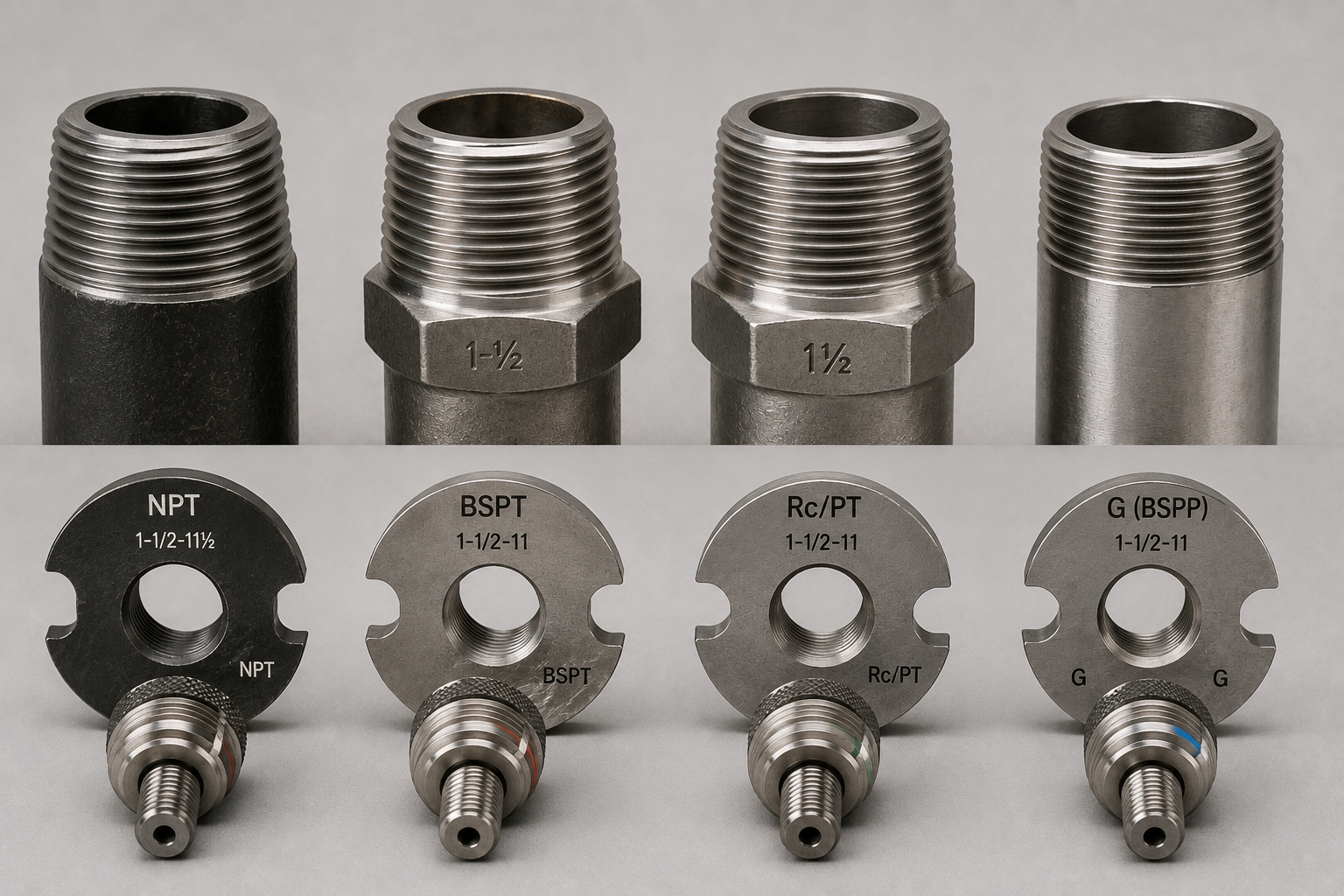
Double check thread designation on drawing before making parts. Check with gauges at incoming inspection. NPT and BSPT can’t be used in place of one another although dimensions may be the same.
| Thread Standard | Taper | Thread Angle | Primary Markets | Governing Standard |
|---|---|---|---|---|
| NPT (National Pipe Taper) | 1 in 16 (3.58°) | 60° | USA, Canada, Mexico, Middle East oilfield | ASME B1.20.1 |
| BSPT / Rp (British Standard Pipe Taper) | 1 in 16 (3.58°) | 55° | Europe, Middle East (non-ASME), Australia | BS 21 / ISO 7-1 / EN 10226 |
| Rc / PT (JIS Standard) | 1 in 16 (3.58°) | 55° | Japan, Southeast Asia, Taiwan | JIS B0203 |
| G / Rp (ISO 228 Parallel) | Parallel (no taper) | 55° | Europe — instrumentation fittings, NOT structural pipe sealing | ISO 228 / DIN ISO 228 |
Synbase Steel manufactures threaded NPT flanges to ASME B1.20.1 standard. BSPT (BS 21 / ISO 7-1) & JIS B0203 (Rc) thread sizes available to special order – please note the standard in the R.F.Q. to prevent a buying error. All thread profiles are checked via gauges at final check.
Uncertain about what thread standard applies to your project? Submit your drawings/project specification to one of our engineers for an answer in one business day.
Ask an Engineer→Synbase Steel Co., Ltd. as production base of E-CHENG STEEL GROUP which as full-pipeline supply chain supplier, having the following strategic co-operations for raw material supplies: we cooperate with Baosteel (Baoshan Iron and Steel Corp., China largest steel producer), TPCO (Tianjin Pipe Corporation), Ansteel, and TISCO. Therefore traceability system begins at mill heat till completed flange, rather than adding for compliance.
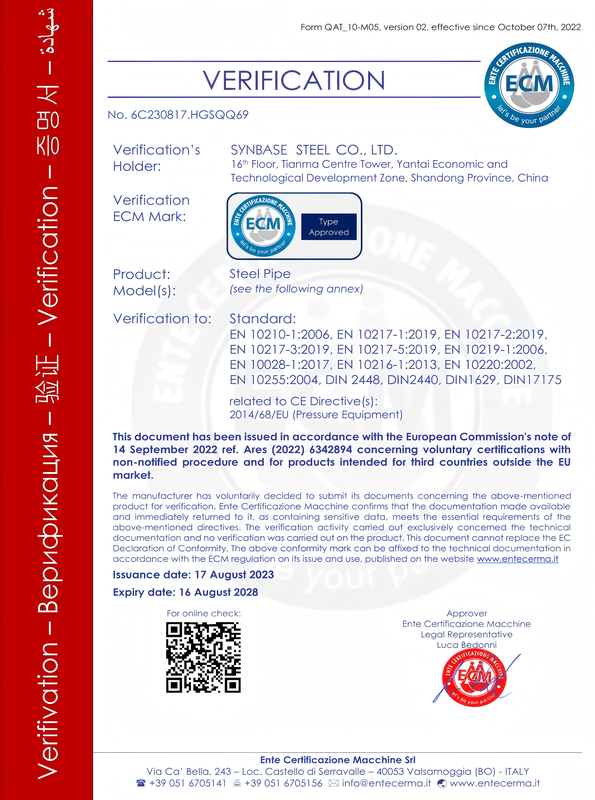
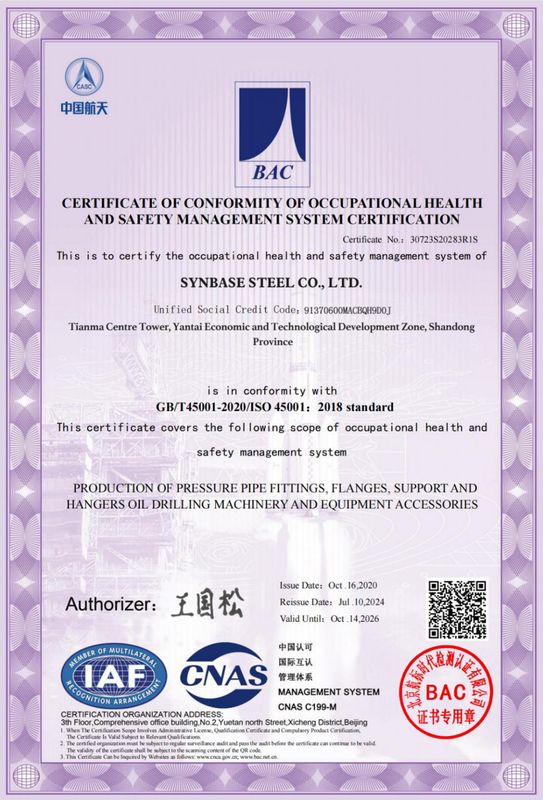
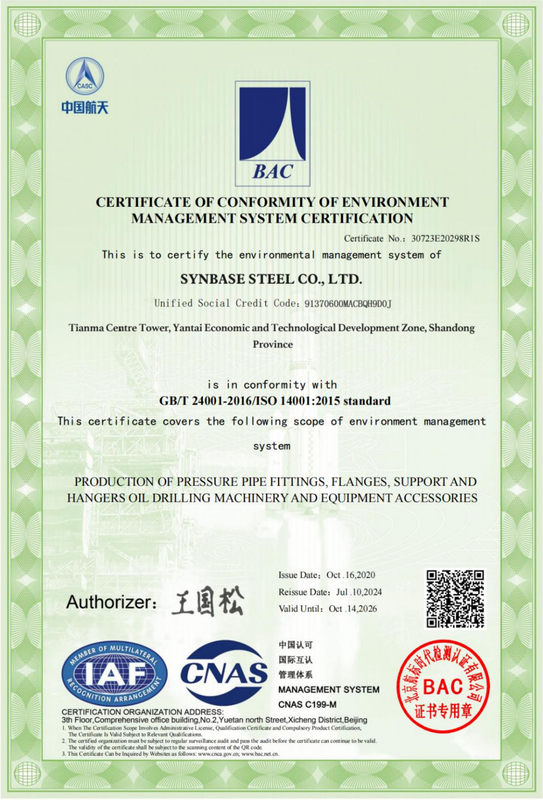
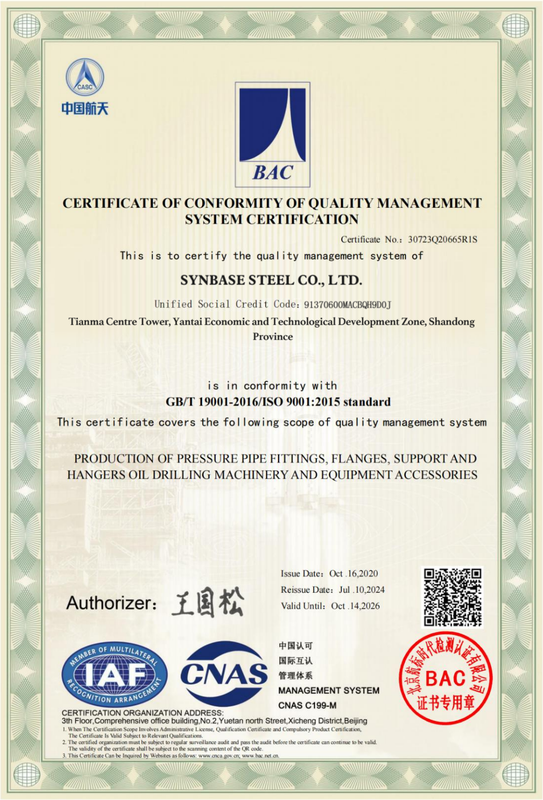
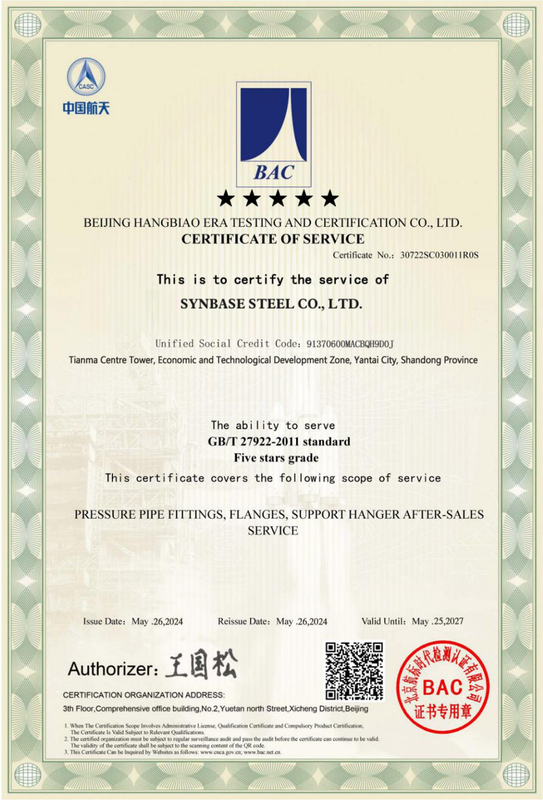
Forging: All Synbase forged threaded flanges are initially manufactured from closed-die forgings from ingots of Baosteel or TPCO. A closed die forging process compacts the grain structure, resulting in superior tensile strength and toughness to that of cast flanges, an essential factor when you need 300 class and higher. After forging:
Steel traceability of all products is managed and packaged to specification at Synbase Steel from mill heat to final product. Standard documentation package for every order:
Instead of working with spot market suppliers like distributors do, E-CHENG STEEL GROUP has partnerships with Four Major Chinese State-owned Mills (Baosteel, TPCO, Ansteel, TISCO) to secure the availability of our products of the most standard grades without having to deal with the unpredictability of the spot market. We’ve provided to the customers over 100 countries around world.
For common dimension/sizes of Class 150-300 we’re having 15-25 days from receipt of order and approval on specification for our material.
Distributors just have stock sizes – Synbase manufactures to drawings Synbase Steel As-built – Drawing manufactured to project drawing – Synbase
We’ve all run into it when sourcing: we need a flange that fall outside of what’s generally accepted in standard envelopes and the biggest thing is schedule. What happens when there’s a gap because no one stock it? “The thing about project is that if your dimension fall out side of standard then it will take time to produce. And with standard sizes there’s just no lead-time what-so-ever.” says Ben B. “We’ve built a lot of custom threaded flanges to project drawing due to requirements that fall outside the standard size envelope in the case such as:
| Standard | Scope | Typical Application |
|---|---|---|
| ASME B16.47 Series A & B | NPS 26″ through NPS 60″ | Large-diameter pipeline transmission (Series A) and refinery service (Series B) — NOT interchangeable |
| AWWA C207 / C228 | Steel flanges for water mains | Municipal water supply, fire protection systems — flat face standard |
| MSS SP-44 | Steel pipeline flanges (heavy-wall) | Natural gas, crude oil, water mains — NPS 26 and above, higher bolt loads |
| DIN EN 1092-1 | European standard flanges (PN series) | European projects requiring PN 6/10/16/25/40 pressure rating |
| JIS B2220 | Japanese standard flanges | Japanese EPC projects, Southeast Asian refineries following JIS specification |
Synbase, other than standards listed here accepts the custom requirements including OEM and specific project requirements. Examples of custom scenario applications :
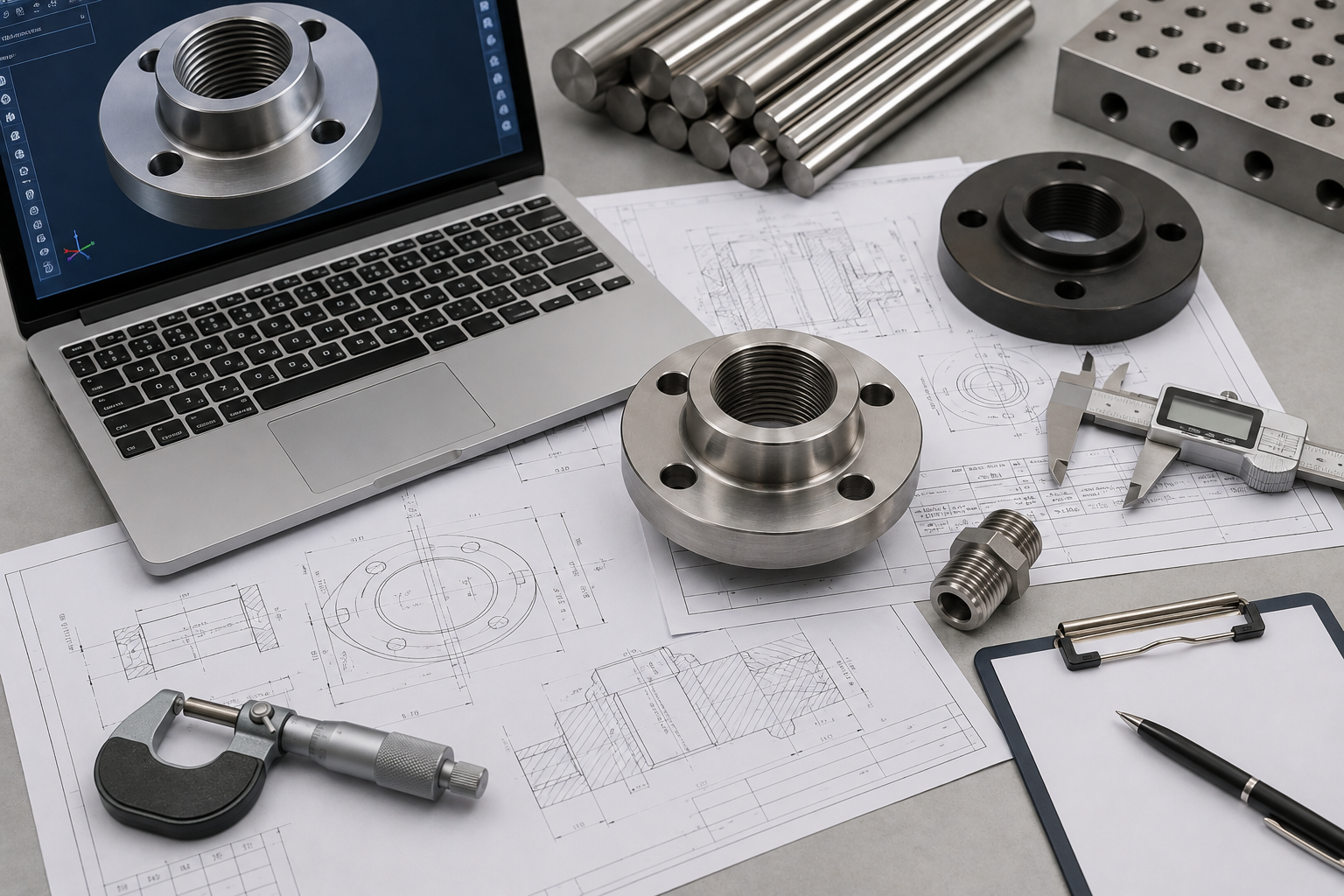
Synbase engineering provides custom quote for custom orders – generally 1 Business Day turnaround on custom orders. Custom order drawings with your DXF, PDF or STEP, and material and qty are supported by synbase engineering, with your request via our online quote form. Prototype samples are available before bulk production for your qualification.
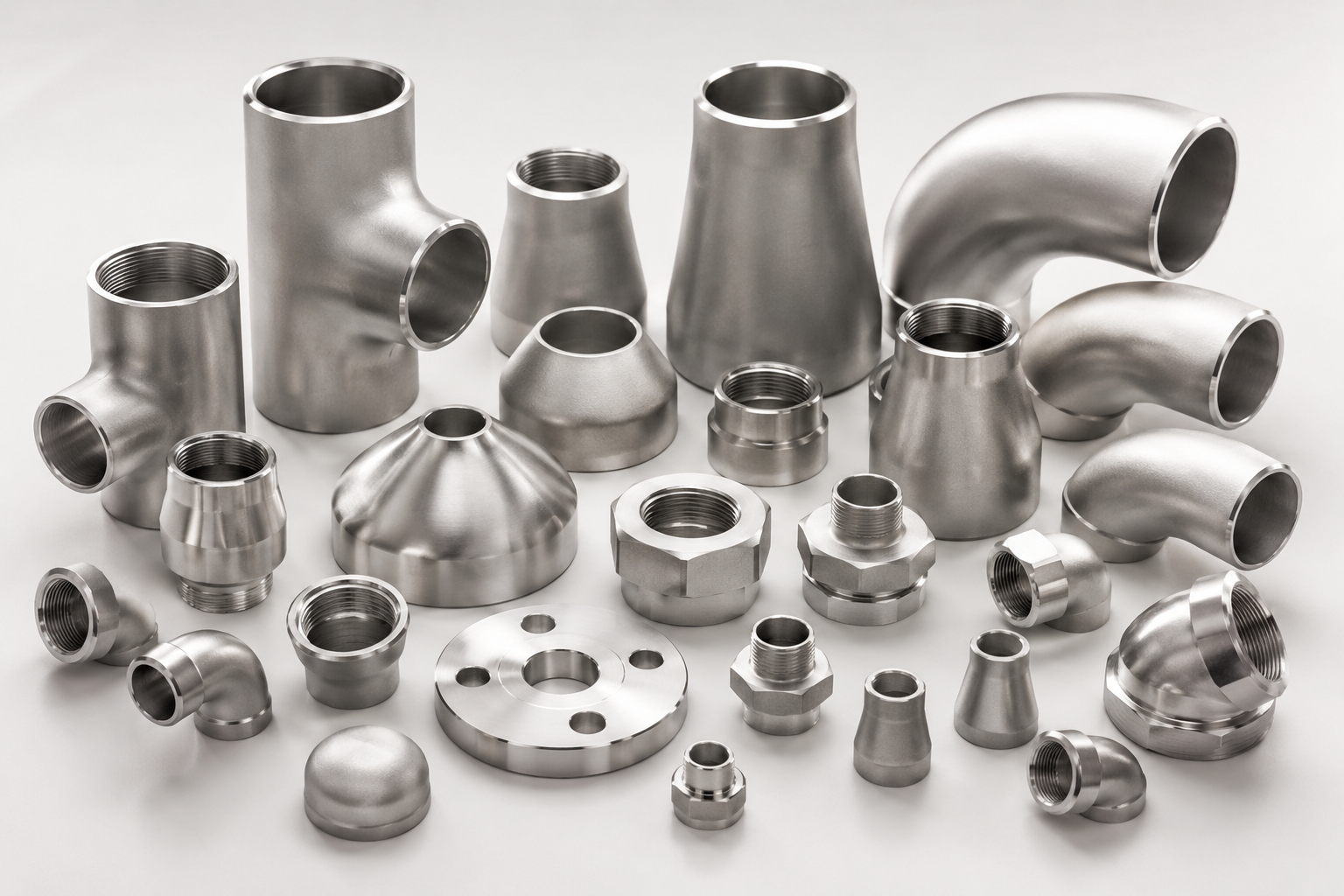
If you’re looking to make requirements customized, take a look at our customization in stainless steel pipe fittings; we follow the same quality control as for flanges.
Every primary process industry uses threaded flanges. The one thread ( pardon the expression ) in common across them? An installation requirement that neither welding the assembly nor taking it apart for repair.
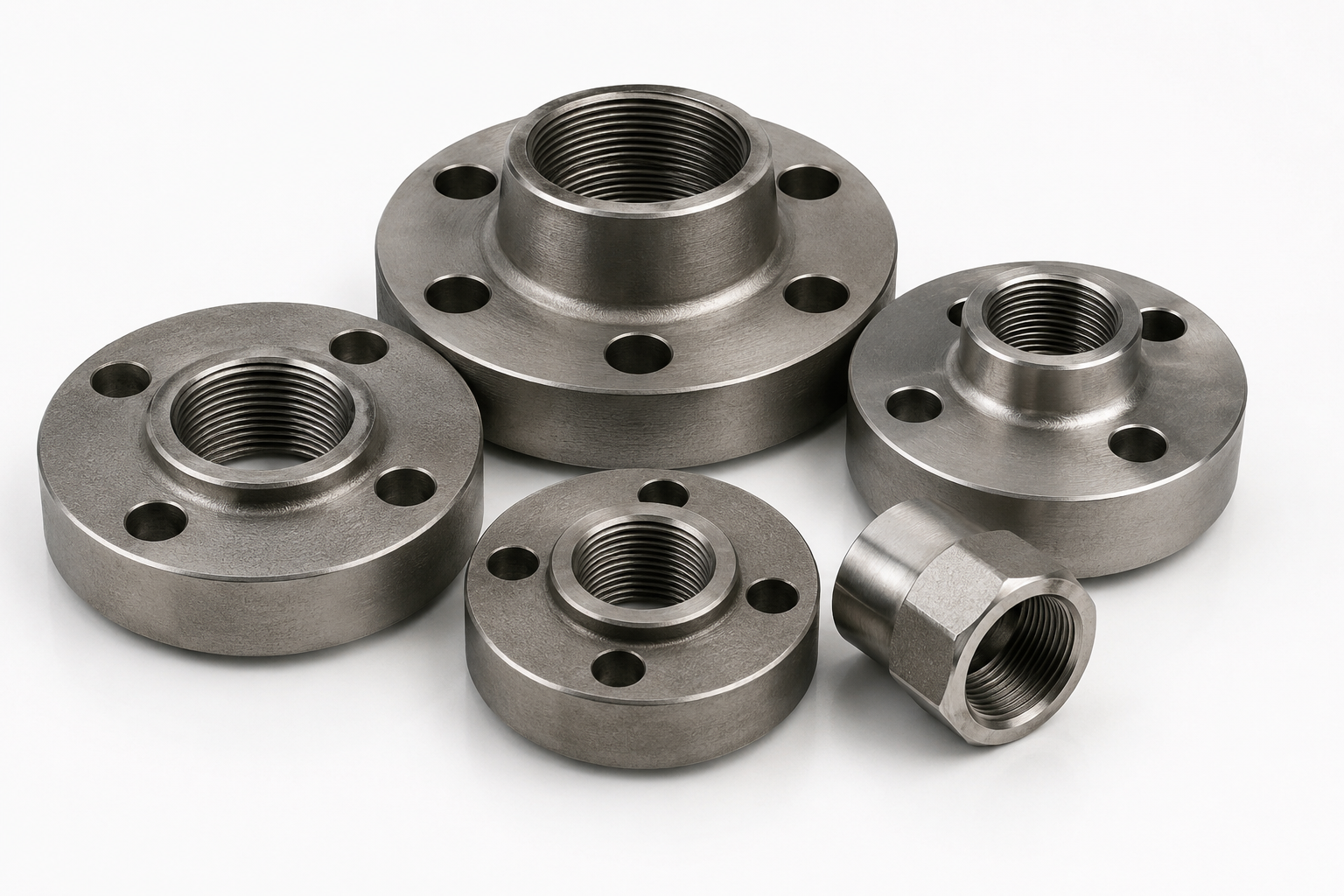
When operating under pressure containing highly reactive, combustible, or explosive material (e.g. sour oilfield applications – thus making API a requirement), threaded flange connections are a necessity. The alternative of hot-work in hydrocarbon zones isn’t only expensive but is also a long, tedious process. Using threaded connection type allows instrument hookup, drain / vent connection and pressure sampling port utilization without welding personnel on-site. Typically A105 carbon steel used for general use, with A182 F316L for sour service conditions.
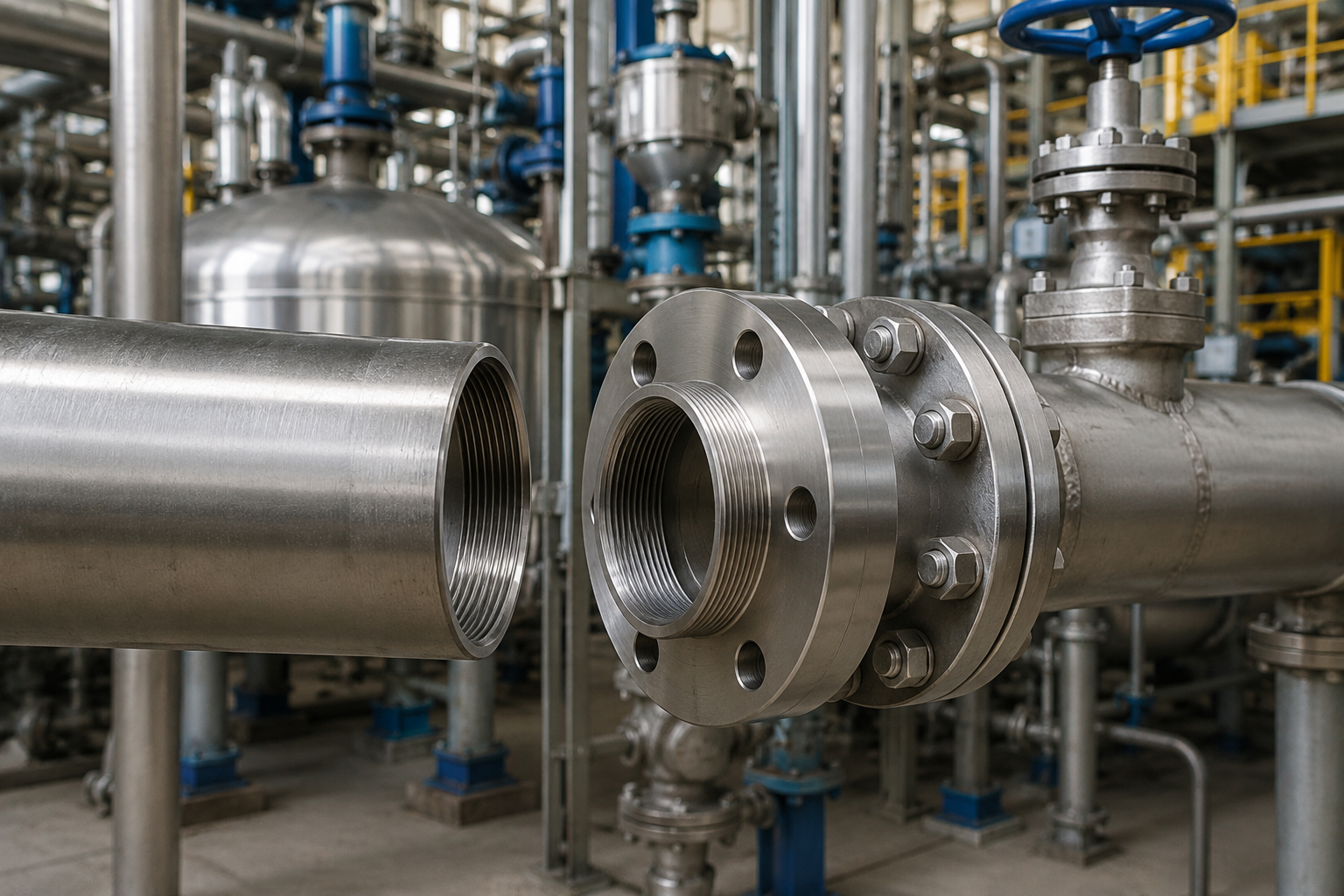
We regularly recommend threaded flanges for utility headers, storage tank nozzle connections, and transport piping at chemical plants when access to these features is required for maintenance. Stainless steel (304L or 316L) is most common in acidic or solvent applications. Duplex F51 is used when chloride stress corrosion is a consideration. Under ASME B31.3 process piping code, approved sealant options include anaerobic sealant paste or dense-form PTFE tape.
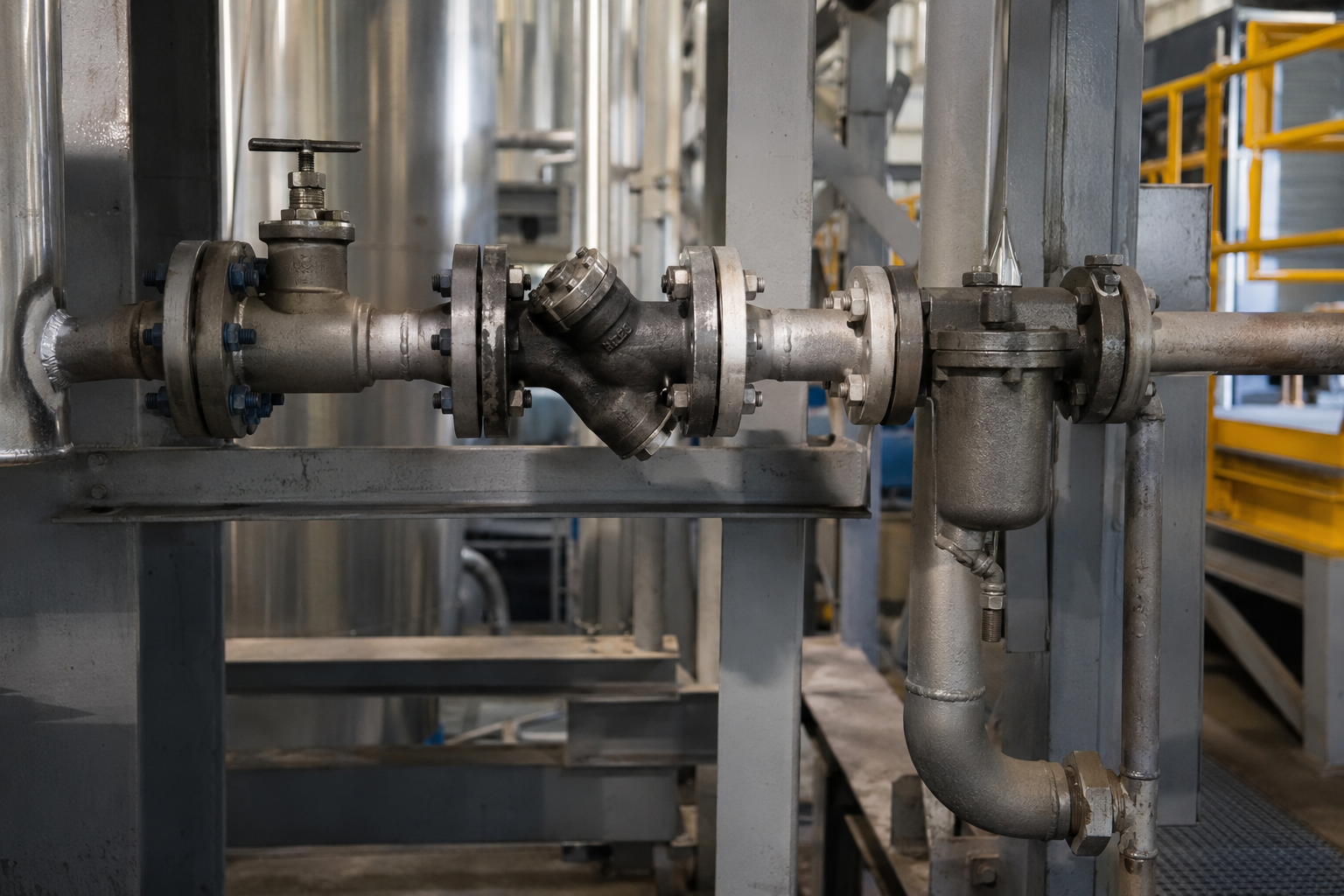
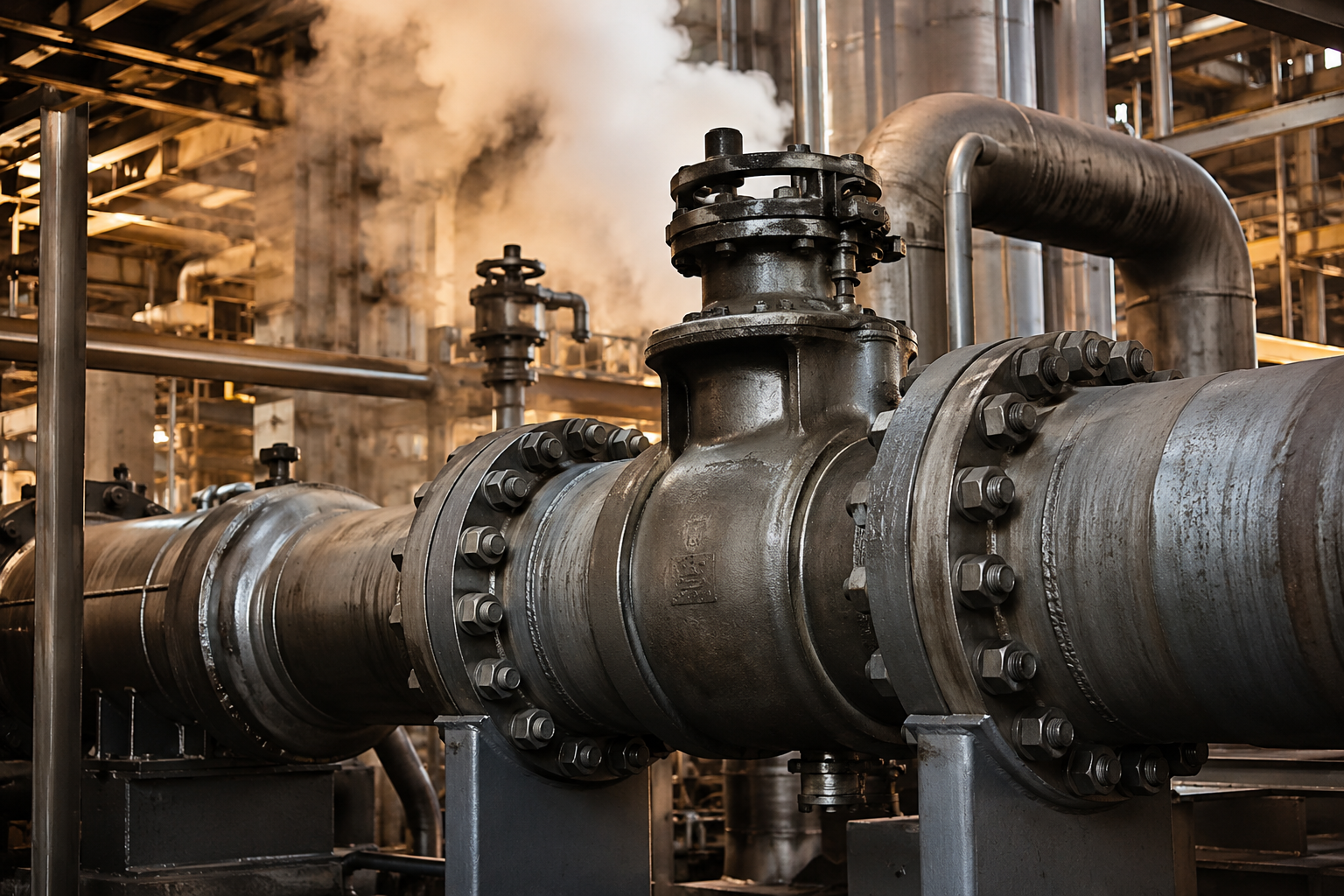
The primary function of threaded flanges within power plants (steam trap connections, condensate return lines, auxiliary piping) is a readily replaceable connection; in fact, a faulty steam trap can be disconnected and replaced simply without any welding or pipe cutting! Where steam temperatures approach or exceed 400F, the higher grade chrome-moly materials, typically A182 F11 or F22 grades, are preferred. Some thing to remember: at higher temperatures, even Class 150 A105 begins to de-rate; it holds just 60% of the room temperature capacity (at 600F vs 100F).
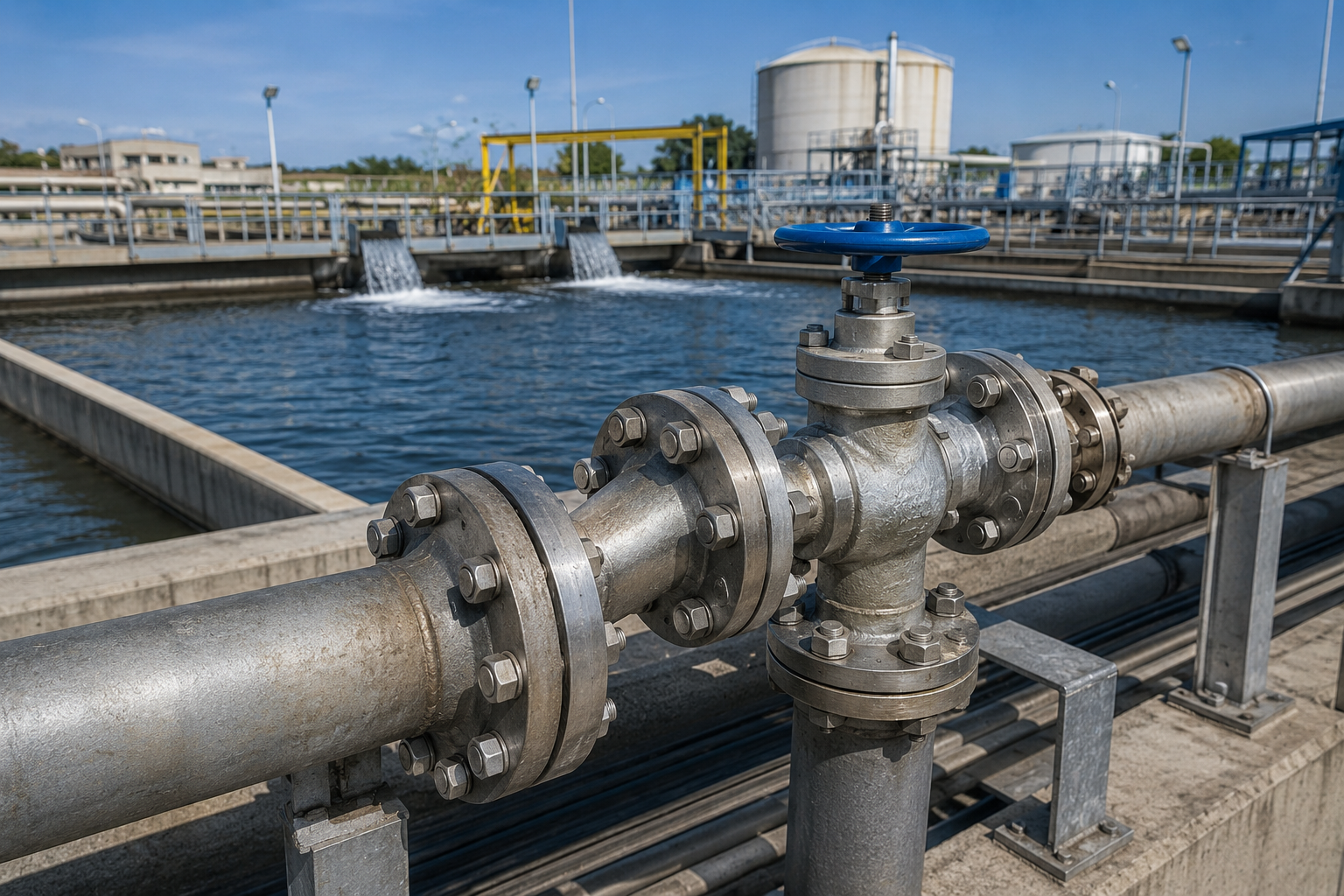
Municipal water treatment plants, desalination plants, wastewater systems stock AWWA C207 flat-face flange for large-diameter headers, and ASME B16.5 threaded flanges for instrument lines and smaller service lines. Full-face gaskets on flat-face flanges need full-face gasket contact – never mate a raised-face flange to flat face flange without engineering review, as the bolt load concentration can crack cast iron pump and pipe fittings. ASTM A105 carbon steel is the typical flange material; duplex F51 plating specified in coastal desalination.
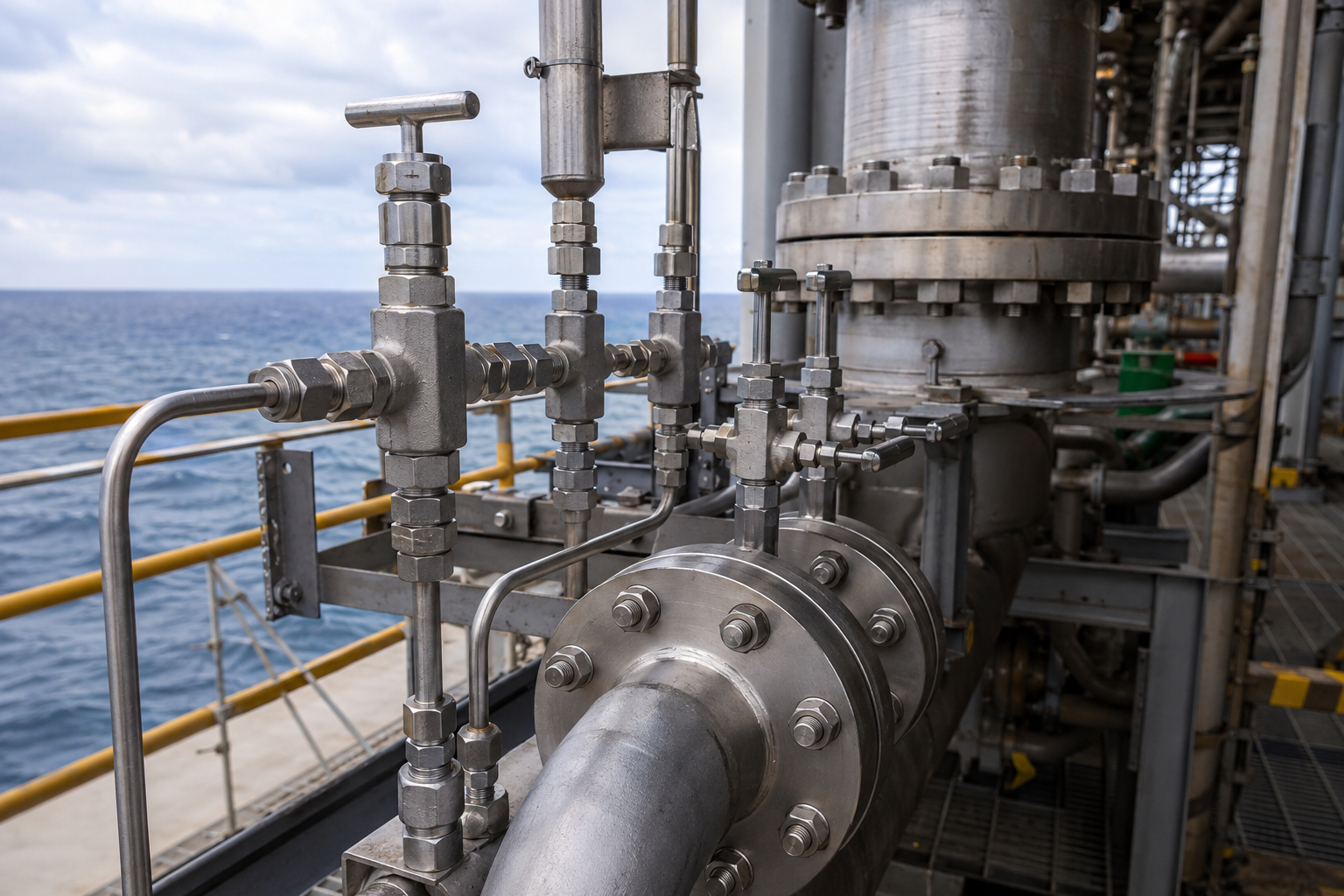
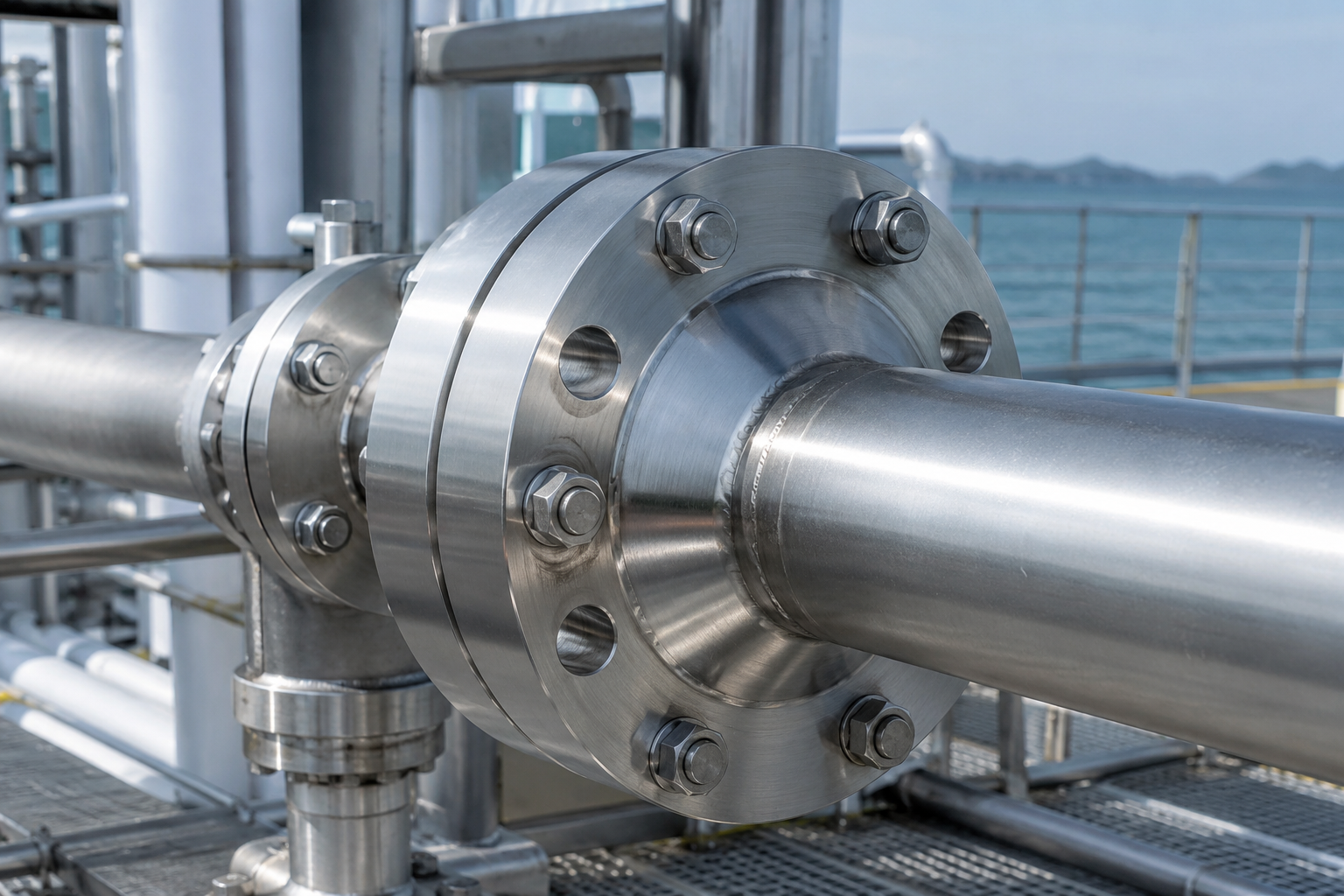
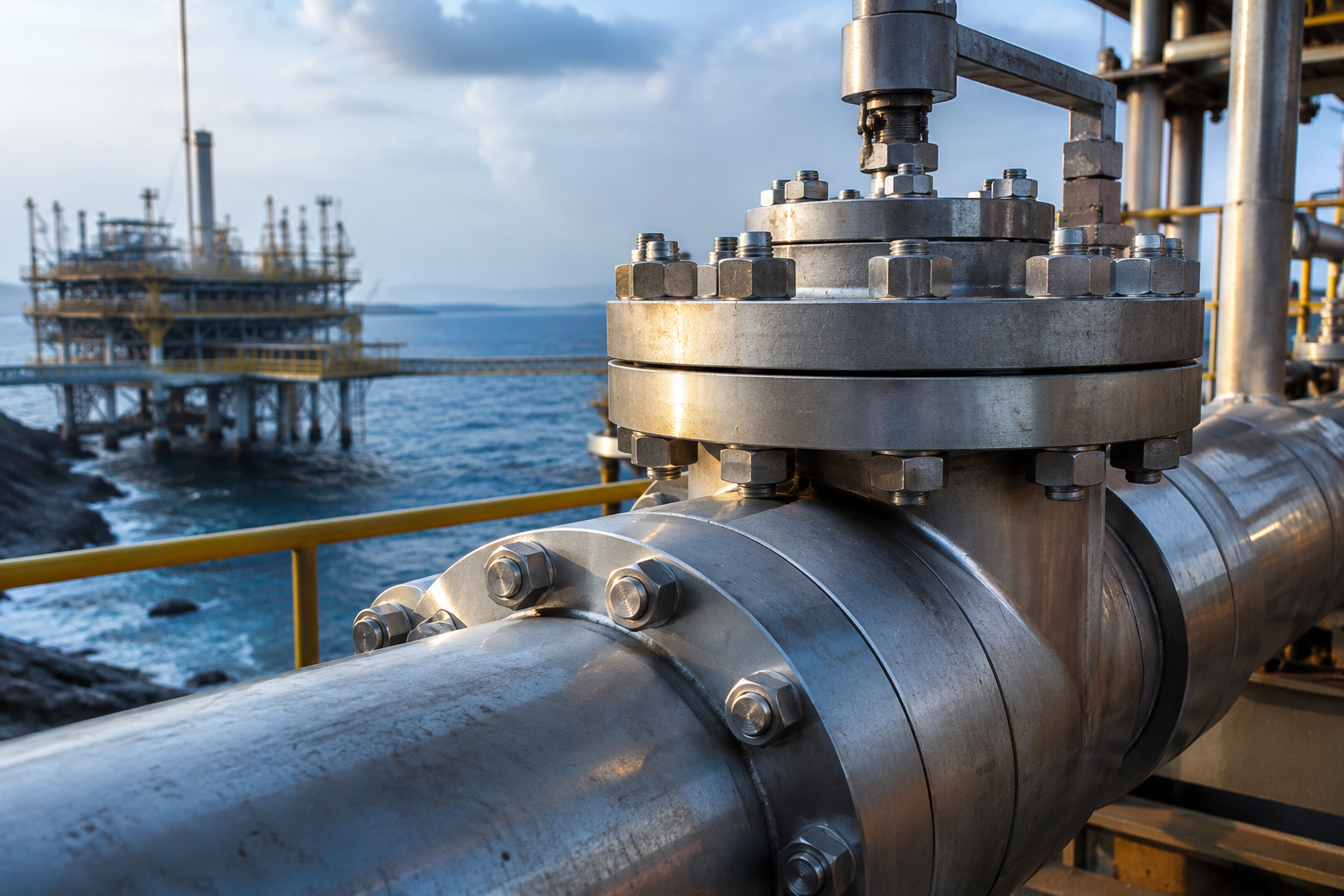
Offshore process package integrating production, water injection, and utility services must suffer from hot work restrictions, minimum maintenance windows, and corrosive environments that make threaded flange the engineered solution. Instrument flow lines, utility supplies, and drain systems on platform modules regularly use ASME B16.5 Class 150-300 threaded flange fittings in duplex stainless (F51) or 316L. Replacing a fitting without cutting steel on a congested platform deck reduces both safety risk and turnaround time.

Food and biotechnology manufacturing plants specify FDA-food grade stainless steel (F304L, F316L) electropolished or Ra-specified on contact lines and CIP piping, utilizing APQP Stainless HD which directs the insertion force to the gasket for greater sealing force, even when installed in rough conditions; threaded flange is specified. The weld-free flanged connection of the threaded flange is a requirement for assuring pipe line cleanliness during construction, where welding could introduce contamination to process lines that produce or package consumables. Flat-face configuration is standard to mate with PTFE-lined or rubber gaskets.
Access our suite of digital engineering tools designed to specify threaded flanges, calculate pressure derating parameters, and verify international thread system compatibilities in real-time.
Determine maximum allowable working pressure (MAWP) and analyze derating factors for threaded connections per ASME B16.5 standards.
Cross-reference and verify mating compatibility between NPT, BSPT, BSPP, and JIS standard pipe thread profiles instantly.
Filter and select the appropriate ASTM forged steel grades based on specific operating temperatures and corrosive environments.
The answer to these questions addresses the most common specification errors and mistakes field engineers observe with threaded flange kit installations. Many other sources leave these gaps unanswered, the solutions summarized below have been summarised from ASME codes, from observed field practices, and from other engineering discussion forum consensus.
A threaded flange has an internally threaded bore that screws onto a male thread pipe end with no weld required. A socket weld flange has a smooth socket bore that slides onto the pipe end, and the pipe is then bottom fillet welded at the socket. The principal effect to note is operation: with threaded flange, the flange can be assembled/disassembled without needing welding tools; whereas with socket-weld, the pipe flange joint is welded, and installed permanently: this removes self-vibration, and allows the flange to be assembled/disassembled with no welding tools required.
Class, material grade, and temperature dictate Maximum Pressure—For Class 150, ASTM A105 carbon steel, at 100 F (38 C) - Maximum allowable pressure: 285 psig (19.6 barg). For Class 300, ASTM A105 carbon steel, at 100 F (38 C) - Maximum allowable pressure: 740 psig (51.0 barg).
ASME B16.5 states that Class 900 and above flanges threaded connections are derated. This de-rating is due to the fact that the NPT thread profile reduce effective pipe wall thickness. If it’s a class 900 and higher, we typically spec socket weld and or weld neck flanged connections.
The NPT (National Pipe Taper) profile and thread is defined by ASME B1.20.1, 60 degree thread angle and a 1:16 thread taper (3.58 deg). It’s the most prevalent in the North American market as we define with in ASME B16.5 specification and our default offering.
For European, Middle East & Japanese markets we offer BSPT, which is equivalent to ISO 7-1 (JIS Rc thread has similar but not equivalent parameters and taper). BSP (G-series thread per ISO 228) are compatible with similar BSP threads and do not have the same taper as NPT(s). The taper of BSPT is 1:16 (same as NPT) but the thread profile has 55 deg included angle and it’s parallel. Never interchange between NPT & BSPT. Confirm threading with project specifications.
This isn't typical. If the pipe code or spec dictates seal welded connections for that service (e.g., specific hazardous gas), the thread will be seal welded. The majority of codes and specs don't allow seal welding of threaded joints. The issue is stress concentration between weld filler and threaded root creating an inferior and weak connection that doesn't perform well. Socket welds, not seal-welded threads, are the engineered alternative for welding socket-welded flanges.
ASTM A105 carbon steel material standard covers wrought carbon steel forgings. For industrial applications including flanges, ASTM A105 forged products have minimum tensiles of 70ksi and can be used in temperature applications between -20°F and 800 °F (-29 °C to 427 °C) according to the 1.1 pressure temperature curves in ASME B16.5. Below 0 °F the ASME B16.5 tables are to refer to ASTM A350 LF2 for impact testing requirements and other requirements specific to the application.
Synbase A105 carbon steel flanges are always certified with an EN 10204 3.1 Mill Test report including: Chemistry & Mechanical Testing. Synbase A105 carbon steel threaded flanges are fully traceable to mill material.
What Documentation Do You Offer?