Send Your RFQ to Synbase Steel
Prefer to send drawings, BOMs or attachment lists by email? sales@synbasesteel.com

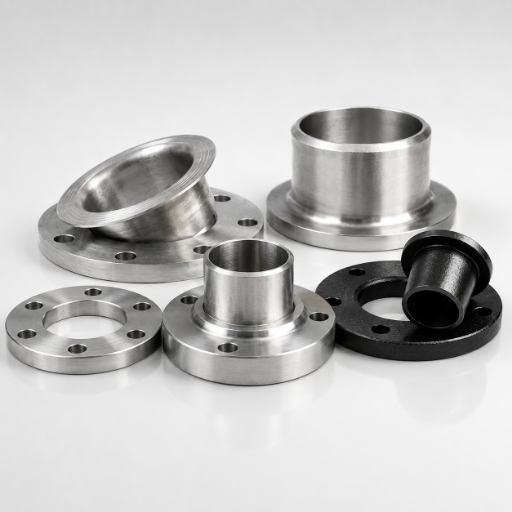
A lap joint flange is a loose backing ring that slides over a butt-welded stub end and rotates freely to line up the bolt holes — and because the flange itself never touches the process media, it lets you pair a low-cost carbon steel ring with the exact alloy your line needs only on the wetted stub end. Synbase Steel forges, machines and certificates lap joint flanges and matched Type A and Type B stub ends across every standard pressure class, each supplied with the material test certificate your inspector releases against.
Request an RFQ Quote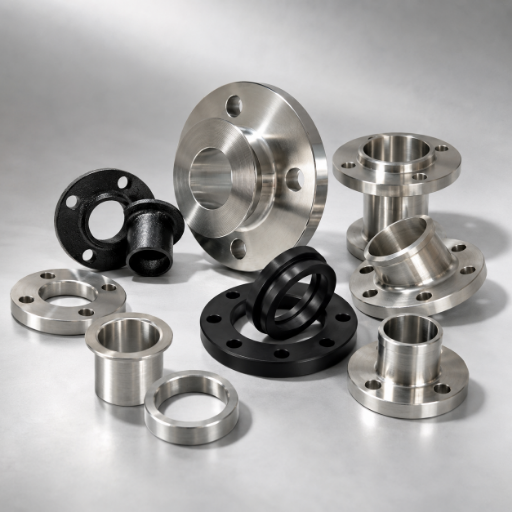
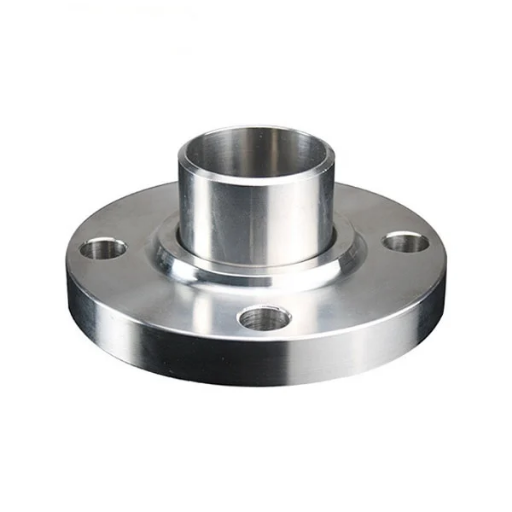
A lap joint flange is one half of a two-part assembly. Its other half is a lap joint stub end, a short length of pipe that is butt welded to the line and machined with a flared sealing face — the lap. The loose backing flange drops over that stub end and is free to rotate, so a fitter spins the ring to align its bolt holes with the mating flange instead of cutting and re-welding to chase alignment during installation. Only the stub end is wetted; the backing ring sits behind the lap face and never sees the process fluid.
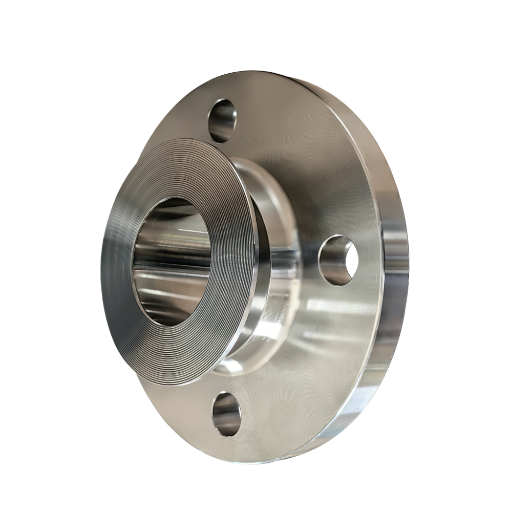
That single fact — the flange does not contact the media — is why engineers reach for this fitting in two situations. One is any piping system that is opened on a schedule for inspection, cleaning or catalyst change: the ring lifts straight off once the stub end is unbolted, so frequent disassembly does not mean cutting pipe. Another is a corrosive line where the pipe is an alloy: you weld an alloy stub end to match the pipe and back it with a cheap carbon steel ring, instead of buying a solid alloy flange.
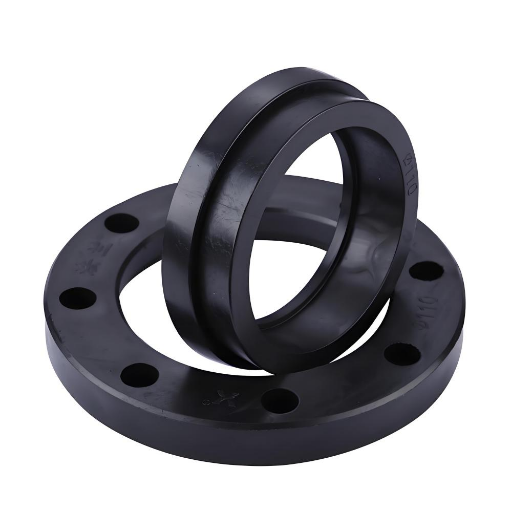
The pain this design removes is real, and it is rarely the flange. On a fixed, welded hub a crew loses hours to bolt-hole alignment on every shutdown, and the gasket seating face is scuffed a little more each time the joint is broken and remade. A lap joint flange turns that repeated separation into a clean, quick lift-off — provided the stub end lap is flat, square and the right thickness. Get the stub end wrong and the saving evaporates, which is exactly why this page treats the stub end as a precision fitting.
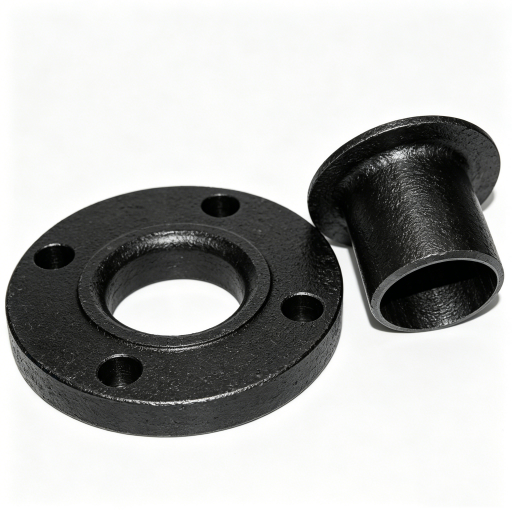
Each lap joint flange we deliver is either forged from the solid ASTM A105 (carbon steel), A182 (stainless & alloy steel) or cut from plate (in the largest diameters) and machined to ASME B16.5 so the bolt circle matches yours to within an nth degree. Its matched lap joint stub end is furnished to either ASME B16.9 (long pattern) or MSS SP-43 (short, light-wall) in the same grade, or higher alloy, as the ring. Since the ring and stub end are offered as a pair, the material cert covering the wetted stub end is what your metallurgist will be referring to.
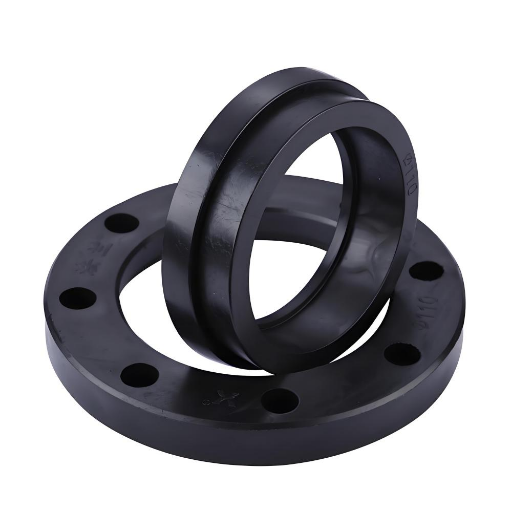
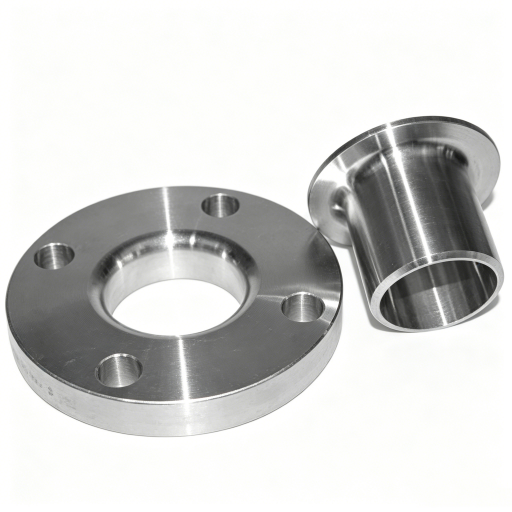
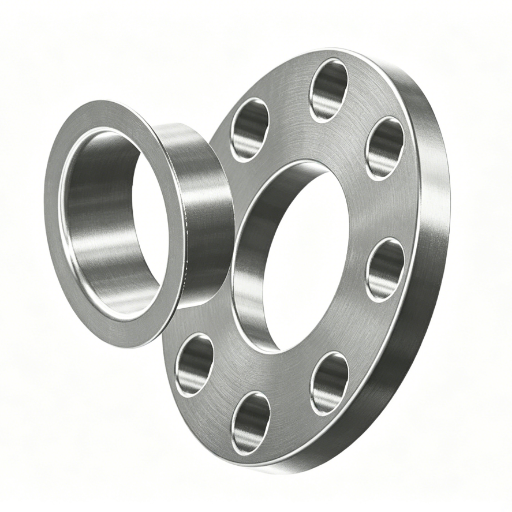
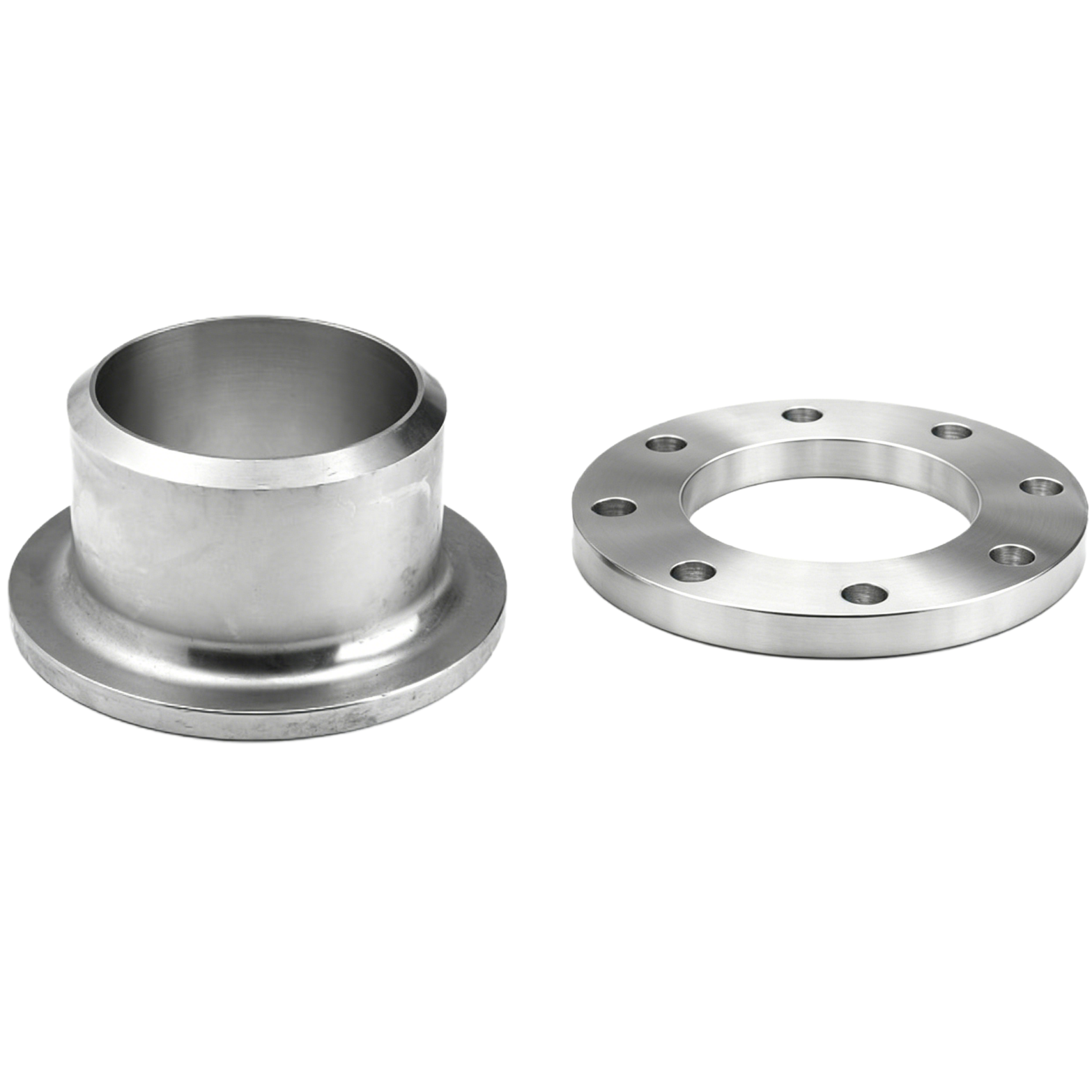
Because the fitting is sold as a package, the specification table below is organised by ring and matched stub end, each with its own pressure rating. An A105 Class 150 ring carries 285 psig non-shock service @ 100F (about 170 at 500F); Class 300 rises to 740 psi non-shock @ 100F (again, actual working temp dictates).
| Component | Material grade | Standard | Class / pattern | Faces |
|---|---|---|---|---|
| Backing flange (ring) | CS ASTM A105 / A350 LF2 | ASME B16.5 | 150–2500 | RF / FF |
| Backing flange (ring) | SS A182 F304 / F316 / F316L | ASME B16.5 | 150–1500 | RF |
| Lap joint stub end | CS A234 WPB / SS A403 WP304-316L | ASME B16.9 | Long (ANSI) pattern | Machined lap, Type A/B |
| Lap joint stub end | SS light wall (Sch 5S/10S) | MSS SP-43 | Short pattern | Machined lap |
| If your line is… | Stub end material | Ring material | Typical class |
|---|---|---|---|
| Water, air, low-pressure utility | CS A234 WPB | CS A105 | 150–300 |
| Frequent dismantling for inspection | Match pipe grade | CS A105 (reusable) | 150–600 |
| Corrosive / chemical / hygienic | SS A403 WP316/316L | CS A105 or SS | 150–600 |
| Chloride / sour / offshore header | Duplex S31803 | CS A105 | 300–900 |
Commercially, the case for a lap joint flange rests on one geometry detail: only the stub end is wetted. On a solid weld neck or slip-on flange in a corrosive line, the entire forged flange has to be the alloy — every pound of it — even though only the bore touches the fluid. With a lap joint assembly you weld a small alloy stub end to the pipe and slide a plain carbon steel backing ring behind it. Expensive metal goes only where the corrosion is; the bulk of the bolted mass stays cheap. On a 316L or duplex line with many connections, that is the difference that pays for the joint.
How large are the cost savings? It depends entirely on the alloy premium and the number and size of the flanges, so any single percentage would be dishonest. What the industry does report is direction and magnitude: on large-diameter or multi-hundred-flange projects the saving from backing an alloy stub end with a carbon steel ring can easily reach into the tens of thousands of dollars across the bill of materials. There is a second, quieter saving as well — if a sealing face is ever damaged, you replace only the stub end, and a backing ring that passes inspection is reusable on the next assembly.
One trap procurement teams fall into is buying the ring carefully and the stub end carelessly. The backing flange is a commodity drilled to a standard — but the stub end carries the lap face, the lap thickness and the alloy that the joint actually seals and survives on. Cut the corner there and you save a few dollars on a fitting that then leaks or under-specs the wetted metal. Our next section is the one that keeps that from happening.
Pairing a carbon-steel backing flange with an alloy stub end keeps high-grade metal off the bolted ring entirely. On large or high-alloy bills of material, the saving versus solid alloy flanges is reported in the tens of thousands of dollars.
Direction and magnitude from industry RFQ experience (texasflange.com); exact saving depends on alloy premium, size and quantity — quoted per line list.“For lap joint assemblies, the stub end is where the game is won or lost – and selecting the wrong type of stub end from a vendor is the most common field error.”
Actually, Type A versus B isn’t long versus short, like you hear – that vendor’s description of the standard isn’t correct. It is the lap fillet radius. A Type A stub end is machine with a broad corner radius so it fits into the port of a true lap joint flange while a Type B stub end is machine with a very small radius designed to slip under a slip-on flange being used as backing. Get type B when it is backed by a slip-on; get Type A when it backed by a lap joint flange. There is another form, Type C, a flared (or Vanstone) stub end which is also has a rounded edge and is machine with a 75% wall lap thickness but left unmachined.
| Stub end | Pairs with | Lap fillet radius | Lap face | Pattern / standard |
|---|---|---|---|---|
| Type A | Lap joint flange | Large (e.g. 3.05 mm @ 1/2″) | Machined, serrated | ASME B16.9 |
| Type B | Slip-on used as backing | Small (0.76 mm) | Machined, serrated | ASME B16.9 |
| Type C (flared) | Lap joint / van stone | Rounded ID edge | Unmachined | Flared, 75% wall |
| Short pattern | Light-wall SS pipe | per type | Machined | MSS SP-43 (Sch 5S/10S) |
Two standards govern length and wall. ASME B16.9 is the long (ANSI) pattern; MSS SP-43 is the short pattern for light-wall stainless pipe, and its dimensions are substantially the same as B16.9 from NPS 1/2 to 24 except for the outside diameter at the weld bevel. As a worked example, a 1/2″ stub end is 50.8 mm long in the short pattern versus 76.2 mm in the long pattern — specify which your isometric assumes, because they are not interchangeable on a tight tie-in.
The lap is the gasket-contact face, and its thickness must be at least the nominal pipe wall, with a tolerance of +1.52 mm / −0 — it may be thicker, never thinner. That “additional lap thickness” rule exists so the seating face always has enough metal after machining. The fillet radius carries its own tolerance (+0 / −0.76 mm up to 3-1/2″, +0 / −1.6 mm at 4″ and above), and the general wall stays at or above 87.5% of nominal. Quote the schedule of the mating pipe and we cut the stub end to suit it; we do not assume Schedule 40 and hope.
A lap joint flange is the right fitting for a specific job, not every job, and the honest comparison is in behaviour, not adjectives. Its strengths are bolt-hole alignment by rotation, frequent disassembly without cutting pipe, and material economy on alloy lines. Its real limitation is fatigue: a lap joint assembly has low fatigue resistance, and in cyclic or vibrating service it is the base metal of the stub end — not the weld — that eventually fails, “like a coat hanger bent back and forth.” Where vibration is unavoidable, the joint should be upgraded to a butt-welded hubbed (weld neck) design. We would rather you knew that before the order than after the shutdown.
| Requirement | Lap Joint | Slip-On | Weld Neck | Van Stone |
|---|---|---|---|---|
| Bolt-hole alignment | Rotates free | Fixed | Fixed | Rotates free |
| Frequent disassembly | Lift ring off | Cut to remove | Cut to remove | Lift ring off |
| Material economy on alloy lines | Alloy stub only | Whole flange alloy | Whole flange alloy | Alloy liner only |
| High-pressure / fluctuating load | Low fatigue life | ~1/3 of weld neck | Best | Low fatigue life |
| Sealing-face exposure | Ring not wetted | Flange wetted | Flange wetted | Liner not wetted |
Where does “van stone” fit? A van stone flange is the same idea as a lap joint flange — a loose ring rotating over a flared lap — and the term is most common in plastic, lined and HVAC duct piping; in steel pipework the two names describe the same fitting, and a swivel flange is a close cousin with a fully rotating ring. As a practical rule, use a slip-on for low-cost moderate-duty connections, a weld neck for severe or fluctuating loads, and a lap joint (van stone) flange where you need frequent disassembly or alloy economy and the service is steady. Tell us the service and we will tell you honestly if a lap joint is the wrong call.
A lap joint flange is only correct when its outside diameter, thickness, bolt circle and hole pattern match the mating flange exactly — and because ASME B16.5 drilling is shared across flange types, the figures below are the same bolt circles your weld-neck and blind flanges use at each size and class. Our tables give the most-requested carbon-steel dimensions for the lap joint pattern; full charts for every class, plus the matched stub-end schedule, ship as the downloadable spec sheet. ASME B16.5 covers NPS 1/2 through 24; above that, large-diameter lap joint flanges move to ASME B16.47 Series A or B.
| NPS | OD (O) | Flange thk (tf) | Bolt circle (BCD) | No. of bolts | Hole dia. |
|---|---|---|---|---|---|
| 2″ | 6.00 | 1.00 | 4.75 | 4 | 0.75 |
| 3″ | 7.50 | 1.19 | 6.00 | 4 | 0.75 |
| 4″ | 9.00 | 1.31 | 7.50 | 8 | 0.75 |
| 6″ | 11.00 | 1.56 | 9.50 | 8 | 0.88 |
| 8″ | 13.50 | 1.75 | 11.75 | 8 | 0.88 |
| 10″ | 16.00 | 1.94 | 14.25 | 12 | 1.00 |
| 12″ | 19.00 | 2.19 | 17.00 | 12 | 1.00 |
| NPS | OD (O) | Flange thk (tf) | Bolt circle (BCD) | No. of bolts | Hole dia. |
|---|---|---|---|---|---|
| 2″ | 6.50 | 1.31 | 5.00 | 8 | 0.75 |
| 3″ | 8.25 | 1.69 | 6.62 | 8 | 0.88 |
| 4″ | 10.00 | 1.88 | 7.88 | 8 | 0.88 |
| 6″ | 12.50 | 2.06 | 10.62 | 12 | 0.88 |
| 8″ | 15.00 | 2.44 | 13.00 | 12 | 1.00 |
| 10″ | 17.50 | 3.75 | 15.25 | 16 | 1.12 |
| 12″ | 20.50 | 4.00 | 17.75 | 16 | 1.25 |
For NPS 26″–60″ the lap joint flange dimensions move to ASME B16.47 (Series A / Series B). Metric projects call up EN 1092-1 (PN6–PN40, Type 02 loose flange) or DIN 2642; Asian projects cite JIS B2220 (5K–20K). Each matched stub end follows ASME B16.9 (long pattern) or MSS SP-43 (short, light-wall pattern). We cross-reference your drilling standard and the mating pipe schedule at quotation so a DIN ring never meets an ANSI stub end.
Nothing loses a week on site faster than a lap joint stub end that arrives without valid paperwork, because the stub end is the wetted, alloy-critical half of the assembly. Procurement teams tell us the same story: a supplier claims a grade, cannot produce a matching certificate at goods-in, and the whole lot is quarantined while the line stands idle. Synbase closes that gap at the source. Every shipment carries an EN 10204 3.1 Material Test Certificate – chemical analysis, mechanical properties and heat-treatment record verified by our works – with the heat number punched on the fitting so the stub end in the inspector’s hand traces back to the mill melt that cast it. Where the project demands it, we arrange EN 10204 3.2 certification witnessed by a third party such as SGS, BV or TÜV.
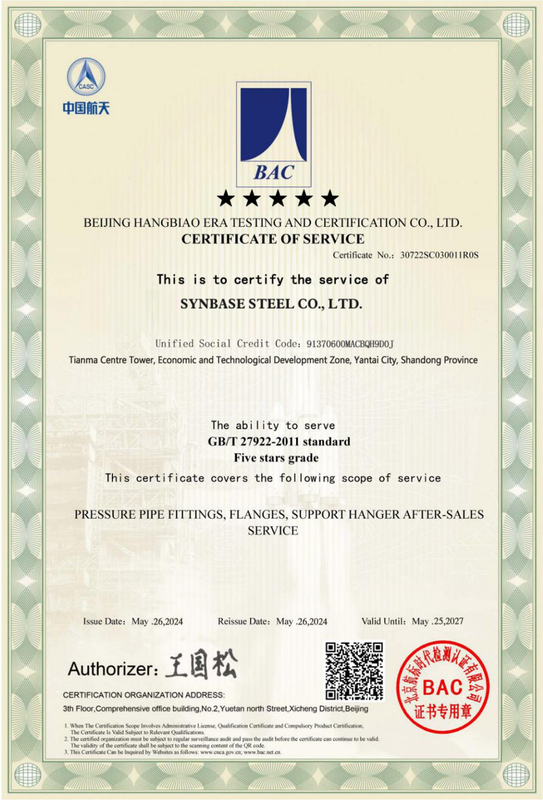
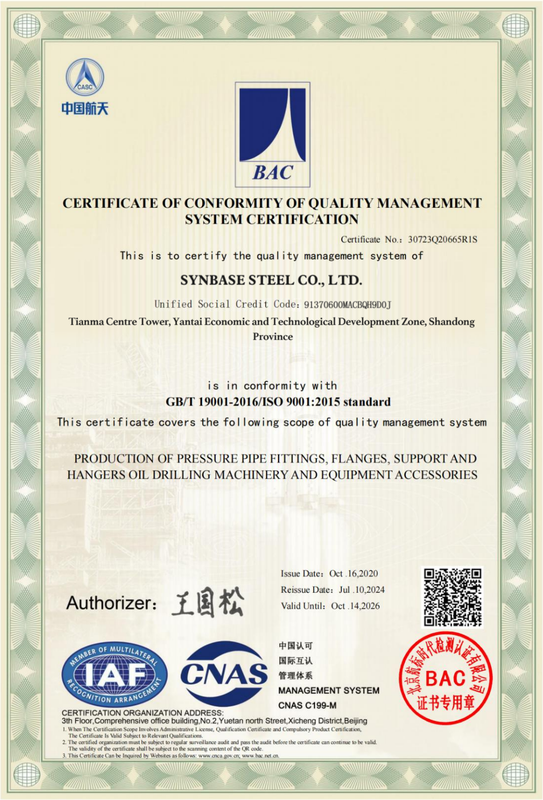
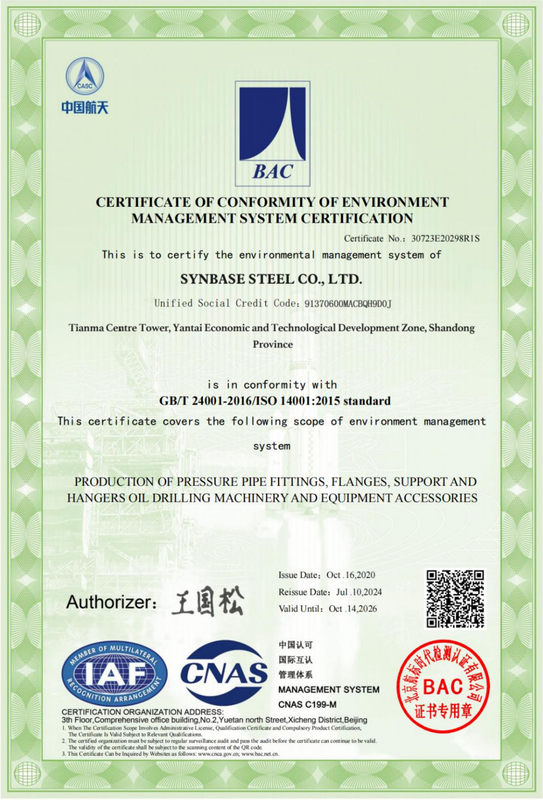
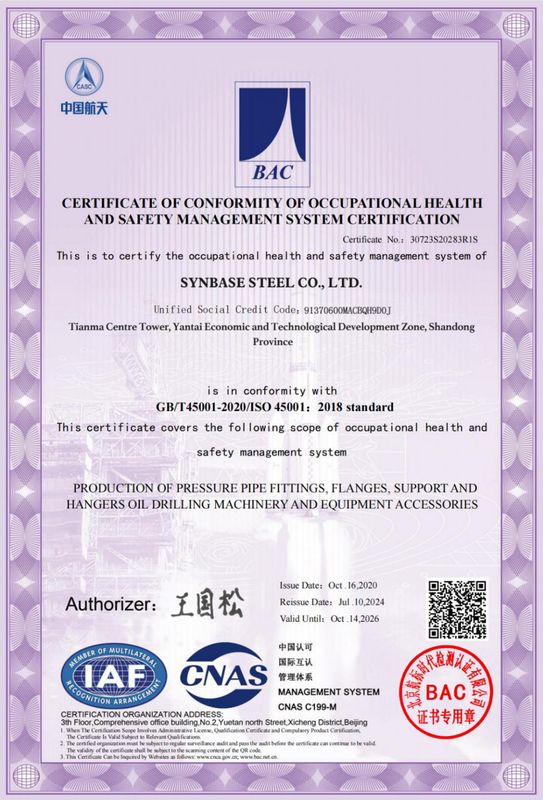
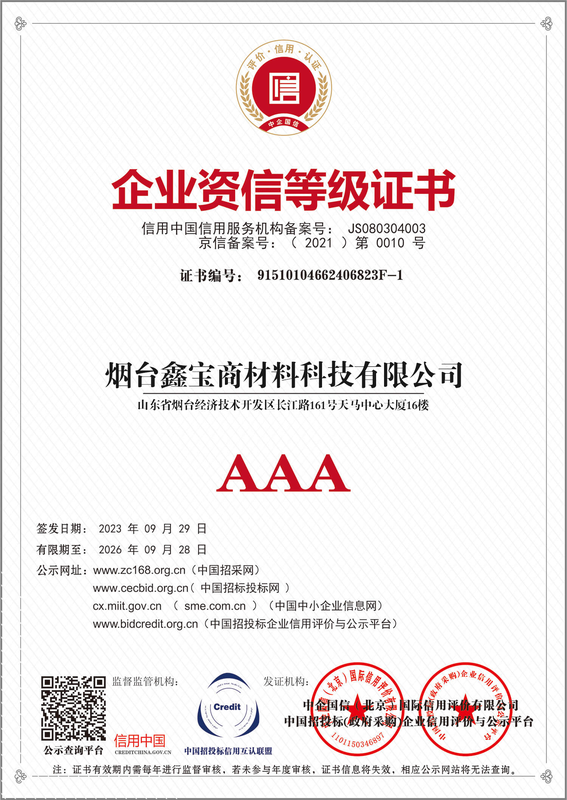
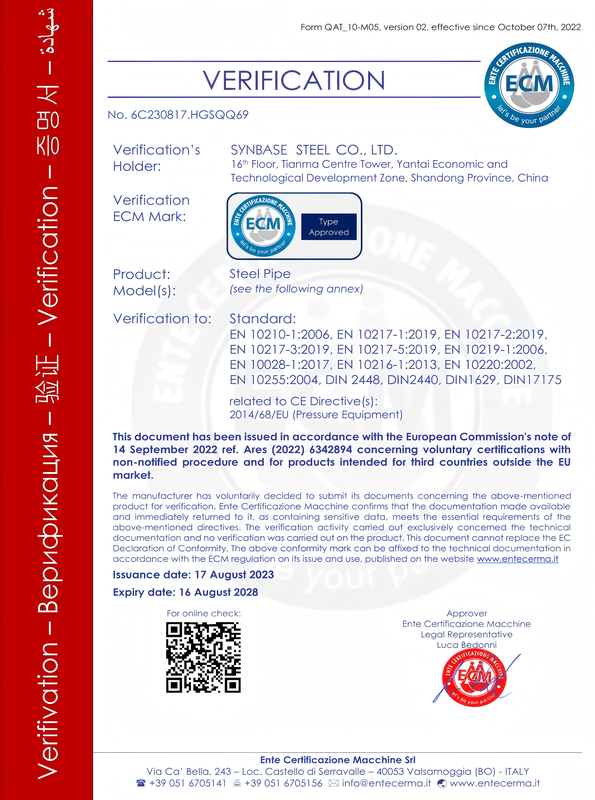
Synbase is the dedicated flange business of the E-CHENG STEEL GROUP, which forges, heat-treats and machines pipes, fittings, flanges and valves on its own bases rather than trading unmarked stock from someone else’s yard. Our raw material comes direct, under long-term supply contracts with China’s largest steel producers – Baosteel, Tianjin Pipe (TPCO), Ansteel and TISCO – and the group is a member of the China Iron and Steel Association. It is that unbroken line – from mill of record, to in-house forge, to heat numbers stamped on each ring and stub end, to a 3.1 certificate – that lets your QA department release the parts without retesting.
A counterfeit mill test certificate is a real risk in the fittings market. When your parts arrive, make three checks: the heat number stamped on the flange and stub end must match the heat number on the 3.1 certificate; the certificate must list actual measured test values, not merely the words “meets spec”; and you must be able to verify the issuing works. Genuine paperwork passes all three – request a sample from us and run the checks yourself.
Want to see our documentation before committing?
Request a sample EN 10204 3.1 Material Test Certificate →Another common name for the lap joint flange is a loose flange, backing flange, swivel flange, van stone flange or lap joint ring flange, often abbreviated to LJRF. In plastic, lined and HVAC duct piping, you will most frequently hear the term ‘van stone’ whilst in steel piping, any of those are used interchangeably and all describe the same loose ring that turns about a butt welded stub end. A rolled angle ring for example rotates because it’s rolled for structural stability and not drilled to an ASME B16.5 pressure rating standard.
A lap joint flange consists of a loose ring and a stub end welded to the pipe, and is usually a two part fitting. The ring rotates freely over the pipe and stub end making bolt alignment easy and the ring is always un-wetted by the fluid. Compare this to the slip-on flange which is one piece, that slides over the pipe and needs to be welded - slip-ons are cheaper and simpler, but can only be removed by cutting the pipe and the entire flange comes into contact with the media. Where frequent disassembly is required and expensive alloys are needed, this type is a more economic option than a slip-on, which suits lower pressure, moderate service applications.
In steel piping nomenclature these are one and the same fitting - a loose ring turning on a flared edge of the stub-end and sometimes they are still referred to as a van stone - a name passed down from plastic/lined and duct piping where the stub end takes on a flared form. It’s all about bolt alignment and keeping the flange ring out of the stream, and it’s the same principle whether they’re called lap joint or van stone.
Their tabulated difference is the lap fillet radius, not length. A Type A stub end has a large corner radius to seat inside the bore of a lap joint flange; a Type B has a small radius to fit under a slip-on flange used as a backing ring. Use Type A with a true lap joint flange. Type C is the flared (van stone) form with lap thickness about 75% of the pipe wall.
Avoid lap joint flanges in cyclic or vibrating service. This assembly has low fatigue resistance, and it is the base metal of the stub end — not the weld — that fatigues over time. For severe or fluctuating loads, a butt-welded weld-neck flange is the correct choice. Lap joint flanges are at their best on steady-service lines that need frequent disassembly or alloy cost economy.
Backing rings are made from either carbon steel (ASTM A105 or A350 LF2 for low temp service) or stainless (A182 F304/F316/F316L) steel. The stub ends supplied are manufactured from matching or superior grade material (A234 WPB carbon; A403 WP304/316L stainless; or duplex and alloy for sour service or service with chlorides). As only the stub end comes in contact with the media, the common cost economy is to use a carbon steel backing ring with an alloy stub end.
Every Synbase lap joint flange and stub end ships with an EN 10204 3.1 MTC and a stamped heat number; 3.2 third-party certification is available on request. Standard stock pairs typically ship in 1–2 weeks, while alloy or non-standard custom pairs run about 3–4 weeks — we confirm the exact lead time against your RFQ.