Send Your RFQ to Synbase Steel
Prefer to send drawings, BOMs or attachment lists by email? sales@synbasesteel.com
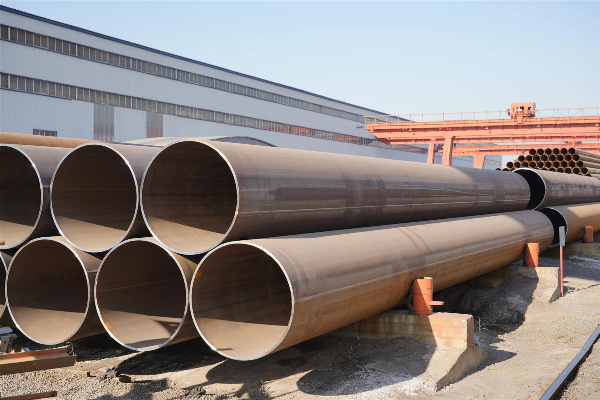
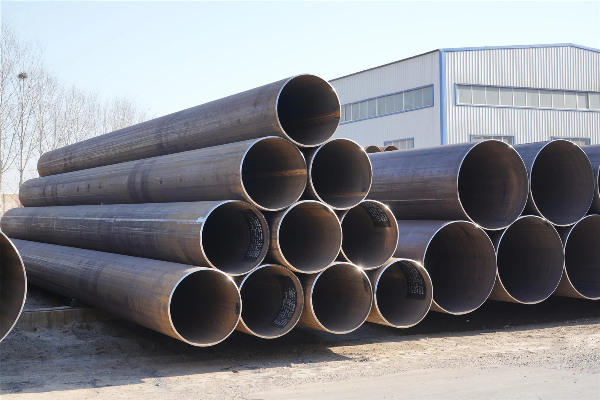
LSAW steel pipe is the engineered answer when a project needs large-diameter, high-pressure line pipe that ERW and seamless simply cannot deliver above 24 inches. Synbase makes its longitudinal submerged arc welded pipe from a single steel plate — JCOE/UOE formed, then welded on both the inside and outside seam. Synbase supplies OD 16–60″ (406–1500 mm) in API 5L X42–X80, with 100% ultrasonic testing and full mill traceability.
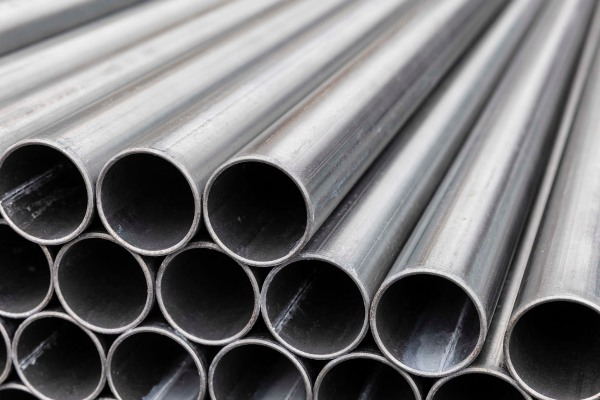
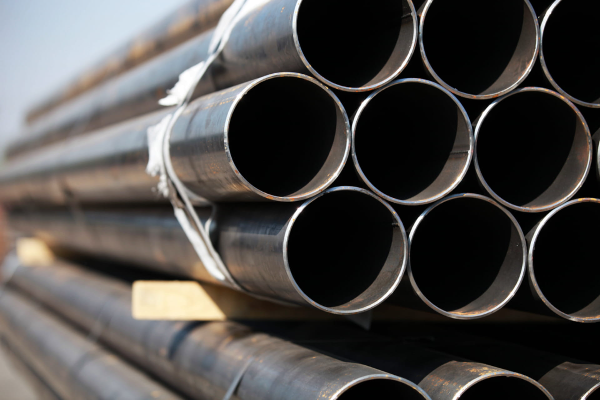
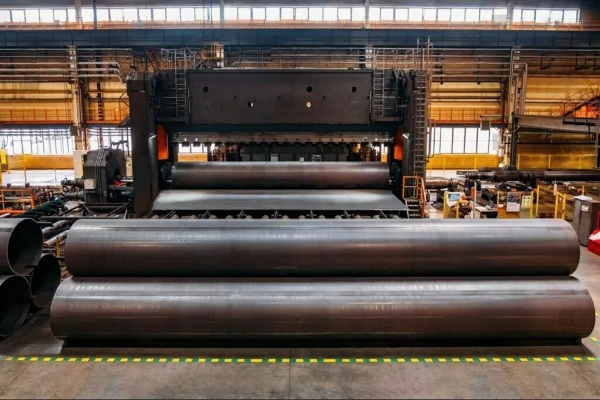
Above 24 inches, the choice narrows fast. Commercial seamless pipe effectively tops out near NPS 24, and ERW is a coil-based process built for smaller bore. That leaves two welded routes for a DN600–DN2000 trunk line, and they aren’t equivalent choices.
A longitudinal submerged arc welded pipe begins as a single narrow strip of steel plate, punched into an open tube via a J-C-O-E process, and then twice welded to the outside as well as to the inside of a single longitudinal seam (that twice-welded longitudinal weld causes LSAW pipe to sometimes be called DSAW – double submerged arc welded), so the welded line is aligned to bear exactly on the same line as the longitudinal axis of the pipe so it intercepts and carries the force caused by internal pressure.
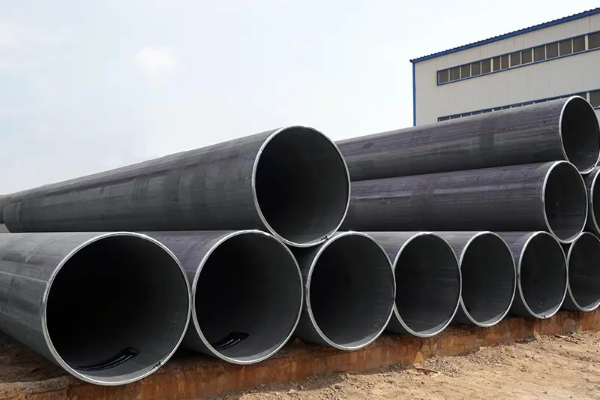
Most buyers conflate LSAW with SSAW and assume the strength is identical, it isn’t, and picking the wrong seam under-rates the line. We built the Synbase 5-Process Pipe Selection Matrix to settle the question with numbers instead of adjectives. It maps the five carbon-steel pipe routes against the dimensions that actually drive a purchase order.
Both submerged-arc families share a welding method but not a seam: LSAW runs a straight longitudinal seam, while SSAW pipe (spiral submerged arc welded, also called HSAW) winds the seam helically. Comparing LSAW and SSAW on strength alone misses why each welded pipe behaves differently under pressure, the seam geometry, not the steel, is the variable.
| Process | Seam | OD range | Pressure fit | Relative cost | Best for |
|---|---|---|---|---|---|
| LSAW (DSAW) | Longitudinal, 2-side SAW | 16–60″ | High (Class 1–2) | Mid | Large-dia high-pressure oil & gas trunk lines |
| SSAW / HSAW | Spiral SAW | 20–100″ | Low–medium (Class 3–4) | Low | Water, low-pressure, ultra-large diameter |
| ERW / HFW | Electric resistance | ½–20″ | ≤ Class 600, non-sour | Low | Municipal water, low-pressure gas |
| Seamless | None | ⅛–24″ | Highest (sour, cyclic) | High | Wellheads, small-bore high pressure |
Under petroleum’s pipeline standards, SAWL/SAW is favored in both Class 1 and Class 2 zones – town, suburbs, and sub-sea – but ssaw/HSAW only allowed for low pressure on Class 3 and 4 portions of lines. That’s a regulated distinction, not a commercial bias. But it’s why most major-line standards — ISO 3183 and API 5L — pick longitudinal seam as the default.
LSAW doesn’t win every axis, and we won’t pretend otherwise. Because its weld is concentrated in one direction, LSAW lateral impact toughness, about 30 J at −20 °C, sits slightly below SSAW, whose spiral seam disperses stress in multiple directions. For axial pressure containment LSAW leads; for very large, low-pressure water lines where material efficiency dominates, SSAW steel pipe is the rational pick, and we make that too.
For the spiral and electric-resistance routes in detail, see our spiral welded pipe and ERW pipe pages; for the line-pipe specification angle, our API 5L line pipe page covers grade selection end to end.
All the LSAW steel pipe’s that go out are built to the specs in our spec book, not what the sales brochure says. Dimensions/grades below are the result of JCOE/UOE type production (we confirm any oversize/extrat-thick-wall specs for an RFQ.)
Core mechanical and dimensional variables executing JCOE heavy-duty industrial pipe manufacturing standards.
| Parameter | Range | Standard Reference |
|---|---|---|
| Outside diameter | 16–60″ (406–1500 mm) | API 5L / ISO 3183 |
| Wall thickness | 6–40 mm (thicker on inquiry) | API 5L |
| Length | up to 12.5 m | per project |
| Grades | Gr.B, X42, X52, X56, X60, X65, X70, X80 | API 5L PSL1 / PSL2 |
| Yield strength | 245–555 MPa | API 5L grade-dependent |
| Tensile strength | 415–625 MPa | API 5L grade-dependent |
| Coating | 3LPE / 3LPP / FBE | ISO 21809-1 / DIN 30670 |
This is where grade specification is most vulnerable as both API 5L PSL2 grades the yield strength at the extremes – an X65 PSL2 pipe would need between 448-600 MPa of yield stress – so an upper grade ensures that you don’t use a material that’s excessively hard for the application (it’s much more susceptible to hydrogen cracking). Use the selector to set grades and PSL to service before issuing your buy order.
| Service | Grade | PSL | Notes |
|---|---|---|---|
| Water transmission | Gr.B / X42 | PSL1 | Coated, low pressure |
| Onshore oil gathering | X42 / X52 | PSL2 | CVN tested |
| Gas transmission | X52 / X65 | PSL2 | TMCP (M) delivery |
| Sour service (H₂S) | X52 / X65 (S) | PSL2 + Annex H | NACE MR0175, HIC/SSC |
| Arctic / low-temp | X65 / X70 | PSL2 (Q) | Impact tested to −46 °C |
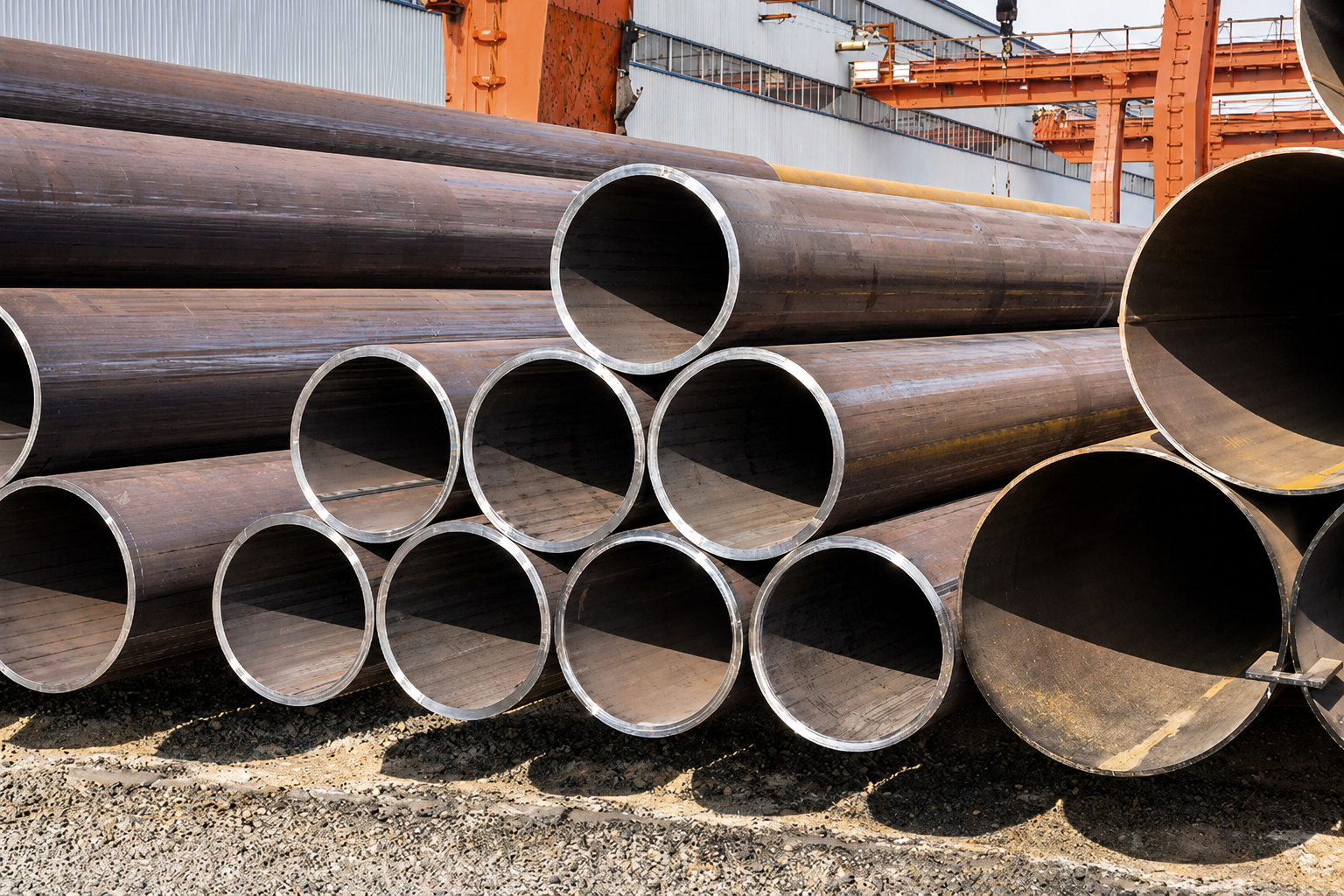
Demand for large diameter line pipe is structural, not cyclical. Market data backs that — LSAW pipe demand is projected to climb from USD 10.6B in 2024 to USD 14.8B in 2030 (5.7% CAGR) on hydrogen-ready and carbon-capture pipelines, though oil and gas remains the core driver. Across all industrial applications these key properties-high strength, weld reliability, corrosion resistance-ensure LSAW remains the de facto standard for any high-pressure gas pipeline. That’s why LSAW excels in the following applications:
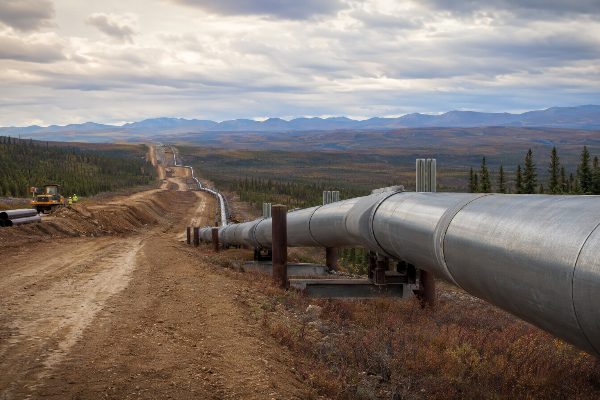
high-pressure crude and natural gas trunk lines, x65/x70 grade, the primary application area for LSAW, typically within Class 1-2 routes.
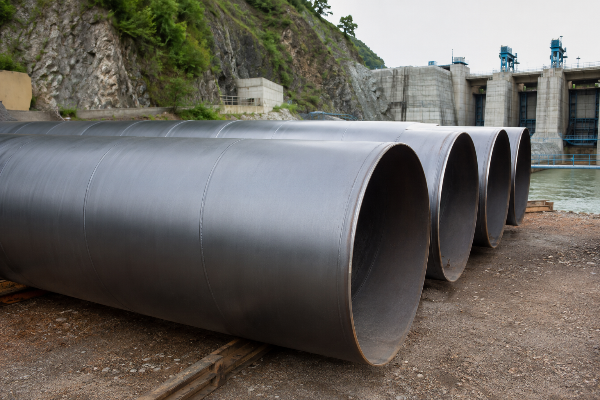
large-bore raw water mains and hydropower penstock applications where wall thickness and straightness are critical.
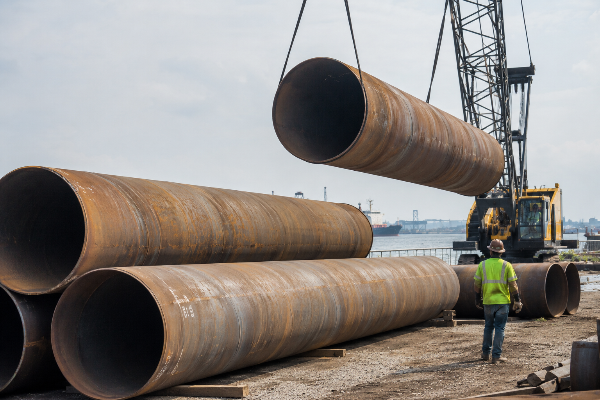
driven foundation piles (ASTM A252) and structural sections for docks, bridges, and offshore platforms.
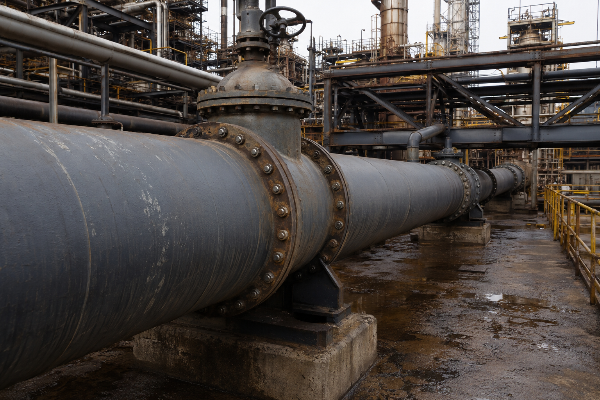
ore concentrate slurry lines and petrochemical / refinery process piping carrying either corrosive or abrasive media.
The proof is at project scale. EACOP (East African Crude Oil pipeline), for instance – the 1443 km long cross-border line, took receipt of the first 100km of its line pipe in Dar es Salaam in December 2023. Lines of this type run on longitudinal seam pipe because the seam hold under sustained high-pressure transmission.
For sour (H₂S) gathering, the service drives more than grade — it drives chemistry. Don’t just match an X-grade; specify PSL2 + Annex H with NACE MR0175 / ISO 15156 compliance. Synbase tailors the grade, wall, and coating to the line, not the catalog.
Get the application wrong and the cost is not abstract, an under-rated line risks an in-service failure no pipeline budget can absorb. Because each line is engineered to its service, Synbase sizes a 20 mm wall X70 for a 6 MPa gas pipeline very differently from a 10 mm X42 water main, on ISO 9001-certified production. Unlike a catalog seller, we confirm the spec against your service conditions first, the right call before any quote.
Buyers often default to seamless out of a belief that seamless equals ultimate safety, then overpay for an advantage that only exists at small bore. On large-diameter high-pressure pipe, that instinct get expensive, this is the Cost-per-Meter Reality Check.
The cost gap is structural. Seamless uses solid billets with only 65–75% material utilization, while welded pipe runs above 90% from plate or coil — and commercial seamless is itself capped near 24″ under ASME B36.10. For large diameters where few mills even have piercing capacity, seamless can land at 3–5× the cost of the same-grade LSAW.
| Factor | Large-dia seamless | LSAW |
|---|---|---|
| Initial price (>20″) | baseline | ~30–40% lower |
| Size availability | limited (≤ ~24″) | 16–60″ |
| Typical lead time | 6–12 months | 2–3 months |
| Material utilization | 65–75% | >90% |
Verification is concrete, not a logo wall. We supply EN 10204 3.1 mill test certificates as standard and 3.2 third-party-witnessed certificates for oil & gas, nuclear, and critical-infrastructure scopes, the heat number on the certificate must match the heat number stamped on the physical pipe. We welcome SGS, Bureau Veritas, TÜV, or Lloyd’s Register inspection written into your purchase order, and our quality system is certified to ISO 9001.
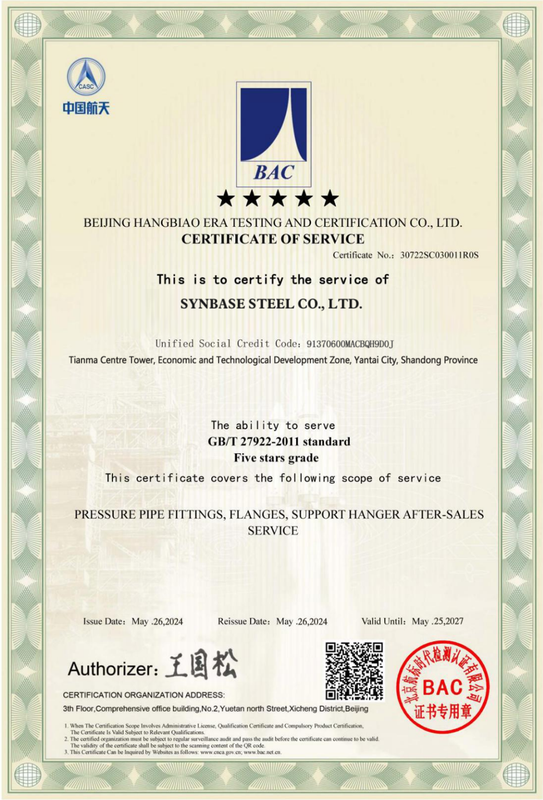
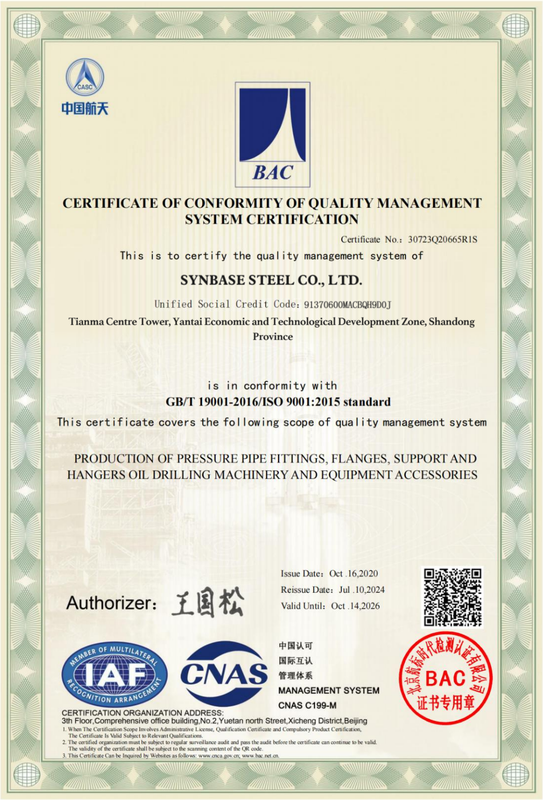
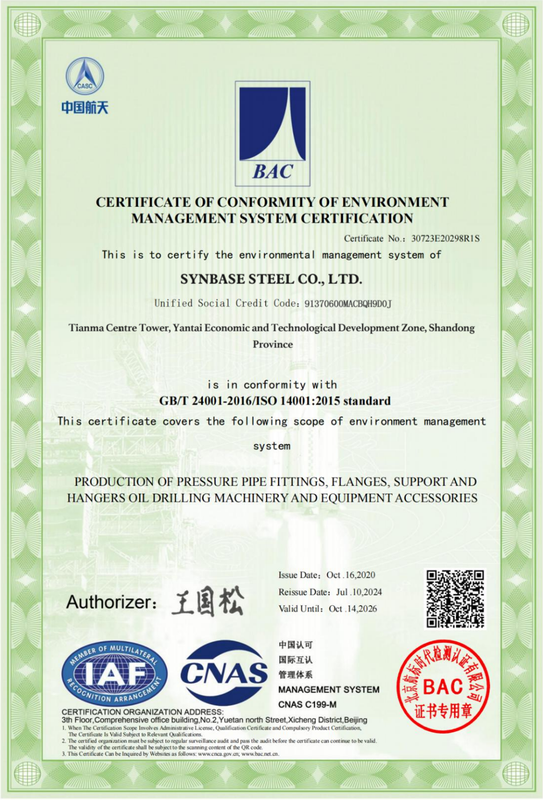
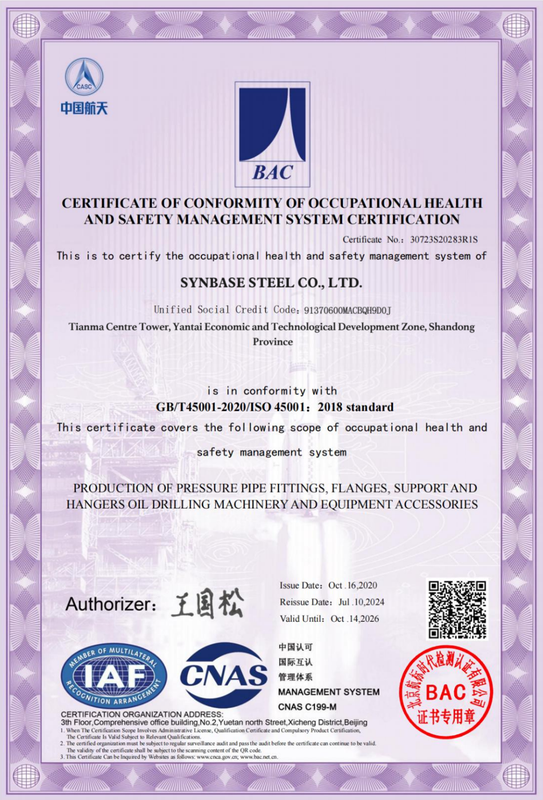
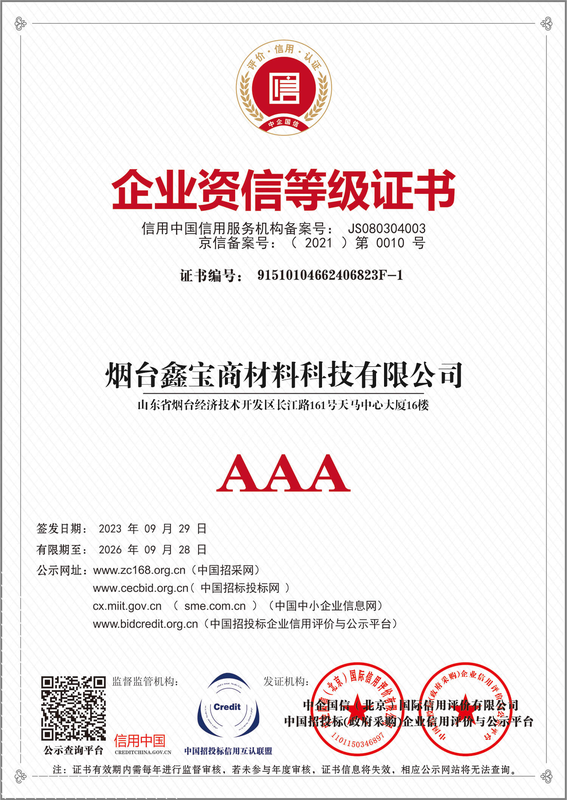
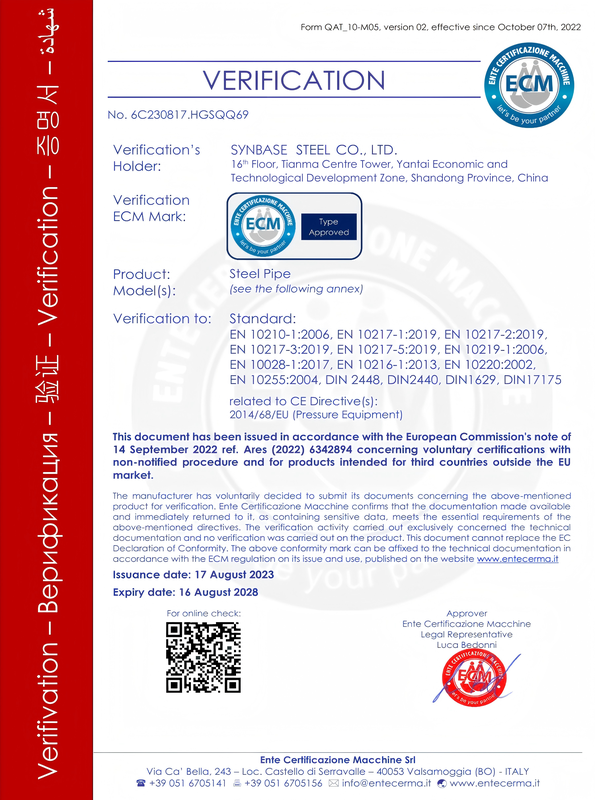
As a pipe manufacturer of record rather than a trader, Synbase is the core enterprise of the pipeline cluster under E-CHENG STEEL GROUP, with production bases, modern processing plants, and large warehousing, so your steel pipes trace to a named mill, not a re-labeled stockist lot. That mill-direct accountability is what lets us tie every claim of strength and reliability to a verifiable certificate. The group holds 800+ national patents, belongs to the China Iron and Steel Association, and maintains strategic supply with Baosteel, TPCO, Ansteel, and TISCO.
A low ex-works price means little if duties and damaged freight wreck the landed cost. Chinese welded line pipe faces anti-dumping and countervailing measures in several markets, U.S. orders remain in force per USITC sunset reviews, and Canada’s CBSA lists large line pipe under measures in force. We help you price the real landed cost, not just the mill quote.
The hidden cost is rarely the mill price, it is a 25% anti-dumping duty or a delayed shipment that slips a project by weeks. Because our documents are built around customs clearance and quoted Incoterms, you can model the true landed cost up front, not discover it at the port. In practice, a 1200 ton order of 24 in pipe on ISO 9001 production ships with the duty position already mapped.
Transit damage is a recurring, honest complaint, even in-spec pipe arrives with crushed coatings and edges when nobody owns the sea freight. Bevels are cut to ASME B16.25 (30° ±5°) so field welders aren’t re-prepping ends on site. Unlike a trader who quotes only ex-works, we treat duty and freight as part of the spec, the right call for a CIF delivery, and one more reason to confirm the full quotation against your destination.
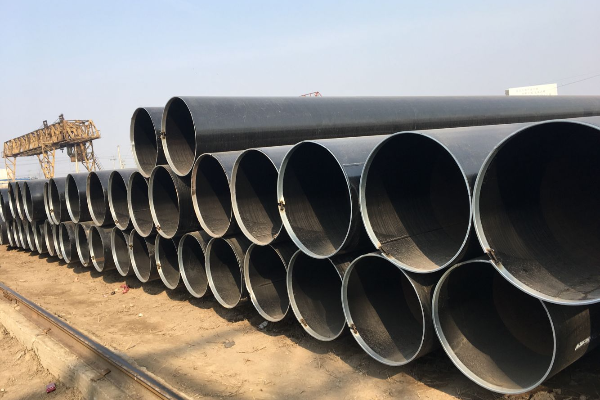
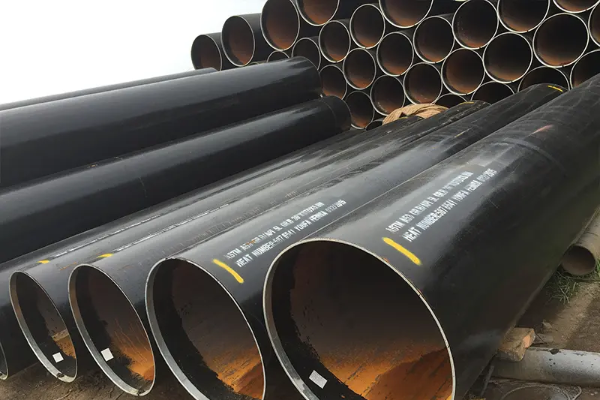
Evaluate your specific project requirements to determine the optimal manufacturing process for your LSAW pipes.
https://synbasesteel.com/welded-steel-pipe/lsaw/pipe-process-selector/ Open SelectorInstantly calculate the theoretical weight of steel pipes to streamline your logistics planning and project cost estimation.
https://synbasesteel.com/welded-steel-pipe/lsaw/pipe-weight-calculator/ Open CalculatorIdentify the precise steel grade and Product Specification Level (PSL) required to meet your operational pressure demands safely.
https://synbasesteel.com/welded-steel-pipe/lsaw/grade-pressure-psl-selector/ Open Selector