Send Your RFQ to Synbase Steel
Prefer to send drawings, BOMs or attachment lists by email? sales@synbasesteel.com

Spec errors-a wrong grade, or a missed certificate that causes rejection or a pitted line-cost more than unit-price errors. We supply traceable seamless pipe to the conditions your line sees every day.
Stainless steel seamless pipe is the right call once a line carries pressure or chlorides that a welded seam cannot safely hold. Synbase makes this pipe to ASME B36.19M dimensions in grades 304/304L, 316/316L, 321, 347 and Duplex 2205, with every length traceable to its heat number on an EN 10204 3.1 mill certificate. For exchanger duty, specify stainless heat exchanger tubes.
Request a Quote / Talk to an Engineer
One chemical plant chose a cheaper grade to save on a seawater heat-exchange line and lost it to chloride pitting in under 18 months — roughly $47,000 in shutdown, replacement and hazardous-waste disposal against a $12,000 grade saving (cortecsteel case). That cheap decision became the expensive one.
A welded line already carries an inherent discount on its strength. ASME B31.3‘s formula for the design of piping systems splits the allowance for maximum permissible stress (S) into joint efficiency factor (E) applied by definition, in part, based on whether there’s a weld seam:
When all is said and done, welded pipe requires a thicker wall, therefore increasing its effective cost, which shrinks, or sometimes eliminates, its price advantage in some wall thickness categories.
That’s the technical reason that boiler, hydrocarbon, and chemical service applications require seamless rather than general service conduit. What seamless pipes guard against is gradual; the same seam that passed the hydro test at the mill is the very origin for future Fatigue failure under years of thermal cycling.
Not sure welded is safe for your pressure class?
Get a seamless-vs-welded review →
A higher grade number is not automatically the right answer. The molybdenum in 316 that defeats chlorides adds 10–35% to the price, and on a dry inland line it buys nothing — one architectural firm over-specified 316 for an inland facade and, after 20 years, measured corrosion identical to 304 (trinitydynamic case).
Grade is a service decision set by chloride load and temperature, not by price tier. A 304 stainless steel pipe and a 316 stainless steel pipe are not always ranked cheapest-to-best, so the honest answer is that the right call is the grade your environment demands. Move up the ladder below only when chlorides or heat require it, and you neither over-pay nor under-build.
| Service condition | Grade | Cr / Ni / Mo % | PREN | Cost index | Typical use |
|---|---|---|---|---|---|
| Chloride <100 ppm, <60 °C | 304 / 304L | 18–20 / 8–10.5 / — | 18–20 | 1.0× | Dry process, structural, food |
| Chloride 100–1000 ppm, ≤150 °C | 316 / 316L | 16–18 / 10–14 / 2–3 | 24–26 | 1.1–1.35× | Coastal, mild chemical, marine |
| Chloride >1000 ppm + pressure | Duplex 2205 | 22–23 / 4.5–6.5 / 3–3.5 | 34–36 | 1.6–1.9× | Seawater, sour service, offshore |
| Hot acidic / high-temp steam | 321 / 347 / 904L | 17–25 / 9–25 / 0–4.5 | 18–35 | 1.3–3× | Superheater, acid plant |
Both austenitic grades face chloride stress-corrosion cracking once tensile stress, chlorides and temperatures above about 60 °C act together, which is why 2205 takes over at the top of the ladder, with ISO 9001-controlled chemistry proven on every heat. Synbase screens grade against your line conditions before quoting, the same way our application desk reads an incoming RFQ.
Sizes run from 1/8” NPS to 24” NPS (OD up to 711 mm), with wall schedules of 5S through XXS and mill lengths to 36 m, holding wall tolerance to the ±12.5% set by ASME B36.19M. Cold-drawn sizes meet the tighter tolerances that instrumentation and hydraulic lines need.
“We test every incoming RFQ against the actual chloride and temperature, not the label on the last order. On a 316L line we hold molybdenum to the 2.0% minimum and prove it on the certificate, anything below that is a rejected lot waiting to happen, not a discount.”
A seamless vs welded pipe choice really comes down to one number in the code, and an honest comparison sits at the design condition, not the showroom. That trade-off below is why specifiers reach for seamless on critical lines and accept welded only where the duty allows it.
| Property | Seamless (A312) | ERW welded (A312) |
|---|---|---|
| Joint efficiency E (B31.3) | 1.00 | 0.85 |
| Wall needed for equal pressure | Baseline | ~15% thicker |
| Heat-affected zone | None | At the seam |
| Relative material cost | 1.0× | 0.65–0.75× |
| Best fit | High pressure, cyclic, sour | Low-pressure, large-OD, budget |
That 0.85 efficiency factor is the single largest technical argument for choosing seamless – the manufacturing process that eliminates the seam is, itself, protected, from the cross-roll piercing through the cold draw (see USPTO US7293443B2). below critical pressure class, welded is a sensible low-cost option; above that, the much-thicker wall of welded pipe quickly closes that cost gap.
Ready to see how seamless compares for your pressure class?
Request a custom comparison →Most procurement delays trace back to one ambiguous line on the PO: the wrong standard, or no edition at all. These four specifications look interchangeable and are not — pipe and tube are measured differently and certified to different codes.
| Spec | Form | Scope | Code path | Intl equivalent |
|---|---|---|---|---|
| A312 / SA-312 | Pipe (NPS + SCH) | Austenitic, general corrosive + high-temp | ASME B31.1 / B31.3 | EN 10216-5 |
| A213 / SA-213 | Tube (OD + wall) | Boiler, superheater, heat-exchanger | ASME Sec I / VIII | EN 10216-5 |
| A269 | Tube (small OD) | Instrumentation, general service | Tighter tolerance | JIS G3459 |
| A790 | Pipe | Duplex / super-duplex (S31803, S32750) | ASME B31.3 | EN 10216-5 |
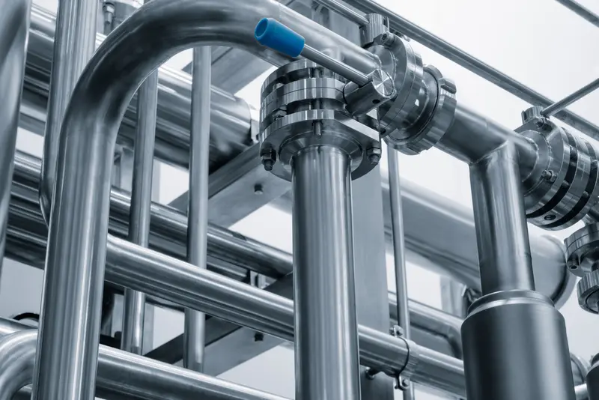
Each standard asks and answers a different question – ASTM A312 applies to “pipe” while ASTM A213 is the standard for boiler and heat exchanger “tubes,” and ASTM A269 covers instrumentation, and cold drawn seamless tube, by contrast. While A312 calls out sizes using nominal pipe size and schedules, A213 and A269 use OD and wall thickness and, additionally, A213 adds the heat-treating and hydrostatic testing required for ASME BPVC boiler service. In an honest trade, the right way is to choose the standard appropriate to the duty. And so naming the exact standard, edition, and grade on the RFQ is always the smartest way to prevent a future headache.
A certificate isn’t any more credible than the testing done to back it up. Synbase has five hot-rolling lines and one cold-draw line. They’re used to complete their manufacturing runs before every heat is subjected to their standard inspection process in order to receive a mill certificate.
Cross-roll pierce, cross-roll elongate, then cold draw for the small, precise dimensions (see CN102649211A for example) – a method proven and patented.
Every length get tested – and that starts at the front end, after hot rolling: 100% eddy-current, Ultrasonic and Magnetic-flux-leakage (MFL) inspection, followed by a full hydro test of every individual length, with testing procedures referenced to NIST standards.
But the work doesn’t stop there – a lab team also checks each heat: Optical emission, metallurgy and microscopy, impact, hardness and high-temperature tensile testing confirm compliance.
Incoming verification at the buyer end is where many lots fail: one Dubai order of 50 tons of 316L was rejected when the spectrometer read 1.8% molybdenum against the 2.0% minimum, adding $34,000 and six weeks. We hold composition to the grade minimum and record the actual heat result, so the pipe that arrives matches the pipe that was certified.
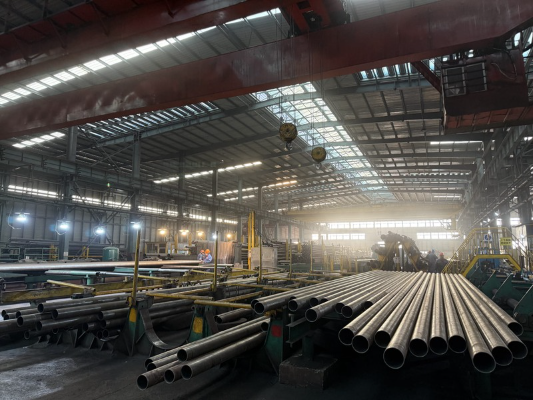
We chart the grade ladder against the two variables that define process-level risk (chloride and temperature) for various industry segments, enabling us to specify seamless pipe accurately and efficiently, as used here for National Oil Companies, EPC contractors and worldwide energy projects.
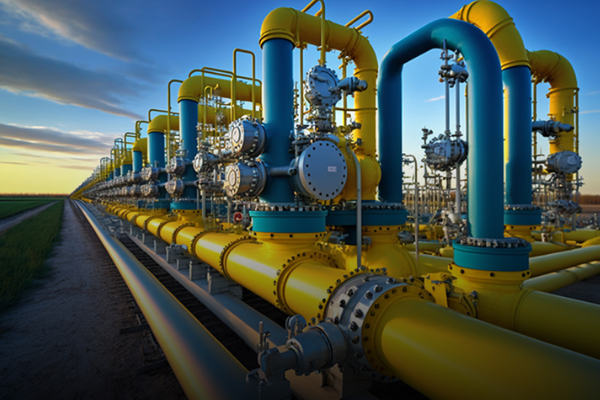
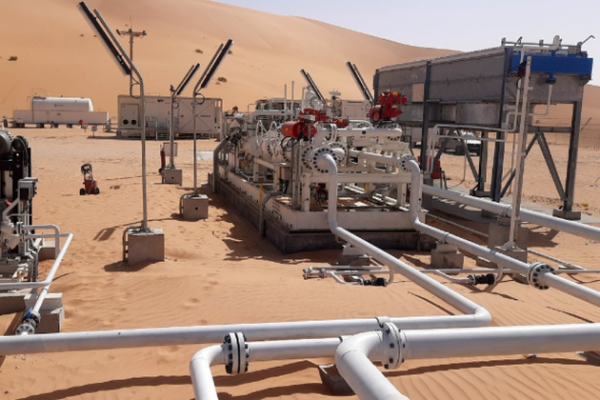
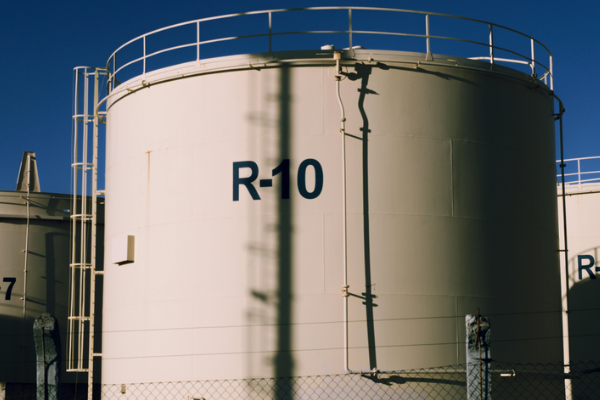
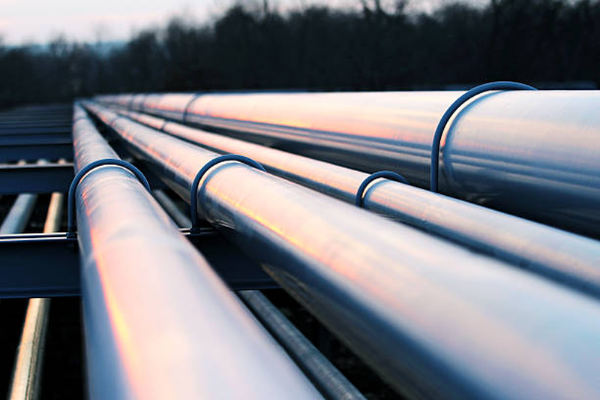
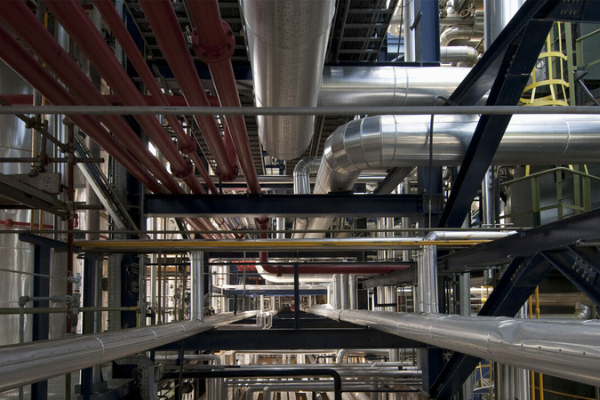
Pick the wrong grade here and the failure is fast and expensive – chloride pitting can scrap a 316 line in under 18 months, while an over-built 2205 order wastes alloy you never needed. Matching grade to duty is the entire discipline, which is why the same mill that ships a 304 structural line also ships a 2205 seawater header without changing its quality system.
For service above the creep range of austenitic stainless — high-temperature steam and hydrogen lines — the choice shifts to alloy steel Cr-Mo seamless pipe, which Synbase supplies to ASTM A335 from the same mill.
A seamless-pipe quote moves with the nickel market, not a fixed list. Nickel drives 55-65% of the 300-series surcharge, so a 304 or 316 price tracks the LME far more than it tracks any single supplier.
Lead time splits cleanly: stock 304/316L moves in roughly 1-3 weeks, while duplex and specialty schedules run 8-16 weeks and reward ordering ahead. Whether the line is an offshore riser or a 6-inch schedule 80 pipe for a refinery header, Synbase quotes against your line list with payment terms and Incoterms stated up front, so the price you approve is the price that lands.
Documented industry cost of a single spec or certificate error — the gap a right-spec, fully-documented order closes.
Industry cases (cortecsteel, hnyigesteel sourcing guide). Silver-tier TCO indicator — exact figures vary by project; request a custom analysis.
Documentation is the part buyers under-budget and projects stop for. One EPC contractor took 120 tons of duplex pipe with no EN 10204 certificates and spent $120,000 in standby charges over a six-week retroactive inspection – a delay that the right paperwork on day one prevents entirely.
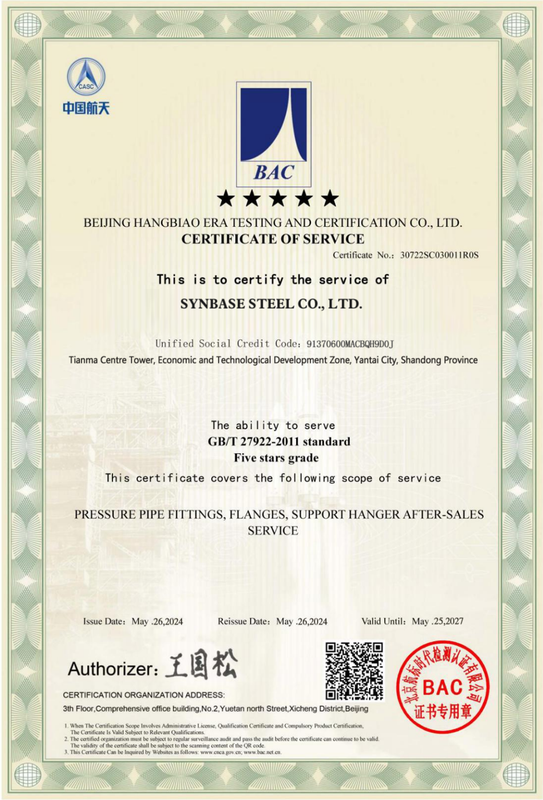
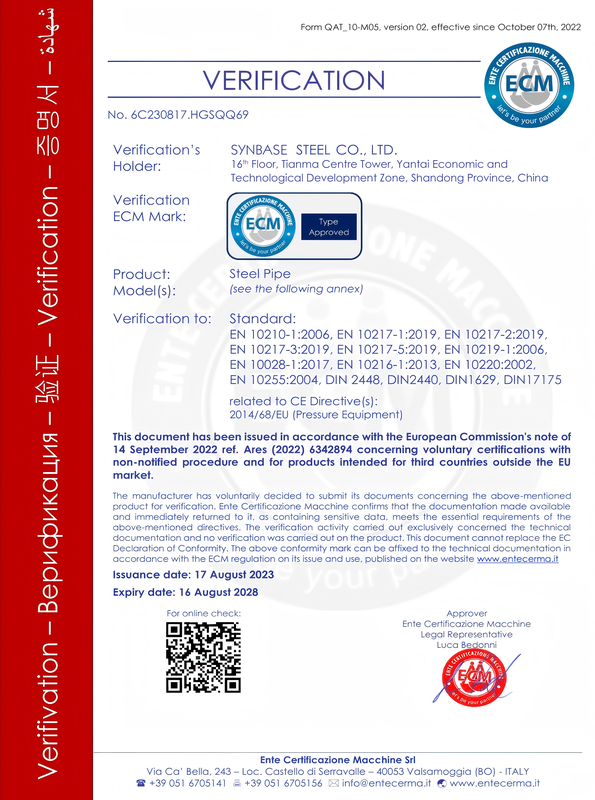
Quality and environmental systems are held to ISO 14001 alongside ISO 9001, and marine heats are released under classification-society witness inspection. Unlike a generic certificate, an EN 10204 3.2 document is signed by an independent third-party inspector – the trade-off is a few extra days for paperwork that survives a project audit.
Monogram, line pipe
Quality system
Environmental
OH&S
EU pressure
Class societies
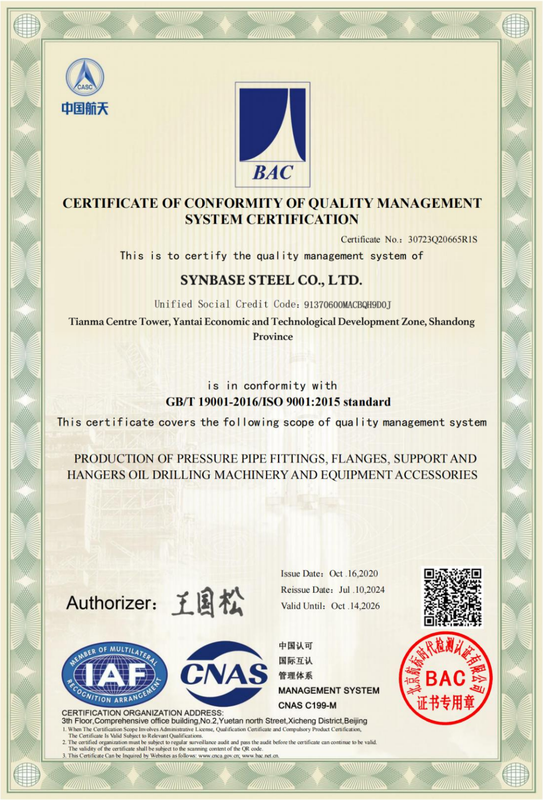
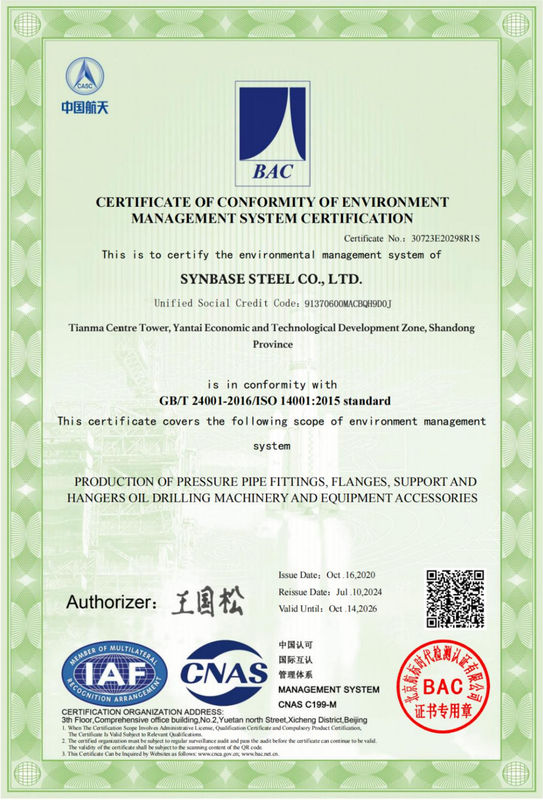
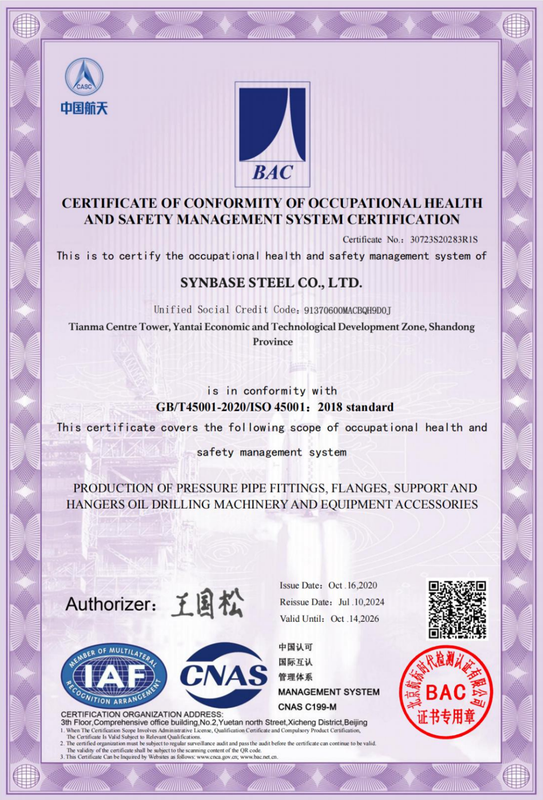
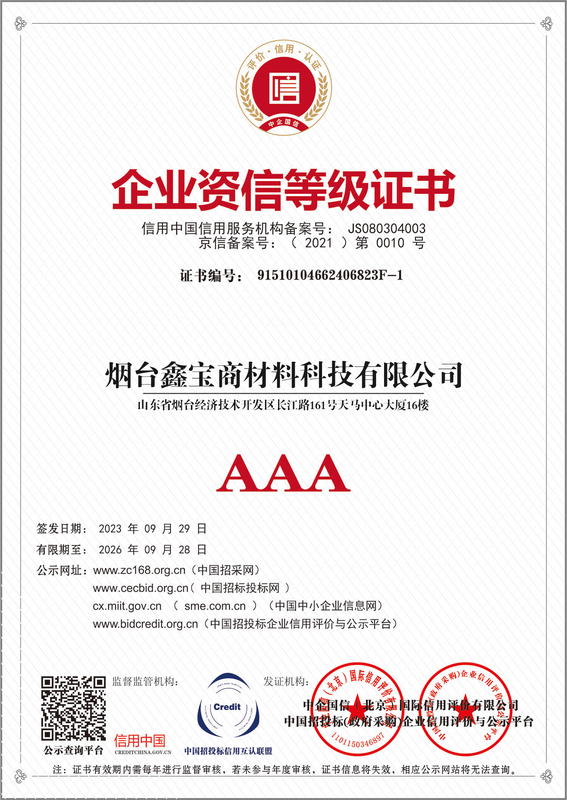
Engineering utilities for material specification, dimensional comparison, and international standard mapping.
No. It is supplied both seamless and welded under ASTM A312. Seamless carries a joint efficiency of 1.00 versus 0.85 for ERW welded, so it is specified where pressure, cyclic load or sour service make the weld seam a liability.
Neither is better in the abstract. Seamless wins on pressure rating and fatigue for critical lines; welded is cheaper and available in larger diameters for low-pressure duty. Duty decides.
Choose by chloride and temperature, not by “premium equals safer.” Below ~100 ppm chloride and 60 °C, 304/304L performs identically to 316 at lower cost; with coastal or chemical chlorides, the molybdenum in 316/316L earns its 10–35% premium. Above ~1000 ppm with pressure, move to Duplex 2205.
The real-world failures are sourcing failures: off-spec composition (molybdenum below the grade minimum), missing EN 10204 certificates, and RFQ ambiguity on standard edition or end condition. Heat-number traceability and PMI verification close all three.
Yes. Every length ships with an EN 10204 3.1 mill certificate traceable to its heat number, with 3.2 third-party sign-off and ABS/DNV/BV/LR/CCS class-society witness available for energy and marine projects.