Send Your RFQ to Synbase Steel
Prefer to send drawings, BOMs or attachment lists by email? sales@synbasesteel.com

Seamless and welded heat exchanger tubes engineered to the alloy, wall thickness, and tolerance your service actually demands, backed by genuine mill-direct documentation. A heat exchanger tube is the working surface of every shell and tube heat exchanger: one fluid, liquid or gas, runs through the tube bore, another flows across the tube bundle on the shell side, guided past the baffles. The wall between them decides how efficiently, and how long, heat transfer holds up.
Most heat exchanger tube failures aren’t random, they trace to erosion, corrosion, or mechanical damage that the wrong material or wall never stood a chance against. Erosion concentrates in the first few inches of the tube inlet, where turbulence and velocity peak. A tube specified one grade too low for its chloride load will pit, leak, and pull the unit offline.
That downtime is the real cost, not the tube price. In a power station, a condenser leak can mean shutting the plant for up to three months, and tube-failure outages routinely run into tens of thousands of dollars per hour of lost output.
Synbase scopes each tube in-house before the first cut, grade, wall, and tolerance set to the duty, not pulled from a bin. In practice, a 25.4 mm × 2.77 mm condenser tube and a 19.05 mm × 1.65 mm cooler tube can leave on the same order, each to its own spec.
Send your service conditions and we map the tube, then request a quote, that’s how we build every order, as a solution, not a length of steel by the ton.
Request a QuoteThe range covers the five tube families that fabricators, EPC contractors, and plant operators actually requisition. Synbase mills and finishes each family in-house to ASTM tolerance, so your RFQ maps to a verifiable specification, not a vague “stainless tube.” Unlike a generic mill listing, every line ties to a UNS number and its EN equivalent on the order acknowledgement.
Every tube is finished to its tube-sheet duty: cut to length, deburred, and, where the design call for it, set into the tube sheet by hydraulic or roller expansion for a leak-tight joint.
| Tube family | Standard | Typical grades | OD range | Wall (BWG) | Form |
|---|---|---|---|---|---|
| Seamless carbon | ASTM A179 / SA179 | Low-carbon (C ≤0.18%) | 15.88–50.8 mm | 16–10 | Straight · U-bend |
| Seamless alloy & stainless | ASTM A213 / SA213 | T11, T22, TP304/304L, TP316/316L, TP321, TP347 | 15.88–76.2 mm | 16–8 | Straight · U-bend |
| Welded stainless | ASTM A249 / SA249 | TP304/304L, TP316/316L, TP321 | 15.88–50.8 mm | 18–12 | Straight · U-bend |
| Welded carbon | ASTM A214 / SA214 | Low-carbon condenser grade | 15.88–50.8 mm | 18–12 | Straight |
| Low-temperature | ASTM A334 | Gr 1, Gr 3, Gr 6 | 15.88–60.3 mm | 16–10 | Straight · U-bend |
Dimensional envelope per ASTM/ASME ranges, with SA-grade tubes built to the ASME Boiler & Pressure Vessel Code. Exact stock OD/gauge confirmed at RFQ.
Roughly 19.05 mm (3/4″) and 25.4 mm (1″) OD account for the majority of shell-and-tube duty, with 15.88 mm (5/8″) common on tight-pitch condensers. We hold these in the most-specified BWG walls below.
| BWG gauge | Wall (mm) | Wall (in) | Tolerance basis |
|---|---|---|---|
| 18 BWG | 1.24 | 0.049 | A249 average wall |
| 16 BWG | 1.65 | 0.065 | A179/A213 minimum wall |
| 14 BWG | 2.11 | 0.083 | A179/A213 minimum wall |
| 12 BWG | 2.77 | 0.109 | A213 minimum wall |
| 10 BWG | 3.40 | 0.134 | A213 minimum wall |
This OD × BWG grid is the third of our open reference tables, the wall basis matters, because a “minimum wall” A213 tube and an “average wall” A249 tube of the same nominal gauge behave differently under pressure.
International projects mix specification systems on a single drawing. This cross-reference keeps your TP316L, 1.4404, SUS316L, and 022Cr17Ni12Mo2 callouts aligned to one physical tube.
| ASTM/ASME | EN (DIN) | JIS | GB | UNS |
|---|---|---|---|---|
| A213 TP304 | 1.4301 X5CrNi18-10 | SUS304 | 06Cr19Ni10 | S30400 |
| A213 TP304L | 1.4307 | SUS304L | 022Cr19Ni10 | S30403 |
| A213 TP316L | 1.4404 | SUS316L | 022Cr17Ni12Mo2 | S31603 |
| A213 TP321 | 1.4541 | SUS321 | 06Cr18Ni11Ti | S32100 |
| A179 / A214 | P235GH (EN 10216-2) | STB340 | 10# / 20# | K01200 |
| A213 T22 | 10CrMo9-10 | STBA24 | 12Cr2Mo | K21590 |
“Most of the back-and-forth on an export order is grade translation, not price. We pin every line to a UNS number and the EN equivalent on the order acknowledgement, so the fabricator’s incoming inspection matches our MTC field-for-field.”
Choosing a tube alloy on purchase price alone is the most expensive mistake in this category. The right choice is driven by your medium, operating temperature, chloride level, and flow velocity, and the final call should always be made against actual process conditions.
Two failure patterns dominate. First, a 304 tube specified for a chloride-bearing cooling loop where 316L or duplex was needed, it pits within a season. Second, the opposite over-spec: paying titanium prices for a clean fresh-water duty that A179 carbon steel would have served for a decade.
Premium metal isn’t a guarantee either. Titanium tubes have failed when steel tools scratched and penetrated the protective oxide layer during installation, proof that handling and tube-sheet practice matter as much as the alloy.
Tell us the medium, peak temperature, chloride ppm, and flow velocity, and we map you to the lowest-cost grade that still clears your service window, then verifies it by in-house PMI before shipment. Unlike a price-led substitution, the recommendation is documented against your conditions.
Seamless isn’t automatically the better tube, and assuming it’s can waste real money. The honest answer is a trade-off: for a low-pressure surface condenser running vacuum on the shell side, a welded A249 tube at 25.4 mm × 1.65 mm is fully acceptable and more economical.
Synbase quotes both seamless and welded against that duty, because the wall basis, minimum versus average, changes the pressure rating your design can claim. In practice, seamless availability in some OD/gauge combinations isn’t worth the premium.
A shell and tube heat exchanger is only one tubular heat exchanger format; a finned tube heat exchanger trades tube area for air-side surface, a different specification entirely.
| Dimension | Seamless (A213) | Welded (A249) |
|---|---|---|
| Wall basis | Minimum wall | Average wall |
| Pressure / temperature ceiling | Higher — superheater, high-pressure | Good with weld-joint factor applied |
| Relative cost | 1.3–1.6× | 1.0× |
| OD / gauge availability | Limited in some sizes | Broad, including large OD thin wall |
| Best for | High-temp / high-pressure boiler & superheater duty | Low-pressure vacuum surface condensers, mild HX |
U-tube and straight-tube designs solve different problems, and the bundle geometry should follow the duty.
| Factor | U-tube | Straight tube |
|---|---|---|
| Thermal expansion | Self-accommodating — free to expand/contract | Needs expansion joint or floating head |
| Footprint | Compact, fewer components | Larger, more parts |
| Maintenance / cleaning | Bore-side cleaning harder at the bend | Easier access, full mechanical cleaning |
| Flow regime | Two-pass by design | True countercurrent flow possible |
| Best fit | High-temp power & refinery service | Fouling-prone duty needing frequent cleaning |
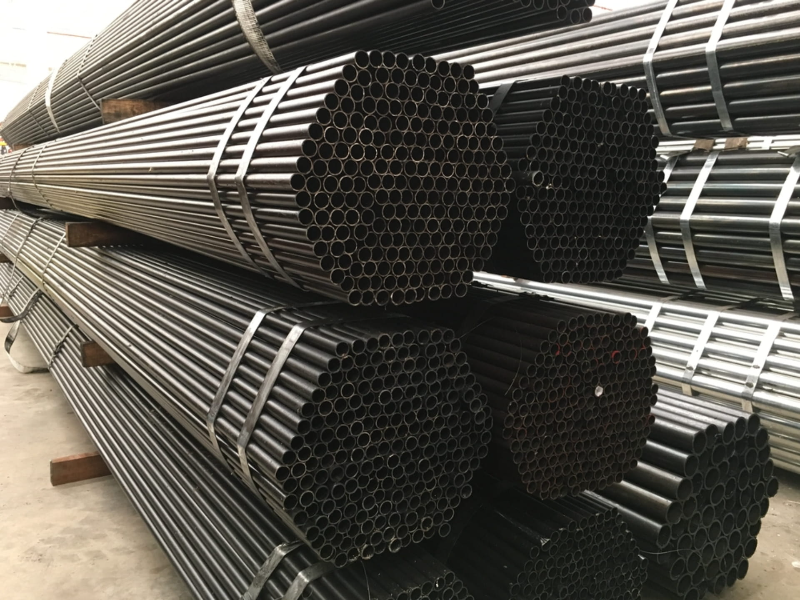
The cheapest tube on the PO is rarely the cheapest tube over ten years. Lifecycle cost is set by how long the alloy survives your medium and how much an unplanned retube cost when it doesn’t.
In natural seawater, cupronickel 90/10 builds a protective film on the tube surface over roughly two to three months, after which corrosion rates keep falling and biofouling stays low, which is exactly why it earns its premium over carbon steel in marine cooling. Duplex and titanium take the same logic further where chlorides or velocity climb.
The biggest hidden cost in sourcing tube abroad isn’t price, it’s paperwork that fails inspection. Common red flags are an EN 10204 3.1 certificate quietly downgraded to a 2.2, a signature from a distributor rather than the mill’s quality authority, or an MTR dated before the tube could plausibly have been made.
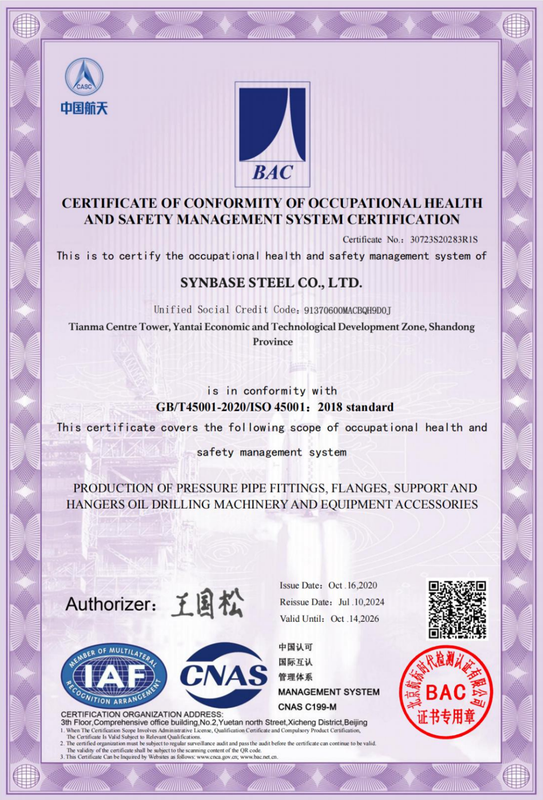
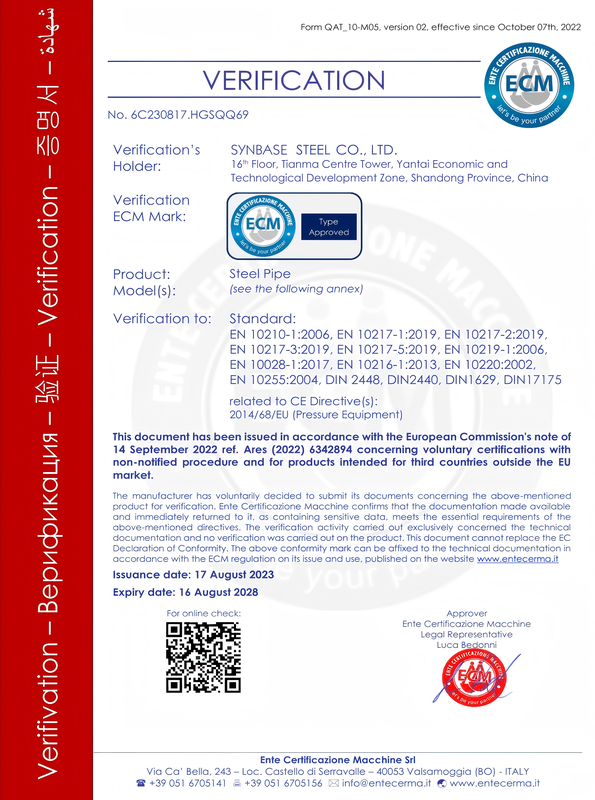
Every order ship mill-direct, tied to the actual heat. It carries a genuine EN 10204 3.1 mill test certificate with heat number, chemical composition, and mechanical properties traceable back to the melt.
A wrong grade or wall here’s an expensive mistake, a tube that fail in 5 years instead of 20. Most tube pages stop at “contact us,” which hides what actually moves the number.
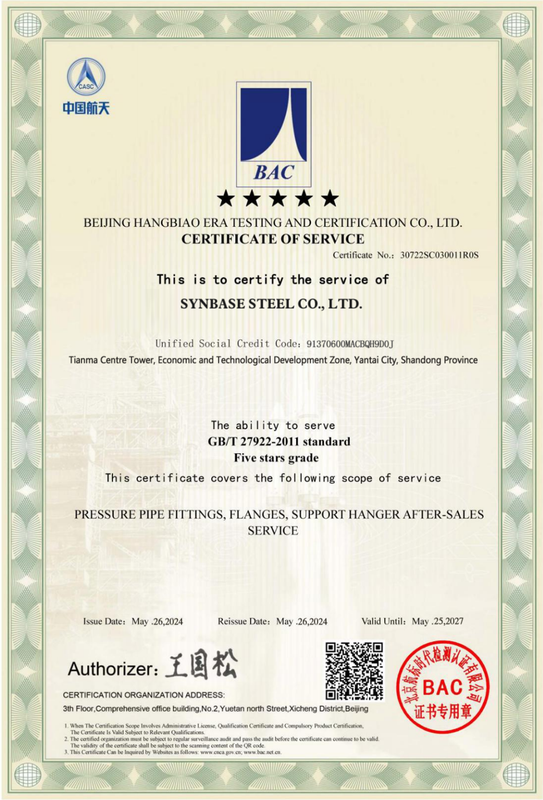
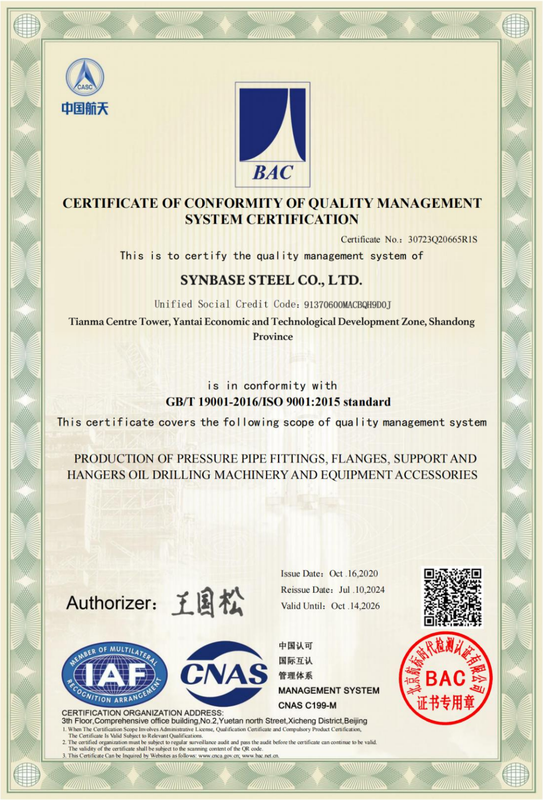
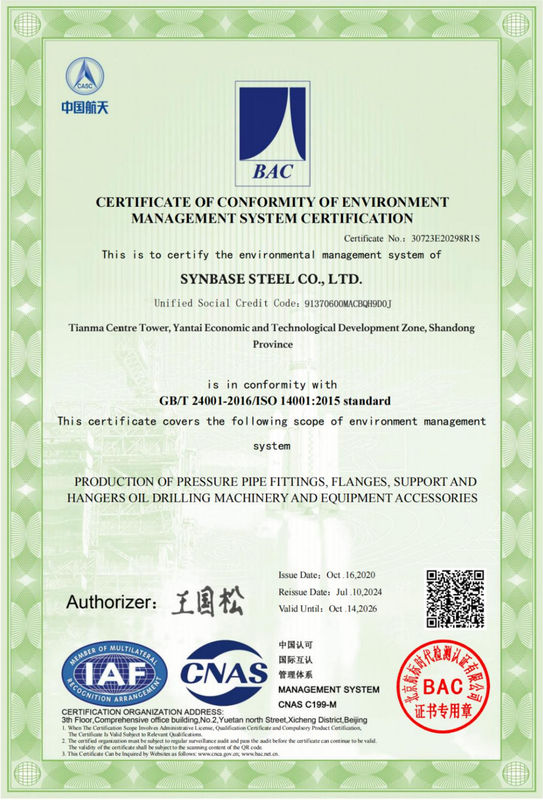
Unlike that, Synbase prices each line transparently, because grade, wall, and quantity drive the cost, all backed by ISO 9001 in-house production and EN 10204 3.1 certificates.
Standard stainless sizes, 15.88, 19.05 and 25.4 mm OD in 16–14 BWG, move fastest because they’re the most-specified condenser and HX walls. Project-scale orders for power, refinery, and desalination duty are quoted with consolidated logistics through the group’s warehousing network.
Send your grade, standard, OD × wall, length or bend radius, and quantity, and we return a detailed RFQ, typically within one business day.
Request a Quote (24h RFQ)| Cost / lead-time driver | How it moves your quote |
|---|---|
| Alloy grade | Carbon < 304/316 < duplex/cupronickel < titanium — the single largest factor |
| Seamless vs welded | Seamless carries a 1.3–1.6× premium over welded at equal size |
| OD & wall (BWG) | Non-standard gauges and large thin-wall OD extend lead time |
| U-bend & finishing | CNC bending, annealing, and PMI add process steps |
| Order quantity | Mill-run quantities improve price; small lots draw from stock |
| Documentation & 3rd-party | EN 10204 3.1 is standard; witnessed FAT/TÜV adds time |
Heat exchanger tube is a project material, not a catalog part, and Synbase is built around project-scale supply. As the pipeline-equipment core of E-CHENG STEEL GROUP, the company run an integrated chain of production, processing, warehousing, and logistics behind every tube order.
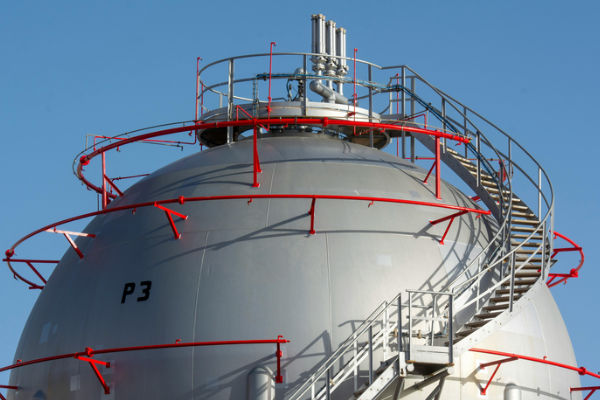
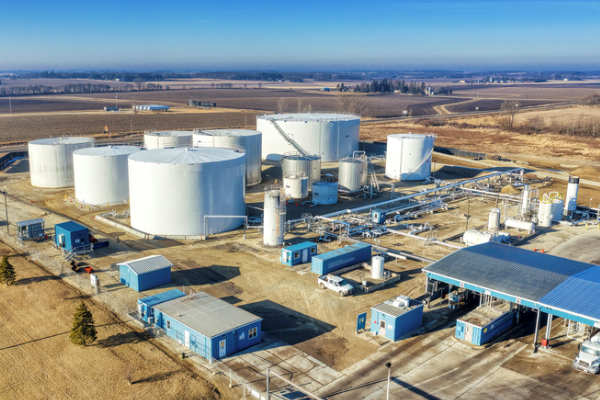
Power generation
Surface condensers, feedwater heaters and steam-service tube in A179, A213 and A249.
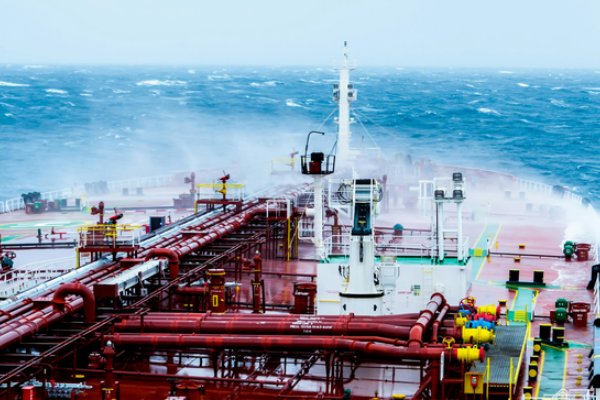
Refining & petrochemical
Process heat exchangers in TP316L, T11/T22 and duplex for corrosive streams.
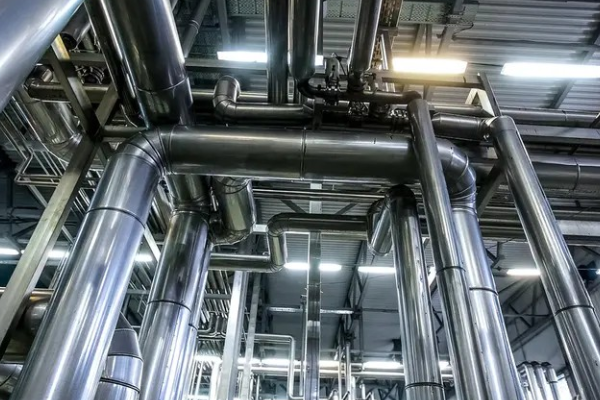
Desalination & marine
Cupronickel and titanium tube for seawater and brackish cooling duty.
HVAC & chillers
Condenser and evaporator tube for water-cooled chiller OEMs.
The group’s authority sits behind that supply. Synbase holds over 800 national-level patents, the kind of tube-joint and metallurgical-bonding work documented in public heat-exchanger patents and exports to more than 100 countries across Southeast Asia, the Middle East, and Europe, serving national oil companies and EPC contractors on large energy projects.
To extend the product line into specialty alloys, the group maintain long-term partnerships with Baosteel, Tianjin Pipe (TPCO), Ansteel, and TISCO, so a single tube enquiry can draw on mill capacity for carbon, stainless, and special alloy steel alike. As a member of the China Iron and Steel Association, Synbase pairs that scale with the certification stack buyers audit against.
Access our open reference matrices and calculators to map tube grades to service environments, cross-reference international standards, and estimate order quantities directly.
Engineering and procurement answers directly from the mill.
It is the metal tube that forms the heat-transfer surface in a shell-and-tube exchanger — one fluid flows inside the tube, another across the bundle on the shell side, and heat passes through the wall. Material and wall thickness determine its pressure rating and service life.
There is no single best — it depends on your medium, temperature, chloride level, and velocity. Carbon steel (A179) suits clean fresh water and oil; 316L handles chlorides; duplex and cupronickel serve seawater; titanium covers the most aggressive chlorinated duty. Our selection matrix above maps each to its environment.
Only where the medium is corrosive. Stainless (304/316L) resists chlorides and chemicals that would attack carbon steel, but for clean, non-corrosive water or oil, carbon-steel A179 delivers the same service at a fraction of the cost.
The most common ODs are 15.88 mm (5/8″), 19.05 mm (3/4″), and 25.4 mm (1″), typically in 16–14 BWG wall. These cover the majority of condenser and shell-and-tube duty and are the fastest to source.
A U-tube bundle bends back on itself, so it absorbs thermal expansion freely and stays compact — ideal for high-temperature power and refinery service. Straight tubes are easier to clean and inspect and allow true countercurrent flow, which suits fouling-prone duty.
Yes — every order ships with a genuine EN 10204 3.1 mill test certificate tied to the heat number, plus 100% eddy current and hydrostatic test records. Third-party witness inspection (TÜV, SGS, BV) and factory acceptance testing are available on request.