Send Your RFQ to Synbase Steel
Prefer to send drawings, BOMs or attachment lists by email? sales@synbasesteel.com

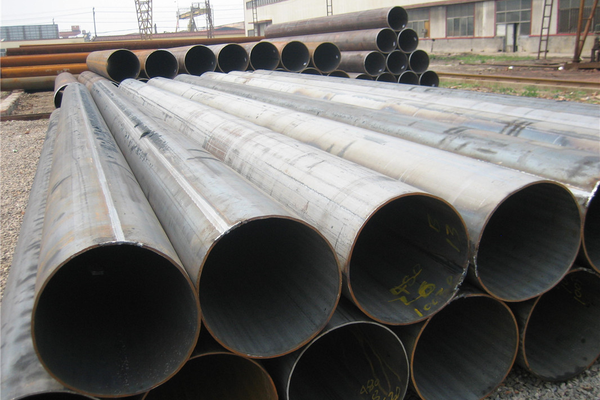
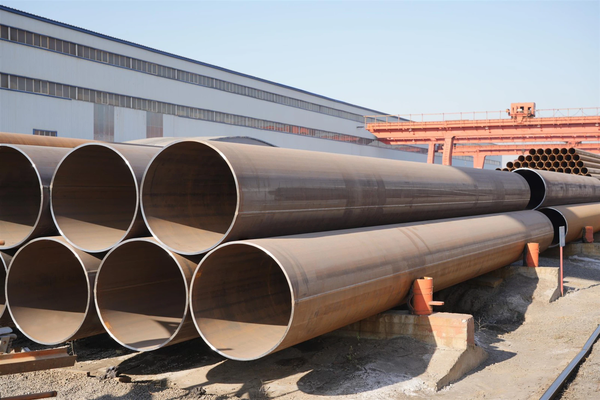
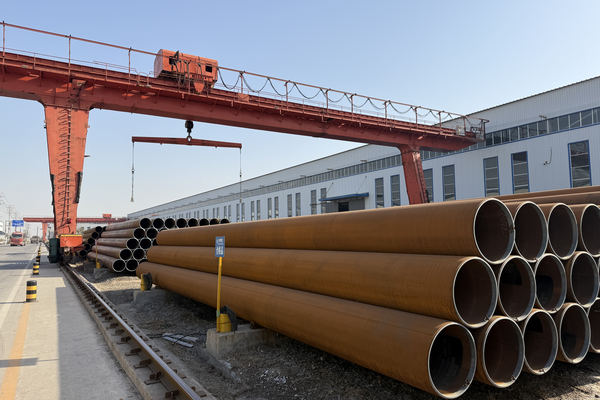
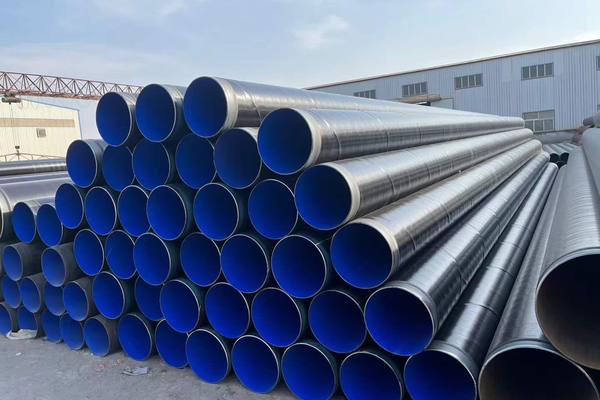
API 5L line pipe refers to steel pipe of a carbon and low-alloy composition that conform to the american petroleum institute specification 5L (equivalent to ISO 3183) for industrial and natural gas pipeline transportation systems in the petroleum. It can be manufactured using SMLS or welded pipe within the two product specification levels – psl1 and psl2 areas across several grades of B and X42 through X80, in addition to testing requirements and sour service variations.
Metallurgy is rarely the hard part. Instead, it’s demonstrating that the pipe in the storage area is the one identified on the certification documents-at a cost and delivery timeline compatible with the project’s schedule.
Unlike a distributor reassigning paperwork, Synbase has the ability to correlate the heat to the actual pipe since we perform in-house melt, roll, weld, and coating – making a borrowed certificate on a 1,440 psi line, the pitfall that sabotages projects, inexcusable. When you’ve an offshore valve header or a 1,016 mm pipeline trunk, your true risk lies with the steel mill responsible, which is why Synbase invites our clients’ inspectors to witness testing. Contact us for a quote including your specifications, and we’ll provide a sample certificate for your review and approval by engineering.
The API 5L grade names carry the minimum yield strength, with “X” grades having that minimum yield strength in ksi (X65 = 65,300 psi), and the tensile strength; the ISO 3183 “L” name, having it in MPa (L450 = 450 MPa). Our API 5L pipe specifications publish both – including the intermediate grades – reconciled to the 46th-Edition values.
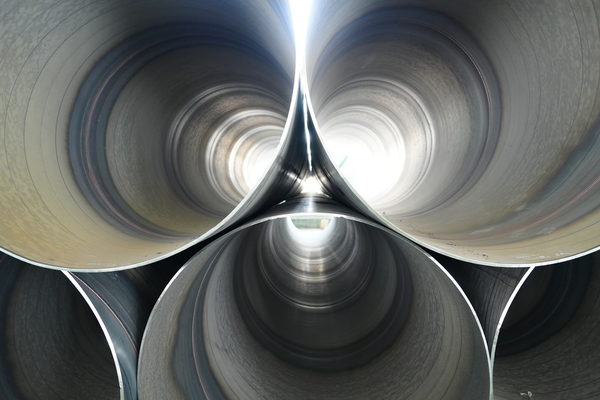
| Grade (API / ISO) | Min YS (MPa / psi) | Min UTS (MPa / psi) | PSL | Typical service — where it fits |
|---|---|---|---|---|
| B / L245 | 245 / 35,500 | 415 / 60,200 | 1·2 | Low-pressure gathering, water, general transmission |
| X42 / L290 | 290 / 42,100 | 415 / 60,200 | 1·2 | Gas distribution, gathering lines |
| X46 / L320 | 320 / 46,400 | 435 / 63,100 | 1·2 | Distribution, moderate-pressure transmission |
| X52 / L360 | 360 / 52,200 | 460 / 66,700 | 1·2 | Distribution and transmission workhorse grade |
| X56 / L390 | 390 / 56,600 | 490 / 71,100 | 1·2 | Transmission, intermediate pressure |
| X60 / L415 | 415 / 60,200 | 520 / 75,400 | 1·2 | Transmission, gathering at higher pressure |
| X65 / L450 | 450 / 65,300 | 535 / 77,600 | 1·2 | Mainline gas/oil transmission, offshore (PSL2) |
| X70 / L485 | 485 / 70,300 | 570 / 82,700 | 1·2 | High-pressure mainline transmission |
| X80 / L555 | 555 / 80,500 | 625 / 90,600 | 2 | Long-distance high-pressure trunk lines |
X100/X120 are available on request for project. Minimum YS for the body will be capped at 495 MPa (71,800 psi) with longitudinal-testing.
There’s little to distinguish psl1 and psl2, save the level of testing. psl2 PSL2 comes with mandatory Charpy V-notch testing (except X80) and mandatory NDT, a narrower chemistry-to-tension band, a 0.93 yield-to-tensile ratio and total heat traceability. PSL1 carries neither with nothing otherwise mandated.
However, in practice a psl 2 pipe (certificate called psl2 pipe) does carry testing requirements that the PSL 1 pipe doesn’t, and it’s requiring longitudinal weld-seam and full-body NDEd. Its mechanical properties and tensile-strength bands are narrower – this is precisely the purpose of the psl 1 and psl 2 split.
| Requirement | PSL1 | PSL2 |
|---|---|---|
| Charpy (CVN) impact test | Not required | Required (27 J @ 0 °C for OD ≤ 762 mm; 40 J for OD > 762 mm) |
| Non-destructive examination | Not required | Required (weld & pipe body) |
| Max yield/tensile ratio | Not specified | ≤ 0.93 |
| Carbon equivalent control | CE only above C 0.12% | CE_IIW ≤ 0.43 / CE_Pcm ≤ 0.25 |
| Traceability | Heat-level | Each length → test unit + chem/mech results |
| Delivery suffix | — | R / N / Q / M / S carried on the grade |
The latest (46th edition) edition includes mandatory hardness testing on every API 5L psl 2 pipe; psl2 pipe sizes are of similar standard as before. A psl 2 for sour service has HIC/SSC coupons whereas a PSL2 equivalent for offshore service will also have annex J toughness requirements – same pipe, different test bundle.
The two specifications range from A25 and A grades up to X80. In both cases, each piece of pipe must be traceable back to its heat for pipeline provenance. This is the foundation of steel pipes tracking.
The belief to correct before you specify the steel: SMLS isn't necessarily any safer than welded. For large diameter, high-pressure transmission, pipe constructed to psl2 psl2 LSAW can provide comparable safety with less landed cost - which explains why the Alaska LNG mainline, 383 km Chihuahua corridor and Tata’s Gulf of Mexico project are all going to use welded X65/X70 PSL2 pipe not SMLS.
Match the process to the service, that's the only honest rule, and the table below is how we do it. LSAW and SSAW are submerged arc welded routes that bring welded steel line pipe to the same API 5L grade as the SMLS route - A welded steel pipe isn't an 'inferior' pipe when built and tested to psl2 standards!
| Route | Synbase OD Range | How It's Made | Best For | Watch-Out |
|---|---|---|---|---|
| SMLS | ≤ Ø711 mm, ≤ 36 m | Hot-pierced / hot-rolled, no weld seam | Small-bore, very high pressure, sour gas | Cost climbs fast above ~16″ |
| LSAW / JCOE | ≤ Ø1829 mm | Plate J-C-O-E formed, double submerged-arc weld | Large-diameter mainline, offshore, sour (Annex H) | Plate origin must be traceable |
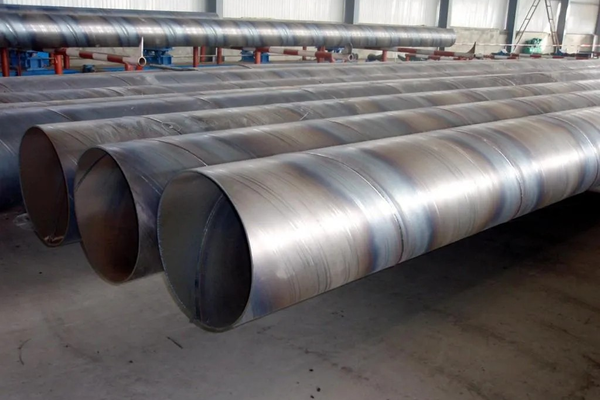
| SSAW (spiral) | ≤ Ø4500 mm | Coil spiral-formed, submerged-arc weld | Very large diameter, low-to-medium pressure, water, piling | Restricted for sour gas service |
| ERW | ≤ Ø610 mm | High-frequency electric resistance weld | Distribution, lower-pressure transmission | Weld-line toughness checks essential |
Spiral (SSAW) pipe has been kept out of sour-gas duty since H&Isub;S stress-corrosion cracking was identified in the 1970s. For wet-sour lines, we redirect to LSAW or SMLS and implement annex H HIC/SSC tests - both welded X65/X70 and SMLS are considered sour duty-accepted if metallurgy and testing are applied appropriately. If a manufacturer indicates they supply you with sour-service spiral, there's some insight to that statement on their behalf.
"We size the route to the duty, not the marketing. A 1,400 mm trunk line at X70 PSL2 leaves our JCOE line; a sour gathering header leaves our SMLS line with HIC coupons. Putting spiral pipe into sour gas to win a price is the kind of shortcut we built our QA system to refuse."
— Welded Pipe Plant, Process & Quality team, Synbase SteelLSAW pipe is formed from a flat steel plate and welded along a single straight (longitudinal) seam, which gives the dimensional accuracy and toughness that large-diameter, higher-pressure lines need. SSAW pipe is spiral-welded from a steel coil, reaching much larger diameters economically, but it is restricted to lower-pressure, non-sour service because the helical weld is the trade-off for that size.
For a sour line the risk is real, so Synbase routes it to LSAW or SMLS under ISO 3183 / API 5L Annex H, never spiral. For those processes in depth, see our LSAW steel pipe and SSAW pipe pages.
API 5L pipe dimensions comply with ASME B36.10 nominal dimensions, and for this reason the pipe used used in this document can be swapped out with that from ASTM A53, A106 and A333. Our deliverable envelope below covers most standard pipeline quotations we receive; The delivery condition- as rolled, normalized or normalizing formed- quenched and normalized or thermomechanical-is logged onto each and every pipe certificate.
| Parameter | SMLS | LSAW (JCOE) | SSAW |
|---|---|---|---|
| Outside diameter | 21.3–711 mm (1/2″–28″) | 406–1829 mm (16″–72″) | 219–4500 mm (8″–177″) |
| Wall thickness | 2.0–60 mm | 6.0–50 mm | 5.0–25.4 mm |
| Length | up to 36 m | up to 12.2 m | up to 18 m |
| Ends | Plain, bevelled (30° ±5°), or to drawing | ||
Grade B wall thickness isn't defined by the grade - it's defined by your design pressure, diameter and schedule as specified under ASME B31.4 / B31.8 and supplied to a tolerance. As a working example of a 12.75” (323.9 mm) grade B line at Schedule 40 this would result in a wall thickness of 10.31 mm and at schedule 80 the thickness would be 17.48 mm. we're able to supply all schedules from SCH 10 to XXS on the basis of your stress report.
Diameters and ovality; API 5L Tables; pipe end squareness, and pipe end straightness,; Mimi’a-z,ut-seain height and pipe end length tolecance are noted on dimensional report associated with each heat. (Approx. 500mm to lecance) at random I nths.
A wall out-of-tolerance, or a bowed joint, is a delay discovered at fit-up, not delivery-the expensive type of problem. Synbase machines bevel in-house and documents every heat’s diameter, wall and straightness. So your field fitters, not you, find them. We don't quote nominal sizes like traders: Synbase respects the 1.0 mm API 5L tolerance that a 1,016 mm trunk weld actually requires. Send your line list for a dimensional spec sheet.
Bare API 5L pipe is only half a buried-pipe answer. Coated by E-CHENGSYNBASESCINC.-We only speak truth to truth:; Service life depends on coatings in the soil, water, or HDD-bore environment-And E-CHENGSYNBASESCIENC. manufactures on its own floor three distinct anti-corrosion coatings (2FBE, 2PE, 3PE/3LPE), processing 6MMT++ ANNUALLY. This keeps custody with us, our line, our schedule.
| Coating | Layer structure | Typical thickness | Service temp | Best for |
|---|---|---|---|---|
| FBE (single) | 1 × fusion-bonded epoxy | 350–500 µm | −30 to 90 °C | Onshore buried; concrete-weight base |
| 2FBE (dual) | 2 × FBE (base + abrasion top) | 600–1000 µm | −30 to 90 °C | HDD, bored crossings, rocky backfill |
| 2PE | FBE/adhesive + polyethylene | 1.8–3.0 mm | −40 to 80 °C | General buried transmission |
| 3PE / 3LPE | FBE + adhesive + polyethylene | 2.0–3.7 mm | −40 to 80 °C | Onshore/offshore mainline — the global default |
Why must coatings be applied to API 5L pipes, and why 2FBE versus 3PE? External corrosion in soil, water, or on offshore lines will eat through the steel. Coating stops that. In its 2FBE construction, 2-Layer FBE uses a single, firmly bonded fusion layer to deliver durable service, strong adhesion, and ease of repair at the joint. In 3PE, an adhesive layer is combined with a tough polyethylene jacket on top of an FBE core to add mechanical strength in offshore and subsea service-the world’s top preference.
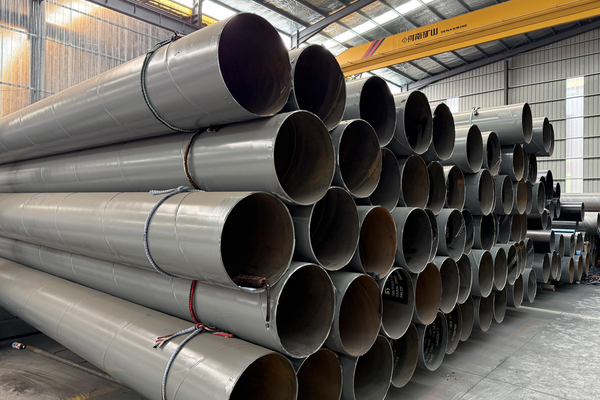
Synbase Steel is a producer, not a reseller, within the E-CHENG STEEL GROUP. Every pipeline section begins as our raw steel and goes through every fabrication and joining stage right to the finished coated product at our own facilities. This is the only way to ensure truthful Heat-To-Pipe Certificates and our own Quality Record.
| What you need | Distributor / stockist | Synbase (mill) |
|---|---|---|
| Heat-to-pipe traceability | Re-issues received paperwork | Generated at our melt & roll |
| Custom grade / size / WT | Limited to stock | Rolled to your spec |
| Coating | Subcontracted out | In-house, same chain of custody |
| Third-party witness (TPI) | Rarely arranged | ABS/DNV/BV/LR/CCS at our works |
| Standards disclaimer | "Consult the manufacturer" | We are the manufacturer |
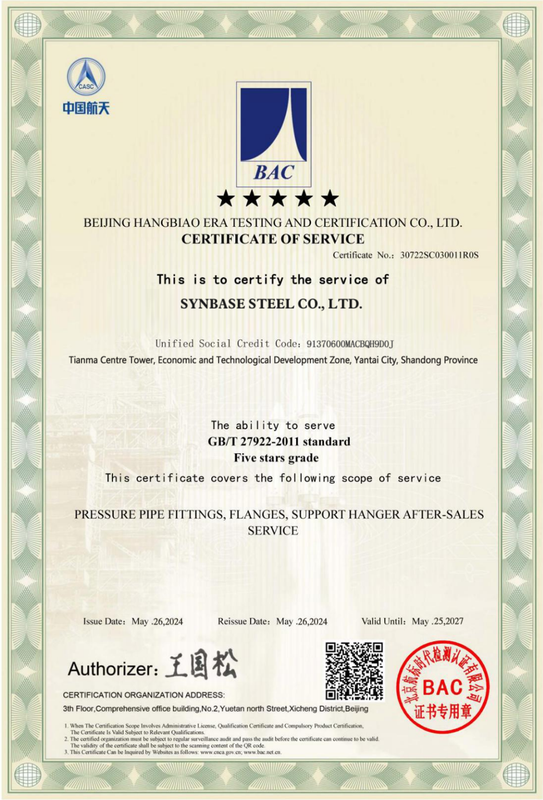
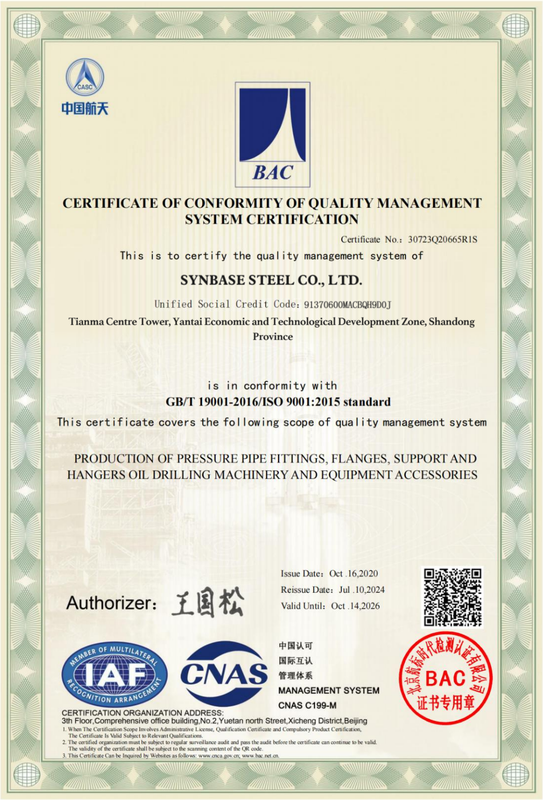
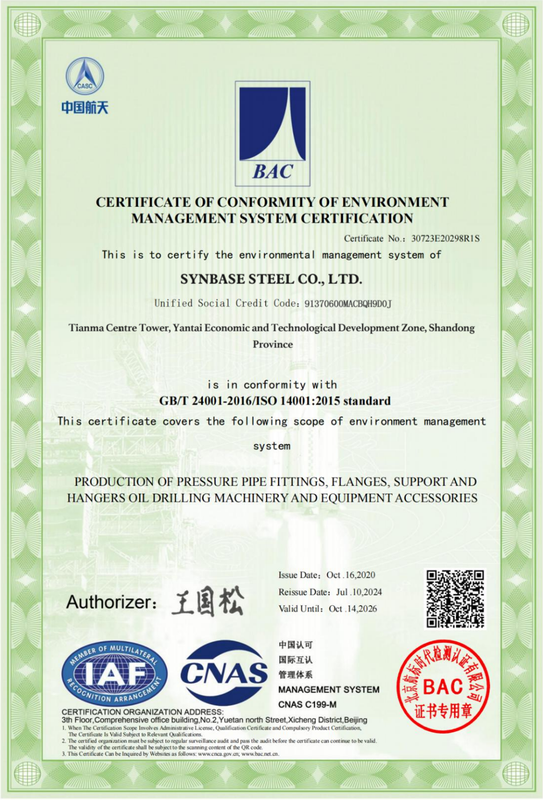
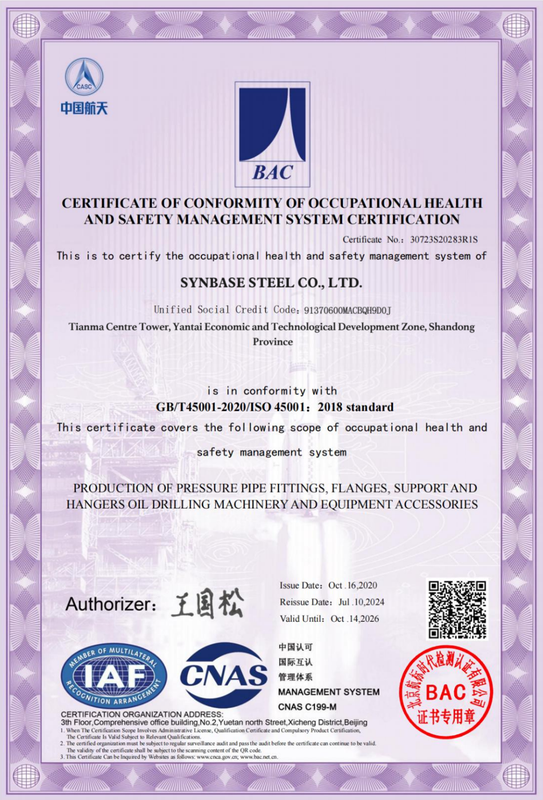
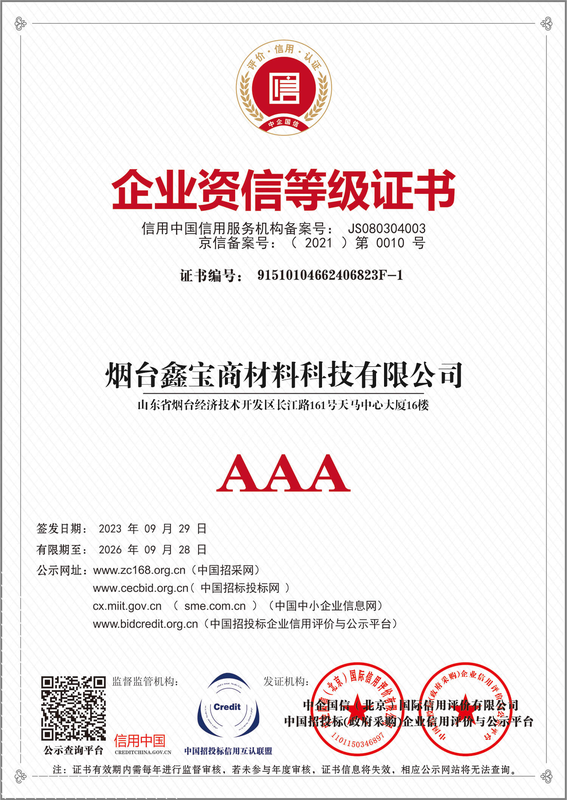
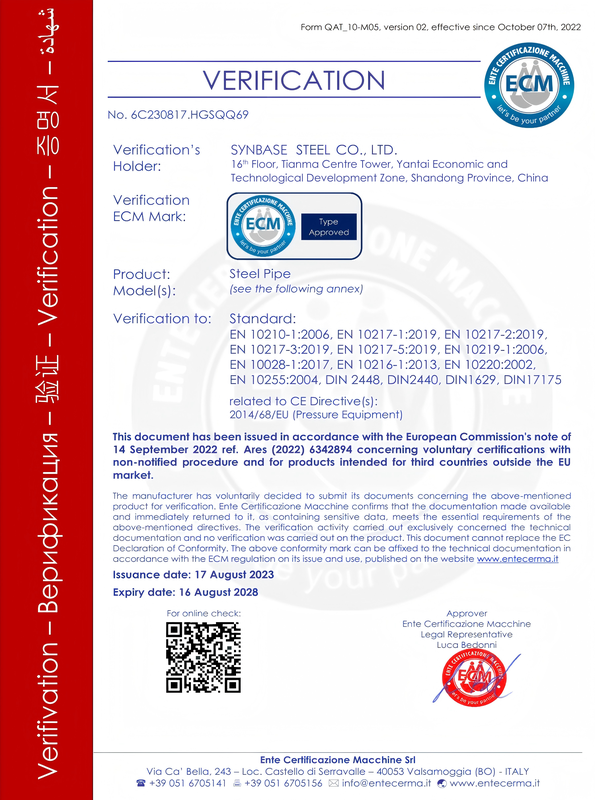
“Fake certificates are the biggest problem with imported hollow tubes.” "Fourth pipe lengths from the same heat number, fake CMTR from some third-world Country", "Criminal conviction for sub-steel at a firm that swapped its mill record to hide actual location of use." You must stop these threats with proof, and Synbase Steel is built to deliver.
| Parameter | Type 3.1 | Type 3.2 |
|---|---|---|
| Who signs | The mill's own QA inspector | The mill's QA inspector and an independent third-party inspector |
| Independence | Internal validation | Independent witness of the actual tests |
| Best when | Trusted, audited supplier | New supplier, critical service, or buyer policy |
| Synbase provides | Standard on every shipment | On request, witnessed by ABS/DNV/BV/LR/CCS |
Always verify mill test certificates against recognized standards before you accept a heat. To ensure that your purchased pipes maintain their value, it's essential to properly carry out this inspection procedure each and every time a heat certificate is received.
Heat Number Match: Check on the MTC for heat number, which should match on the hard stamp and paint mark of pipe body - no two pipes with shared heat should be from different heats.
Chemical Composition: Check for C, Mn, P, S and CE on chemical composition within the limits for the API 5L grade you need to buy for your PSL.
Mechanical Properties: Check for yield, tensile and elongation along with (psl2) Charpy values to the grade row - also rederive the SMYS yourself.
Testing Records: Confirm NDE (UT/RT) and hydrostatic test passes have all been completed and are documented, especially with psl2 pipe.
Signature Validation: For Type 3.2, verify that both the manufacturer’s QA representative and the independent third-party inspector have signed and stamped.
PO Traceability: Trace the certification to the specific purchase-order item and test-unit-all length records need to be accounted for.
Final Society Cross-Check: Match the class-society (or third-party) inspection number; call us up to request the inspector’s report for final sign-off.
| API 5L | ISO 3183 | Closest ASTM | Note |
|---|---|---|---|
| Grade B | L245 | A106 B / A53 B | 245 MPa min yield; common interchange |
| X42 | L290 | A106 C (approx.) | Distribution/gathering |
| X52–X70 | L360–L485 | — | No direct ASTM equal; specify by API 5L grade |
| Sour (Annex H) | Annex H | NACE MR0175/ISO 15156 | HIC/SSC tested |
| Offshore (Annex J) | Annex J | — | Added toughness & dimensional control |
What is API 5L pipe equal to? API 5L Grade B corresponds to ASTM A106 Grade B / ASTM A53 Grade B for regular pressure services and the entire specification is comparable to ISO 3183 (similar grade mapping of L245 = B and L555 = X80). The API 5L annex H, along with NACE MR0175 / ISO 15156, are direct correlates of Sevunib Sovatab. Higher X-grade products lack directly equivalent ASTM pipe grades and ought to be bought out under their specified API 5L designations.
That full API 5L specification, the American Petroleum Institute Specification API 5L, specifies pipe suitable for use; it designates pipe that's ideal for the transportation of oil and gas fluids, while annex J of the API 5L standard addresses toughness requirements and exact dimensional control for offshore service projects.
Pipe pricing is highly dynamic and is dependent on numerous key factors. If these factors are addressed appropriately within the RFP, we'll furnish a competitive and comparable bid.
Quickest shipments: common grade / common sizes - but special heats, sour service, thick coatings push out the timeline. Min order quantity (MOQ) is tied to heat/coating line size, so consolidating into one order minimizes your effective MOQ. We provide required import documentation, markings, packaging for the EPC contractors and National Oil Companies in over 100 countries worldwide. For your project’s firm leadtime and minimum, please speak with a Pipe Engineer.
While X70 offers a theoretical reduction in wall thickness versus X65, it isn't a free win. X70 high cost runs 8–10% higher than X65, in exchange for roughly 27% thinner wall and about 30% less tonnage on the line.
Bear in mind though that as your designer already knows, a thinner higher-grade pipe wall can also lead to increased fabrication (welding) costs and higher pre-heating expenses that will partially offset savings. Selecting the optimum pipe material ensures that combined installation and manufacturing cost is minimized - this comes as a calculation and not merely an assertion.
Calculate the exact theoretical weight and tonnage of API 5L line pipes for instant results.
Access ToolIdentify and select the appropriate API 5L steel grades and PSL requirements for your project.
Access ToolDetermine the required minimum pipe wall thickness or maximum internal pressure using Barlow's Formula.
Access ToolSend your grade, PSL, size, coating, and quantity. Get a line-itemised quote, a sample mill test report, and a direct line to the plant engineers.
Request a Quote