Send Your RFQ to Synbase Steel
Prefer to send drawings, BOMs or attachment lists by email? sales@synbasesteel.com

Synbase machines API 5CT casing and tubing couplings in every standard grade and connection, J55 through Q125, STC, LTC and BTC, from weld-free coupling stock with full mill traceability. We supply the coupling that matches your string, not a bin of unmarked blanks.
Request a Quote / RFQ by Spec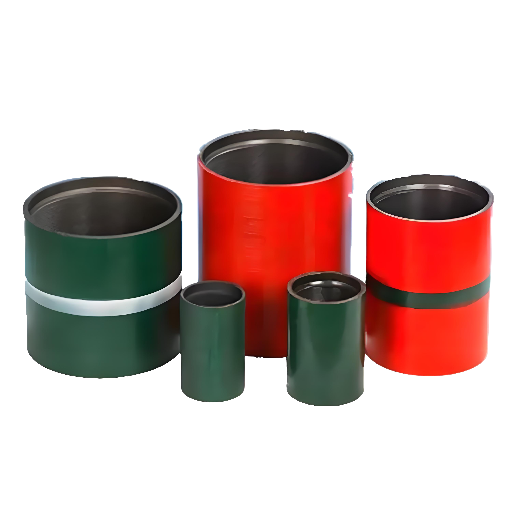
A casing coupling is the short, internally threaded sleeve that joins two lengths of casing or tubing, and per published failure analysis it's where roughly 90% of casing failures actually occur, at the threaded connection rather than the pipe body.
In thermal (CSS/SAGD) wells, over 80% of uphole casing failures are reported at connections, and field presentations document P110 casing couplings splitting longitudinally after frac jobs with no evidence of abuse. A grade stamp on the pipe means little if the connection that hold the string together leaks, galls, or parts downhole.
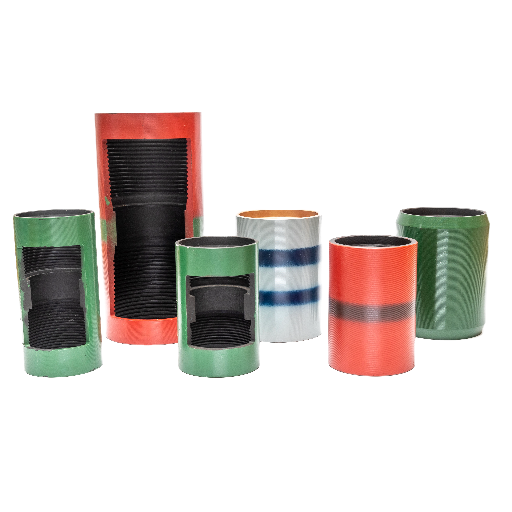
So the selection question is never "which thread is best" — it's "which connection and grade survive this well." Standard API threads (STC, LTC, BTC) lack a positive torque shoulder, so make-up is a calculated torque window, not a physical stop: over-torque galls, under-torque jumps out. That's exactly why connection choice has to follow depth, load and service.
Per ExxonMobil connection research (US Patent 5,212,885), API Buttress was historically a liquid-service connection — phosphatized BTC couplings failed gas pressure in every size and grade tested, and gas-tightness came only from coupling surface plating plus the right thread compound, not from the buttress profile itself. Higher grades make it worse: the higher the grade and the smaller the diameter, the harder the same connection is to seal.
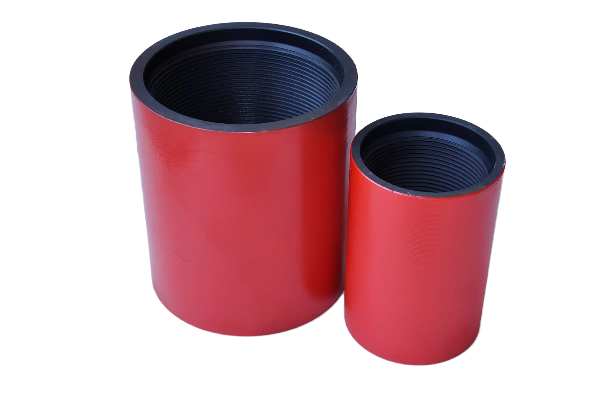
| Connection | Thread | Best for | Seal mechanism | Watch-out |
|---|---|---|---|---|
| STC (short round) | 8rd, 60° | shallow / low-pressure, cost-sensitive | thread + compound | lowest joint strength |
| LTC (long round) | 8rd, 60° | medium depth, more tension | thread + compound | still liquid-biased |
| BTC (buttress) | 5 TPI | deep / high axial load | thread + compound | not inherently gas-tight |
| Premium (VAM / TenarisHydril / Hunting) | metal-to-metal | HPHT, gas, sour, deepwater >15,000 psi | metal face + torque shoulder | license-gated, higher cost |
Synbase manufactures the API 5CT standard couplings honestly, and, unlike a distributor chasing the sale, tells you when you have outgrown them. That trade-off between cost and duty is the honest version of connection selection, not a compromise we hide in the footnotes. If your string is gas-tight HPHT or sour at high pressure, you want an ISO 13679 CAL IV qualified premium connection, and we will say so rather than oversell a buttress coupling into a duty it was never built for.
shallow, non-corrosive strings. Note: J55 and K55 share the same 55-ksi yield, so procurement teams treat them as interchangeable, but K55 carries ~20 ksi higher minimum tensile and mandatory heat treatment.
medium depth; L80-1 for sour H₂S service (capped hardness ≤23 HRC), L80-13Cr for CO₂.
sour and high-strength, qualified to NACE MR0175 / ISO 15156-2 with SSC testing per NACE TM0177.
deep and high-pressure, but both lose sour-service eligibility as yield climbs, so neither belongs in an H₂S well.
API 5CT requires that J55 and K55 buttress casing be furnished with Grade L80 Type 1 couplings when specified, a higher-grade coupling on lower-grade pipe to keep joint strength uniform. We apply that rule automatically; a pass-through distributor reselling mixed stock often doesn't.
ISO 13679 CAL IV INQUIRYBuyers tell us the real fear about a China-sourced coupling is metallurgy and threading they can't verify, and that fear is earned. In sworn US trade testimony, Chinese OCTG was characterized as commodity-grade tonnage competing on price, with threaded ends arriving damaged after 45–50 days of ocean transit.
A coupling that galls on make-up or cracks downhole doesn't care how cheap it was, and on a rig that can cost over $100,000 a day, the saving evaporates in a single fishing job. Synbase is built to be the opposite of that story: a traceable manufacturer, not a commodity reseller, where the difference show up in what we can certify versus what a distributor can only claim.
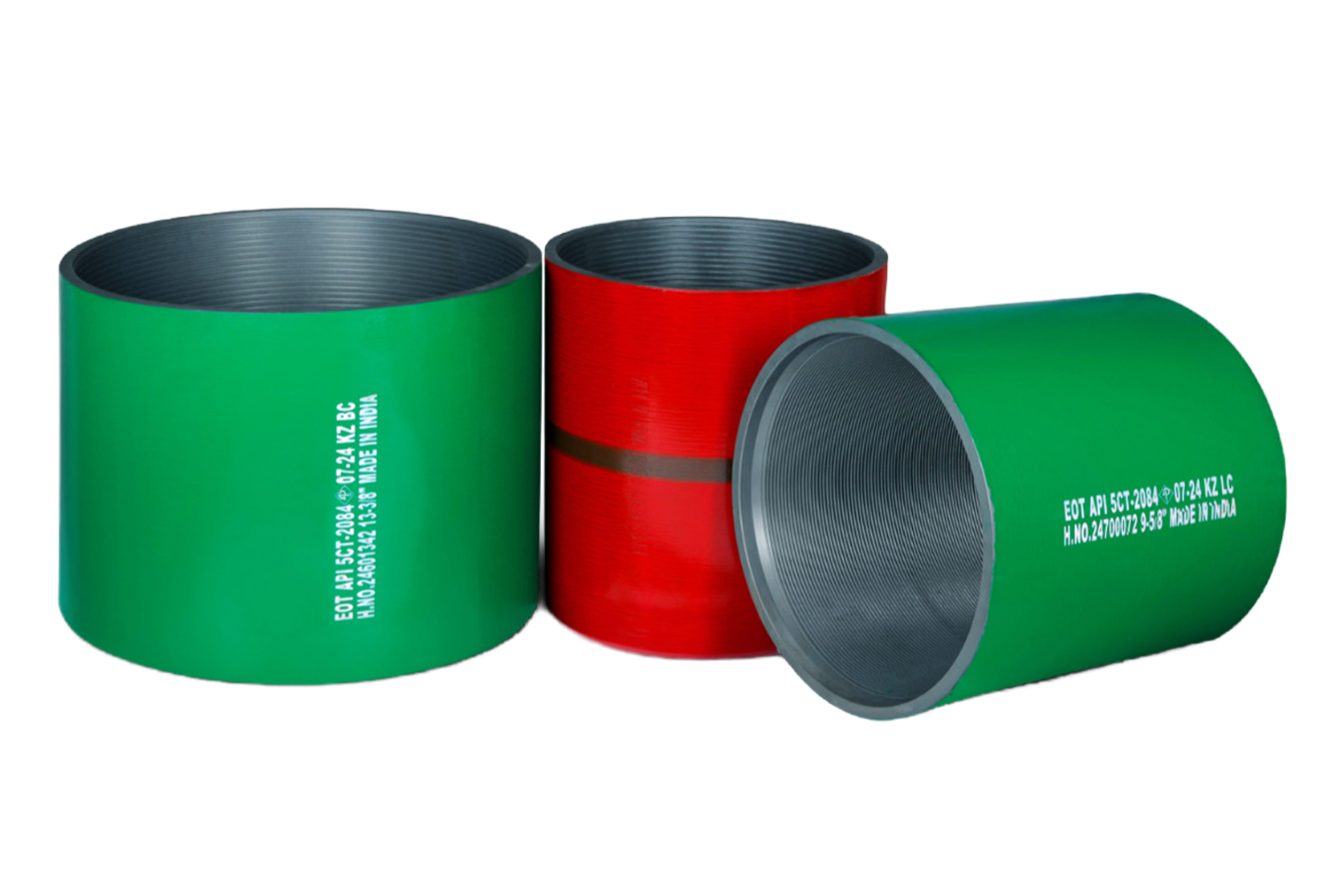
"We treat a coupling like a pressure part, not a fitting. Before any lot ships, we tie it back to its heat number and its API 5B gauge record, because the buyer is trusting that connection with the whole string, and 'it looks right' is not a certificate."
This is also why we position our API 5CT couplings honestly against premium connections. For routine and liquid-service strings, a properly made, fully traceable API coupling is the cost-right choice; for HPHT gas or sour service, we'll route you to a qualified premium connection rather than stretch a standard product past its rating.
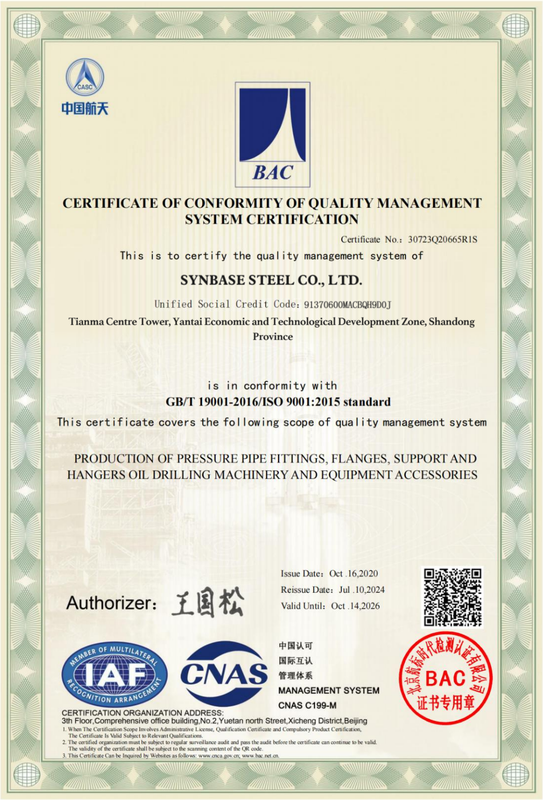
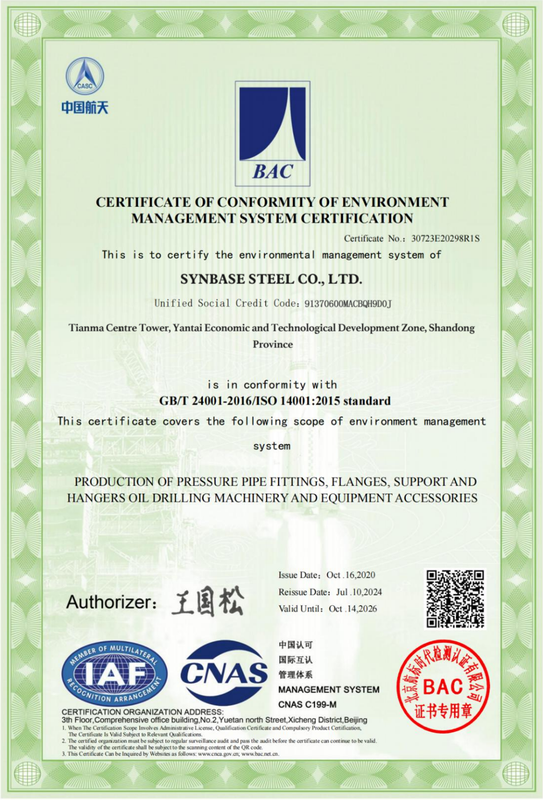
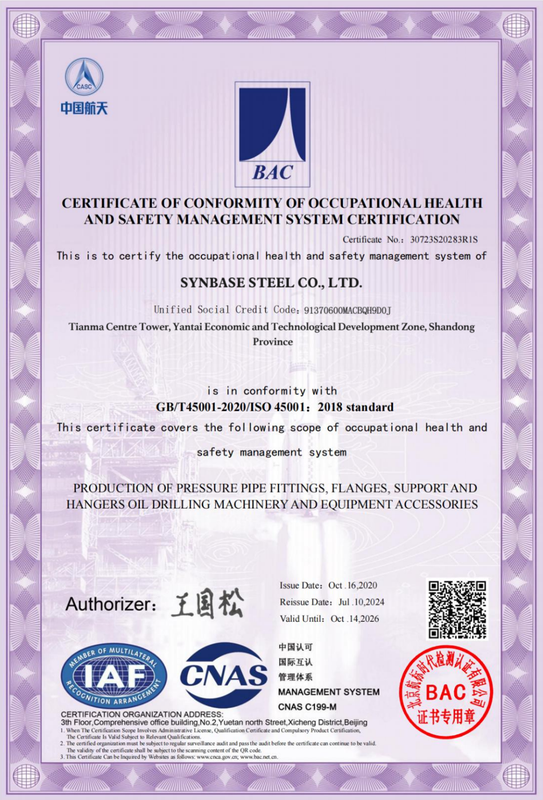
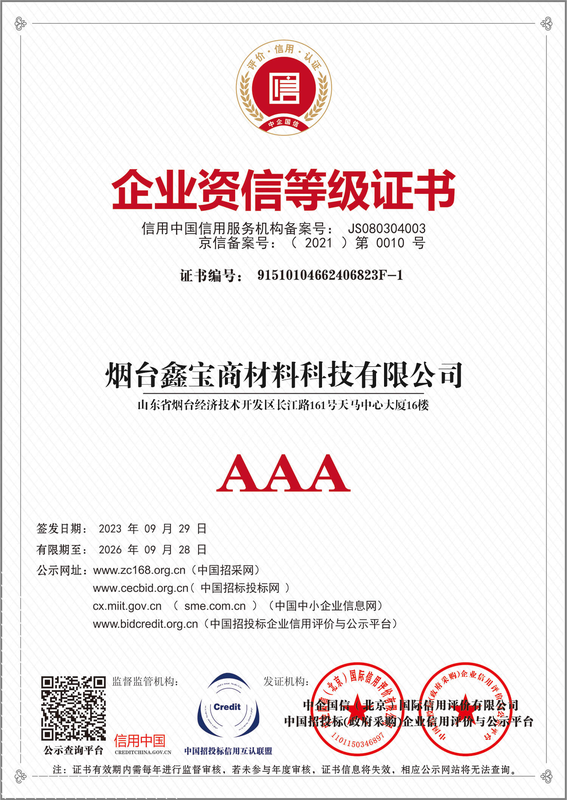
A coupling earns trust through records, not adjectives. Our couplings are manufactured to API 5CT 11th edition and threaded, gauged and inspected to API 5B, under a group quality system certified to ISO 9001, ISO 14001 and ISO 45001 with CE marking; API monogram licensing scope is confirmed per order on your RFQ.
Ultrasonic and electromagnetic (eddy-current / flux-leakage) inspection of coupling stock to acceptance level L4, plus magnetic-particle on threads.
Tensile and yield, hardness, and Charpy V-notch impact on the coupling itself (couplings carry their own toughness minimums, per IOGP S-735).
SSC qualification to NACE MR0175 / ISO 15156-2 and NACE TM0177 for L80-1, C90, T95 and C110; hardness capped at 25.4 HRC / 255 HBW.
Thread gauging with API working ring, plug, lead, taper and height gauges, and a minimum make-up-length check.
Spec-compliant SR-13 seal-ring couplings have failed to contain gas even under careful laboratory make-up. A certificate proves the metal; the gauging, the make-up record and the marking prove the connection. We supply all three.
Per operator inspection standards, a coupling missing its required API marking is cause for rejection, so knowing how to read the marking is your first counterfeit screen. The 4-Mark Verification is simple: four things travel with a compliant coupling.
| Marking Element | What It Tells You | How To Verify |
|---|---|---|
| Stencil | Size, weight, grade, connection | Matches the line item on your PO |
| Colour Band | Grade at a glance — J55 = one bright green band, K55 = two bright green bands | Cross-check against the mill's grade colour chart (confirm on the MTR, never by colour alone) |
| API Monogram | Licensed API thread & manufacture | Confirm the licence scope on your RFQ |
| Heat Number | Links the coupling to its melt | Traceable to the EN 10204 3.1 MTR |
OCTG is roughly 16% of well-completion spend and a named, supplier-dominated line item, so how you write the PO decides how much risk you carry. Our single most useful rule for buyers: order by OD → weight (lb/ft) → grade → connection → range, and state the documentation you require up front.
Couplings to API 5CT 11th edition, threaded per API 5B.
Heat-number lot traceability and EN 10204 3.1 mill test reports (3.2 with third-party witness on request).
Sour-service SSC (NACE MR0175 / ISO 15156-2) where the well demands it.
Thread protectors fitted, export packaging and marking, and Incoterms agreed before shipment so the threaded ends survive transit.
We quote against your exact spec, hold stock and made-to-order across the J55–Q125 range, and ship to projects in 100+ countries with the MTR travelling with the lot. Lead time depends on grade, size and heat-treatment route, tell us the line item and we'll give you a real date, not a slogan.
Quickly identify and select the exact OCTG coupling specifications matching your threading and dimensional requirements.
Ensure operational safety by accurately matching steel grades with your specific well service and environmental conditions.
Generate a comprehensive technical checklist to streamline your Request for Quotation (RFQ) and procurement process.