Send Your RFQ to Synbase Steel
Prefer to send drawings, BOMs or attachment lists by email? sales@synbasesteel.com

Updated July 2026
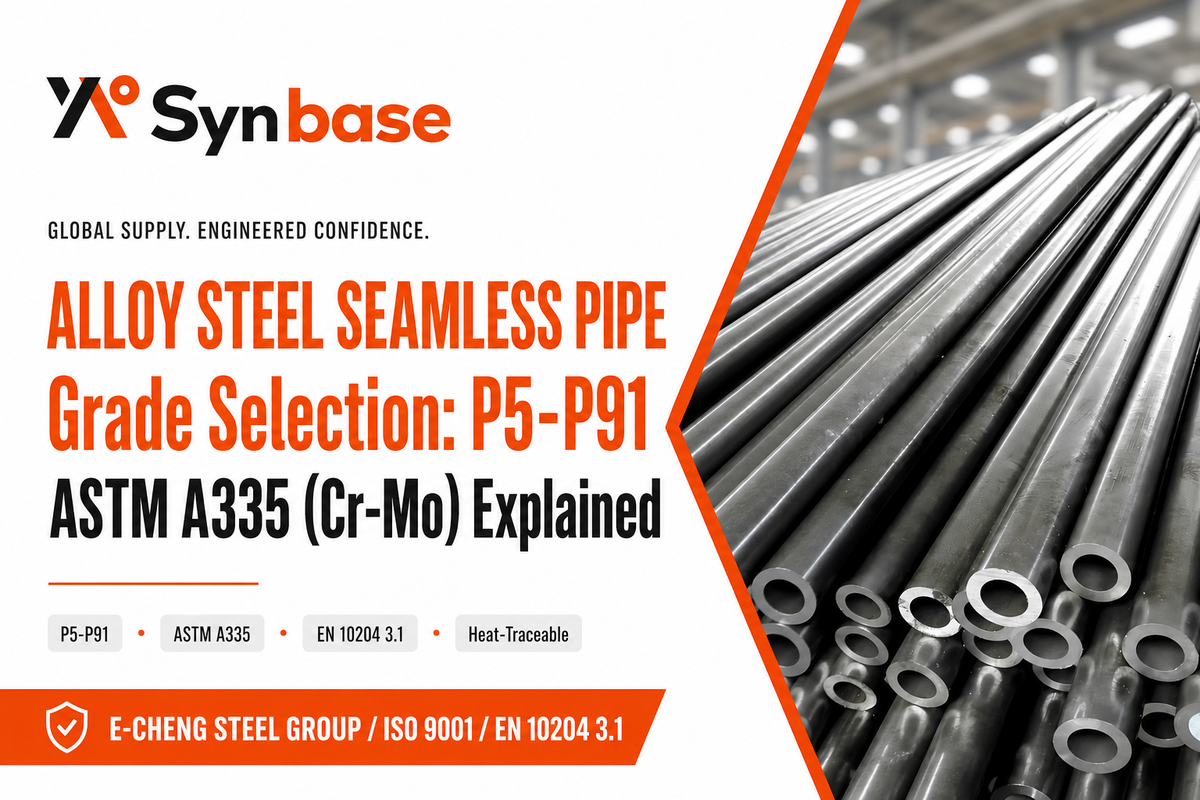
Alloy steel seamless pipe is a Cr-Mo pipe made to ASTM A335 (ASME SA335), pierced from a solid billet with no weld seam and engineered to hold its strength at temperatures where standard carbon steel pipe begins to creep. Available in 5 primary grades – P5, P9, P11, P22, and P91 – choosing the wrong one is more than a cosmetic error; it changes wall thickness, weld procedure, and whether the pipe lasts as long as it’s supposed to. This guide walks you through the standard, the grade table, when alloy outperforms carbon and stainless, where each grade gets used, and the single, costly selection error – over-specifying P91 – that provides no high-temperature benefit but costs buyers real money and welding effort.
| Governing standard (pipe) | ASTM A335 / ASME SA335 |
| Governing standard (tube) | ASTM A213 / ASME SA213 |
| Grades covered | P5, P9, P11, P22, P91 (pipe) / T5, T9, T11, T22, T91 (tube) |
| Chromium range | 1.00% – 9.50% |
| Molybdenum range | 0.44% – 1.13% |
| Max service temperature | 510°C (P11) to 650°C (P9), grade-dependent |
| Size range | 1/2″ – 24″ NPS, SCH 20 – XXS |
| Certification | EN 10204 3.1 Mill Test Certificate |
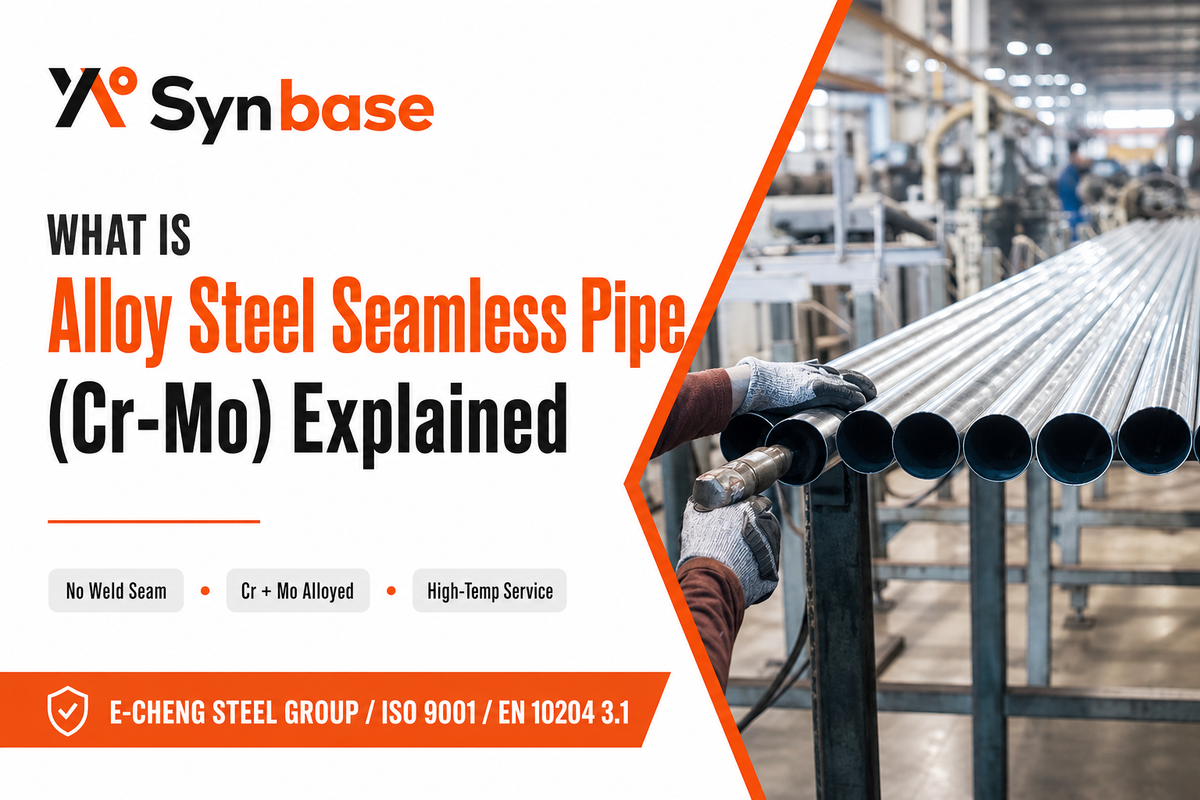
Alloy steel seamless pipe is produced from a solid steel billet that’s pierced and rolled into a hollow tube – a process that eliminates the longitudinal weld seam found in welded pipe, and it is this absence of a weld seam that gives the finished product its higher working pressure rating over welded pipe. What separates it from plain carbon steel pipe is the added amounts of elements such as chromium and molybdenum in the metal.
These added elements offer high-temperature corrosion and oxidation resistance for chromium and improved creep strength and weldability (the steel’s resistance to slow deformation under steady stress at high temps) for molybdenum. Each ASTM A335 P-grade and A213 T-grade pipes contain these elements for this specific reason, with common examples like ASTM A335 P11, ASTM A335 P91, and ASTM A335 P12 all adhering to this same underlying chemistry principle but at different alloy levels.
It’s not merely a production distinction: a longitudinal seam on a welded pipe has different metallurgic properties from the main pipe body and is where stress and defects tend to concentrate during repeated heat cycles. This absence of a seam is why seamless pipe is typically selected for main steam line, superheater header and other services in which a failure isn’t just a maintenance inconvenience, but potentially a dangerous incident – for further information on how alloy compares to carbon and stainless pipe families, see our full seamless steel pipe range.
The relative amounts of these alloying elements effectively divide pipe into two categories: low-alloy (less than approximately 5% total alloying elements, including ASTM A335 P1, P2, P11, P12 and P22) and high-alloy (between approximately 5% and 50%, including P5, P9, P91 and P92).
Elements like chromium and molybdenum give ASTM A335 pipes their characteristic behavior, and chromium percentages increase from about 0.5% at the lower end of the scale up to as high as 9% for P91/P92 in proportion to higher desired operating temperatures. You can use chromium as a quick sanity-check to determine whether a grade specified on the material specification matches the declared chemical composition and intended application temperature. Note that any of these ASTM A335 grades should not be mistaken for AISI/SAE 4130 or 4140 chrome-moly steel, which are of a different alloy type used for aerospace and automotive tubing, rather than industrial pipe.
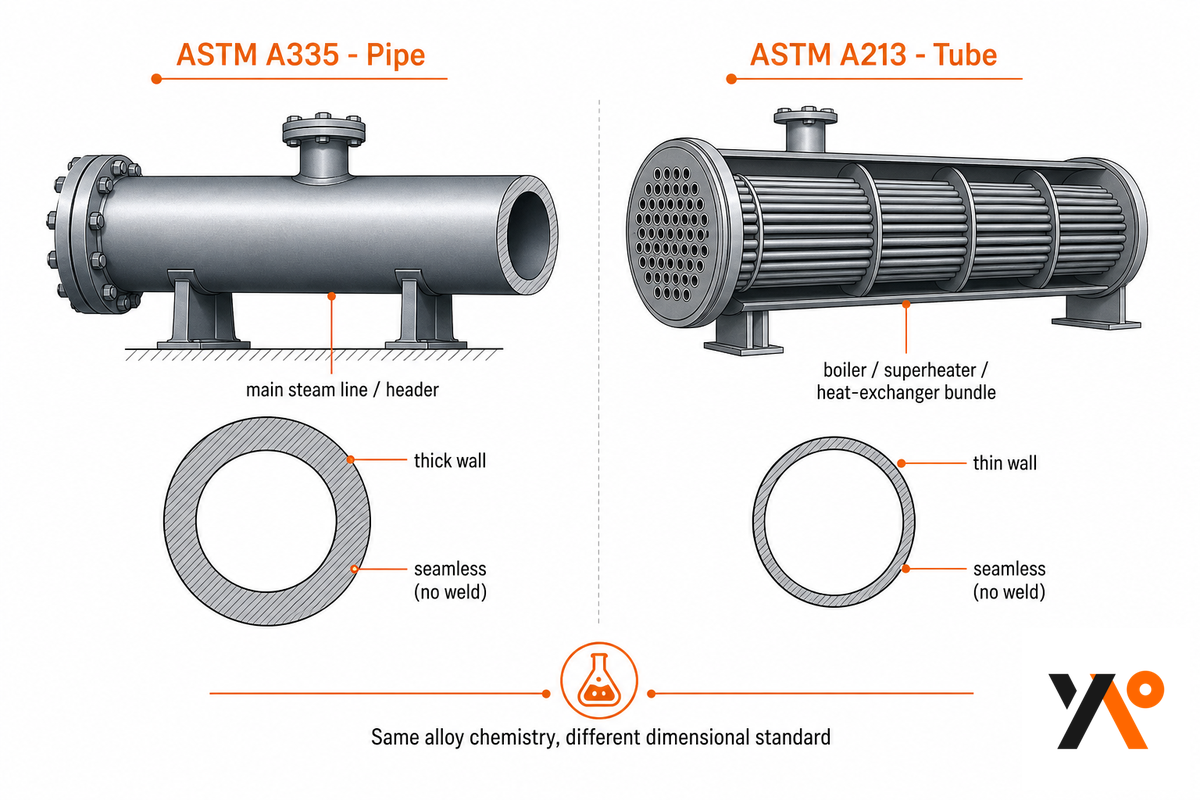
ASTM A335 is exactly the same in terms of technical content as ASME SA335 – it is the specification for seamless ferritic alloy-steel pipe for high temperature service. It includes grades P1 through to P92 and specifies the chemistry, tensile and yield requirements and dimensional tolerance that a mill must adhere to if they wish to stamp a pipe as compliant per ASTM A335.
Buyers often mistake A335 with its sister standard, ASTM A213. We get the confusion: both use parallel grade designations (A335 P11 to A213 T11, A335 P2 to ASTM A213 T2, A335 P12 to T12, A335 P22 to T22, A335 P91 to T91, with ASTM A213 T1 sitting at the low-alloy end alongside P1), and their chemical composition is practically the same for each match. Product form and usage are what set them apart: A335 standards are for pipe, the transport and structural piping such as the main steam lines and headers.
A213 standards are for tubing, which is the size required for heat-transfer service (boilers, superheaters and heat exchangers). But specify the wrong standard on your purchase order, and you may have the mill ship you a chemically equivalent product in the wrong dimensional category. An ASTM A691 standard exists to cover electric-fusion-welded (EFW) alloy steel pipe for higher pressure and temperature services, in larger diameters – this is useful to know should your line size start to go beyond the economical size range for seamless pipe.
A more frequent pitfall: a purchase order bill of materials lists “ASTM A519” (the seamless carbon and alloy mechanical tubing specification) alongside the A335 and A213 line items. Since A519 covers structural and mechanical tubing rather than pressure piping, matching the correct specification to your intended use is just as important as matching the grade.
ASTM A335 (ASME SA335) covers seamless ferritic alloy-steel pipe for high-temperature service – main steam lines, headers, and process piping runs. ASTM A213 (ASME SA213), by contrast, covers seamless ferritic and austenitic alloy-steel tube for boiler, superheater, and heat-exchanger duty. Chemistry is identical between the two for a given grade: P11 pipe and T11 tube are the same alloy metallurgically.
What differs is the dimensional specification each product form is built to, so a spec sheet or bill of materials that lists “P11” without explicitly stating pipe or tube form is an incomplete callout.
International customers check the EN 10216-2, DIN 17175 and JIS G3462 standards to verify equivalency of these materials should their procurement fall outside of the ASTM/ASME system; additionally, newer, higher temperature alloy grades (P92, P93, P115, P128, P921) have been incorporated into the ASME SA335/SA335M-24b standard released October 2024 to support growing demand for boiler applications with increased operating parameters.
Many supplier pages show the chemistry for P-grade pipe in one table and the chemistry for T-grade tube in another (or at all) — which forces the buyer to check two separate documents just to make sure the pipe and tube for a header assembly will be from the same alloy family. All nine common grades and their direct tube counterparts are paired below, organized by alloy class, chromium, molybdenum, and maximum useful service temperature.
| Pipe Grade (A335) | Tube Twin (A213) | Alloy Class | Cr % | Mo % | Max Service Temp | Typical Service |
|---|---|---|---|---|---|---|
| P1 | T1 | Low-alloy | – | 0.44-0.65 | Moderate (legacy) | Older moderate-temperature lines, largely superseded by P11 |
| P2 | T2 | Low-alloy | 0.50-0.81 | 0.44-0.65 | Moderate (legacy) | Older moderate-temperature lines, largely superseded by P11 |
| P12 | T12 | Low-alloy | 0.80-1.25 | 0.44-0.65 | Moderate (legacy) | Older moderate-temperature lines, largely superseded by P11 |
| P11 | T11 | Low-alloy | 1.00-1.50 | 0.44-0.65 | 510°C | Economical moderate-temperature steam lines |
| P22 | T22 | Low-alloy | 1.90-2.60 | 0.87-1.13 | 565°C | Refinery/power workhorse, creep + hydrogen service |
| P5 | T5 | High-alloy | 4.00-6.00 | 0.44-0.65 | 600°C | Refinery sulfidation/oxidation service |
| P9 | T9 | High-alloy | 8.00-10.00 | 0.44-0.65 | 650°C | High-chromium oxidation resistance |
| P91 | T91 | High-alloy (CSEF) | 8.00-9.50 | 0.85-1.05 | 600°C+ | Ultra-supercritical, ~50% thinner wall than P22 at equivalent rating |
| P92 | T92 | High-alloy (CSEF) | 8.50-9.50 | 0.30-0.60 | 600°C+ | Advanced ultra-supercritical, added tungsten for the highest-parameter designs |
Lower-alloy grades ASTM A335 P1, P2, and P12 (with T2 and T12 as tube twins) lie below the table’s five main grades and see limited use today outside legacy plants; most new specifications for moderate-temperature service now default straight to P11 rather than the older, lower-strength P1/P2/P12 family. At the other extreme, T92 (the tube twin of pipe grade P91) extends the same CSEF family beyond P91 for the most demanding advanced ultra-supercritical designs. Across all ASTM A335 grades, pipe wall and outside-diameter tolerances are set out in ASME B36.10 dimensional tables, so always confirm pipe specifications against the schedule table for your exact size rather than assuming a round number.
Wall thickness, not just temperature headroom, is the practical payoff of the P91/T91 pairing. Because P91’s vanadium- and niobium-strengthened microstructure carries more load per unit of wall, a header that needs, say, a 25mm wall in P22 at a given design pressure and temperature can often be built with roughly half that wall thickness by switching to P91, holding the pressure rating constant – cutting weld volume, dead weight, and the thermal stress a thick-walled header sees during a fast startup. Run both wall-thickness options through our seamless pipe weight calculator to see the actual per-meter weight difference for your size before you commit to a grade. That saving is real, but it’s also exactly what makes P91 easy to over-specify, which is the subject of the next section.
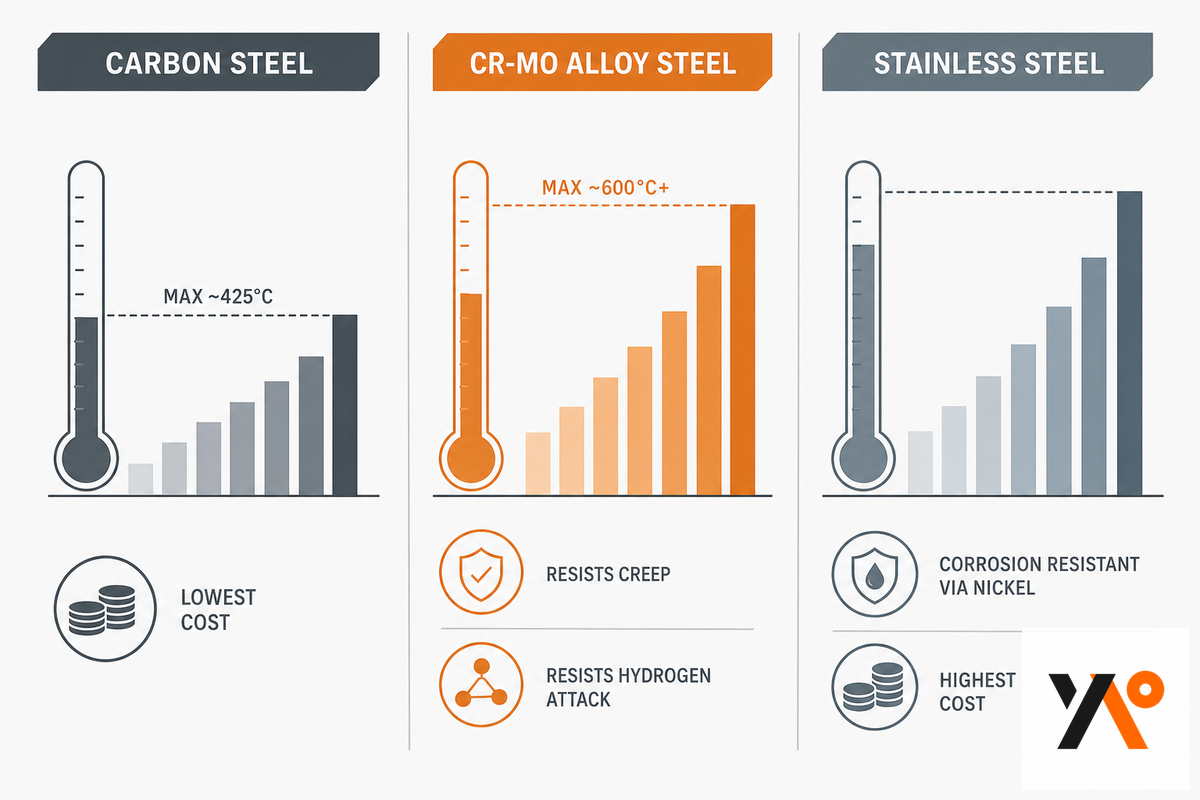
Choosing between carbon steel, Cr-Mo alloy steel, and stainless steel seamless pipe comes down to what’s actually failing in service, not brand preference. Carbon steel pipe (A106/A53) is cheapest but loses strength past roughly 400°C-450°C, where creep becomes the limiting factor. Cr-Mo alloy pipe adds chromium and molybdenum to push that creep limit upward – P22 to about 565°C, P91 beyond 600°C – at a moderate cost premium over carbon steel.
Stainless steel takes an entirely different path: austenitic grades such as 304/316 use far higher chromium (often 18%+) plus nickel to create a passive oxide layer to fend off corrosion, not creep. That’s the key the customer misses most often – the Cr-Mo alloy steel pipe contains zero nickel and is resistant by virtue of chromium and molybdenum working on oxidation and creep, not the passive nickel-stabilized layer that protects stainless from aggressive chemical attack. Extreme alloys like titanium, alloy 20 pipe, or superalloy pipe with high nickel push resistance to corrosion a step further but do so with a price and lead time premium rarely warranted except in highly specialized chemical processing. In short: use Cr-Mo when heat/creep is the problem at a price you can afford; use stainless when chemicals attack you at any temperature; use carbon steel when none of the above apply and cost is king. Don’t use alloy steel when it’s a corrosion issue, or stainless when it’s a high-temp-only issue (these are common and costly errors in both directions; see our carbon steel seamless pipe guide and stainless steel seamless pipe guide if you’re still comparing.
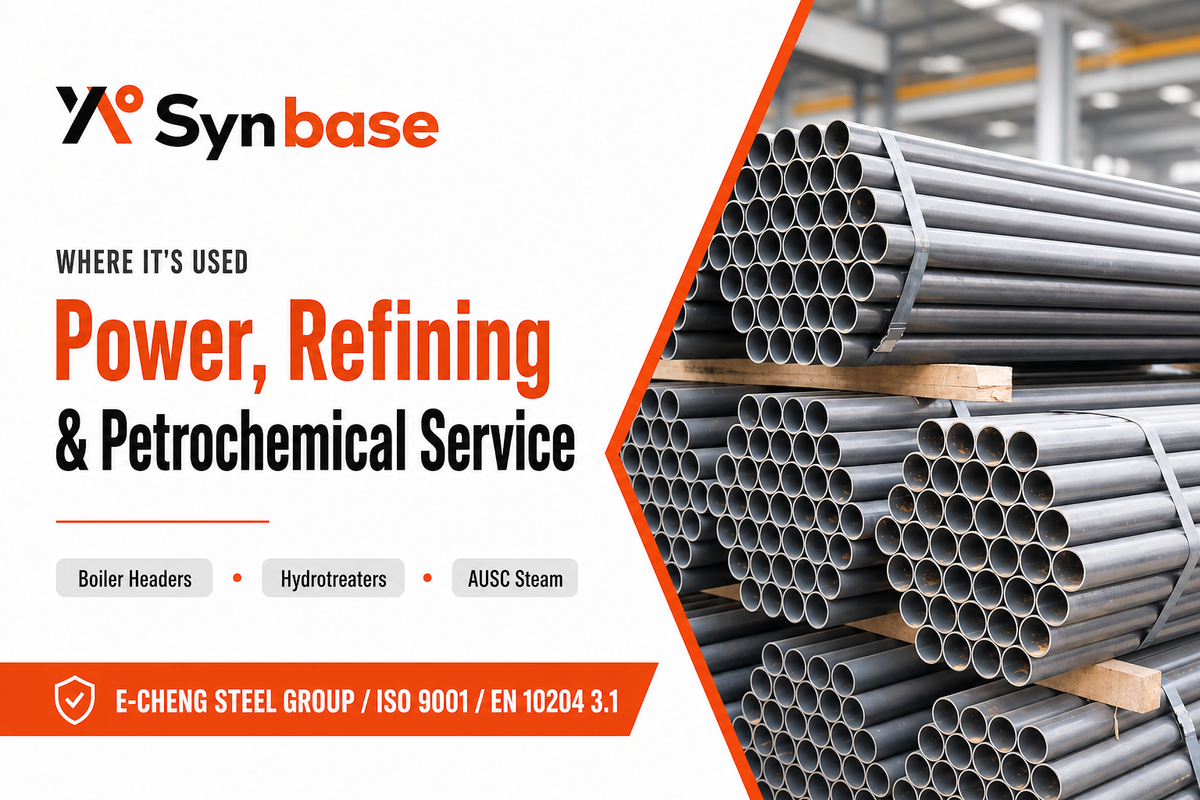
Grade is selected for the intended service temperature and process environment far more than by industry label. P11 and P22 see the widest use in main steam, header, and medium-to-high-temperature process piping across power generation and refinery facilities, spanning the range of applications where safety and reliability are non-negotiable. P91 and P92 serve ultra-supercritical and advanced ultra-supercritical (AUSC) boiler main steam and header service. P5 and P9 are more common in petroleum refining hydrogen and sulfidation service.
In AUSC designs, U.S. Department of Energy and Ohio Coal Development Office research has designated low-alloy Cr-Mo steels and high-chromium (9-12%) martensitic steels as the material path through subcritical, supercritical, and ultra-supercritical boiler parameters. In P5/P9 sulfidation service, the added chromium resists corrosion from sulfur attack at process temperature; a hydrotreater processing sour crude oil above 400°C is a textbook P9 application that would see significant sulfidation loss within a few years if carbon steel pipe were installed instead.
Alloy steel seamless pipe is stocked in various sizes running from ½” NPS instrument tubing to 24” NPS main steam headers, spanning the P5, P9, P11, P22, and P91 grades. A 4-inch P91 pipe, for example, shares its outside dimensions with the equivalent P22 size, but needs a lower minimum wall thickness to hold an identical pressure rating – the grade-selection rationale above playing out on a real size.
Boiler and power-plant piping typically uses P11 and P22 for main steam lines and headers at moderate design temperatures, and P91 (with P92 in the most demanding advanced ultra-supercritical designs) where design temperature and pressure push past P22’s practical ~565°C ceiling. Superheater and reheater tube bundles use the matching T-grade tube form – T11, T22, or T91 – rather than pipe, since tube dimensional standards (ASTM A213) are built for heat-transfer bundles, not transport runs.
Buyers sourcing boiler tube rather than pipe should also review our carbon and alloy boiler tube range and our heat exchanger tube page, since a bill of materials calling for “P91” without specifying pipe or tube form is an incomplete order.
“Main welding mistakes that cause P91 failure start with no preheat or low preheat, hydrogen gets trapped, martensite forms too hard, and cracking follows.”
Khalid Shaikh, welding engineering practitioner, in a LinkedIn post on P91 welding failure modes
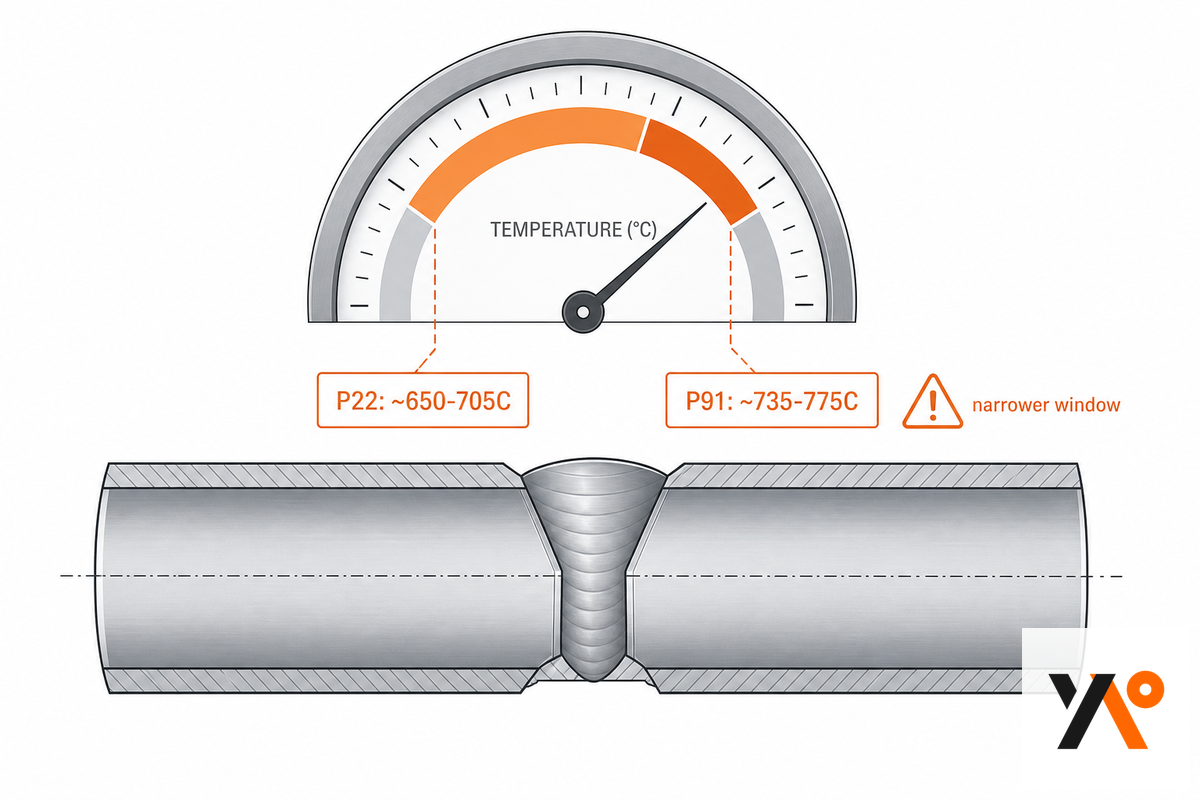
P91’s higher creep strength is real, but it isn’t a free upgrade over P22. Both grades ask for meaningfully different post-weld heat treatment (PWHT).
Engineers discussing real P91-to-P11 weld joints on the eng-tips forum cite ASME B31.1 PWHT hold temperatures of roughly 650°C-705°C for P11, versus 735°C-775°C for P91 – a jump of 85°C-125°C that isn’t a rounding difference in a furnace or local resistance-heating PWHT setup. P91 also carries a narrower acceptable PWHT window: overshoot it and the steel over-tempers and softens; undershoot it and martensite stays too hard and crack-prone. A 2026 ASME Code Case specifically sets an upper PWHT temperature limit for Grade 91 to prevent exactly that over-tempering failure mode – a constraint P22 doesn’t carry.
Delayed hydrogen cracking is the sharpest version of this risk: welders on the American Welding Society’s technical forum note that cracking in Cr-Mo welds can appear as late as 72 hours after PWHT is complete, so a weld that inspects clean immediately after PWHT isn’t proof it’s sound.
It only adds a ~100°C-higher PWHT window, mandatory hardness testing, and a stricter Code-Case temperature limit that P22 doesn’t require.
Copying P91 into a spec by habit – because it’s the “modern” grade name – without checking whether the design temperature actually needs it: that’s the recurring mistake. On a project where P22 would meet every stress and temperature requirement, that habit adds real welding cost and schedule risk for zero performance gain.
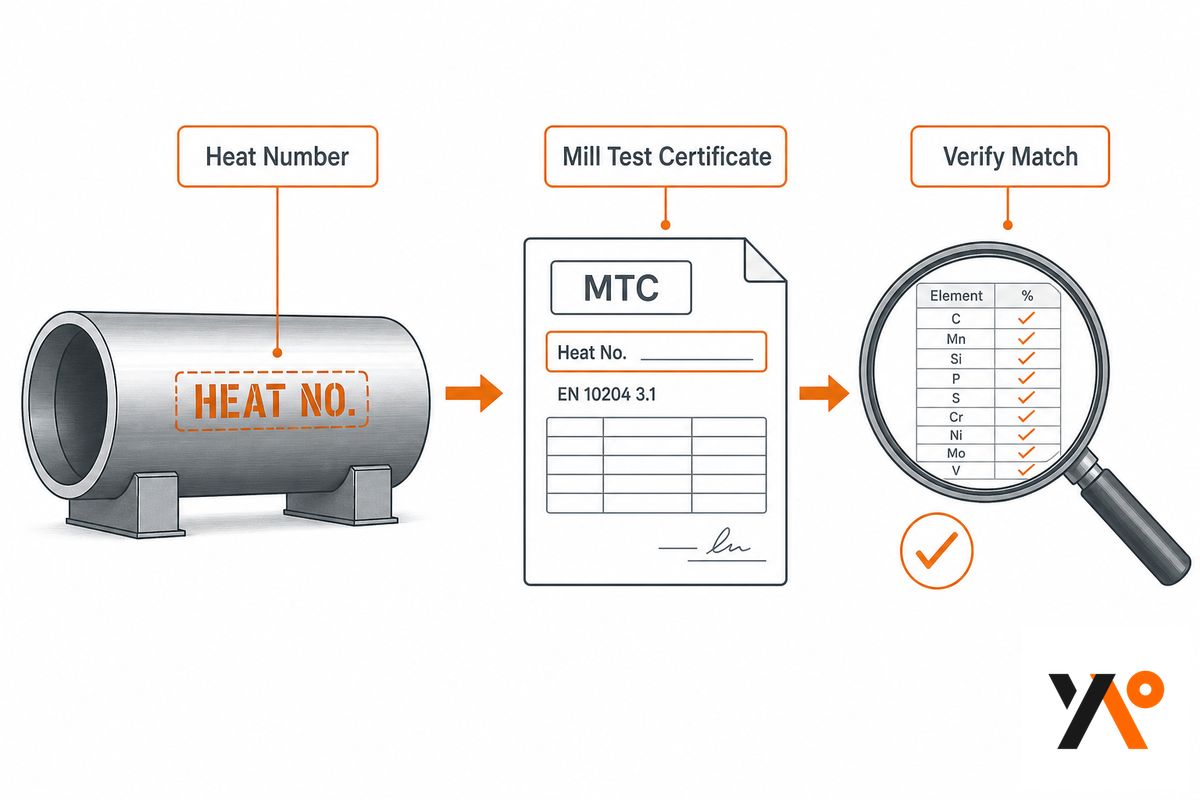
EN 10204 3.1 Mill Test Certificates (MTCs) only indicate what came out of the mill if the pipe in your hand is the pipe described by that document. Each heat (cast) of alloy steel is given a unique heat number after its chemical composition has been analyzed and it must be stenciled or stamped on the pipe itself as well as printed on the MTC. One verification step that will catch problems: Read the heat number from the stencil on the pipe. Find that number on the MTC and compare the chemical analysis (Cr%, Mo%, and for P91, the V and Nb levels) against the applicable grade’s specification range – don’t just check it against the grade name on the header.
This isn’t some theoretical possibility. POWER Magazine’s reporting on aberrant P91 components found that abnormal material and welds were frequently traced back to heat treatments that were not performed to the specific, critical parameters the grade demands. A heat-number verification is precisely the check that can stop this before it becomes an incident investigation: a boiler inspector finds that the heat number on a suspect P91 header piece doesn’t match any heat listed on the pipe’s MTC batch and, instead of dismissing it as a clerical typo, holds the header for retesting. For P91 in particular, specifically ask for copies of the chemical analysis and hardness testing results in addition to the MTC; knowing only the composition doesn’t guarantee the material was heat treated to the tight PWHT window for this grade described above.
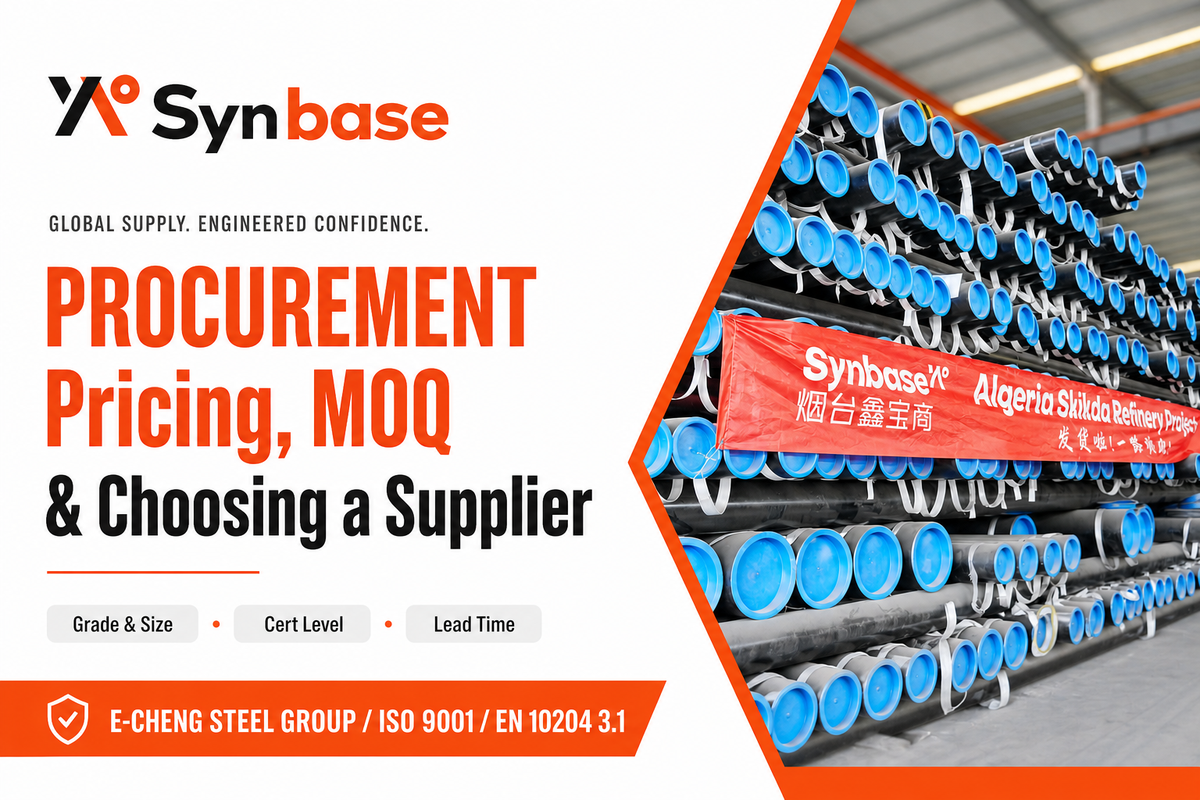
A price list for alloy steel seamless pipe found on-line is close to useless by the time you read it-alloy pipe price per kg isn’t static, it fluctuates against a handful of identifiable factors, which offers a buyer more utility than a fixed rate. Grade and alloy content form the foundation of price: the added molybdenum, vanadium, and niobium in P91 and P92 carries a genuine premium over the leaner P11/P22 grades and requires an added heat-treatment cycle. Manufacturing method adds cost too, with seamless commanding a premium over the same grade produced by welding (ERW/EFW/SAW). Wall thickness, outside diameter, length, whether the material ships in its normalized-and-tempered state, and the level of testing and certification requested (standard EN 10204 3.1 versus added third-party inspection) all move the final figure, on top of week-to-week swings in raw material and freight cost.
Any unusually low price point given the cost drivers listed above should be a red flag signaling to ask for more information, not less, focusing on whether the heat treatment and testing processes, along with the MTCs, align with the grade’s specifications or were abbreviated in the PWHT and testing steps discussed previously.
Before you ask for a quote, make sure you’ve clearly identified the exact grade (e.g., P5/P9/P11/P22/P91), size, schedule, single random or double random length of the pipe, and whether you require pipe (A335) or tube (A213) form. You cannot effectively compare a quote from a steel pipe supplier based on an incomplete spec with that from another.
Synbase Steel, an approved P5-P91 steel pipe product manufacturer and alloy steel pipe supplier, with EN 10204 3.1 mill test certificates and full heat number traceability, can support all of your full P5-P91 pipe requirements. See our alloy steel seamless pipe product page for a full listing of grades and sizes, for a Cr-Mo grade data sheet, or for a spec-matched quote.
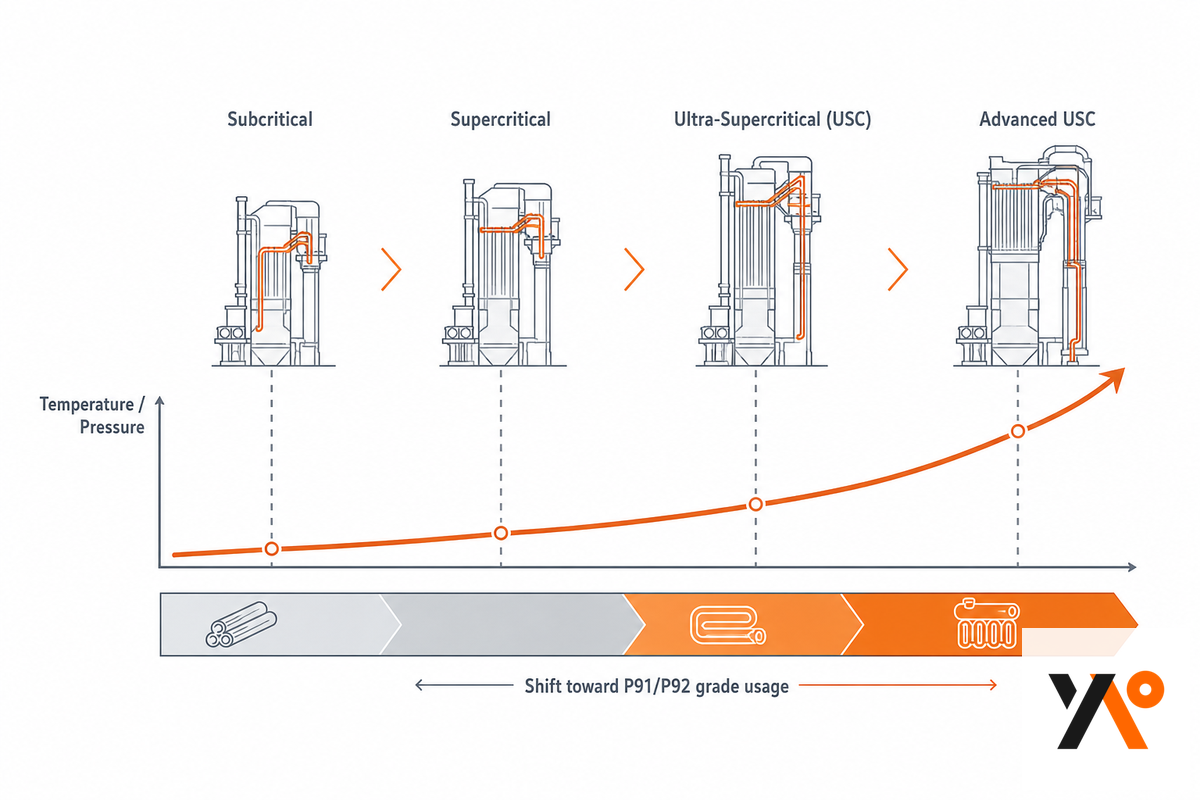
What’s actually driving P5-P91 selection right now is the shift of power-plant design toward supercritical and ultra-supercritical (USC) steam conditions, where U.S. Department of Energy funded material-systems research has focused specifically on low-alloy Cr-Mo steels and 9-12% chromium martensitic steels as potential candidate materials. This shift explains the growing P91 usage, even in projects or sections that will remain within P22 territory, an over-specification risk identified throughout this guide.
On the standards side, the October 2024 A335/A335M-24b update includes a number of higher parameter grades (P92, P93, P115, P128, P921), a clear indication that mills and standards committees continue to expand upward beyond P91 in the Cr-Mo / CSEF high-strength alloy steel family, rather than viewing P91 as a ceiling. As a buyer, you’ll want to be sure that your intended design temperature and pressure is aligned with the latest allowable stress values prior to defaulting to the highest grade with the most recently adopted grade designation; (e.g. global market size for alloy seamless steel pipe market is projected to be $6.2 billion in 2024 with consistent growth to 2030 per various market analyses) data points of market size, while informative, don’t represent a definitive spec for any given application.
This guide draws on ASTM A335/A213 specification data, ASME B31.1 allowable-stress and PWHT references, and field-reported P91 welding experience from eng-tips.com and the American Welding Society’s technical forum, cross-checked against Synbase Steel’s own alloy steel seamless pipe grade data (P5 through P91, EN/DIN/JIS cross-references) published on our product pages. Where a data point came from a single industry source rather than a standards document, we have flagged it as approximate rather than presenting it as an exact figure.
Reviewed by the Synbase Steel technical team.
Synbase Steel supplies steel pipe, fittings, flanges, valves and OCTG for oil and gas, petrochemical, power, water and industrial projects. Our technical guides are written to help buyers compare standards, grades, dimensions, coatings, inspection requirements and commercial terms before sending an RFQ.
We focus on practical specification work: matching pipe process to service conditions, checking wall thickness and end finish, reviewing MTC and NDT requirements, and clarifying documentation before production or shipment.
Project support across seamless pipe, ERW, LSAW, SSAW, buttweld fittings, forged flanges, valves and oilfield tubulars.
Specification review for ASTM, ASME, API, EN and DIN standards, including material grade, pressure class, coating and inspection scope.