Send Your RFQ to Synbase Steel
Prefer to send drawings, BOMs or attachment lists by email? sales@synbasesteel.com

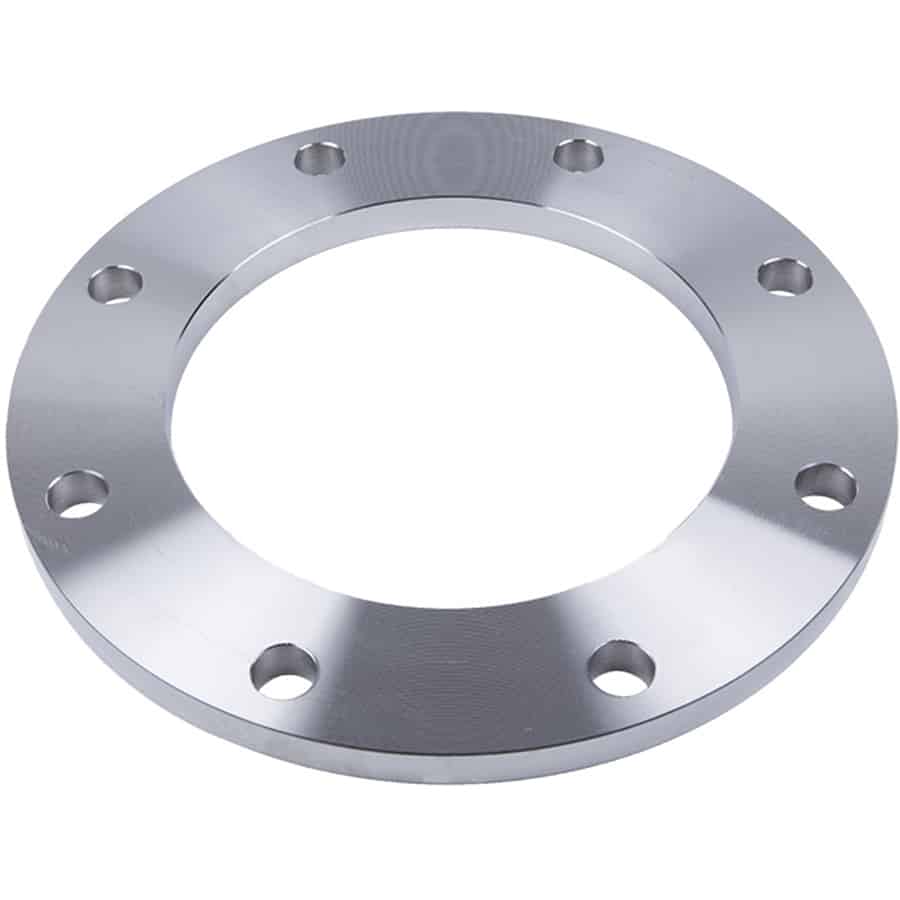
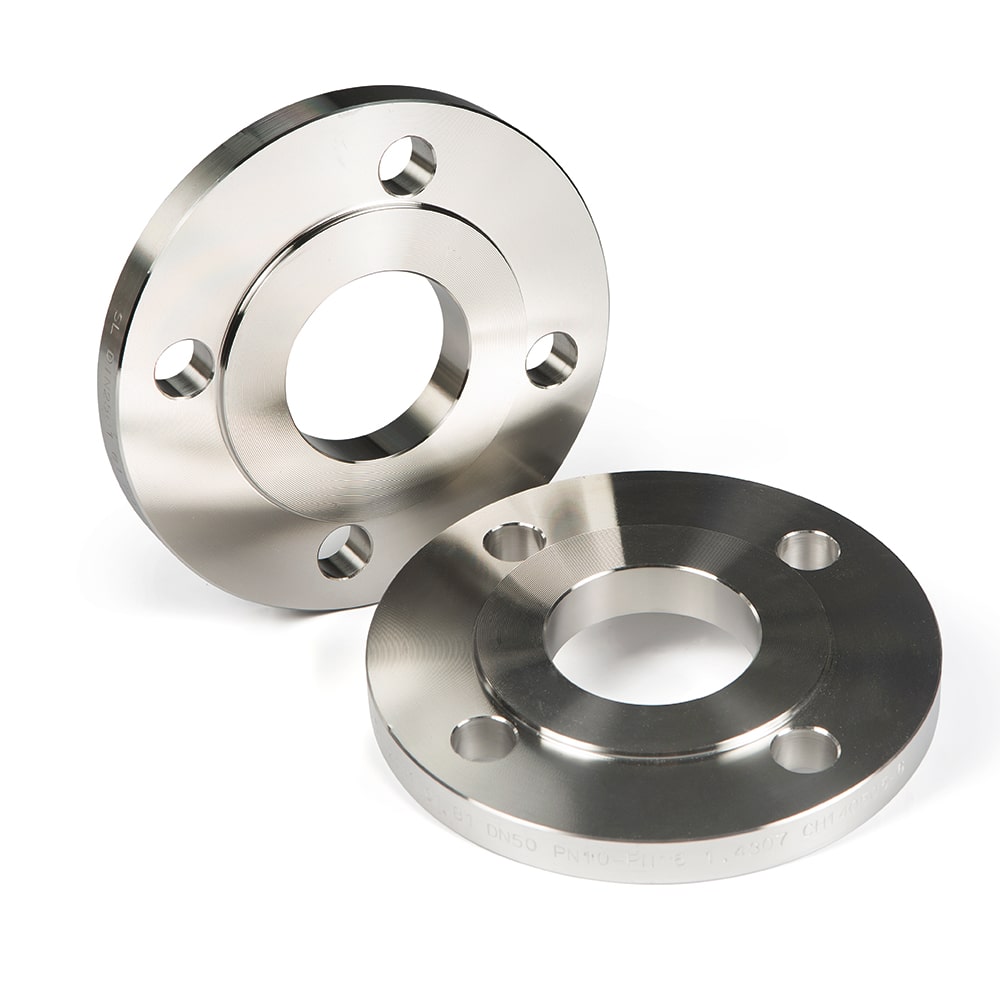
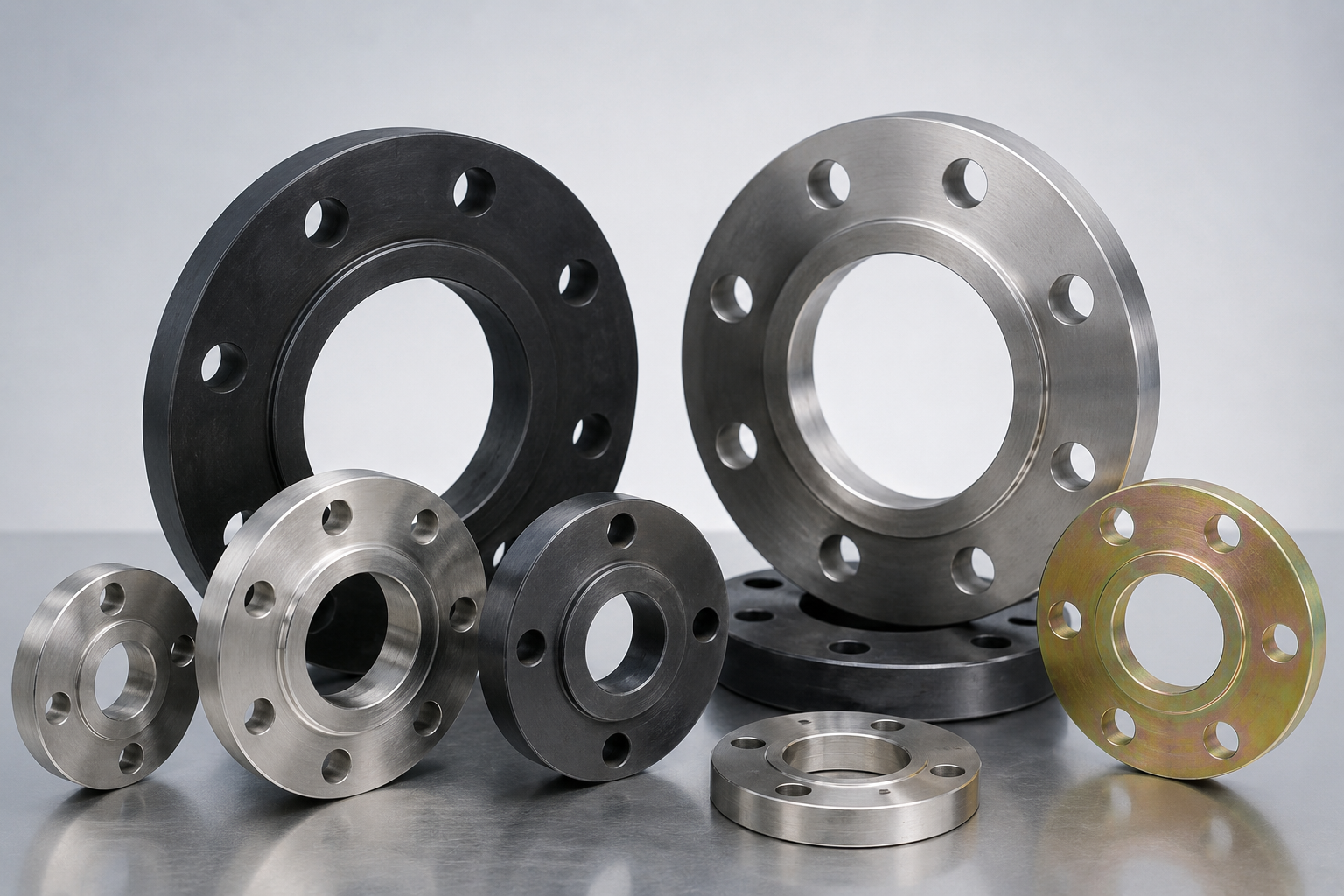
A plate flange is basically a flat, ring shaped disc manufactured from a rolled plate stock with a hole bored through the middle (in order to slide it over the pipe end), and welded in place (usually to the inner and outer surface). At Synbase Steel we supply our plate flanges in: EN 1092-1 Type 01 , ASME B16.5, DIN 2576 , AWWA C207 and JIS B2220 in DN15 – DN1200 and NPS ½ ” – NPS 48″.
You don’t need help sourcing a plate flange supplier. Finding a supplier capable of delivering plate flanges to the right standard, with the correct pressure-temperature rating and backed by EN 10204 3.1 material traceability – minus the headaches of confusing PN and Class values that consistently delay your commissioning – that’s where the work really starts.
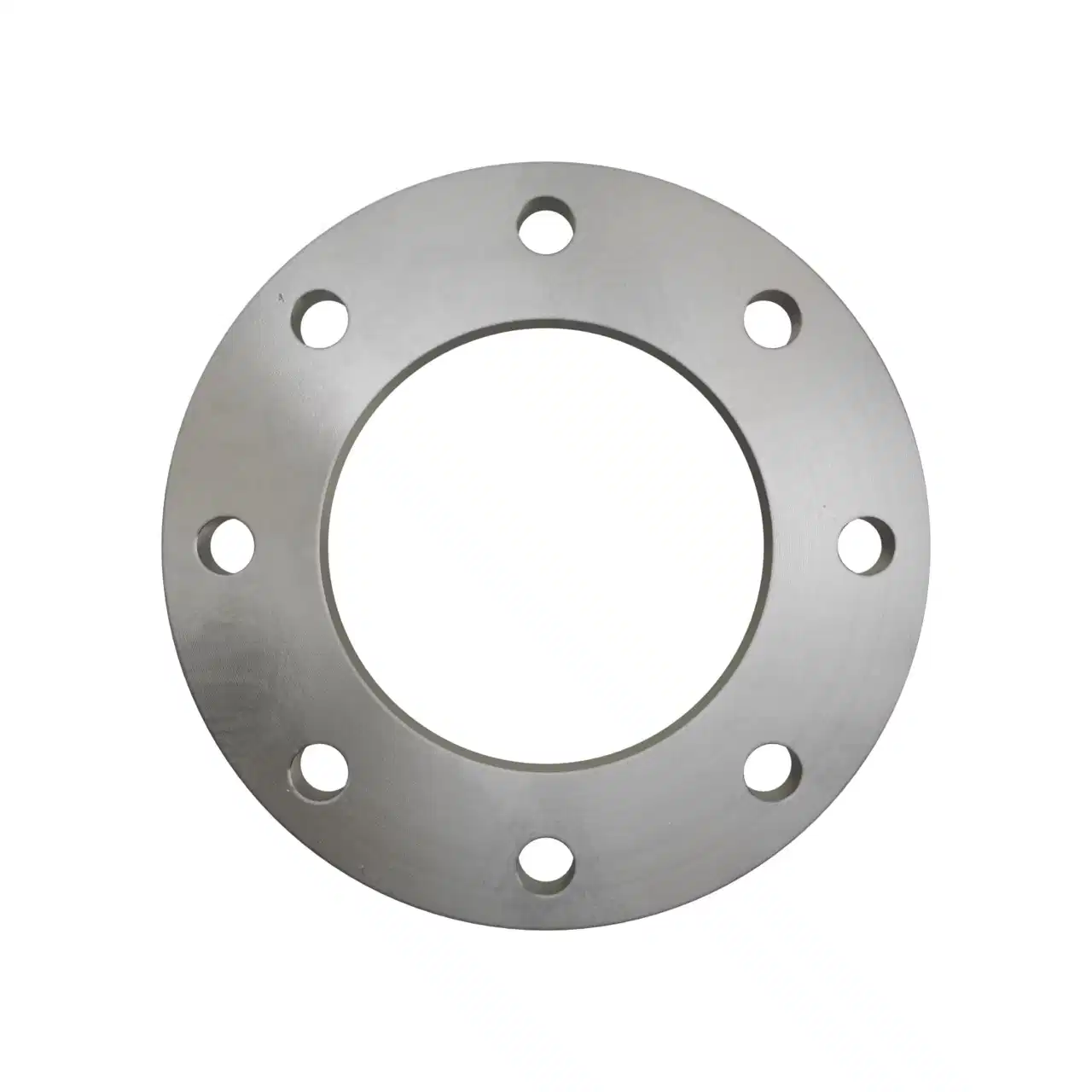
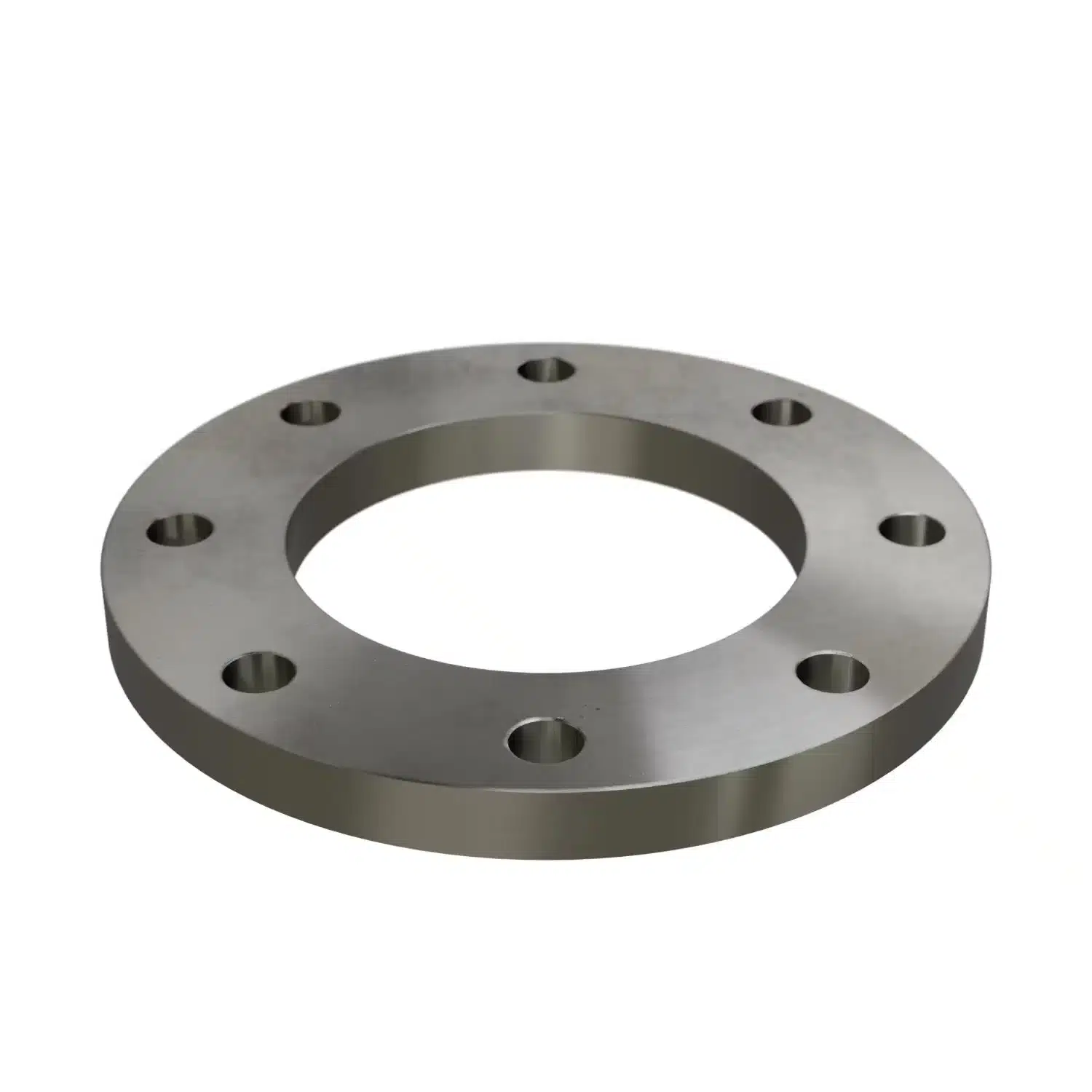
Several of our more representative plate flange supply applications for projects across our customer base are demonstrated in the following section. The Synbase’s capabilities, together with our parent group, E-CHENG STEEL GROUP, spans over one hundred (100) countries, covering projects from Middle East to Europe and to the Asia Pacific region.
| Industry | Region | Standard Applied | Material | Size Range | Key Requirement |
|---|---|---|---|---|---|
| Petrochemical plant — utility piping headers | Middle East | EN 1092-1 PN16 Type 01 | Carbon steel P245GH | DN50–DN300 | EN 10204 3.1 MTC + PMI testing on 10% random sample; delivery FOB Shanghai within 6 weeks |
| Water treatment — process interconnect piping | Central Europe | EN 1092-1 PN10 / PN16 Type 01 | Carbon steel S235JR; 316L SS for chemical dosing lines | DN80–DN500 | PED-relevant documentation package; EN 10204 3.1 MTC; CE marking on finished flanges |
| LNG regasification — utility cooling water | Asia Pacific | ASME B16.5 Class 150 (slip-on) | ASTM A105 carbon steel; A240 316L SS for seawater service | NPS 2–NPS 12 | Full ASME MTC package; raised face with serrated finish; third-party dimensional inspection report |
Synbase plate flanges are used in multiple industries, including:
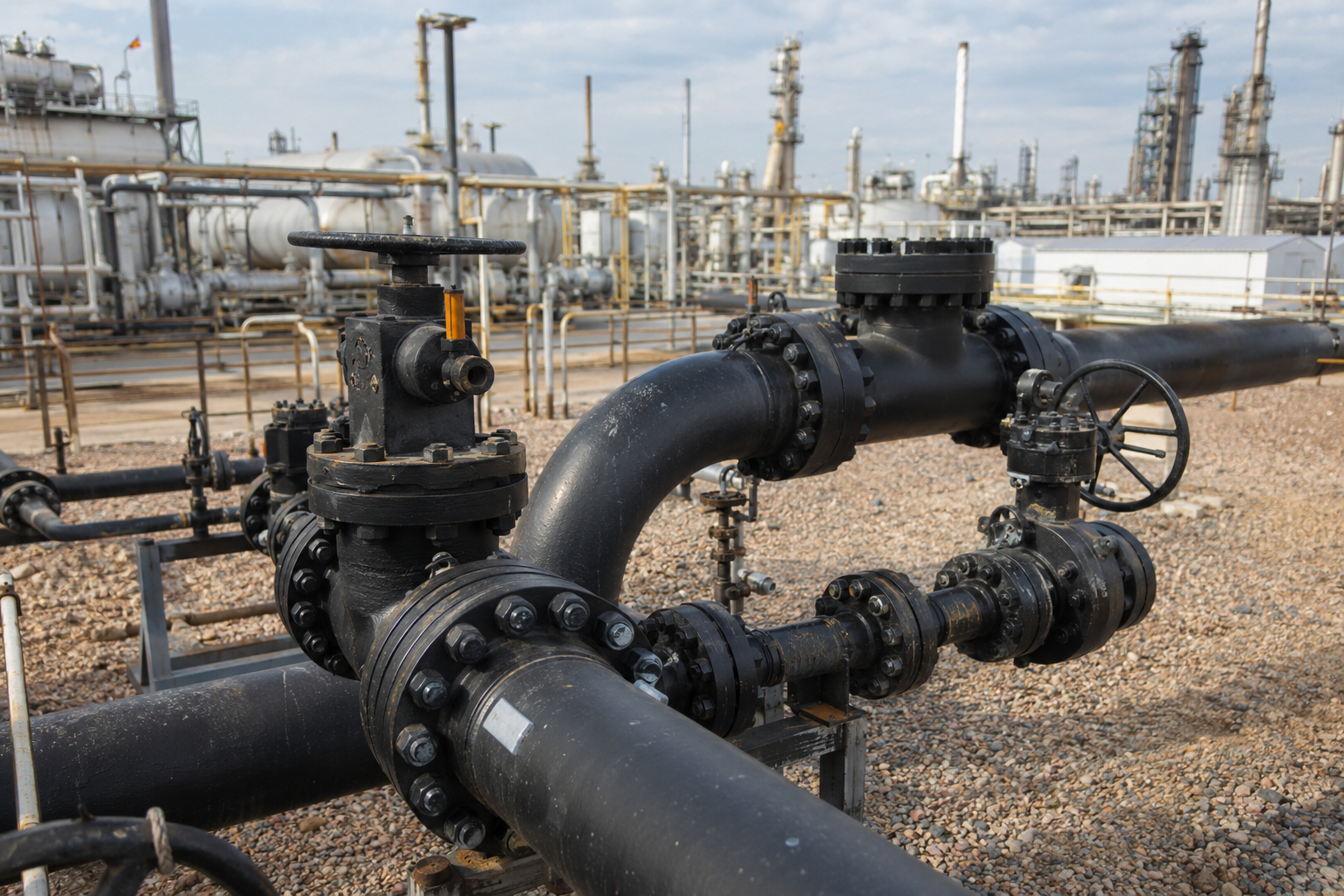
For upstream and midstream applications, such as crude oil gathering, gas compression station piping, produced water and general service water piping. Typical applications include carbon steel A105 / A36 for less demanding applications, or special material alloys per NACE for service with hydrogen sulfide.

The applications typically include reactor feed and discharge lines, steam headers and drain lines, process waste, scrubbers, and neutralization processes. The materials are often stainless steel in the form of SS304 or SS316, as well as duplex 2205 for aggressive service.
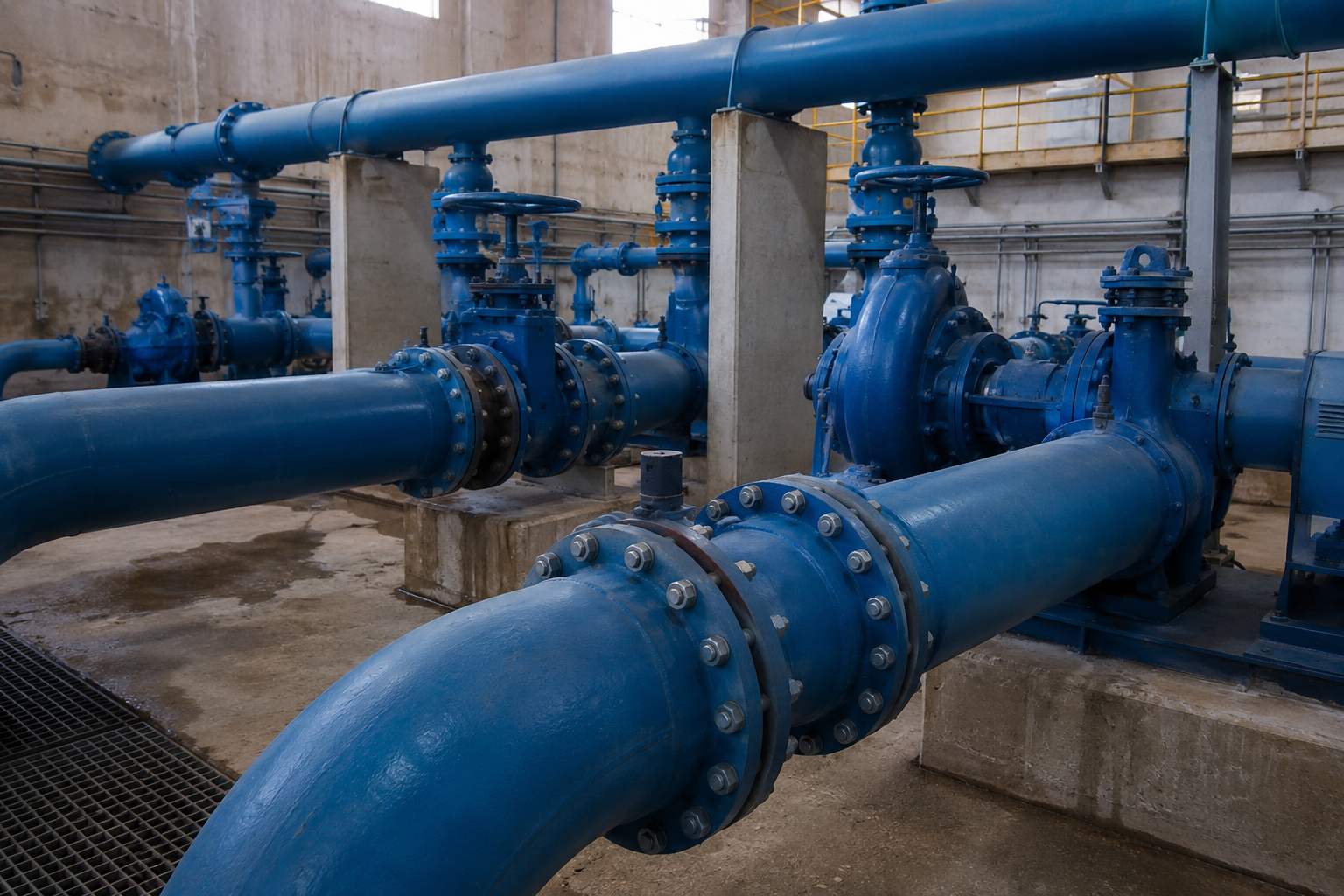
Includes the water distribution and intake lines, pumped system header connections and associated piping, pump intake and discharge piping. These are frequently in the form of AWWA C207 steel flanges with the flat face to ensure compliance with lined and unlined pipes including cast iron, and the ductile iron piping series.
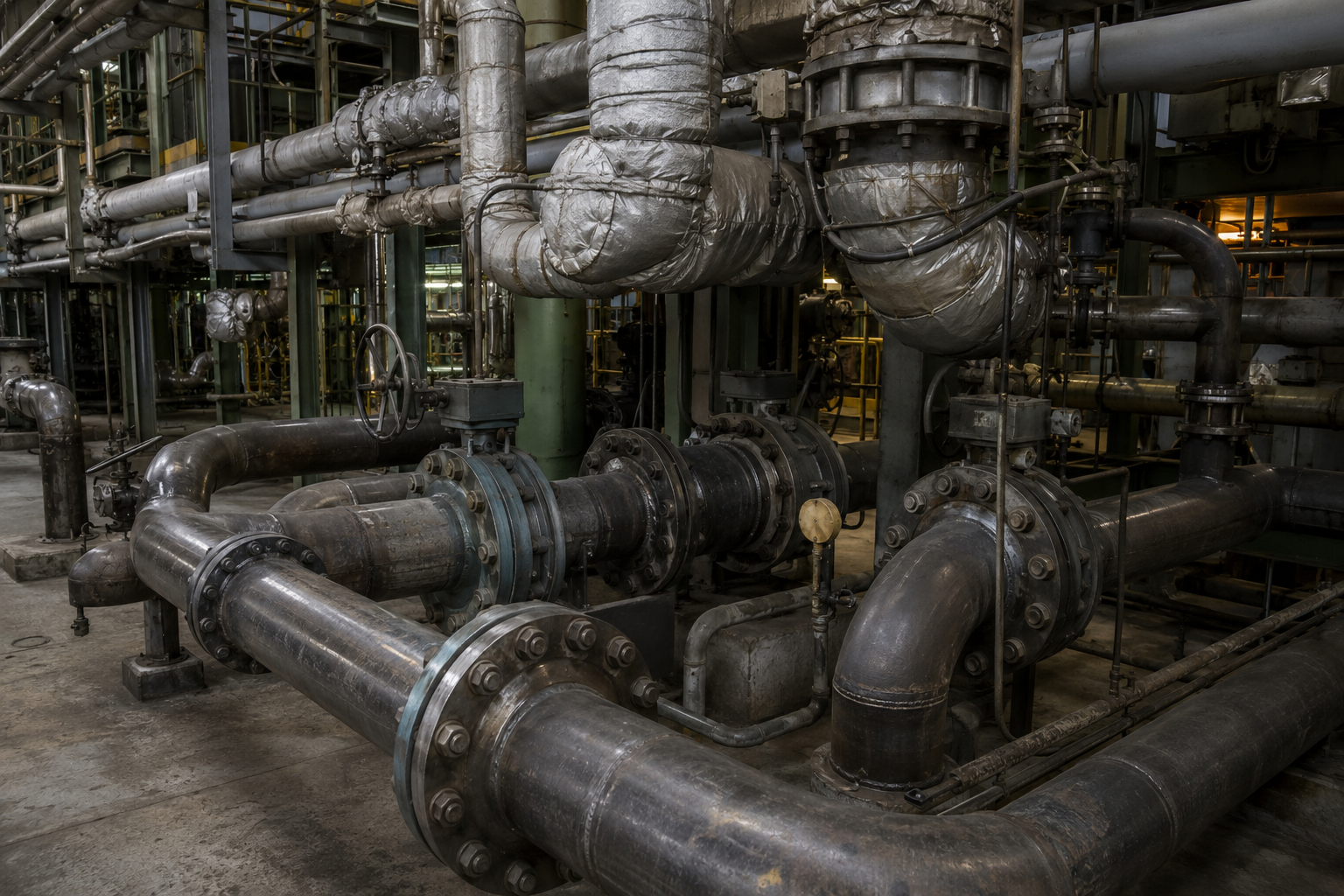
The applications for plate flanges include cooling water lines, boiler feed water piping, generator blowdown lines, auxiliary and process cooling header lines and any and all other secondary piping systems within the power house. Typical is plain carbon steel or alloy material based on service conditions including elevated temperature steam.
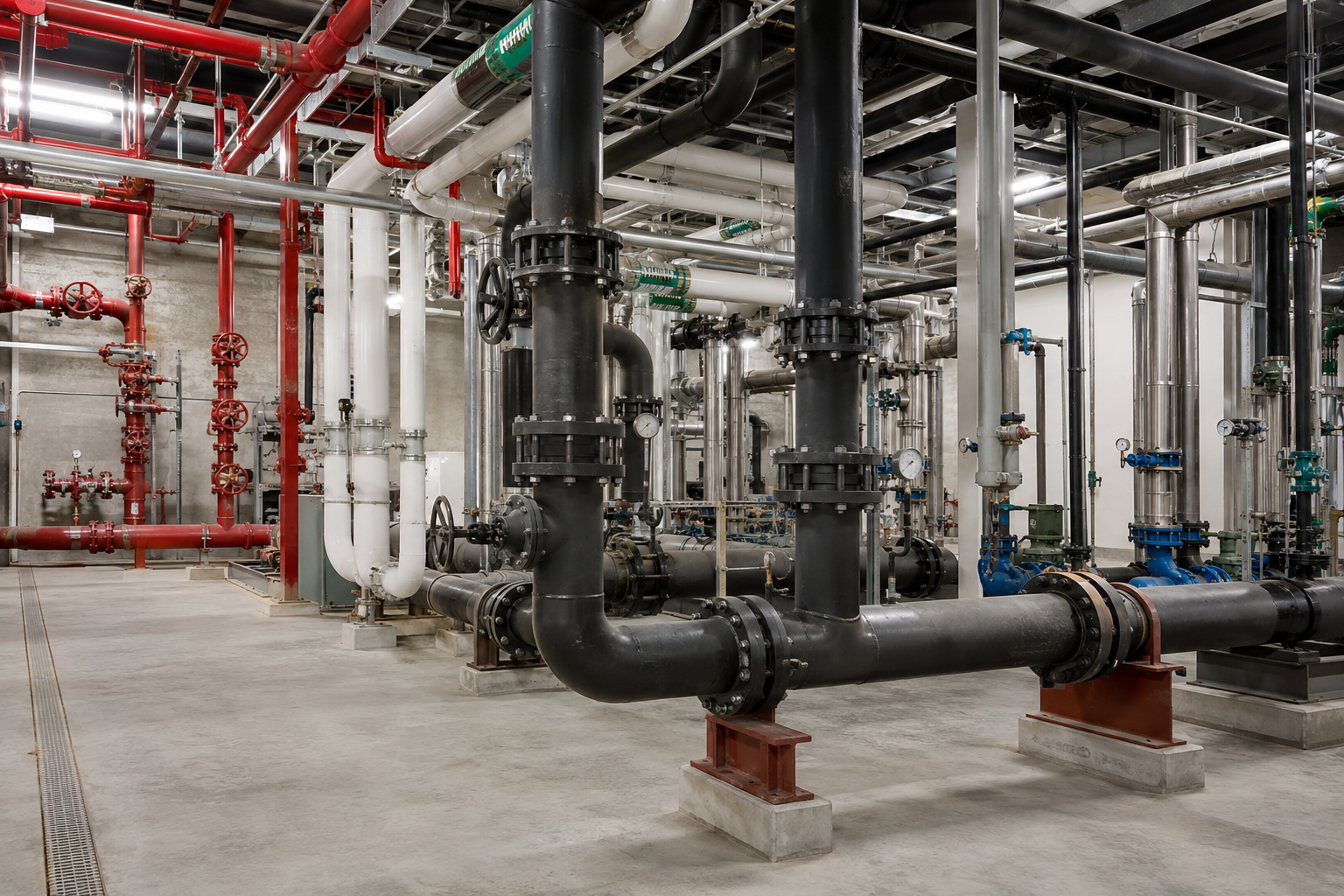
The requirements are often for cooling tower water lines, central cooling plant supply and return water, chiller lines, condenser water, main return headers from terminal units, steam condensate return lines, domestic water, fire protection mains and headers. Typically is plain carbon steel with flat face construction.
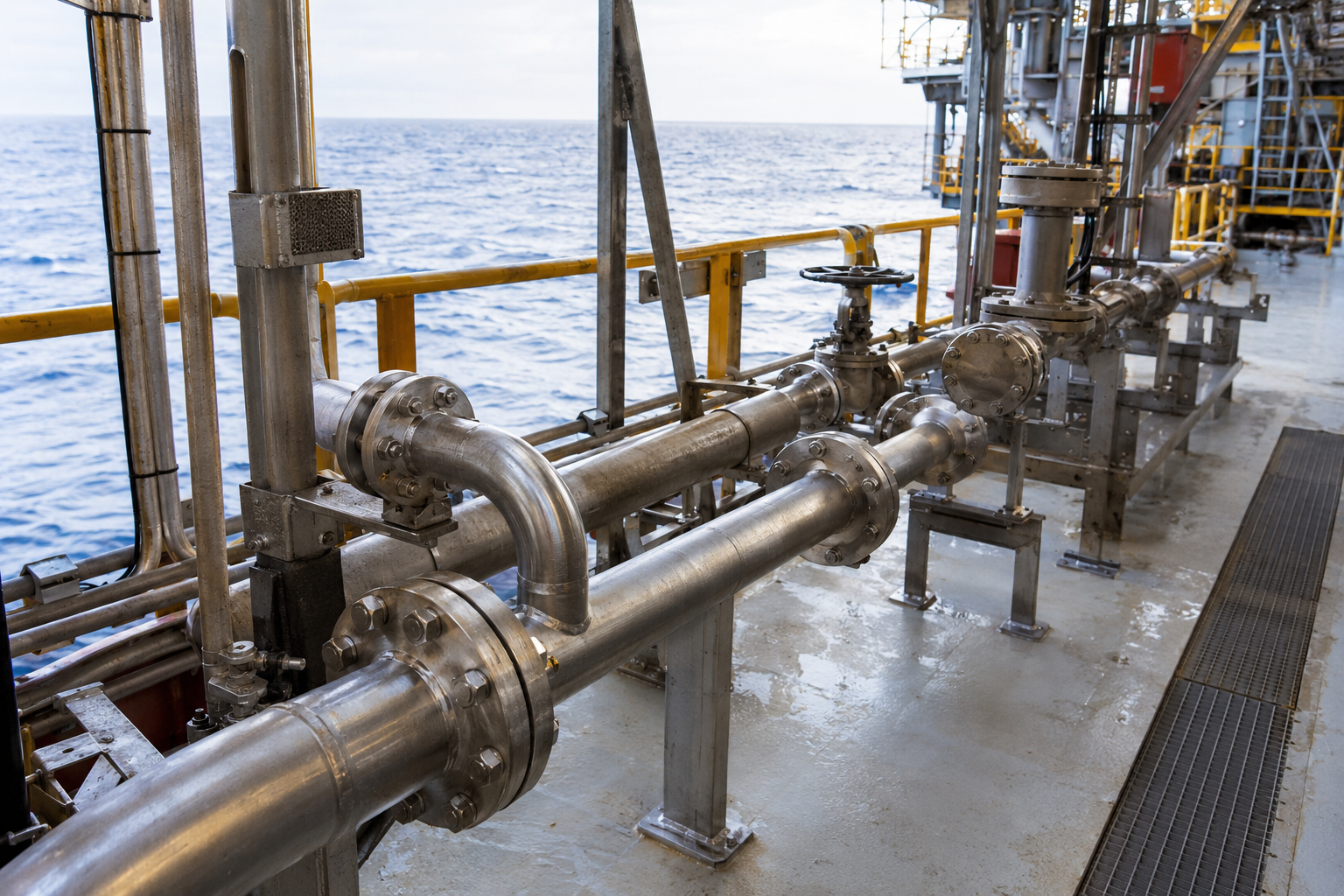
Typically for utility and service water lines, ballast and bilge services. 316L stainless is most common where salt water is present and may be supplied with Norok, Dnv or any other client specified additional documentation required.
For EPC contractors navigating projects involving mixed standards — where a piping system could connect both EN 1092-1 equipment and ASME B16.5 process equipment — Synbase offer a one-stop solution with separate standard-documented paperwork. This removes the coordination headaches of managing separate EN and ASME suppliers and the associated risks of the wrong type of flanges landing up at a single bolting arrangement. One might erroneously assume that a manufacturer capable of making an EN flange will also be able to provide the corresponding documentation and marking for the ASME standard. This is certainly not case — and at Synbase we carry the ASME capability separately to our EN manufacturing, verifiable beyond a purely cosmetic “paper-swap”.
Synbase plates flanges are organized by standard family. Specifications shown are for the most commonly purchased standard sizes and ratings. For non-listed DN/NPS sizes,PN63-100 pn ratings and custom boring requirements, please refer to dimensional tables or contact sales for further information.
Representative dimensions shown at PN16 in carbon steel P245GH. Raised face Form B is standard; flat face Form A and tongue-and-groove Form C are available on request, and Type 05 blanking flanges can be produced to any PN class or DN size.
| DN | OD (mm) | Bolt Circle Ø (mm) | Bolt Holes | Bolt Size | Min Thk (mm) | Bore (Std Sch) |
|---|---|---|---|---|---|---|
| DN 25 | 115 | 85 | 4 | M12 | 14 | 27.2 |
| DN 40 | 150 | 110 | 4 | M16 | 14 | 41.9 |
| DN 50 | 165 | 125 | 4 | M16 | 14 | 53.0 |
| DN 80 | 200 | 160 | 8 | M16 | 16 | 80.9 |
| DN 100 | 220 | 180 | 8 | M16 | 18 | 106.3 |
| DN 150 | 285 | 240 | 8 | M20 | 20 | 159.3 |
| DN 200 | 340 | 295 | 8 | M20 | 22 | 206.5 |
| DN 250 | 395 | 350 | 12 | M20 | 24 | 257.0 |
| DN 300 | 445 | 400 | 12 | M20 | 24 | 309.0 |
| DN 400 | 565 | 515 | 16 | M24 | 28 | 407.0 |
| DN 500 | 670 | 620 | 20 | M24 | 30 | 508.0 |
| DN 600 | 780 | 725 | 20 | M24 | 32 | 610.0 |
Slip-on type, representative dimensions at Class 150 in carbon steel ASTM A105. Raised face is standard; flat face and Ring Type Joint (RTJ) are available on request, as is raised-face slip-on in stainless A182 F304/F316.
| NPS | OD (mm / in) | Bolt Circle Ø (mm / in) | Bolt Holes | Bolt Size | Min Thk (mm) |
|---|---|---|---|---|---|
| NPS 1 | 108.0 / 4.25″ | 79.4 / 3.12″ | 4 | ½″ | 11.2 |
| NPS 1½ | 127.0 / 5.00″ | 98.6 / 3.88″ | 4 | ½″ | 12.7 |
| NPS 2 | 152.4 / 6.00″ | 120.7 / 4.75″ | 4 | ⅝″ | 14.2 |
| NPS 3 | 190.5 / 7.50″ | 152.4 / 6.00″ | 4 | ⅝″ | 15.7 |
| NPS 4 | 228.6 / 9.00″ | 190.5 / 7.50″ | 8 | ⅝″ | 17.5 |
| NPS 6 | 279.4 / 11.00″ | 241.3 / 9.50″ | 8 | ¾″ | 19.1 |
| NPS 8 | 342.9 / 13.50″ | 298.5 / 11.75″ | 8 | ¾″ | 22.4 |
| NPS 10 | 406.4 / 16.00″ | 362.0 / 14.25″ | 12 | ⅞″ | 23.9 |
| NPS 12 | 482.6 / 19.00″ | 431.8 / 17.00″ | 12 | ⅞″ | 23.9 |
| Material Category | ASTM / ASME Grade | EN / DIN Equivalent | Typical Application |
|---|---|---|---|
| Carbon Steel | ASTM A105 (forged); A36 / A516 (plate) | P245GH (1.0352) / S235JR | General service, oil & gas, water treatment |
| 304 / 316 Stainless | ASTM A240 Gr. 304 / 304L / 316 / 316L | 1.4301 / 1.4307 / 1.4401 / 1.4404 | Chemical processing, food & beverage, marine |
| Duplex Stainless | ASTM A240 Gr. 2205 (UNS S31803) | 1.4462 | Offshore, seawater, chloride-rich service |
| Alloy Steel | ASTM A182 F5 / F9 / F11 / F22 | 13CrMo4-5 / 10CrMo9-10 | High-temperature power & petrochemical service |
Shortened language like PN16 Class 150 only describes the same product at one operating point — maximum pressure near 20 °C, carbon steel only. Under any other condition it becomes a real problem. Check all six points below against your working conditions before cross-specifying.
| Comparison Point | EN 1092-1 PN16 — DN100 | ASME B16.5 Class 150 — NPS 4 | Direct Substitution? |
|---|---|---|---|
| Bolt circle diameter | 180 mm | 190.5 mm | No 10.5 mm gap — bolts will not reach the mating holes. An adapter spool is required. |
| Max pressure @ 20 °C | 16.0 bar (232 psi) | 19.6 bar (285 psi) | No ~23% apart. PN16 is the lower-rated part — never use it where Class 150 pressure is the design basis. |
| Max pressure @ 200 °C (A105 / P245GH) | ~10.5 bar (152 psi) — verify per EN P-T table for the actual grade | 13.8 bar (200 psi) | Verify Confirm by material group and operating temperature. Do not assume parity. |
| Face type default | Form B (raised face, EN geometry) | Raised face (RF, ASME geometry) | No Gasket OD and seating width differ — a B16.5 Class 150 spiral-wound gasket may not seat in a Form B facing. |
| Material designation | EN numbers: P245GH, 1.4307, 1.4404 | ASTM grades: A105, A182 F304L, F316L | Verify PMI (positive material identification) testing required to confirm equivalence across systems. |
| Documentation format | EN 10204 MTC; PED applies for the EU market | ASTM MTC; ASME code stamps for pressure-vessel items | No Different document chains — EN 10204 3.1 does not substitute for ASME MTC on ASME-coded systems. |
| Nominal diameter alignment | DN 100 (metric nominal; OD per EN series) | NPS 4 (inch nominal; OD per ASME series) | No DN 100 ≠ NPS 4 in drilling. Never treat “100 mm” and “4-inch” as equivalent without checking bolt circle and layout. |
Any specification using the two in combination requires an engineering adapter spool — one carrying both drilling patterns with a signed-off pressure/temperature re-rating for that piping run. Synbase produces these adapter spools as bespoke items.
Distinguishing Between Plate and Forged Flanges. Neither plate flange nor forged flange is a direct competitor in the same market niche. In many circles there’s a widespread and incorrect assumption that plate is a low-cost/low-performance alternative to the “real” flange, ie. the forged product. Both manufacturing processes have distinct characteristics and different appropriate service application areas. The key differentiating decision-making factors can be categorised as relating to: Operating pressure; Cyclic loading; and Service criticality.
| Property | Plate FlangeEN 1092-1 Type 01 / ASME Slip-On | Forged FlangeASME Weld Neck / EN 1092-1 Type 11 |
|---|---|---|
| Manufacturing route | Cut and bored from rolled plate stock; two fillet welds to pipe | Hot-forged billet; integral hub; single butt weld to pipe |
| Grain structure | Rolled plate grain; uniform but without forging compression | Compressed, directionally aligned grain; enhanced fatigue resistance |
| Tensile strength (typical) | Meets ASTM A36 / A240 minimums (250–515 MPa range by grade) | 20–30% higher tensile strength than equivalent plate grade |
| Unit cost (relative) | Lower; generally 15–25% less per unit than equivalent forged flange | Higher upfront; longer service intervals typically offset premium |
| Service life (maintenance intervals) | Suitable for design life when operating within rated pressure-temperature | 40–60% longer between maintenance intervals in equivalent service |
| Pressure-temperature ceiling | Full EN 1092-1 / ASME B16.5 pressure rating applies; practically preferred for ≤ PN40 / Class 300 service | Preferred for Class 600 and above, or any cyclic / fatigue-critical application |
| Dominant application standard | AWWA C207 waterworks (Classes B, D, E, F: 86–300 psi); EN 1092-1 general piping | ASME B31.3 process piping; API 6A wellhead; high-pressure oil & gas |
The trade-offs between these products are in summary of the ‘value for money’ proposition for your specific project. Plate flanges have lower installed costs and shorter lead times, in general; Forged flanges offer superior fatigue performance, thereby offering the potential for enhanced reliability and a longer service interval in highly cyclic conditions. This selection can usually be addressed by three variables: pressure class; service duty cycle; and your project’s cost/reliability matrix.
Synbase provides an assortment of flanges including plate type and the various types of forged flanges. Weld Neck, Slip-On, Blind and Socket weld flanges can all be provided from a forged steel block as well as all of the various types of rolled plate flange configurations that can accommodate either a full range of sizes in standard ANSI or API pressures and dimensions, or custom bored configurations. When a piping specification requires a combination of plate flanges for the less rigorous services like general purpose cooling water, and then forged steel flanges for the more rigorous process services, both can be supplied from the same manufacturer under a single set of MTR’s that can simplify the TPI inspection process and cut the supplier qualification overhead for an EPC.
Request flange selection and MTR documentationSeveral of our more representative plate flange supply applications for projects across our customer base are demonstrated in the following section. The Synbase’s capabilities, together with our parent group, E-CHENG STEEL GROUP, spans over one hundred (100) countries, covering projects from Middle East to Europe and to the Asia Pacific region.
| Industry | Region | Standard Applied | Material | Size Range | Key Requirement |
|---|---|---|---|---|---|
| Petrochemical plant — utility piping headers | Middle East | EN 1092-1 PN16 Type 01 | Carbon steel P245GH | DN50–DN300 | EN 10204 3.1 MTC + PMI testing on 10% random sample; delivery FOB Shanghai within 6 weeks |
| Water treatment — process interconnect piping | Central Europe | EN 1092-1 PN10 / PN16 Type 01 | Carbon steel S235JR; 316L SS for chemical dosing lines | DN80–DN500 | PED-relevant documentation package; EN 10204 3.1 MTC; CE marking on finished flanges |
| LNG regasification — utility cooling water | Asia Pacific | ASME B16.5 Class 150 (slip-on) | ASTM A105 carbon steel; A240 316L SS for seawater service | NPS 2–NPS 12 | Full ASME MTC package; raised face with serrated finish; third-party dimensional inspection report |
Synbase plate flanges are used in multiple industries, including:
For upstream and midstream applications, such as crude oil gathering, gas compression station piping, produced water and general service water piping. Typical applications include carbon steel A105 / A36 for less demanding applications, or special material alloys per NACE for service with hydrogen sulfide.
The applications typically include reactor feed and discharge lines, steam headers and drain lines, process waste, scrubbers, and neutralization processes. The materials are often stainless steel in the form of SS304 or SS316, as well as duplex 2205 for aggressive service.
Includes the water distribution and intake lines, pumped system header connections and associated piping, pump intake and discharge piping. These are frequently in the form of AWWA C207 steel flanges with the flat face to ensure compliance with lined and unlined pipes including cast iron, and the ductile iron piping series.
The applications for plate flanges include cooling water lines, boiler feed water piping, generator blowdown lines, auxiliary and process cooling header lines and any and all other secondary piping systems within the power house. Typical is plain carbon steel or alloy material based on service conditions including elevated temperature steam.
The requirements are often for cooling tower water lines, central cooling plant supply and return water, chiller lines, condenser water, main return headers from terminal units, steam condensate return lines, domestic water, fire protection mains and headers. Typically is plain carbon steel with flat face construction.
Typically for utility and service water lines, ballast and bilge services. 316L stainless is most common where salt water is present and may be supplied with Norok, Dnv or any other client specified additional documentation required.
For EPC contractors navigating projects involving mixed standards — where a piping system could connect both EN 1092-1 equipment and ASME B16.5 process equipment — Synbase offer a one-stop solution with separate standard-documented paperwork. This removes the coordination headaches of managing separate EN and ASME suppliers and the associated risks of the wrong type of flanges landing up at a single bolting arrangement. One might erroneously assume that a manufacturer capable of making an EN flange will also be able to provide the corresponding documentation and marking for the ASME standard. This is certainly not the case — and at Synbase we carry the ASME capability separately to our EN manufacturing, verifiable beyond a purely cosmetic “paper-swap”.
When a procurement manager considers or compares the plate flange suppliers, the three factors should be considered is: Price range for budget estimation, Lead time for schedule planning and Document requirement for project requirement. All three are described below in this chapter.
Plate flange prices are determined by material grade, specification, size, quantity. Below is only a range estimate for budget purposes, a firm price quote based on your BOM will be prepared within 24 hours upon receiving the fully submitted RFQ.
| Material | Size Range | Unit Price (FOB SH) |
|---|---|---|
| Carbon steel (A105/A36) | DN15–100 / NPS ½”–4″ | USD 8–50 / pc |
| Carbon steel (A105/A36) | DN150–300 / NPS 6″–12″ | USD 40–200 / pc |
| 304/316 Stainless | DN15–100 / NPS ½”–4″ | USD 20–130 / pc |
| Duplex 2205 | All sizes | USD 80–500+ / pc |
Orders over 1,000 pieces and greater than $10,000 are eligible for project pricing. Email BOM review, to Synbase technical sales team, for formal quotation with itemized pricing.
| Situation | Lead Time (ex-works) |
|---|---|
| Standard carbon sizes (stock/short-run) | 2–4 weeks |
| Standard stainless (304/316) common sizes | 3–5 weeks |
| Custom bore, large-diameter (DN400+) | 4–6 weeks |
| Expedite (airfreight capable) | 10–15 biz days |
These transit times don’t include lead times for production of the goods. For immediate requirements, it usually takes 5 to 7 business days to clear for airfreight on route to European hubs after departing from Shanghai.

Ordering the Synbase is meant to provide certainty. Follow our standard protocol to ensure error-free documentation and production scheduling.
Submit RFQ with your specs (standard per ASME B16.5/EN 1092-1, size, PN/Class, face type, material grade, MTR level, quantity and required date of delivery).
Synbase tech team carries out technical analysis of the specification, highlights gaps or potential mismatches and issue written technical confirmation with the commercial quote.
On acceptance of order, a production traveler is generated with your specification tied into the incoming raw Material MTR from mill. Inspection hold points can be planned.
Minimum order quantity: 50 pieces for all standard items. For custom project orders (mixed items from one BOM list), the entire order will be evaluated to determine if it meets the criteria for project pricing.
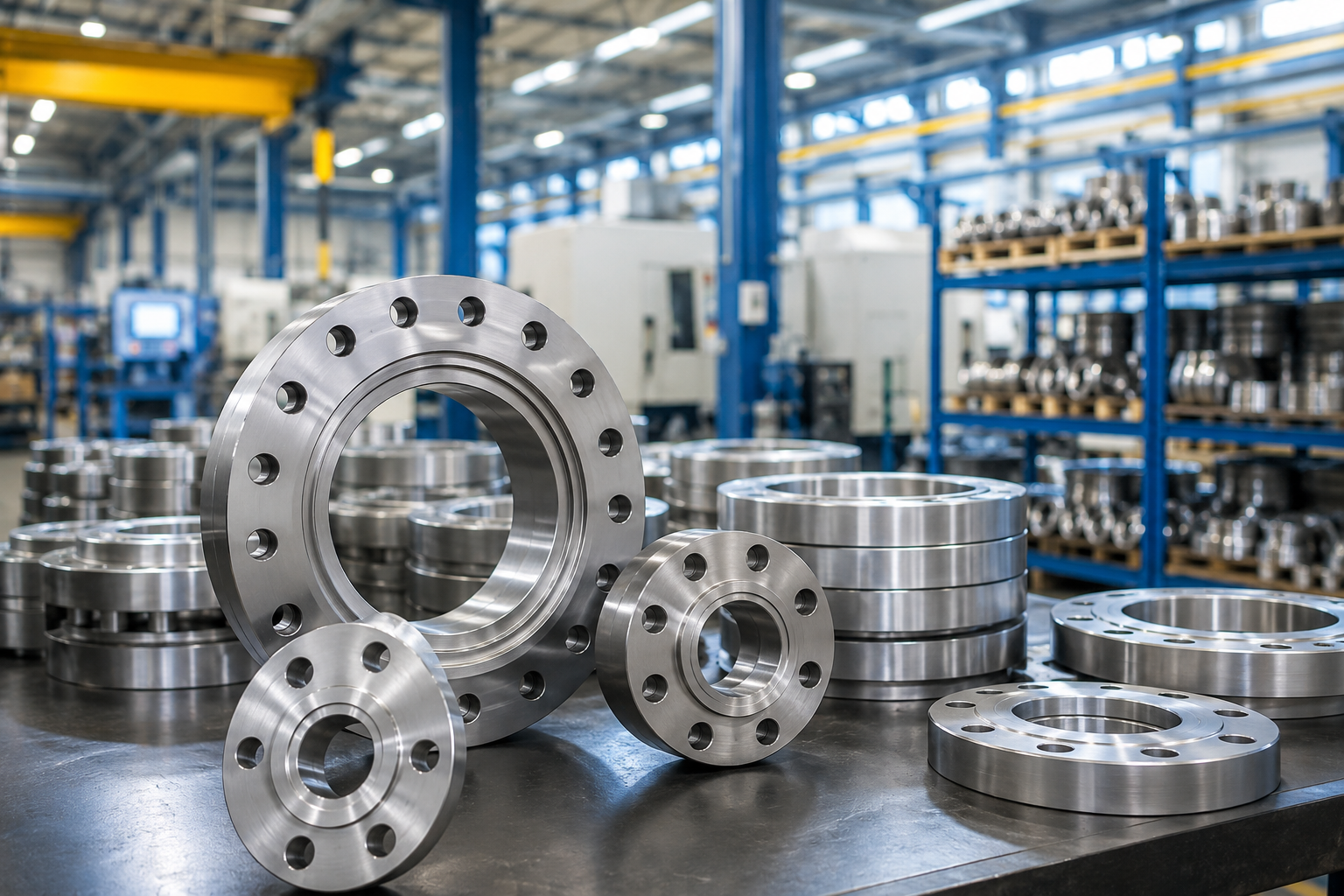
When your required flange isn’t found in any standard catalogue — whether it’s an oversized flat face plate flange for waterworks service as specified in AWWA C207, an odd bore to perfectly match your existing pipe schedule, or a non-standard alloy grade for exotic applications — Synbase can accommodate.
Lead the conversation with a drawing or your required dimensional parameters and one of our expert engineers will advise of production feasibility within one business day.
Custom processing utilizes our extensive internal library of raw materials. CNC machining centers ensure exact precision for concentricity and bespoke bore requirements.
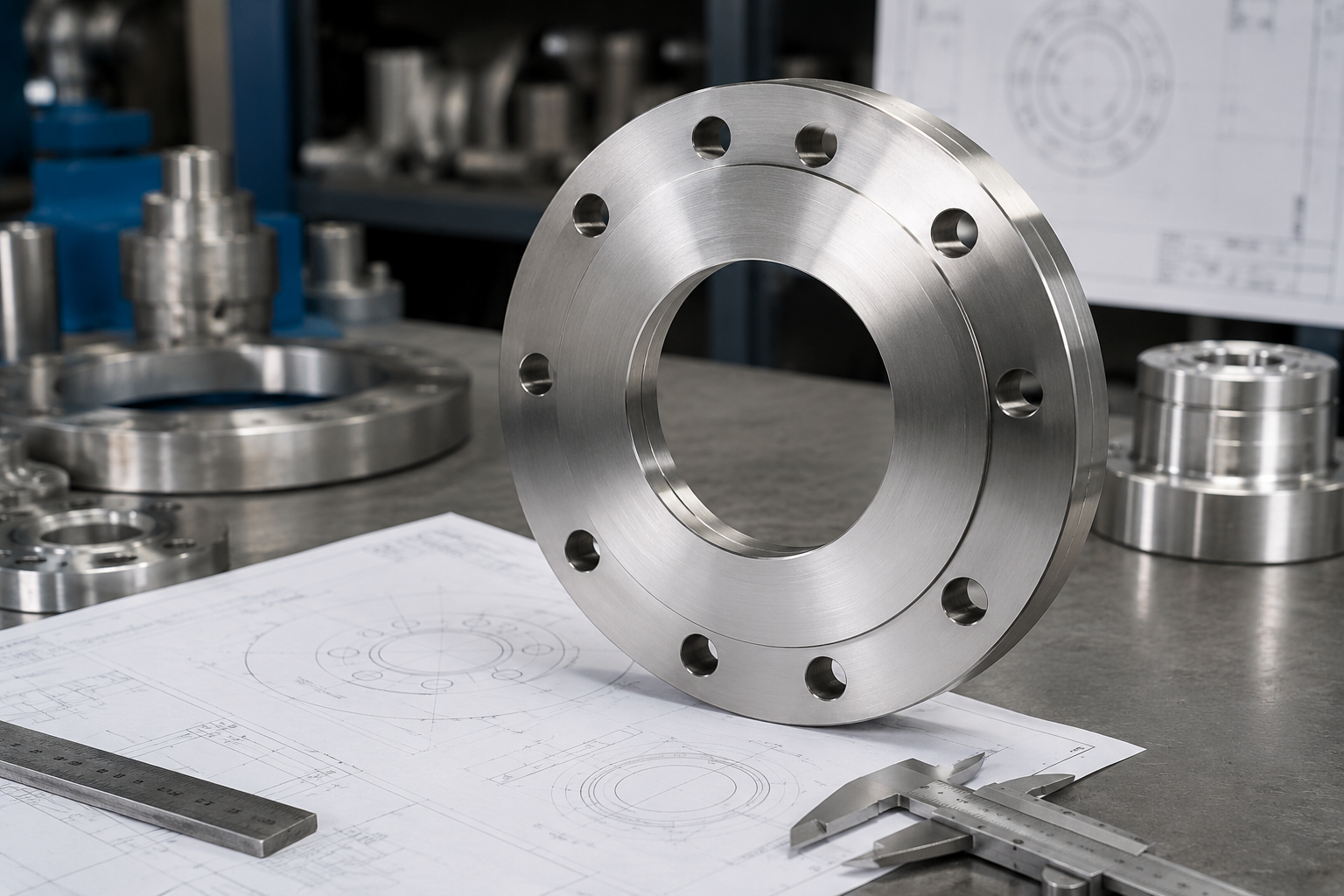
Submit your BOM or specifications, and receive your firm quotation within 24 hours. We’ll include a technical review in our offer.
Request a Quote Today →The most common, and perhaps the most preventible, cause of third party inspection failure in the factory acceptance phase is documentation errors. Perfectly conforming material physically – correct dimensions, chemical composition, heat number – can fail a simple incoming inspection if the Material Test Certificate (MTC) isn’t the right type, not issued by the correct issuing body or lacks the co-signature the project Quality Assurance (QA) plan may call for.
Perhaps more misunderstood is the distinction between EN 10204 3.1 and 3.2 documentation: 3.1 signifies manufacturer’s certification, whereas 3.2 requires the witnessing of tests and the signing of the certificates by an independent third party. Specifying the wrong documentation type then finding out at site can be far costlier than choosing the right option at RFQ.
A European EPC contractor sourcing plate flanges for a gas compression station in the Middle East specified EN 10204 3.2 in the project QA plan. The contractor’s previous supplier delivered with 3.1 certificates only. The batch was quarantined pending re-inspection, delaying installation by three weeks. The project specification had been clear; the supplier hadn’t read it carefully. Unlike flange traders who source from multiple mills with fragmented and often ad hoc MTR chains, Synbase maintains a single continuous traceability path, from BAOSTEEL or TPCO mill certificate through in-house production records to the finished-flange MTC, allowing the correct document type to be confirmed and locked before production begins, not after.
From design review, raw material incoming inspection, to in-process dimension control, to final inspection prior to packing and shipping. Unlike many Chinese vendors relying on domestic or internationally unaccredited issuing bodies, Synbase ISO 9001 certification was issued via internationally accredited certificate.
Environmental Management System.
Occupational Health and Safety Management System.
Synbase also meet the latest EC directives standards where required by end markets, and will gladly provide the declaration of conformity for our CE marked flange products to aid any regulatory submission processes.
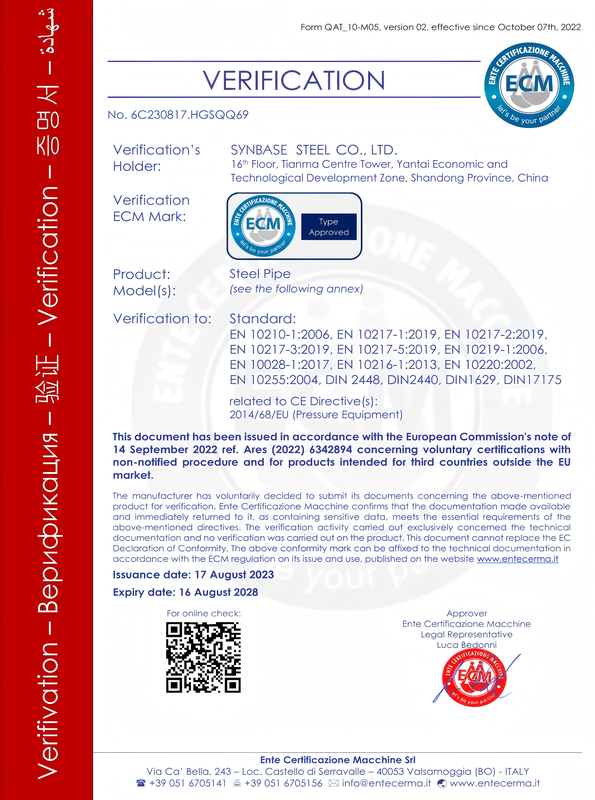
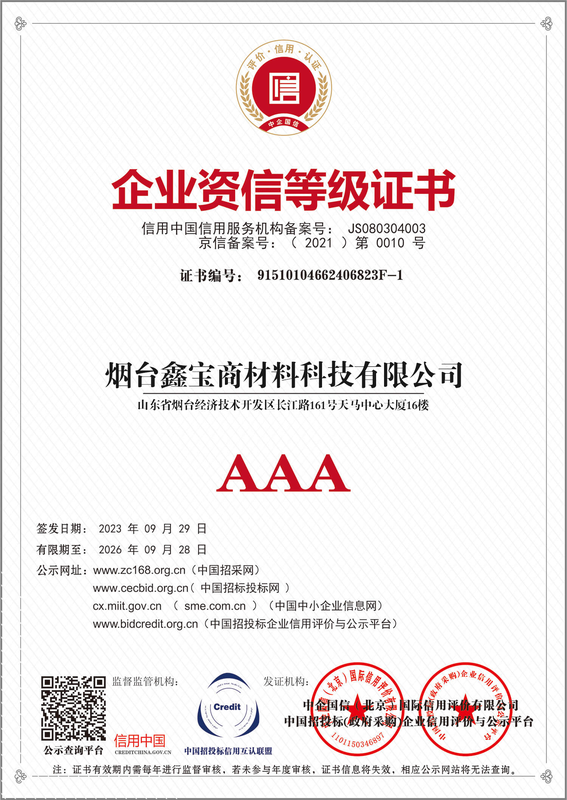
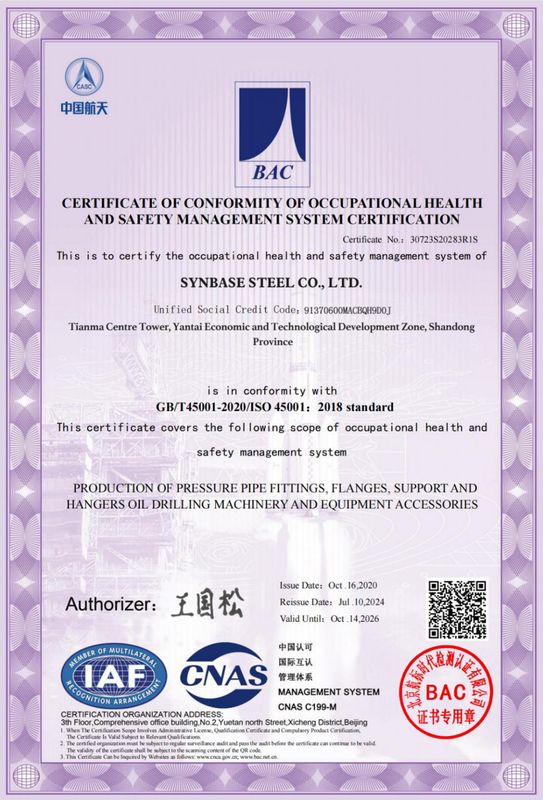
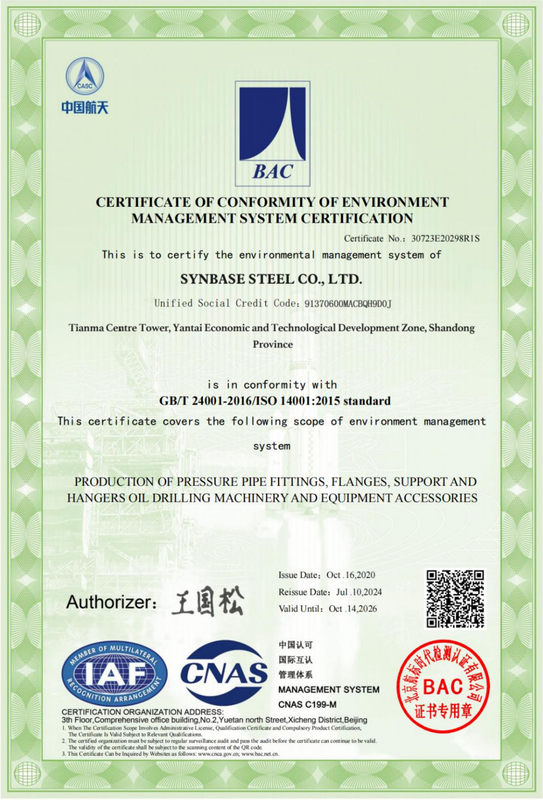
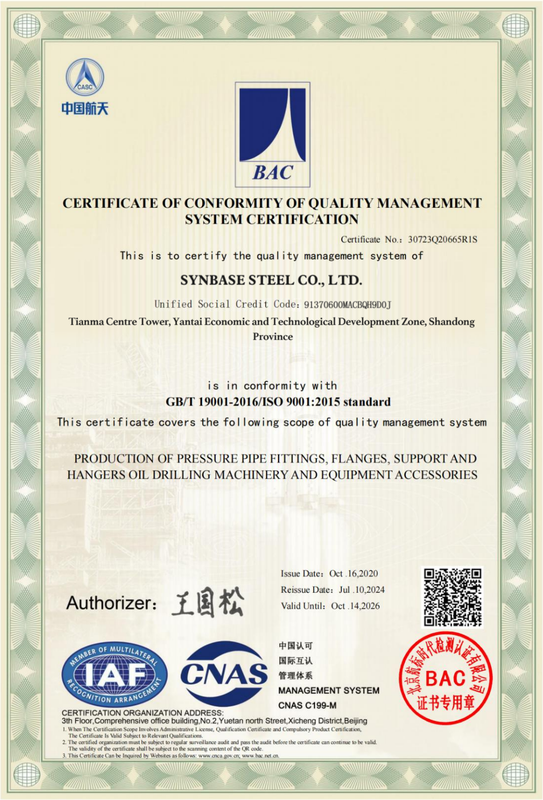
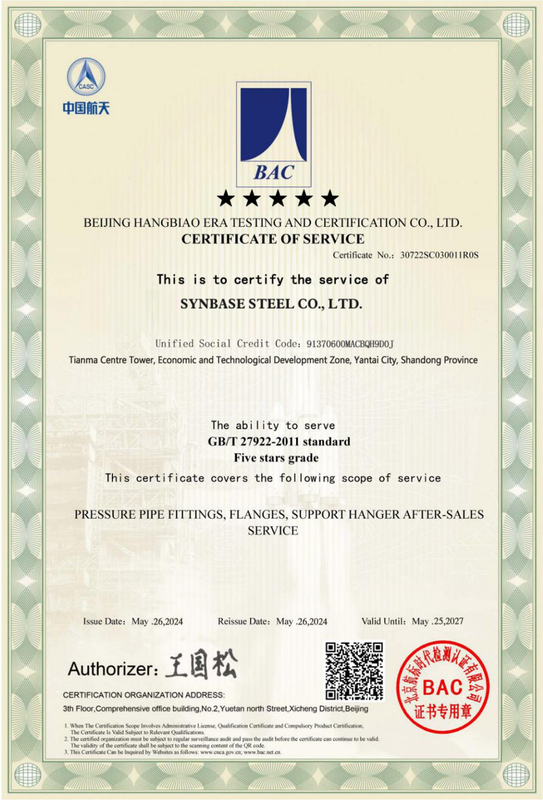
Every Synbase plate flange shipments can be supplied with EN 10204 documentation, and appropriate Level will depend upon the requirements of the project:
The MTR chain begins at the raw plate mill. Raw steel plate for Synbase carbon steel flanges is sourced exclusively from two of China’s most prominent state-owned steel producers – BAOSTEEL and TPCO – both of whom have international quality system audits and carry their own respective EN 1092-1 compliant mill certificates. Therefore, the raw material traceability backing every Synbase MTR one step back is often greater than for many other Chinese flange producers.
XRF spectrometer validation of alloy chemical composition – typically for applications where mixing carbon steel and stainless materials must be prevented, or higher alloy grades that may necessitate identification beyond reliance on an MTC alone.
Inspection of raw plates prior to cutting, especially important on thicker section flanges intended for critical pressure service.
For material requiring NACE MR0175 / ISO 15156 requirements (sour service applications).
Report with a complete check of each flange against drawings and signed by our QC inspector, individual flange numbering tying back to the batch MTC.
Synbase Steel Co., Ltd. is an E-CHENG STEEL GROUP Company. We boast over 800 registered patents concerning steel processing & manufacturing of pipe fittings. This enables us to support our customers’ more bespoke needs – for example unique bore diameters (tolerances as low as +/- 0.005 inch) or OD to suit legacy pipework in their plant, custom steel analysis or unique material specification, needs that standard traders simply cant satisfy. Interestingly most other flange suppliers from China act solely as traders sourcing finished product from numerous different facilities, on which they then place their company brand & ‘own’ test certificate. Our ‘own’ facility also means that control points are throughout the entire production process, not just the despatch inspection.
Use the interactive tools below to cross-reference ratings, look up dimensions, select the right flange, compare material grades, and submit a specification for quotation.
Enter your standard, size, pressure rating, face type, and material grade to build a complete plate flange specification and submit your request for quotation.
Match EN PN pressure ratings to ASME Class ratings across common plate flange standards.
Open Cross-ReferenceLook up plate flange dimensions and bolt patterns by standard, size, and pressure rating.
Open Spec LookupWork through type, face, and rating to identify the right plate flange for your line.
Open Selection GuideCompare carbon steel, stainless, and duplex grades against your service conditions.
Open Material GradeA plate flange is a ring formed from a flat rolled steel plate cut to size and bored to fit the exterior diameter of the pipe. Plate flanges are typically welded in place with two fillet welds, one on the inside and one on the outside. The ‘plate’ moniker refers to the construction, not the material. Plate flanges can be ordered in a wide variety of materials, including various grades of carbon, stainless, and alloy steel. In EN 1092-1 standards, plate flanges are classified as Type 01 and are available for PN (pressure nominal) rating from PN6 to PN100. The equivalent in ASME B16.5 is a Type A slip-on flange.
A forged flange start life as a solid round billet which is heated and hammered to the required hub-and-flange shape under enormous pressure. The molecular structure created in the material during the forging process makes forged flanges stronger and more fatigue resistant than their plate flange counterparts, hence why they’re the preferred choice in higher-pressure applications (Class 300+ in ASME, or PN63+ in EN), those carrying critical services, and applications involving high cyclic stress. A plate flange begins life as a flat steel plate cut to a circular blank; the material and process make them ideal for lower pressure service, such as PN10/PN16 (EN 1092-1 Type 01), class 150/300 (ASME B16.5 slip-on type), and all waterworks applications specified under AWWA C207. Both types share the same dimensional characteristics, are fabricated to conform to international standards, and share the same pressure-temperature rating (when correctly specified).
The two key international standards governing plate flanges (slip-on type in the case of ASME) are EN 1092-1 (covering the range PN6 to PN100) and ASME B16.5 (covering the range Class 150 to Class 2500). There’s also DIN 2576, an older German standard for plate flanges (PN10/PN16), but this has largely been superseded by EN 1092-1 and is only frequently cited in project specifications for legacy reasons. For waterworks applications, the industry-standard AWWA C207 is widely used. The Japanese equivalent is JIS B2220.
Usually not. Without an adaptor or engineering design change, although PN16 and Class 150 ratings are effectively the same pressure rating at room temperature the bolt hole pattern for these designations differs. For example, a DN100 PN16 plate flange is produced with a 180mm bolt hole circle diameter whereas an NPS 4 Class 150 flange is supplied with a 190.5mm bolt hole circle. Therefore the bolt hole centres wouldn’t line up. Also the overall gasket face diameter dimension (where the gasket seals) differs between the various drilling standards such as EN Form B and ASME RF. For hybrid piping systems where mixing different standardizations occurs, use an adapter spool. This type of spool is specifically made to adapt between two different drilling dimensions. Synbase is able to manufacture purpose made transition pieces for your needs.
Synbase can supply plate flanges in various material grades including:
Material selection must consider the service fluid, temperature, any corrosion allowance, and the requirements set forth by the specific flange connection in the piping class.
The commonly held misconception is that pressure ratings should convert neatly between EN PN ratings and ASME Class ratings; that misconception is, for the sake of engineering, fatally flawed. PN ratings and ASME Class ratings are neither interchangeable designator systems, nor should they be directly compared; both represent disparate systems under disparate standardizing bodies with differing test methodologies, differing material group considerations, and crucially differing pressure/temperature ratings. They just so happen to produce numerically similar values at one particular point on the curve; that’s, room temperature carbon steel. For a Class 150 carbon steel plate flange, per ASME B16.5, group 1.1 is rated at 285 psi (19.6 bar) at ambient, dropping to 200 psi at 400F and to 140 psi at 600F. A PN16 plate flange, per EN 1092-1, in carbon steel p245gh is rated for 16 bar (232 psi) at 20°C. Both reduce at higher temperature, and both must be cross-checked against the standard’s temperature/pressure chart for the intended material grouping and operating temperature — the information inscribed on a plate marking is never alone adequate for fine-scale engineering work.
A plate flange (slip on type) is welded onto a pipe utilizing two fillet welds. The flange is slipped onto the pipe end, positioned to the correct gap from the pipe end (normally 3-5 mm), and is welded in alignment using tack welds. The outside fillet weld is performed first, then the bore inside fillet weld. The weld size is normally equal to the pipe wall thickness to a limit imposed by the WPS for the service. For critical service, both welds are to be specified with full-penetration requirements. The inside bore fillet weld provides the sealing element and the outside fillet weld provides the structural support/redundancy. All welded connections shall be completed in accordance with the relevant applicable code (ASME B31.3 for process piping; EN 13480 for european industrial piping) by qualified welders and approved WPS.
All material is shipped complete with EN 10204 3.1 mill test reports including chemical composition, mechanical testing results, heat number and dimensions. EN 10204 3.2 third party witnessed material certificates are available on request. The mill test report will also include: a dimensional inspection report conforming to the standard tolerance specified in the flange design; a packing list which detail number of pieces and heat number for complete trace; Where specified, a PMI (Positive Material Identification) record indicating the alloy type confirming the grade by XRF analysis. For material placed on the EU market CE document are available upon request. On request, Synbase also provides additional quality certificates required for suppliers’ qualification submission per ISO 9001:2015.