Send Your RFQ to Synbase Steel
Prefer to send drawings, BOMs or attachment lists by email? sales@synbasesteel.com

July 2026 update | Editorial review by Synbase Steel Co., Ltd….
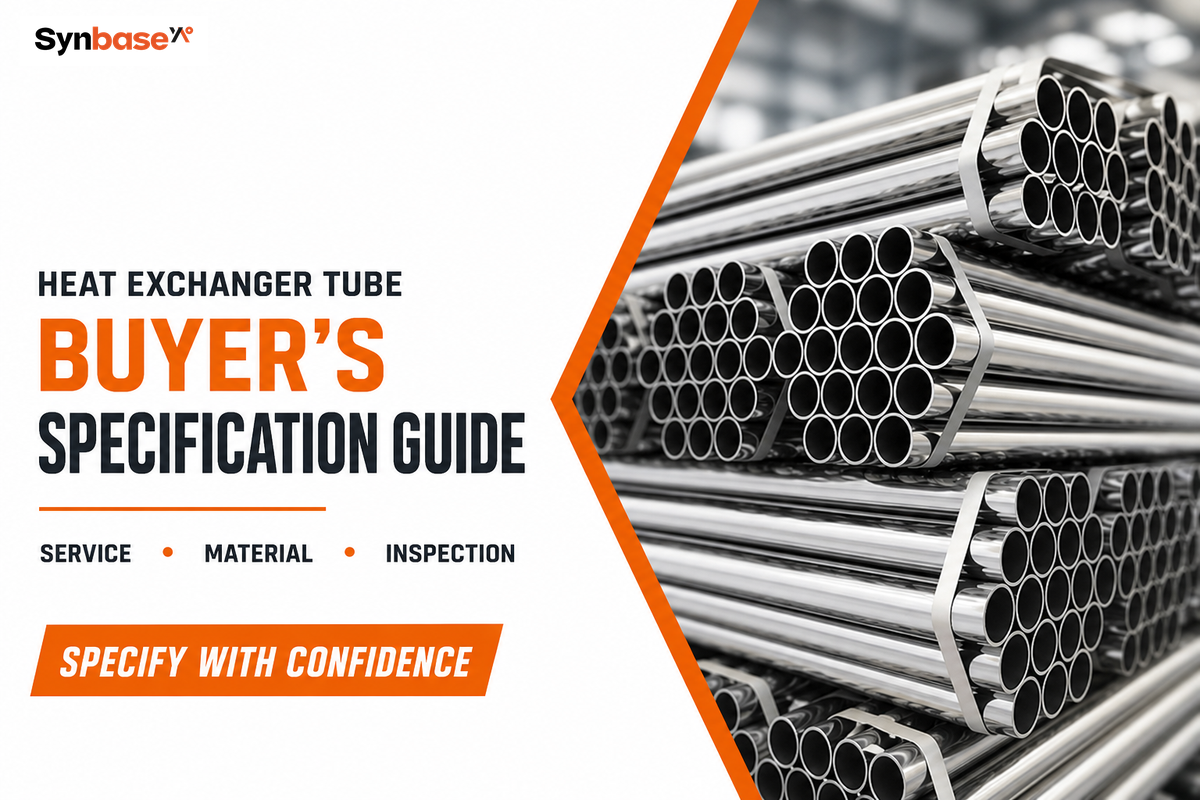
A heat exchanger tube is a heat-transfer surface, not a length of pipe stuck in a shell. It must meet two fluids, a pressure boundary, a fabrication method, a tube bundle configuration, and a future inspection program. That’s why an order line listing only grade, outside diameter, and length is usually insufficient to permit a responsible evaluation of supplier offers.
This Guide is consciously different from the standard commercial Heat exchanger tube page on the Synbase Steel web site. That’s where we talk about supply and pricing. This is about the necessary precursor work: identifying the service, selecting the standard to be used, setting inspection expectations, and drafting a RFQ which will give each prospective supplier a similar technical basis.
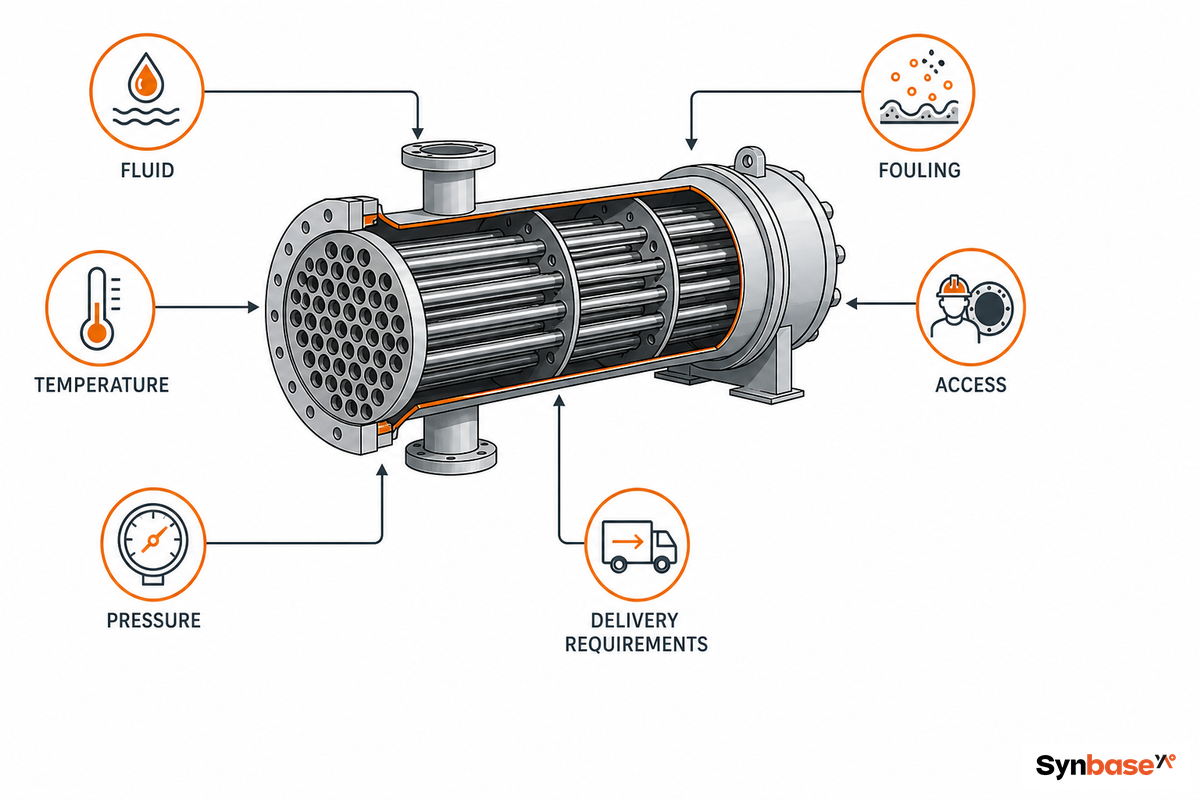
| Input | Why it changes the order |
|---|---|
| Tube-side and shell-side fluid | Defines corrosion, fouling, cleaning, and cross-contamination questions. |
| Temperature and pressure window | Changes material limits, wall requirements, joints, and the equipment-code review. |
| Degradation concern | Turns a grade request into a check for pitting, cracking, erosion, vibration wear, or deposits. |
| Tube dimensions and configuration | Sets area, pressure drop, fit-up, cleaning access, and bundle construction. |
| Applicable standard path | Separates tube-product requirements from exchanger and pressure-boundary requirements. |
| Tests and documents | Makes quotations comparable before the purchase order is released. |
A typical risk to a buyer, particularly on an industrial site, is an incomplete quote, because those six inputs require a common foundation. Synbase Steel can pre-check the inquiry against these items before it gets out to suppliers.
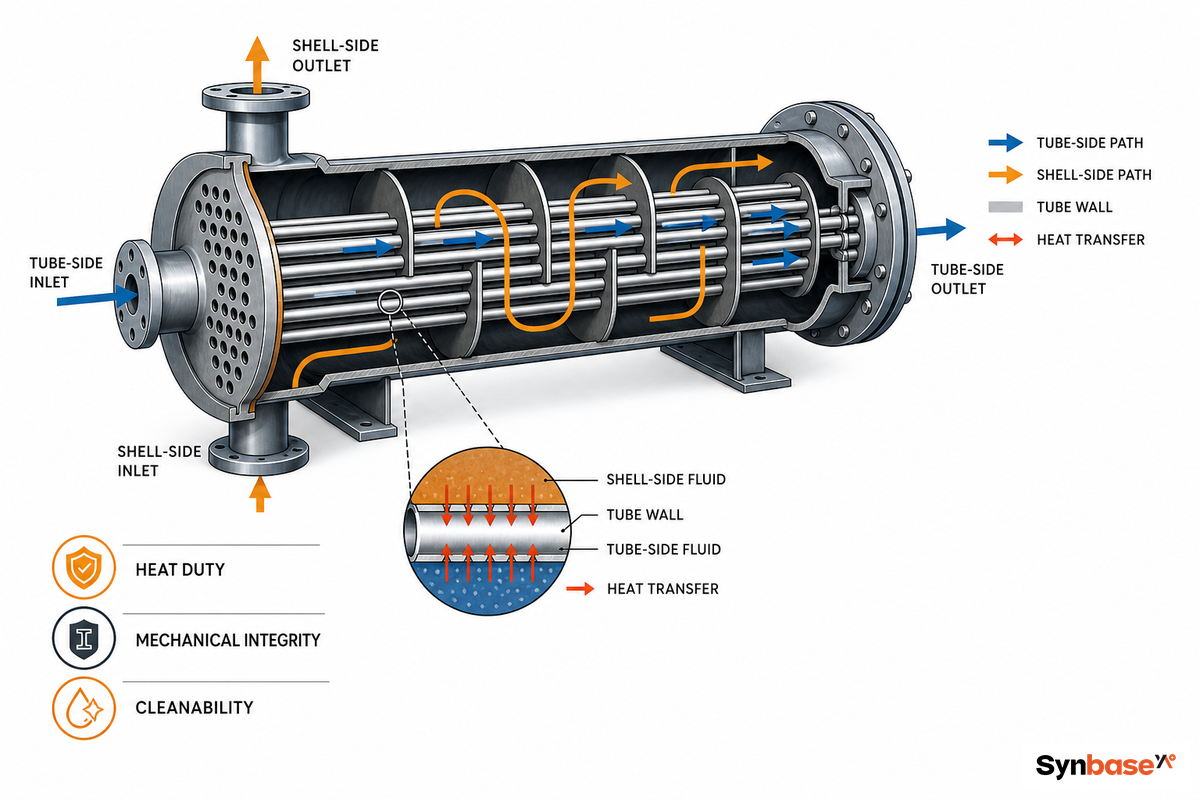
In a shell-and-tube type exchanger, tubes are one stream’s fluid, while another fluid is routed around the tubes. Heat flows through the tube wall, but the tube must also be designed to contain pressure, withstand corrosion and deposits, survive movement and cleaning, and maintain its joint to the tubesheet. Hence the tube is a component part of the system, not a free-standing commodity.
Heat exchanger tubing is selected to transfer heat across a temperature difference: thermal conductivity, tube surface, and available surface area affect the heat transfer coefficient and heat transfer efficiency, but design changes intended to improve heat transfer never replace the exchanger designer’s duty calculation.
System risk grows where the tube is treated as an individual product, because bundle details will affect the actual process duties. Synbase Steel can discuss the component context using the buyer’s data sheet.
For a steel tube line, for instance, ASTM A213/A213M-25 is a standard for certain ferritic and austenitic alloy-steel boiler, superheater, and heat-exchanger tubes. This standard defines the product category and sets forth test methods but does not select a alloy to fit a specific process or design the overall exchanger.
A tube in a heat exchanger is the wetted heat-transfer element that separates two fluids while passing heat between them. Its alloy, wall thickness, dimensions, connection, and test procedure must suit the process service, operating conditions, and future service access.
Note to engineers: The term “Heat exchanger tube” can apply to the service or application, rather than a single, standard product. Different material and construction standards for steel tubes, titanium tubes and exchangers may all apply to a given project.
That distinction is important to avoid a common procurement blunder of assuming pipe schedule or NPS will suffice as a basis for tube dimensions. If piping and tube bundle components are involved, a properly validated pipe schedule reference must be used for piping dimensions, while the tube dimensions are shown on the exchanger drawing.
First the service window, then the grade. Name the two fluids, their temperatures hot and cold, the pressure, contaminants, flow variation, cleaning chemistry, shutdown condition, whether the bundle can be removed or inspected. A grade-only requirement leads to otherwise comparable quotes that mask varying test and documentation assumptions.
For a corrosive process fluid, vapor content, pool water, water pressure, water flow, the cold side, and the hot-side chemistry should be defined before the choice of tube material is called corrosion-resistant.
For a buyer who uses industrial equipment, the absence of service data is a risk, as the cleaning chemistry and cleaning conditions may impact the shortlist of suitable materials, a Synbase Steel engineer can discuss your enquiry with your project team.
Research conducted by a 2022 peer reviewed paper in to a 316 stainless heat-exchanger tube in geothermal-water service indicated stress-corrosion cracking. This isn’t to suggest all 316 tube would suffer from this issue, but rather a reason that naming the grade isn’t sufficient substitution for the cleaning conditions, chemistry, and temperature at which the stress will be placed.
| Condition | Question for the data sheet | Risk if left open |
|---|---|---|
| Fluid chemistry | Which ions, gases, solids, and cleaning agents are present? | Wrong corrosion or compatibility assumption. |
| Temperature cycle | What are normal, upset, start-up, and shutdown temperatures? | Thermal movement or material-limit surprises. |
| Pressure and differential pressure | Which side can see the higher pressure, and under which case? | Incomplete pressure-boundary review. |
| Flow and solids | Are velocity, particles, entrained gas, or deposits expected? | Erosion, fouling, or vibration wear. |
| Cleaning approach | Will the tube see mechanical, water-jet, or chemical cleaning? | A maintenance method incompatible with the selected tube. |
| Inspection access | Can the tube side be inspected in service, during turnaround, or only after bundle removal? | A difficult-to-monitor degradation mechanism. |
When used for oil, gas, injection or any equally extreme hydrocarbon service, ISO 21457 indicates the parameters for the selection of materials, corrosion mechanism and identifies corrosion mechanism in a relevant evaluation process. It states that specific manufacturing and testing criteria should be part of the relevant products and manufacturing standards. In practice, an alloy review and a tube-product specification answer different pieces of the same question.
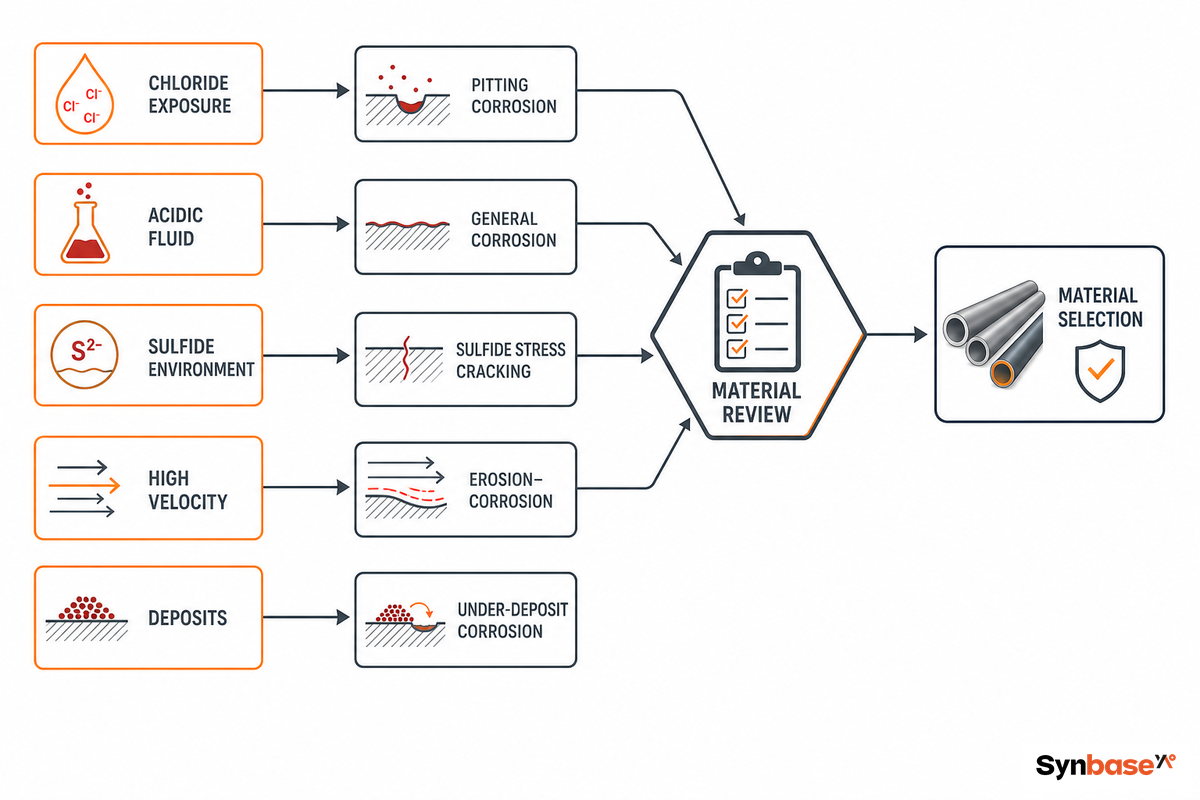
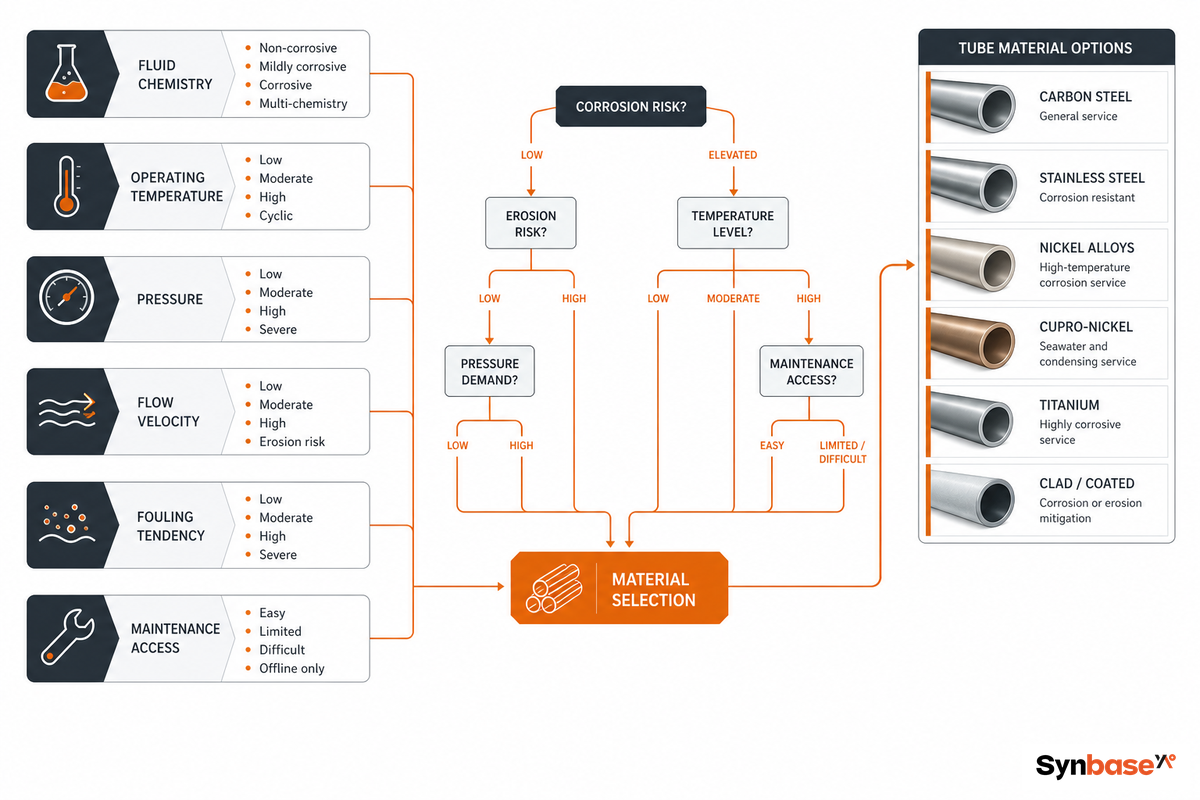
There should be no selection of any material unless the relevant service mechanism, the fabrication history, testing history, costs and availability are assessed simultaneously. The naming, the widely touted alloy content and the cost of material shouldn’t answer the questions as a whole.
There isn’t a universal best material. The material shortlist for different services may include carbon steel, stainless steel, titanium, duplex grades, nickel alloys and copper alloys. Selection needs to be supported by evidence on fluid chemistry, pressure, temperature, cleaning and fouling history, corrosion mechanism, applicable codes, and the exchanger designers’ own calculations. It also needs to fit tube-to-tubesheet compatibility, the relevant product route, evidence required at release, and availability at the required dimensions for the intended quantity and delivery condition.
| Material family or route | Why it may enter the shortlist | What must still be verified | Wrong shortcut to avoid |
|---|---|---|---|
| Carbon and low-alloy steel | May fit controlled, non-aggressive duties where project calculations support it. | Corrosion allowance, water chemistry, temperature, and cleaning environment. | Assuming low purchase price means low life-cycle risk. |
| Austenitic stainless steel | Often considered where corrosion resistance and fabrication properties are needed. | Chlorides, temperature, residual stress, deposits, and weld or heat-treatment condition. | Treating 304 or 316 as a blanket corrosion answer. |
| Duplex or higher-alloy stainless | May be evaluated when strength and corrosion resistance need closer review. | Fabrication route, welding procedure, chemistry, and purchaser requirements. | Upgrading alloy without confirming the failure mechanism. |
| Titanium and titanium alloys | May be considered for defined condenser, evaporator, or exchanger duties. | Applicable product standard, galvanic interfaces, fabrication, and project conditions. | Assuming all titanium routes use the same tube standard. |
| Copper alloy | May be assessed where conductivity and water-service behaviour are central. | Water chemistry, erosion, deposits, and adjacent-metal compatibility. | Choosing by conductivity alone. |
| Copper-nickel route | May be evaluated where a project defines its water chemistry and alloy compatibility needs. | Exact alloy, water composition, deposits, velocity, and mating materials. | Assuming every marine or brackish-water duty has the same answer. |
| Ferritic or martensitic steel route | May be considered where the applicable product standard and service conditions support it. | Temperature, corrosion environment, heat treatment, and project approval. | Selecting a family before defining the operating mechanism. |
| Nickel alloy | May be assessed for specified severe chemical or temperature conditions. | Exact environment, fabrication, documentation, availability, and project approval. | Calling it a universal upgrade without a defined duty. |
In any service which contains hydrogen sulfide within an oil and gas production environment or a gas sweetening facility, that should be flagged at the beginning of an enquiry. ISO 15156-1:2020 deals with metallic materials in these services and supports but does not replace the various design codes and standards that apply.
In a steel-only start point for material, you can gain a better overview by checking our stainless steel pipe, alloy steel pipe, and carbon steel pipe pages – however these aren’t a replacement for a service discussion.
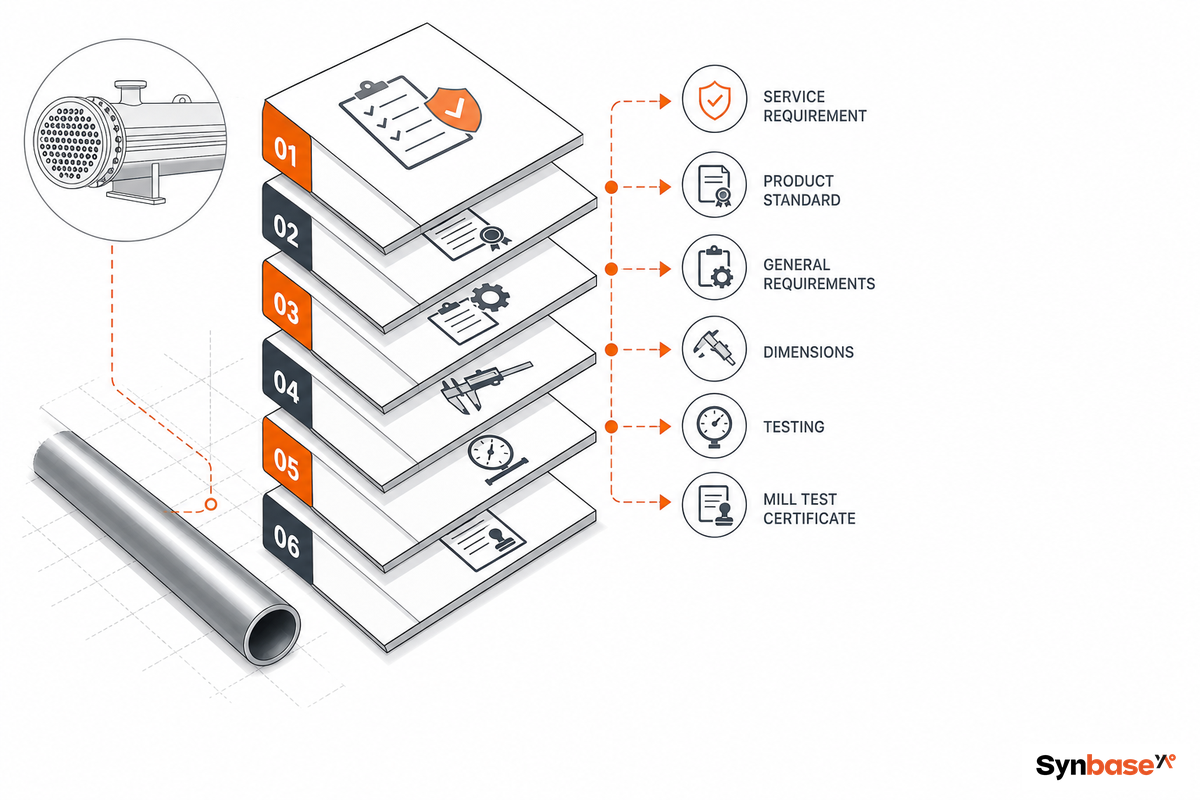
Standards follow a hierarchy. The initial step is to ascertain what product and which manufacturing path you require. Once this is done, it’s important to understand what generic specifications will apply, followed by confirming what specific requirements have been made by the owner, the EPC, the exchanger, pressure vessel or other relevant project standards that the assembly and order must adhere to. A standard title doesn’t constitute the entire scope of purchase requirements.
For an industrial buyer, the risk is a late mismatch because an unlisted general requirement can change the same RFQ; Synbase Steel engineers can review the stated standard before quotation.
| Layer | Examples | Buyer check |
|---|---|---|
| Tube product route | A213 for named alloy-steel tube routes made without a longitudinal weld; A249/A249M-24 for welded austenitic routes; B338-17(2026) for titanium tube routes made with or without a longitudinal weld. | Does the quoted product, route, grade, and condition match the actual order? |
| General tube requirements | ASTM A1016/A1016M-24A covers general requirements for named steel tube specifications, including A213 and A249. | Are the test, tolerance, unit, and purchase-order requirements read together? |
| Exchanger mechanical design | TEMA, ISO 16812, or API 660 when the project calls for them. | Which standard governs bundle details, inspection, testing, and shipment preparation? |
| Pressure boundary and project code | ASME BPVC Section VIII Division 1 can apply to certain pressure vessels above 15 psig. | What does the project design code require from the exchanger and its documentation? |
In ASTM A1016, it is stipulated that where a product specification and a general-requirements specification conflict, the product specification should take precedence, and any more restrictive purchase-order requirement takes precedence over either of these specifications. It makes sense, for that reason, to enter the specific edition, test procedure, measurement system, and added specifications into your enquiry.
6-Field Tube RFQ Framework: Dimensions are part of the specified product standard not some general web chart. ASTM A213/A213M-25 refers to typical sizes from 1/8-inch to 5-inch and walls from 0.015-inch to 0.500-inch within its specified scope. ASTM A249/A249M-24 describes a welded austenitic-tube wall range from 0.4 mm to 8.1 mm. These figures are scope information, not a recommendation for design.
Likewise, the ASME BPVC Section VIII Division 1 applies to some pressure vessels over 15 psig; this can’t be inferred from tube grade alone.
The numbers shown here are references from the source specifications, not recommended dimensions, materials, or approval limits for a working exchanger.
| Source | Reference marker | Correct use |
|---|---|---|
| ASTM A213/A213M-25 | Ordinary outside diameters from 1/8 in to 5 in (about 3.2 mm to 127 mm). | Check whether the order falls within the named product scope. |
| ASTM A213/A213M-25 | Walls from 0.015 in to 0.500 in within the stated scope (about 0.38 mm to 12.7 mm). | Do not treat a scope range as a design wall. |
| ASTM A249/A249M-24 | Welded austenitic-tube walls from 0.4 mm to 8.1 mm. | Confirm that the product route matches the enquiry. |
| OSTI crossflow experiment | A 12.7 mm triangular array in the reported experiment. | Use it as geometry-specific evidence, not a catalogue default. |
| OSTI crossflow experiment | The cited experiment reports calibrated transducers at ±1% of reading. | Recognize the stated experiment boundary. |
| ASME BPVC Section VIII Division 1 | Certain pressure vessels above 15 psig. | Confirm code applicability with the project team. |
Scope: This guide helps with asking the correct questions, it doesn’t identify code applicability for the project, approve tube-to-tubesheet joints, or substitute the exchanger designer, owner specification, or the jurisdictional review.
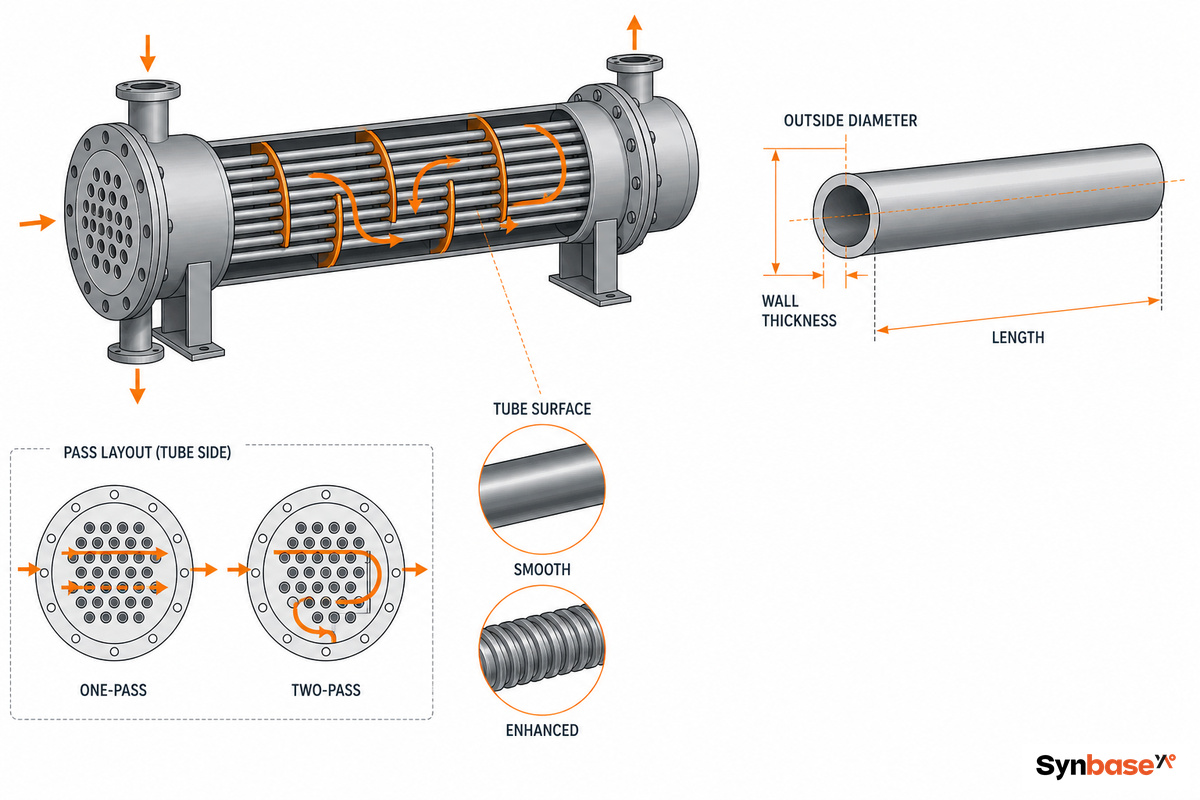
There’s no one size tube that works for all exchangers. Outside diameter, wall thickness, length, pitch, pass count, bend radius, finning, surface condition and tube layout are interdependent on heat-transfer area, pressure drop, constructability, cleanability, and support spacing. The drawing and thermal design basis will drive geometry.
Shell diameter, the number of tubes, the number of tube passes or number of passes, a floating tube arrangement, and thermal expansion connect the bundle geometry to the mechanical design and construction of the exchanger.
Geometry poses a practical risk in that the drawing, cleaning procedure, and pressure drop basis must agree. Synbase Steel engineers can review those for consistency prior to quoting.
The designer must combine the coefficient, fluid flow, turbulence and hydraulic heat-transfer and pressure drop calculations for a u-tube arrangement. For tubing in a chiller circuit, an upstream valve change can alter those boundary conditions, so a familiar dimension must be reconfirmed with the current data sheet.
No universal size exists; a dimension can be established by understanding the type of exchanger, heat duty, allowable pressure drop, materials of construction, method of manufacture, method of cleaning, tubesheet design and the project standard. Existing sizes are only starting points.
The cited OSTI crossflow experiment, using a 12.7 mm triangular tube array, reports calibrated-transducer accuracy of ±1% of reading over its stated Reynolds number range. It shows why arrangement and flow regime matter, and why one dimension doesn’t necessarily apply to another project.
When low-temperature piping is close to exchanger equipment, it can be a separate material route. For instance, Synbase’s low-temperature A333 page is a good starting point for piping conversations, but don’t copy it onto a heat-exchanger tube order without reviewing the equipment specification.
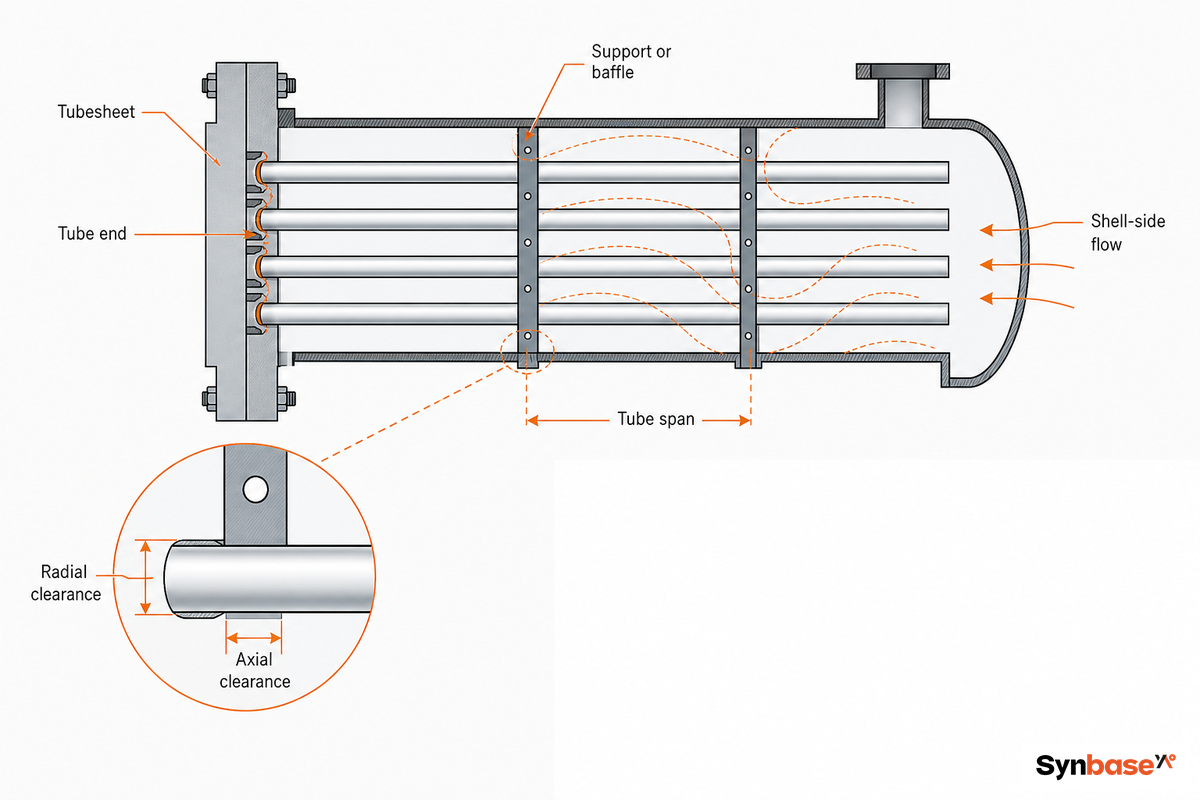
A tube can have a material certificate and still be sited within a weak system decision. tube sheet tube-to-tubesheet joint method, tube sheet material, baffle and support layout, vibration exposure, expansion allowance, impingement condition, and inspection access all impact the delivered exchanger.
Support and tubesheet details create a reliability risk to an industrial buyer because they impact movement and access to the exchanger’s inside parts and nozzles; Synbase Steel engineers will pinpoint missing drawing references in the RFQ.
TEMA 11th Edition made it explicitly required to list inspection material with non-destructive testing information, along with updating its heat-exchanger specification sheet, tube-end erosion clarity, and tube-to-tubesheet talk.
It serves as a reminder that dependable bundle buying necessitates going beyond a tube mill certificate.
| Feature | Question to close before release | Relevant downstream check |
|---|---|---|
| Tube-to-tubesheet joint | Is the specified joint method matched to the project and inspection plan? | Joint procedure, inspection, and leak-test record. |
| Tube support and baffles | What prevents excessive movement under the stated flow condition? | Drawing review and vibration assessment by the designer. |
| Inlet zone | Is erosion or impingement a concern at the tube ends? | Service review and any defined protective feature. |
| Thermal movement | Which components move differently over the operating cycle? | Mechanical design and joint review. |
| Access | Can the planned inspection method actually reach the required area? | Maintenance plan, tube map, and inspection record. |
“A tube certificate answers a material question. A bundle specification must also answer a construction, inspection, and service question.” – Synbase Steel technical and commercial review perspective
Even if a tube passed a pre-release test, it can be difficult to inspect it after installation. Identify the planned inspection route before issuing the order, and maintain the baseline records for comparison later.
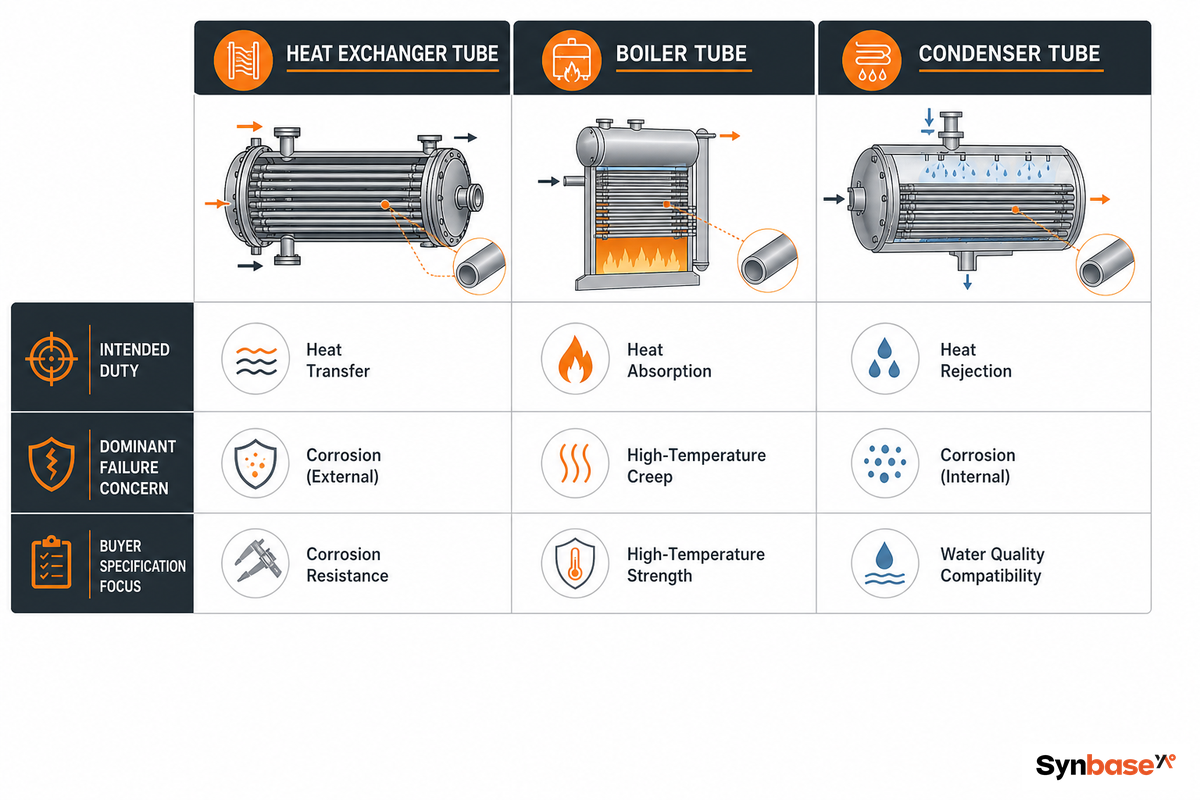
Even within the same families, material labels can be overlapping, but their application for different equipment, fabrication methods, tests, or project scenarios won’t match. A buyer shouldn’t arbitrarily swap out one label for another based on similarities in the outside diameter and grade.
Where the shell is made from rolled plate, a tube leakage path must be assessed as a system consequence, not merely as a tube-product defect.
Although a change in labels doesn’t ensure that a specific product route was followed, it still carries a risk. Synbase Steel engineers can analyze the indicated standard and service prior to generating a quote.
| Label on the enquiry | Do not assume | Return to this evidence |
|---|---|---|
| Heat exchanger tube | One universal steel grade or manufacturing route. | Service, tube product standard, bundle and equipment requirements. |
| Boiler or superheater tube | It is a direct substitute for a shell-and-tube exchanger component. | Applicable boiler duty, product standard, temperature and code path. |
| Condenser tube | It is always a steel product or has the same water-side conditions. | Fluid chemistry, material family, and exact product standard. |
| Welded or non-welded tube route | A sales label alone cannot decide the route. | Project specification, applicable standard, dimensions, tests, and service. |
Standards themselves highlight boundaries. A213 indicates a alloy-steel route made without a longitudinal weld, while A249 designates welded austenitic steel routes. B338 specifies titanium routes for condensers, evaporators, and heat exchangers.
For petroleum, petrochemical, and natural-gas shell-and-tube exchangers, ISO 16812:2019 outlines a mechanical-design, materials, fabrication, inspection, testing, and shipment-preparation standard that complements API 660.
If the project include welded steel pipe connections, material and welding discussions may require a separate package.
Use Synbase’s welded steel pipe overview as a general guide from the supplier’s viewpoint, but keep the exchanger tube order bound to its own drawing and standard.
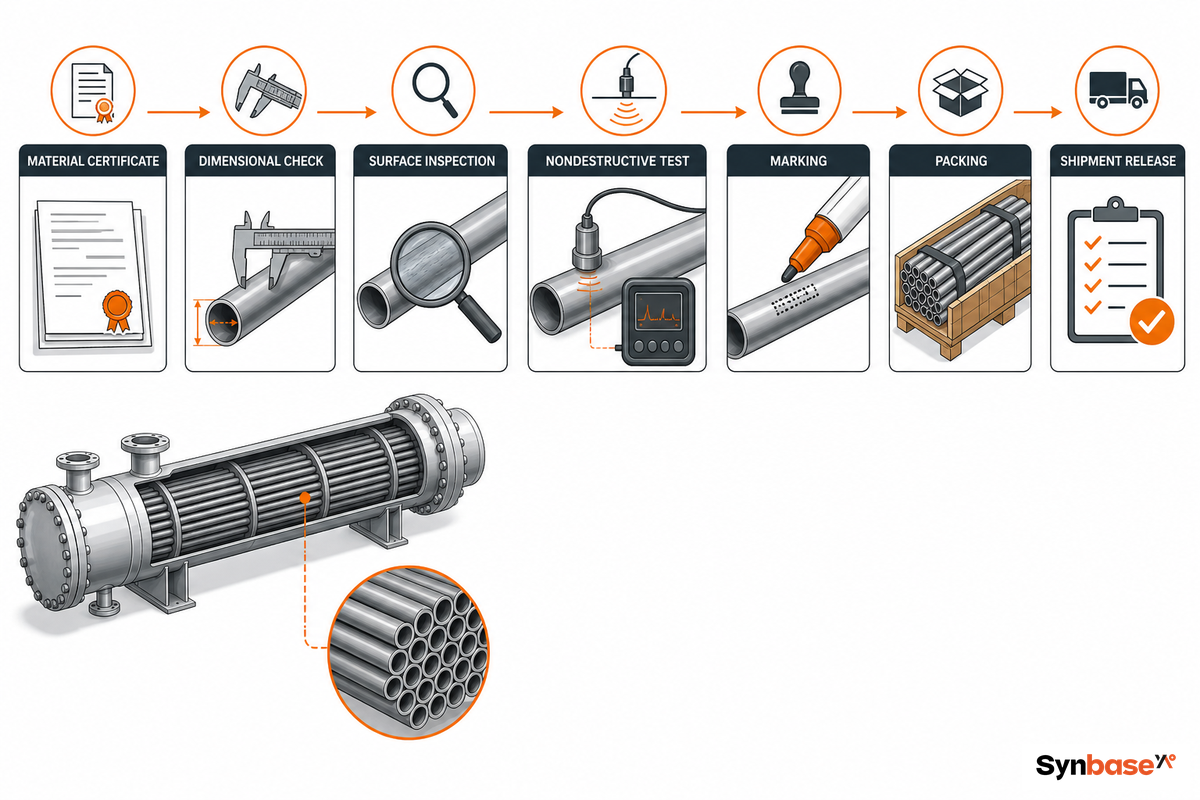
Ensure that inspection requirements are stated prior to production, rather than dealt with after the equipment is shipped.
ASTM A213/A213M-25 and A249/A249M-24 each describe distinct product scope and individual testing choices. The corresponding order must detail the checks, acceptance criteria, reports, marking, and third-party witness points required for the project.
Delay, often quite costly, starts when the order merely specifies “ASTM” without the applicable edition, general requirements, and buyer-requested tests. An effective purchasing document will offer every supplier a level playing field in pricing and documentation.
| Item | What to define | Evidence to request |
|---|---|---|
| Material identity | Grade, heat, product form, and applicable edition. | Traceable material certificate and marking plan. |
| Dimensions | Outside diameter, wall, length, straightness, bend details, and tolerance basis. | Dimensional record tied to the lot or order. |
| Condition | Heat treatment, finish, cleaning, preservation, and end protection. | Process and release documentation where specified. |
| Mechanical and integrity tests | Which tests apply under the product standard and project specification? | Test reports with method and acceptance criteria. |
| Non-destructive examination | Method, extent, qualification, and report format. | NDE record where required by the order. |
| Third-party inspection | Hold points, witness points, notification time, and release authority. | Inspection release note if included in the contract. |
| Packing and traceability | Bundle identification, protection, document index, and shipping marks. | Packing list linked to the certificate and order line. |
Synbase perspective: Synbase Steel Co., Ltd. can use the following six fields to review the completeness of an enquiry but the guide doesn’t provide any specific project test result, life figure or field performance outcome.
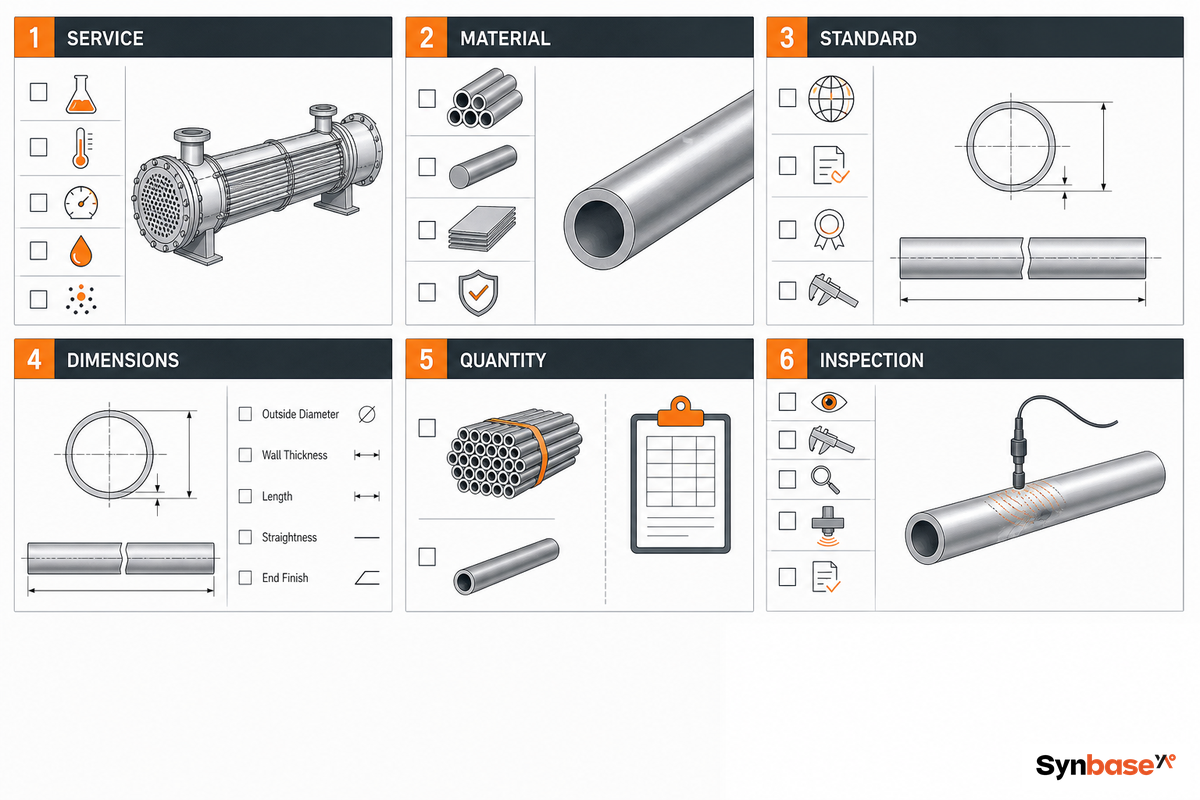
The 6-Field tube RFQ is an editorial framework for obtaining similar technical quotations and isn’t a replacement for an exchanger data sheet. It provides the buyer with a disciplined first version of the information required to convey to the exchanger designer, supplier, inspection team, and procurement staff.
| Field | What to provide | Why it makes quotes comparable |
|---|---|---|
| 1. Service window | Both fluids, normal/upset temperature and pressure, contaminants, flow basis, fouling, cleaning, and prior failures. | Prevents a grade-only offer from hiding a different duty assumption. |
| 2. Material and standards | Material family or proposed route, product standard, active edition, general requirements, and any owner/EPC additions. | Shows whether bidders are pricing the same manufacturing and test basis. |
| 3. Dimensions | Outside diameter, wall, straight length, U-bend details, tolerance, and quantity. | Avoids a quote that fits a different tubesheet or layout. |
| 4. Configuration | Drawing reference, tube layout, surface condition, bend requirements, and tube-to-tubesheet context. | Connects the tube order to the bundle construction. |
| 5. Tests and inspection | Required tests, NDE, extent, acceptance criteria, witness/hold points, and release process. | Stops late arguments about what “tested” was meant to include. |
| 6. Documents and logistics | Certificate format, traceability, marking, packing, delivery basis, and document-submittal timing. | Lets procurement compare both material cost and execution risk. |
Once the six fields are assembled, buyers requiring sourcing support can access Synbase’s Heat Exchanger Tube page to discuss the product and quotations. It’s the ordering of this sequence which is critical – specify first, then compare supplier capability on that same RFQ.
Associated supplier-level background reading also helps teams prepare related package detail, including a carbon steel pipe guide, an alloy steel Cr-Mo guide, and a flange selection guide.
These cover component issues, but don’t override the exchanger data sheet.
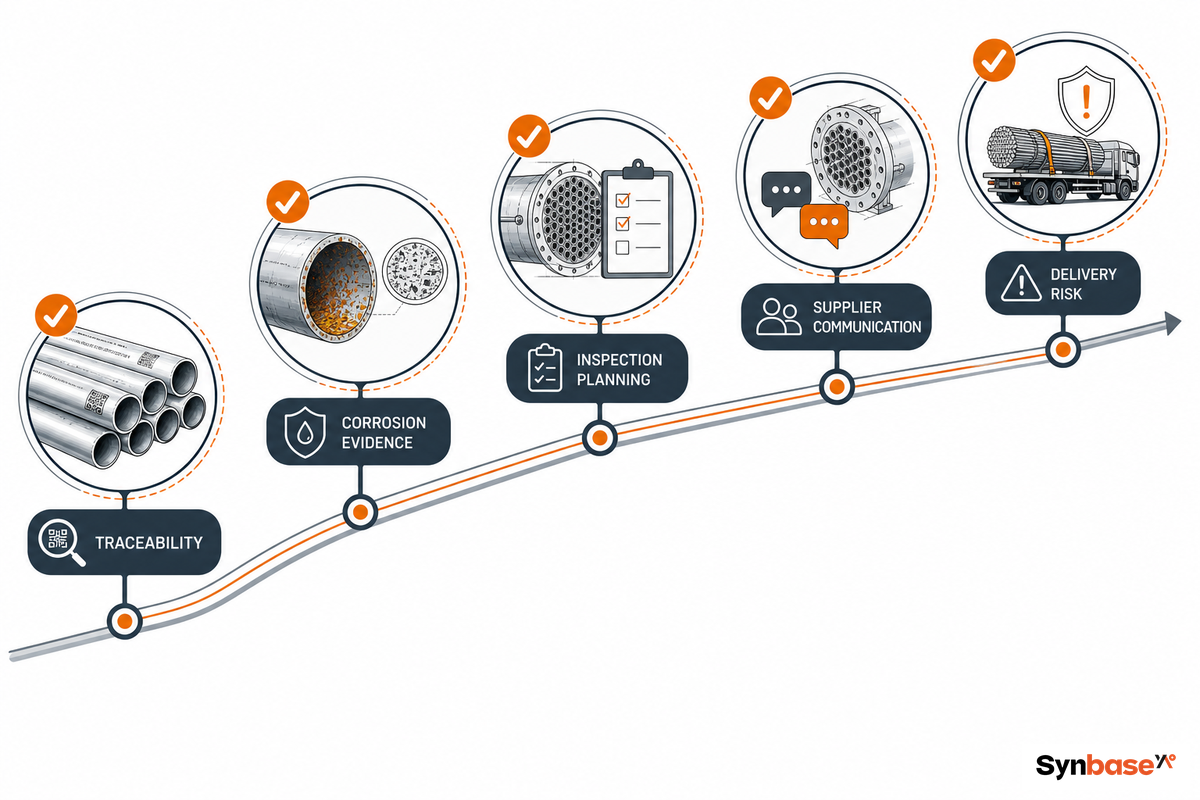
The most telling sign for 2026 is not any kind of broad market forecast, but rather the rising importance of version control, of clearly articulated service assumptions, and of inspection-ready specifications. While the ASTM list A213/A213M-25 as active, they also list updated versions (A1016/A1016M-24A) active in their catalog, and TEMA’s 11th edition highlights more explicitly inspection, exchanger-sheet specificity, tube erosion, and tube-to-tubesheet dialogue.
In heat recovery or waste heat industrial applications, countercurrent flow and the log mean temperature difference help set the thermal duty; geometry intended to improve heat transfer still needs a fouling and cleaning review.
For any industrial buyer, version-control gaps are procurement risks because standard edition, inspection, and service details all impact comparability and Synbase Steel engineers are prepared to assist review of the RFQ record.
The purchasing action is simple for buyers: state the edition, describe service chemistry, separate tube product needs from exchanger-code requirements, ask what gets inspected prior to shipment, and document what helps maintain future equipment. New tube designs and patent filings may be interesting, but not a substitute for specifying clear duty, a traceability document.
If the project involve wider piping scope, then Synbase’s steel pipe guide, stainless steel pipe guide, or API 5L line pipe guide may help distinguish adjacent scope from the exchanger tube requirements.
A heat exchanger tube is defined as a tube that acts as the heat-transfer surface between two fluids in a heat exchanger, condenser, heater or evaporator. Its service chemistry, pressure, temperature, geometry, joining method, and inspection plan must all be accommodated, but the label alone doesn’t designate one material or one fabrication approach. The RFQ must record service fluids, pressure, temperature, dimensions, joint method, applicable standard, release checks, document requirements, and the drawing revision used for supplier comparison.
No one material fit all services, and it’s important to start by documenting and prioritizing all risks of failure (corrosion, chloride, sour, erosion, fouling, vibration, temperature, pressure, cleaning) as well as fabricating conditions, tube-to-tubesheet compatibility, inspection requirements and availability evidence required at release. The final material route, however, should be the decision of the exchanger designer and project standard rather than the exchanger-product label of a supplier catalog.
Select size from the thermal and mechanical design basis, not a generic catalog line. Tube O.D., wall thickness, length, tube passes, arrangement, bend requirements, cleaning method, pressure drop, support spacing, and tubesheet construction all impact size. A known tube size can be a useful starting point, but still must be validated against the actual exchanger drawing and duty.
Heat exchanger tubes and boiler tubes may share family nomenclature or appear in the same or related standards, but the labels aren’t inherently interchangeable. Selection must therefore always follow actual duty, product scope, fabrication route, test plan, and applicable project-code requirements.
On a critical order, clearly define requirements for material certificate, heat or lot traceability, dimensional record, test reports, NDE report as needed, heat-treatment or condition evidence as required, inspection release, marking, packing list and document index. Specify document requirements in the purchase order and link to applicable standard edition and project acceptance criteria. A certificate by itself doesn’t prove all buyer-requested tests, witness points, or logistics requirements were completed.
Timing depends on service, condition monitoring history, previous inspections, fouling, leaks, pluggage level, turnaround planning and economic viability. A pre-shipment inspection establishes a baseline, but not a guarantee against all potential in-service failure mechanisms. Method and frequency are also influenced by accessibility, tube material, known degradation modes and leak consequences between the two circuits. Use the exchanger owner’s integrity process and approved inspection methodology to determine the appropriate cleaning, repair, retubing or replacement actions.
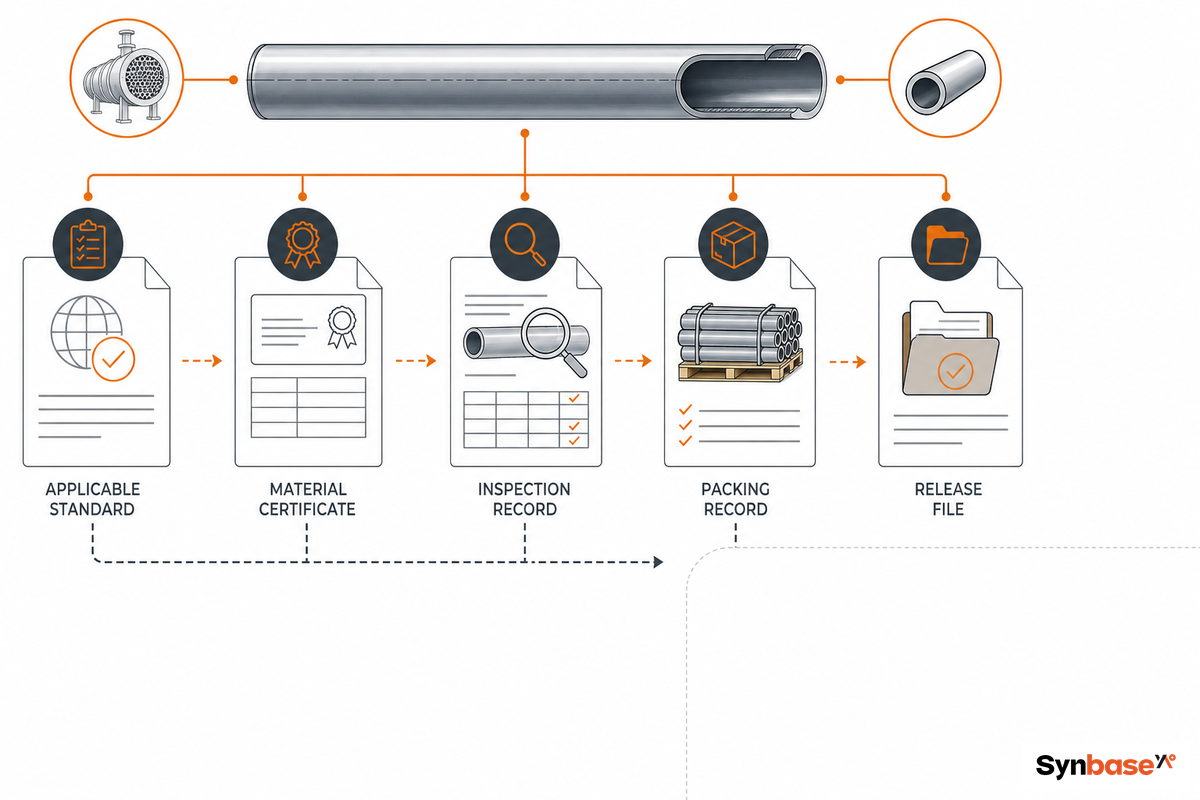
Editorial note: this educational guide is intended for specification awareness only and was developed by Synbase Steel Co., Ltd. This guide isn’t a design calculation, code interpretation or material selection approval.
Synbase Steel supplies steel pipe, fittings, flanges, valves and OCTG for oil and gas, petrochemical, power, water and industrial projects. Our technical guides are written to help buyers compare standards, grades, dimensions, coatings, inspection requirements and commercial terms before sending an RFQ.
We focus on practical specification work: matching pipe process to service conditions, checking wall thickness and end finish, reviewing MTC and NDT requirements, and clarifying documentation before production or shipment.
Project support across seamless pipe, ERW, LSAW, SSAW, buttweld fittings, forged flanges, valves and oilfield tubulars.
Specification review for ASTM, ASME, API, EN and DIN standards, including material grade, pressure class, coating and inspection scope.