Send Your RFQ to Synbase Steel
Prefer to send drawings, BOMs or attachment lists by email? sales@synbasesteel.com

A butt weld tee is a 90° branch fitting welded inline to split or combine flow, and on a pressure line every dimension, grade and mill certificate has to survive your inspector. Synbase forges and forms equal and reducing tees mill-direct in carbon steel (ASTM A234 WPB), stainless steel (ASTM A403 WP304/304L/316/316L) and alloy steel, to ASME B16.9 with EN 10204 3.1 or 3.2 traceability.
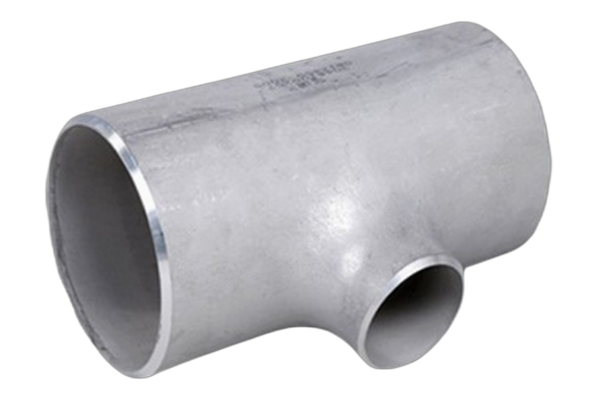
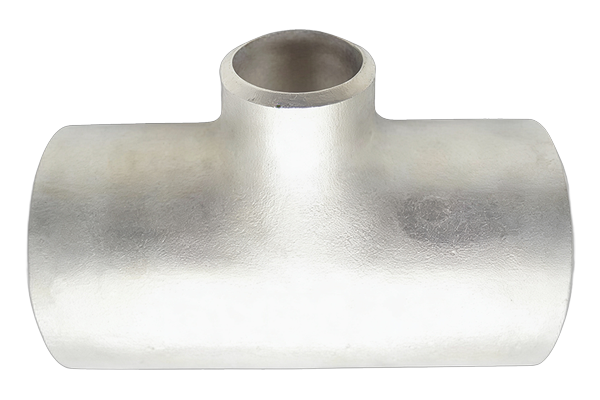
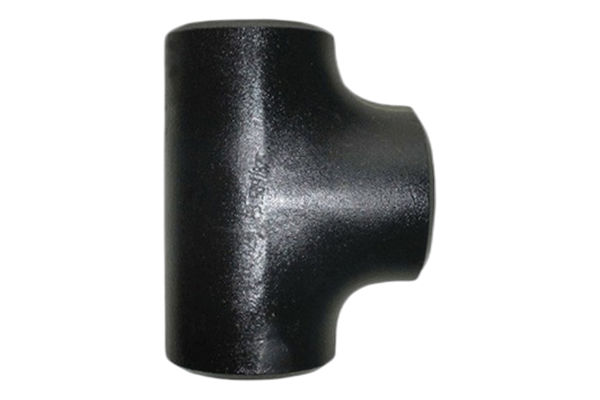
Here’s the trap engineers hit on real spools. ASME B16.9 standardizes the end-to-end, center-to-end and squareness tolerances of a wrought tee, but not the full wall thickness through the body.
Schedule isn’t a pressure rating, the same “Sch 40” on A106-B carbon and on 304 stainless, or at 20°C versus 400°C, carries vastly different pressure. MAWP is the governing number, set by material, wall, OD and design temperature together.
Stainless schedules don’t equal carbon schedules, A403 stainless uses the 10S / 40S / 80S series, whose walls differ from plain carbon Sch 10 / 40 / 80, a cross-grade trap when you read one dimension table for both.
Crotch wall thins during forming, that branch crotch is the highest-stress zone, so a tee should reinforce there, and many makers start one schedule heavier to keep the wall adequate after the metal is drawn out.
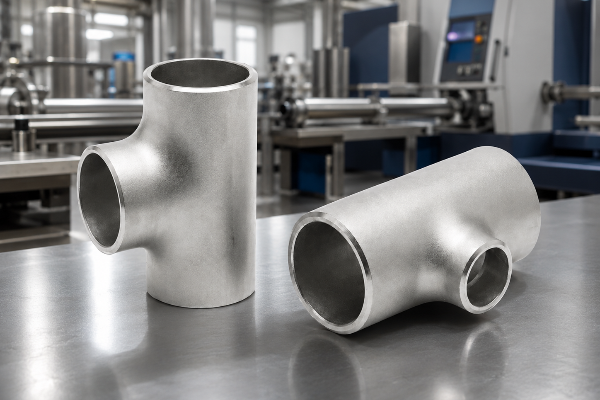
Synbase resolves these at the quote stage, not at site receiving, because an RFI hold on a single 6 in reducing tee can stall a whole pipe spool. We confirm wall thickness against your ordered pipe schedule per grade, hold the branch crotch above the B16.9 minimum, and state the material specification and one-piece or welded construction on every line item. Unlike a distributor who ships whatever the catalogue lists, our mill control the heat for oil & gas and EPC process piping alike.
Get A QuoteAs a mill-direct butt weld fittings manufacturer, Synbase forges and forms the full tee family to one dimensional standard and three material families, so a single purchase order can cover a carbon header and its stainless tie-ins. Every tee ships beveled per ASME B16.25, ready to butt-weld directly to pipe, an elbow or a weld-neck flange with no intermediate nipple. That breadth come from a group with steel-pipe, fitting and flange production bases under E-CHENG STEEL GROUP and 800+ national patents.
| [Tee Type] | [Material Family] | [Grades] | [Size / Schedule Range] |
|---|---|---|---|
| Equal (straight) tee | Carbon steel | ASTM A234 WPB, WPC | NPS ½″–48″ · Sch 10–XXS / 160 |
| Reducing tee | Carbon steel | ASTM A234 WPB, WPC | NPS ½″–24″ common · larger MTO |
| Equal & reducing tee | Alloy steel (Cr-Mo) | A234 WP1 / WP5 / WP9 / WP11 / WP22 / WP91 | High-temp headers · Sch 40–XXS |
| Equal & reducing tee | Stainless steel | A403 WP304 / 304L / 316 / 316L | NPS ½″–24″ · Sch 5S–80S |
| Barred (pigging) tee | Carbon / high-yield | A234 WPB · MSS SP-75 high-yield | Build-to-print · Class 150–2500 |
Buyers most often trip on the size callout itself, flipping the run and the branch. Convention here’s fixed and material-independent, you read the run first and the branch (the “bull”) always last.
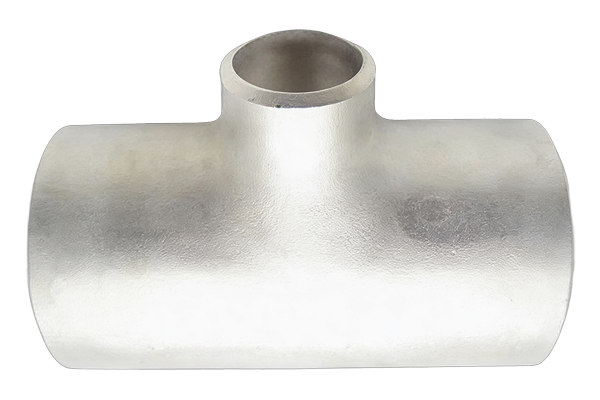
Two rules keep a reducing-tee line off an RFI hold. State the larger NPS and its schedule first, then the branch and its schedule; and where the run and branch run different walls, we taper-bore the lighter end to suit so fit-up is correct on arrival. One caution from the standard itself: a 6″×4″ reducing tee is a stock geometry, but an extreme ratio such as 16″×2″ isn’t made by anyone, that branch belongs on a branch connection, which we cover below.
For oil and gas transmission and gathering lines that are cleaned or inspected with a pig, a plain tee is a place the pig can stall or shred its sealing cups. A barred tee welds scraper bars across the branch so the pig passes straight through the run.
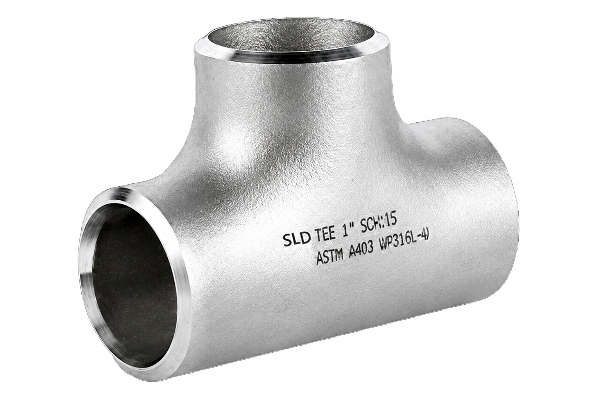
Most supplier pages name the standard and stop; almost none publish the equal tee dimensions and reducing tee dimensions you actually size and lay out a spool with. This is the Synbase ASME B16.9 Tee Dimension Crosswalk, every ASME B16.9 tee given as center-to-end values in both inch and millimetre, because international oil & gas and EPC desks shouldn’t have to convert 254 mm to 10 in by hand. We forge these in our own mill, so the numbers you size with are the numbers you receive.
For a reducing tee the run dimension doesn’t move, C stays equal to the run size’s value above, while the branch center-to-end M shortens with the branch. That’s why you spec the run schedule first.
A B16.9 tee is rated to the pipe it joins, not on its own, its pressure-temperature rating equals that of the matching pipe of the same material and nominal wall. Get this wrong and you either under-rate a header or pay for an expensive schedule you don’t need. This is the Schedule-to-Service Pressure Band your spec has to land inside.
| [ DRIVER ] | Carbon A234 WPB | Stainless A403 WP316L |
|---|---|---|
| Min tensile | 415 MPa (60 ksi) | 485 MPa (70 ksi) |
| Min yield | 240 MPa (35 ksi) | 170 MPa (25 ksi) |
| Long-term temp | −29°C to 425°C | Higher / cryogenic-capable |
| Above the limit | Move to WP11 / WP22 alloy | Already corrosion-grade |
| Below −29°C | Move to A420 WPL6 | Austenitic stays tough |
Going up a schedule buy wall, not an automatic pressure class. Confirm MAWP from wall, OD, grade allowable and design temperature together, then apply your corrosion allowance and mill tolerance. We match the tee wall to the heavier of run or branch schedule so the joint never under-runs your line.
For sour (H2S) service the window tightens further: NACE MR0175 / ISO 15156 caps carbon-steel hardness at 22 HRC and demands heat-level traceability plus SSC/HIC verification, all of which Synbase reports on the certificate. We rate every tee to the matching pipe because a fitting is only as strong as the line it joins, not to a generic class a distributor assumes for an oil & gas or pipeline service.
Picking 304 to save money on a chloride line, or carbon on a 450°C header, is the failure that shows up two years later. Our Tee Material Compatibility Heatmap below maps the real selection drivers, temperature, corrosion, sour service and cost, onto the grades we stock.
Workhorse, matches A106-B / API 5L Gr.B pipe
Cr-Mo alloy holds strength hot
Impact-tested low-temp carbon
Austenitic, weldable, economical
Mo addition resists pitting
≤22 HRC, SSC/HIC verified
Two grade facts decide most stainless tees. Those “L” grades (304L, 316L) hold carbon at or below 0.03% so the heat-affected zone of your circumferential weld doesn’t sensitize and lose corrosion resistance, which matters because a tee gets welded into the line.
Carbon equivalent governs whether your fitters can weld it without cracking, so we hold A234 WPB at a CE of 0.50 or below and print the value on the certificate.
“A standard grade marking is not the same as fitness for service. We have seen A234 WPB rated to −20°F fail by brittle fracture in hydrotest because the manganese-to-carbon ratio was cut to save cost. On low-temperature work we specify the impact test and the Mn:C ratio, then verify it against the heat, we don’t take the grade stamp on faith.”
Senior Application Engineer, Synbase Steel
Send us the line list and we return a grade per service, not a one-size grade for the whole job.
Request Grade Per ServiceYou’ll read that a weldolet “costs 50% to 90% less than welding tees.” That figure is published by an olet manufacturer and it’s branch-specific, it isn’t a neutral verdict that a tee is overpriced. An honest comparison weighs total installed cost and stress, not sticker price.
For most size-on-size and one-size-down branches above 2″ NPS, the tee is the right default, it’s one inline fitting with two or three butt welds, no header hole to cut and no reinforcing pad to fit. Field evidence is blunt.
| Branch method | Best use | Stress / flow | Trade-off |
|---|---|---|---|
| Reducing / equal tee (B16.9) | Size-on-size & one-size-down branches | Lowest SIF, full flow, integral crotch | Higher part price; needs the stocked ratio |
| Weldolet | Off-ratio small branches to ~6–10″ | Self-reinforced; volumetric NDT hard | Adds a stress riser in the run wall |
| Sweepolet | High-pressure / fatigue (B31.3 Ch IX) | Contoured, low SIF, 100% RT possible | High-cost special fitting |
| Stub-in + reinforcing pad | Large branches, field fit | Cheapest part; hand saddle fit-up | ~2× SIF; 20–60 min hand-fit, HAZ to machine out |
Buyers’ real objection to an imported tee isn’t price, it’s the paper. Engineers have received Chinese-origin stainless with a clean certificate claiming “100% PMI,” then found three of four lengths several percent low on nickel under an XRF gun, all stamped with one heat number. That isn’t off-spec material; it’s a fabricated certificate, and it’s the reason buyers distrust an MTC PDF.
This distrust is rational, not regional. US authorities keep antidumping orders on Chinese carbon-steel butt-weld fittings and have run evasion inquiries into origin-laundering of this exact product, so your QA team is right to demand proof.
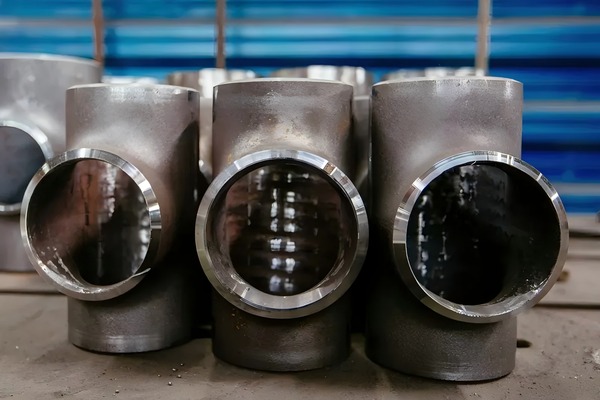
“That’s the difference a mill-direct chain make. Buyers who trust China-made fittings are explicit about why: they deal only with the mill of record and witness the run. As one put it bluntly, ‘if it has been through two distributors we won’t touch it.’ A single-source, single-heat tee removes the hop where certificates get laundered.”
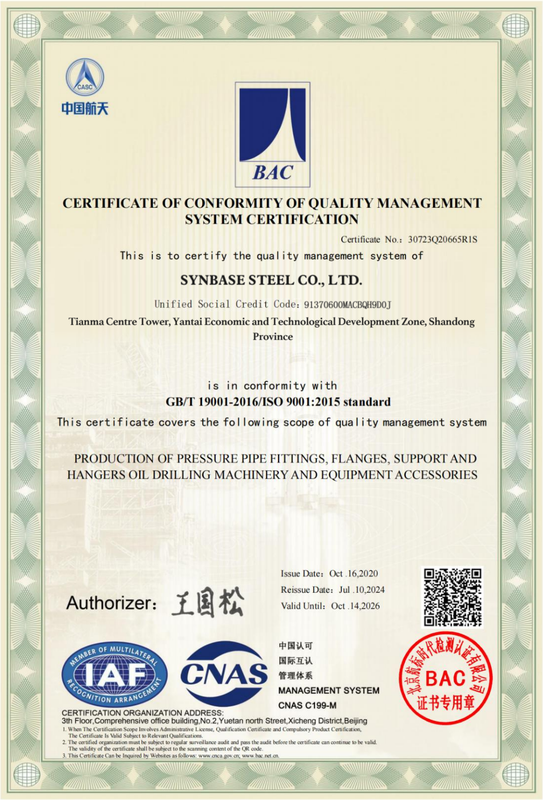
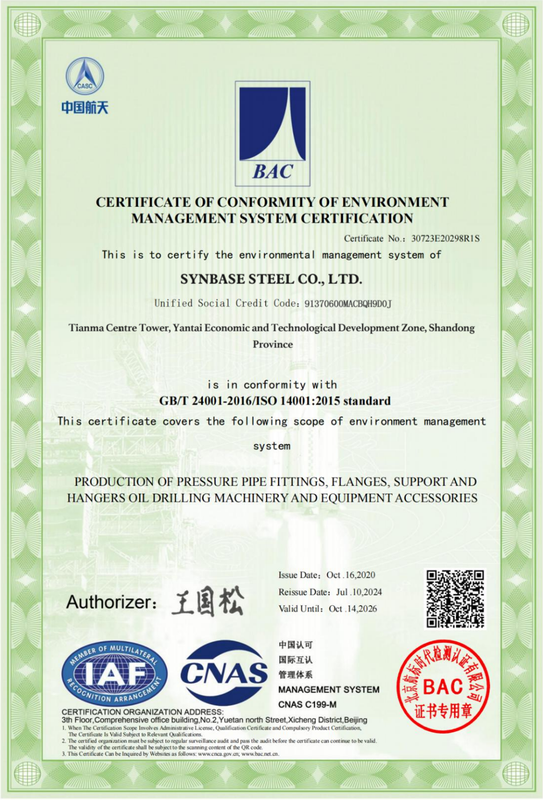
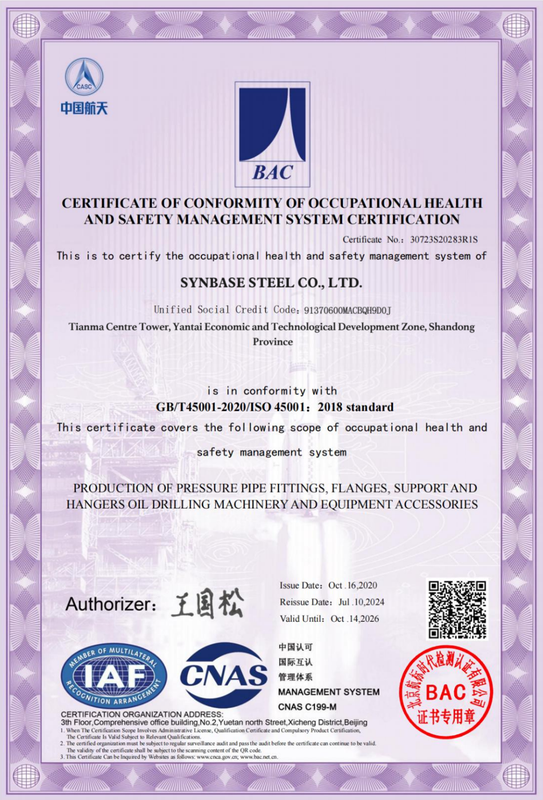
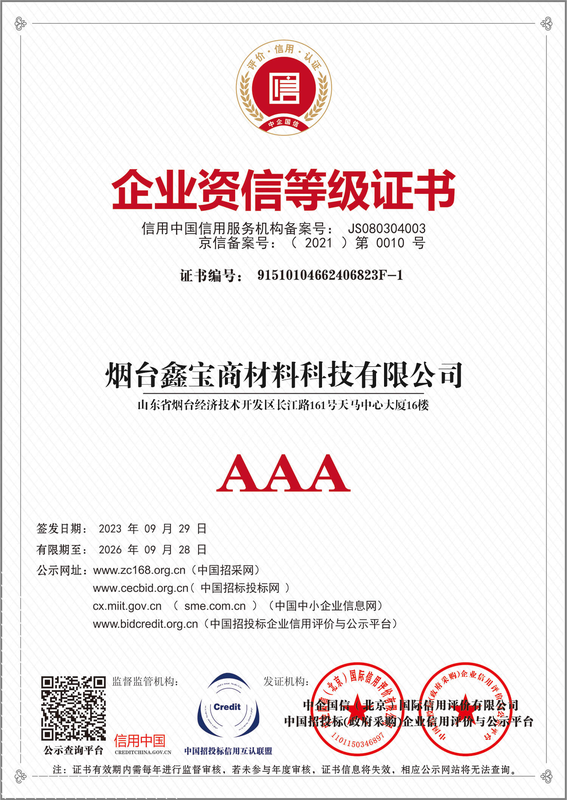
Certificate fraud isn’t unique to any one country, engineers cite cases out of Germany, Italy and the US too, so the real risk is an unverified chain of custody, whatever the flag. Our answer is to be the verifiable source, not to ask for faith. For sour or critical service we add NACE MR0175 hardness and SSC/HIC results, PMI, and full UT/RT and dimensional inspection records to the data book.
matches the EN 10204 certificate, and the certificate matches our mill heat record. One heat, one number, no swap.
with chemistry, tensile, yield, elongation, hardness and the mother-pipe hydrostatic test, per ASTM A234 / A403 requirements.
3.1 validated by our QA independent of production, or 3.2 with an independent third-party inspector who witnesses and co-signs.
SGS, Bureau Veritas, TÜV, Lloyd’s or DNV may witness our production run; we want your inspector at the mill.
run your own PMI / XRF and the alloy matches the certificate, because the certificate matches the metal.
Query standard outer diameters, wall thicknesses, and center-to-end tolerances for seamless and welded equal tees according to ASME B16.9.
Generate accurate procurement descriptions and standardized purchasing codes based on run and branch pipe size configurations.
Match ideal steel grades across carbon steel, stainless steel, and alloy systems with your project’s temperature and pressure parameters.
Evaluate optimal branch reinforcement connections including tees, weldolets, and threadolets based on header-to-branch ratios.
Run first, branch last. By convention it’s run × run × branch (A × B × C), so a 6″ line with a 4″ branch reads “NPS 6 × 4” or formally 6 × 6 × 4. Your branch (the “bull”) is always the final figure, regardless of material.
A one-piece tee is formed from a solid billet with no longitudinal seam; a welded tee is rolled from plate with a long seam and reaches larger sizes (past 24″, welded is the only economical route). ASME B16.9 makes no distinction, both must meet the same end-product criteria, and a properly made welded tee isn’t weaker at the seam.
Both. A403 classes its fittings by NDE: Class S is one-piece; W, WX and WU are welded with radiographic or ultrasonic checks.
A wrought B16.9 tee is either one-piece or carries one controlled longitudinal seam; the circumferential welds that join it to your pipe are separate field welds. A joint quality factor that worries some buyers applies only to long seams, not to those circumferential welds.
Yes, A234 WPB is the carbon-steel workhorse for moderate-to-high-temperature pressure piping, from −29°C to 425°C, matching A106-B and API 5L Gr.B pipe. Above 425°C move to WP11/WP22 alloy; below −29°C move to A420 WPL6.
Start with the heat number stamped on the tee body and confirm it matches the certificate, then ask the supplier to show that the same heat number appears in the mill’s own production record; run a PMI or XRF reading on arrival to confirm the alloy against the stated chemistry; and where the service is critical, arrange a third-party inspector such as SGS, BV, TÜV or DNV to witness the production run before shipment. A genuine mill-direct, single-heat chain of custody is what lets all of those checks line up.