Send Your RFQ to Synbase Steel
Prefer to send drawings, BOMs or attachment lists by email? sales@synbasesteel.com

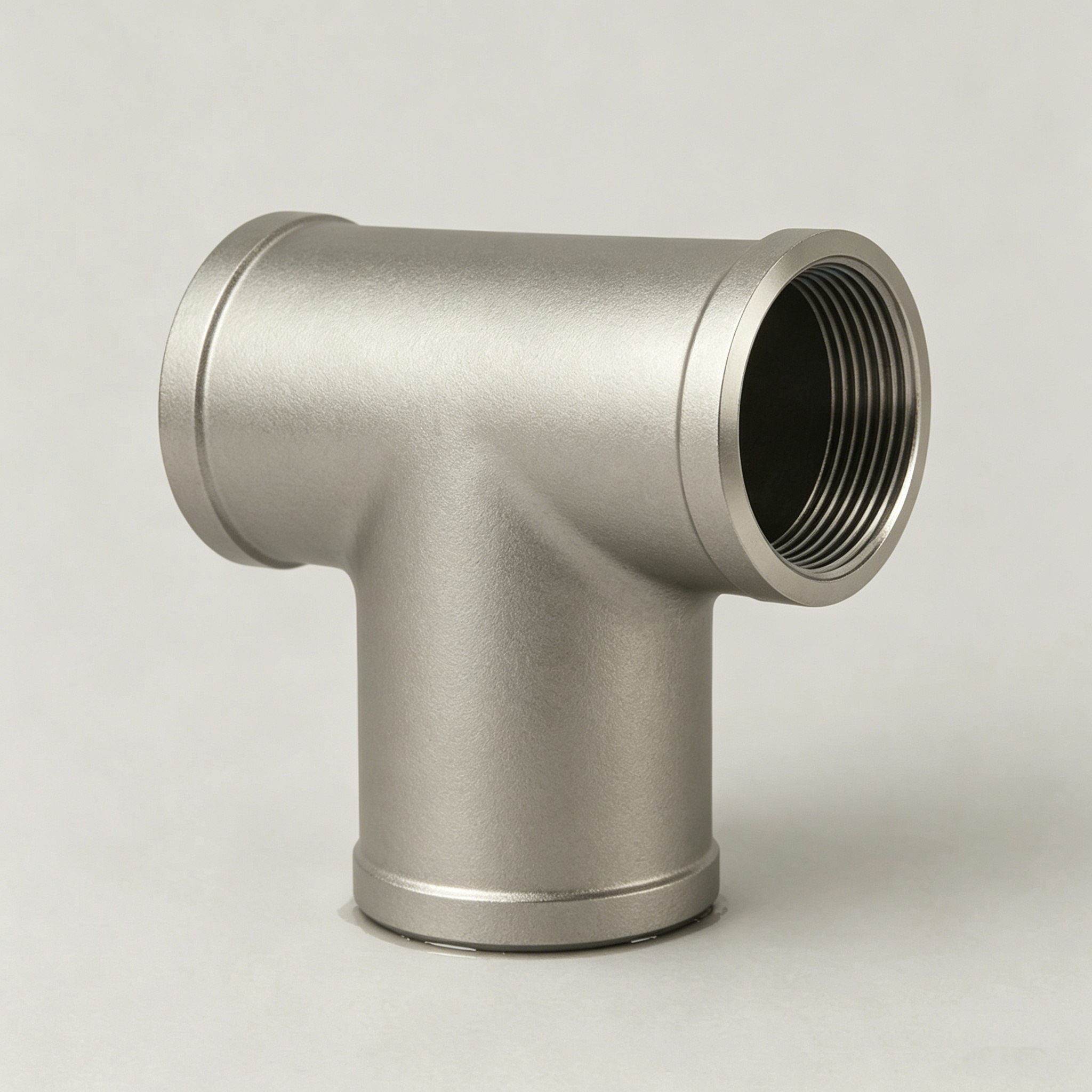
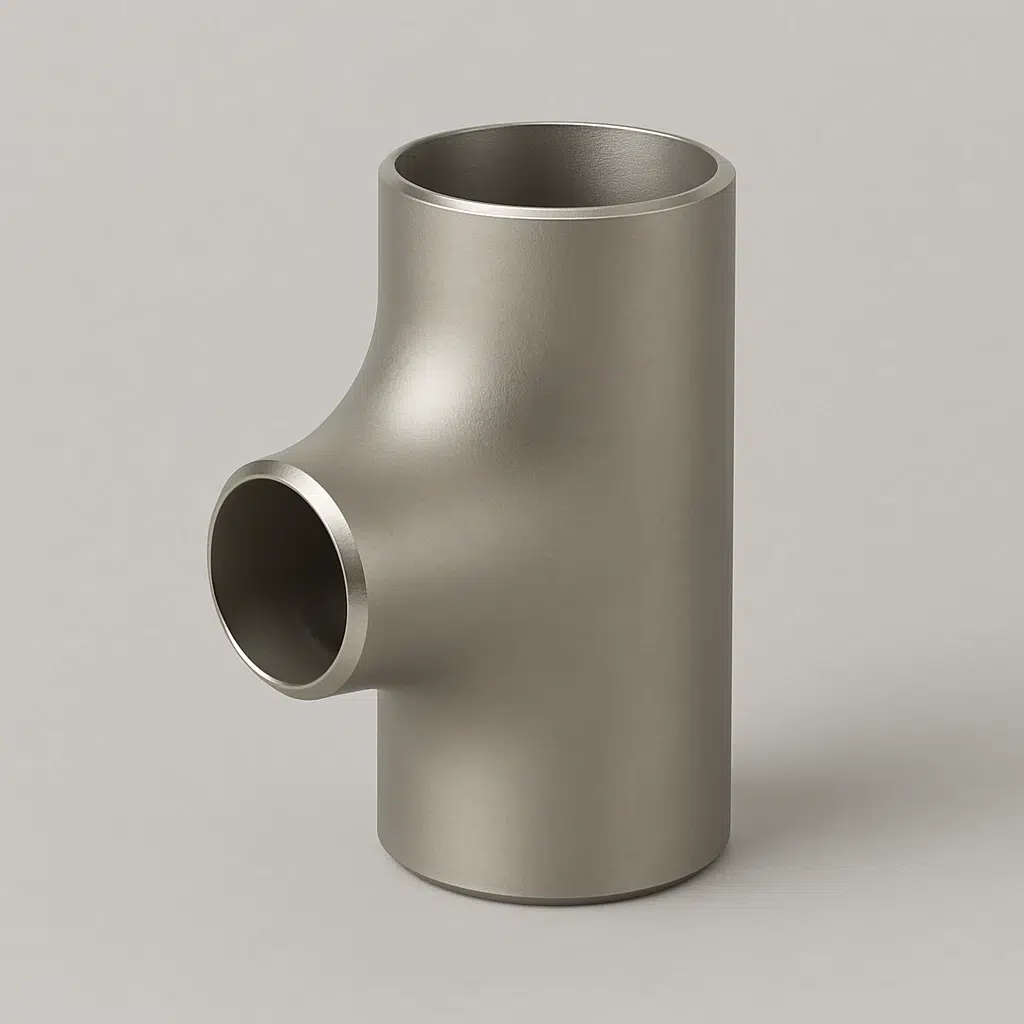
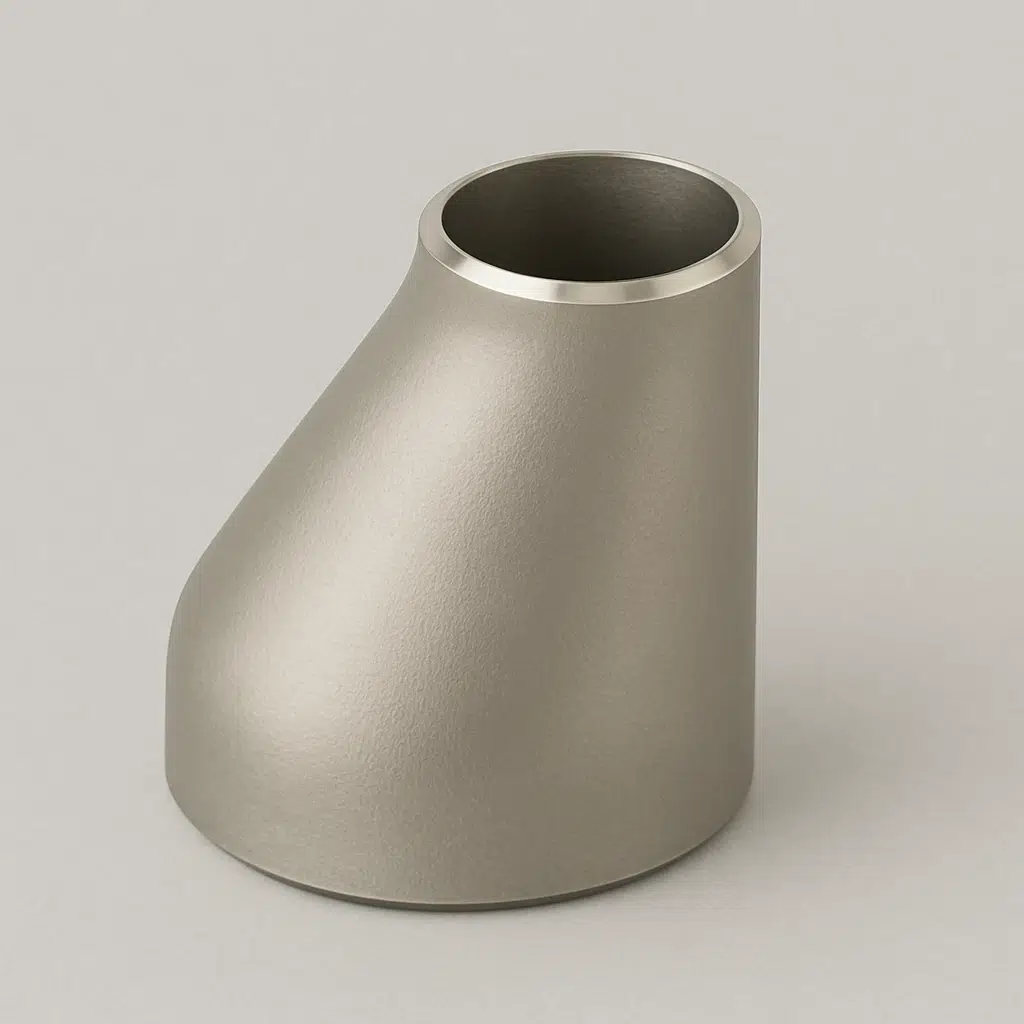
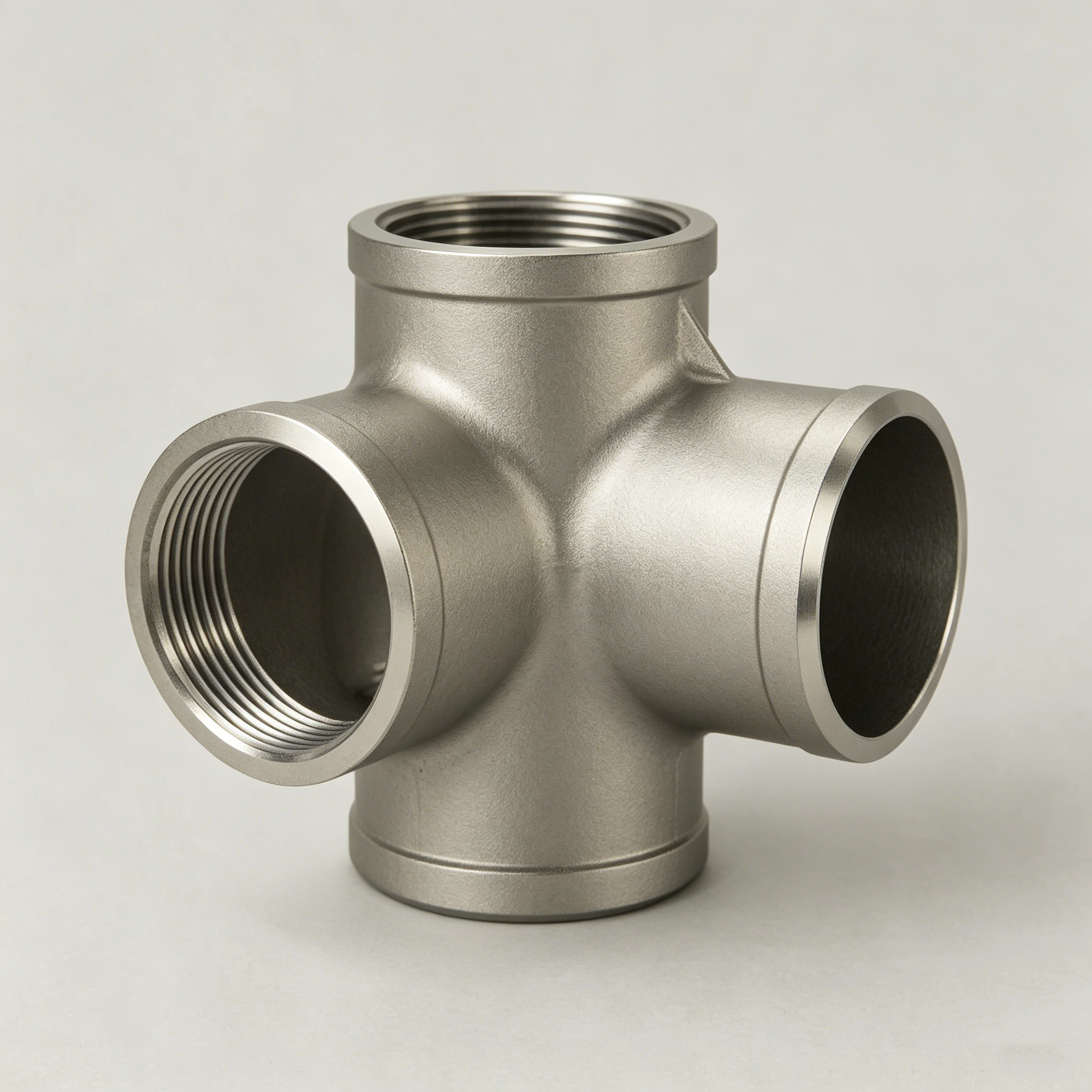
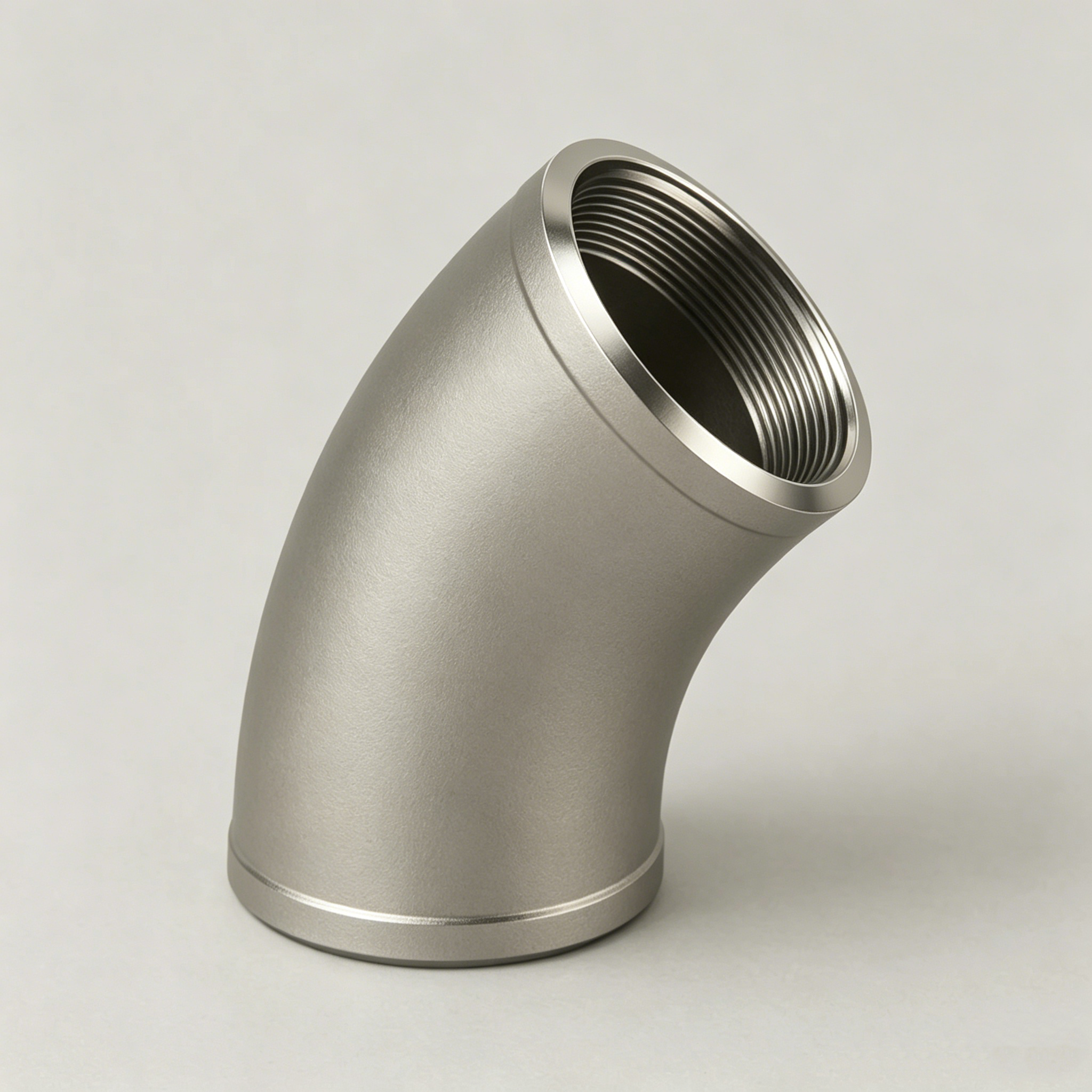
| Fitting Type | Dimensional Standard | Size Range | Schedule / Pressure Class | Available Grades |
|---|---|---|---|---|
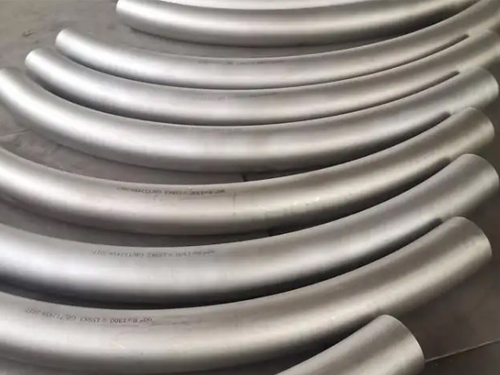
| Butt Weld 90° Elbow (Long Radius, Short Radius) | ASME B16.9 / EN 10253 | 1/2″–48″ OD (NPS 1/2–48) | Sch 5S, 10S, 40S, 80S, 160, XXS | 304/304L, 316/316L, 317L, 321, 347, 2205, 2507, 904L |
| Butt Weld 45° Elbow | ASME B16.9 / EN 10253 | 1/2″–48″ OD | Sch 5S–XXS | 304/304L, 316/316L, 317L, 321, 347, 2205, 2507, 904L |
| Butt Weld Equal Tee / Reducing Tee | ASME B16.9 / EN 10253 | 1/2″–48″ OD | Sch 5S–XXS | 304/316L/317L/321/347/2205/2507/904L |
| Concentric Reducer / Eccentric Reducer | ASME B16.9 / EN 10253 / DIN 2605 | 1/2″–48″ OD | Sch 5S–XXS | 304/316L/317L/321/347/2205/2507/904L |
| End Cap / Pipe Cap | ASME B16.9 | 1/2″–48″ OD | Sch 5S–XXS | 304/316L/317L/321/2205/2507 |
| Return Bend / U-Bend (180°) | ASME B16.9 | 1/2″–36″ OD | Sch 10S–XXS | 304/316L/317L/321/347 |
| Stub End / Lap Joint | ASME B16.9 / MSS SP-43 | 1/2″–24″ OD | Sch 5S–80S | 304/316L/2205/2507 |
| Socket Weld Elbow / Tee / Cross / Coupling / Half Coupling | ASME B16.11 / ASTM A182 | 1/8″–4″ NPS | Class 3000, 6000, 9000 | 304/316L/317L/321/2205 |
| Threaded Fitting (NPT / BSPT): Elbow, Tee, Cross, Coupling, Bushing | ASME B16.11 / ASTM A182 | 1/8″–4″ NPS | Class 3000, 6000 | 304/316L/321 |
| Weld Neck Flange / Slip-On Flange / Blind Flange / RTJ Flange | ASME B16.5 (≤NPS 24) / B16.47 (>NPS 24) / ASTM A182 | 1/2″–60″ OD | Class 150, 300, 600, 900, 1500, 2500 | 304/316L/317L/321/2205/2507/904L |
| Cross Fitting (Butt Weld) | ASME B16.9 | 1/2″–12″ OD | Sch 10S–Sch 80S | 304/316L/2205 |
Premature pitting corrosion failure that often get erroneously attributed to manufacturing defect by the purchasing department stems from an inappropriate grade of alloy for the specific service. This is usually one of the most costly errors in a piping system specification because the mode of failure – localized pit and/or stress corrosion crack – will typically manifest without immediate notification. A 316L elbow placed in a sea water cooling system may appear healthy and serviceable for 18 months and yet will have pitted sufficiently to cause thru wall leaks in that 19th month. Most purchasing agents assume the component was defective. The reality for our piping Engineers and those in the know is that: 316L typically has a PREN of around 23-25; Sea Water Cl concentration is about 19,000ppm which is well above 316L’s passivisation capability to maintain stability.
There’s no obvious trade-off of alloy cost versus severity of service, absent an engineering framework. Super duplex 2507 costs ~2-2.5x that of 2205 duplex and ~4x that of 316L. Deploying 2507 in a fresh water process line where Cl < 100 ppm is material cost without corrosion advantage. For those unaware of formula, The Pitting Resistance Equivalent Number (PREN) = %Cr + 3.3(%Mo) + 16(%N) can tell you if you’re asking your materials for too much, in chemistry terms.
“When a 316L elbow starts showing pitting in a seawater cooling circuit, the question is not ‘Was it real 316L?’ — it’s ‘Did the specification engineer know that 316L has a PREN of 24 and seawater requires PREN 40+?’ Grade traceability tells you what the fitting was made of. The PREN-Based Alloy Selection Matrix tells you whether it was the right choice for the job.”
Synbase Steel application engineering team, based on field feedback from offshore procurement clients“Over” isn’t always “correct”. As illustrated in the PREN-Based Alloy Selection Matrix, which charts various austenitic and duplex alloys against their service environments (Below Table). Consider PREN value and threshold chloride as first order selection factors, then double-check for temperature limitations and applicable operational context.
321 & 347 have same PREN values as 304. They’re Titanium & Niobium stabilized to prevent sensitization on welding and to enhance elevated temperature service life. Selecting 321/347 with no reference to the PREN formula and chloride threshold doesn’t necessarily indicate reliable service in chloride media. 321/347 are often selected for thermal stability, not for improved resistance to chloride stress cracking.
When offshore contractors compare the cost versus performance for 2205 & 2507 super duplex fittings in production platform applications: the performance gap for super duplex isn’t proportionally addressed by the price difference between them. The relative performance benefit for 2507 over 2205 decreases at less challenging service environments (e.g. under 5,000 ppm Cl and temperatures below 80°C, both in moderate chloride conditions), as duplex 2205 delivers 95% of 2507’s corrosion performance at around 50% of the cost. An honest approach to alloy selection dictates that overspecifying 2507 in lieu of a suitable grade 2205 duplex alloy entails a deliberate trade-off with no corresponding increase in technical value; a choice wisely made rather than defaulting to one’s default high-end strategy. Experienced specification engineers for suppliers of 316L stainless steel pipe fittings with ABS type approval and NACE MR0175 compliance on a production platform should start with verification of MTR PREN values, not supplier relationships.
To request a written alloy recommendation from the Synbase engineering team for your specific process and operational conditions, provide the composition of your process fluid, along with your operating temperatures and pressures, chloride concentrations, and the presence of HS (sour gas, NACE MR0175/ISO 15156 compliant).
Request Application Engineering Review Ref: ASME B16.9 Factory-Made Wrought Buttwelding FittingsFailure in any aspect of the supply chain poses a risk, ranging from simple errors to intentional circumvention. The critical risk in any international procurement process involving stainless steel pipe fittings involves not evaluating your supplier’s proven capabilities – a risk exposed when a manufacturer supplying a super duplex 2507 butt-welded fitting passes all physical inspections, yet fails hardness testing required by NACE MR0175/MR0103, and has sub-contracted the welding and post-weld heat treatment to an unqualified third-party facility, completely bypassing required process capabilities and checks; it’s an issue of verification rather than deficient specification design.
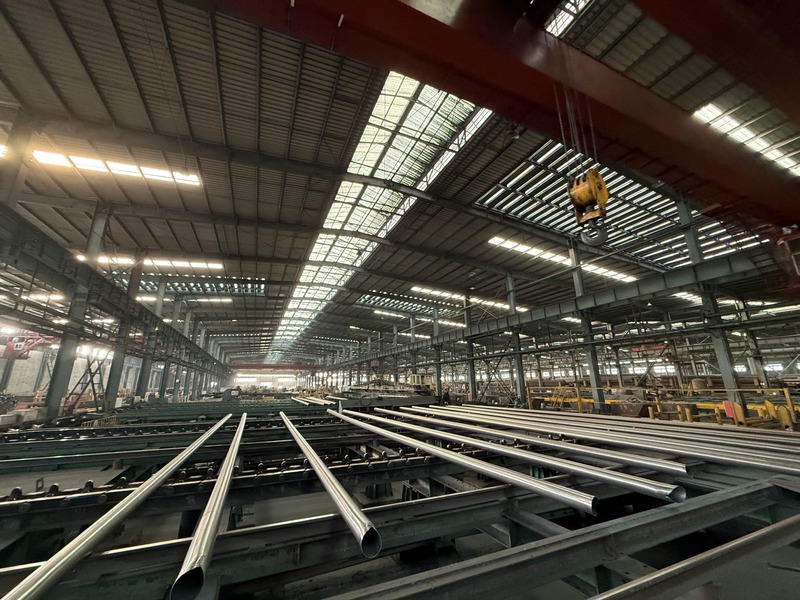
The only reason that Synbase can physically produce 48 OD heavy-wall butt weld fittings in super duplex is a 6000-ton hydraulic press originally designed for stainless forming at large formats. Without that particular tool, the forces needed to press duplex heavy-wall plate without causing cracking of the ferrite-austenite phase structure aren’t generated. Anyone claiming to make 48” OD duplex pipe fittings without this equipment is just a relabeling broker buying offshore and putting a different sticker on it.
| Capability | Specification | Significance |
|---|---|---|
| Hydraulic Press (primary) | 6,000-ton capacity | Enables 48″ OD heavy-wall butt weld forming in duplex SS grades |
| Hydraulic Press (secondary) | 2,000-ton capacity | Mid-range production for NPS 2″–24″ fittings |
| Production Base | 70,000 m² total floor area | Single-site production: no subcontracting, one quality system |
| CNC Machining Units | 200+ units | Precision dimensional work: socket bore, threaded connections, flange facing |
| Heat Treatment Furnaces | In-house solution annealing | Post-form austenitic and duplex heat treatment on-site — no thermal cycle outsourcing |
| National Patents | 200+ patents | Process innovation in forming, welding procedure, microstructure control — not relabeling |
| Operating History | Established 2005, Hong Kong | 21+ years of production and international export experience |
| Group Annual Export | 3 billion RMB across 100+ countries | Production scale supports price commitment for large project orders |
| Overseas Offices | Malaysia (2018), Thailand (2022) | Regional procurement coordination for Asia-Pacific EPC projects |
In contrast to distributors who source product from multiple mill suppliers and re-certify everything under their label, Synbase, the manufacturer of record, issues the actual EN 10204 3.1 Material Test Reports. Synbase’s heat numbers for MTRs tie back directly to Synbase production batch numbers and its in-house heat treatment, not back to an external mill that whose quality system can’t be controlled by Synbase.
Some of the best objective validation of manufacturing capability exists with operator vendor qualifications. Both Kuwait National Petroleum Corp. (KNPC) and SONATRACH (the Algerian national oil company) have approved Synbase’s vendor qualification status as of 2015. These are among the most stringent industrial buyer qualification and auditing programs in the world. They don’t qualify suppliers based on a quality document on letterhead, they actually visit and audit your manufacturing facilities and systems and traceability documents first.

The vast and well-established sub-tier market of commodity stainless steel produces lots of mill-cert quality documentation from uncertified trading companies that looks exactly like real EN 10204 documentation and is equally unreliable. It’s the same fundamental challenge that separates experienced EPC procurement specialists from buyers who blindly rely on any “certification.” Information disparity is the issue: The PDF document on paper from “Company X,” reporting that it contain a BV inspection certificate, is impossible for you to verify.

What’s the structural solution to the fake mill-cert problem? Demand certs that come with a unique identification number verifiable in a database maintained by a third-party organization, not a broker or trading company. This can be a well-known cert number listed in an API API certification directory, an ABS type approval cert number searchable on ABS.org, or a DNV or Bureau Veritas Certificate number traceable via their online search facilities. These can’t be faked, because the number doesn’t match up in the third party database.

If you’ve ever heard the question, “Can Chinese manufacturing ever match Western quality?” what’s implied behind that question is based on a fundamentally false premise. The best quality system certifiers (ABS, DNV, BV, LR and API) and their processes (i.e., site inspections, system audits, etc) are all “Western” in the sense they’re part of established global standards of the developed world. The location of the manufacturing plant is completely irrelevant to the credibility and reliability of the certification granted by these bodies. Synbase holding an ABS type approval means the American Bureau of Shipping examined and approved our manufacturing facility and quality system – ABS’s location had nothing to do with the approval itself.
| Certification | Issuing Body | Scope | Verification Method |
|---|---|---|---|
| API (5CT / 5L) | American Petroleum Institute | Oil & gas casing, tubing, linepipe fittings | License number searchable at api.org/products-and-solutions/monogram-and-apiqr-program |
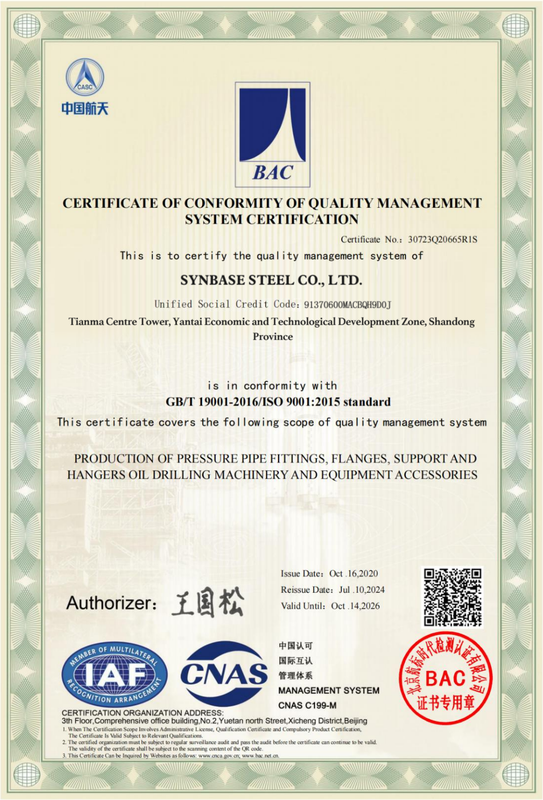
| ISO 9001:2015 | TÜV / SGS / Bureau Veritas (third-party registrar) | Quality management system — design, production, inspection, and delivery | Certificate registration number searchable via registrar |
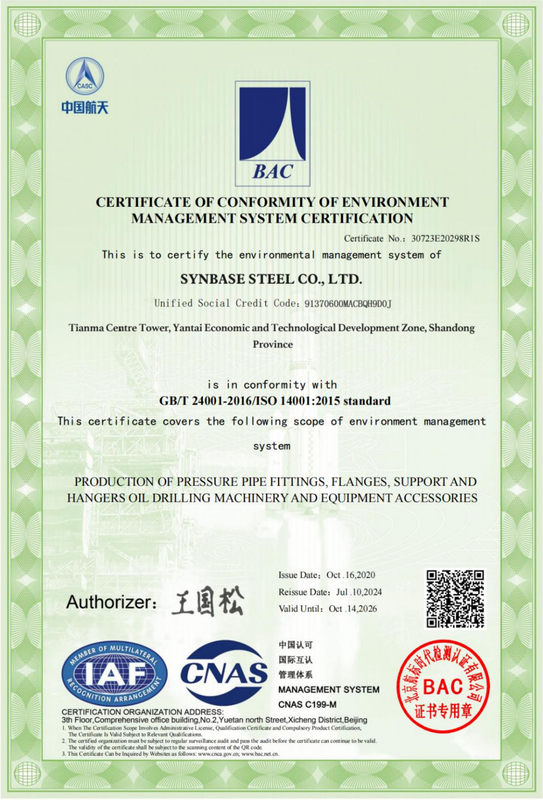
| ISO 14001:2015 | Third-party registrar | Environmental management system | Certificate registration number searchable via registrar |
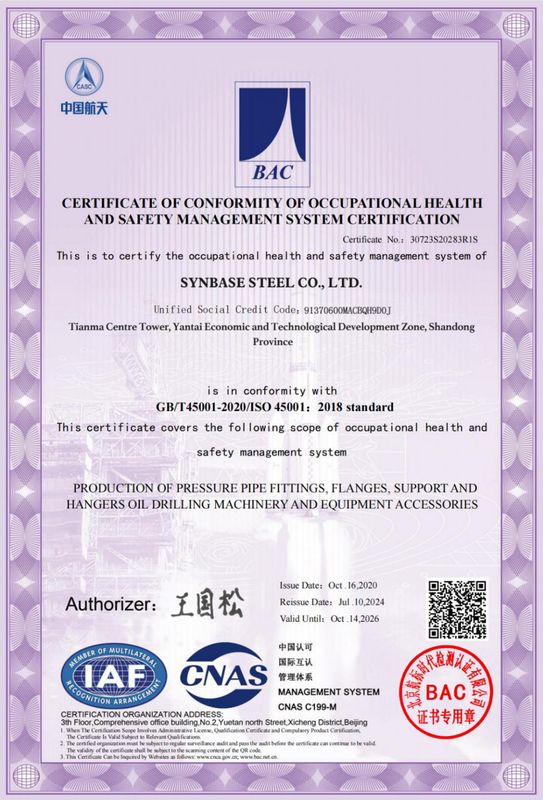
| ISO 45001:2018 | Third-party registrar | Occupational health and safety management | Certificate registration number searchable via registrar |
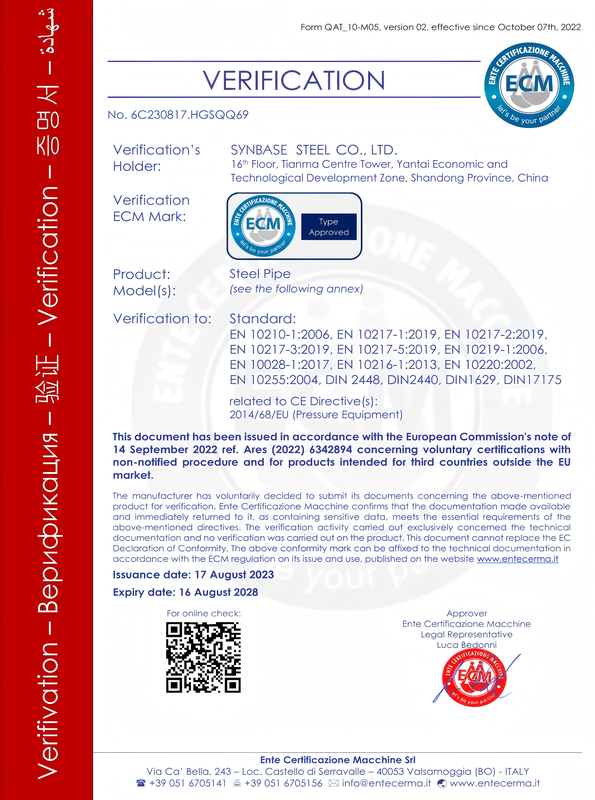
| CE Marking (PED 2014/68/EU) | EU Notified Body | Pressure Equipment Directive compliance for EU import and use | Declaration of conformity with notified body identification number |
| ABS (American Bureau of Shipping) | American Bureau of Shipping | Marine and offshore structural components and piping systems | ABS type approval certificate number searchable in ABS online database |
| DNV (Det Norske Veritas) | DNV GL | Marine, offshore energy, and structural applications | DNV type approval certificate number verifiable at dnv.com |
| BV (Bureau Veritas) | Bureau Veritas | Marine, offshore, and industrial quality assurance | BV certificate number verifiable at bureau veritas.com |
| LR (Lloyd’s Register) | Lloyd’s Register | Marine and offshore structural piping components | LR type approval certificate number verifiable at lr.org |
| CSS (China Classification Society) | China Classification Society | Domestic maritime and offshore platform applications | CCS certificate number verifiable at ccs.org.cn |
Quality Assurance / Documentation
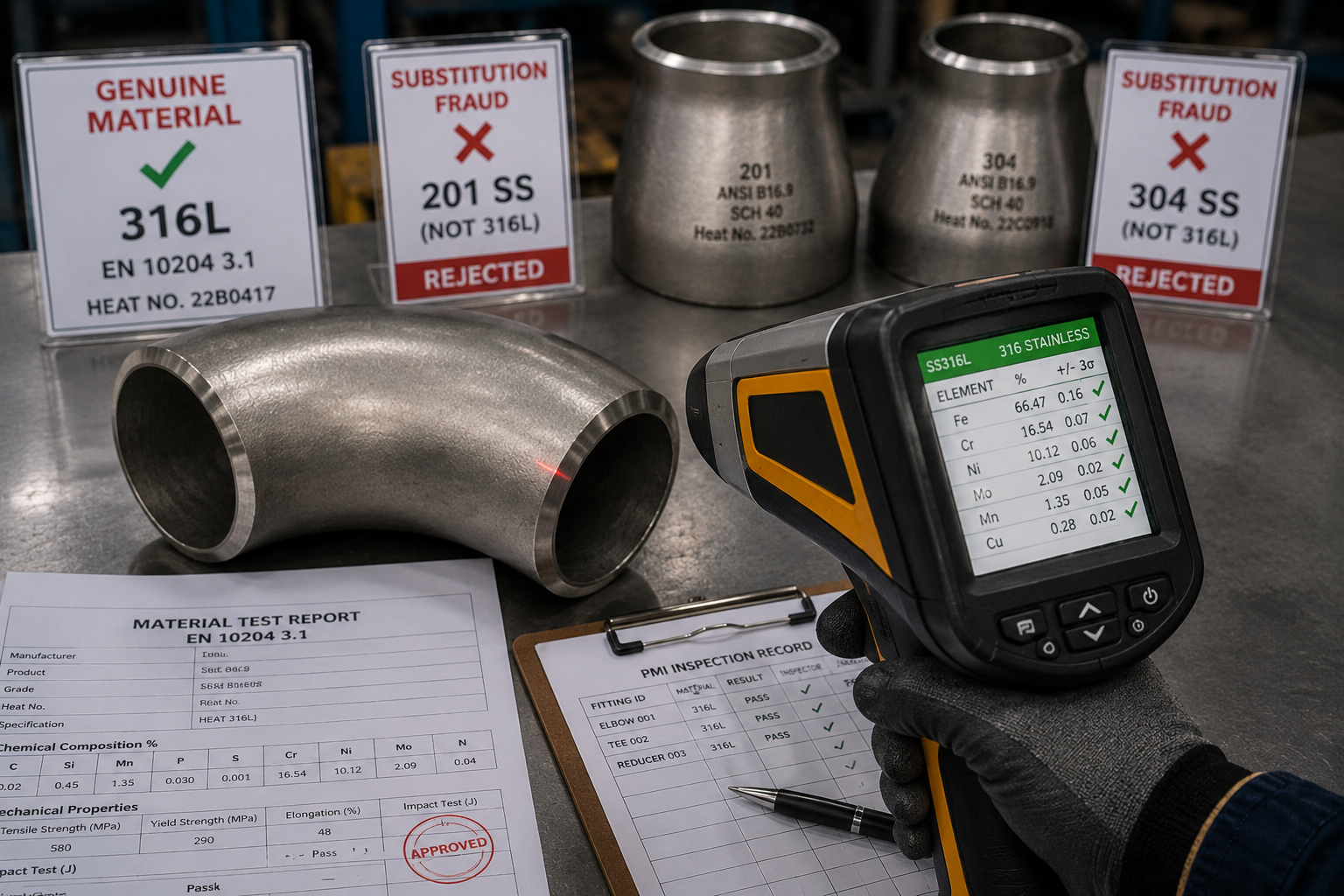
The most frequent procurement error a seasoned industrial buyer won’t make twice is treating one certificate as validation that the materials meet all specification requirements. The gap between a certificate of conformance a trading company can print on its own letterhead and actual heat level traceability is where material substitution fraud happens. The CoC from an uncertified vendor tell you what grade they say they delivered; an MTR with heat number tells you what grade the mill produced; and the physical fitting itself evaluated with PMI is what it’s actually made of.
The 3-Document Stack is the industry standard in the sour gas, offshore, and critical pressure system arena. What makes the three-layer documentation resistant to material fraud is that each document is the responsibility of a different authorizing entity, therefore eliminating the potential for a single source to perpetrate a fraud across all three levels.
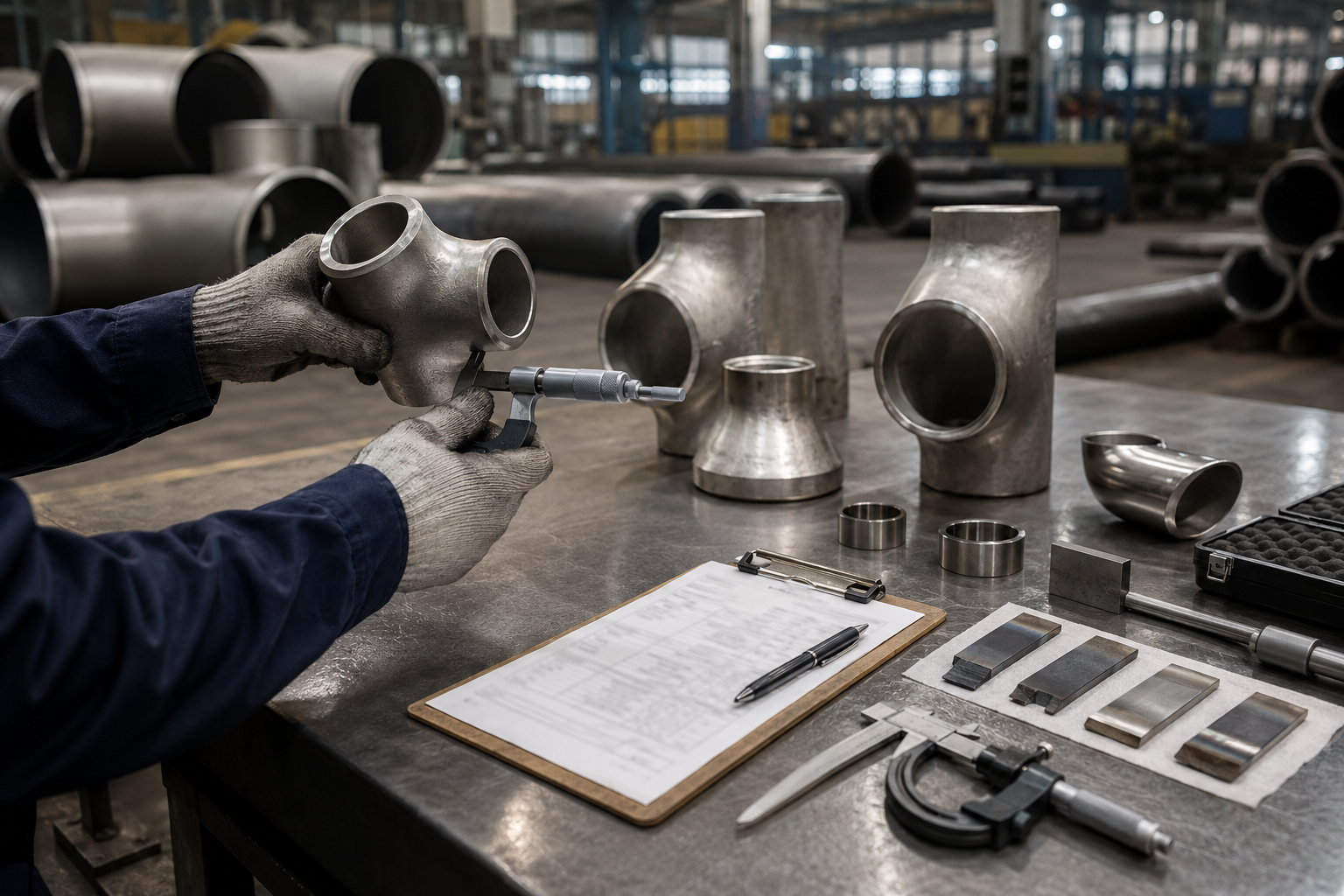
Works/mill inspection — Synbase QC department as manufacturer
Chemical composition, mechanical properties (UTS, yield, elongation), heat number, heat treatment record, dimensional check
Standard requirement for all industrial orders. Minimum documentation level for most EPC specifications.
Independent third-party inspector approved by the purchaser or their authority (e.g., SGS, Bureau Veritas, TÜV)
Same content as 3.1 MTR, plus a signed witness statement from the approved third party who physically observed the tests
Sour gas service (H₂S per NACE MR0175/ISO 15156), offshore platform piping, nuclear piping, North Sea and GoM operator specifications
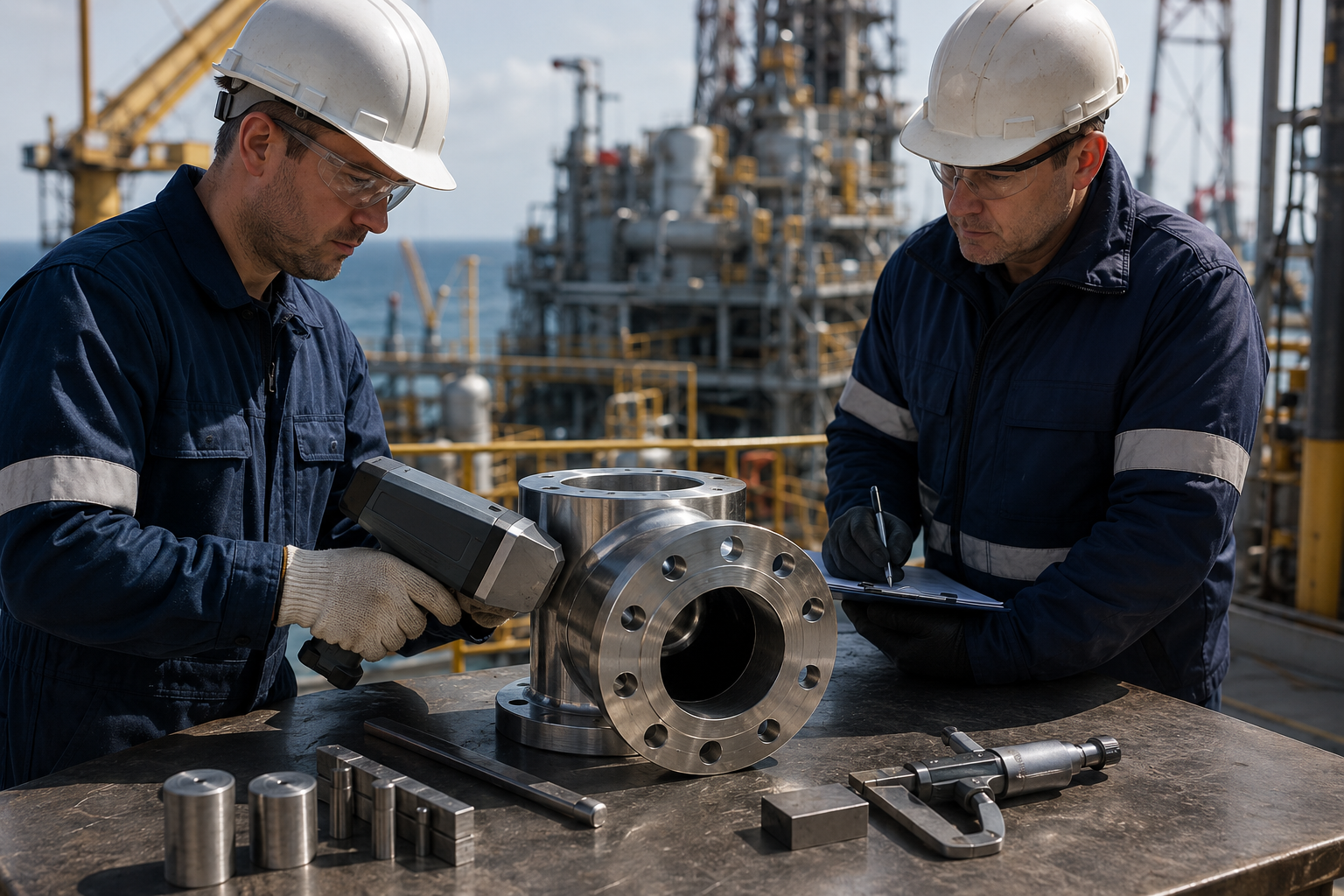
On-site XRF or OES instrument test at receiving dock or fabrication shop
Actual measured Cr%, Ni%, Mo%, Mn%, Si% elemental composition of the physical fitting, matched against grade specification limits
Substitution-risk orders, re-certification of warehouse stock, pre-weld composition verification in critical systems
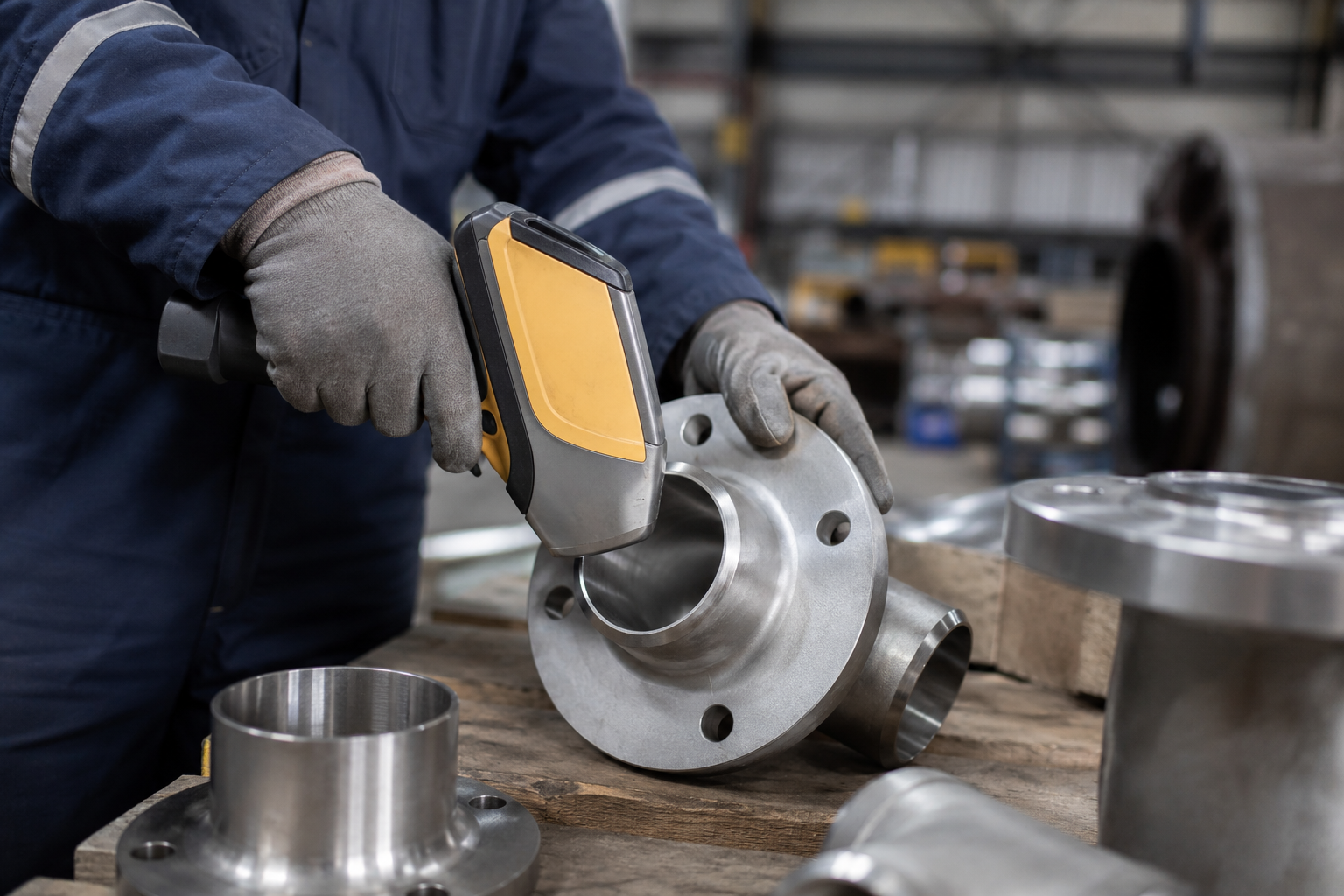
Synbase QC + third-party WPS qualification
Weld procedure specification (WPS), procedure qualification record (PQR), welder certification, NDE records (RT/UT/PT), PWHT documentation
Fabricated fittings, pressure vessel assemblies, Class 2500 high-pressure systems, systems requiring ASME code stamp
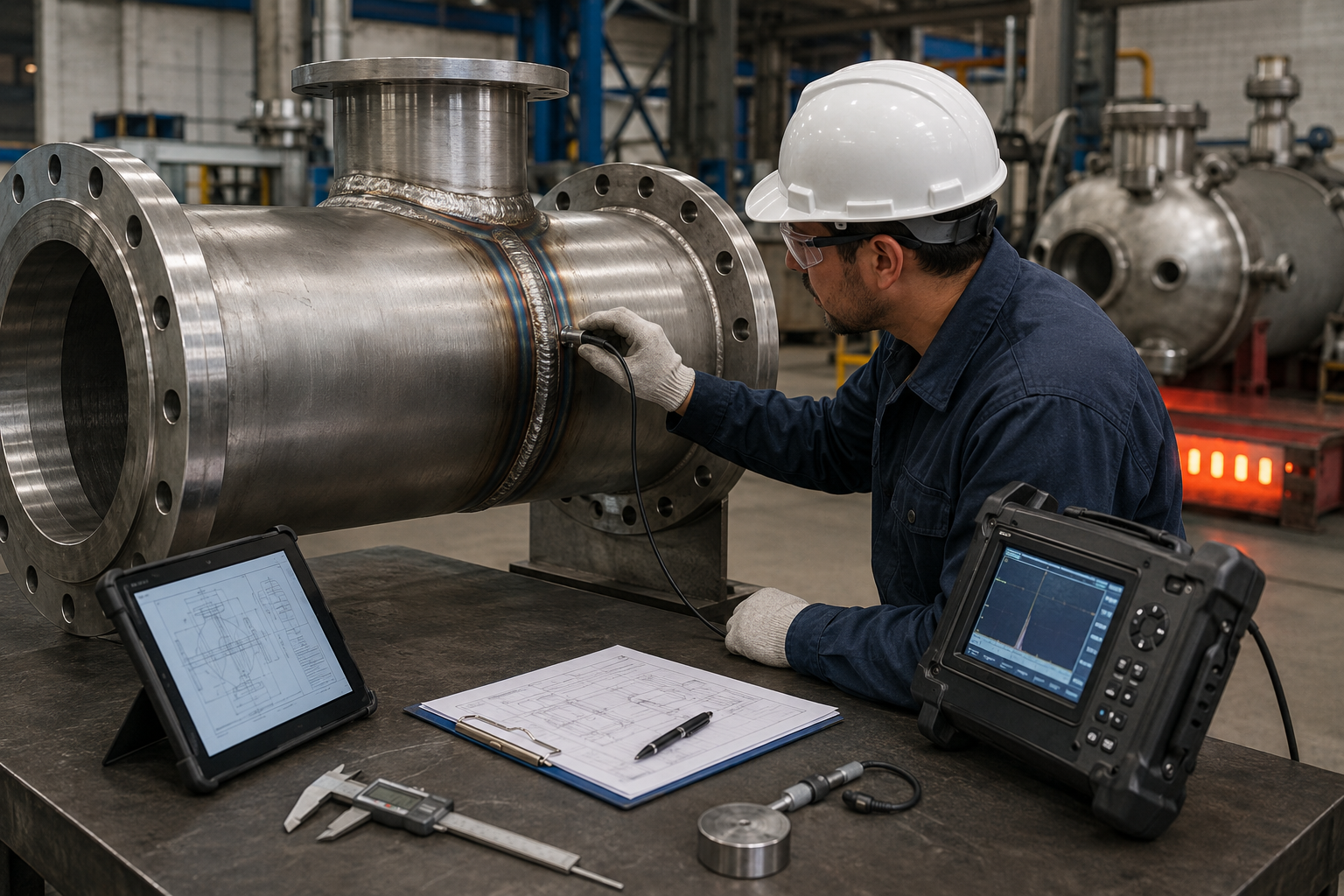
PMI serves as the final check of the 3-Document Stack because only the analysis of the physical fittings (your hands) can give you the accurate chemical analysis versus just reviewing the MTR of the lot you were supposedly sent. XRF spectrometry analysis at your dock takes about 30 seconds and will flag any material that has fooled previous checks in the documentation chain. We recommend on 100% of duplex/super duplex, and on any austenitic orders sourced from a new or uncertified vendor.
We supply MTRs per EN 10204 3.1 on all standard orders. Third party verified CoCs per EN 10204 3.2, complete with inspection by an approved 3rd party (e.g., Bureau Veritas, TUV, SGS, Intertek, or as specified by customer), are available upon special order if confirmation is obtained at the time order confirmation. Please provide the full name of your preferred inspection agency when you place your order.
Would you like to see an example of our EN 10204 3.1 Material Test Report before submitting an RFQ? Download a sample MTR package.
Standards Compliance
An ASME B16.9 dimensionally conforming fitting isn’t necessarily one which also meets EN 10253-4 end preparation requirements required by most offshore, North Sea and European projects. It’s easy for a procurement agent, when ordering stainless steel pipe fittings to be supplied internationally, to overlook the fact that a fitting manufactured to B16.9 specifications doesn’t also conform to EN 10253 Part 4, when it comes to edge preparation, or positive material marking (PMM), and other design considerations. Because ASME B16.9 and EN 10253 Part 4 (specifically B) were developed independently by different bodies, for some overlapping applications, they include distinct specifications that must both be observed.
The reason it falls between the cracks in the procurement process, is that B16.9 defines its specifications, like the centre-to-face and minimum wall thickness, based on the NPS, Schedule and thickness. EN 10253-4 defines its specifications on the basis of a DN, Series and bevel angle related to thickness. It’s possible for a 6-inch Sch 160 butt weld elbow to satisfy B16.9 thickness criteria and have a bevel angle that deviates from the specified EN 10253 Sec 6.3 criteria; Many an international project specification, from the majors like BP, Shell, Total and Equinor, requires conformance to both these standards on the same purchase order.
Reference Matrix
| Standard | Type | Covers | Key Requirements |
|---|---|---|---|
| ASTM A403 / A403M | Material | Wrought austenitic stainless steel butt weld pipe fittings for pressure applications | WP grades (WP304, WP316L, WP317L, WP321, WP347); UTS min 485 MPa (WP316L); Yield min 170 MPa; solution annealing required; wall thickness ≥87.5% of nominal schedule |
| ASTM A815 / A815M | Material | Wrought duplex and super duplex stainless steel butt weld fittings | WP2205 (UNS S32205): UTS ≥620 MPa, Yield ≥450 MPa; WP2507 (UNS S32750): UTS ≥800 MPa, Yield ≥550 MPa; phase balance testing required |
| ASTM A182 / A182M | Material | Forged or rolled alloy and stainless steel flanges, socket weld fittings, threaded fittings | Grades F304, F316L, F317L, F321, F347, F51 (2205), F55 (2507); covers the forged product form (socket weld, threaded) — not butt weld |
| ASTM A240 / A240M | Material | Chromium and chromium-nickel stainless steel plate, sheet, strip for pressure vessels and piping | Used as base material for fabricated fittings; covers all austenitic and duplex grades |
| ASME B16.9 | Dimensional | Factory-made wrought butt welding fittings: elbows, tees, reducers, caps | Wall thickness ≥87.5% of nominal pipe schedule; center-to-face and end-to-end dimensions; beveled end per ASME B16.25 |
| ASME B16.11 | Dimensional | Forged socket weld and threaded fittings: elbows, tees, crosses, couplings | Pressure classes 3000, 6000, 9000 lb; bore dimensions; thread form per ASME B1.20.1 (NPT) |
| ASME B16.5 | Dimensional | Pipe flanges and flanged fittings, NPS 1/2″ through NPS 24″ | Pressure classes 150 through 2500; bore, bolt circle, raised face dimensions; material groups |
| EN 10253-4 | Dimensional + Material | European butt welding pipe fittings: austenitic stainless steel, weldable grades | Series 1 (lighter wall) and Series 2 (heavier wall); end preparation per Section 6; marking requirements per Section 9 |
| DIN 2605 / 2615 / 2617 | Dimensional | German elbow (2605), tee (2615), reducer (2617) standards for industrial piping | Older EU specification still referenced in German and Central European EPC piping specifications |
| JIS B2312 | Dimensional | Japanese stainless steel butt weld pipe fittings for pressure piping | Covers austenitic grades in JIS designation; applicable for Japanese EPC projects in Asia-Pacific region |
Ordering material solely based on “ASME B16.9” if the project specification may require EN 10253 for compliance, may leave gaps when procuring for international use. Verify with your project specification the required standard before creating a purchase order. In cases where dual (or triple) standards document packages are requested (e.g. ASME + EN + JIS) define these during the inquiry process to minimize delay caused by certificate re-creation.
Root Cause Engineering Analysis
The costliest piping failure is rarely one which occurs due to manufacturing errors; it’s a perfectly valid engineering choice that was applied to the wrong engineering specification. The leading cause of stainless steel piping fitting premature failure in service conditions has been traced to selection errors, where the incorrect grade of stainless steel alloy was chosen. The PREN-Based Alloy Selection Matrix in Section 2 provides guidance to avoid this problem and subsequent repair, downtime and liability.
Table below outlines the six common failure modes for stainless steel pipe fitting products, identifying the root cause, recommended preventative actions, and suggested steel grades. Note that failures can vary: the origin may be the steel chemistry itself (e.g., SCC in chloride environments), the process utilized (e.g., welding-induced sensitization, thread galling), or may be based entirely on fraudulent or inappropriate material substitution.
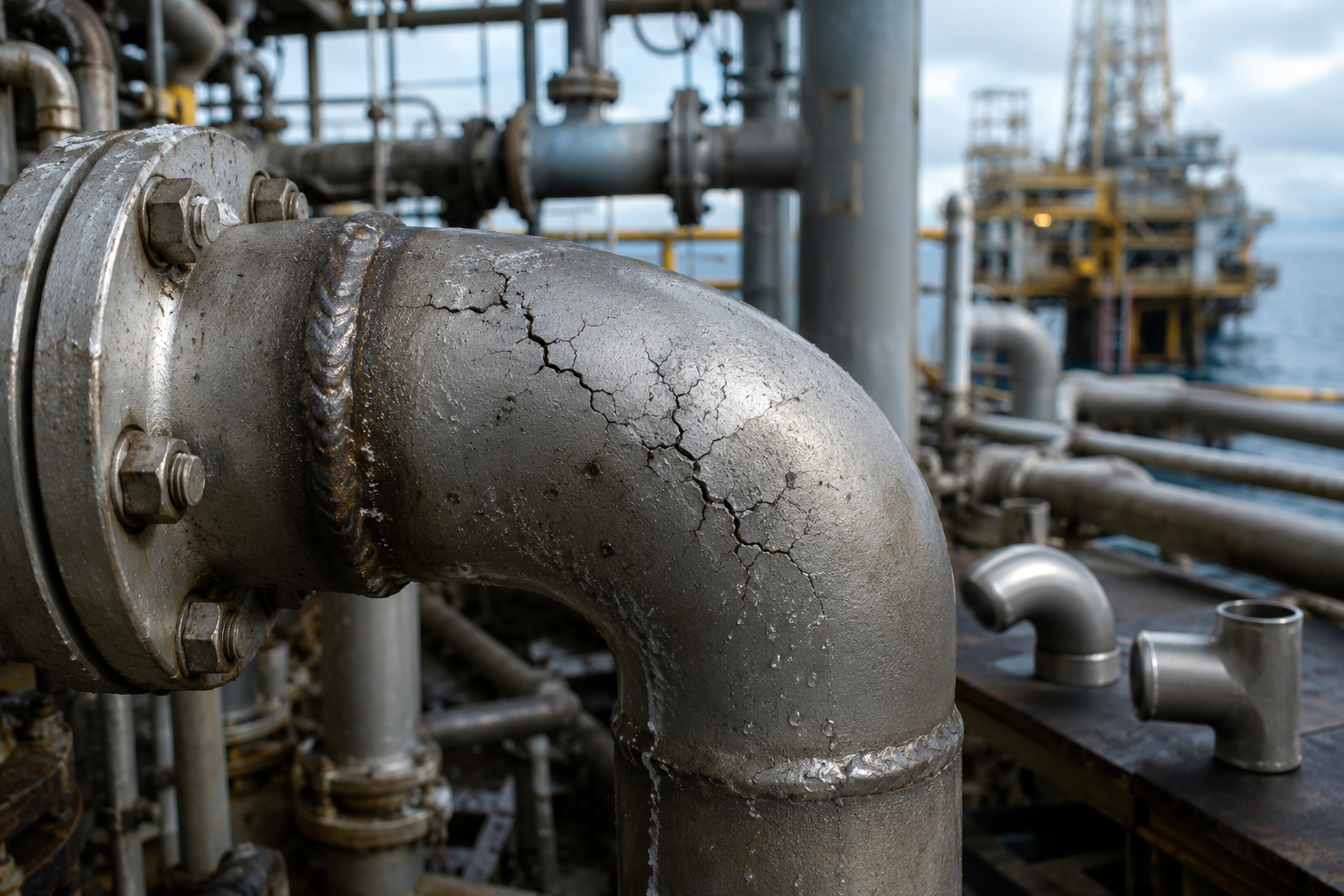
Wrong alloy grade selection for Cl⁻ concentration + temperature combination.
Cl⁻ >300 ppm combined with tensile stress and temperature >50°C exceeds passive film stability for austenitic grades. 316L SCC threshold at 60°C is approximately 700–900 ppm Cl⁻.
Select duplex 2205 for medium-chloride environments; 2507 for seawater. Reduce stress concentrations at weld toes. Specify solution-annealed condition to minimize residual stress.
2205 (Cl⁻ up to ~10,000 ppm); 2507 (seawater service).
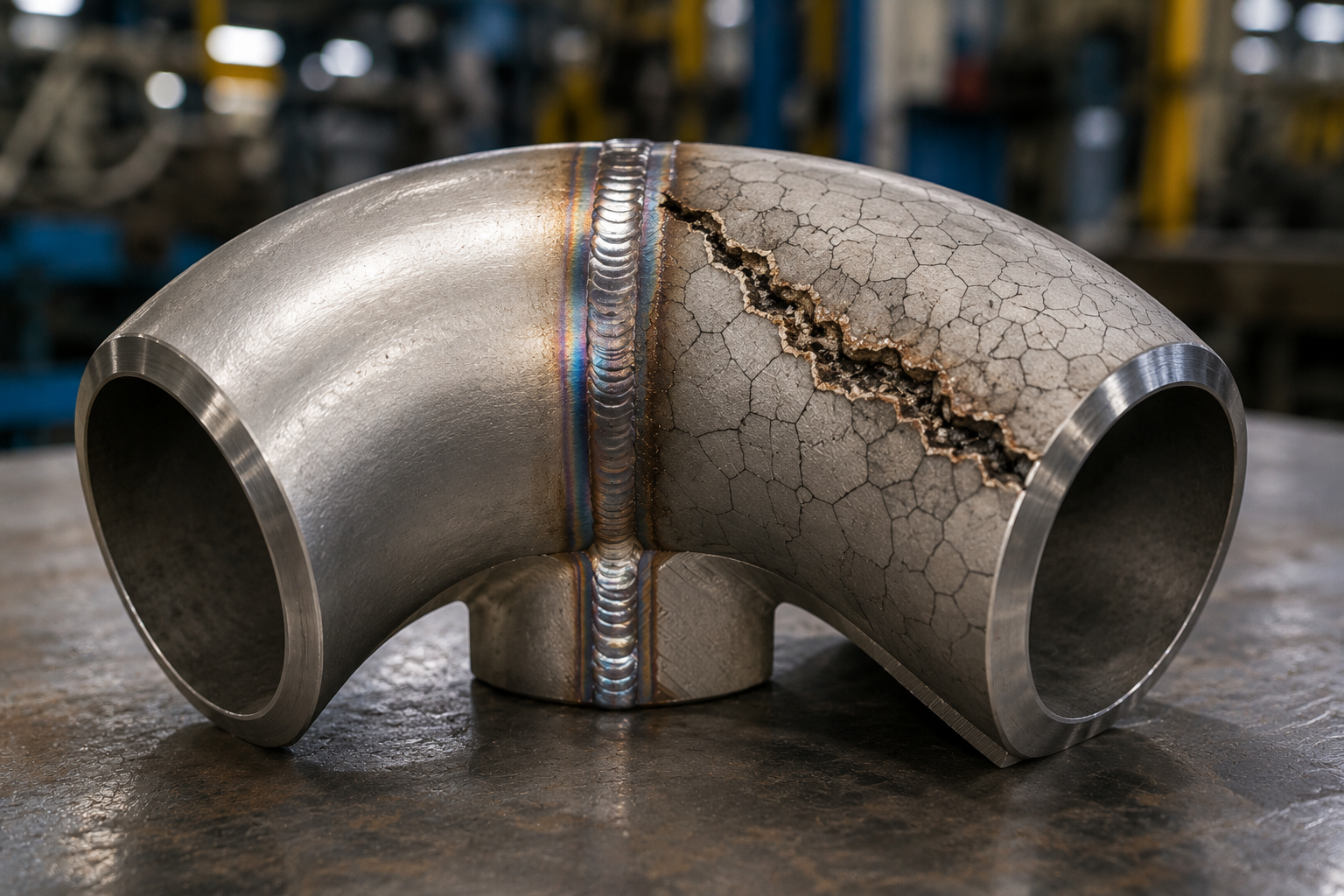
Sensitization damage during welding: carbon >0.03% + heat input in the 425–870°C sensitization range precipitates chromium carbides at grain boundaries.
Chromium depletion zone (<12% Cr) adjacent to carbides loses passivity. In subsequent service, intergranular corrosion progresses along depleted boundaries.
Specify L-grade (316L, 304L, C ≤0.03%) or stabilized grade (321 with Ti, 347 with Nb) for any welded assembly. Post-weld solution annealing restores passivity if geometry allows.
316L (standard welded service); 321 or 347 (high-temperature welded service).
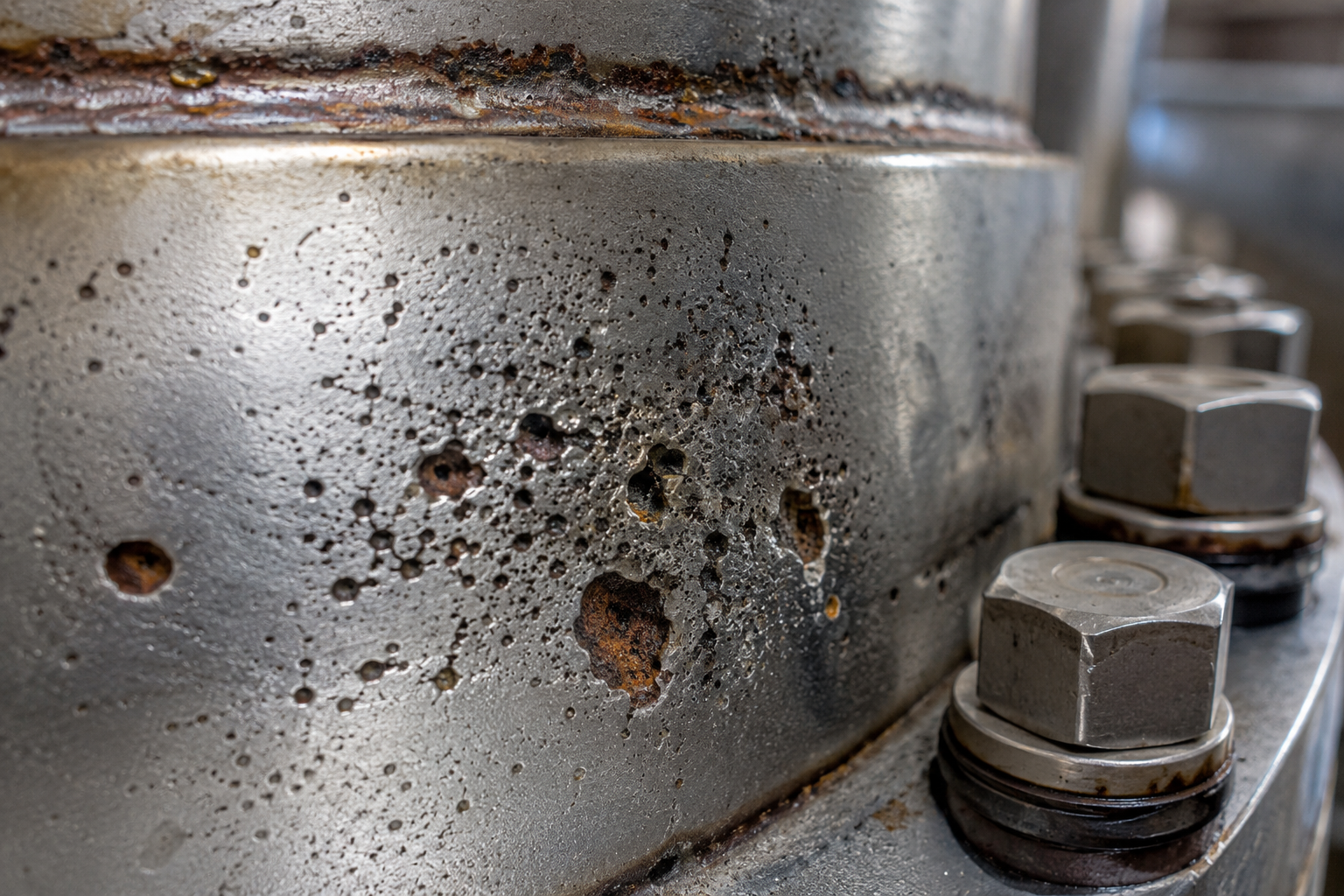
Service Cl⁻ concentration exceeds PREN threshold, initiating passive film breakdown in tight crevices or at surface defects.
Chloride ions displace oxygen at the passive film surface, creating an anodic pit that becomes self-sustaining once initiated. Pitting often begins under gaskets, at weld toes, or at mechanical damage sites.
Match PREN to service chloride concentration using the alloy selection matrix. Avoid austenitic grades in stagnant seawater. Use electropolishing or passivation treatment to reduce surface roughness.
Per PREN matrix: 316L (<1,000 ppm Cl⁻); 2205 (<10,000 ppm); 2507 (seawater).
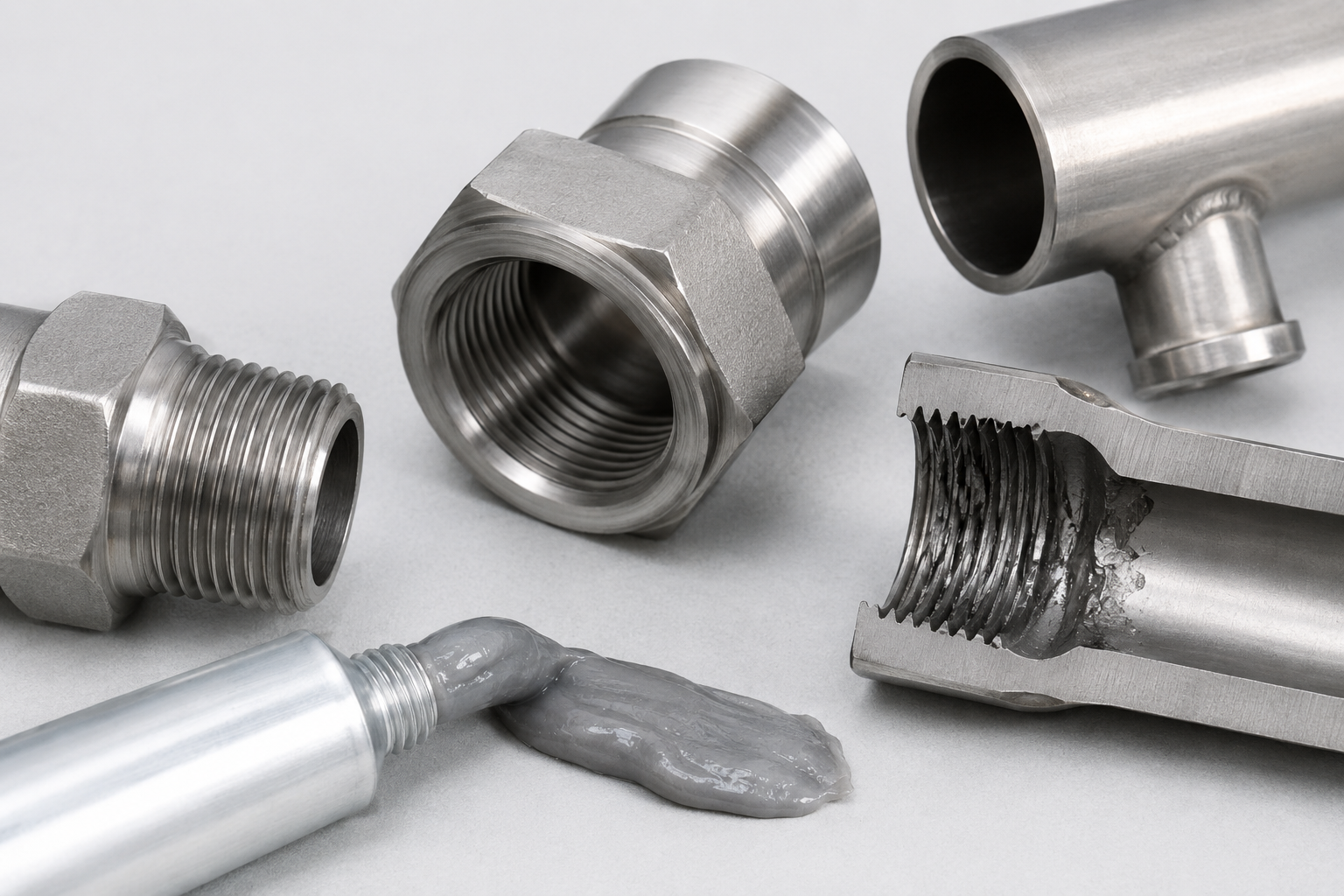
Stainless-on-stainless galling seizes threaded connections during assembly under high contact pressure.
Austenitic SS has low surface lubricity and high adhesion coefficient under thread contact load. Cold welding initiates at asperities, progressing to galling that prevents breakout and requires fitting removal by cutting.
Apply nickel-based anti-seize compound (Molykote 1000 or equivalent) on NPT threads before makeup. For permanent pressure lines, socket weld fittings eliminate threading risk entirely and achieve higher pressure rating.
All austenitic grades susceptible. Anti-seize required for NPT/BSPT threaded connections. Socket weld is the engineering solution for permanent installations above Class 3000.
Material substitution fraud from gray-market suppliers: 201 SS or 304 SS supplied and certified as 316L; 304 supplied as 316L to capture nickel price arbitrage.
201 SS contains manganese instead of nickel — it is significantly less corrosion resistant than 304. 304 lacks the molybdenum that gives 316L its chloride resistance advantage (PREN difference: 316L ≈24 vs 304 ≈19). Fabricated mill certificates look identical to genuine EN 10204 documents — visual inspection cannot distinguish them.
Require MTR with heat number + PMI (XRF) on receipt. Specify EN 10204 3.1 minimum. For critical applications, specify EN 10204 3.2 with named third-party inspector. PMI takes 30 seconds per fitting and catches 100% of elemental substitution.
Any grade — prevention is PMI-based, not grade-specific. Higher-cost grades (2205, 2507, 904L) carry higher substitution risk.
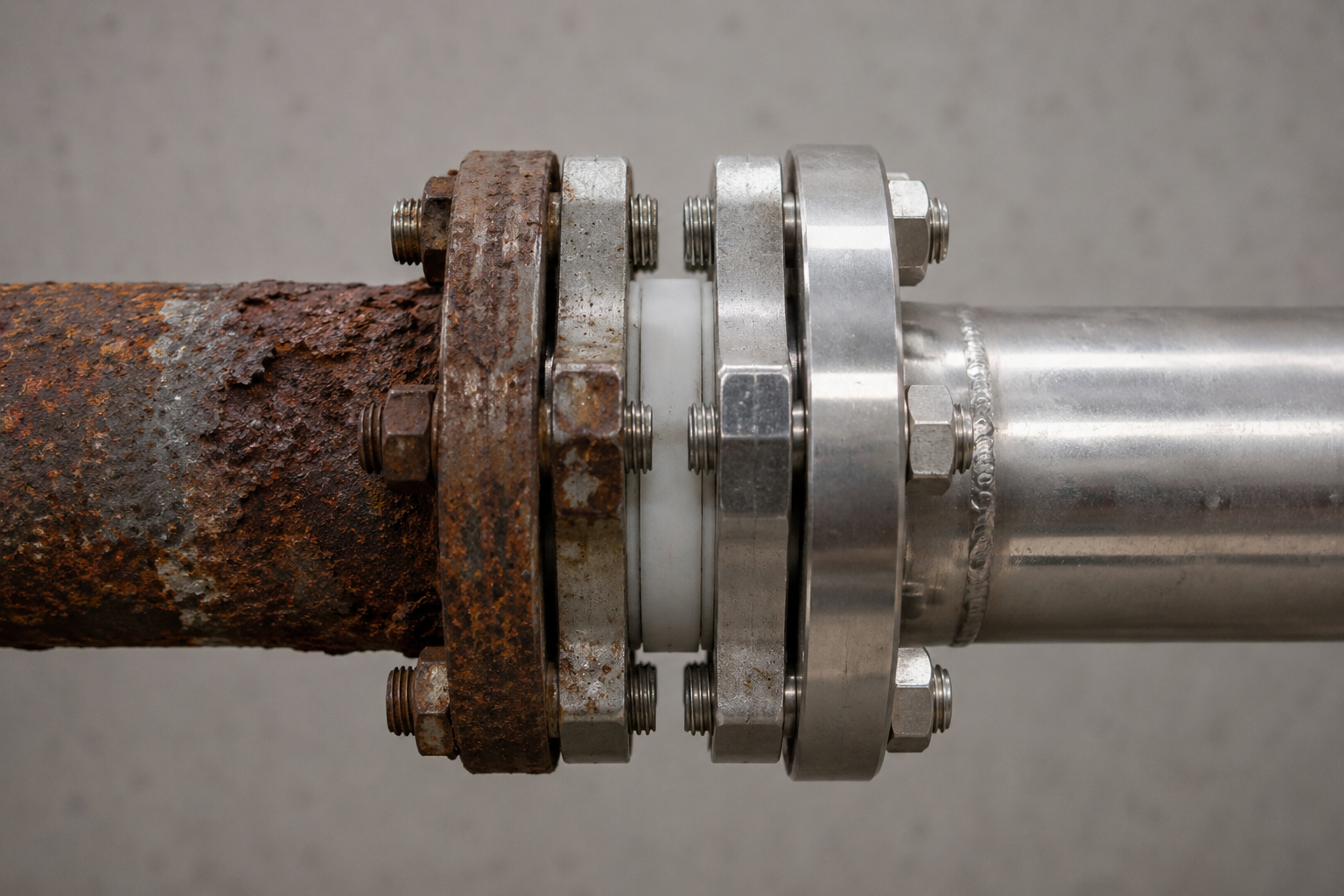
Potential difference between stainless steel (noble) and carbon steel (active) creates galvanic cell in conductive electrolyte.
Counter-intuitive failure: it is not the SS fitting that corrodes — it is the adjacent carbon steel pipe or fitting that corrodes at an accelerated rate. In a piping system with both SS and CS components connected in conductive fluid, the CS section acts as the sacrificial anode. Specifying SS fittings at a transition without isolation addresses the appearance of “upgrading” the system while actually accelerating failure at the interface.
Install electrical isolation flanges (dielectric unions) at all SS-to-CS transitions. Do not allow direct metal-to-metal contact between SS and CS in fluid service without isolation.
Isolation flanges required regardless of SS grade selected.
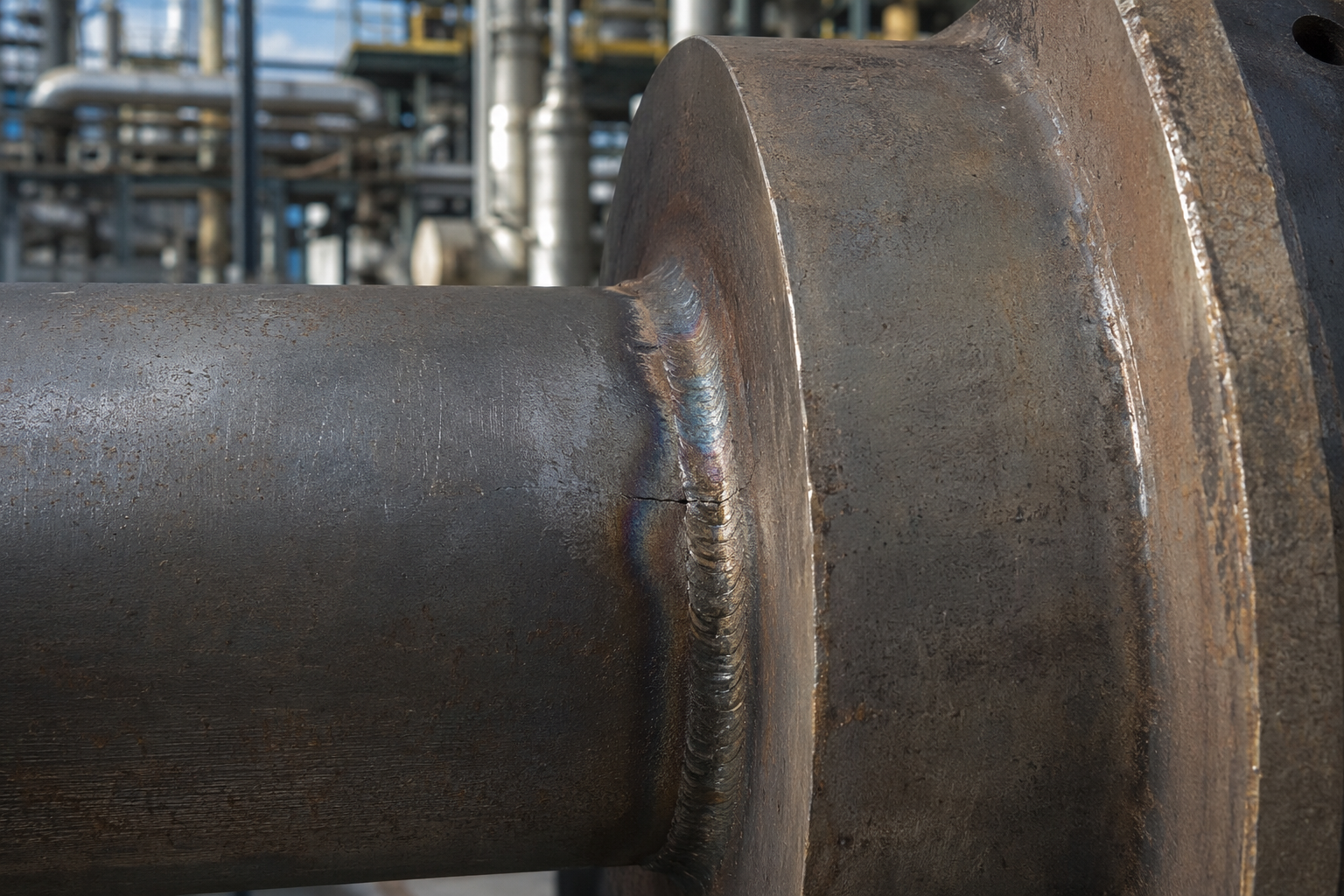
Asymmetric weld preparation or bore misalignment creates stress concentration at fitting-to-pipe junction.
ASME B16.9 tolerances allow for bore mismatch when fitting schedule does not match pipe schedule. Turbulent flow at bore step + vibration loading initiates fatigue cracks at the weld toe.
Confirm that fitting wall schedule and pipe wall schedule are matched to minimize bore step. Specify end preparation per ASME B16.25. For vibration-prone service, specify long-radius elbows (R = 1.5D) rather than short-radius.
Not grade-dependent. Production-quality issue: specify ASME B16.9 wall tolerance and end prep to minimize mismatch.
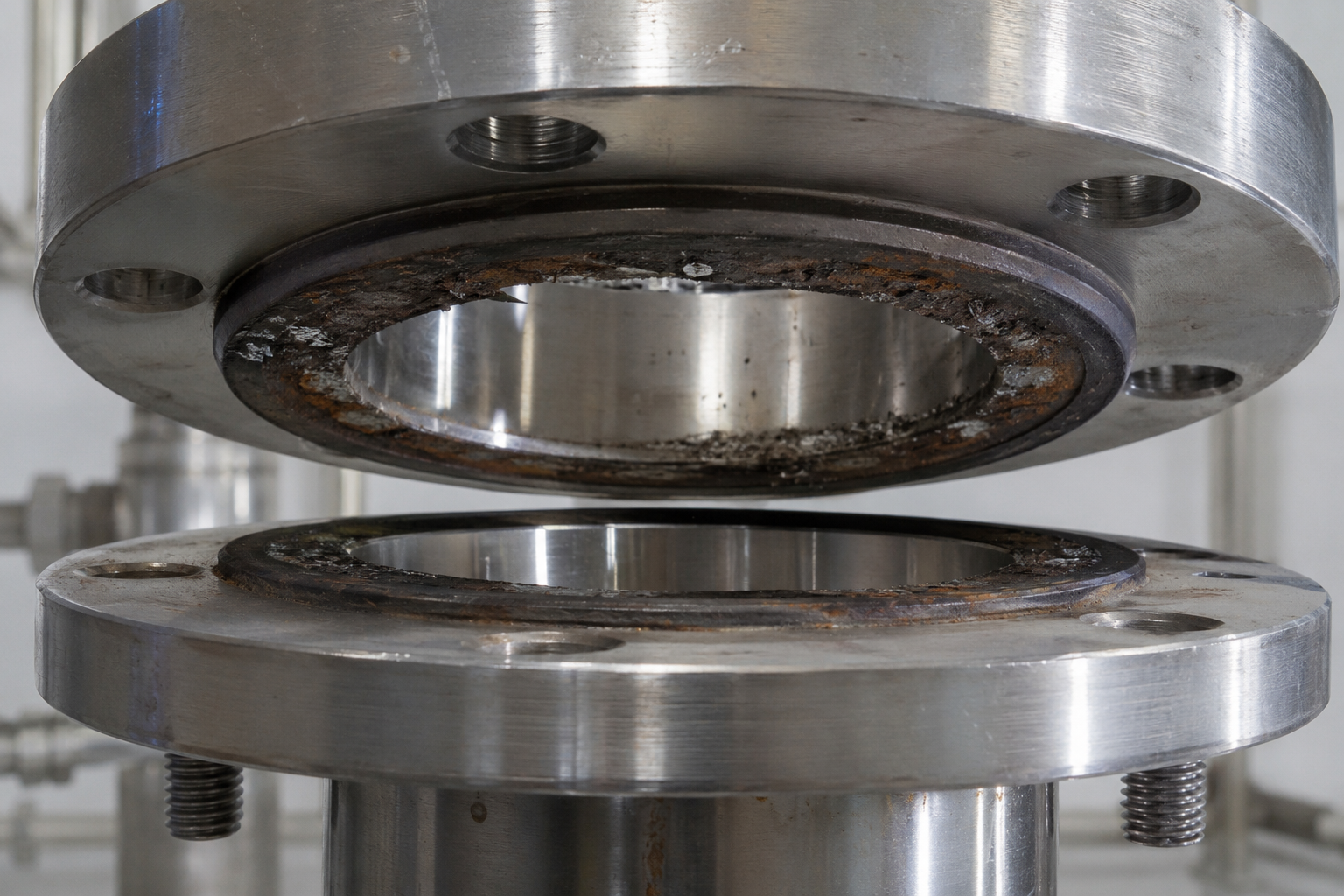
Oxygen-depleted zone under gasketed surfaces accelerates localized passive film breakdown.
In the crevice between flange face and gasket, oxygen is consumed and cannot be replenished. The locally low-oxygen, high-chloride environment initiates pitting below the threshold PREN of the base material.
Use PTFE-encapsulated or spiral-wound gaskets. Ensure raised face flatness per ASME B16.5 requirements. For highly aggressive media, step up one PREN grade at flanged connections (specify 2205 where the line is 316L). Crevice corrosion resistance requires PREN ≥40 in chloride service, not always met by standard austenitic grades.
316L minimum for most crevice applications; 2205 for elevated Cl⁻ service; 2507 for aggressive seawater at flange connections.
Application Engineering
Request Application Engineering ConsultationThe industrial sourcing of stainless steel piping fittings is fraught with challenges beyond the price per unit. Nickel price volatility introduces uncertainty into project procurement budgets, especially on large EPC projects with substantial requirements for 316L or 2205 duplex pipe fittings from a verified 316l stainless steel pipe fittings manufacturer. As a stainless steel flanges manufacturer and pipe fittings producer with direct factory output, the industry truth is that Synbase can offer project-level price commitment that US distributors operating on spot pricing cannot. the fundamental difficulty here’s that U.S.-based distributors offer spot pricing and usually can’t make project-level price commitments, their inventory practices geared towards smaller commercial volumes rather than the longer-term procurement needs of industrial and EPC organizations.
Synbase produces piping components for over 100 countries with global exports valued at 3 billion RMB annually. this allows us to discuss price per project for orders where lead times are established, specifications are confirmed, and the project provides sufficient project order value. The procurement table below depicts our standard commercial policies, although project pricing may be negotiated based on the full project piping material list.
| Parameter | Standard Catalog Orders | Custom / Project Orders |
|---|---|---|
| Minimum Order Quantity (MOQ) | 50 kg for common grades (304, 316L) in standard sizes | Negotiable; large OD fittings (NPS ≥12″) quoted per piece with no weight floor |
| Lead Time — Stock Grades | 3–7 business days (NPS 1/2″–4″, 304/316L, standard schedule) | N/A (custom orders below) |
| Lead Time — Custom / Special | N/A | 4–8 weeks from order confirmation; milestone updates at 50% and 80% completion |
| Size Range (Butt Weld) | 1/2″–24″ NPS from stock | NPS 26″–48″ manufactured to order; larger sizes as fabricated fittings on inquiry |
| Grades Available | 304, 316L, 317L, 321, 347 (common austenitic) | 2205, 2507, 904L, Alloy 20, and any ASTM-specified austenitic or duplex grade |
| Standard Documentation | MTR per EN 10204 3.1 (heat number, chemistry, mechanical properties) | EN 10204 3.2 with named third-party inspector on request; Weld Maps; NDE reports |
| Inspection Options | Dimensional inspection + hydrostatic test standard | PMI (XRF), RT/UT/PT per ASTM A403 Section 8, Charpy impact, intergranular corrosion test per ASTM A262 |
| Incoterms | FOB Tianjin or FOB Shanghai (standard) | CIF, CPT, DAP, DDP on request; project-specific Incoterms confirmed at order |
| Shipping Options | 20′ FCL or LCL consolidation | 40′ HC FCL for large project orders; air freight for urgent replacement parts |
| Overseas Offices | Malaysia office (est. 2018) for SE Asia EPC coordination | Thailand office (est. 2022) for Thailand and regional Southeast Asia procurement |
| Cost Factor | Carbon Steel (coated) in Cl⁻/H₂S Service | 316L Stainless Steel in Same Service |
|---|---|---|
| Typical Service Life (chloride / sour gas) | 3–7 years (coating failure + corrosion) | 15–25 years (passive film stable below Cl⁻ threshold) |
| Replacement Events per 20-Year Asset Life | 3–5 replacement cycles | 0–1 replacement events |
| Estimated Downtime per Replacement (per line) | 4–12 hours for accessible lines; 24–72 hours for embedded or insulated runs | N/A (planned maintenance only) |
| Material + Labor Cost Ratio (20-year horizon) | Upfront lower; cumulative higher when replacement labor and downtime included | Upfront 3–4× higher; lower cumulative cost over 15+ year horizon |
| Primary TCO Advantage Threshold | CS preferred when process life is <5 years or non-corrosive service | SS preferred when process life is >10 years and corrosive service present |
TCO analysis from industry’s typical replacement rate for corrosive process piping. Actual life depends on fluid chemistry, temperature and pressure. For site-specific analyses for your process fluids, contact Synbase Steel.
Request Project-Level Quote with MTR Package
Request Project-Level Quote with MTR PackageEngineering & Procurement Tools
Three tools that run the procurement workflow end to end: select the right stainless grade for your service conditions, confirm the documentation your project requires, and assemble a complete request for quotation.
Match your stainless grade to your service environment using PREN threshold values. Enter chloride concentration, operating temperature, and service conditions (sour gas, acid, high temp) for an initial grade recommendation across 304L through 2507 super duplex.
Select your project specification type to generate the required documentation package. Covers MTR, CoC, PMI, API mill certificates, CE / PED, class society approvals (ABS / DNV / BV / LR), and sour gas test reports per NACE MR0175.
Compile your fitting type, selected grade, dimensions, and certification scope into a structured request for quotation, then submit it to Synbase for availability and lead-time confirmation.
ASME B16.9 • ISO 15156 • NIST Materials Engineering
Synbase Steel offers pipe fittings in austenitic alloys 304, 304L, 316, 316L, 317L, 321, 347, and 904L as well as duplex 2205 (UNS S32205) and super duplex 2507 (UNS S32750). Alloy grade selected according to process stream’s concentration of chlorides and temperature. The 316L (low alloy content), 2205 duplex (medium alloy content), and 2507 super duplex (high alloy content) work as well as a PREN-Based Alloy Selection chart indicates, from about 1000ppm to over 19,000ppm, for seawater with pitting to be very unlikely for any of the grades listed. Consult section 2 for PREN value based material selection based on this fluid analysis. The only exception listed is sour service (H₂S per NACE MR0175), here use 316L, with 22HRC hardness, and confirm on MTR.
The dimensional basis for any factory made fitting for butt welding for piping in pressure applications is ASME B16.9. This standards document outlines all dimensional information relating to: the center-to-center (end-to-end for reducers & caps) length; tee center-to-end dimension; leg dimensions for tees and laterals; elbow angle dimensions; minimum wall thickness (93.75% of Schedule based on piping standard); outside diameter tolerance of the tubing which makes up the fitting; etc. While the standards outline dimensions and a specification method for material and testing for butt weld fittings (ASTM A403 or ASTM A815).
ASTM A403 is for wrought austenitic stainless steel fittings made by forming from a pipe blank, barstock or plates, it typically encompasses elbows, tees, caps and reducers. The ASTM A182 material standard covers flanged fittings that are forged, not formed from pipe products. both these material standards would describe a 316L fitting but based on different forming processes, for use in your flanged system, using ASTM A403 WP316L for the butt-welded portions of you system piping and the use of a ASTM A182 F316L for use on our flanged system is suitable.
I suggest the use of the three-tier-level documents system; First the Material Test Report (MTR) per EN 10204 Type 3.1 which shows the heat lot number against, the material composition/chemical analysis, and all mechanical properties for the subject fitting as tested by the manufacturer itself. Secondly, for enhanced, mission-critical services, consider having third party to visit and certify to this MTR document to obtain an EN 10204 3.2 level document, this will add value as it shows third-party verification to material properties and chemistry. And last, the most critical link, which alone would provide positive material confirmation, the physical examination of the fittings prior to installation, using PMI device (using an XRF method – an instrument to measure chemical composition on surface) and showing an average result of approximately 16Cr/12Ni/2Mo that confirms the material to be 316L. If a 304 fitting were offered instead of a 316L one, it will show an approximate composition of 18Cr/8Ni/0Mo, which would be identified via a PMI process with an acceptable XRF and no other documents, for it would never match any specification documents (like MTR 3.1 or 3.2), and hence no vendor would ever be brave to sell such substitute with any of those types of documents.
PREN stands for Pitting Resistance Equivalent Number. It’s determined by PREN = %Cr + 3.3%Mo + 16%N and it’s an indication of how resistant a stainless steel grade is to concentrated pitting caused by localized chloride concentrations. A higher PREN is a better resistance. Stainless grade 316L will typically be in the order of 23-25, duplex 2205 about 35-37, and super duplex 2507 42-44. PREN is important since stainless steel isn’t a single material. Often stainless steel refers to all corrosion resistant steels but that’s simply not true. In an environment with over 100ppm chlorides a 304 fitting will pit, while in seawater a 316L fitting will pit. Using PREN as the key alloy selector means that the most prevalent type of premature corrosion failure on a pipework installation, (i.e.: wrong material of construction), won’t happen.
Socket weld fittings (ASME B16.11, ASTM A182): An recessed socket into which the pipe end is inserted and attached by an external fillet weld. Pressure classes available are 3000, 6000 and 9000. standard for small bore sizes NPS 1/8-4. Butt weld fittings (ASME B16.9, ASTM A403): Have bevelled ends matched to the pipe end in which a groove for a full-penetration butt weld is formed. this is the preferred joint for systems NPS 2 and larger in pressure piping, large-diameter industrial applications, or wherever complete NDE (radiography or ultrasonic inspection of the weld) is mandatory. This also removes the crevice formed in socket bore systems which would normally lead to crevice corrosion with aggressive media. for large-diameter stainless steel pipe in corrosive environments, this method should be specified for any permanent pressure line, NPS 2 or larger.
EN 10204 Type 3.2 (also called an “Inspection Certificate 3.2”) requires that test results be inspected and counter-signed by an approved, independent third party inspector named by the customer or by a regulatory agency. This means the inspector must actually be on site to see (not just receive paper copy from) the tensile, chemical analysis and dimension testing take place. EN 10204 3.2 is the minimum level of documentation on NACE MR0175/ISO 15156 sour gas (H₂S) services, major offshore platform process pipe per major operator standards, nuclear systems, and most offshore UK N Sea and GoM pipeline fittings. Please mention at the time you place your order the authorized inspection agency to witness your inspection such as SGS, Bureau Veritas, TÜV, Intertek or your own nominated inspector so that Synbase can make arrangements in your manufacturing schedule to facilitate their inspection.
Standard MOQ is 50Kg for commonly held Austenitic grades 304, 316L and common pipe sizes NPS 1/2-4. Large bore fittings (NPS 12 and upwards) and Speciality Grades (2507 super duplex, 904L, Alloy 20) are quoted individually with no weight based minimum – in some instances a minimum of 1 piece, if a defined spec is agreed with Synbase, can be sourced. Large project based orders with full piping specification can be evaluated by Synbase on the basis of the complete piping bill of materials; such can be provided on an ‘entitlement’ or no item MOQs pricing basis. Forward your project piping class sheet or Material Take Off to Synbase and receive your fully competitive quotation.
Yes. Sour gas service – situations with H₂S as defined by NACE MR0175/ISO 15156 – call for: (1) a 22-maximum hardness for austenitic grade materials (316L and 304L conform when properly heat treated to service condition); (2) EN 10204 3.2 third-party witnessed inspection; (3) Charpy impact toughness tested to minimum specified design temperature; and (4) intergranular corrosion testing per ASTM A262 Practice E for sensitization. Duplex grades 2205 and 2507 also comply with NACE MR0175 hardness requirements after heat treatment to specification. Just be sure to specify “NACE service per NACE MR0175/ISO 15156” on inquiry so that Synbase includes the correct test package in the manufacturing routing.
Synbase makes butt weld fittings through 48″ OD on the first pass of production using their massive, 6000-ton hydraulic press – the amount of press energy and hydraulic forming capacity needed to form heavy gauge duplex stainless plate on large diameter sizes without damaging the microstructure. Sizes NPS 26 to NPS 48 are manufactured to the customer’s order on a typical lead time of 4 to 8 weeks. Fabricated (ASME B16.9) fittings are made beyond 48″ OD upon request. For large diameter stainless fittings for EPC project procurement – where the US and European distributor bases physically can not fulfill – Synbase serves as the direct source for this entire range of sizes, fully supported by ASTM A403 / A815 material certification.