Send Your RFQ to Synbase Steel
Prefer to send drawings, BOMs or attachment lists by email? sales@synbasesteel.com

When your last full joint lands the string 2 ft shy of the hanger, you don’t cut and re-thread a Range 2 joint – Synbase Steel spaces it out with a pup joint machined to the exact grade, weight, and connection of the string it joins.
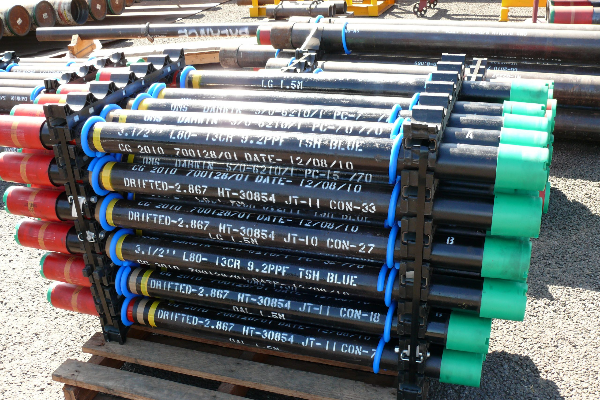
A pup joint is a short length of API 5CT casing or tubing – usually 2 to 12 ft, standard 6 ft – threaded on both ends and run into a tubular string to space it out to an exact depth. Also called a saver sub, spacer, or pup, it sets tubing-hanger landing elevation, positions downhole tools, and keeps couplings clear of the BOP ram closure zone – without field-cutting full-length pipe.
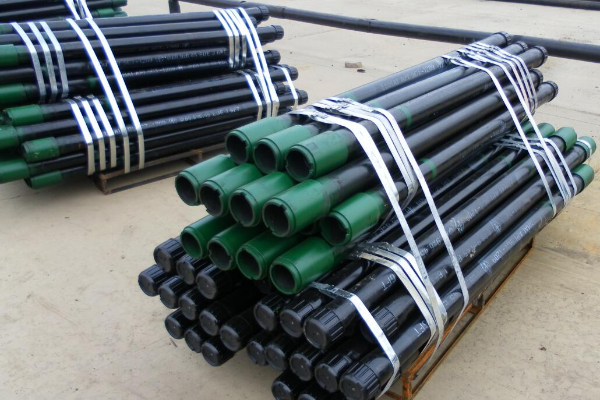
Range 2 tubing and casing run 28-32 ft per joint, and those joints almost never sum to the exact landing elevation a well design calls for. A few inches of error puts a packer off-seat, a gas-lift mandrel at the wrong injection depth, or a coupling inside the BOP ram closure zone.
That last one isn’t a tolerance problem – it’s a well-control risk, because a coupling sitting where the rams must close compromises the seal. Crews carry pup joints for one structural reason is to keep rams closing on pipe body, not on collars.
Lands the tubing hanger at its exact flange elevation after the cement job fixes string depth.
Positions couplings outside the ram closure zone so rams seal on body, not collars.
Sets safety valves, gas-lift mandrels, and logging tools to measured depth in the field without cutting full joints.
Unlike a downgraded stub, a Synbase pup joint is full API 5CT non-welded material – same grade, same −12.5% wall tolerance, same non-welded requirement – engineered to carry the parent pipe’s burst, collapse, and tension rating.
Put plainly: treat the short piece as anything less and it becomes the weak link the whole string is rated to – a mistake that surfaces 10,000 ft down, not on the rack.
Synbase Steel supplies the seven API 5CT stock lengths plus cut-to-order, across the tubing and casing sizes that carry real oilfield demand. Every figure is nominal – your mill certificate carries the CNC-verified as-built value within API tolerance.
| OD (in) | Wall (in) | Weight (lb/ft) | Drift ID (in) | Grades | Connection |
|---|---|---|---|---|---|
| 2-3/8 | 0.190 | 4.70 | 1.901 | J55 · N80 · L80 · P110 | EUE / NUE |
| 2-7/8 | 0.217 | 6.50 | 2.347 | J55 · N80 · L80 · P110 | EUE / NUE |
| 3-1/2 | 0.254 | 9.30 | 2.867 | J55 · N80 · L80 · P110 | EUE / NUE |
| 4-1/2 | 0.271 | 12.75 | 3.833 | J55 · N80 · L80 · P110 | EUE / NUE |
| OD (in) | Wall (in) | Weight (lb/ft) | Grades | Connection |
|---|---|---|---|---|
| 4-1/2 | 0.290 | 13.50 | J55 · N80 · L80 | STC / LTC / BTC |
| 5-1/2 | 0.304 | 17.00 | J55 · N80 · P110 | STC / LTC / BTC |
| 7 | 0.317 | 23.00 | J55 · N80 · L80 · P110 | LTC / BTC |
| 9-5/8 | 0.395 | 40.00 | J55 · N80 · L80 | BTC |
| 13-3/8 | 0.380 | 54.50 | J55 · K55 | STC / BTC |
API 5CT sets length at standard 6 ft with 3 in. (76.2 mm), wall at −12.5% only (no plus tolerance, Clause 7.3), and weight at +6.5%/3.5%. They aren’t the same band, and the mistake of putting one figure on a PO invites the wrong part.
Downhole tubing is sized by OD for tool fit, whereas line pipe is sized by ID for flow – a 2-in. line-pipe ID is a 2-in. tubing OD. Our in-house QA confirms OD against the drift before threading.
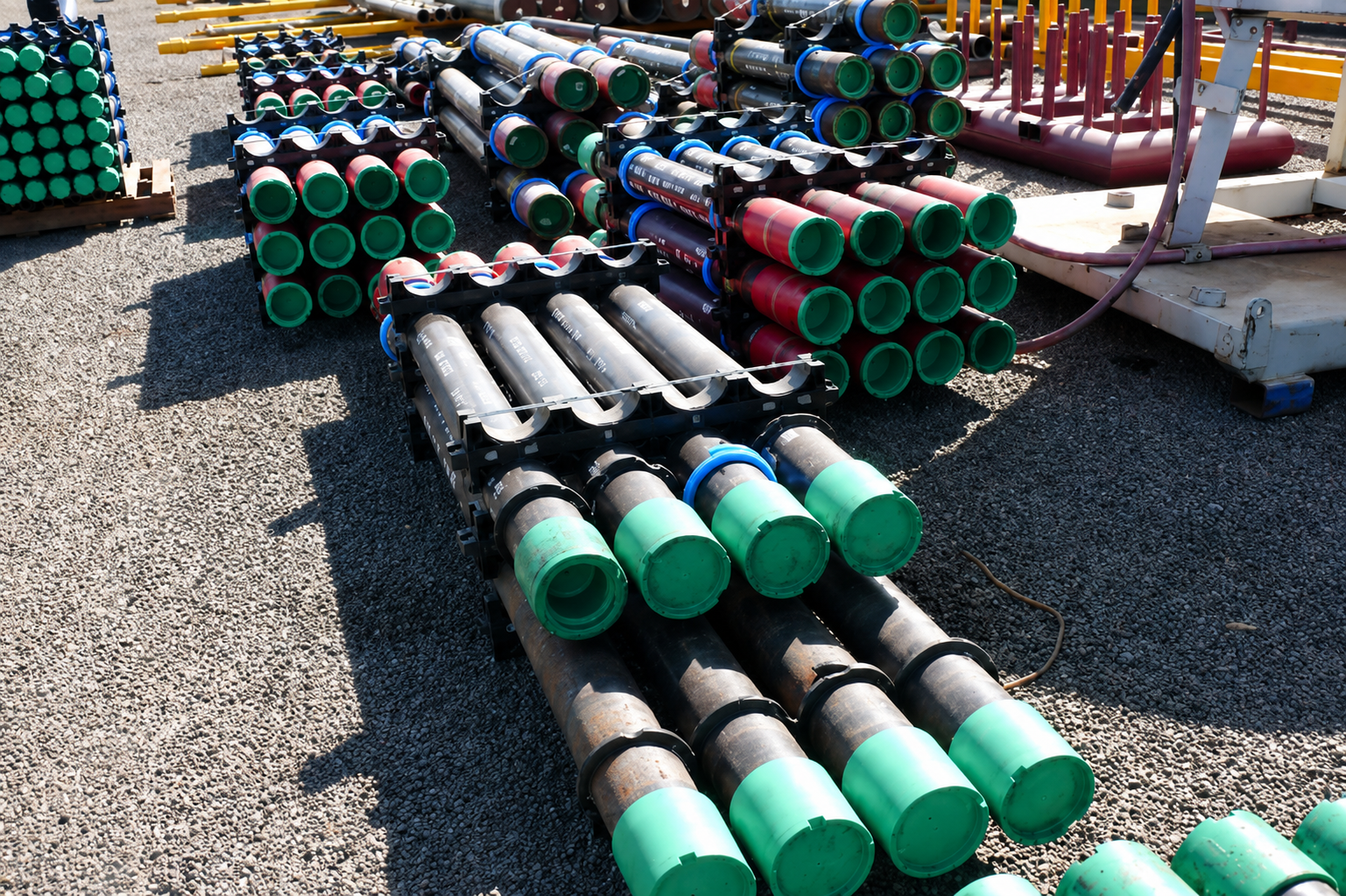
Grade selection answers 3 fundamental questions: how deep (suspension weight), how sour (HS), and how hot and high pressure & temperature (HPHT). The API 5CT Grade-to-Service Map below associates every grade with its minimal yield strength and the well service it serves best, because optimizing only yield strength is the most expensive error in octg.
| Grade | Min Yield (ksi / MPa) | Min Tensile (ksi) | Max Hardness | Heat Treat | Sour (NACE) |
|---|---|---|---|---|---|
| H40 | 40 / 276 | 60 | — | As-rolled | No |
| J55 | 55 / 379 | 75 | — | Normalized | No |
| K55 | 55 / 379 | 95 | — | Normalized | No |
| N80-1 | 80 / 552 | 100 | — | Normalized | No |
| L80-1 | 80 / 552 | 95 | 23 HRC / 241 HBW | Q&T | Yes |
| L80 9Cr/13Cr | 80 / 552 | 95 | 23 HRC | Q&T | Yes (+CO₂) |
| C90 | 90 / 621 | 100 | 25.4 HRC / 255 HBW | Q&T | Yes |
| T95 | 95 / 655 | 105 | 25.4 HRC | Q&T | Yes |
| P110 | 110 / 758 | 125 | — | Q&T | No |
| Q125 | 125 / 862 | 135 | — | Q&T | No |
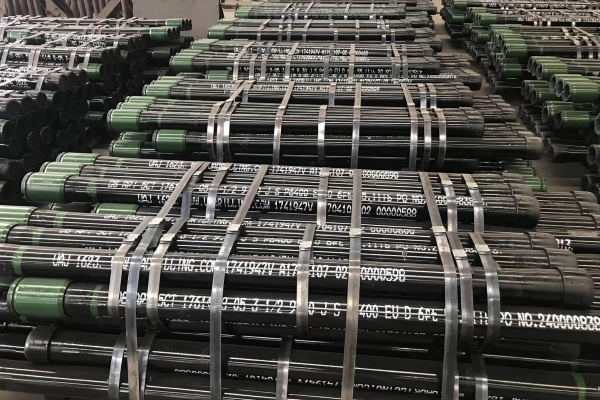
While N80 and L80 both have an 80 ksi minimum yield strength, that wording can lead users to an alternative – a trap, in other words.
Just L80 has the 23 HRC hardness ceiling that qualifies it for sour service under NACE MR0175; N80 doesn’t specify a hardness. A careless comparison of N80 to L80 in an HS well introduces sulfide stress cracking – an unnecessary safety trade-off, cloaked by an arguably similar yield strength figure.
The optimal engineering solution: the sour limit is HS partial pressure 0.05 psia, not an absolute ppm value – 1,000 ppm, at 100 bar, is just sour; the same value, at 1 bar, isn’t.
Q125 is the strongest alloy steel grade; it isn’t sour-specified, but T95 is, so we stock and heat-treat it accordingly to meet demanding well conditions.
“We hold sour-service pups to the NACE 22 HRC limit, not the API 23 HRC ceiling, because on an export order the project spec usually references both standards, and the lower number governs. We would rather re-temper a heat in-house than ship an L80 that passes API and fails the customer’s NACE clause at the rig.”
The thread connects, not the pipe body, is by far the most frequent source of leaks and critical joint failures, since couplings are the weakest point of every casing string. Match the pup’s thread form – not merely its diameter – to the parent string and verify against the coupling grade to be certain it matches or exceeds the pipe.
| Connection | Family | Seal mechanism | Joint efficiency | Best for |
|---|---|---|---|---|
| EUE (8RD) | Tubing, upset | Thread + interference | ~95% | Standard production tubing |
| NUE (10RD) | Tubing, non-upset | Thread + interference | ~80% | Low-pressure, full-bore ID |
| STC | Casing, short round | Thread dope | 60–80% | Surface / non-critical casing |
| LTC | Casing, long round | Thread dope | 70–85% | Intermediate / production casing |
| BTC | Casing, buttress | Thread (not gas-tight) | ~95% tension | High-collapse deep strings |
| Premium (VAM-type) | Both, proprietary | Metal-to-metal seal | 100% | HPHT, sour, gas-tight >5,000 psi |
Orders for tubing pups (EUE/NUE) intended for inclusion in a casing string (STC/LTC/BTC) are quite often the biggest non-productive time-related errors, since the threads don’t connect. EUE and NUE aren’t interchangeable, since NUES can penetrate into un-thickened walls and behave differently under load,while EUEs can cause the end to ‘upset’ for near 100% efficiency.
A premium metal-to-metal connection is recommended below the packer or any HS condition above 0.05 psia, for being gas-tight, rather than an API thread relying on dope. Synbase produces autoadmitted premium pins in the in-house licensed gauges.
Spec a pup joint and it blends into the string; miss one axis and the mismatch jumps out downhole, when non-productive time outweighs part price. The 4-Axis Pup Joint Selector locks in the spec because any field failure can be traced back to one of these four axes.
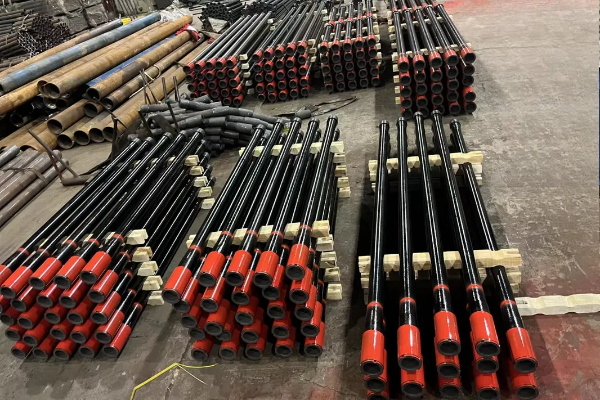
Match exactly — never run 6.50 lb/ft in a 4.70 lb/ft string (wall step = stress riser)
Equal or exceed parent; J55 <8,000 ft, N80 8–12k ft, P110 >12k ft or >10,000 psi
Match thread form, not just diameter; confirm EUE vs NUE vs BTC
Sour (≥0.05 psia H₂S) → L80/C90/T95; CO₂ → 9Cr/13Cr
A complete pup-joint PO order would look like: “pup joint, 2-7/8 OD, 6.50 lb/ft, L-80, EUE 8rd, 6 ft, Qty 4.” Pipe size, weight per foot, grade, connection type and thread form, length and quantity – all six specs present and accounted for, because there are only four possible points of failure, and one missing variable is that error that shows up way downhole.
Add field thread makeup to the spacing calculations: figure about 0.5 in. for an EUE joint and 1.0 in. for an EUE and/or a BTC joint, along with any saver-sub lengths. You can, of course, allow some slack with your calculations; we precision machine with a 1/16 in. cut tolerance, and we’ve a good handle on where you’re, downhole, and where you can be.
If you’ve on site 2-ft, 3-ft, 4-ft and 6-ft pups, then any spacing requirement between 1 ft and 15 ft can be attained in single foot increments – and this is why field crews carry two or three spare pups downhole and don’t just re-thread out fulls. That’s standard practice in industry for uncertainty in spacing, and you still save time on custom mill-cut delays.
You get what you order: pups are used to correct spacing with the same thread at both ends, while crossovers are used to correct either end’s connection spec or dimension discrepancy. Because they look and feel similar, and they fix completely opposite problems, verify your string tally against this specification before creating your next RFQ.
The go-to rig-floor remedy when a string fall a little short is a full joint recut – that process can drain time and resources and, just as critically, sacrifice an engineer’s thread, integrity on which the security of your downhole string relies and a recut is a high-risk venture that compromises that integrity.
A documented Permian horizontal completion closed a 7-ft landing gap with two stock EUE pups instead of cutting a full joint — landing 0.3 ft off TD with every gas-lift mandrel in spec.
“6 feet,” for example, doesn’t precisely pin the problem, because it leaves you questioning whether end-to-end measurement or thread-to-thread measures are more applicable to the situation; either reading could shift total string length up to 15 feet over one hundred joints. While field recuts introduce unknowns, our Synbase pups are CNC precisely machined with clear specifications; let’s know the measurement basis and the tolerance, as in ‘6 ft end-to-end with 1/16in precision tolerance,’ and it’s your purchase.
At Synbase Steel we precisely cut pups from non-welded API 5CT raw tube steel and pass it through a full octg heat treating and CNC thread machining, testing chain – we manufacture our pups with the highest precision for integration into any octg string: heat treat and straightened then cut-to-length and machined, ensures that our pup segments incorporate a verified micro-structure.
Sourced from non-welded octg API 5CT certified tube with chemistry verification per grade (API 5CT doesn’t permit welded pipe).
Matching our pipe per grade. Quench & temper for N80Q/L80/C90/T95/P110 and normalize for J55.
Full-length straightening, then cut to 1/16″ tolerance in-house.
precision CNC threading to API 5B, and we use our thread form gauge to measure all pups for taper, standoff, and thread design.
All pups go through our complete series of checks: full body ultrasonic examination; pressure testing to 20,000 PSI on your required pup joints; and then are sent out as dry pipe.
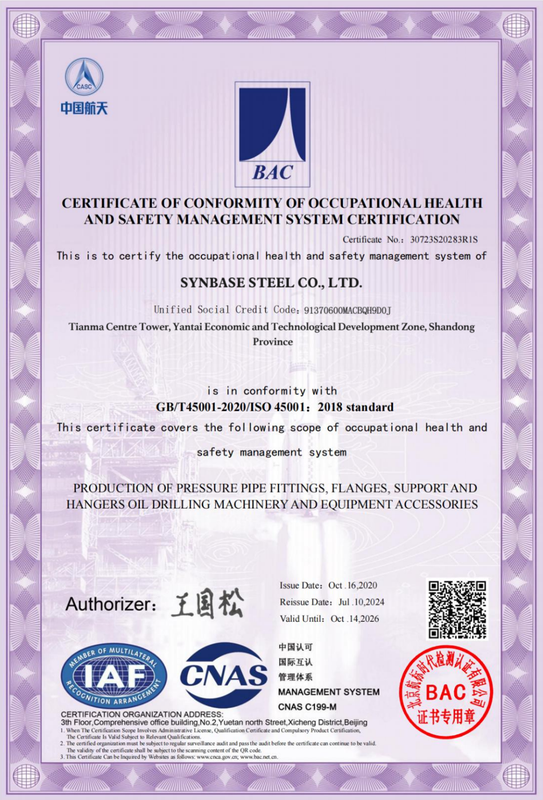
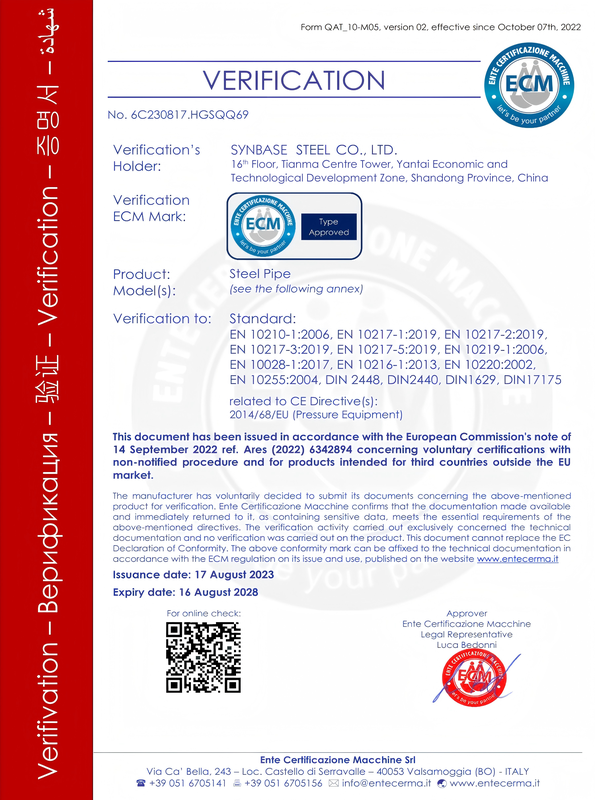
Each piece ships with its own API monogram, EN 10204 3.1 material certification, and bears API 5CT Clause 11 marks.
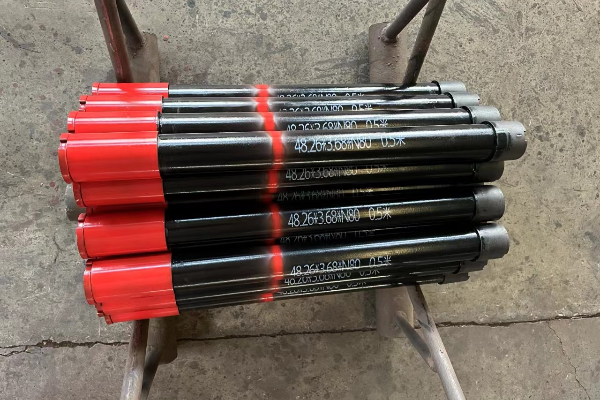
It seems to some of our clients the API compliance stamps is “enough”. But one P110 tubing failed (API 5CT certified!) before the tubebody ever yielded – the thread threads galled and ate through itself from crevice corrosion. The reality – just knowing you can use the baseline isn’t enough – it also takes selecting the right connection and traceability for the environment to ensure successful service life.
This explains why when we cut to your length – and send it from the original manufacturer mark, we “re-stamp” or “transfer mark” the heat number and grade. More than half of what comes into our fabrication shop fail an inspection due to lost traceability – usually a failure to properly “transfer mark.”
Galling, thread-cross-threading and leak path starts with the handling of a thread threaded pipe connection – protectors yanked off too soon, the wrong lube dope, stabbing in at an angle and driving in. While we machine the highest quality thread connections for the industry we install protectors and provide made-up guidance for two critical reasons – a machine perfect thread in the yard can be mangled quickly and it’s a risk not found on any spec sheet.
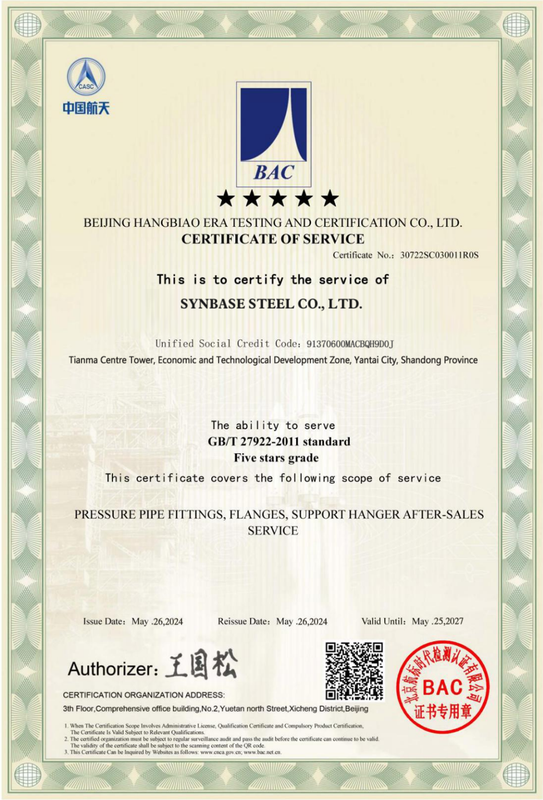
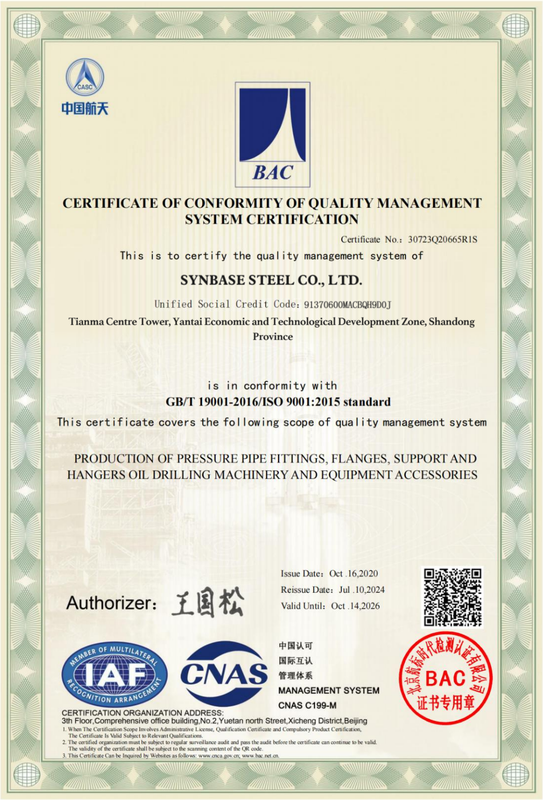
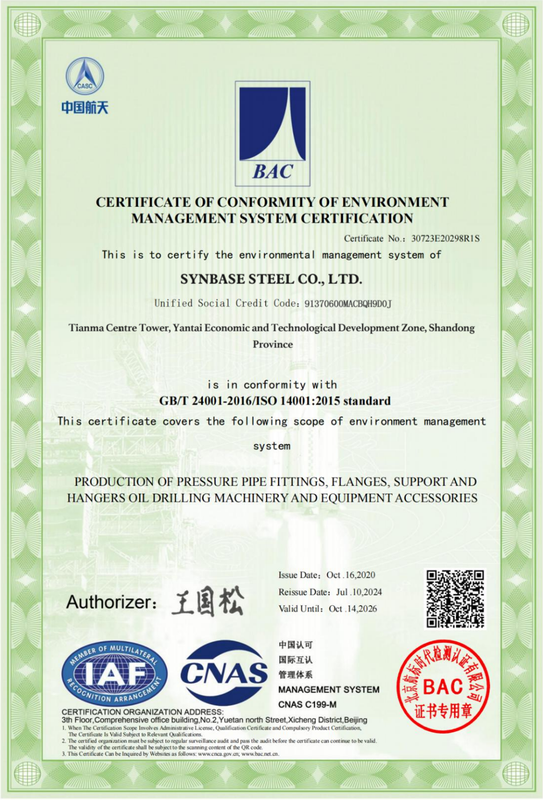
Accurately calculate total tubing lengths and precise spacing parameters. Maximize operational accuracy for your assembly strings downhole.
Identify the optimal API and proprietary steel grades based on specific well environments. Ensure safety, compliance, and material durability.
Configure exact dimensional specifications matching your requirements. Quickly match thread connections, Outer Diameters (ODs), and weights.
A pup joint, a short API 5CT casing, tubing length -2 to 12ft, standard 6ft- threaded both ends, run into a string to hang it out in the hole at the correct depth. It has the same class, weight, and connection as the string it joins, never drops the string quality.
Pup joints are used to spac out tubing and casing strings, land the hanger, and run down hole tools. API 5CT Table C.27 defines the standard pup joint lengths at 2, 3, 4, 6, 8, 10, and 12ft, 6ft preferred, 3in tolerance; custom 20ft maximum cut to 1/16.
tubing pup run 2-4 OD with EUE or NUE threads for production; casing pups run 4-13+ with STC, LTC, or BTC threads for casing. The thread families don’t mate, so need to specify a Vupeb P110 or P110 for example, not a string match if no kid.
EUE (external-upset, 8RD) thickens the end of the pipe for ~95% joint efficiency, high-pressure; NUE (non-upset, 10RD) threads into the un-thickened wall at ~80% for lower-pressure, full-bore service. Use what’s running already in the parent string, don’t mix.
L80 (1, 9Cr, 13Cr), C90, T95 are sour-rated under NACE MR0175 / ISO 15156, with maximum hardness 23 HRC (L80) or 25.4 HRC (C90/T95). J55, K55, N80, P110, Q125 aren’t certified in a 0.05 psia HS partial pressure, a spec, not a label — always qualified to the stated H2S partial pressure, CO2, chloride, temperature, and pH of your well, never assumed from the grade name alone.
Yes – fabricated from non-welded API 5CT body pipe, heat treatment in grade, CNC-threaded to API 5B, full-body ultrasonic and hydrostatic tested, supplied with API monogram and an EN 10204 3.1 mill test report showing the full pup joint spec.
Yes. CNC machines perforated pup joints for water injection, circulation, and gas lift, crossover pups (i.e. EUE pin BTC box), and drill pipe pup joints in alloy steel grades for BHA spacing..
Standard grades and stock lengths ship in 2 to 4 weeks; sour-service, premium-thread, or large-OD casing pups run 6 to 10 weeks. Contact us for a job-specific estimate.