Coupling

OCTG Casing & Tubing Couplings, Manufactured to API 5CT & 5B

Synbase machines API 5CT casing and tubing couplings in every standard grade and connection, J55 through Q125, STC, LTC and BTC, from weld-free coupling stock with full mill traceability. We supply the coupling that matches your string, not a bin of unmarked blanks.

Request a Quote / RFQ by Spec
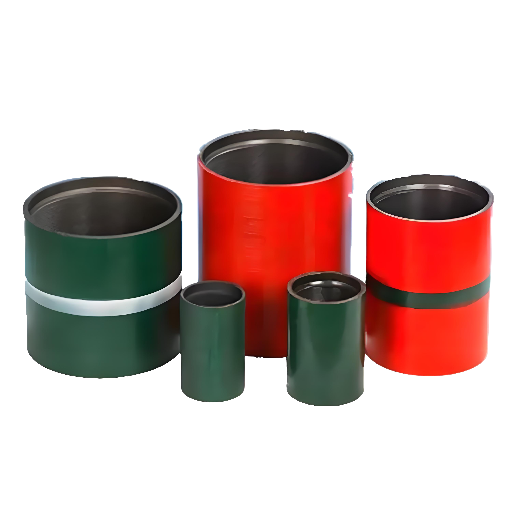
OCTG Casing and Tubing Coupling complying with API 5CT standard
  • J55–Q125 API 5CT grades, incl. L80-13Cr sour/CO₂
  • STC·LTC·BTC + NU / EUE tubing per API 5B
  • 1.05″–20″ tubing & casing OD range
  • API 5CT 11th + API 5B threading & gauging
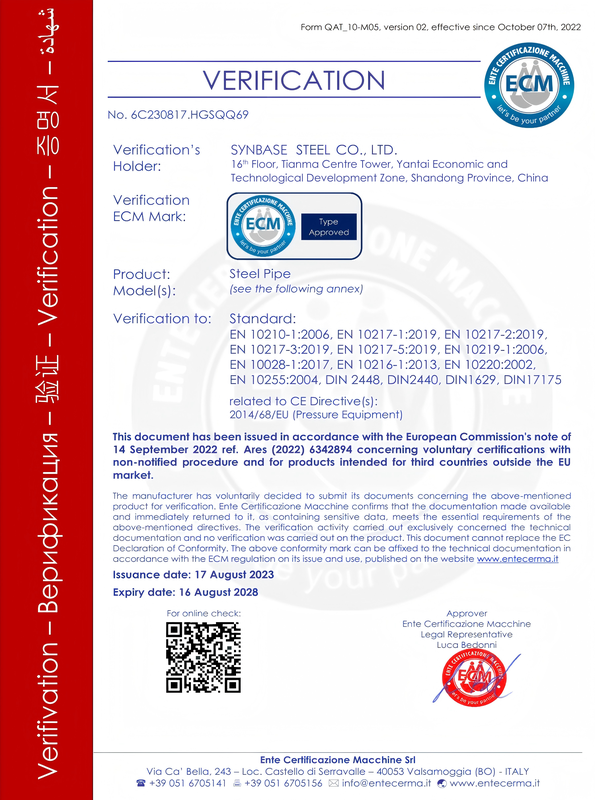
  • ISO 9001 + CE MTR / EN 10204 3.1 per heat
  • 100% weld-free grain-refined coupling stock
INCIDENT REPORT

Why the Coupling Is the Weak Link in Your Casing String

90%

A casing coupling is the short, internally threaded sleeve that joins two lengths of casing or tubing, and per published failure analysis it's where roughly 90% of casing failures actually occur, at the threaded connection rather than the pipe body.

In thermal (CSS/SAGD) wells, over 80% of uphole casing failures are reported at connections, and field presentations document P110 casing couplings splitting longitudinally after frac jobs with no evidence of abuse. A grade stamp on the pipe means little if the connection that hold the string together leaks, galls, or parts downhole.
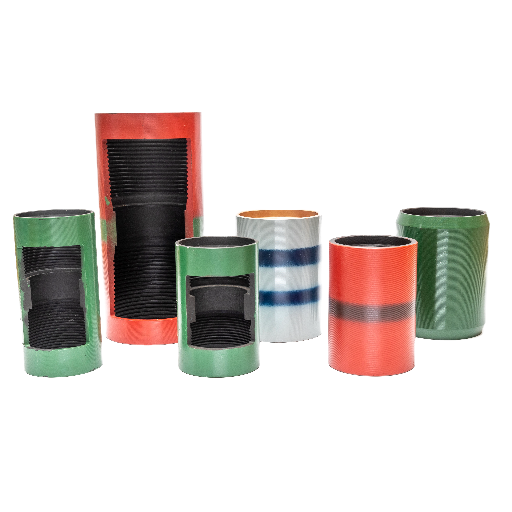
Cross-section diagram illustrating casing coupling and API threaded connection failure points

Synbase OCTG Coupling Range, Grades, Connections & the Spec Matrix

We supply three coupling families: casing couplings (4-1/2″–20″), tubing couplings (1.05″–4-1/2″, NU and EUE), and special couplings (special-clearance, reducing, combination, seal-ring and special-bevel). Each is built to one API 5CT grade and one API 5B connection, selected to match your string, never substituted silently. Couplings are one piece of the Synbase OCTG line, drawn from the same weld-free steel pipe and casing pipe stock as our tubing, line pipe, drill pipe, pup joints and sucker rod couplings, so one mill can certify your whole string.

STANDARD API 5CT / 5B
CASING RANGE 4-1/2″ — 20″
TUBING RANGE 1.05″ — 4-1/2″
ALL SOUR & HPHT GRADES VERIFIED

The Synbase Coupling Spec Matrix, grade properties

Grade is not one number. Minimum yield, minimum tensile, heat-treatment route and service environment all move together, which is why the same nominal "80 ksi" splits into N80-1, N80Q and L80. The table below is the API 5CT property backbone (ISO 11960) we manufacture to.

Grade Group Min yield (psi / MPa) Min tensile (psi / MPa) Heat treat Typical service
H40140,000 / 27660,000 / 414as-rolledshallow / conductor
J55155,000 / 37975,000 / 517hot-rolled / normalizedgeneral, non-sour
K55155,000 / 37995,000 / 655normalized (required)general, non-sour
N80-1180,000 / 552100,000 / 689normalized / N&Tmedium depth
N80Q180,000 / 552100,000 / 689quench & temperhigher collapse
L80-1280,000 / 55295,000 / 655Q&T, ≤23 HRCsour (H₂S)
L80-13Cr280,000 / 55295,000 / 655Q&T martensiticCO₂ / CRA
C90290,000 / 621100,000 / 689Q&T, ≤25.4 HRCsour, deeper
T95295,000 / 655105,000 / 724Q&T, SSC testedsour, high-strength
P1103110,000 / 758125,000 / 862quench & temperdeep / high-pressure
Q1254125,000 / 862135,000 / 931quench & temperdeepest / HPHT

Coupling dimensions you can actually drop into a PO

Most coupling pages publish a paragraph and a logo. We publish the dimensions, coupling outside diameter (W) and make-up length (NL) by casing size and connection, the numbers your running crew and your wellhead clearance depend on. Get a dimension wrong and the coupling either fails to make up or galls in a tight annulus, so Synbase verifies every W and NL against API 5CT before threading.

Casing size (OD) STC — W / NL (in) LTC — W / NL (in) BTC — W / NL (in)
4-1/2″5.000 / 6.255.000 / 7.005.000 / 8.875
5″6.500 / 10.187.750 / 12.569.125 / 12.99
5-1/2″ (6.050)6.750 / 11.448.000 / 14.039.250 / 14.14
7″ (7.875)7.250 / 18.349.000 / 23.6710.000 / 23.22
9-5/8″7.750 / 39.5110.500 / 55.7710.625 / 50.99
[SYS-01] SELECTION LOGIC

How to Choose, Connection (STC / LTC / BTC) and Grade

So the selection question is never "which thread is best" — it's "which connection and grade survive this well." Standard API threads (STC, LTC, BTC) lack a positive torque shoulder, so make-up is a calculated torque window, not a physical stop: over-torque galls, under-torque jumps out. That's exactly why connection choice has to follow depth, load and service.

[STATUS] FIELD MYTH CORRECTED

"Buttress is the gas-tight upgrade." It is not.

Per ExxonMobil connection research (US Patent 5,212,885), API Buttress was historically a liquid-service connection — phosphatized BTC couplings failed gas pressure in every size and grade tested, and gas-tightness came only from coupling surface plating plus the right thread compound, not from the buttress profile itself. Higher grades make it worse: the higher the grade and the smaller the diameter, the harder the same connection is to seal.
[HOOK B] DATA MATRIX

Connection-to-Well Decision Grid

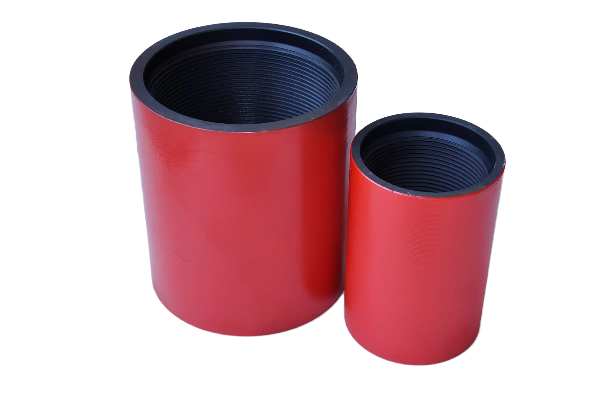
Steel pipe coupling for connection-to-well decision grid
Connection Thread Best for Seal mechanism Watch-out
STC (short round) 8rd, 60° shallow / low-pressure, cost-sensitive thread + compound lowest joint strength
LTC (long round) 8rd, 60° medium depth, more tension thread + compound still liquid-biased
BTC (buttress) 5 TPI deep / high axial load thread + compound not inherently gas-tight
Premium (VAM / TenarisHydril / Hunting) metal-to-metal HPHT, gas, sour, deepwater >15,000 psi metal face + torque shoulder license-gated, higher cost

Synbase manufactures the API 5CT standard couplings honestly, and, unlike a distributor chasing the sale, tells you when you have outgrown them. That trade-off between cost and duty is the honest version of connection selection, not a compromise we hide in the footnotes. If your string is gas-tight HPHT or sour at high pressure, you want an ISO 13679 CAL IV qualified premium connection, and we will say so rather than oversell a buttress coupling into a duty it was never built for.

[HOOK C] SPECIFICATION

Grade-to-Service Ladder

J55 / K55

shallow, non-corrosive strings. Note: J55 and K55 share the same 55-ksi yield, so procurement teams treat them as interchangeable, but K55 carries ~20 ksi higher minimum tensile and mandatory heat treatment.

N80 / L80

medium depth; L80-1 for sour H₂S service (capped hardness ≤23 HRC), L80-13Cr for CO₂.

C90 / T95 / C110

sour and high-strength, qualified to NACE MR0175 / ISO 15156-2 with SSC testing per NACE TM0177.

P110 / Q125

deep and high-pressure, but both lose sour-service eligibility as yield climbs, so neither belongs in an H₂S well.

[PROTOCOL]

A substitute-grade rule most distributors skip

API 5CT requires that J55 and K55 buttress casing be furnished with Grade L80 Type 1 couplings when specified, a higher-grade coupling on lower-grade pipe to keep joint strength uniform. We apply that rule automatically; a pass-through distributor reselling mixed stock often doesn't.

ISO 13679 CAL IV INQUIRY
[SYS-EVAL-01] Market Analysis

Manufacturer-Direct vs Brochureware Distributors

Buyers tell us the real fear about a China-sourced coupling is metallurgy and threading they can't verify, and that fear is earned. In sworn US trade testimony, Chinese OCTG was characterized as commodity-grade tonnage competing on price, with threaded ends arriving damaged after 45–50 days of ocean transit.

What a cheap coupling really costs

A coupling that galls on make-up or cracks downhole doesn't care how cheap it was, and on a rig that can cost over $100,000 a day, the saving evaporates in a single fishing job. Synbase is built to be the opposite of that story: a traceable manufacturer, not a commodity reseller, where the difference show up in what we can certify versus what a distributor can only claim.
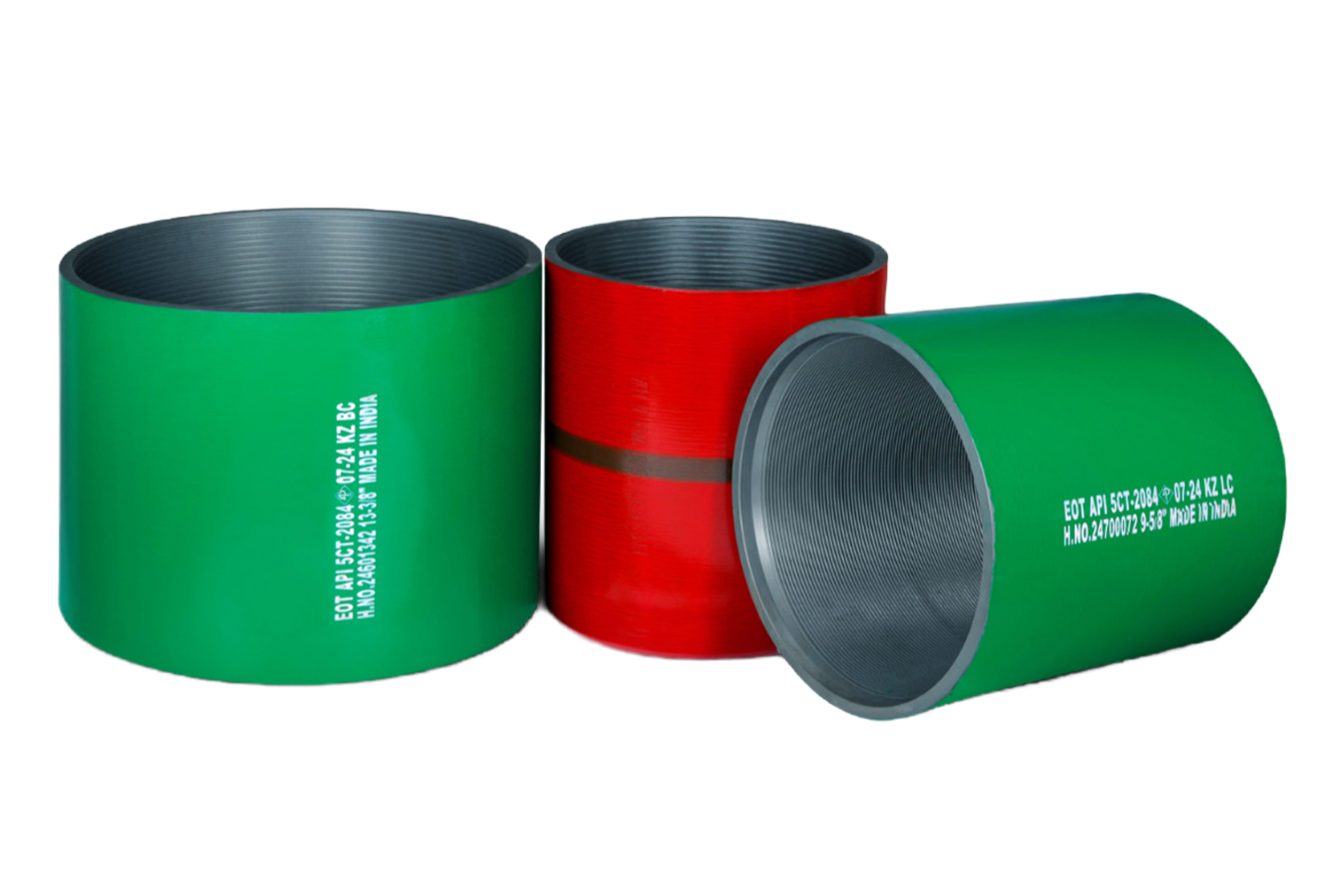
Synbase API 5CT Coupling Spec Match and Threading Quality
SYS.REF // CPLG-12
[DATA] Decision Factor
Synbase (Manufacturer-Direct)
Typical Brochureware Distributor
Coupling stock
weld-free, grain-refined, sourced in-house
mixed-origin blanks, unstated mill
Threading
CNC to API 5B, gauged in-house
coordinated across 7–8 outside vendors
Traceability
heat-number + MTR per lot
aggregate "in stock", no heat link
Inspection
per-lot NDE + thread gauging
"meets API" — no records shown
Spec match
grade + connection + dimension verified
nearest size from the bin
[LOG] Eng. Protocol

"We treat a coupling like a pressure part, not a fitting. Before any lot ships, we tie it back to its heat number and its API 5B gauge record, because the buyer is trusting that connection with the whole string, and 'it looks right' is not a certificate."

Synbase Engineering Team, OCTG threading & quality

This is also why we position our API 5CT couplings honestly against premium connections. For routine and liquid-service strings, a properly made, fully traceable API coupling is the cost-right choice; for HPHT gas or sour service, we'll route you to a qualified premium connection rather than stretch a standard product past its rating.

[SYS-QA-01]

Quality, Certification & Inspection

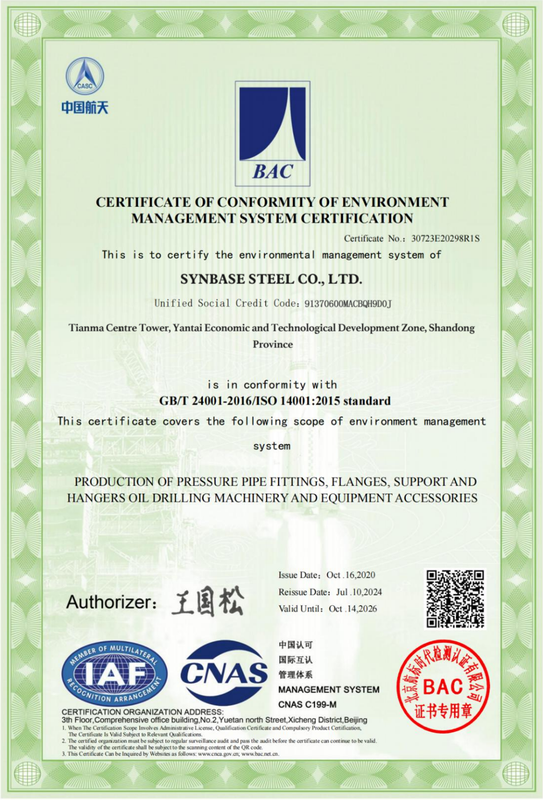
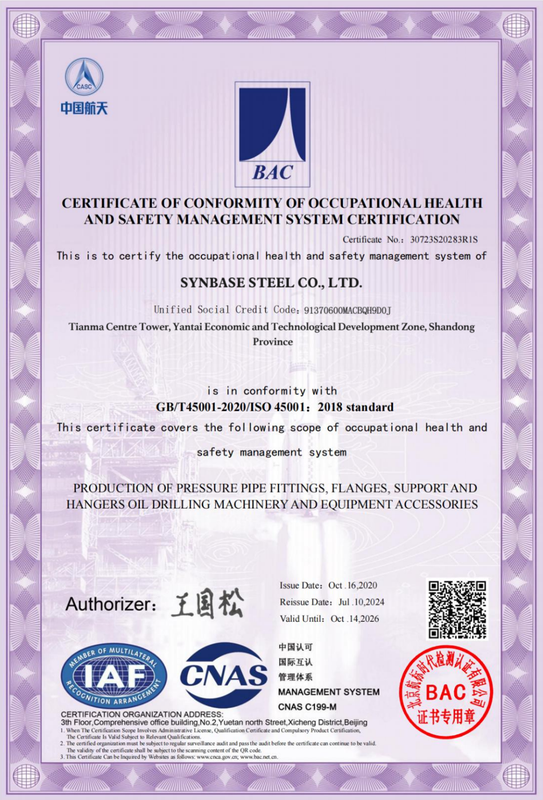
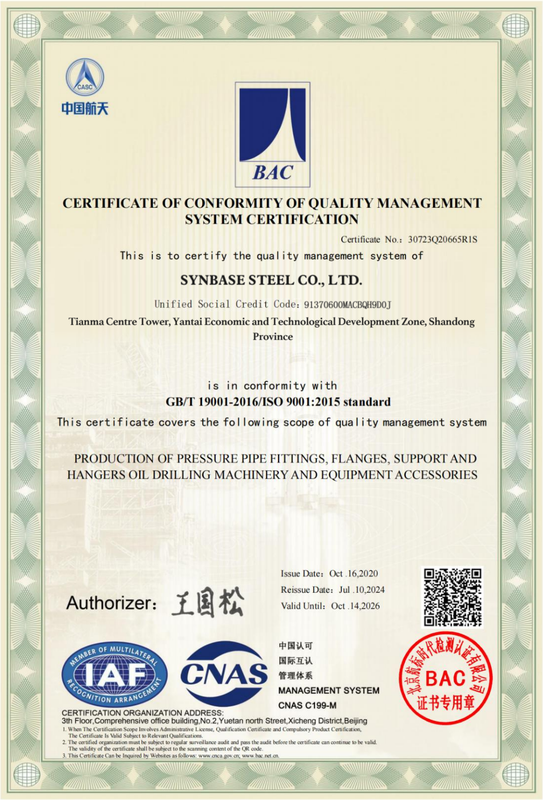
A coupling earns trust through records, not adjectives. Our couplings are manufactured to API 5CT 11th edition and threaded, gauged and inspected to API 5B, under a group quality system certified to ISO 9001, ISO 14001 and ISO 45001 with CE marking; API monogram licensing scope is confirmed per order on your RFQ.
[SPEC] What Our Inspection Actually Covers

01
NDE

Ultrasonic and electromagnetic (eddy-current / flux-leakage) inspection of coupling stock to acceptance level L4, plus magnetic-particle on threads.

02
Mechanical

Tensile and yield, hardness, and Charpy V-notch impact on the coupling itself (couplings carry their own toughness minimums, per IOGP S-735).

03
Sour Service

SSC qualification to NACE MR0175 / ISO 15156-2 and NACE TM0177 for L80-1, C90, T95 and C110; hardness capped at 25.4 HRC / 255 HBW.

04
Dimensional

Thread gauging with API working ring, plug, lead, taper and height gauges, and a minimum make-up-length check.

Why "API Compliant" On Paper Is Not Enough

Spec-compliant SR-13 seal-ring couplings have failed to contain gas even under careful laboratory make-up. A certificate proves the metal; the gauging, the make-up record and the marking prove the connection. We supply all three.

[PROCESS] Hook D, The 4-Mark Coupling Verification

Per operator inspection standards, a coupling missing its required API marking is cause for rejection, so knowing how to read the marking is your first counterfeit screen. The 4-Mark Verification is simple: four things travel with a compliant coupling.

Marking Element What It Tells You How To Verify
Stencil Size, weight, grade, connection Matches the line item on your PO
Colour Band Grade at a glance — J55 = one bright green band, K55 = two bright green bands Cross-check against the mill's grade colour chart (confirm on the MTR, never by colour alone)
API Monogram Licensed API thread & manufacture Confirm the licence scope on your RFQ
Heat Number Links the coupling to its melt Traceable to the EN 10204 3.1 MTR
[SPEC: API-5CT] // MATERIAL COMPLIANCE

From Coupling Stock to Finished Thread, How We Make Them

API 5CT is explicit that couplings, coupling stock and coupling material shall be weld-free, and that the steel must be grain-refined with aluminium, niobium, vanadium or titanium to control austenite grain size. We start there and never compromise it, a welded or unrefined blank can't carry the toughness a connection need, and can crack or gall at the threads no matter how sound the pipe body is. From that stock each coupling follows a controlled route, and the heat-treatment step that follows is what separates a real grade from a look-alike.
[SYS-FLOW] // INTERNAL ROUTING

Inside the Synbase process line

01

Weld-free grain-refined coupling stock

02

Saw-cut to length and faced

03

Heat treatment by grade (quench & temper for N80Q, L80, C90, T95, P110, Q125; normalize for J55/K55)

04

CNC thread machining to API 5B

05

Wet magnetic-particle and dimensional gauging

06

Phosphate / surface treatment

07

Grade colour banding and heat-number stencil.

[CAPABILITY] // STRATEGIC ADVANTAGE

Procurement Guide, MOQ, Lead Time, Packaging & Export

OCTG is roughly 16% of well-completion spend and a named, supplier-dominated line item, so how you write the PO decides how much risk you carry. Our single most useful rule for buyers: order by OD → weight (lb/ft) → grade → connection → range, and state the documentation you require up front.

Purchase Order Directives

  • [SPEC-01]

    Edition

    Couplings to API 5CT 11th edition, threaded per API 5B.

  • [SPEC-02]

    Traceability

    Heat-number lot traceability and EN 10204 3.1 mill test reports (3.2 with third-party witness on request).

  • [SPEC-03]

    Service Call-outs

    Sour-service SSC (NACE MR0175 / ISO 15156-2) where the well demands it.

  • [SPEC-04]

    Logistics

    Thread protectors fitted, export packaging and marking, and Incoterms agreed before shipment so the threaded ends survive transit.

We quote against your exact spec, hold stock and made-to-order across the J55–Q125 range, and ship to projects in 100+ countries with the MTR travelling with the lot. Lead time depends on grade, size and heat-treatment route, tell us the line item and we'll give you a real date, not a slogan.

Get Instant Quote
Technical Resources

OCTG Coupling FAQ

What is a casing coupling?

A casing coupling is a short, internally threaded steel sleeve that joins two lengths of casing into a continuous string. It carries the same grade and pressure duty as the pipe, which is why API 5CT controls it as a product, not a generic fitting.

What is the difference between STC, LTC and BTC?

STC (short round thread) and LTC (long round thread) use a 60° round form at 8 threads per inch; LTC simply has more engaged threads for higher joint strength. BTC (buttress) uses a 5 threads per inch buttress form for the highest axial-load capacity, which is why it's chosen for deep strings, but none of the three is inherently gas-tight, since all seal on thread compound rather than a metal face.

What is the difference between a casing coupling and a tubing coupling?

Both do the same job, they join two pipe joints, but casing couplings cover 4-1/2″ to 20″ and use STC/LTC/BTC, while tubing couplings cover 1.05″ to 4-1/2″ and use non-upset (NU) or external-upset (EUE) connections sized for production tubing. Grade and service drive both, so a P110 casing coupling is never substituted by an N80 tubing coupling.

What does API 5CT mean, and how is it different from API 5B?

API 5CT is the specification for casing and tubing, it controls steel grade, chemistry, strength, dimensions and manufacturing quality of the pipe and couplings. API 5B is the separate standard for threading, gauging and inspection of those threads, so a compliant coupling is built to 5CT and threaded to 5B; the two always travel together.

Can you supply a mill test report and prove the grade?

Yes, every Synbase coupling lot ships with an EN 10204 3.1 mill test report tied to its heat number, reporting chemistry, mechanical properties and the relevant inspection results, with 3.2 third-party witnessing available on request. That heat-to-MTR link is how a buyer defeats substitution and counterfeit risk, because a missing or mismatched marking is a documented cause for rejection.

Should I use a standard API coupling or a premium connection?

Use a standard API 5CT coupling for conventional, liquid-service and cost-sensitive strings where its joint strength and availability are sufficient, which covers the majority of casing and tubing runs. Move to a qualified premium metal-to-metal connection (VAM, TenarisHydril, Hunting and similar) for gas-tight, HPHT, sour or deepwater duty above roughly 15,000 psi, where an independent face seal and torque shoulder start to matter. Treat any "buttress is gas-tight" claim with caution, because gas-tightness depends on the seal mechanism and coupling surface treatment, not the thread name, and we'll tell you honestly when a standard coupling is enough versus when it isn't.