Send Your RFQ to Synbase Steel
Prefer to send drawings, BOMs or attachment lists by email? sales@synbasesteel.com

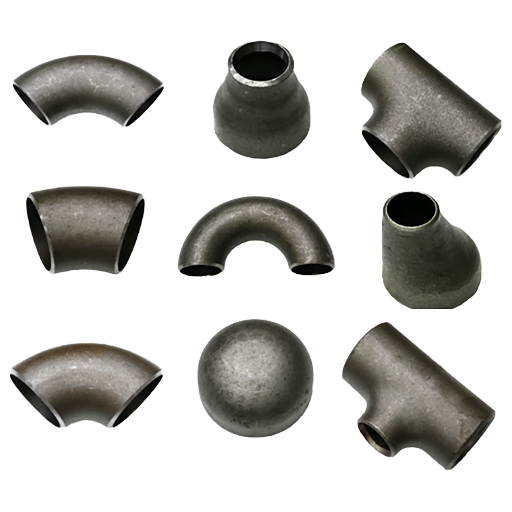
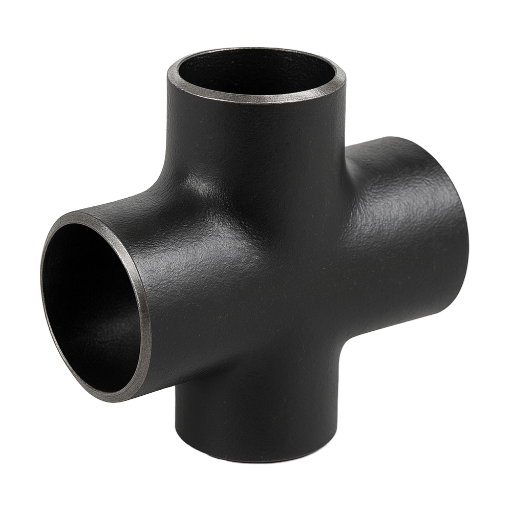
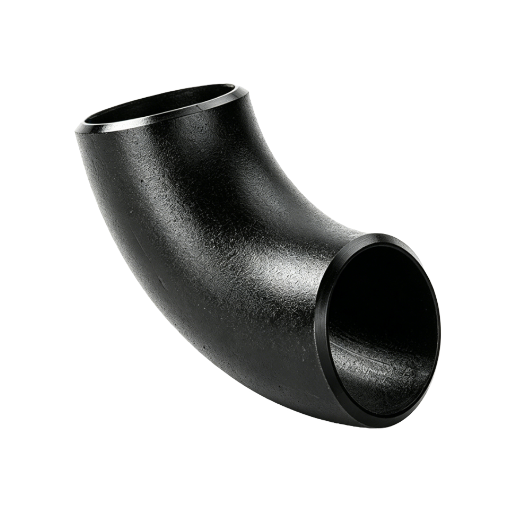
Carbon steel buttweld fittings carry the full strength of the pipe they join, but only when the chemistry, the wall thickness, and the ASME B16.9 dimensions are all right at incoming inspection. Synbase manufactures ASTM A234 Grade WPB elbows, tees, reducers, caps, crosses and stub ends from our own 70,000 m² fittings base, ships them with EN 10204 3.1 mill test certificates traceable to the steel heat, and backs every lot with API, ISO and marine-class approvals. You weld to a known quantity, not a stamp you cannot verify.
Request a Quote / RFQ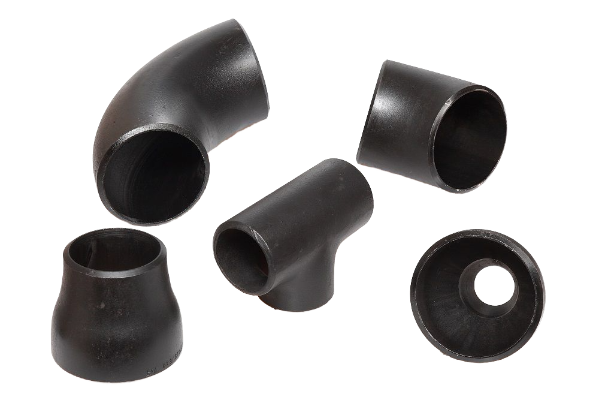
Most rejected carbon steel buttweld fitting lots don’t fail on the headline grade. They fail on a marking the inspector can’t trace, an out-of-round bevel the welder has to force into line, or a wall thickness that drifted below what the welding procedure assumed. A buttweld fitting is simply a wrought carbon steel and alloy steel component that lets you make a full-penetration, full-bore welded connection between two lengths of pipe, but its value live entirely in the documentation and the dimensions behind it.
Synbase answers all three at the source. Unlike a stocking distributor that resells whatever lands on the shelf, Synbase forges A234 WPB fittings on its own 6000-ton presses, tests them in its own metallurgical lab, and issues mill test certificates tied to the original steel heat, because a fitting that can’t be traced is a risk item the moment an inspector asks. The same fittings ship into oil and gas, petrochemical and power piping across more than 100 countries, and the sections below give you the verified chemistry, the published ASME B16.9 dimensions and tolerances, and the manufacturing trail a procurement manager and a piping engineer both need before they commit a single weld.
ASTM A234/A234M is the standard specification for piping fittings of wrought carbon steel and alloy steel for moderate and high temperature service. These fittings are for use in pressure piping and in pressure vessel fabrication, and the standard fixes the fittings material requirements for every grade. Grade WPB is the most widely used carbon-steel grade in the family: the letters read W (weldable/wrought), P (pressure), B (Grade B minimum-strength band). Fittings of welded construction add a trailing “W” to the grade mark.
A234 sets an explicit carbon-equivalent control: CE = C + Mn/6 + (Cr+Mo+V)/5 + (Ni+Cu)/15, and the result must be no greater than 0.50 and reported on the mill test certificate. That single number is what tells your welding engineer whether the heat will weld without preheat surprises. Synbase reports it on every CMTC, because “good weldability” without the CE figure is just a claim, and on a 24-inch oil and gas header that claim is the difference between a clean root pass and a cracked weld.
| Element | WPB (wt%) | WPC (wt%) |
|---|---|---|
| Carbon (C) | 0.30 max | 0.35 max |
| Manganese (Mn) | 0.29–1.06 | 0.29–1.06 |
| Phosphorus (P) | 0.050 max | 0.050 max |
| Sulfur (S) | 0.058 max | 0.058 max |
| Silicon (Si) | 0.10 min | 0.10 min |
| Cr / Mo | 0.40 / 0.15 max | 0.40 / 0.15 max |
| Ni / Cu / V | 0.40 / 0.40 / 0.08 max | 0.40 / 0.40 / 0.08 max |
Source: ASTM A234/A234M, corroborated element-for-element by independent published specifications. For each 0.01% reduction below the maximum carbon, A234 permits the manganese maximum to rise by 0.06%, up to the ceiling allowed by the specification. The sum Cu+Ni+Cr+Mo must not exceed 1.00%.
| Property | WPB | WPC |
|---|---|---|
| Tensile strength, min | 415 MPa (60 ksi) | 485 MPa (70 ksi) |
| Yield strength, min (0.2%) | 240 MPa (35 ksi) | 275 MPa (40 ksi) |
| Elongation, longitudinal | 22% min | 22% min |
| Elongation, transverse | 14% min | 14% min |
| Plate-sourced elongation | 17% min | 17% min |
The WPB vs WPC choice comes down to that strength step: WPC buys roughly 70 MPa more tensile for a higher carbon ceiling, which can mean more preheat care on heavy walls. WPB remains the default for the great majority of carbon-steel pressure piping.
Plain carbon WPB covers moderate-temperature pressure piping and pressure vessel fabrication up to roughly 425°C (800°F). Above that envelope you step up the A234 chrome-moly ladder: WP11 and WP22 for steam, superheater and reheater lines, then WP91 for advanced creep service in high-pressure thermal-power boiler piping. Treating WPB as a universal “hot service” grade is a specification error that drives creep and oxidation failures, a point we develop in the grade-selection section below.
Almost every catalogue names ASME B16.9 and then prints none of its numbers. That gap is where field rework starts, so we publish the dimensions and the tolerance window in full. ASME B16.9 governs long-radius elbows, tees, reducers, caps and stub ends; ASME B16.28 governs short-radius elbows and returns; ASME B16.25 governs the welding-end bevel. The B16.9 vs B16.28 split is purely about elbow radius, not strength, and none of these standards assigns a pressure rating, they control geometry only.
“The dispute we see most is wall thickness at exactly 87.5% of nominal on a critical line. The standard allows it, but mill under-tolerance and forming thinning stack up, so on high-consequence orders we hold our own internal floor above the code minimum and put the measured wall on the certificate. The number a buyer can read is worth more than the number a code permits.”
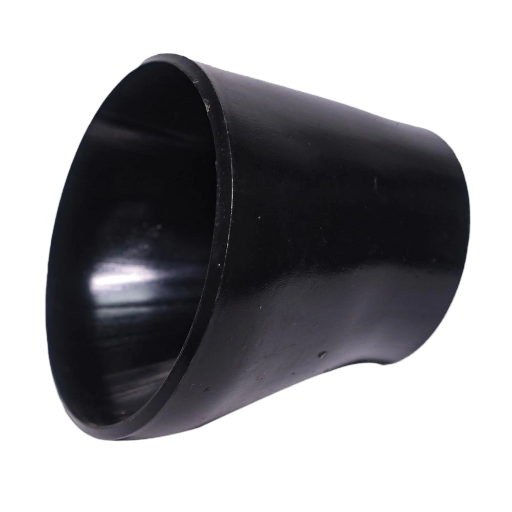
Above 1″ NPS, no other joining method offers as many sizes, schedules and materials as the buttweld fitting, which is exactly why critical and large-bore lines in oil and gas, petrochemical and power service default to it. Synbase produces the full A234 WPB product family as seamless or welded construction, from NPS ½ through 48″ and SCH 10 through XXS, with the dimensional standard called out on every line item.
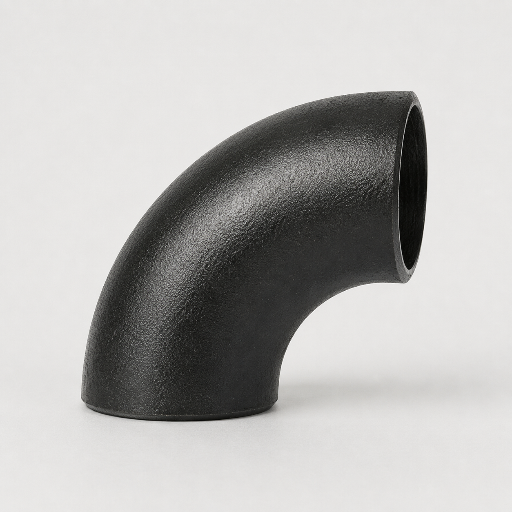
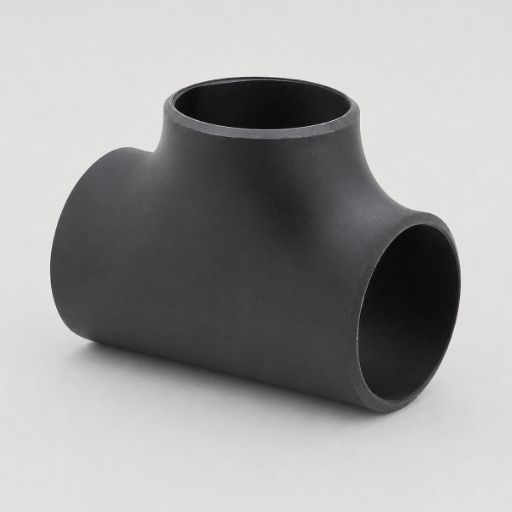
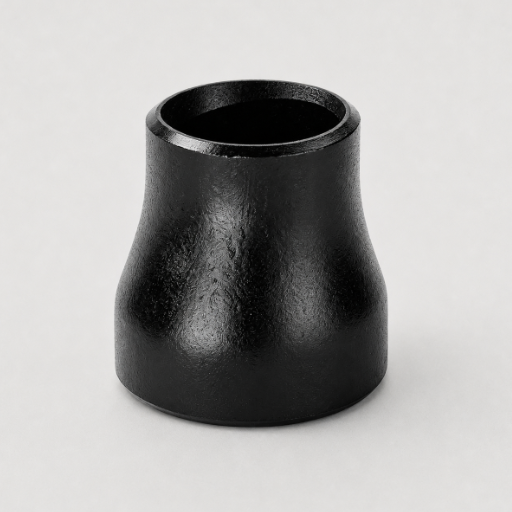
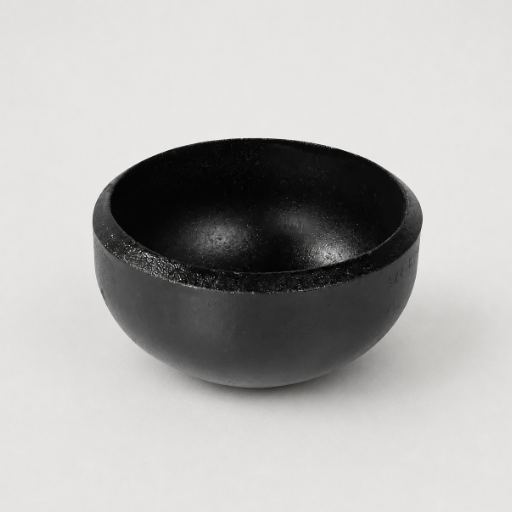
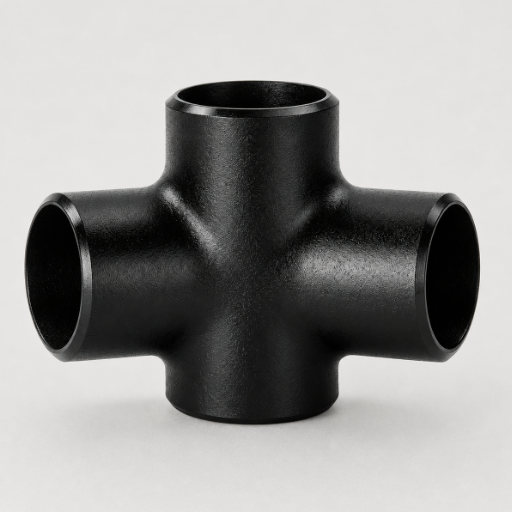
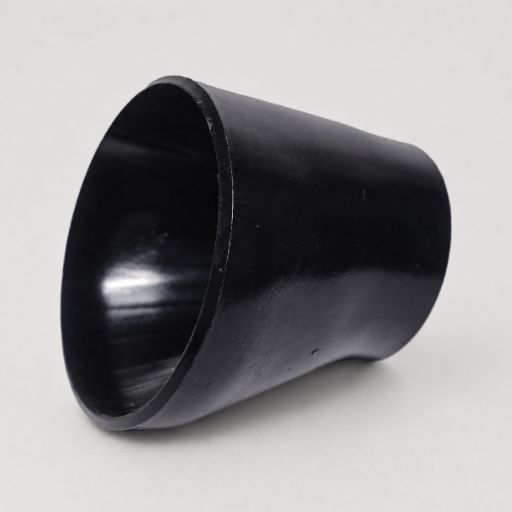
A fully radiographed, full-penetration butt weld carries a joint efficiency of 1.0 under ASME B31.3, the joint is rated at the full strength of the parent pipe, with no weld-joint reduction factor. Socket-weld and threaded joints can’t match that, and just as importantly they block volumetric inspection. This is a real engineering trade-off, not a slogan:
| Factor | Buttweld (A234 WPB) | Socket weld (B16.11) | Threaded (B16.11) |
|---|---|---|---|
| Joint efficiency (full RT) | 1.0 (full pipe strength) | Fillet — reduced | Mechanical — reduced |
| Volumetric NDT (RT/UT) | Yes | No (surface only) | No (surface only) |
| Bore / dead volume | Smooth flush bore | Crevice at socket | Thread crevice |
| Best size range | >1–2″, large bore | Small bore, <4″ | Small bore, low risk |
| Disassembly | Permanent | Permanent | Removable |
Class designations under ASME B16.11 (socket 3000/6000/9000; threaded 2000/3000/6000) are class labels, not psi values. The honest trade-off: on small-bore high-pressure instrument lines, butt weld isn’t always the right call, socket weld can be the engineered choice for repeatable alignment with less bevel prep.
Matching fittings to a new line? See our API 5L line pipe for pipe-and-fitting supply from one mill, or request a size-and-schedule availability check →
A234 WPB is the correct fitting for moderate-temperature carbon-steel pressure piping, and the wrong fitting the moment your service crosses into sustained high temperature or a corrosive medium. Grade selection is a service decision before it’s a price decision, so map the temperature and the fluid first.
| Service envelope | A234 grade | Typical lines | Min tensile |
|---|---|---|---|
| ≤ ~425°C (800°F), standard | WPB (carbon) | Oil & gas, water, process headers | 415 MPa |
| Elevated steam / boiler | WP11 / WP12 (1¼Cr) | Steam, hot-water, mild high-temp | 415–485 MPa |
| Superheater / HP steam | WP22 (2¼Cr-1Mo) | Superheaters, reheaters | ≥520 MPa |
| Advanced creep service | WP91 (9Cr-1Mo-V) | Thermal-power HP boiler piping | ≥620 MPa |
WPB is plain carbon steel with only moderate corrosion resistance, not for acids, chlorides or sour (H2S) service by default; confirm NACE MR0175 / ISO 15156 or move to a corrosion-resistant alloy.
A234 WPB fittings are designed to mate with carbon-steel pressure pipe of matched chemistry and schedule. WPB raw stock is itself typically drawn from A106 Gr.B/C pipe and A516-70 / A572 plate, which is why the weld metallurgy lines up cleanly:
| WPB fitting with… | Compatibility | Note |
|---|---|---|
| ASTM A106 Gr.B seamless pipe | Recommended | Shared chemistry; standard high-temp match |
| ASTM A53 Gr.B pipe | Recommended | Common utility / structural pressure lines |
| API 5L Gr.B / X-grade line pipe | Verify CE & schedule | Match wall and carbon equivalent |
| Stainless / duplex pipe | Not compatible | Use A403 stainless fittings instead |
Synbase calls out BOTH the material specification (ASTM A234/A234M Gr.WPB) AND the dimensional standard (ASME B16.9) on every line item, plus NPS, schedule and end prep. The common mistake is to omit one: that ambiguity invites a mismatched bevel, weight or wall thickness, and turns a “same NPS” fitting into a field rework on your spool that costs far more than the part.
Unsure whether WPB or a Cr-Mo grade fits your service? Send your design temperature and medium →
The single most expensive failure in carbon steel buttweld fittings isn’t a dimension, it’s a fitting whose paperwork an inspector won’t accept. One real example: a project inspector rejected an entire A234 lot at site because he wanted the steel-mill heat number stamped on the part, even though A234 itself permits either the heat number or the manufacturer’s heat identification. When traceability breaks, a fitting that measure perfectly still becomes a risk item.
We build the answer into the line, not into a sales claim. Every Synbase A234 WPB fitting moves through a documented chain that resolves the finished part back to the original steel heat:
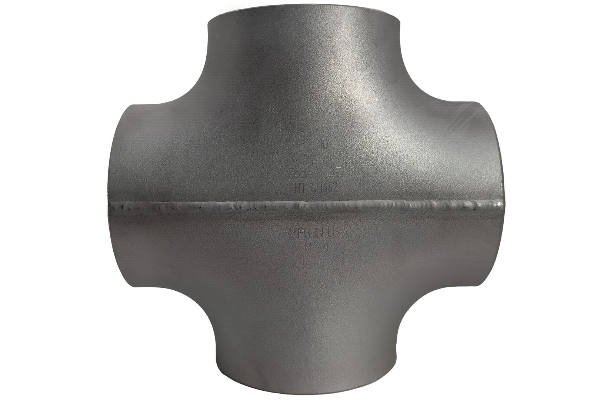
This runs on a dedicated 70,000 m² pipe-fittings and flange base, 42,000 m² of plant, 6000-ton and 2000-ton hydraulic presses, three medium-frequency induction push-forming machines, two large induction bending machines, and a full metallurgical lab (impact, tensile, hardness, metallographic, hydrostatic). This base holds over 200 national patents and produces to API, ASTM/ASME, EN, DIN, JIS and GB standards.
Killed steel, seamless or fusion-welded tubular products, bar or plate from A106/A516-70/A572 stock, each heat logged with its certified mill analysis.
Hot push-forming on 6000-ton and 2000-ton hydraulic presses, induction push-forming and high-frequency induction bending, the elbow-forming methods documented in patents such as CN102161146A.
Normalizing, annealing or normalize-and-temper in the natural-gas heat-treatment furnace, per ASTM A960/A960M paragraph 7; welded fittings receive PWHT at 1100–1250°F.
Welding-end preparation to ASME B16.25 on 2.5 m vertical lathes and CNC drill-mill.
PMI heat analysis, tensile testing, plus MPI / UT / hydrostatic as the order require, in our CNAS-equipped laboratory.
EN 10204 3.1 mill test certificate (3.2 third-party witnessed on request) with chemistry, mechanicals and the reported carbon equivalent.
Heat or manufacturer heat-identification mark that resolves through our records to the original CMTC and steel heat number.
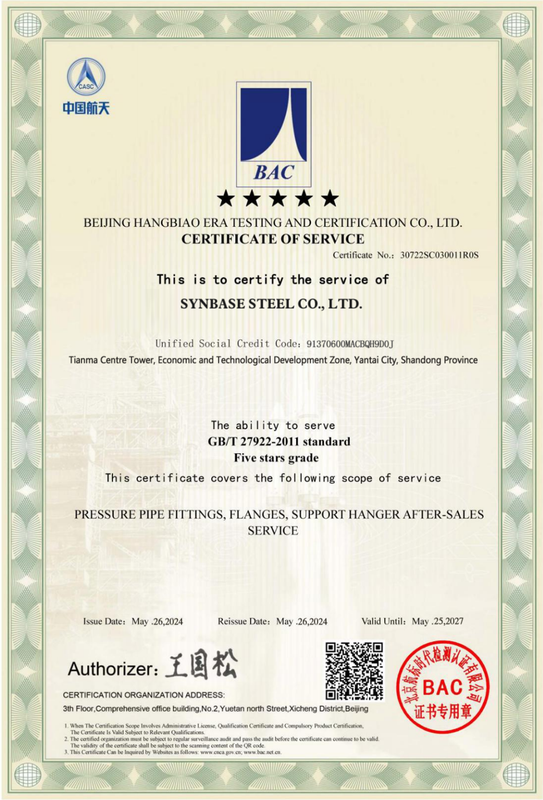
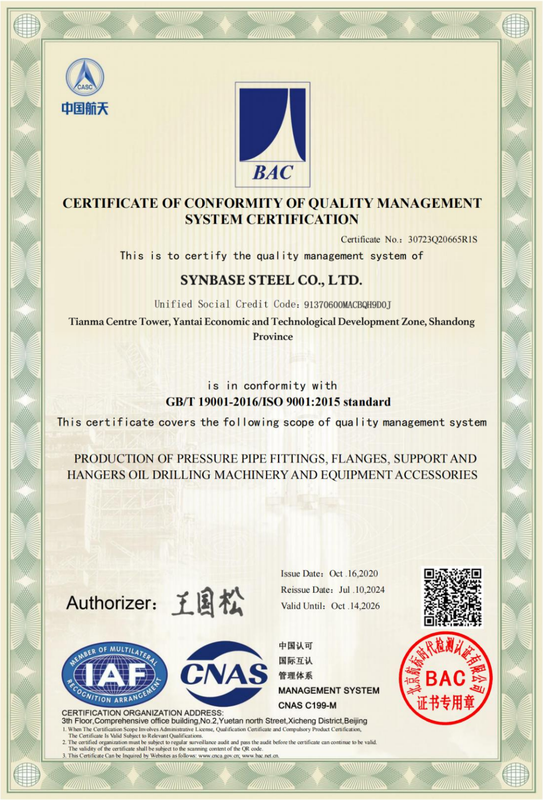
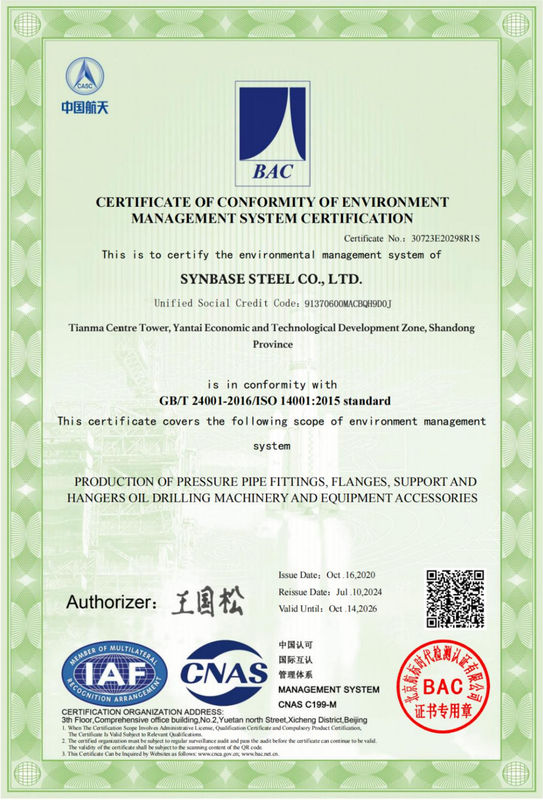
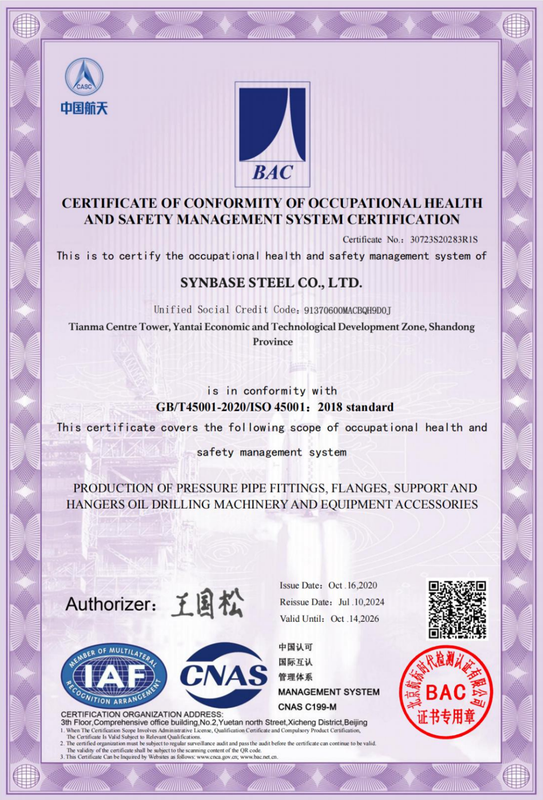
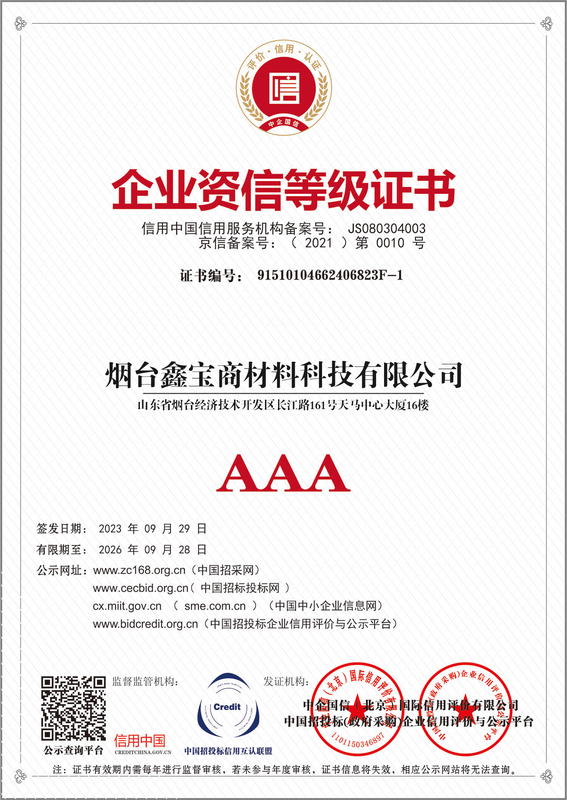
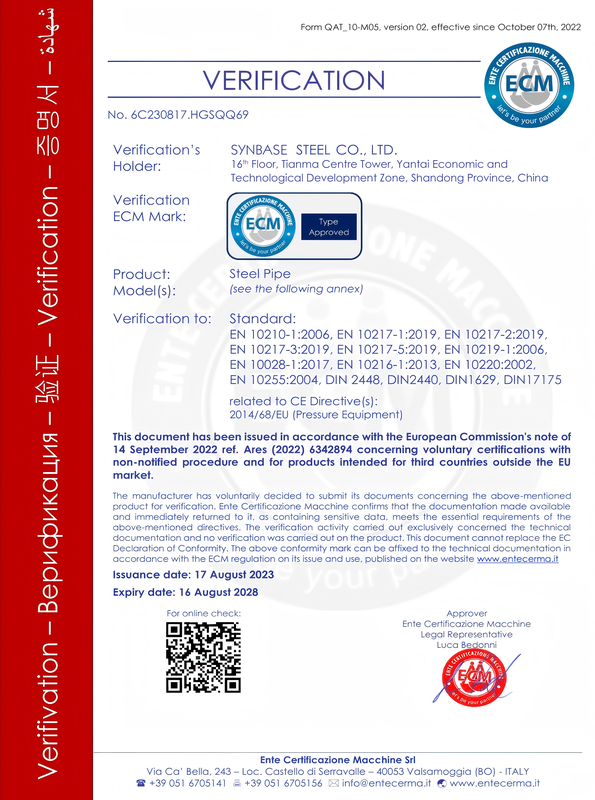
A factory-level ISO 9001 certificate proves a factory exists; a specific order needs a chain of custody, and the gap between the two is exactly where lots get rejected at site. Synbase carries the named, auditable approvals that let A234 WPB fittings ship into oil and gas, petrochemical, power and marine projects in over 100 countries, not a single logo image, but the certificate set inspectors actually ask for, because a generic mark with no mill test certificate behind it is the first thing a third-party auditor challenges.
American Petroleum Institute
Quality management
Environmental
Occupational H&S
EU 2014/68/EU
Marine class
Ship classification
Mill test certificate
Real cost on a buttweld fitting is rarely the unit price on the proforma invoice. It’s the hidden cost of a wrong elbow series that invalidates a whole spool, a 12-week lead time that forces overstocking, and a quality claim from your own customer downstream. A mill-direct supply chain attacks all three, because Synbase controls the steel, the forming and the certificate inside one production system instead of reselling stock it never made, which is what shortens delivery on a refinery shutdown from weeks to days.
A fitting itself is usually cheaper than mechanical alternatives, but the welded joint carries certified welder labour, bevel and fit-up time, and radiographic inspection. Independent cost studies of welded versus weldless piping put radiography alone at roughly a third of welded labour on high-pressure work. Buttweld earns its place on long-term integrity and minimal maintenance, not on lowest first cost, so a TCO model should price the weld and the inspection, not just the part.
A fully radiographed full-penetration butt weld is rated at the full strength of the parent pipe — the long-term integrity that justifies the welded joint over its higher install cost.
Joint efficiency per ASME B31.3 weld joint quality factor for 100%-RT full-penetration butt welds.Working to a deadline?
Send your bill of materials for a quotation and lead-time estimate →ASTM A234 WPB is wrought carbon steel for piping fittings used in moderate and high temperature pressure service. The grade code reads W for weldable, P for pressure and B for the Grade B strength band; WPB has a minimum tensile strength of 415 MPa (60 ksi) and a minimum yield of 240 MPa (35 ksi), with a carbon maximum of 0.30%.
Both are carbon-steel grades to the same A234 specification. WPC allows a higher carbon content (0.35% max versus 0.30% for WPB) and delivers a higher minimum tensile strength of 485 MPa (70 ksi) against WPB’s 415 MPa. WPB is by far the more common pipeline grade; WPC is chosen where the slightly higher strength is specified.
A234 WPB fittings are made in both seamless and welded construction to the same ASME B16.9 dimensional and ASTM A234 mechanical requirements; welded fittings simply carry a “W” added to the grade mark. The wrought unwelded form is often preferred on small-bore high-service lines for a uniform microstructure, while welded construction is common in large diameters for cost. The “no weak seam” claim is a marketing simplification — a qualified welded fitting with the required NDT is equally acceptable.
The A234 vs A105 question comes up on almost every order: A234 is the wrought buttweld fitting standard, while A105 is a forged carbon-steel standard used mainly for forged flanges and fittings. They are different products and are not interchangeable. Even cross-referenced “equivalent” grades such as EN 10253-2 P265GH or JIS STPT370 match only on chemistry and service — confirm design temperature, creep limits and documentation before any substitution.
Yes. A234 WPB and A106 Gr.B share matched carbon-steel chemistry, so the weld metallurgy lines up and the combination is a standard high-temperature pressure-piping match. Confirm the schedule and carbon equivalent agree with your welding procedure, and call out both the material and dimensional standards on the order.
No. A buttweld fitting does not carry an independent pressure-class rating the way a forged fitting does — it follows the connected pipe’s schedule and the governing piping code (for example ASME B31.3) pressure-temperature chart. Schedule is a wall-thickness designation, and allowable pressure also drops as temperature rises, so “higher schedule equals higher pressure rating” is a common mis-reading.
Yes. Every Synbase A234 WPB lot ships with an EN 10204 3.1 mill test certificate (3.2 third-party witnessed on request) reporting chemistry, mechanical properties and the carbon equivalent. That mark on the fitting resolves through our records to the original certified steel heat, so the part is auditable back to the heat number rather than to a generic factory certificate.
Synbase supplies NPS ½ through 48″ in schedules SCH 10 through XXS. Carbon-steel fittings lighter than Sch 40 are rarely stocked below about 12″ across the market, which is where substitution and lead-time risk creep in — as a mill we produce thin-wall and non-standard schedules to order rather than substituting a heavier part.