Send Your RFQ to Synbase Steel
Prefer to send drawings, BOMs or attachment lists by email? sales@synbasesteel.com

A blind flange has a solid centre – without any bore – closing off the open end of pipework, a nozzle or vessel; and is the one item which can delay a turnaround more effectively than any other if an incorrect specification of thickness, face or certificate arrives on site. Synbase Steel forges, machines and certificates blind flanges, spectacle blanks and line blanks covering all standard pressure classes; they are supplied with the material certificate for release by your inspector.
Request an RFQ Quote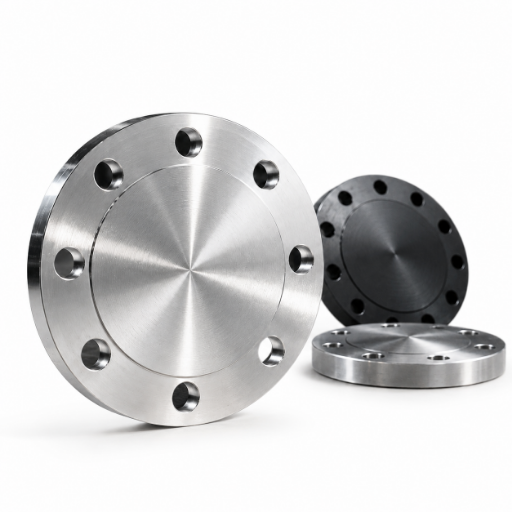
In a live process line, a blind flange serves a single, essential function: it is secured to a matching flange and seals off the process from a piping system’s termination, a vessel nozzle, or where a future branch line will connect. The absence of a through bore makes the blind flange the goto fitting when an open ended section of process must be proof pressure tested, isolated for service and maintenance, or sealed until a facility expansion has been installed. On some occasions, the same fitting is also ordered up as a blank flange – whether the terms, blind flange and blank flange, actually refer to one solid drilled fitting differs depending on whether the catalogue is for process or vacuum (ISO/KF) fittings.
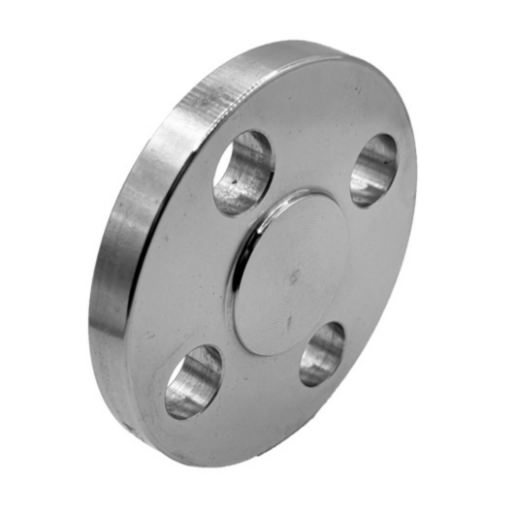
The source of that pain usually isn’t the flange itself. Usually, it’s a discrepancy nobody spotted during the RFQ, but: A Class 150 blind received for a Class 300 drilling, a flat-face blind installed on a raised-face valve, or a group of discs arriving with no traceable heat number when the inspector is standing at the request. All of that discards the discs into a stock room and the schedule to an all-nighter. The page you’ll see below: Synbase designed the page to accommodate these failure points – Drilling to the proper standard, exactly as requested for each face, the proper heat-number traceability back by certificate, and the right isolation group so you deliver the correct disc to the correct flange-the very first time.
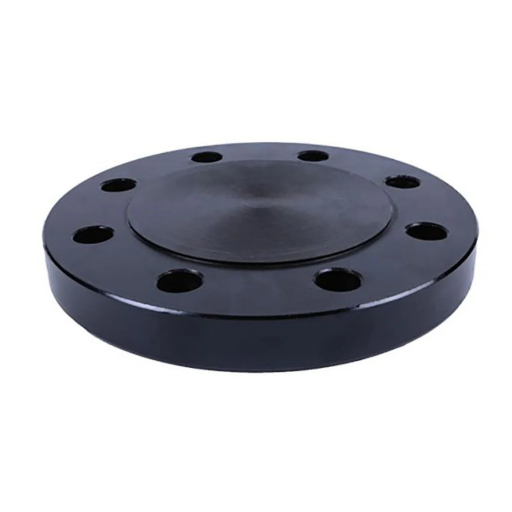
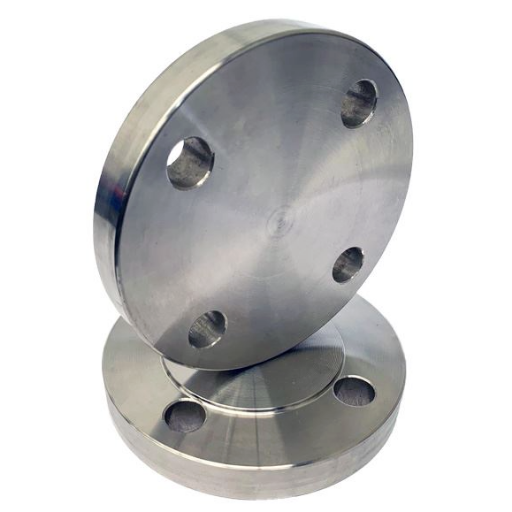
Every blind flange we ship is forged from a single billet (ASTM A105 for carbon steel, A182 for stainless and alloy) or cut and machined from certified plate for the largest diameters, then drilled to match the mating flange’s bolt circle exactly. Forging matters here – a forged disc has a grain flow running from outside in whereas plate has no directionally dependent strength to either x or y axis and it is only forged or better quality material that is referenced within the “full ASME B16.5 rating tables”; for those higher class blinds you only get as-cut plate and those would not pass 600psi hydro test.
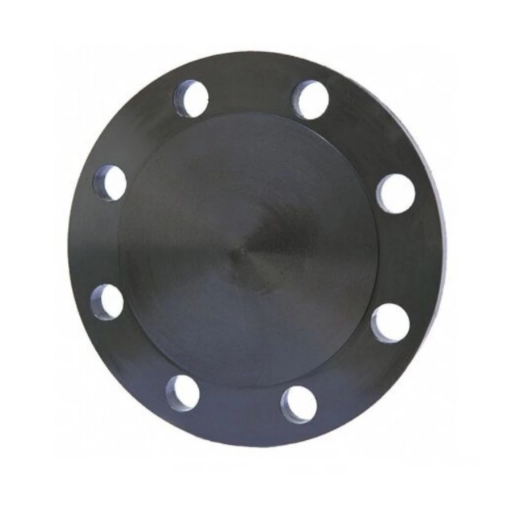
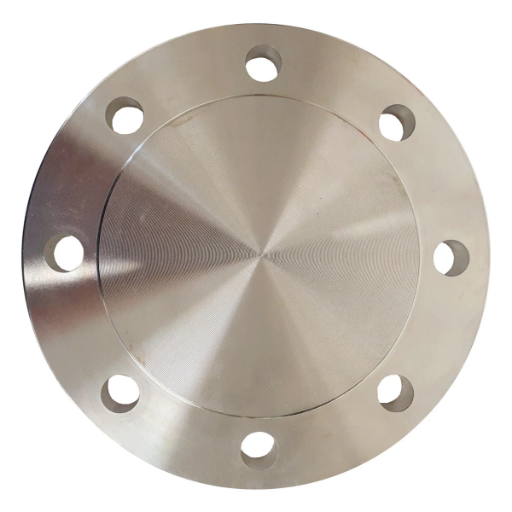
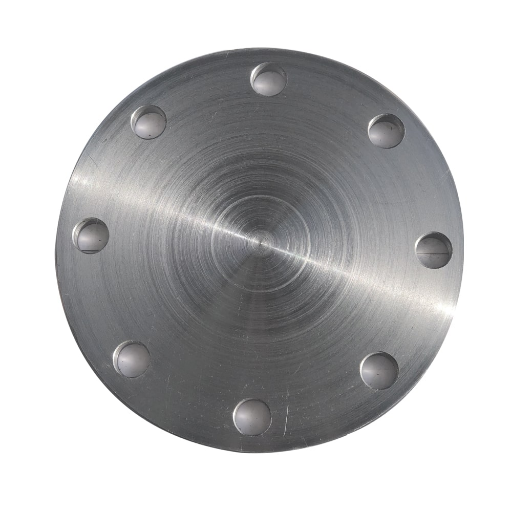
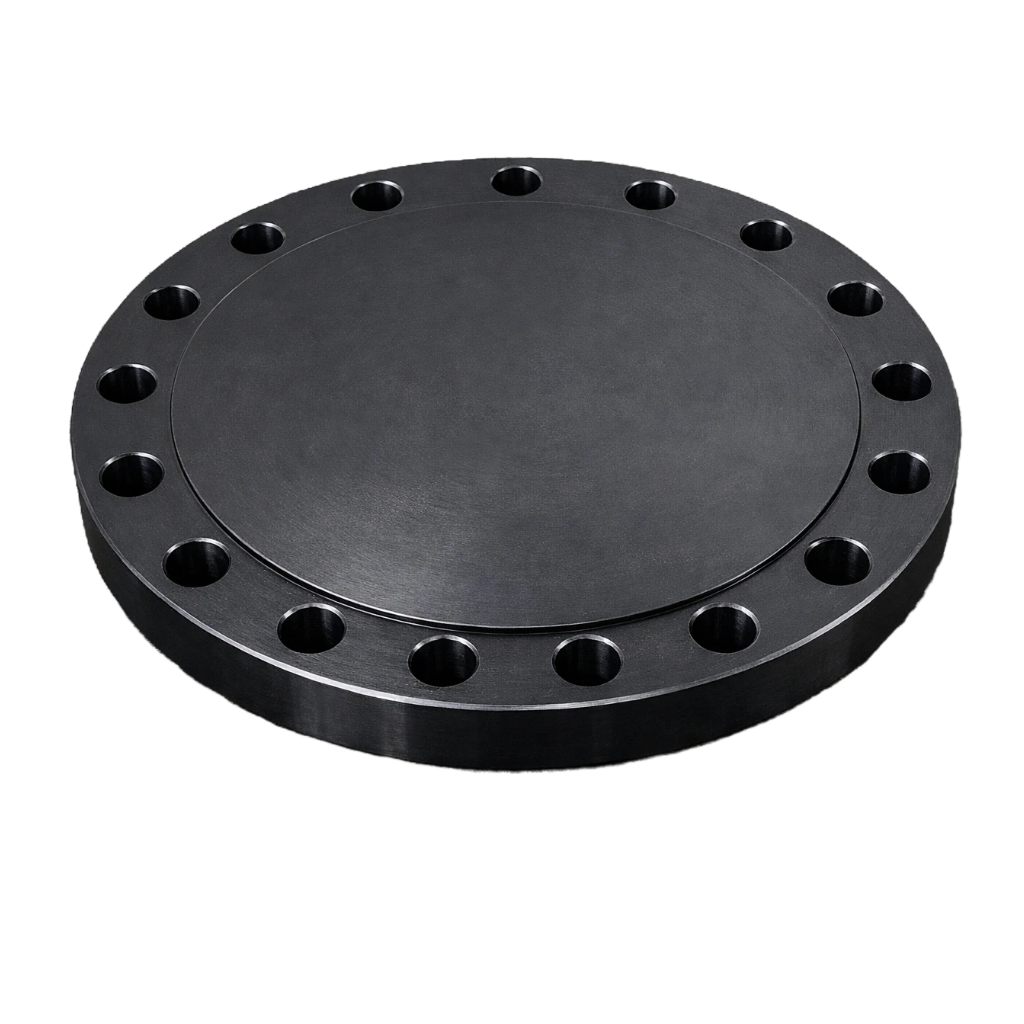
Beyond the standard solid disc, the same forging is the basis for the variants engineers ask for most: a tapped blind flange with one or more NPT-threaded ports for drains, vents or instrument connections; a high-hub blind for API 6BX high-pressure service; and custom bores that let a blind double as a hubless slip-on. Each is machined from the same certified material, so the certificate that covers the blank covers the modification.
| If your line is… | Material | Face | Typical class |
|---|---|---|---|
| Water, air, low-pressure utility | CS A105 | FF or RF | 150–300 |
| Oil & gas / petrochemical hydrocarbon | CS A105 / A350 LF2 | RF or RTJ | 300–900 |
| Corrosive / chemical / hygienic | SS A182 F316/F316L | RF | 150–600 |
| Chloride / sour (H2S) / offshore | Duplex S31803 / Super Duplex | RTJ | 600–2500 |
| High-pressure wellhead | Alloy / A182 F11–F22 | RTJ (6BX) | 1500–2500 |
This matrix is an RFQ start, not an end. Tell us the line’s design pressure, service and mating flange standard and we deliver a drill-pattern matched number with material locked:
Request a sample EN 10204 3.1 Material Test Certificate →Blind flanges block a line we want to shut and leave off-stream. The moment we need to open-close any line routinely – on shutdown; turnaround; or catalyst change – a permanently-bolted blind becomes an impediment because on each turn cycle the gasket seats become damaged and crew hours spent will stack up and will drive up costs. The whole of the isolation family evolved to take away those recurring issues. Which of the isolation family we fit for a purpose that involves opening and closing a line on a schedule is one of the piping world’s most costly errors.
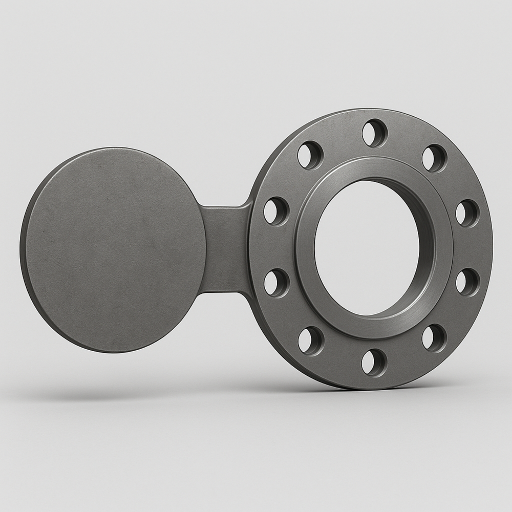
One solid + one open disc, web tie · ASME B16.48
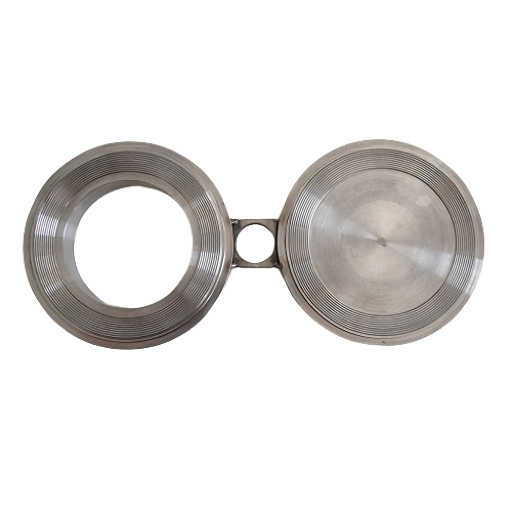
Separate solid spade + ring spacer · handle
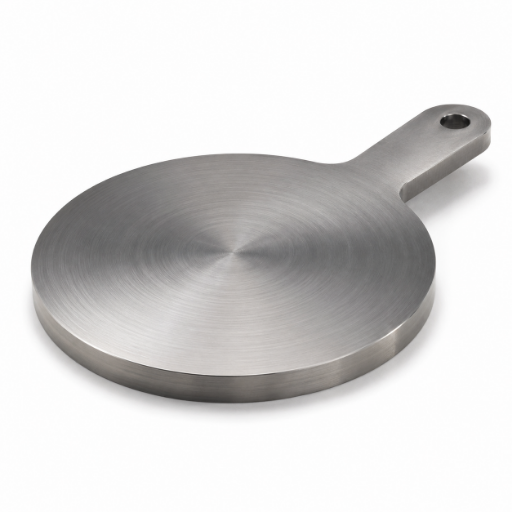
Single solid disc with handle · ASME B16.48
That distinction is operational, not cosmetic. A spectacle blind (figure-8 blank) carries a solid disc and an open ring joined by a web tie bar; loosen the bolts, rotate the spectacle, and you switch a line between flow and positive isolation without ever removing the part from the rack — and a glance tells the operator which half is in service. A spade and spacer pair (paddle blind) does the same job as two separate pieces, swapped over when the configuration changes; it is lighter to stock but slower to switch. A plain line blank or skillet is a single solid disc dropped between flanges for one-off isolation. All three are governed by ASME B16.48 — the standard purpose-built for line blanks used with ASME B16.5 flanges — while the end-cap blind flange itself sits under ASME B16.5.
| Requirement | Blind Flange | Spectacle Blind | Spade + Spacer | Line Blank |
|---|---|---|---|---|
| Permanent end seal | Best | Overkill | No | Possible |
| Frequent isolate / flow switching | Re-bolt each time | Rotate in place | Swap pieces | Remove each time |
| Visual status at a glance | No | Yes (figure-8) | Partial | No |
| Lowest stocking weight | Medium | Heaviest | Lightest | Light |
| Governing standard | ASME B16.5 | ASME B16.48 | ASME B16.48 | ASME B16.48 |
“Why not just use a valve?” is the question every junior engineer asks. Closed valves can pass — seats wear, debris holds them open a fraction — so it gives only flow control, never the certified positive isolation a permit-to-work demands when crews are inside a vessel. Spectacle blinds and spades physically break the path. That is why the isolation family appears on every refinery and pipeline material spec alongside the valves, not instead of them.
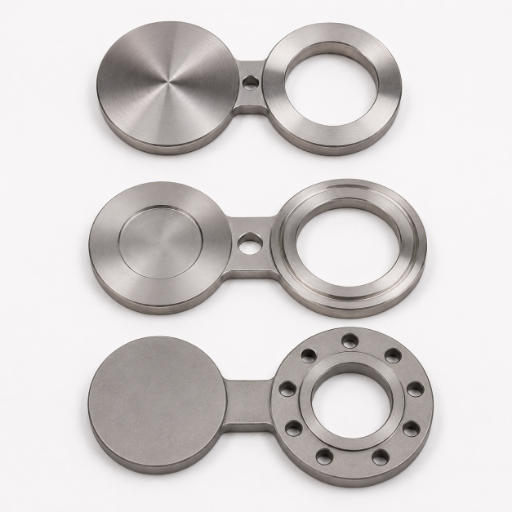
A blind flange is only correct when its outside diameter, thickness, bolt circle and hole pattern match the mating flange to the letter. Dimension tables below give the most-requested ASME B16.5 carbon-steel figures; full charts for every class, plus the B16.48 thickness schedules, ship as the downloadable spec sheet. One detail buyers miss until it fails an inspection: standards are revised, and an ASME B16.5 drilling is identical across editions while material and marking clauses are not — we manufacture and mark to the current edition and note it on the certificate.
| NPS | OD (O) | Thickness (C) | Bolt circle (BCD) | No. of bolts | Bolt dia. |
|---|---|---|---|---|---|
| 2″ | 6.00 | 0.75 | 4.75 | 4 | 5/8 |
| 3″ | 7.50 | 0.94 | 6.00 | 4 | 5/8 |
| 4″ | 9.00 | 0.94 | 7.50 | 8 | 5/8 |
| 6″ | 11.00 | 1.00 | 9.50 | 8 | 3/4 |
| 8″ | 13.50 | 1.12 | 11.75 | 8 | 3/4 |
| 10″ | 16.00 | 1.19 | 14.25 | 12 | 7/8 |
| 12″ | 19.00 | 1.25 | 17.00 | 12 | 7/8 |
| 16″ | 23.50 | 1.44 | 21.25 | 16 | 1 |
| 20″ | 27.50 | 1.69 | 25.00 | 20 | 1-1/8 |
| 24″ | 32.00 | 1.88 | 29.50 | 20 | 1-1/4 |
| NPS | OD (O) | Thickness (C) | Bolt circle (BCD) | No. of bolts | Bolt dia. |
|---|---|---|---|---|---|
| 2″ | 6.50 | 0.88 | 5.00 | 8 | 5/8 |
| 3″ | 8.25 | 1.12 | 6.62 | 8 | 3/4 |
| 4″ | 10.00 | 1.25 | 7.88 | 8 | 3/4 |
| 6″ | 12.50 | 1.44 | 10.62 | 12 | 3/4 |
| 8″ | 15.00 | 1.62 | 13.00 | 12 | 7/8 |
| 10″ | 17.50 | 1.88 | 15.25 | 16 | 1 |
| 12″ | 20.50 | 2.00 | 17.75 | 16 | 1-1/8 |
| 16″ | 25.50 | 2.25 | 22.50 | 20 | 1-1/4 |
| 20″ | 30.50 | 2.50 | 27.00 | 24 | 1-1/4 |
| 24″ | 36.00 | 2.75 | 32.00 | 24 | 1-1/2 |
For NPS 26 “-60” large diameter blinds dimensions move to ASME B16.47 (Series A / Series B). Metric projects call up EN 1092-1 (PN6-PN40, Type 05 blank) or DIN 2527; Asian and Australian standards cite JIS B2220 (5K-20K) and AS 2129 (Table D/E/H). Line blanks, spectacle blinds, spades and spacers in NPS 1/2 “-24” Class 150-600 are dimensioned according to ASME B16.48. We cross-reference your drilling standard at quotation so a DIN flange never meets an ANSI blind.
By far the most important number on a spectacle blind or line blank is its disc thickness, and it has two right answers. Isolation thickness is sized to hold the line’s maximum allowable working pressure (MAWP). Hydro thickness is sized to hold the hydrotest pressure, which is typically about 1.5 times the MAWP, so a hydro-rated blank is significantly thicker than an isolation-rated one of the same class. Order the thinner isolation blank for a hydrotest and it bows; order hydro thickness for routine isolation and you have paid for steel you do not need. We measure and stamp the intended service on every blank so the wrong one never reaches the field.
Selecting a material grade is a balancing act of pressure, corrosion and budget, and the factual comparison is in numbers, not in adjectives. Carbon steel A105 is sufficient for most hydrocarbon and utility service at the lowest cost; stainless A182 F316 is cost-effective for chemical and hygienic lines against corrosion; duplex and exotic alloys only go where chlorides, sour gas or extreme temperature would destroy cheaper options. This table sets out the options side by side.
| Property | CS — A105 | SS — A182 F316 | Duplex — S31803 |
|---|---|---|---|
| Min. yield strength | 36,000 psi | 30,000 psi | 65,000 psi |
| Max. continuous temp | about 425 C | about 540 C | about 300 C |
| Chloride / pitting resistance | Low | Moderate (PREN ~24) | High (PREN ~35) |
| Sour (H2S) service | With A350 LF2 | Limited | NACE MR0175 capable |
| Relative material cost | 1.0x baseline | 3–4x | 5–7x |
“We forge carbon-steel blinds from a single A105 billet and normalize before machining, because a re-bar-grade disc cut from random plate will pass a quick visual and then fail a Charpy test at 4 degrees below ambient. The certificate is only as honest as the heat behind it.”
— Synbase Steel Engineering Team, Flange & Forging DivisionCompare the above material cost to what it takes to move 5-7 times the duplex lens on a plain water line for the sake of a few hours of availability: it is just as wrong to install carbon steel on a sour-gas header. This selection keeps the additional expenditure where it is needed – which is where total cost, not per unit price, is decided.
Comparing grades for a specific medium and temperature? Request a material recommendation with your line data →One of the easiest ways to spend a week on site is blind flange with no valid paperwork. Procurement teams have told us the same story time and again: a supplier claims a grade, cannot produce a matching certificate when it arrives at the goods-in point, and the entire batch is quarantined while the line is rendered useless. Synbase addresses that gap at its source. Every shipment arrives with an EN 10204 3.1 Material Test Certificate – chemical analysis, mechanical properties and heat-treatment record verified by our works – with the heat number punched on the flange so the disc in the inspector’s hand can be traced back to the mill melt that cast it. Where it is a requirement, we arrange EN 10204 3.2 certification witnessed by a third party such as SGS, BV or TUV.
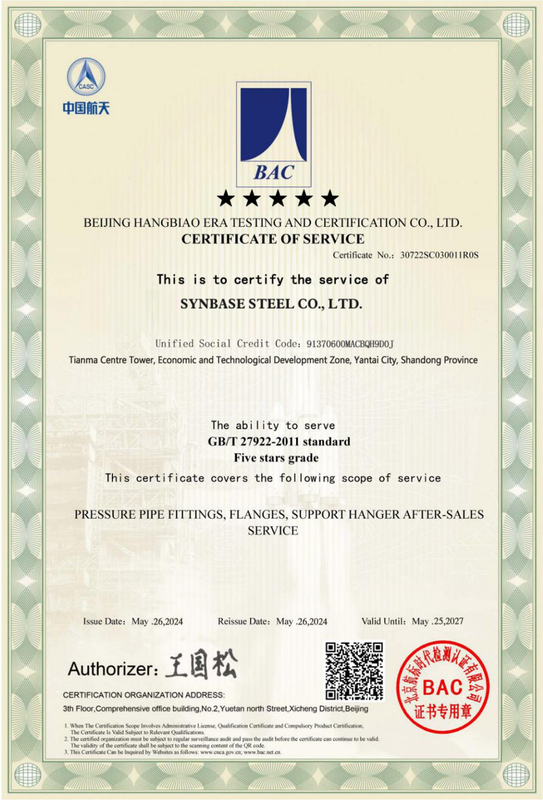
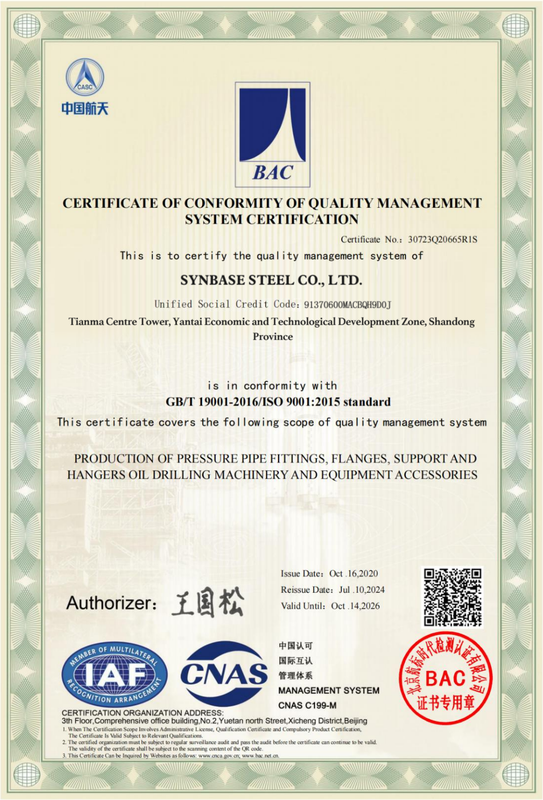
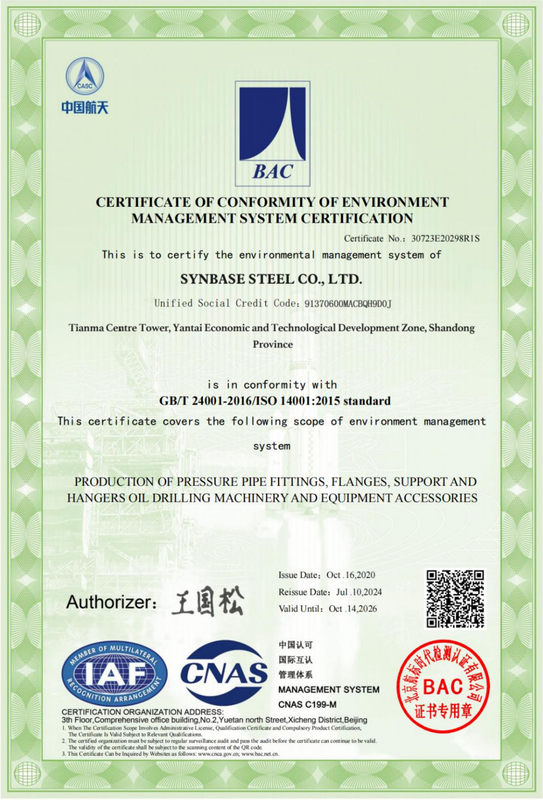
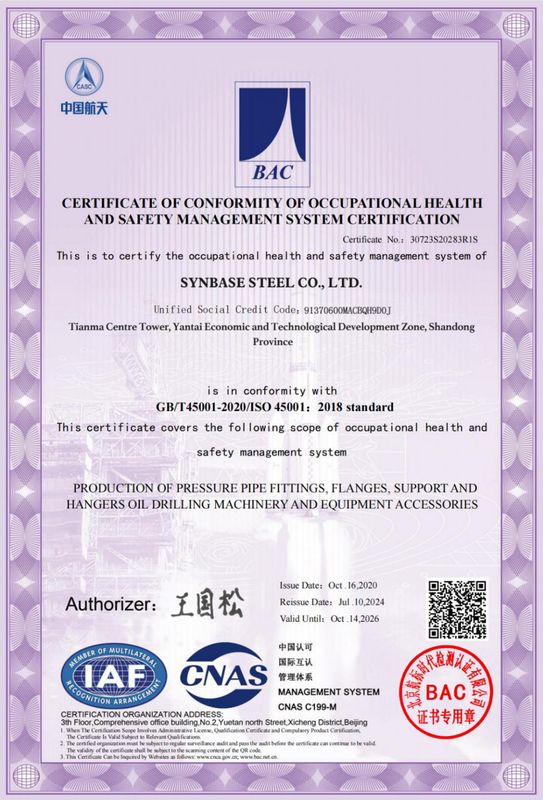
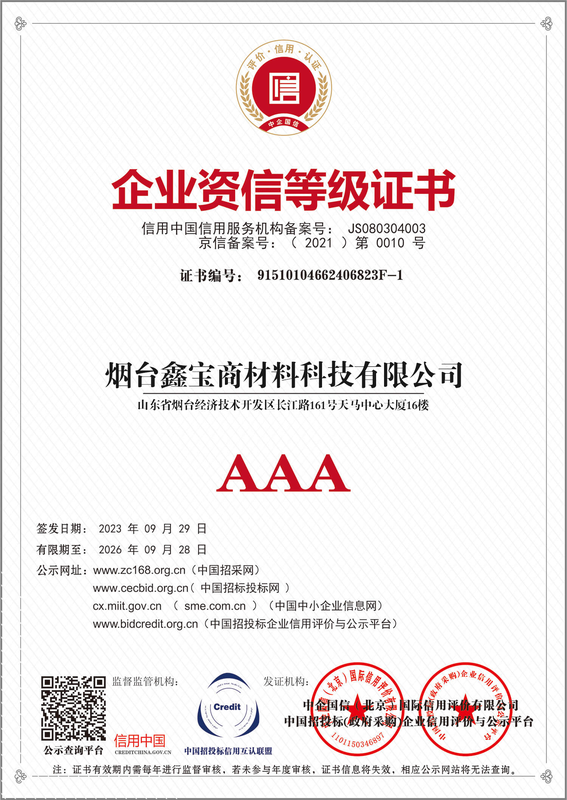
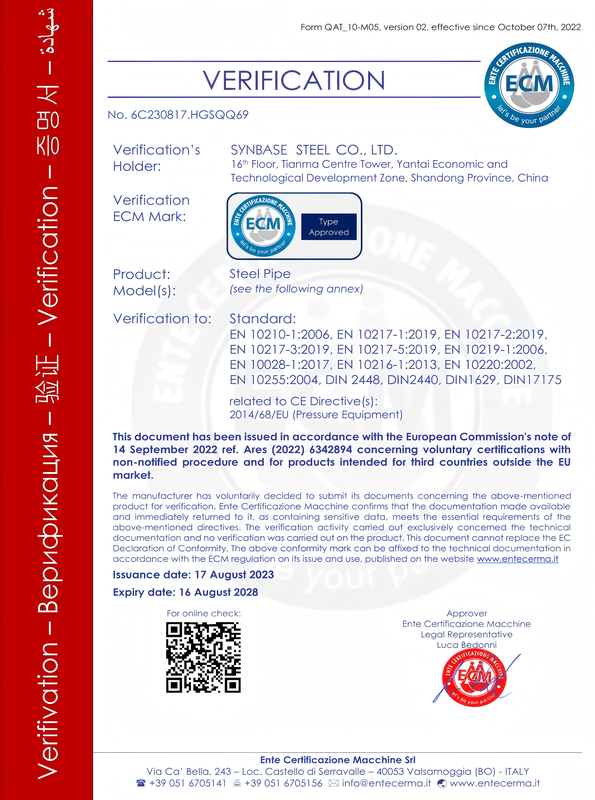
So what’s the difference between the badges? Structure: Synbase is the dedicated flange business of the E-CHENG STEEL GROUP, which manufactures pipes, pipe fittings, flanges and valves with their own forge, heat treatment and machining bases – rather than being a trading house peddling unmarked pipe fittings from someone else’s stock. Our raw material comes direct, with 20-yr supply contracts with all of China’s biggest steel producers (Baosteel, TPCO, Ansteel, TISCO), and we’re a China Iron and Steel Association member. It is this complete line – from our China mill of record, to our own in-house forge, to heat numbers stamped on individual items, to our 3.1 certificates – that allows your QA department to release your production without retesting.
How to Avoid Counterfeit MTCs: One real risk in the flange market is the counterfeit test certificate, often known as MTC (mill test certificate). There are three checks you can make when your parts arrive: the heat number on the flange must match the heat number on the 3.1 certificate, the 3.1 certificate must list actual test values (not merely ‘ meets’), and you need to be able to verify the issuing works. If it’s authentic, it will pass these three tests – request a sample from us today to see for yourself.
Want to see our documentation before committing?
Request a sample EN 10204 3.1 Material Test Certificate →Blind Flanges Explained: What do they do and why do they need to pass a test? A normal fitting like a slip-on or weld-neck flange acts as a connecting socket for two pieces of pipe, allowing flow to pass through a central hole - or 'bore.' A blind flange doesn't have this opening; it has a solid disk at the front which blocks or 'caps' the end of a pipe, fitting, or port, perhaps to seal it off pending future connections or to cap the end of a pressure vessel.
A blind flange is a permanent seal on the end of a pipe and will only open by removing all of the bolts. A spectacle blind (or fig. 8) uses both a solid plate and an open plate connected with a tie bar that rotates by removing only one fastener for flow/isolation and provide a visual on which plate is in use. Flanges are manufactured to ASME B16.5, Spectacle blinds are to ASME B16.48.
Yes. A blind flange seals against its mating flange through a gasket compressed by the bolt load, just like any other bolted flange joint. Gasket type follows the face: a flat or ring gasket for RF/FF faces, and a metal ring for an RTJ groove.
Carbon steel (ASTM A105, or A350 LF2 for low temperature), stainless steel (A182 F304/F316), duplex (S31803/S32750) and alloy grades for high-pressure or corrosive service. The right grade depends on pressure, temperature and medium — the selection table above maps common duties to materials.
Forged carbon-steel flanges, including blinds, are most commonly supplied to ASTM A105 (with dimensions to ASME B16.5). For low-temperature service the equivalent is ASTM A350 LF2. Stainless and alloy forgings are covered by ASTM A182.
All Synbase blind flanges are supplied with an EN 10204 3.1 MTC and stamped heat number. EN 10204 3.2 certification may also be sourced from third parties if required. Standard stock items should take 1 to 2 weeks for delivery. Custom-forged blinds and those made with special materials should take between 3 and 4 weeks. we will verify the precise delivery lead-time against your RFQ.