Send Your RFQ to Synbase Steel
Prefer to send drawings, BOMs or attachment lists by email? sales@synbasesteel.com

The most safety-critical steam in your plant rides on seamless boiler tubes — so the wrong grade or a forged test report does not just underperform, it ruptures. Synbase mills to your exact spec across the full ASTM, ASME, EN, DIN and GB grade map, supplies traceable mill certificates, and stands behind the product with one group-level supply chain rather than a broker’s paper trail.
Request a Quote (RFQ)
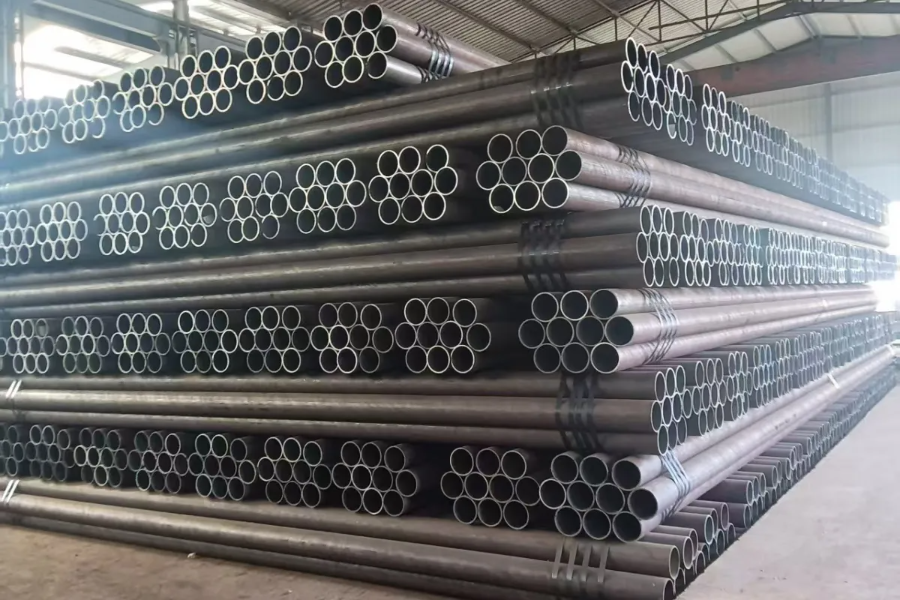
The pressure bearing steel tubes carrying water and steam through the economizer, waterwall, superheater, and reheater of a boiler are boiler tubes. They happen to be situated in the hottest and most heavily stressed area of any power plant in the world, and therefore, grade selection is a reliability decision, not an easily traded commodity line item.
The failure data is brutally direct in this field: 52% of the forced outages at coal plants are triggered by boiler tubes. Turbine, generator, and balance of plant failures account for much less.
Most of those trace back to the steel, not the person who welded it. Creep accounts for about 23% of ruptures and fly-ash corrosion another 12%, both governed by the service temperature against the steel’s chromium-molybdenum ratio.
It makes the buying question a different one. A boiler tube order is minimal against the cost of an outage that order might prevent, so the spec isn’t least-cost-per-ton, but it is the grade, thickness of wall and the cert you’ll believe in at temperature.
Around 800–1000°F, carbon steel starts to lose strength and graphitize. Push it past that limit, the wall thins, “creep cusps” form, and the tube splits in the thick-edged “fish-mouth” mode documented in superheater failure studies.
What to do is match the alloy to the metal temperature: low-alloy chrome-moly on superheaters; high-grade 9Cr for ultra-supercritical. The matrix to the right charts how those decisions line up against real-world standards.
This is why an industrial customer or EPC supplier looks to the grade, not the catalog. Within its own factory, Synbase engineers that grade-to-temperature relationship because the pairing of a metal temperature with a specific alloy can be the difference between twenty years of reliable tube life and a shut down order. This single point grade control is what distinguishes each quote.
Synbase mills three material families on one site: carbon steel for economizer and low-pressure duty, chrome-moly alloy steel for superheater and reheater service at high temperature, and austenitic stainless that adds corrosion resistance through the hottest, high-temperature passes.
Matching A335 alloy steel pipe and headers come off the same lines. The seamless manufacturing process — pierce, roll and cold-draw — leaves a weld-free wall, and every grade of tube and steel pipe ships against its named standard with a matching mill test certificate.
Choosing the right boiler tube material starts with the boiler tube grades that match your service temperature. Few suppliers ever put it in one place, but one table really drives the spec — grade against standard against service-temperature ceiling against boiler zone.
| Grade (ASME/ASTM) | Type | Max use temp | Standard family | Boiler zone |
|---|---|---|---|---|
| SA-178 A / C | ERW carbon, C-Mn | 800°F rimmed / 1000°F killed | ASME I, ASTM A178 | Economizer, waterwall |
| SA-192 | Seamless carbon, min-wall | ~1000°F (538°C) | ASTM A192, EN 10216-2 | Boiler & superheater |
| SA-210 A-1 / C | Seamless medium-carbon | ~1000°F | ASTM A210, GB 5310 | Boiler, superheater, HX |
| SA-213 T11 | 1¼Cr-½Mo low-alloy | 1200°F | ASTM A213, EN 13CrMo4-5 | Superheater / reheater |
| SA-213 T12 | 1Cr-½Mo low-alloy | 1200°F | ASTM A213, DIN 13CrMo44 | Superheater / reheater |
| SA-213 T22 | 2¼Cr-1Mo alloy | 1125°F (scale limit) | ASTM A213, GB 12Cr2MoG | Superheater / reheater |
| SA-213 T91 | 9Cr-1Mo-V advanced | >550°C, creep service to ~650°C | ASTM A213, GB 10Cr9Mo1VNbN | USC superheater, main steam |
| SA-213 T92 | Advanced 9Cr-W | Ultra-supercritical | ASTM A213 | USC reheater / headers |
| SA-213 TP304H / TP347H | Austenitic stainless | 1500°F (ASME I allowable) | ASTM A213, EN 10216-5 | Final superheater |
| A335 P11 / P22 / P91 | Matching alloy pipe | Pairs with T11 / T22 / T91 | ASTM A335 / SA-335 | Headers & main steam lines |
Sizing is the second half of the spec. ASTM A192 covers minimum-wall seamless carbon tube from ½ in to 7 in outside diameter (12.7–177.8 mm), and Synbase mills across that band plus heavier alloy sections to order.
Read this boiler tube size chart alongside the grade matrix. A high pressure boiler tube needs the right alloy and the right wall together to carry its load at temperature.
| Tube class | OD range | Wall thickness | Length | Typical use |
|---|---|---|---|---|
| Small-bore HX | 12.7–38 mm | 0.5–5.0 mm | up to 25 m | Heat-exchanger, economizer |
| Standard boiler | 38–76 mm | 3.0–10 mm | up to 25 m | Waterwall, superheater |
| Heavy-wall alloy | 51–140 mm | 6.0–20 mm | cut to order | Reheater, high-pressure pass |
| Header/main-steam | up to 168 mm+ | to 25 mm+ | cut to order | Headers, main steam |
| Your service | Pressure / temp | Recommended grade | Why |
|---|---|---|---|
| Economizer, feedwater | <300°C, low-P | SA-178 / SA-210 A-1 | Carbon steel is sufficient |
| Industrial boiler, low-P | ~400°C | SA-192 / SA-210 C | Higher-carbon seamless |
| Sub-critical superheater | 450–540°C | SA-213 T11 / T12 / T22 | Cr-Mo creep resistance |
| Supercritical / USC main | >550°C, >25 MPa | SA-213 T91/T92, A335 P91 | 9Cr-V creep strength |
| Final superheater | >600°C | TP304H / TP347H stainless | Steam-oxidation resistance |
Pick the row that matches your hottest pass, then size the wall to your pressure. If you send the operating envelope, our application team returns the grade, wall and standard call-out in the quote.
Grade mismatch is the quiet risk in a boiler tube order: spec one step below the service temperature and the wall thins until it fails. That single error is the root cause behind a large share of the 52% of forced outages tied to tube failures.
For industrial buyers and EPC contractors, Synbase keeps the heat, the grade and the GB 5310 or ASTM call-out under one factory’s control on every lot. Single-source grade accountability across 100+ countries is the differentiator a stocking trader cannot offer.
Here is the honest version that most mill websites skip: “seamless is always better” is an outdated rule of thumb. Modern ERW and high-frequency-induction welded tube can meet or beat strength requirements in a lot of industrial service, and it runs 20-30% cheaper.
The rule that actually holds is narrower. Above roughly 500C operating temperature and 15 MPa pressure – main steam lines, supercritical superheaters, critical pressure parts – the weld seam becomes a creep and inspection liability, and seamless is the right call. For general heat exchange below that line, quality welded tube is a defensible choice.
This matters commercially because the wrong “upgrade” wastes money and the wrong economy gets a tube field rebuilt. One US OEM built heat-recovery steam generators with welded tube whose mill ran poorly maintained ultrasonic test machines; defective tube passed inspection and the field failed, forcing a rebuild. Process patents such as US8245552B2 describe seamless tube made without seam flaws.
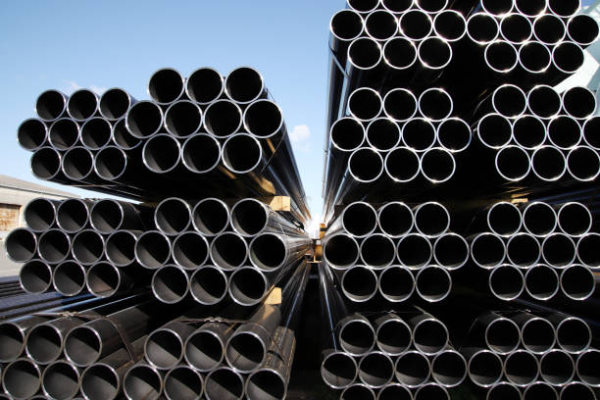
Before a grade and a tube form get locked, six factors decide the spec. Run them in order and the seamless-versus-welded question answers itself.
| No. | Factor | What it sets |
|---|---|---|
| 1 | Service temperature | Carbon vs Cr-Mo vs 9Cr vs austenitic grade |
| 2 | Pressure rating | Wall thickness and seamless threshold |
| 3 | Medium & corrosion | Stainless or alloy vs carbon |
| 4 | Standard / code | ASME I, ASTM, EN, DIN or GB call-out |
| 5 | Tube form | Seamless above 500°C/15 MPa; welded for general HX |
| 6 | Size & tolerance | OD, wall, ovality, surface finish |
| Property | Seamless tube | Welded (ERW/HFIW) tube |
|---|---|---|
| Weld seam | None — monolithic wall | One longitudinal seam |
| Max critical service | >550°C, >25 MPa USC | General HX, sub-critical |
| Relative cost | Baseline | ~20–30% lower |
| Pressure-cycling margin | Higher, no seam to fatigue | Depends on weld + UT quality |
| Where Synbase recommends it | Power, USC, main steam | Low-P economizer / HX duty |
Boiler tube specs change by zone, and a real supplier has to cover the whole ladder on one order. Economizers run carbon steel at 150-300C; waterwalls and superheaters climb past 450C into Cr-Mo alloy; ultra-supercritical units step up to T91, T92 and austenitic stainless for the final passes.
Synbase supplies that full range of power generation, petrochemical, and oil-and-gas plant builders and the EPCs who package them. Because the group operates its own welded and seamless lines, in addition to our factory warehouse, a single order can have carbon economizer and T91 superheater in the same test certificate suite.
Match the design code first — the ASME Boiler & Pressure Vessel Code or the project’s EN/GB equivalent — then confirm heat-number and furnace traceability across every lot.
Ask for third-party testing report, confirm the mill’s precedent for similar temperature, pressure, and medium. And the on-time delivery capacity is just as important as the per unit cost.
If a single rejected tube lot can cause a unit downtime for as much as two weeks, the EPC’s vendor qualification assessment will examine the delivery history and production capacity beyond their brochures. Synbase can pass it, as the group maintains its own steel production plants, warehouses and logistics chains instead of outsourcing.
For an EU buyer or US buyer placing a multi-grade boiler package, one accountable source for every certificate and heat-trace record is the differentiator, and Synbase has delivered it to national oil companies and EPC contractors across 100+ countries.
Get a custom quote scoped to your project’s grade mix →
“We will trace the history of each tube for our boiler tube orders back to its heat number, followed by a PMI scan before releasing, since it ensures that when the buyer checks, the chemistry detailed on the mill certificate will match that of the actual tube in hand. That’s the essence of mill certification.”
— Synbase Engineering Team, quality assurance
Boiler tube pricing is never one number, so a quote that ignores your real parameters is not worth much. Six factors move the figure, and naming them up front shortens the back-and-forth.
Boiler tube quoting is not one number: a quotation ignoring your parameters is not much use. Six factors influence pricing, so it speeds the talking round if they are stated initially.
Grade and alloy content set the floor — carbon tube and 9Cr T91 sit in different cost worlds. OD, wall and tonnage move it from there, since heavy-wall alloy and small lots cost more per ton.
Level of certification (3.1 or 3.2 with third-party witness), extent of inspection (PMI on all tubes, plus extra NDT) shipment terms and your lead-time category, shape the final cost.
Buyers name schedule risk most often — a single late lot can hold a 14-day commissioning window. Synbase removes it because one group factory issues every certificate, so an EPC buyer places one purchase order for mixed grades instead of chasing five mills. Every lot still ships certified to its named standard — ASTM, ASME, EN, DIN or GB.
The greatest concern that engineers express about purchasing boiler tubes from overseas is not material properties, but rather the integrity of the associated documents; there are numerous online discussions where buyers are insistent about PMI for every tube and are unwilling to do business with mills until the issue of forged mill certificates is resolved.
Synbase offers such reassurance through evidence of traceable product information, instead of general claims. Every tube can be traced to its unique heat number and the chemistry and physical characteristics stated in the certificate match those of the tubes if independently tested.
By aligning the heat number on the tube against that inscribed on the certificate, we connect the documentation directly to the laboratory results for the exact lot of material. A PMI meter may be used to identify the type of alloy grades for accurate chemistry verification.
For enhanced security, a second certificate may be requested based on EN 10204 3.2 and endorsed by either SGS or Bureau Veritas, or an independent third party can collect a selection of randomly picked tubes for inspection before dispatch. Factory-direct purchasing significantly shortens these supply chains, because the heat number tracing originates at Synbase.
On the test site, boiler tubes endure the tests such as hydrostatic, Eddy current and ultrasonic methods of NDT and standard geometrical and flattenings.
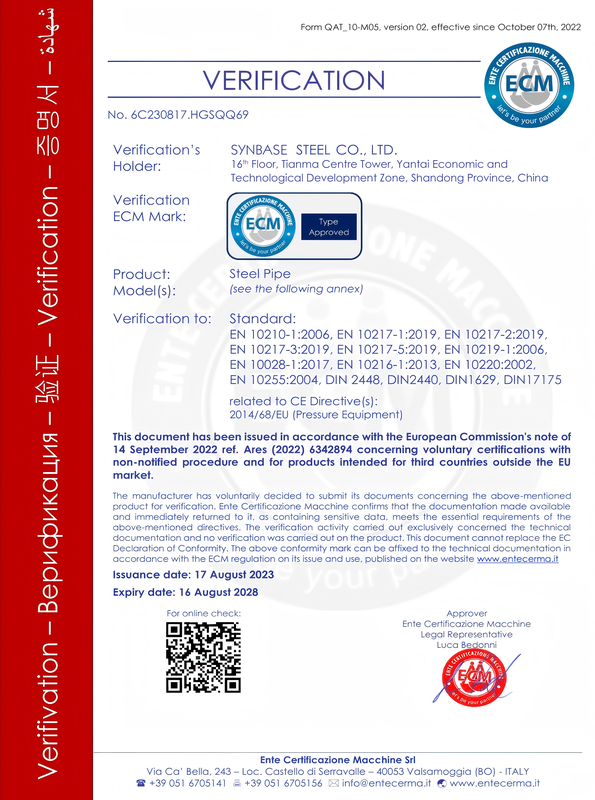
Heat Treatment which makes them normalize or anneal, according to the various grade specifications for desired mechanical properties followed by Mechanical tests – tensile, hardness, and chemical analysis of each batch before it’s dispatched to client for use under such code-standards as the client demands namely GB 5310, ASTM A178, ASME SA210, ASME SA213, EN 10216-2 etc.
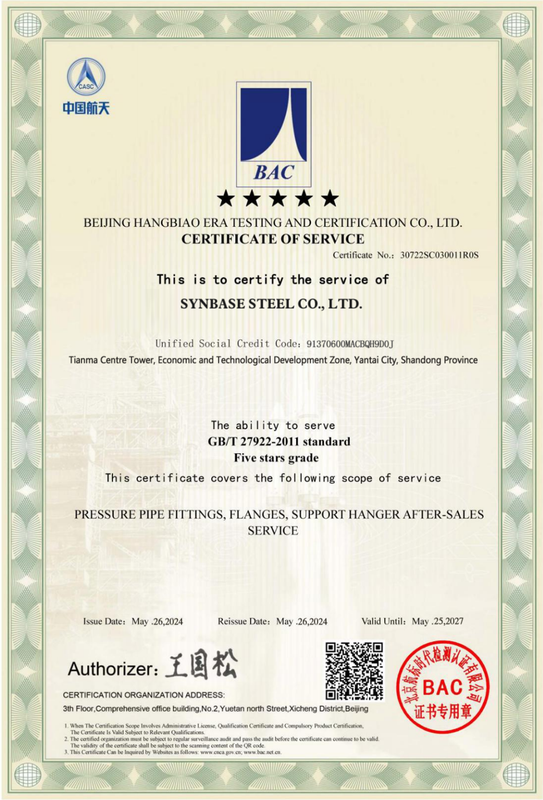
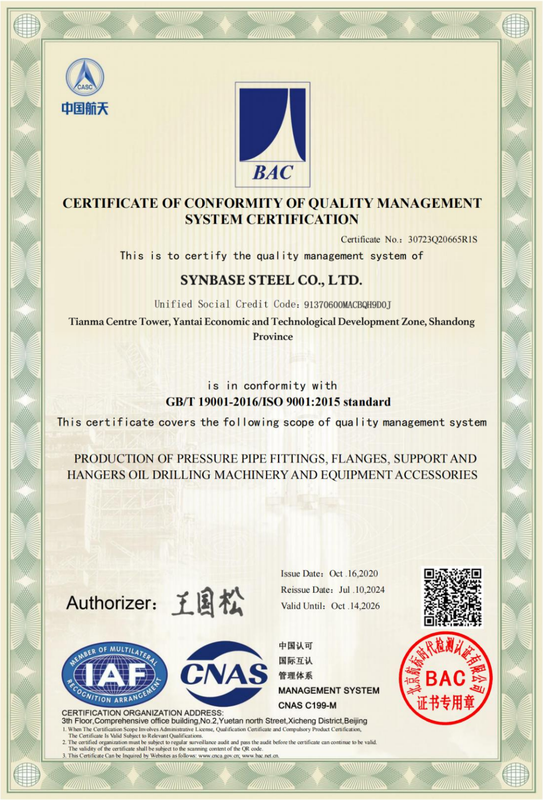
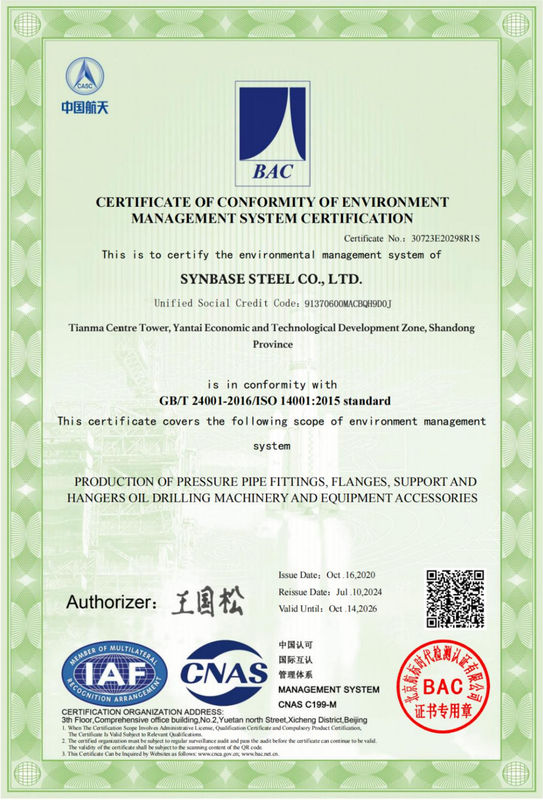
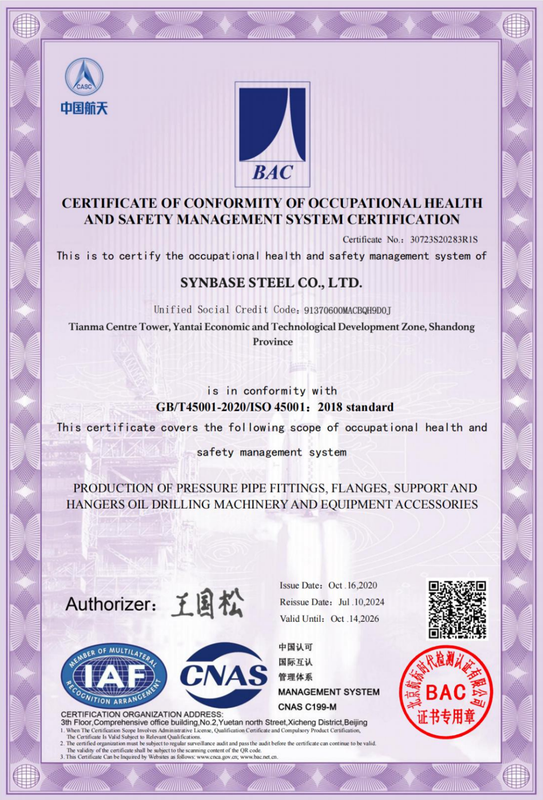
Forged paperwork is the real risk here, not metallurgy: a fake certificate can cost a 14-day outage and a rebuilt tube field, which is why buyers require PMI on every tube. Synbase certifies every lot because each tube starts from our own heat number, under ISO 9001, 14001 and 45001 systems.
An EU buyer or US buyer auditing a shipment finds the chemistry on the certificate in the metal. One factory, one accountable certificate — that is the differentiator against a trader’s paper trail.
Access our engineering utilities to calculate tonnage, compare material standards, and determine the optimal tube process for your operating parameters.
Match the heat number stencilled on the tube to the number on the certificate, then run a PMI gun on the alloy grades to confirm the chemistry. For critical heats, ask for an EN 10204 3.2 certificate witnessed by SGS or Bureau Veritas, or have a third party draw random samples before shipment. Buying mill-direct keeps that paper trail short, because the heat data starts at our furnace rather than a trader’s desk.
Seamless applies above about 500°C and 15 MPa — superheaters, main steam and supercritical cycles — where the weld seam becomes a creep and inspection risk. Below that line, quality welded tube is a sound, lower-cost choice.
Carbon SA-178/192/210, chrome-moly SA-213 T11/T12/T22 and 9Cr T91/T92, austenitic TP304H/TP347H, and matching A335 P-grade pipe — to ASTM, ASME, EN, DIN and GB 5310.
Carbon tube from ½ in to 7 in OD per the ASTM A192 scope, with heavier alloy sections and cut-to-length headers quoted to drawing. Custom OD, wall and tolerance are made to order.
Common grades ship from stock; alloy and custom sizes roll to order. Send your tonnage and destination for an exact figure.
Tube is specified by exact OD and wall for heat transfer and pressure parts; pipe is specified by nominal bore for fluid transport. Boiler tube standards such as A213 set tighter dimensional and test requirements than general pipe.