Send Your RFQ to Synbase Steel
Prefer to send drawings, BOMs or attachment lists by email? sales@synbasesteel.com

Order a heat-treated, full length, quenched AISI 4145H bar slick, spiral or non-magnetic drill collar, guaranteed by an EN 10204 3.1 mill test certificate – the one that ensures your bottom hole assembly (BHA) is approved by, rather than sent back from, the rig floor – delivered fresh from our line.
Request a Drill Collar Quote →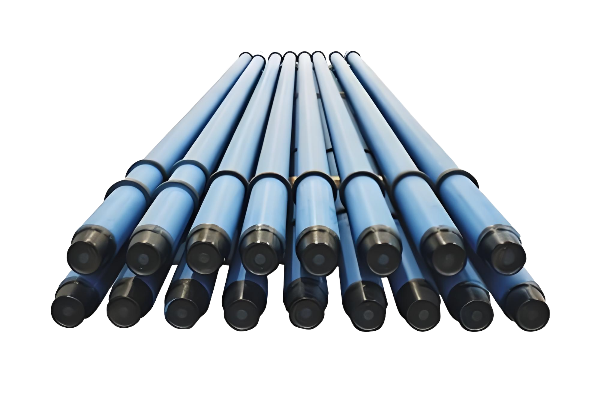
Drill collars are massive, heavy-duty pipe members seated immediately above the bit that bear weight and support bottom hole assemblies(BHA), and when they’re under-spec failure occurs when it can be costliest to repair.
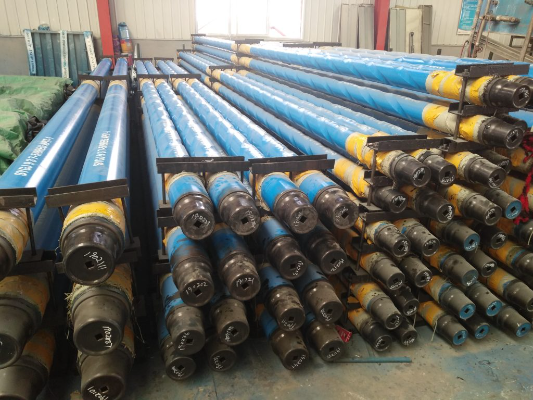
A drill collar’s function relies on its location within the string and in most operations addresses any three key risks we’ll explain here to eliminate their effect, and as we discuss our machines all contribute to removing the following three risks:
If your drill string runs too few or too light a drill collar, the bit chatters instead of cutting, penetration rates fall, and the bit dulls early.
With their large diameter and smooth profile, drill collars come into direct contact with the borehole wall and if the well bore is permeable, over-pressured and deviated this large surface of contact with the pipe and earth result in sticking.
Drill collars manufactured with a magnetic alloy that’s too close to the MWD transmitter distort the azimuth and angle measurements which would carry the wellbore off-course long before anyone realizes there’s any issue at the surface.
Drill collar fatigue failures trace back to cyclic bending stress under downhole vibration – the failure mode behind USPTO work on vibration-dampening collars (US 2005/0217898) – not to the steel simply wearing out. A collar that arrives soft, off-tolerance, or without a traceable heat record is a failure waiting for the wrong dogleg.
A pipe can look visually correct on the racks and still not meet your specs for heat-treat; one could have been insufficiently heat-treated and carry a mill certificate not traceable to the serial number, while another was made with bar of an unknown origin. A steel-on-steel sale may be profitable but it’s not Synbase. Synbase is a full-time Synbase facility manufacturing our 4145H and certifying each collar on an EN 10204 3.1 MTC, serial number traced, full-length.
| Component | Wall / weight | Primary function | Loading & position |
|---|---|---|---|
| Drill pipe | Thin-wall, light | Transmits rotary torque & circulates mud | Runs in tension; most of string length |
| HWDP | Intermediate wall | Transition joint; some weight on bit | Mild compression; between pipe & collars |
| Drill collar | Thick-wall, 22–216 lb/ft | Provides weight on bit + BHA stiffness | Runs in compression; just above the bit |
A costly mistake is considering all drill collars to be similar, or using outer diameter (OD) solely as the criterion. Whether a slick or spiral drill collar is specified in a bottom hole assembly depends upon its intended use. Getting one wrong will cost money in downhole problems; both sticking and faulty readings for direction.
Here is the honest, counter-intuitive part most spec sheets skip: a non-magnetic drill collar is almost always run slick, not spiral. Its non-mag alloy is costly and the survey depends on magnetic spacing, so the groove that fights sticking on a steel collar is usually left off the non-mag joint – a deliberate trade-off, not an oversight.
| Collar type | Geometry / alloy | Best well / position | Key benefit | Trade-off |
|---|---|---|---|---|
| Slick | Smooth round OD, 4145H | Vertical / low-deviation holes | Maximum weight per foot, lowest cost | Full wall contact — sticking risk in deviated holes |
| Spiral | Helical grooves, 4145H | Deviated & horizontal holes | ~40% less wall contact for only ~4% weight loss | Slightly lower weight per foot vs slick |
| Non-Magnetic | Slick, P530 / P550 / Monel | MWD/LWD survey zone in the BHA | Magnetic permeability μr ≤ 1.01 — clean surveys | Highest cost; typically non-spiral |
| Pony / short | Shortened slick or spiral | BHA space-out & fine WOB tuning | Adjusts weight & sensor spacing precisely | Supplementary, not primary weight |
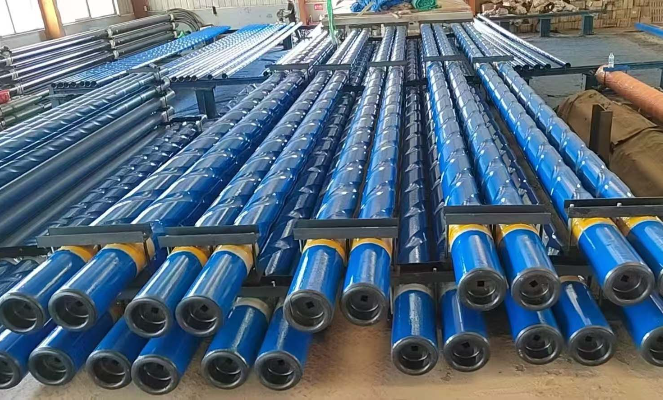
For non-ferrous applications, especially where you rely heavily on data from your MWD/LWD tool, you won’t want a drill string made out of standard steel because of its magnetic properties. Selecting one of our austenitic-designed P530 or P550 non-magnetic drill collars eliminates this interference and provides true accuracy in directional measurements, whether for horizontal, offshore and ultradeep drilling in all kinds of environment, even H2S containing environment for P550.
Building a BHA with both steel and non-mag collars?
Get a type-by-position recommendation for your string →These are the components your competitor distributes through out downloadable PDFs: OD, Bore, lbs./ft. and corresponding API connection in a single place – making it possible for your engineer to size and your buyer to RFQ from one row. A thin spec sheet risks a connection mismatch found only after collars are on-site – expensive and time-consuming to replace.
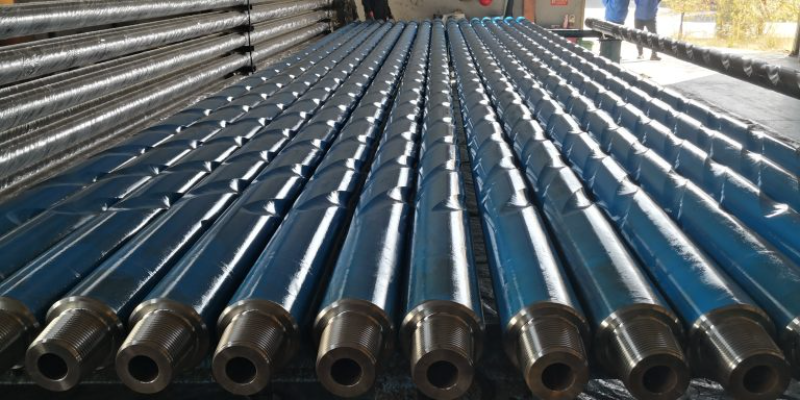
All of these drill collar sizes are manufactured to the API Spec 7-1 dimensional and mechanical requirements, in standard 30 – 31 ft (Range 2) lengths, and with slip and elevator recesses machined to spec, upon request.
| OD (in) | Bore / ID (in) | Weight (lb/ft) | Typical API connection |
|---|---|---|---|
| 3⅓ | 1¼ | 22 | NC23 / 2⅝ PAC |
| 3½ | 1½ | 27 | NC26 (2⅝ IF) |
| 4⅛ | 2 | 35 | NC31 (2⅞ IF) |
| 4¾ | 2¼ | 47 | NC38 (3½ IF) |
| 5 | 2¼ | 53 | NC38 (3½ IF) |
| 6 | 2¼ | 83 | NC44 / NC46 |
| 6½ | 2-13/16 | 91 | NC46 (4 IF) / 4½ REG |
| 7 | 2-13/16 | 110 | NC50 (4½ IF) |
| 8 | 2-13/16 | 150 | 6⅝ REG |
| 9 | 3 | 192 | 7⅝ REG |
| 9½ | 3 | 216 | 7⅝ REG |
| 11 | 3 | ~300 | 8⅝ REG |
Two collars with the same OD will behave like night and day when downhole: fatigue life and survey compatibly is defined by the alloy and the heat treatment- not diameter. Just buying on ID is how you get a soft collar in your survey rated for one.
Our standard Synbase drill collars are manufactured from modified AISI 4145H chrome-molybdenum bar and have been through harden and temper to achieve the mechanical properties required to the mechanical property set for API Spec 7-1 with a hardness 285-341 BHN evenly through the drill collar, not simply hard skin over soft core.
| Property | AISI 4145H mod | P530 non-mag | P550 non-mag |
|---|---|---|---|
| Alloy family | Cr-Mo alloy steel | Austenitic Mn-Cr-N (Ni <2%) | High Cr-N austenitic |
| Hardness | 285–341 BHN | ~30–38 HRC equiv. | ~32–40 HRC equiv. |
| Min yield (typical) | ~110 ksi | ~120 ksi | ~135 ksi |
| Magnetic permeability | Magnetic (standard) | μr ≤ 1.01 | μr ≤ 1.005 |
| SCC resistance | Standard | Good | Superior |
| Best for | Slick & spiral collars | Standard directional MWD | Ultra-deep / sour horizontals |
That non-magnetic material isn’t stainless steel trying to hide; it’s engineered. Its non-magnetic behaviour comes from an unusually stable austenitic structure of manganese, chromium and nitrogen (not nickel) that holds magnetic permeability near unity (μr ≤ 1.01) – so a magnetometer reads the Earth’s field, not the collar.
Documentation is part of the drill collar, not an upsell – a missing or mismatched certificate is a failed BHA inspection or a rejected shipment, and that is how a cheap collar becomes the expensive one. Sourcing fraud lives here too: a real certificate reused across product lines it never covered, or a sister-company document with no link to the bar that was machined. Your defence is traceability you can audit, not a logo on a PDF.
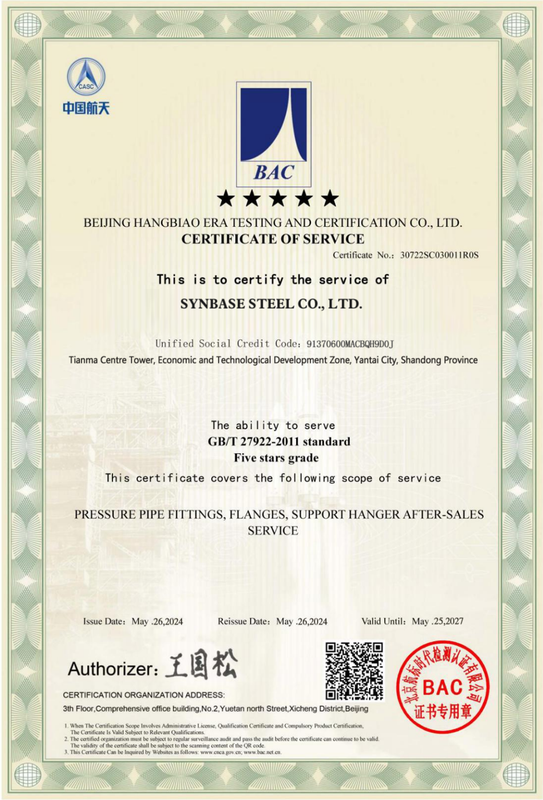
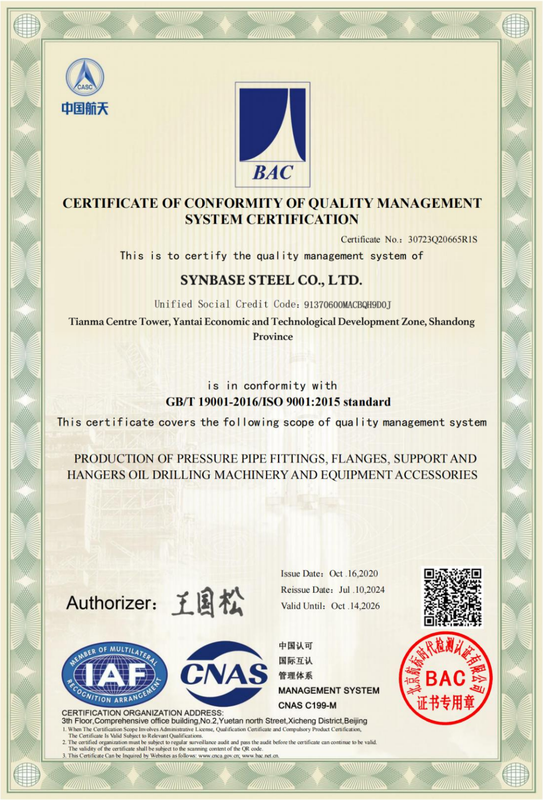
But this isn’t just about tests: it’s backed up by deep experience in manufacturing. Synbase Steel is the pipeline-equipment core enterprise of E-CHENG STEEL GROUP, operating its own plants for steel pipe, fittings, flanges and valves, with supply-chain partners including Baosteel, TPCO (Tianjin Pipe), Ansteel and TISCO for special-alloy bar. Its quality management is certified to ISO 9001.
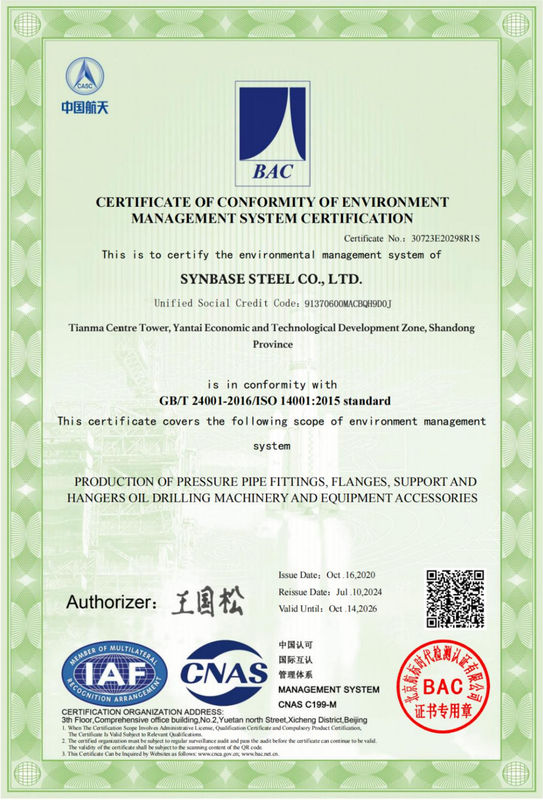
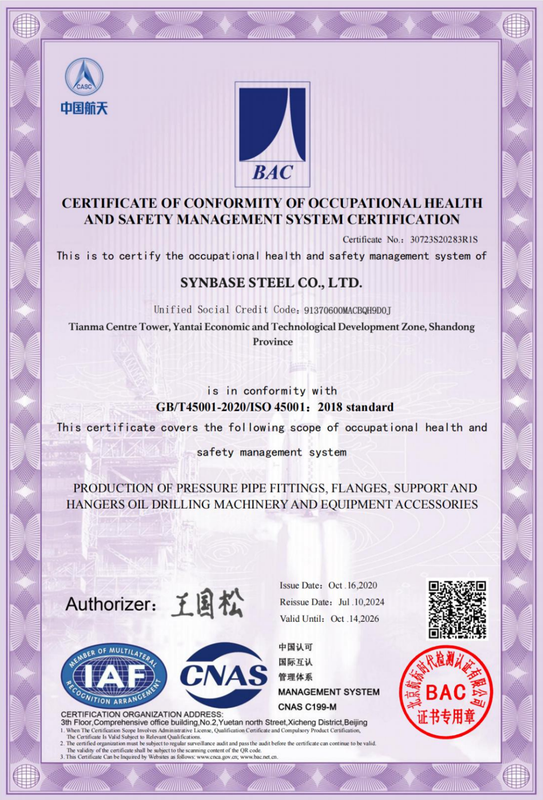
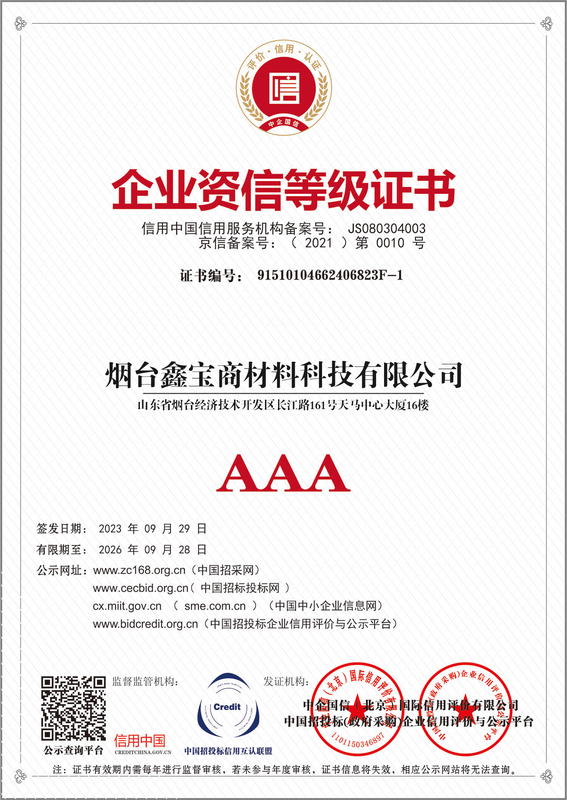
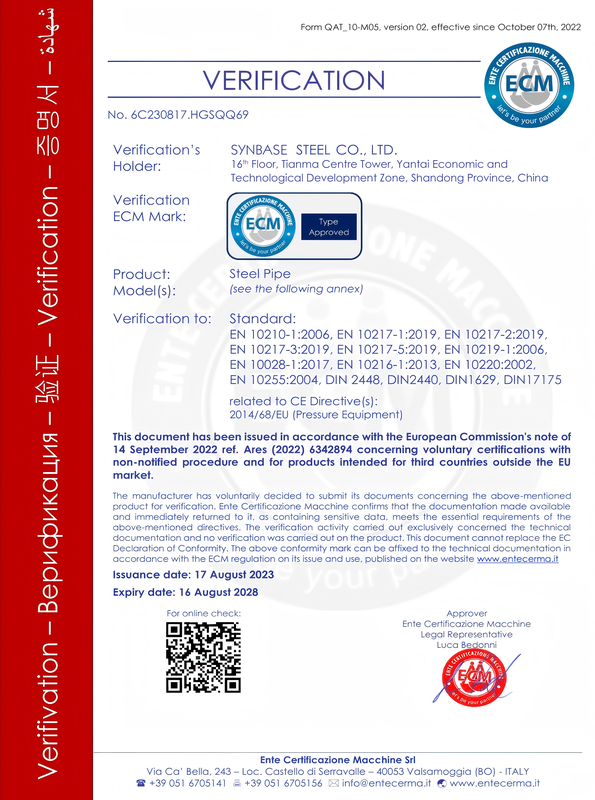

A listed price is never the whole price for drill collars. If you cut out the middlemen and buy drill collars direct from the machining mill, you won’t just change your cost; you’ll get a level of documentation you wouldn’t otherwise see.
spiral geometry removes ~40% of wall contact for only ~4% weight loss — the highest-impact spec choice on the collar
Performance trade-off per industry drill collar data; exact figures vary by OD and groove design. Not a price quotation.
Two numbers drive the order: weight on bit your bit and formation need, buoyed weight available from each collar size in your mud. Engineers run enough collars (often topped with HWDP) to deliver that weight with a safety margin and keep the neutral point in the HWDP, not the collars:
Instead of quoting an single misleading figure, Synbase breaks down the levers that move your delivered cost so you can plan against them:
A suite of technical calculators designed to specify BHA configurations, evaluate string weight constraints, and select the optimal drill collar metallurgy for your directional profile.
Drill collars are thick-walled, heavy tubulars run directly above the bit to put weight on bit and add stiffness to the bottom hole assembly. That weight make the bit cut efficiently, while the stiffness resists buckling and helps control hole direction. They run in compression while the drill pipe above them runs in tension.
A drill collar is much thicker-walled and heavier (22-216 lb/ft) and supplies the weight on bit; drill pipe is thin-walled and light and transmits torque and circulates mud over most of the string length. The collar run in compression near the bit, the pipe in tension above it.
Drill collar types divide into four families: slick (smooth OD, for vertical holes and maximum weight), spiral (helical grooves to resist differential sticking in deviated holes), non-magnetic (P530/P550 or Monel, to protect MWD/LWD surveys), and pony or short collars used to space out the BHA and fine-tune weight.
Non-magnetic drill collars are machined from austenitic stainless alloys – commonly P530 and P550 grades built on manganese, chromium and nitrogen with low nickel, or the older Monel nickel alloy. Unlike standard 4145H steel, these grades hold a stable austenitic structure that keeps magnetic permeability near unity (r 1.01). That magnetic transparency is what lets a magnetometer in the MWD/LWD tool read the earth’s field instead of the collar’s, so azimuth and inclination surveys stay accurate and the directional driller can trust where the well is going.
It depends on OD and bore: a 3-inch collar is about 22 lb/ft, a 6-inch collar about 91 lb/ft, and a 9-inch collar around 216 lb/ft. The weight-and-dimension reference table above lists standard API Spec 7-1 sizes from 3 to 11 inches.
API Specification 7-1 (Rotary Drill Stem Parts), and has NS-1 and DS-1 as the standard inspection standards. The Synbase machines are certified to API Spec 7-1.
On vertical, low-deviation wells that aren’t highly prone to getting stuck, run slick collars to get maximum weight downhole. Then switch to spiral just below the kick-off point and continue to the end of the well on deviated or horizontal intervals: grooves minimize dog contact by 40% (for about 4% weight) and drastically decrease differentials.
Yes, Each Synbase drill collar comes with a heat number traceable EN 10204 3.1 MTC (3.2 third-party per request). All connections can be manufactured to suite your existing BHA’s to API NC, IF or REG and BSR assured in close proximity to the 2.50 ideal value