Send Your RFQ to Synbase Steel
Prefer to send drawings, BOMs or attachment lists by email? sales@synbasesteel.com

Pipe flanges join pipe, valves, pumps and vessels in pressure-tight, removable joints. Synbase Steel forges carbon, stainless and special-alloy flanges to ASME B16.5, ASME B16.47 and EN 1092-1, including weld neck, slip-on, blind, socket weld, threaded, lap joint, plate and orifice flanges from Class 150 to Class 2500.
Synbase is the pipeline-equipment manufacturing arm of E-CHENG STEEL GROUP. Each order is built around the specified type, class, face, material grade and heat-number traceability requirements, so buyers can review the steel identity, dimensional basis and certificate package before shipment.
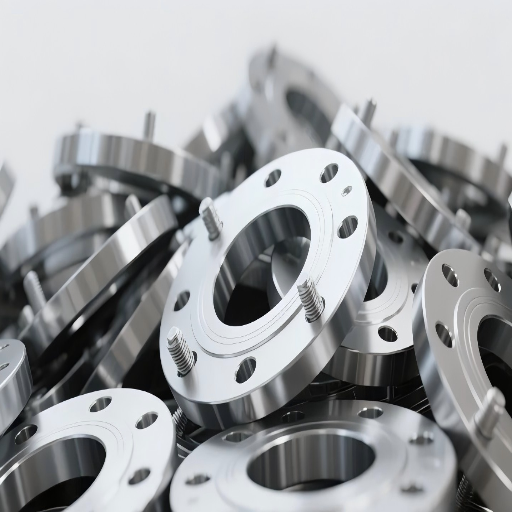
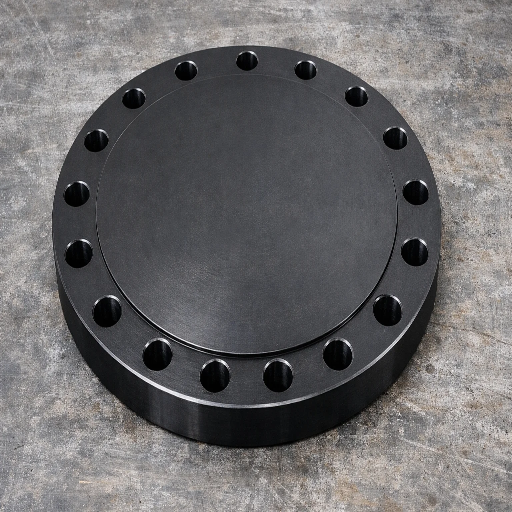
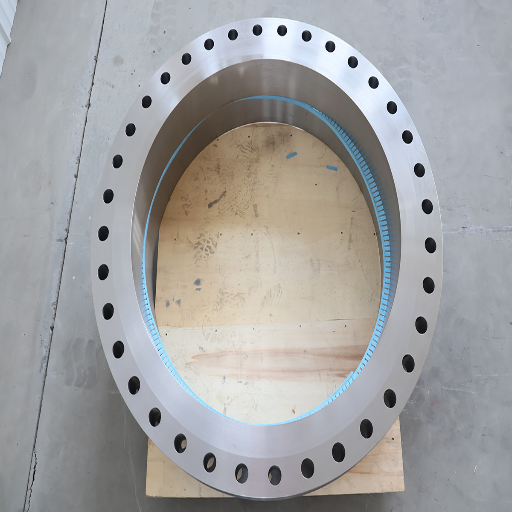
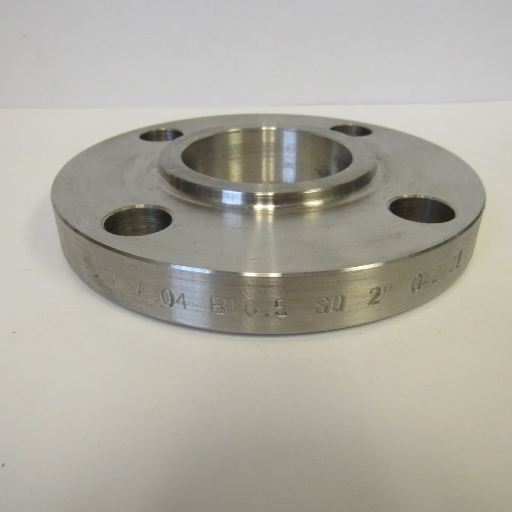
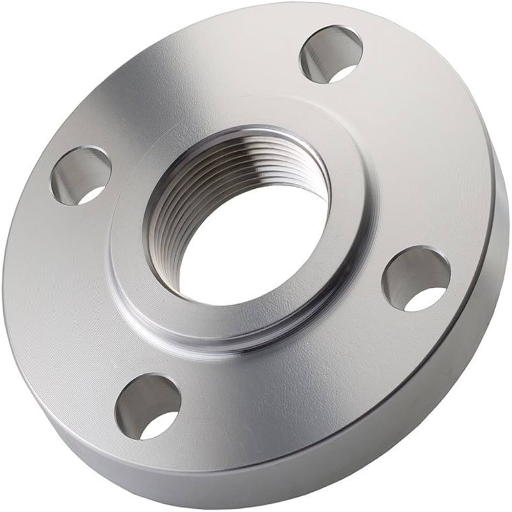
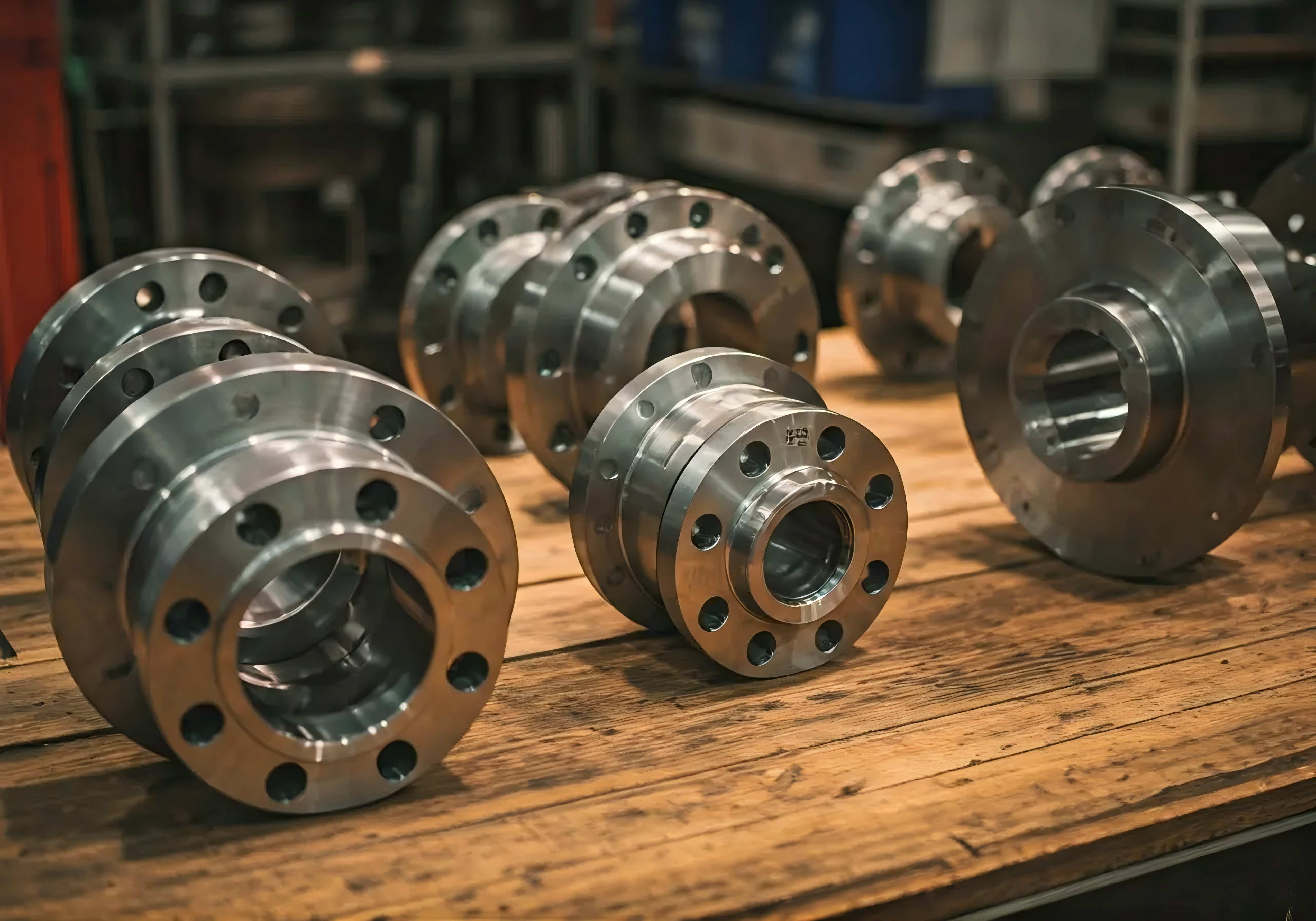
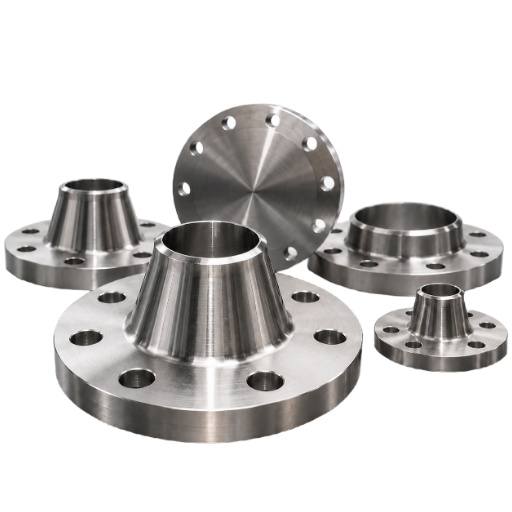
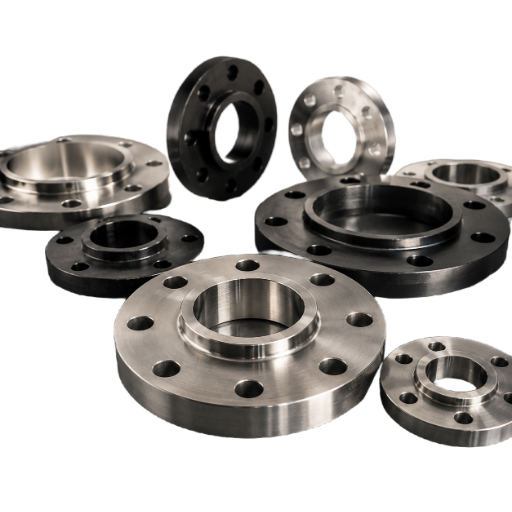
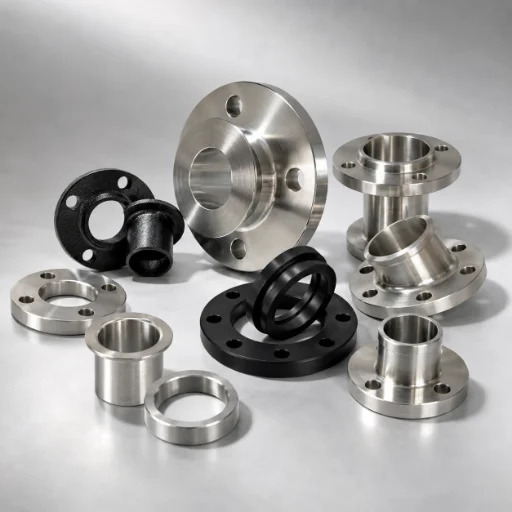
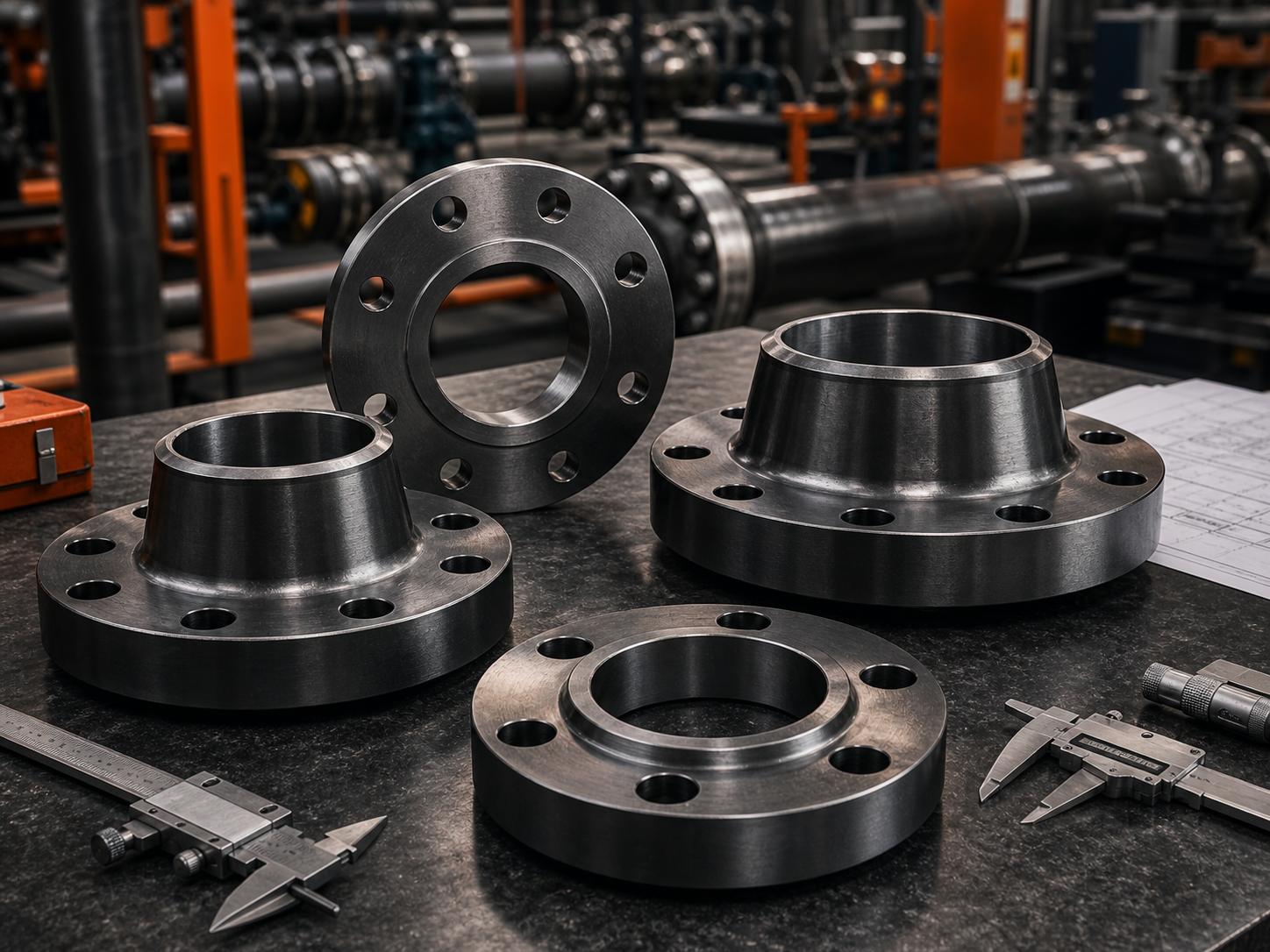
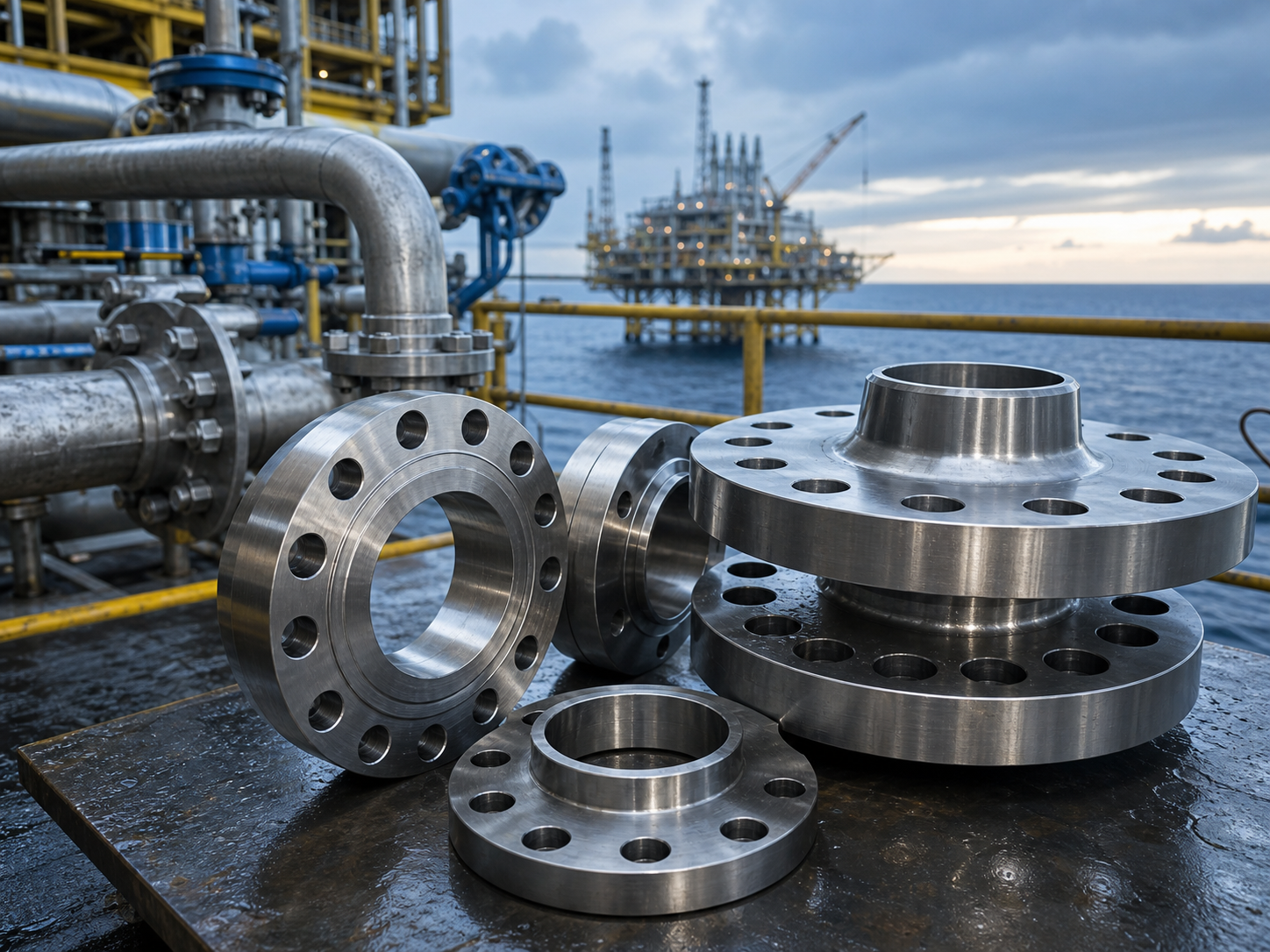
Forged carbon and stainless steel pipe flanges manufactured by Synbase Steel to ASME B16.5 — weld neck, blind, and slip-on types staged for inspection
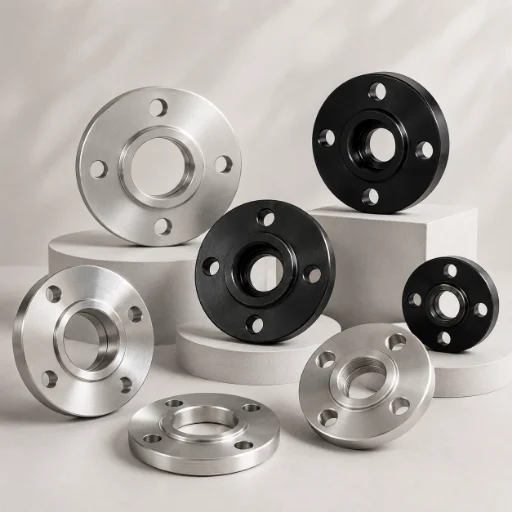
Weld neck, slip-on, blind, socket weld, threaded, lap joint, plate, reducing & orifice
Pressure classes (PN6–PN100), per ASME B16.5 / B16.47
Size range, incl. large-diameter B16.47 Series A/B
A105, A350 LF2, A182 F304/316, duplex, chrome-moly
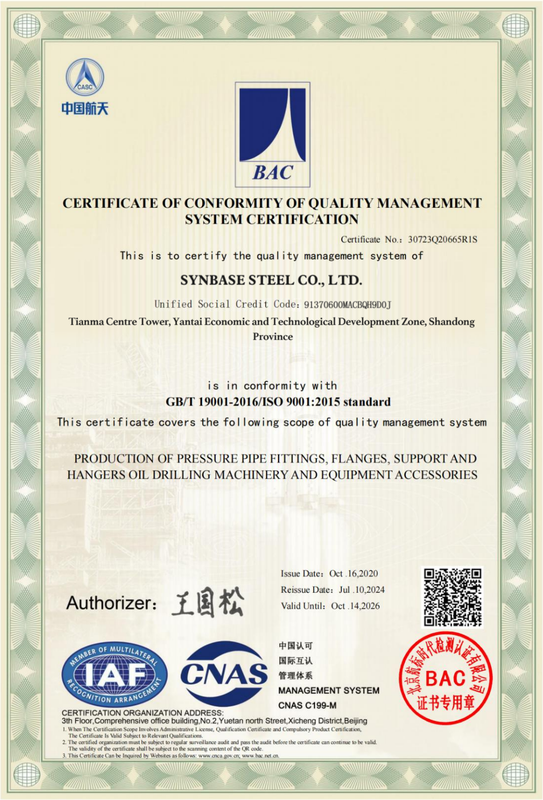
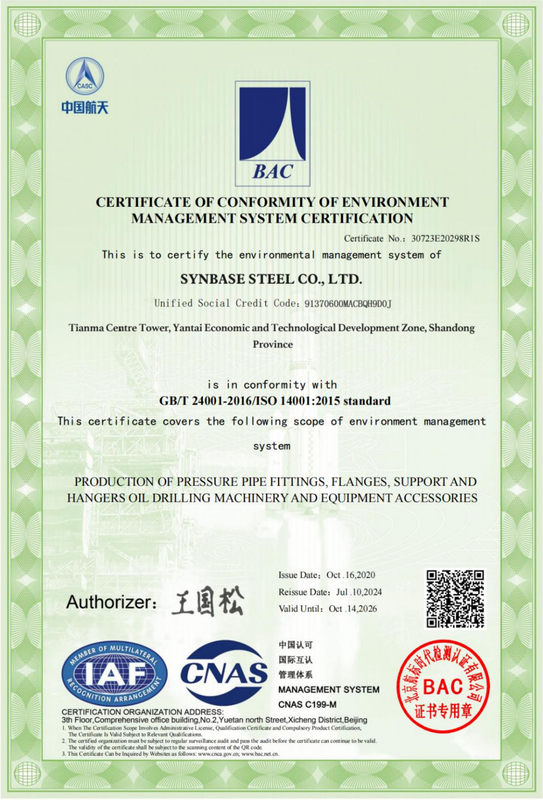
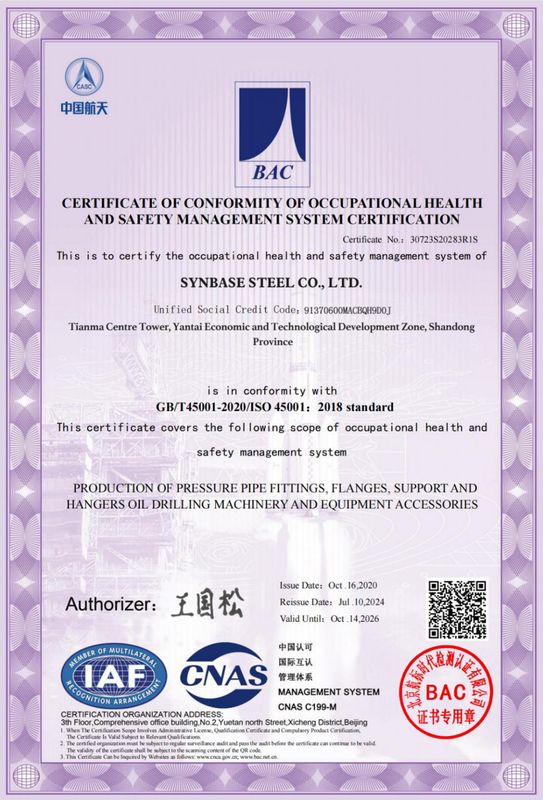
ISO 9001 / 14001 / 45001 + CE; MTR / EN 10204 3.1 on demand
Forged flange supply to energy, EPC & process buyers worldwide
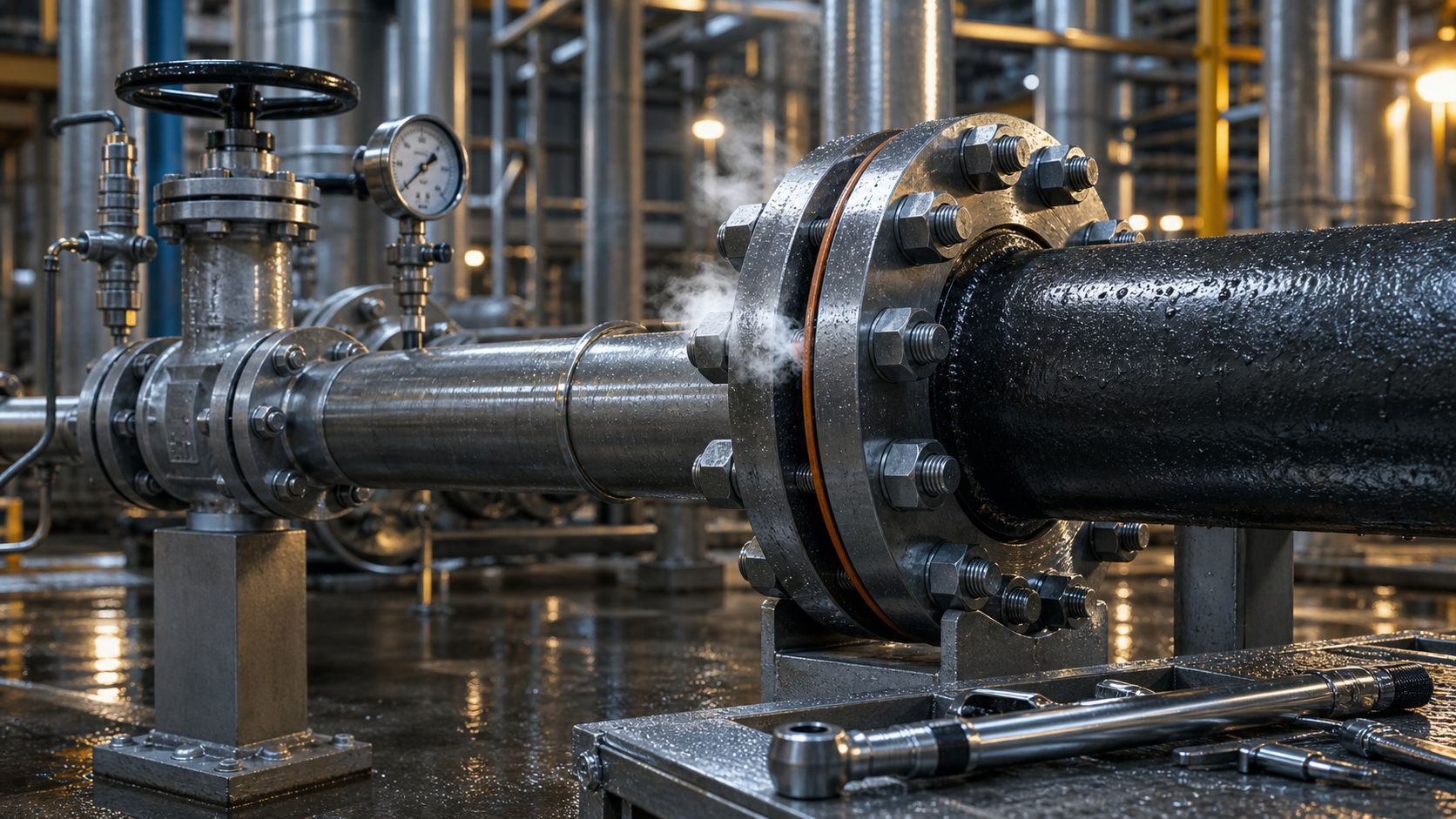
In high-pressure and high-temperature applications the joint design carries the whole safety case. Replace the gasket five times without correcting the root cause and you’ve only bought five more shutdowns.
Tight doesn’t mean sealed. A flanged joint can be torqued hard and still weep, because a leak is a system issue, not just a bad gasket. Flanges connect pipes, valves and vessel nozzles into a pressure-tight, demountable joint, and that joint holds only when flange face, alignment, gasket, bolt load and tightening method all match the service.
A common specification mistake starts with bolt-hole match. The same bolt pattern does not make two flanges interchangeable. A slip-on flange and a weld neck flange of the same standard and class may share the ASME B16.5 bolt circle, but they serve different stress and fatigue requirements. Selection should be based on pressure class, face type, material grade, weld design, gasket and service conditions, not bolt-hole match alone.
Manufacturing identity matters because a forged flange is both a pressure component and a documentation item. Synbase forges within E-CHENG STEEL GROUP production resources, publishes the standards it works to, and ties each flange lot to heat-number records. When type, class, face and material grade are specified against ASME B16.5 or the required project standard, the inspection and certificate package can be checked before the line is ever pressurized.
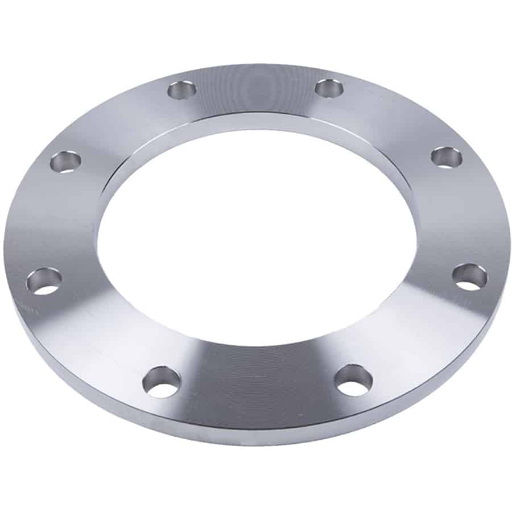
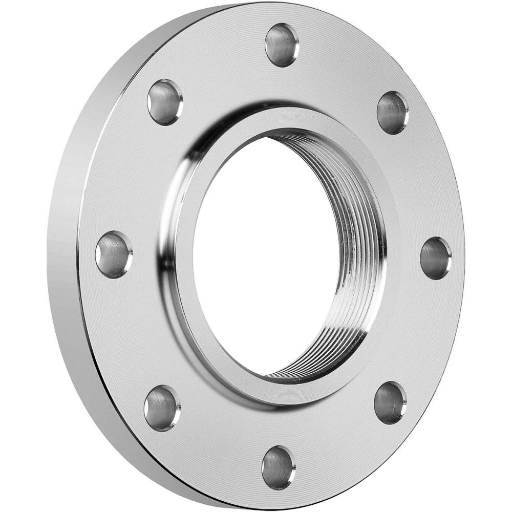
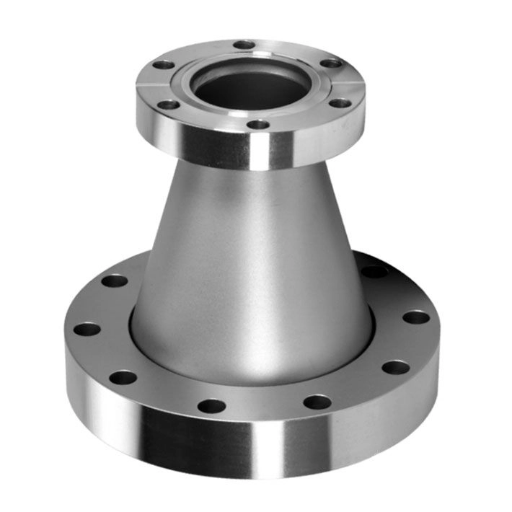
| Flange Type | Internal-Pressure Strength | Fatigue Life | Connection | Best-Fit Service | Common Faces |
|---|---|---|---|---|---|
| Weld Neck | Baseline (100%) | Baseline (100%) | Butt weld (full pen.) | HP/HT, cyclic, critical lines | RF, RTJ |
| Socket Weld | = slip-on | +50% vs slip-on | Fillet weld in socket | Small-bore HP, instrument | RF |
| Slip-On | ~67% of WN | ~33% of WN | 2 fillet welds | Moderate P, non-cyclic | FF, RF |
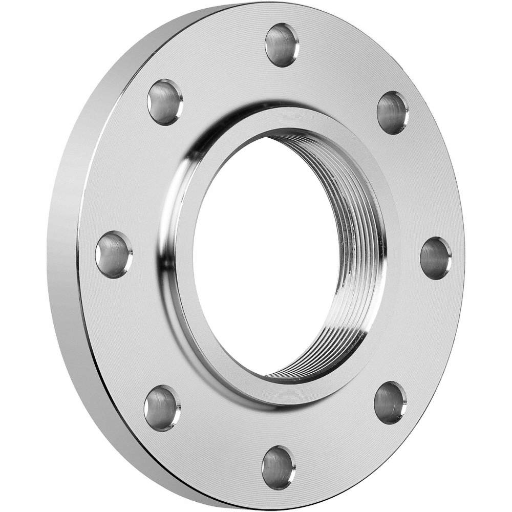
| Threaded | Lower (no weld) | Low | NPT thread | ≤4″, no-hot-work areas | FF, RF |
| Lap Joint | ~ slip-on | ~10% of WN | Stub end + loose ring | Frequent dismantling, SS lines | Stub-end face |
| Blind | Highest bending stress | n/a (static) | Bolted closure | Line ends, manways | FF, RF, RTJ |
At 800°F a carbon-steel flange has lost more than 70% of its ambient rating, which is why design pressure and design temperature must be read together, off the right material-group table, never off the class number alone.
| ASME Class | @ 100°F | @ 400°F | @ 800°F | Typical service |
|---|---|---|---|---|
| 150 | 285 | 200 | 80 | Water, HVAC, low-P steam |
| 300 | 740 | 635 | 410 | Process piping, hydrocarbons |
| 400 | 985 | 845 | 550 | Legacy / specialized |
| 600 | 1480 | 1265 | 825 | Oil & gas, steam, chemical |
| 900 | 2220 | 1900 | 1235 | Refinery, severe hydrocarbon |
| 1500 | 3705 | 3170 | 2055 | HP reactors, critical steam |
| 2500 | 6170 | 5280 | 3430 | Ultra-high-pressure systems |
The flange face decides how the flange gaskets seal. Raised face flanges (RF) — proud 1/16″ on Class 150/300, 1/4″ on Class 400 and up, concentrate bolt load on a smaller gasket area and cover most service. Flat-face flanges (FF) mate full-area for brittle housings such as cast iron, FRP, or bronze, where a raised face would crack the casting. Face flange geometry, in short, matches both the mating component and the gasket. A ring-type joint (RTJ) uses a soft metal ring crushed into a machined groove for metal-to-metal sealing; it’s standard from Class 600 up and required on API 6A wellhead equipment. A tongue and groove or ring joint face handles the remaining specialized sealing duties, and matching the face to the service is what stops leakage at the rated pressure.
| Face | Seal mechanism | Typical class band | Use when | Not for |
|---|---|---|---|---|
| Flat Face (FF) | Full-face soft gasket | 150–300 | Cast iron / FRP / bronze mating | HP/HT steel lines |
| Raised Face (RF) | Concentrated soft gasket | 150–2500 | General process default | Fire-critical sour service |
| RTJ (R/RX/BX) | Metal-ring, plastic deform | 600–2500, API 6A | HP/HT, fire-safe, sour gas | Low-P / FF mating |
Material is where service temperature, corrosion, and code all meet. Most flanges are forged carbon steel (SA-105) or forged stainless (SA-182 F304/L, F316/L); low-temperature service moves to A350 LF2 and its cousins, high-temperature lines to F11/F22/F91 chrome-moly, and aggressive media to duplex 2205/2507 or nickel alloys 625/825. Get the grade wrong against temperature and the failure mode isn’t slow corrosion, it’s brittle fracture during hydrotest or cold start-up, a documented failure even on parts nominally rated to −20°F.
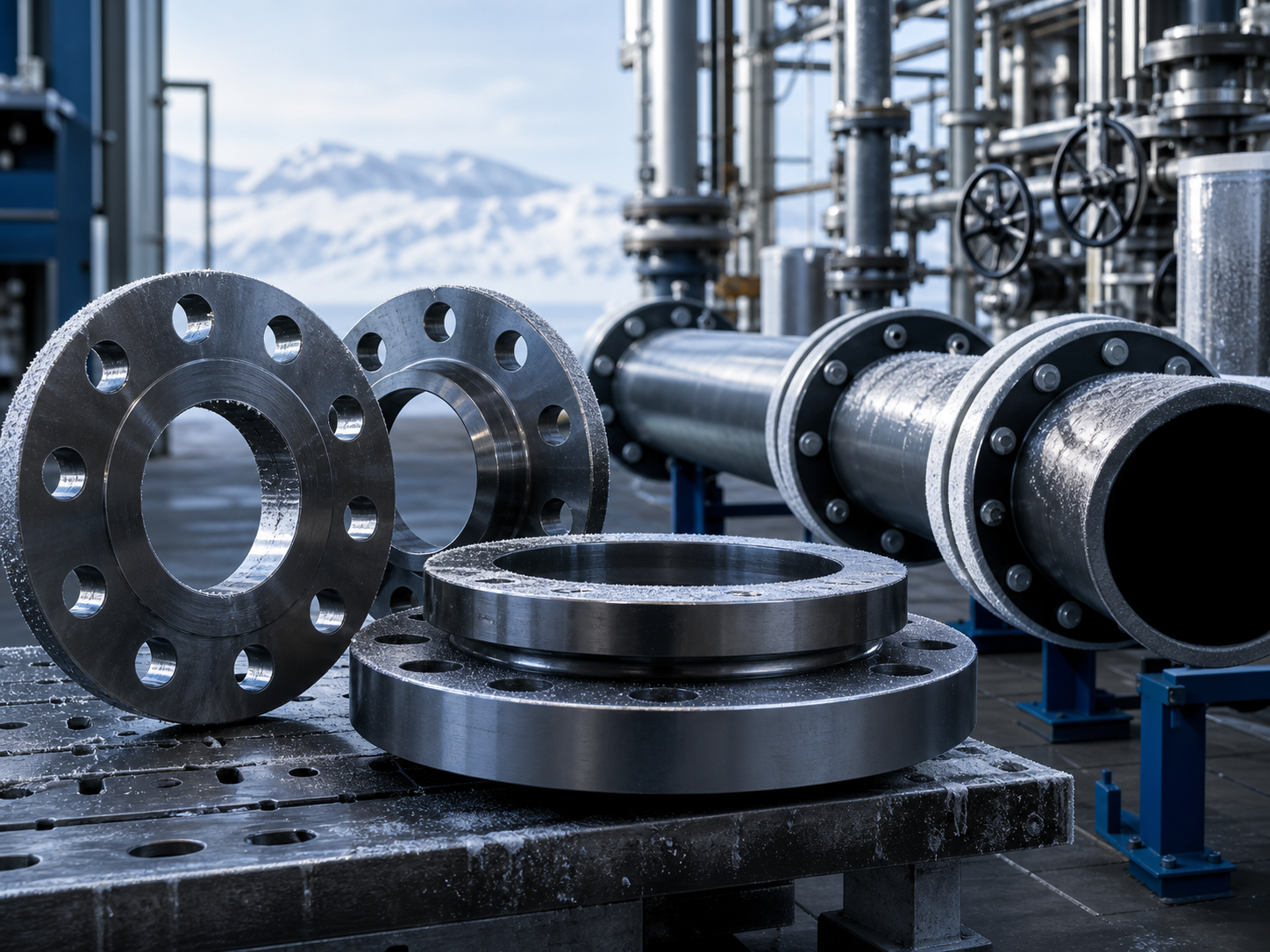
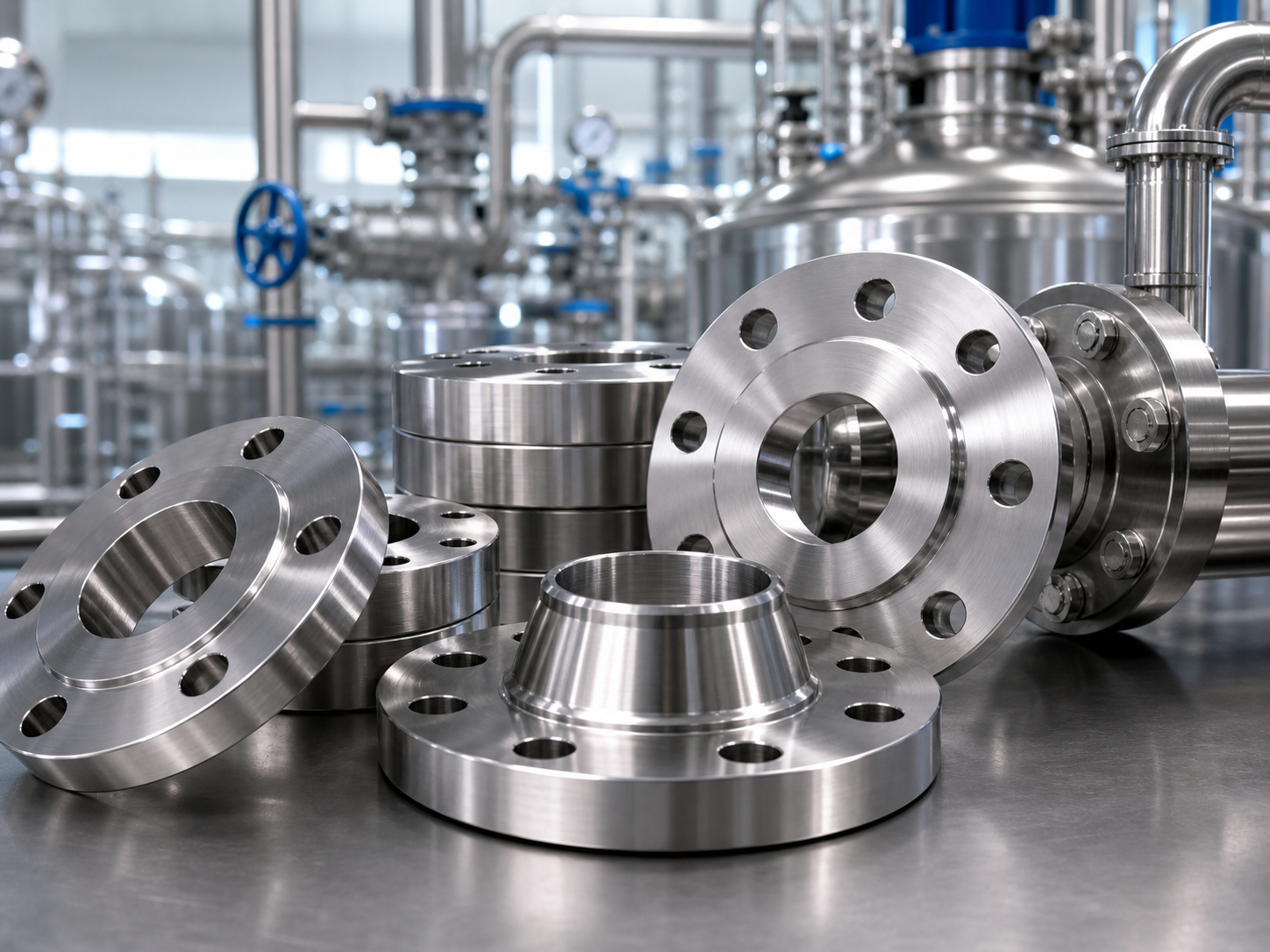
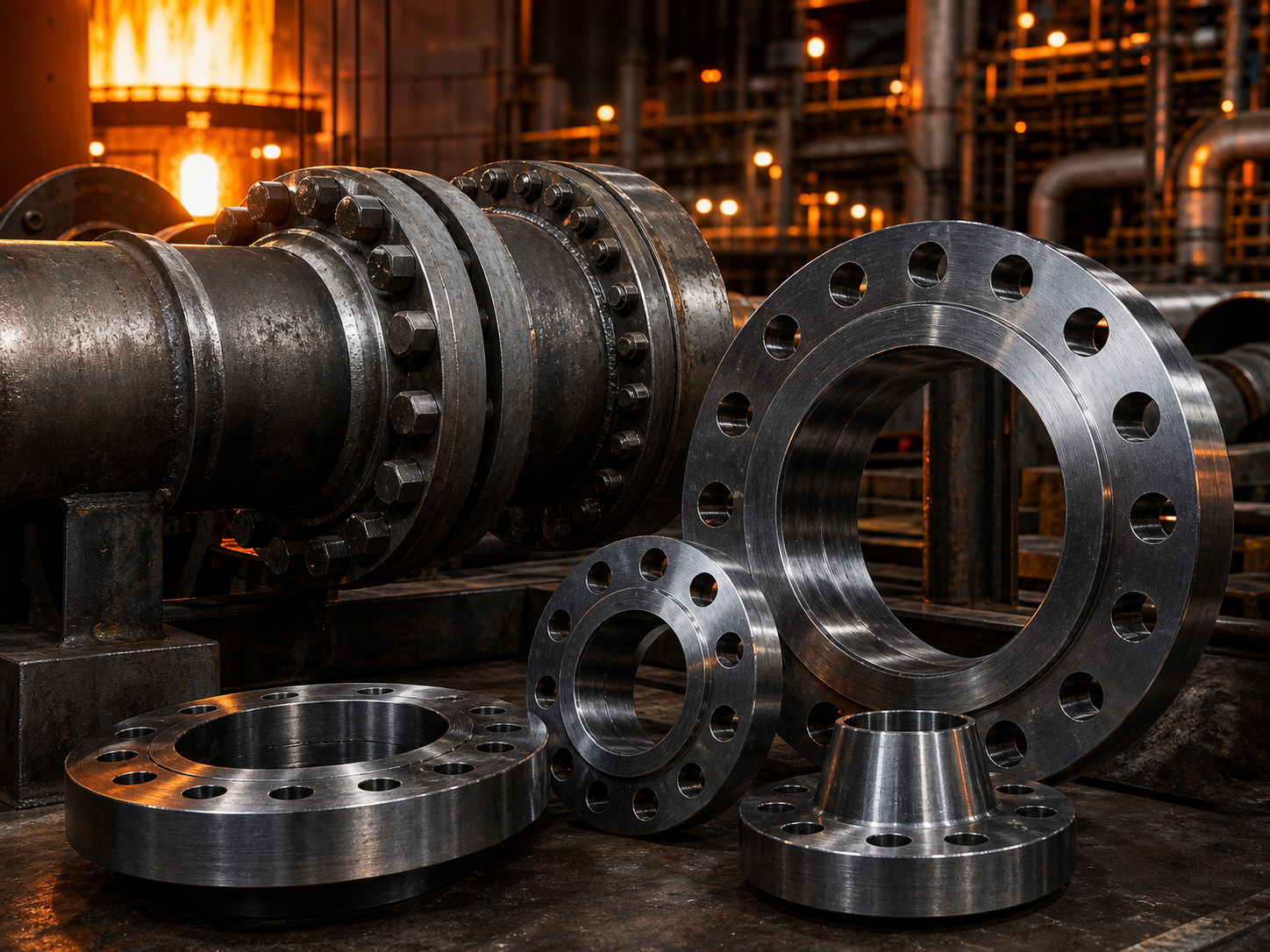
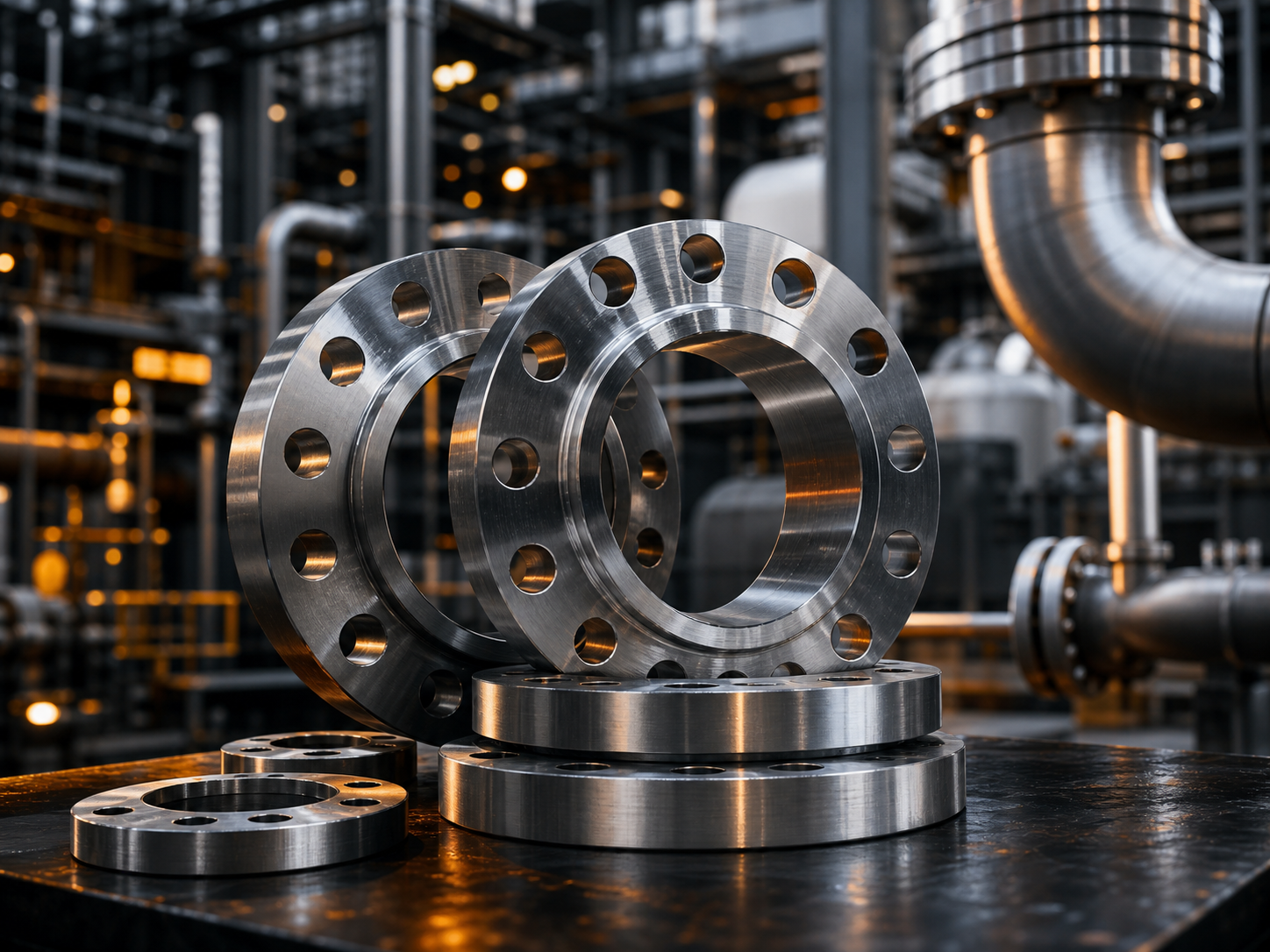
Optimized for general industrial processing, ambient-to-high pressure piping arrays.
Duplex, super-duplex, low-temp, and chrome-moly grades are where opaque suppliers quietly substitute or run out. Synbase supplements its forged lines through long-term partnerships with leading Chinese mills, Baosteel, Tianjin Pipe (TPCO), Ansteel, and TISCO, so a Class 600 duplex weld neck order is backed by a named, traceable melt source rather than a best-effort spot buy. One trade-off we’ll state plainly: special alloys carry longer lead times than commodity A105, and we quote them honestly rather than promising stock we don’t hold.
Synbase reviews special-alloy orders against the named mill source, material grade and heat-number records before release. The production team keeps the heat number linked from forging through packing, so the alloy in the piping system matches the certificate package. For duplex, super-duplex, chrome-moly and nickel alloy work, chemical and mechanical certificates are treated as the start of verification, supported by dimensional and inspection records.
A low unit price can become expensive when freight, duties, documentation gaps, rejected lots or rework are added later. Compare forged flanges on landed cost and qualification evidence, not unit price alone. A useful quote should separate product cost, freight assumptions, duty assumptions, certificate level and inspection scope.
Tariff exposure depends on destination, material grade, product scope, origin and the rules in force at the time of import. U.S.-bound stainless and steel articles may face trade-remedy duties, while many non-U.S. destinations follow different rules. Synbase treats tariff items as quote assumptions for buyer and broker review, not as legal advice. The purpose is to make landed-cost exposure visible before the purchase order is placed.
A rejected lot, rework claim or site delay can cost more than the apparent saving on a low unit price. Qualify the supplier on traceability and inspection scope, then compare landed cost.
Illustrative procurement-risk framing. Final cost depends on project scope, destination, inspection level and broker review.| Cost layer | What drives it | Honest note |
|---|---|---|
| Ex-works unit price | Grade, class, size, NDT level, cert tier | Where forging cost advantage lives |
| Duty assumption, if applicable | Destination and classification dependent; verify current rate before order | U.S.-bound only; verify current rate at order |
| China-origin duty assumption, if applicable | Destination and classification dependent; broker review required | U.S.-bound only |
| Stainless flange trade-remedy scope, if applicable | Scope and company status must be verified for U.S.-bound stainless orders | U.S.-bound, stainless scope; cooperation matters |
| Freight, clearance & broker fees | Lane, Incoterm, documentation | Quote should state Incoterm, packing, freight basis and document responsibilities |
| Quality-failure risk | Rejected lots, rework, leak events | Often dwarfs the headline unit saving |
We’ll also concede what some China-sourcing pitches won’t: domestic sourcing isn’t a free hedge either, U.S. trade-remedy data shows downstream steel-using production fell by billions even as mill prices rose. Neither reflex is right, not “always import,” not “always buy domestic” — but a transparent landed-cost comparison for your destination and grade. Tariff schedules change frequently, confirm current rates against the Federal Register Section 232 proclamations at the time you order. Contact Synbase for a destination-specific landed-cost quotation.
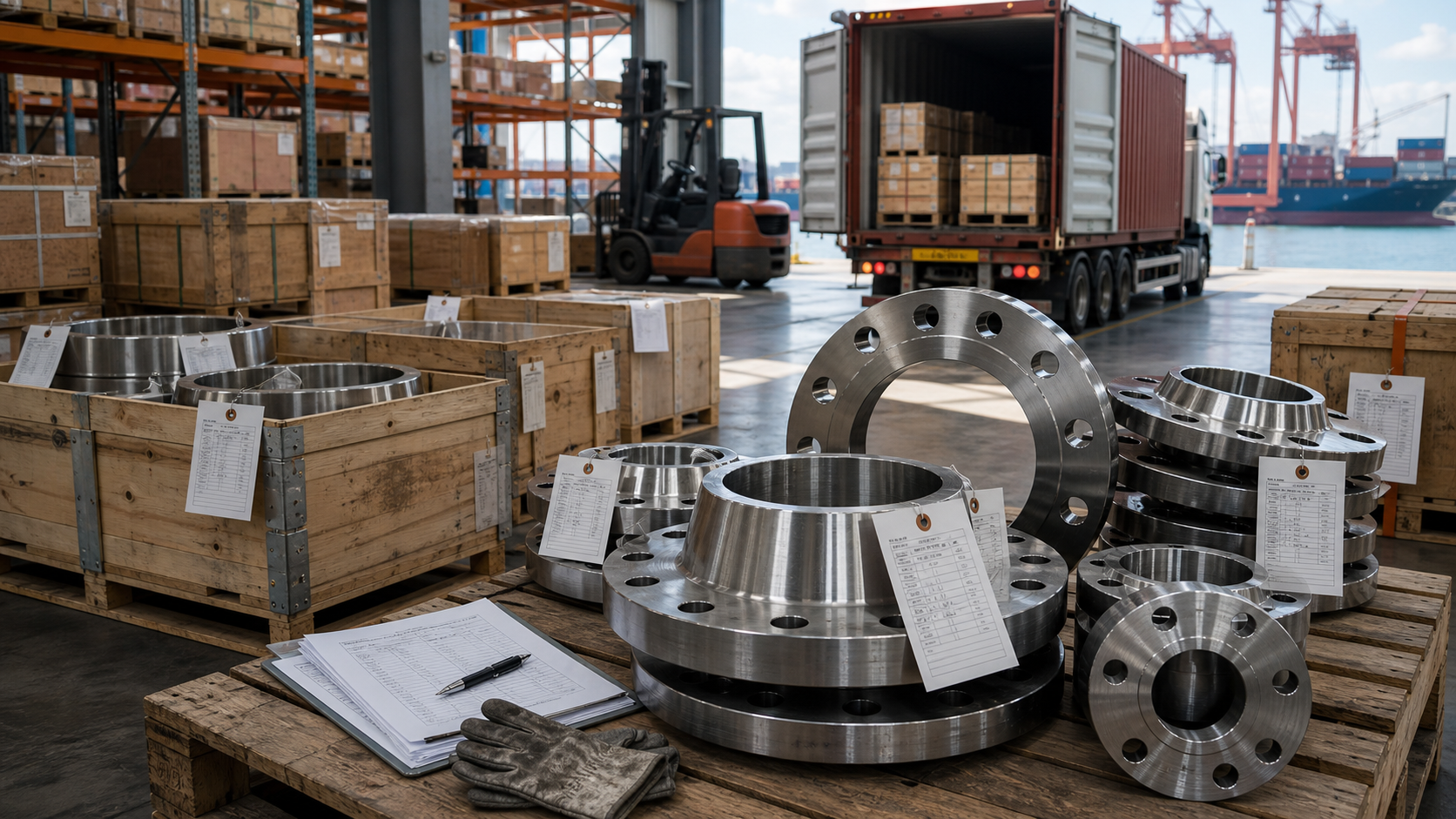
A material certificate is necessary, but it does not replace dimensional inspection. EN 10204 Type 3.1 confirms chemical composition and mechanical properties for the material, while ASME B16.5 dimensions, face finish, bolt circle, thickness and marking still need inspection records. For stainless and alloy grades, PMI can support grade verification; for carbon grades, heat-number traceability and mill records remain critical.
The stronger quality control is a linked package: forged manufacturing route, heat number, material certificate, dimensional report, NDT record when required, quantity record and packing list. For hubbed pressure-boundary flanges, the manufacturing route and traceability package should match the governing standard rather than relying on certificate wording alone.
“We do not ship a flange we cannot trace. Every lot carries its heat number from the forging press through dimensional and NDT hold points to the packing list, and we will hand a buyer the 3.1, or a 3.2 with third-party witness, before release, not after a dispute. The certificate is where our inspection starts, not where it ends.”
Synbase runs in-process dimensional checks on bolt circle, thickness, face finish and marking as production hold points rather than relying only on one final spot check. Where the order requires it, forgings can be supported with ultrasonic, magnetic-particle, PMI, pressure-test or third-party witness records before shipment.
Synbase forged flanges serve pressure-boundary applications across energy, process, water and industrial projects, with the governing standard changing by sector. Synbase is a manufacturing brand within an established group, so this section maps the project types, standards and documentation scope we support rather than implying named-client references.
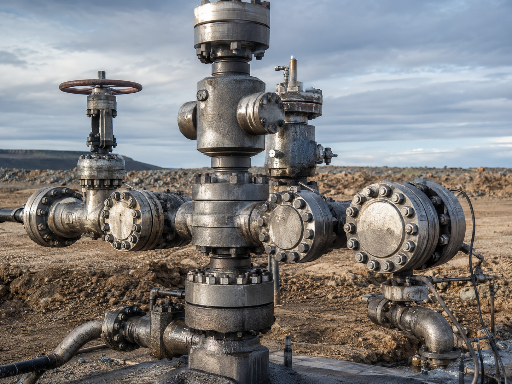

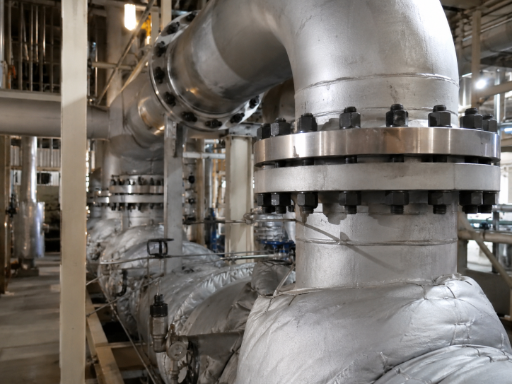
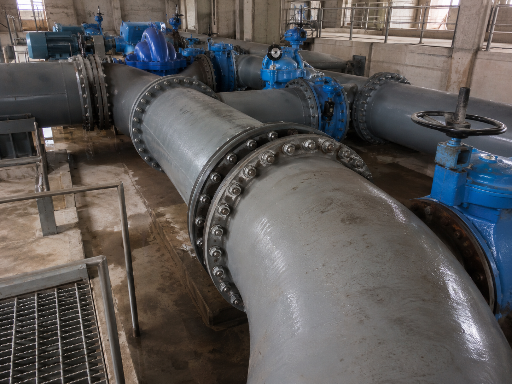
Choosing the wrong sector specification is expensive: an RF flange where API 6A requires RTJ can fail a wellhead review and delay the project. Synbase reviews face type, material, pressure class and governing code against the application before production, so the flange is built to the specified project standard rather than treated as a generic catalog item.
For EPC buyers, consolidated supply can reduce vendor coordination: flanges, fittings, pipe and valves can be sourced through the group with aligned document requirements and one project documentation trail. The advantage is fewer supplier interfaces and clearer heat-number records to audit across the package.
Engineering tools for checking flange class, face type, landed cost and specification lines.
ASME B16.5 reference ratings — ASTM A105 forged carbon steel (Material Group 1.1)
Answer four questions — get a starting recommendation per ASME B16.5 engineering practice
See past the unit price — itemize duty, freight & risk for your destination
Assemble an unambiguous RFQ line — the five fields that remove the most common ordering errors
Pipe flanges join two pipe ends, a valve, or a vessel nozzle into a bolted, pressure-tight connection that can be taken apart for inspection or maintenance. It carries pressure and bolt load through a gasketed face. That’s why flange type, pressure class, face, and gasket must each suit the service, not be chosen on price or bolt-hole pattern alone.
Weld neck flanges have a long tapered hub joined to the pipe by a single full-penetration butt weld, giving them the highest strength and fatigue life and full radiographic inspection. Slip-on flanges slide over the pipe, fixed with two fillet welds, cheaper and easier to align, but they hold only about two-thirds of the internal-pressure strength and one-third of the fatigue life.
Use the weld neck where pressure cycles or temperatures are high, and the slip-on for moderate, non-cyclic service.
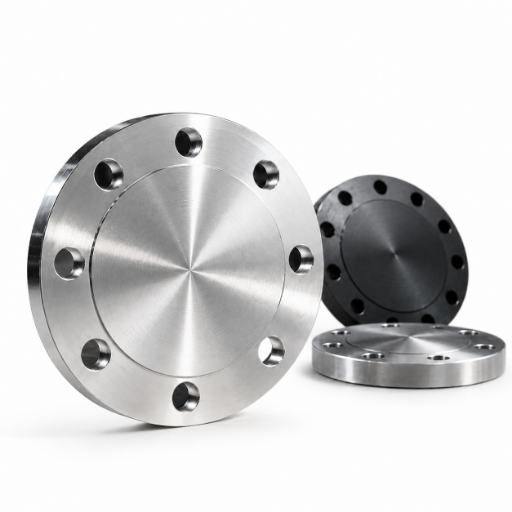
The blind flange vs normal flange difference is simple: a blind flange has no bore, it’s a solid disc that seals the end of a line, a manway, or an unused nozzle, whereas a bored flange (weld neck, slip-on, and the rest) connects to a pipe and let flow through.
Because it carries internal pressure and bolt load with no pipe to share the stress, a blind flange is actually the most highly stressed type, with bending stress concentrated near its center, so it’s engineered accordingly.
Raised-face flanges (RF) sit proud of the bolting surface and concentrate the bolt load onto a smaller gasket area, which is the general process default. Flat-face flanges (FF) mate over the full face for brittle housings such as cast iron, FRP, or bronze, where a raised face would crack the casting under bolt load. These two aren’t mixed on the same joint.
ASME B16.5 defines Classes 150, 300, 400, 600, 900, 1500, and 2500. The number is a pressure-temperature rating bucket, not a psi value, a Class 600 carbon-steel flange is rated about 1,480 psig at 100°F and derates as temperature rises. Higher classes have larger bolt circles and thicker bodies, so a 150 and a 300 aren’t interchangeable even when the bolt holes appear to line up.
Yes. Every order is supplied with a material test report, and we can provide an EN 10204 3.1 certificate as standard or a 3.2 with third-party witness on request, before shipment. Each lot carries a heat number that links the flange to its melt certificate, quantity, and packing list. We treat the certificate as the start of verification, paired with in-process dimensional and NDT hold points, because a material cert alone doesn’t confirm dimensional conformance.
Yes. Beyond the standard NPS 1/2–24 ASME B16.5 range, we forge large-diameter flanges to ASME B16.47 Series A/B (NPS 26–60) and to EN 1092-1, DIN, JIS, BS 4504, AWWA, and GOST. Custom bores, special facings, and non-standard drilling are made to your drawing with the governing standard confirmed in writing on the order.
Tariff exposure depends on destination, product scope, material grade, origin and the rules in force at the time of import. For U.S.-bound orders, duties and trade-remedy measures should be reviewed with the buyer’s broker against the official tariff schedule. Synbase can provide quote-level landed-cost assumptions and documentation for broker review, while non-U.S. destinations follow their own import rules.
Send your line items, type, size, class, face, material, quantity, destination and certificate requirements. Synbase will return a quotation with the applicable standard, lead time, Incoterm and certificate level stated up front, supported by heat-number traceability and a project documentation chain.
Request a Quote