Send Your RFQ to Synbase Steel
Prefer to send drawings, BOMs or attachment lists by email? sales@synbasesteel.com

It’s the seam of a pressure pipe that fails first. We deliver true seamless carbon steel pipe, without a weld line, along with an EN 10204 3.1 heat-traceable certificate, that actually matches your service’s needs to the quoted grade.
A carbon steel seamless pipe contains pressurized fluids, steam and gas, without a longitudinal weld seam that can open under load. That is the reason process and energy projects use it for their highest-pressure lines. Synbase supplies this seamless carbon steel pipe to ASTM A106, ASTM A53 and API 5L in a single mill run; and each heat is traced from the steel mill that melted it to the mills’ own test report.
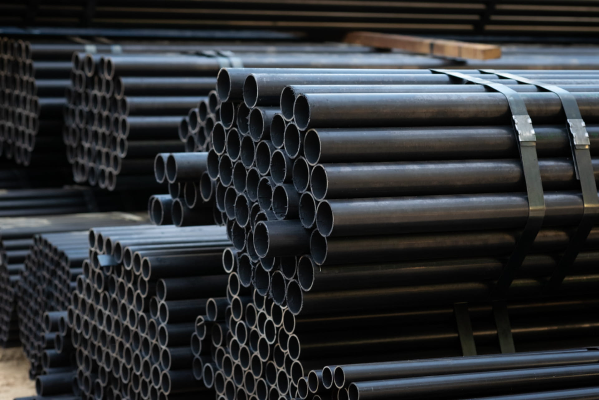
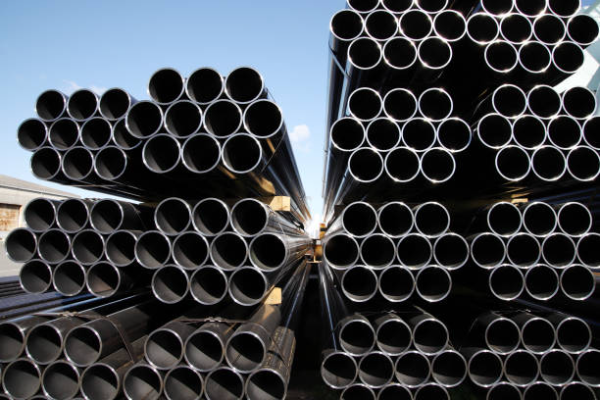
A carbon steel pipe specified one grade too low doesn’t fail during ordering, it fails years later as a thinned wall, a cracked weld root, or a rejected line at hydrotest. On an EPC project a wrong grade ends in a safety stand-down and budget overrun.
Our seamless carbon steel pipe is drawn from a single solid billet over a piercing mandrel, so the pipe has no weld seam to become the weak axis under cyclic pressure or thermal load.
Sourcing is the failure most buyers underestimate: a distributor resells whatever heat it stocked, with no control over the mill that melted the steel.
If there’s no link to the physical pipe heat number on the certificate it carries then that whole lot get put on hold; and it slips on project schedules.
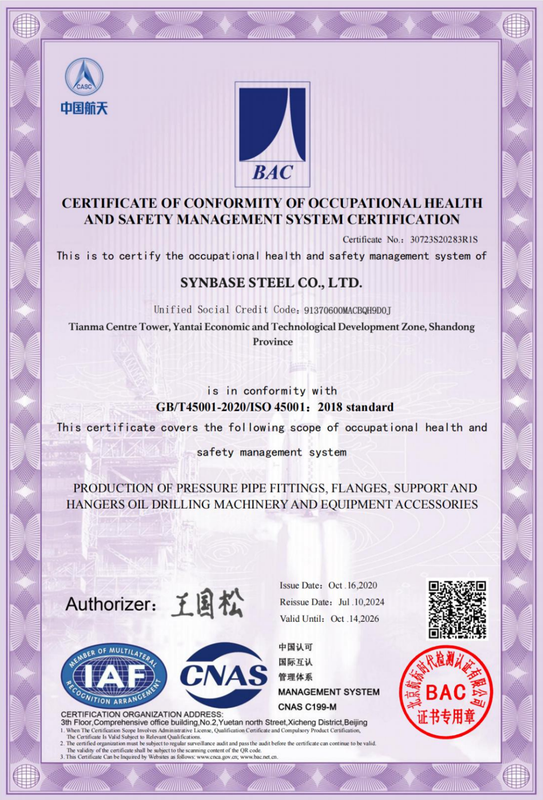
That is the structural reason a critical line should start at the mill, not at a stockist. Synbase produces the pipe, runs the tests, and issues the certificate from one ISO 9001 production line, so the steel, the data, and the document describe the same product.
There are pipe makers and there are grade standards; ordering the right type means specifying the applicable standard-not necessarily grade-of carbon steel pipe based on operating temperature, pressure and medium.
Our application engineering process begins by matching each RFQ request to a service, followed by the associated standard that’s mandated. That mapping determines the proper heat and test certification:
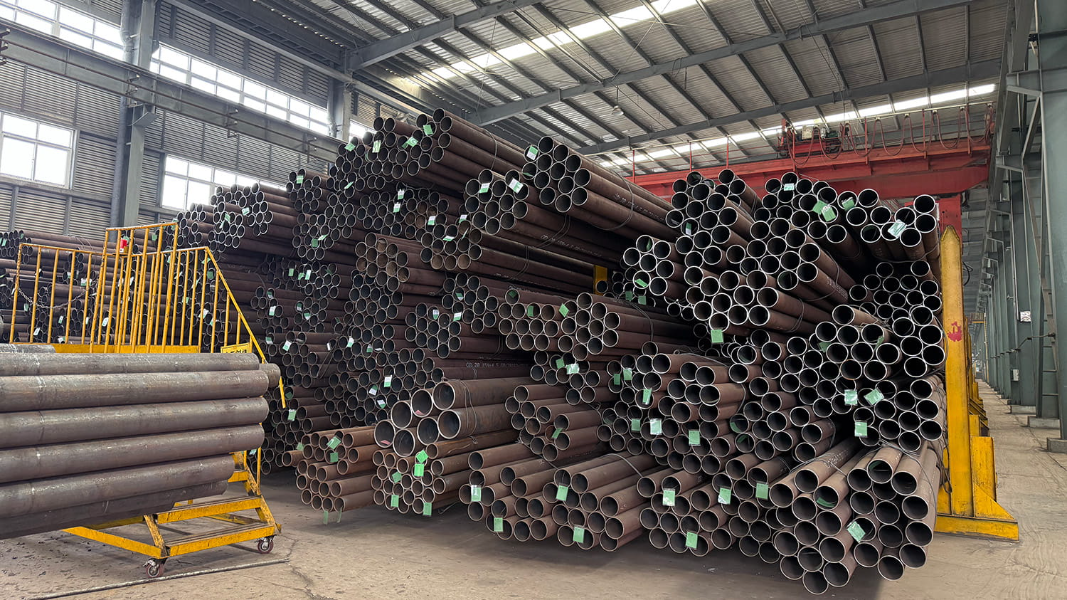
| Standard / grade | Primary service | Temp window | Min yield / tensile | Typical application | Test package |
|---|---|---|---|---|---|
| A106 Gr B | High-temperature pressure | to ~425 °C | 240 / 415 MPa | Refinery, steam, process piping | Tensile + flattening, each heat |
| A106 Gr C | Higher-strength pressure | to ~425 °C | 275 / 485 MPa | Heavy-wall headers, hot lines | Tensile + flattening, each heat |
| A53 Gr B (Type S) | General fluid / air / steam | ambient–moderate | 240 / 415 MPa | Utilities, low-to-mid pressure | Hydrostatic + bend |
| API 5L Gr B | Oil & gas transmission | ambient | 245 / 415 MPa | Pipelines, gathering lines | PSL1 / PSL2 package |
| API 5L X42 / X52 | Higher-pressure transmission | ambient | 290–360 / 415+ MPa | Long-distance line pipe | PSL2, CVN impact |
| A333 low-temperature seamless pipe (Gr 6) | Low-temperature / cryogenic | to −45 °C | 240 / 415 MPa | LNG, cold ethylene, sub-zero | Charpy impact at −45 °C |
| A179 | Heat-exchanger / condenser | moderate | cold-drawn low-C | Feedwater heaters, condensers | Hardness + flaring |
| A519 (1020/1026) | Mechanical / machined parts | ambient | grade-dependent | Cylinders, bushings, structural | Dimensional + hardness |
Use this as a starting point, not a final purchase spec, because wall schedule and service medium still shift the answer. Synbase supplies all eight rows in seamless carbon steel pipe, in NPS 1/8″ to 28″ and schedules SCH 20 through XXS, dimensioned to ASME B36.10M.
“We tell buyers to specify the service condition, not just a grade number. Half the A106 enquiries we see would be served correctly, and identically, by the same pipe certified to A53 and API 5L, so we certify all three rather than upsell a standard.”
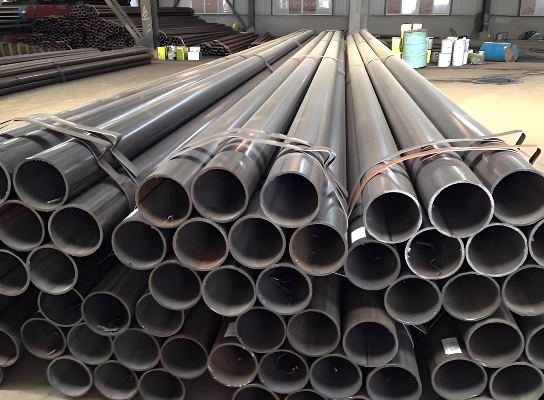
Here’s the honest answer most spec confusion misses: global mills no longer produce A53 Grade B Type S as a separate commodity, so a single seamless heat is routinely certified to A53, A106, and API 5L at once. There’s no real cost or availability difference between those three grades when the pipe is seamless.
What does change is the testing and the chemistry the standard forces – and that’s where the choice become real.
| Property | A106 Gr B | A53 Gr B | API 5L Gr B | A333 Gr 6 |
|---|---|---|---|---|
| Made seamless? | Seamless only | Seamless or welded | Seamless or welded | Seamless or welded |
| Silicon minimum | ≥0.10% | none required | ≥/per PSL | ≥0.10% |
| Service driver | High temperature | General purpose | Hydrocarbon transmission | Low temperature |
| Min tensile | 415 MPa | 415 MPa | 415 MPa | 415 MPa |
| Impact test | not required | not required | X-grades: CVN | Charpy at −45 °C |
| Typical use | Refinery / steam | Utilities / structural | Pipelines | LNG / cryogenic |
The silicon requirement is the quiet differentiator: A106 carries a 0.10% silicon minimum that improves high-temperature behaviour, while A53 sets no silicon floor at all. That’s why a refinery hot line is written to A106 and a compressed-air header is content with A53. Where carbon steel runs out of temperature margin — sustained service above ~425 °C or high-pressure hydrogen — the specification moves to Cr-Mo alloy steel seamless pipe.
For sour or wet-H2S service, none of the four base grades is enough on its own. The order must also invoke NACE MR0175 / ISO 15156, which caps hardness at HRC 22 and sulfur at ≤0.01% to resist sulfide stress cracking.
We screen every enquiry for these conditions before quoting, because a pipe that passes the wrong test is still the wrong pipe.
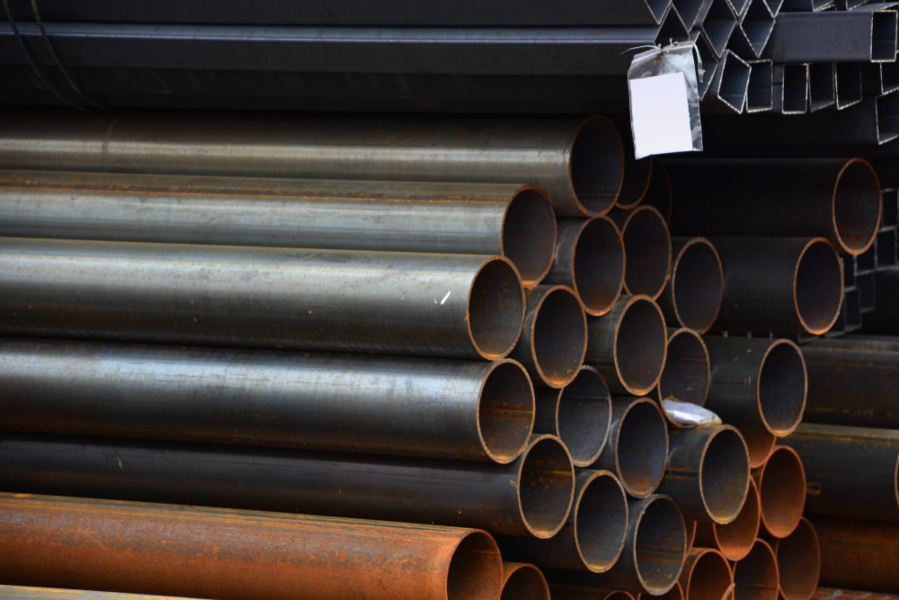
The common rule – “seamless is always stronger than welded” – isn’t always true, and a good engineer should know why. Strength tracks the steel grade and weld quality more than the manufacturing method: a high-grade ERW line pipe outperforms a low-grade seamless one, and per the American Welding Society a sound weld can reach 100% of base-metal strength.
Where seamless still wins is consistency under cyclic and high-temperature load, because there’s no seam to act as a fatigue initiation site. That’s the structural case for seamless on critical pressure and steam service – not a blanket strength claim. That trade-off is real, so the honest call is to pay the seamless premium only where cyclic or high-temperature load justifies it.
Once the grade is set, the schedule set the pressure rating, since a higher schedule number means a thicker wall for a given outside diameter.
| NPS | OD (mm) | SCH 40 wall | SCH 80 wall | SCH 160 wall | XXS wall |
|---|---|---|---|---|---|
| 1/2″ | 21.3 | 2.77 mm | 3.73 mm | 4.78 mm | 7.47 mm |
| 1″ | 33.4 | 3.38 mm | 4.55 mm | 6.35 mm | 9.09 mm |
| 2″ | 60.3 | 3.91 mm | 5.54 mm | 8.74 mm | 11.07 mm |
| 3″ | 88.9 | 5.49 mm | 7.62 mm | 11.13 mm | 15.24 mm |
| 4″ | 114.3 | 6.02 mm | 8.56 mm | 13.49 mm | 17.12 mm |
| 6″ | 168.3 | 7.11 mm | 10.97 mm | 18.26 mm | 21.95 mm |
| 8″ | 219.1 | 8.18 mm | 12.70 mm | 23.01 mm | 22.23 mm |
| 10″ | 273.0 | 9.27 mm | 15.09 mm | 28.58 mm | 25.40 mm |
| 12″ | 323.8 | 10.31 mm | 17.48 mm | 33.32 mm | 25.40 mm |
| 16″ | 406.4 | 12.70 mm | 21.44 mm | 40.49 mm | — |
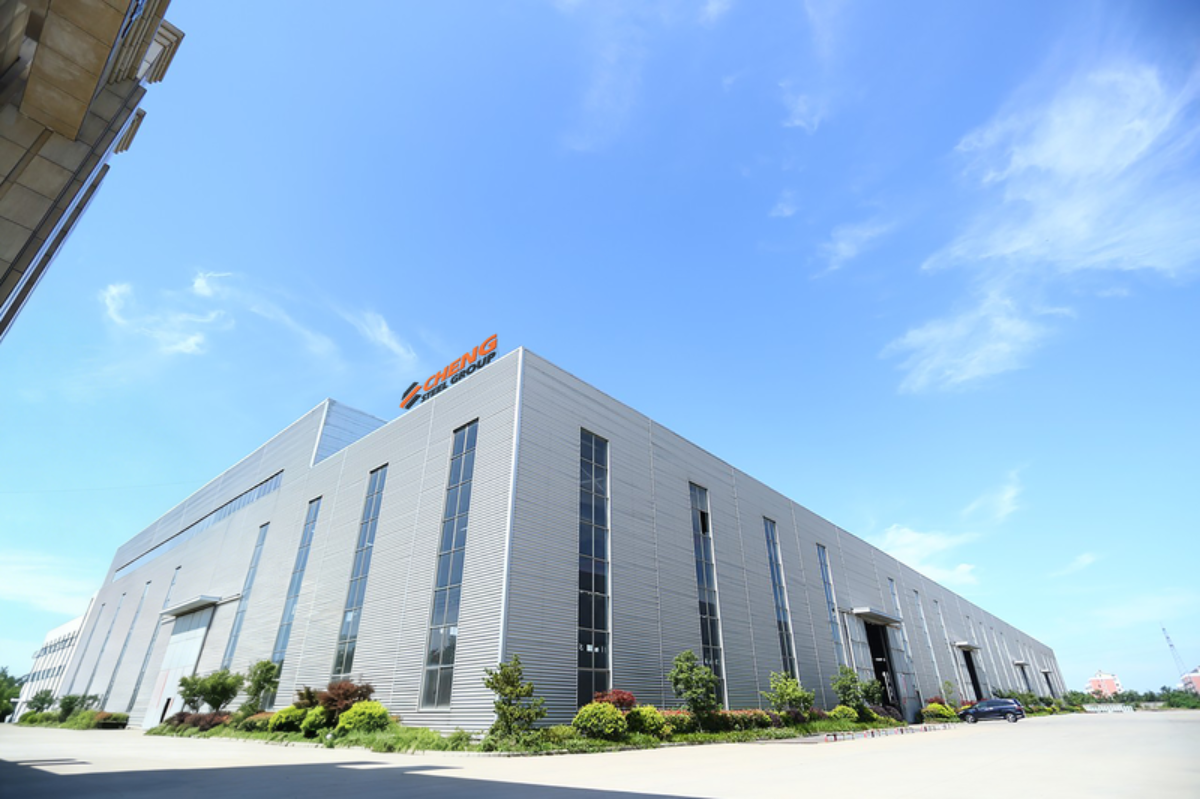
Carbon steel seamless pipe is the backbone material of the plants that run hot and under pressure, and the application follows the grade. Synbase supplies into projects across more than 100 countries through E-CHENG STEEL GROUP.
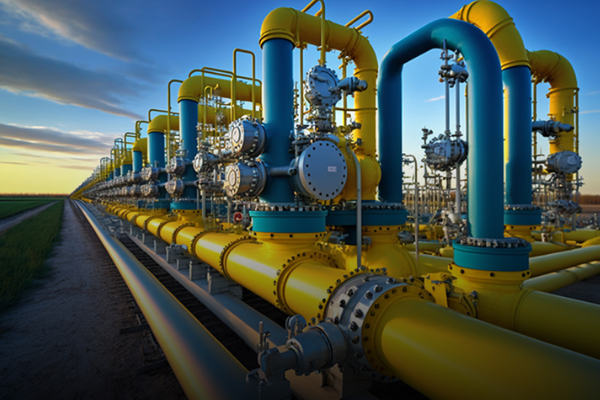
Crude, gas, and product transmission, gathering lines, and offshore platform piping.
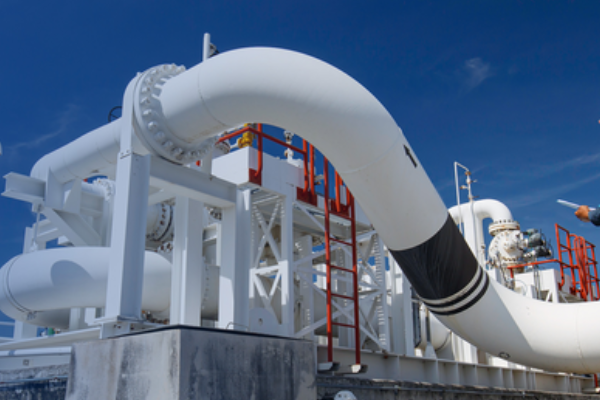
Process piping, reactor lines, and high-pressure steam where A106 high-temperature service is mandatory.
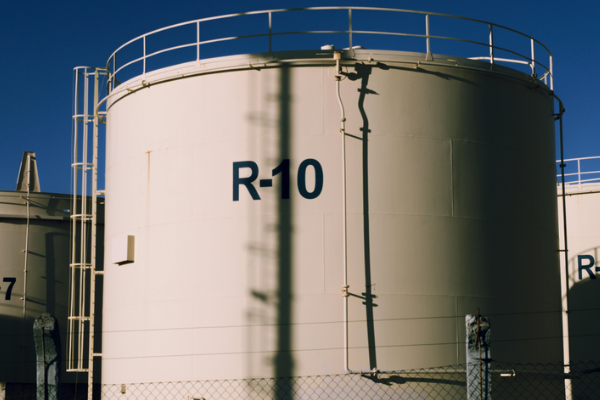
Boiler feedwater, economizer, and balance-of-plant lines alongside the group’s high-temperature alloy range. For high-temperature pressure parts, specify seamless boiler tubes.
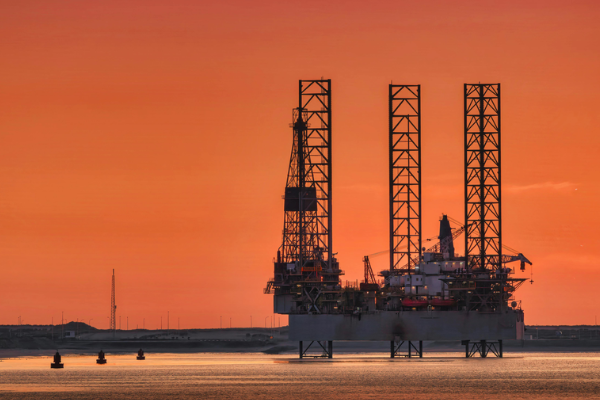
Load-bearing columns and mechanical applications served by A53 and A519.
The group has supplied steel pipe to international energy operators and EPC contractors, including national oil companies across the Middle East and the CIS. Those programs are won on documentation and delivered tonnage, not on brand recognition – which is the gap a newer supplier must close with evidence.
Total cost of ownership on a carbon line is set as much by rejected heats and certificate disputes as by price per tonne. Sourcing from the mill that melts and tests the steel removes the markup layer and the traceability gap a distributor cannot control.
TCO framing based on procurement-cost drivers (distributor markup + certificate rework); exact savings depend on order scope and certification level.
Since Synbase manages heat from the mill to certificate, the lot that arrives at your door is the lot listed on the document – proof you’ll defend to in a supplier audit of a new mill.
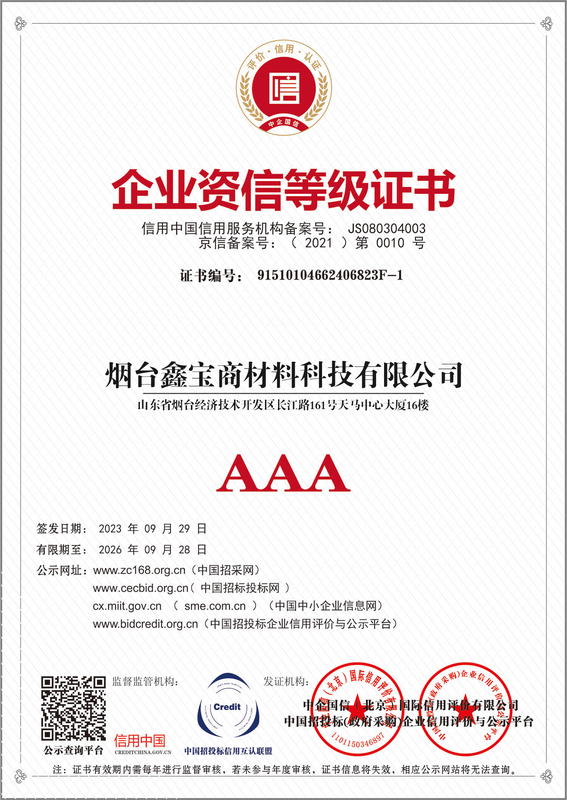
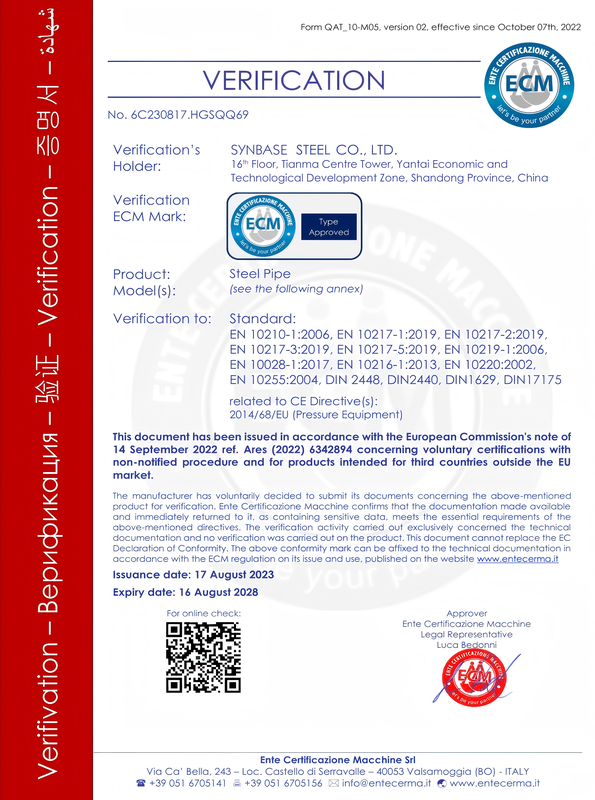
The reason buyers hesitate with a new carbon pipe supplier is certificate trust, and the concern is legitimate: a supplier can list certifications it can’t actually document on the heat you receive. The defense is heat-number traceability, the chain that links every length back to the steel melt it came from.
We issue each Synbase-manufactured heat a 3.1 certificate under the EN 10204 standard, confirming the heat number, its exact chemistry, and the tested mechanical properties from that melt batch.
As EN 10204 indicates, a 3.1 is endorsed by an independent test lab not involved in producing the steel-no backroom deals from the pipe rollers. You simply cross-reference the product-stamped heat number to its certificate at goods-in, closing out the inspection.
For the highest-risk lines, Synbase arranges 3.2 certification witnessed by a third party such as SGS, TÜV, or Lloyd’s. We won’t claim a result we can’t test, and on a pressure line, an unverified heat is a future failure, not a discount.
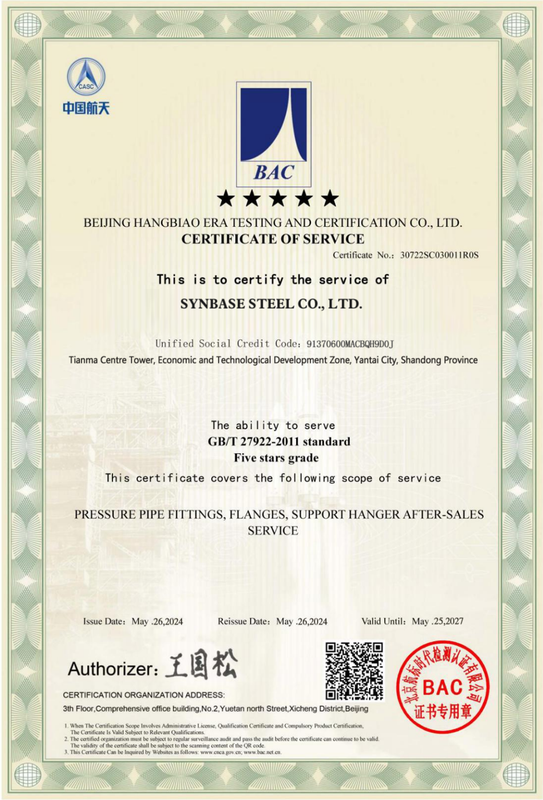
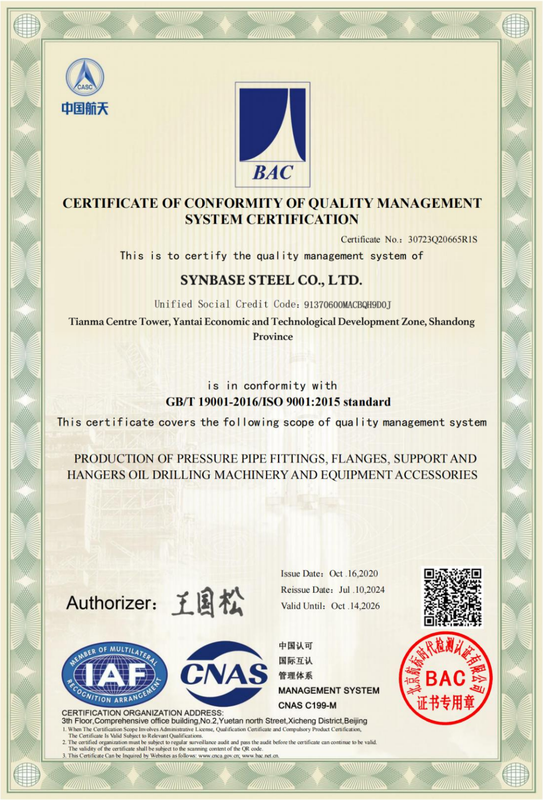
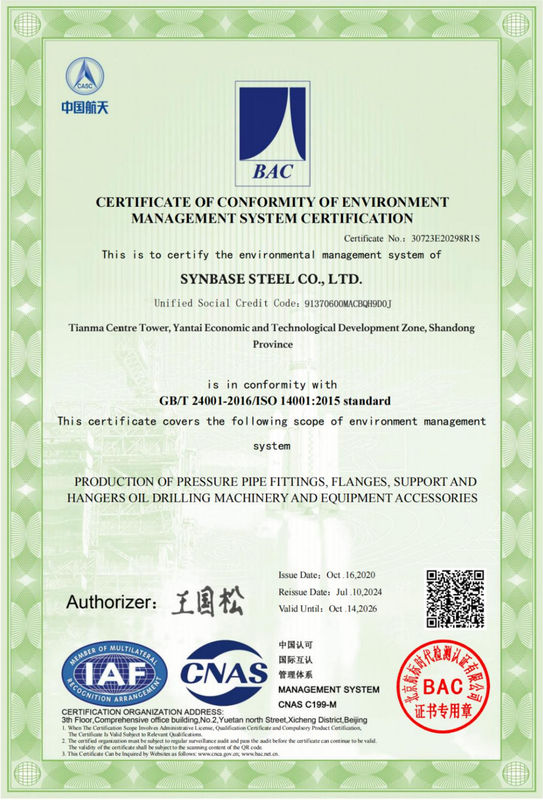
A single list price for seamless carbon steel pipe can be misleading, because price isn’t just dictated by tonnes. Each Synbase quote takes into consideration the following factors:
We supply our seamless pipe in mill lengths up to 36 meters, in any requested size and wall, and can include custom marking, OEM, and same-order matching flanges and fittings through the group’s warehousing and logistics network, with overseas offices in Hong Kong, Bangkok, and Kuala Lumpur. Match the pipe order with weld neck flanges. Include compatible butt weld elbows where routing requires them.
Cryogenic and impact-tested A333s, for example, require significantly more testing than a general A53 grade.
Heavy wall and larger OD sizes naturally increase manufacturing complexity and production times.
A 3.1 (EN 10204) is the standard document for most service; 3.2 third-party witnessed certification increases the costs and timeline for additional scrutiny.
Testing Scope, NDT, coatings, heat treatments, and overall order size are all considered.
For a firm price and lead time, send your grade, size, schedule, quantity, and certification level, the engineering team return a spec-matched quotation traceable to one production line.
Request a quote →Standardized engineering utilities designed for piping specifiers and EPC contractors to calculate weights, cross-reference international material standards, and select optimal carbon steel grades.
It is steel pipe formed from a solid billet pierced and drawn into a hollow section without any longitudinal weld seam. Because there is no seam, the wall is uniform around the circumference, which is why it is preferred for high-pressure and high-temperature service.
A106 must be seamless and carries a 0.10% silicon minimum for high-temperature service, while A53 can be seamless or welded and sets no silicon floor. In practice one seamless heat is often certified to both A106 and A53, so for seamless pipe there is usually no price difference between them.
Schedule 40 describes the wall thickness, not the manufacturing method, so a Schedule 40 pipe can be either seamless or welded. Synbase supplies Schedule 40 — and every schedule from SCH 20 to XXS — as true seamless carbon steel pipe.
No. Strength depends mainly on the steel grade and weld quality, so a high-grade welded line pipe can be stronger than a low-grade seamless one. Seamless wins on consistency under cyclic and high-temperature load because it has no seam to fatigue, which is the real reason it is specified for critical service.
Both are carbon steel pipe with similar room-temperature strength, but A333 Grade 6 is impact-tested for low-temperature service down to −45 °C, while A106 Grade B is built for high-temperature pressure service. Choose A333 for LNG and cryogenic lines and A106 for hot process and steam lines.
The absence of a weld seam gives a uniform wall with no longitudinal joint to open under sustained pressure or thermal cycling. That uniformity is why seamless carbon steel pipe is the default for refinery, steam, and high-pressure hydraulic service.
Yes. Every heat ships with an EN 10204 3.1 mill test certificate naming the heat number, chemistry, and mechanical results, and 3.2 third-party witnessed certification is available for critical lines. The heat number on the pipe matches the certificate so the lot is traceable to its melt.